


Enterococcal Endocarditis: Hiding in Plain Sight
- PMID: 34527603
- PMCID: PMC8435889
- DOI: 10.3389/fcimb.2021.722482
Enterococcal Endocarditis: Hiding in Plain Sight
Abstract
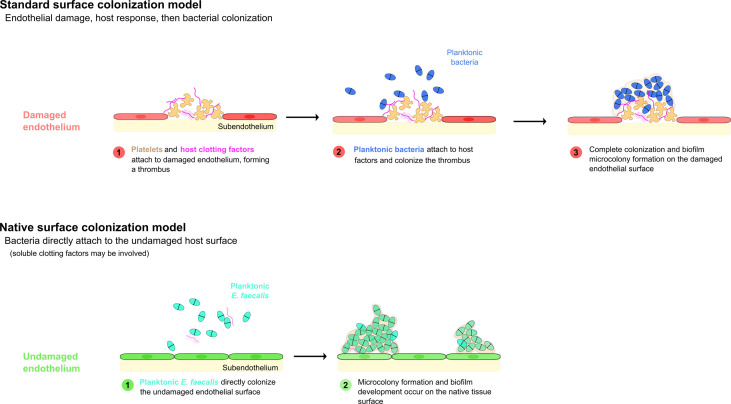
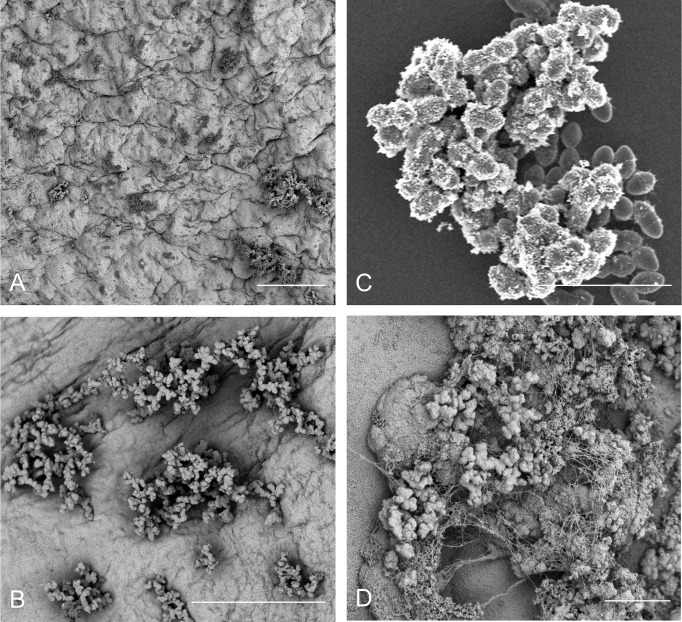
Enterococcus faecalis is a major opportunistic bacterial pathogen of increasing clinical relevance. A substantial body of experimental evidence suggests that early biofilm formation plays a critical role in these infections, as well as in colonization and persistence in the GI tract as a commensal member of the microbiome in most terrestrial animals. Animal models of experimental endocarditis generally involve inducing mechanical valve damage by cardiac catheterization prior to infection, and it has long been presumed that endocarditis vegetation formation resulting from bacterial attachment to the endocardial endothelium requires some pre-existing tissue damage. Here we review both historical and contemporary animal model studies demonstrating the robust ability of E. faecalis to directly attach and form stable microcolony biofilms encased within a bacterially-derived extracellular matrix on the undamaged endovascular endothelial surface. We also discuss the morphological similarities when these biofilms form on other host tissues, including when E. faecalis colonizes the GI epithelium as a commensal member of the normal vertebrate microbiome - hiding in plain sight where it can serve as a source for systemic infection via translocation. We propose that these phenotypes may allow the organism to persist as an undetected infection in asymptomatic individuals and thus provide an infectious reservoir for later clinical endocarditis.
Keywords: biofilm; host colonization; immune evasion; infection source; microbial adherence.
Copyright © 2021 Barnes, Frank and Dunny.
Conflict of interest statement
The authors declare that the research was conducted in the absence of any commercial or financial relationships that could be construed as a potential conflict of interest.
Figures
References
-
- Andrewes F. W., Horder T. J. (1906). A Study of the Streptococci Pathogenic for Man. Lancet 2, 708–713. 10.1016/S0140-6736(01)31538-6 - DOI
-
- Barnes A. M. T., Dale J. L., Chen Y., Manias D. A., Greenwood Quaintance K. E., Karau M. K., et al. (2017). Enterococcus faecalis Readily Colonizes the Entire Gastrointestinal Tract and Forms Biofilms in a Germ-Free Mouse Model. Virulence 8, 282–296. 10.1080/21505594.2016.1208890 - DOI - PMC - PubMed
Publication types
MeSH terms
Grants and funding
LinkOut - more resources
Full Text Sources
Medical
