


Metabolic actions of kisspeptin signaling: Effects on body weight, energy expenditure, and feeding
- PMID: 34530008
- PMCID: PMC8884343
- DOI: 10.1016/j.pharmthera.2021.107974
Metabolic actions of kisspeptin signaling: Effects on body weight, energy expenditure, and feeding
Abstract
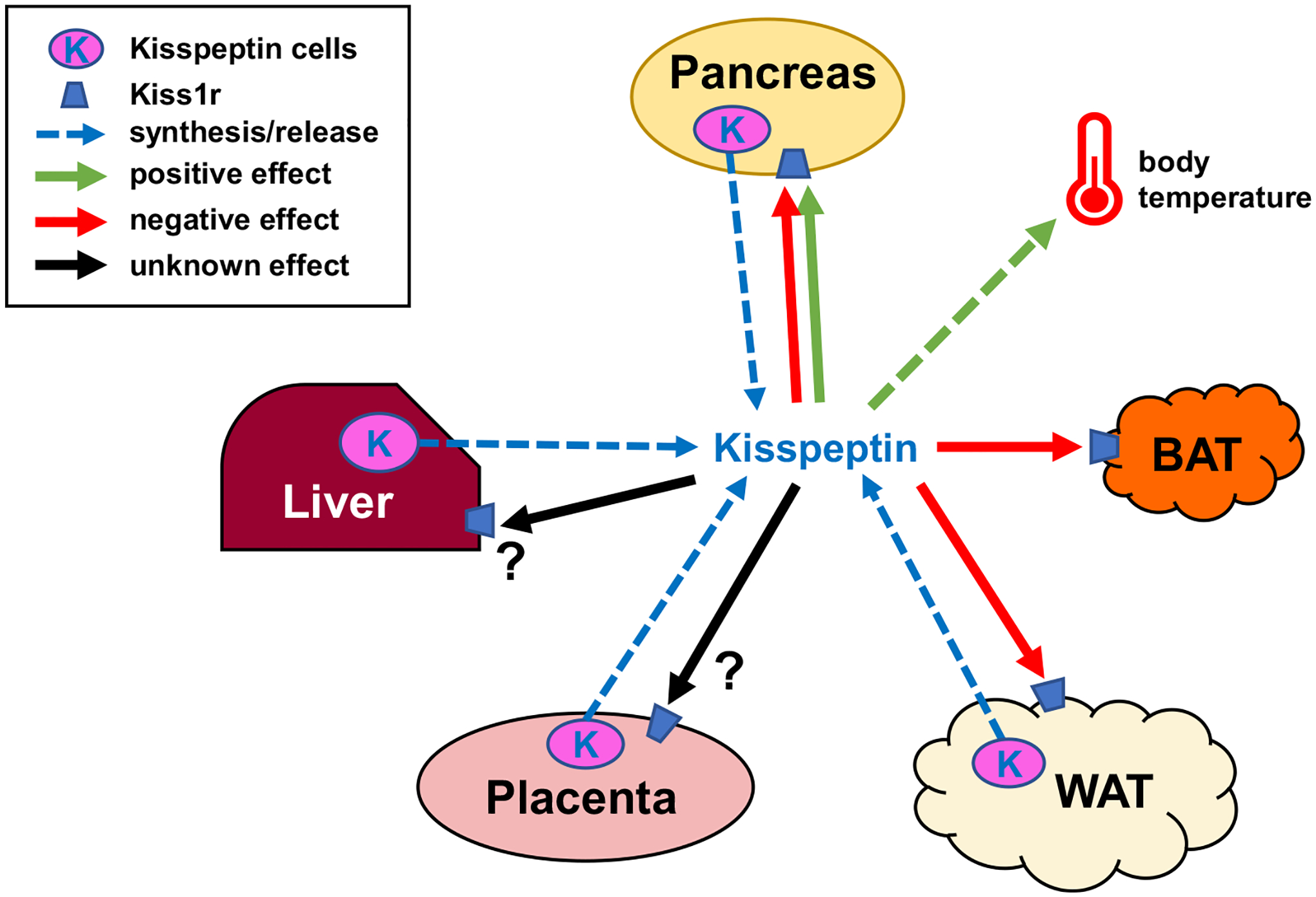
Kisspeptin (encoded by the Kiss1 gene) and its receptor, KISS1R (encoded by the Kiss1r gene), have well-established roles in stimulating reproduction via central actions on reproductive neural circuits, but recent evidence suggests that kisspeptin signaling also influences metabolism and energy balance. Indeed, both Kiss1 and Kiss1r are expressed in many metabolically-relevant peripheral tissues, including both white and brown adipose tissue, the liver, and the pancreas, suggesting possible actions on these tissues or involvement in their physiology. In addition, there may be central actions of kisspeptin signaling, or factors co-released from kisspeptin neurons, that modulate metabolic, feeding, or thermoregulatory processes. Accumulating data from animal models suggests that kisspeptin signaling regulates a wide variety of metabolic parameters, including body weight and energy expenditure, adiposity and adipose tissue function, food intake, glucose metabolism, respiratory rates, locomotor activity, and thermoregulation. Herein, the current evidence for the involvement of kisspeptin signaling in each of these physiological parameters is reviewed, gaps in knowledge identified, and future avenues of important research highlighted. Collectively, the discussed findings highlight emerging non-reproductive actions of kisspeptin signaling in metabolism and energy balance, in addition to previously documented roles in reproductive control, but also emphasize the need for more research to resolve current controversies and uncover underlying molecular and physiological mechanisms.
Keywords: Adipose; Body weight; Diabetes; Energy expenditure; Fat; Feeding; Food intake; GPR54; Insulin; KISS1; KISS1R; Kisspeptin; Metabolism; Obesity.
Copyright © 2021 Elsevier Inc. All rights reserved.
Conflict of interest statement
Declaration of Competing Interest
Both ADH and ASK declare no conflicts of interest.
Figures
References
-
- Babwah AV (2015). Uterine and placental KISS1 regulate pregnancy: What we know and the challenges that lie ahead. REPRODUCTION 150(4), R121. - PubMed
-
- Backholer K, et al. (2010). Kisspeptin cells in the ewe brain respond to leptin and communicate with neuropeptide Y and proopiomelanocortin cells. Endocrinology 151 (5), 2233–2243. - PubMed
-
- Baron AD, et al. (1987). Role of hyperglucagonemia in maintenance of increased rates of hepatic glucose output in type II diabetics. Diabetes 36(3), 274–283. - PubMed
