


Effects of Metabolic Factors, Race-Ethnicity, and Sex on the Development of Nephropathy in Adolescents and Young Adults With Type 2 Diabetes: Results From the TODAY Study
- PMID: 34531309
- PMCID: PMC9174961
- DOI: 10.2337/dc21-1085
Effects of Metabolic Factors, Race-Ethnicity, and Sex on the Development of Nephropathy in Adolescents and Young Adults With Type 2 Diabetes: Results From the TODAY Study
Abstract
Objective: To describe the longitudinal effects of sex, race-ethnicity, and metabolic factors on the risk of developing diabetic kidney disease (DKD) in the Treatment Options for Type 2 Diabetes in Adolescents and Youth (TODAY) cohort.
Research design and methods: Urine albumin-to-creatinine ratio (UACR) and estimated glomerular filtration rate (eGFR) by serum creatinine and cystatin C were assessed annually for up to 15 years after study entry. Markers of DKD included micro- and macroalbuminuria (UACR ≥30 mg/g and ≥300 mg/g, respectively), hyperfiltration (eGFR ≥135 mL/min/1.73 m2), and rapid eGFR annual decline (>3 mL/min/1.73 m2 and/or ≥3.3%). The relationships between risk factors and DKD were evaluated longitudinally using time-to-event models.
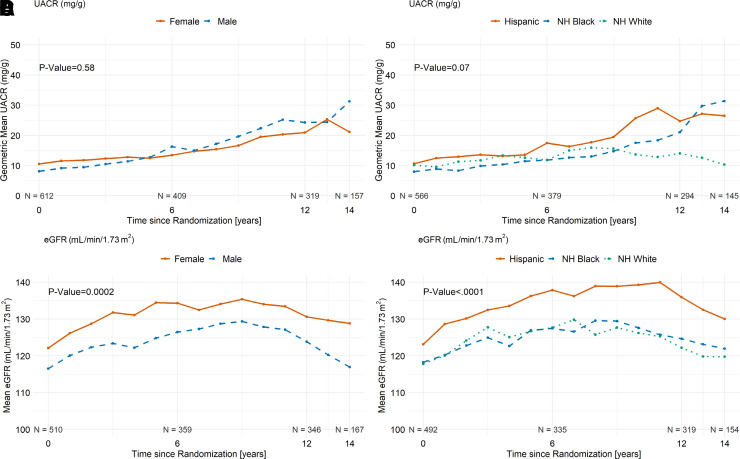
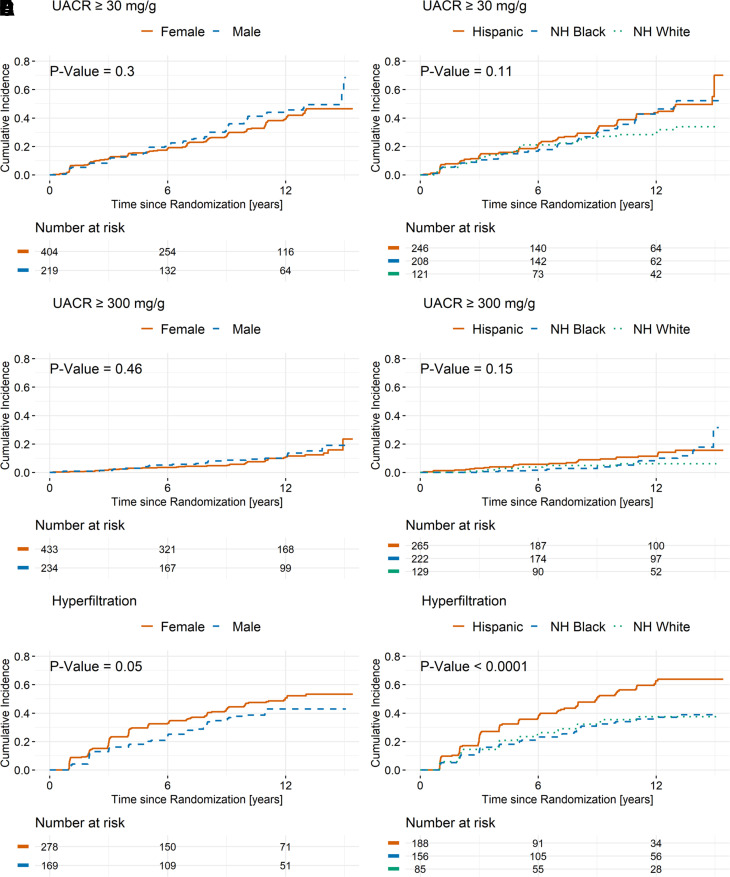
Results: Data were available on 677 participants, average age at baseline 14 years, with a mean ± SD follow-up of 10.2 ± 4.5 years. Each 1% increment in HbA1c conferred higher risk of microalbuminuria (hazard ratio 1.24 [95% CI 1.18, 1.30]), macroalbuminuria (1.22, [1.11, 1.34]), hyperfiltration (1.11, [1.05, 1.17]), and rapid eGFR decline (1.12, [1.04, 1.20]). Higher systolic blood pressure and baseline serum uric acid, and lower indices of β-cell function (C-peptide index and oral disposition index [oDI]), increased the risk of microalbuminuria, while higher triglycerides increased risk of micro- and macroalbuminuria. Lower oDI levels, female sex, and Hispanic ethnicity were associated with higher risk of hyperfiltration.
Conclusions: Elevated HbA1c was a shared risk factor among all phenotypes of DKD in this longitudinal cohort of adolescents and young adults with youth-onset type 2 diabetes. Other risk factors included elevated blood pressure, triglycerides, serum uric acid, and β-cell dysfunction.
© 2021 by the American Diabetes Association.
Figures
References
-
- Pavkov ME, Bennett PH, Knowler WC, Krakoff J, Sievers ML, Nelson RG. Effect of youth-onset type 2 diabetes mellitus on incidence of end-stage renal disease and mortality in young and middle-aged Pima Indians. JAMA 2006;296:421–426 - PubMed
-
- Morton JI, Liew D, McDonald SP, Shaw JE, Magliano DJ. The association between age of onset of type 2 diabetes and the long-term risk of end-stage kidney disease: a national registry study. Diabetes Care 2020;43:1788–1795 - PubMed
Grants and funding
LinkOut - more resources
Full Text Sources
Research Materials
Miscellaneous
