


Incidence, risk factors and management of post cesarean section surgical site infection (SSI) in a tertiary hospital in Egypt: a five year retrospective study
- PMID: 34537018
- PMCID: PMC8449867
- DOI: 10.1186/s12884-021-04054-3
Incidence, risk factors and management of post cesarean section surgical site infection (SSI) in a tertiary hospital in Egypt: a five year retrospective study
Abstract
Background: Surgical site infection (SSI) is one of the commonest complications following cesarean section (CS) with a reported incidence of 3-20%. SSI causes massive burdens on both the mother and the health care system. Moreover, it is associated with high maternal morbidity and mortality rate of up to 3%. This study aims to determine the incidence, risk factors and management of SSI following CS in a tertiary hospital.
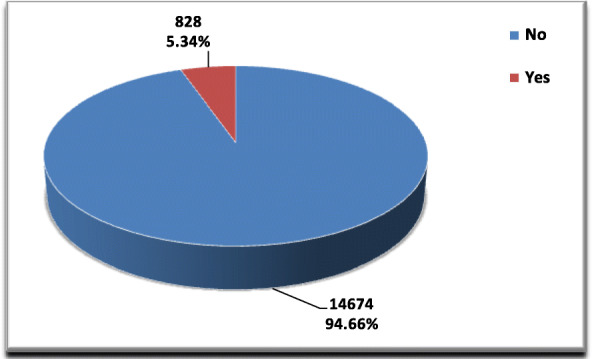
Methods: This was an observational case control retrospective study which was conducted at Minia maternity university hospital, Egypt during the period from January 2013 to December 2017 (Five years). A total of 15,502 CSs were performed during the studied period, of these, 828 cases developed SSI following CS (SSI group). The control group included 1500 women underwent cesarean section without developing SSI. The medical records of both groups were reviewed regarding the sociodemographic and the clinical characteristics.
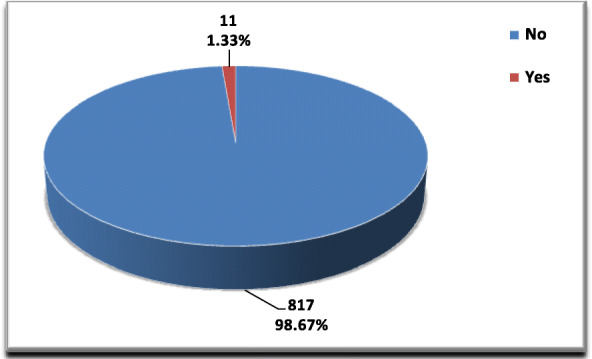
Results: The incidence of SSI post-cesarean section was 5.34%. Significant risk factors for SSI were; chorioamnionitis (adjusted odds ratio (AOR) 4.51; 95% CI =3.12-6.18), premature rupture of membranes (PROM) (AOR 3.99; 95% CI =3.11-4.74), blood loss of > 1000 ml (AOR 2.21; 95% CI =1.62-3.09), emergency CS (AOR 2.16; 95% CI =1.61-2.51), duration of CS of > 1 h (AOR 2.12; 95% CI =1.67-2.79), no antenatal care (ANC) visits (AOR 2.05; 95% CI =1.66-2.37), duration of labor of ≥24 h (AOR 1.45; 95% CI =1.06-2.01), diabetes mellitus (DM) (AOR 1.37; 95% CI =1.02-2.1 3), obesity (AOR 1.34; 95% CI =0.95-1.84), high parity (AOR 1.27; 95% CI = 1.03-1.88), hypertension (AOR 1.19; 95% CI = 0.92-2.11) and gestational age of < 37 wks (AOR 1.12; 95% CI = 0.94-1.66). The mortality rate due to SSI was 1.33%.
Conclusions: The obtained incidence of SSI post CS in our study is relatively lower than other previous studies from developing countries. The development of SSI is associated with many factors rather than one factor. Management of SSI is maninly medical but surgical approach may be needed in some cases.
Registration: Local ethical committee (Registration number: MOBGYN0040).
Keywords: Cesarean section; Incidence; Minia; Risk factors; Surgical site infection.
© 2021. The Author(s).
Conflict of interest statement
The authors declare that they have no competing interests
Figures
References
-
- Ministry of Health and Population [Egypt], El-Zanaty Associates [Egypt], ICF International. The 2014 Egypt Demographic and Health Survey (2014 EDHS). Main Findings. Cairo, Egypt 2015.
-
- World Health Statistics 2015. Geneva: Health care associated infections: Fact sheet [cited 05 May 2015]. Available from: www.who.int/gpsc/country_work/gpsc_ccisc_fact_sheet_en.pdf. Accessed 2 May 2020.
-
- Center for Disease Prevention and Control (CDC). Guideline for Prevention of Surgical Site Infection. 1999 [updated May 2011; cited 05 May 2015]. Available from: www.cdc.gov/hicpac/SSI/table1-SSI.html.
-
- Mihretu M, Temesgen K. Tewodros Seyoum and Mengstu Melkamu Surgical site infection and associated factors among women underwent cesarean delivery in Debretabor General Hospital, Northwest Ethiopia: hospital based cross sectional study. BMC Pregnancy Childbirth. 2019;19:317. doi: 10.1186/s12884-019-2442-0. - DOI - PMC - PubMed
Publication types
MeSH terms
LinkOut - more resources
Full Text Sources
Medical
