


Six-Month Quality of Life in COVID-19 Intensive Care Unit Survivors
- PMID: 34538745
- PMCID: PMC8401277
- DOI: 10.1053/j.jvca.2021.08.036
Six-Month Quality of Life in COVID-19 Intensive Care Unit Survivors
Abstract
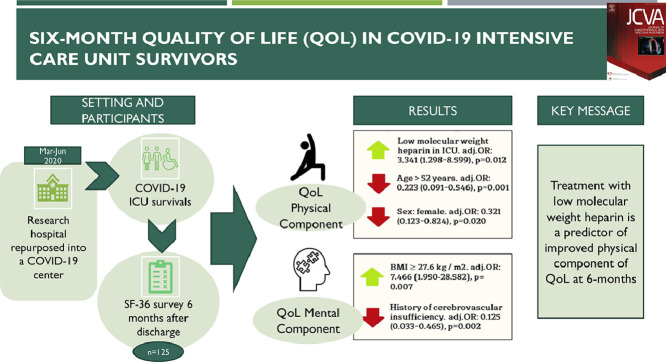
Objectives: Because there is increasing evidence of serious deterioration in long-term quality of life (QoL) in coronavirus 2019 (COVID-19) intensive care unit (ICU) survivors, the authors identified predictors of poor quality of life in these patients.
Design: Prospective cohort study.
Setting: Research hospital repurposed into a COVID-19 center.
Participants: Consecutive patients admitted in COVID-19 ICUs between March and June 2020.
Interventions: An SF-36 questionnaire, which included physical and mental items, was used six months after patient's discharge.
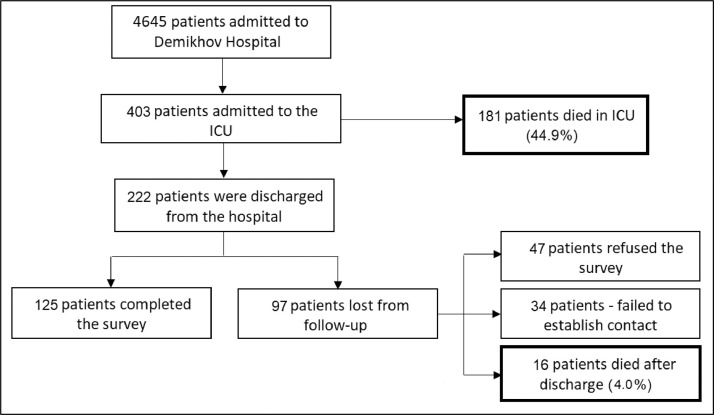
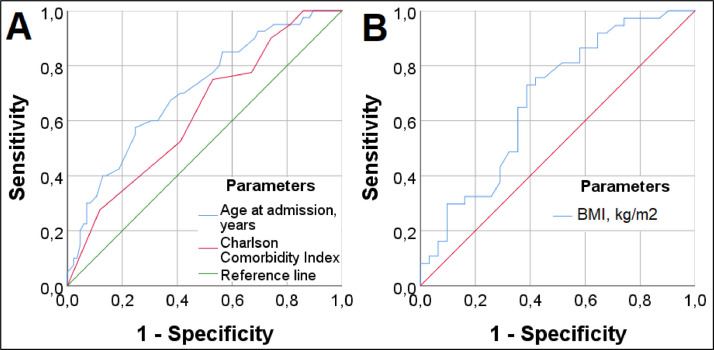
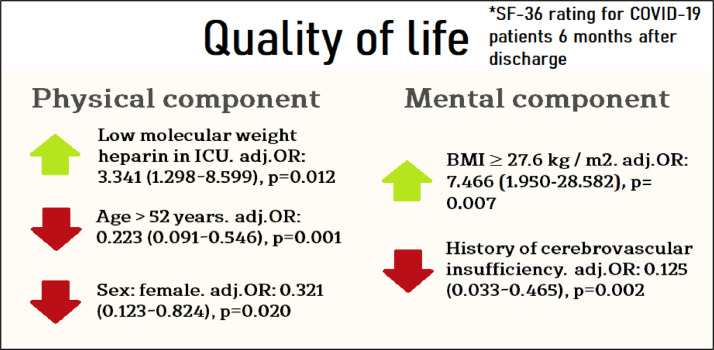
Measurements and main results: A total of 403 patients were managed in the ICU, with a hospital mortality of 181 of 403 (44.9%), and 16 (4.0%) patients died within six months. Among the 125 questionnaire responders, only 32.0% and 52% had a normal quality of life in terms of the physical and mental component of health. Multivariate analysis identified low-molecular-weight heparin treatment in the ICU as the only modifiable factor associated with an increase in physical component of QoL odds ratio (OR) 3.341 (95% confidence interval 1.298-8.599), p = 0.012, and age ≥52 years OR 0.223 and female sex OR 0.321 were significantly associated with a decrease in the physical component. Medical history of cerebrovascular insufficiency was significantly associated with a decrease in mental component of QoL OR 0.125, and the only factor associated with an increase in the mental health component was body mass index ≥27.6 kg/m2 OR 7.466.
Conclusions: In COVID-19 ICU survivors the authors identified treatment with low- molecular-weight heparin as a predictor of improved physical component of QoL at 6 months.
Keywords: COVID-19; Intensive Care; SARS-CoV-2; critical care; low molecular weight heparin; mortality; quality life; quality of life.
Copyright © 2021 Elsevier Inc. All rights reserved.
Conflict of interest statement
Conflict of Interest None.
Figures
References
MeSH terms
LinkOut - more resources
Full Text Sources
Medical
Miscellaneous
