Review
. 2021 Jun 26:8:71-94.
doi: 10.1016/j.bioactmat.2021.06.023. eCollection 2022 Feb.

How far is Lignin from being a biomedical material?

Affiliations
Review

How far is Lignin from being a biomedical material?

Sigit Sugiarto et al. Bioact Mater. .

Abstract

Lignin is a versatile biomass that possesses many different desirable properties such as antioxidant, antibacterial, anti-UV, and good biocompatibility. Natural lignin can be processed through several chemical processes. The processed lignin can be modified into functionalized lignin through chemical modifications to develop and enhance biomaterials. Thus, lignin is one of the prime candidate for various biomaterial applications such as drug and gene delivery, biosensors, bioimaging, 3D printing, tissue engineering, and dietary supplement additive. This review presents the potential of developing and utilizing lignin in the outlook of new and sustainable biomaterials. Thereafter, we also discuss on the challenges and outlook of utilizing lignin as a biomaterial.

Keywords: 3D printing; Antioxidants; Biomass; Biomedical applications; Tissue engineering.


Figures

Image 1
Graphical abstract
Fig. 1
Fig. 1
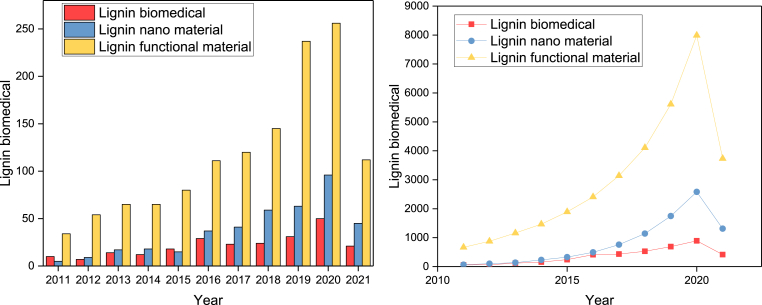
Total number of publications in the last 10 years. a) by number of publications; b) by number of citations per year. Search terms: “Lignin biomedical”, “Lignin functional material”, “Lignin nano material”. According to Web of Science, searched on 1 June 2021.
Fig. 2
Fig. 2
Overview of lignin as a biomaterial.
Fig. 3
Fig. 3
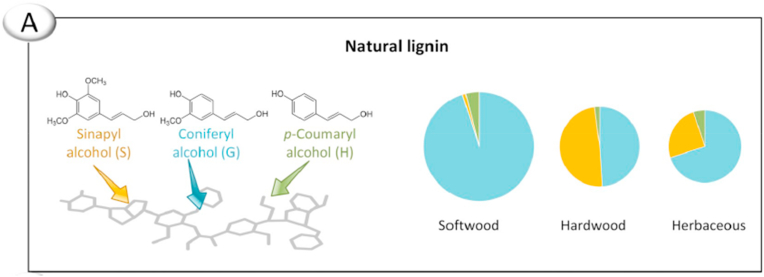
Compositions of natural lignin in different types of plants. Reproduced from Ref. [13] with permission from Elsevier. Copyright 2019.
Scheme 1
Scheme 1
Free radical scavenging mechanism by lignin which is stabilized by the resonance structure.
Fig. 4
Fig. 4
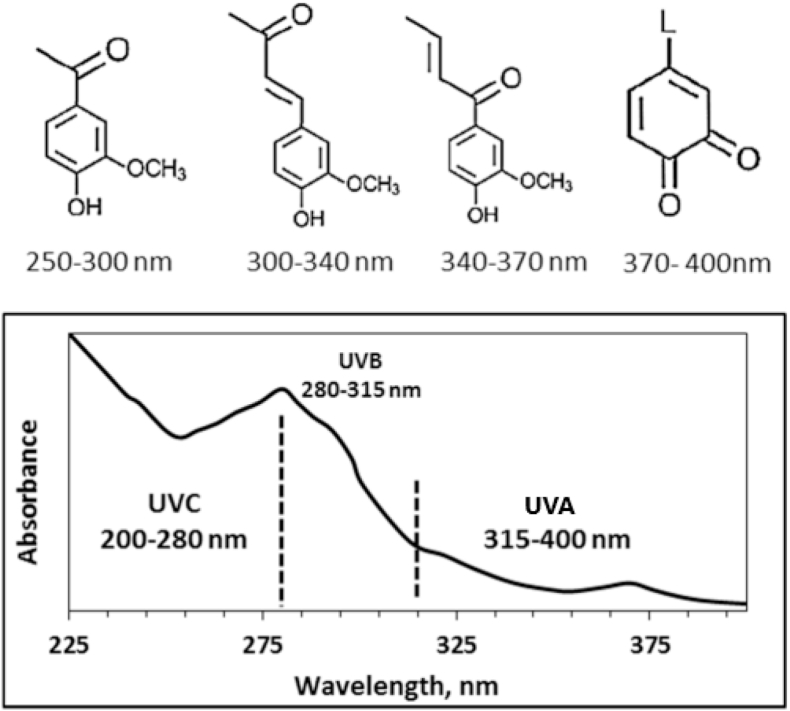
Chromophore groups in lignin and their absorption spectra in the UV light range. Reproduced and modified from Ref. [87] with permission from MDPI. Copyright 2020.
Fig. 5
Fig. 5
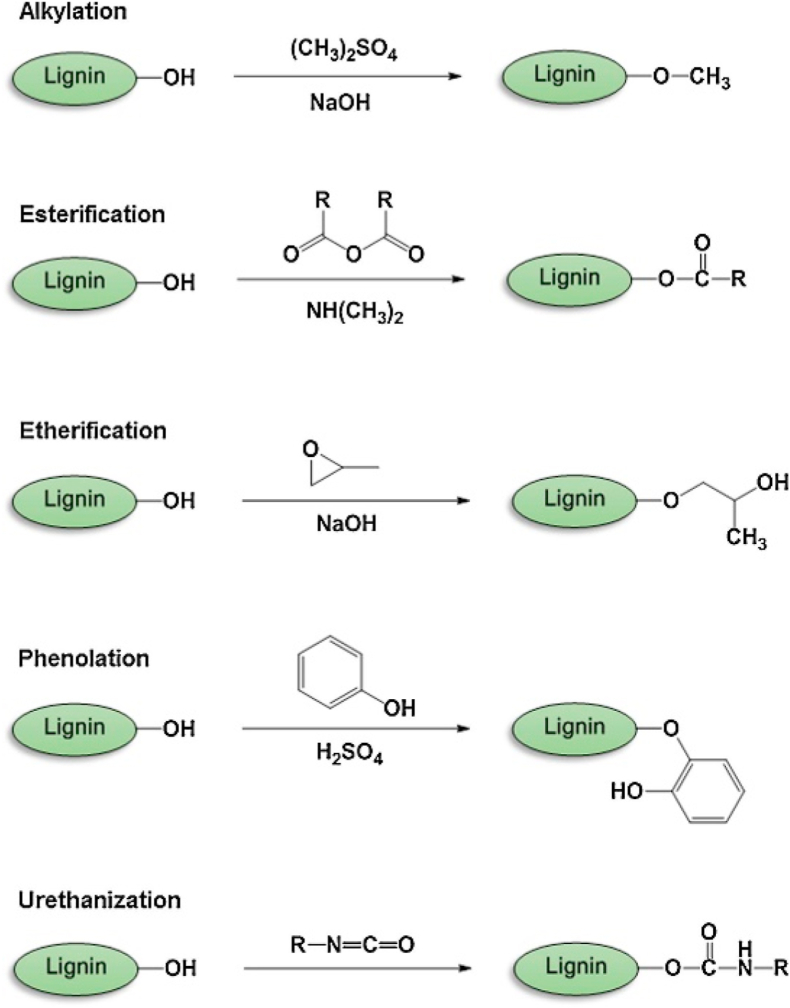
Overview of chemical modifications of lignin. Reproduced from Ref. [12] with permission from Elsevier. Copyright 2017.
Fig. 6
Fig. 6
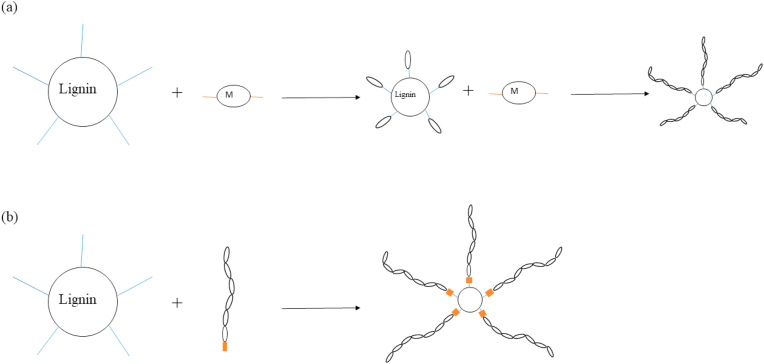
Schematic of two grafting approach: (a) “Grafting to” approach; (b) “Grafting from” approach.
Fig. 7
Fig. 7
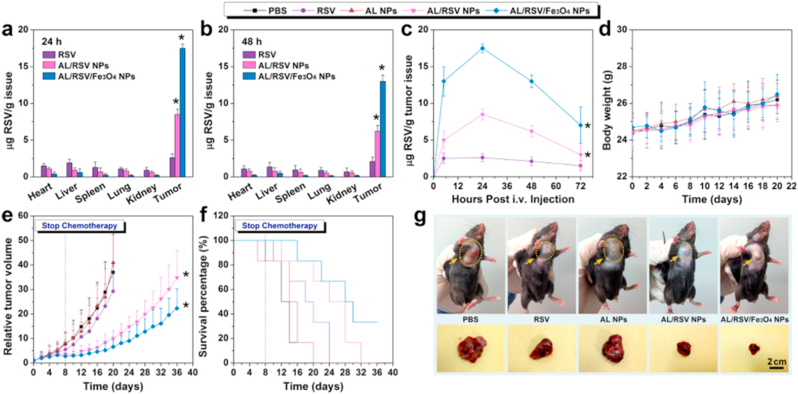
Tissue distribution with the different RSV formulations for 24 h (a) and 48 h (b). RSV content in tumor issues post-IV injection (c). Bodyweight (d), tumor inhibition (e), and survival rates (f) of tumor-bearing mice with different formulations. Tumor photographs from different groups on day 20 (g). Reproduced from Ref. [126] with permission from ACS Publications. Copyright 2017.
Fig. 8
Fig. 8
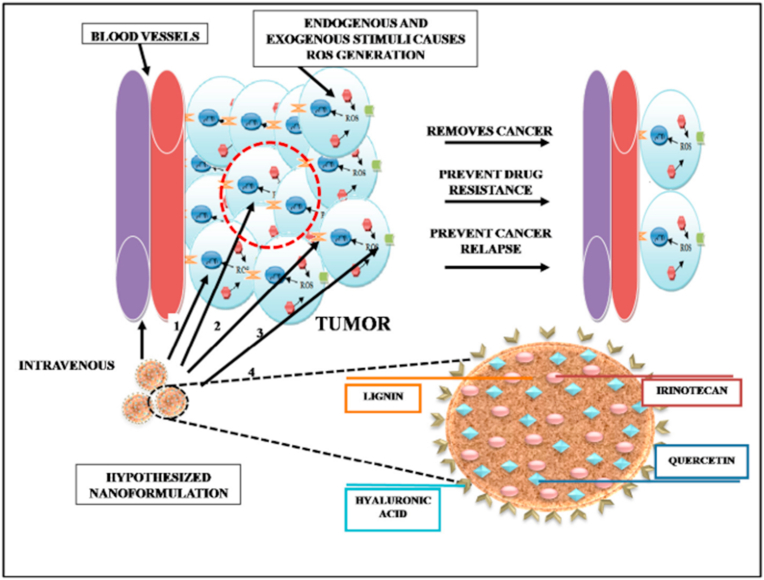
Novel 4-in-1 strategy to combat colon cancer, drug resistance, and cancer relapse. Hypothesized functionalized lignin nanoparticles can achieve this through the following 4 approaches. 1. Chemotherapeutic drug acts on cancer cells. 2. Antioxidants (lignin and quercetin) act on cells under high oxidative stress and prevent cancer relapse. 3. Quercetin modulates P-gp and overcomes drug efflux. 4. Hyaluronic acid actively targets nanoparticles to cancer cell through CD44 receptor and also makes them long-circulating. Reproduced from Ref. [128] with permission from Elsevier, Copyright 2018.
Fig. 9
Fig. 9
Biosensor construction based on Ga2O3/lignin/GOx or ZrO2/lignin/GOx material. Reproduced from Ref. [136] with permission from MDPI. Copyright 2019.
Fig. 10
Fig. 10
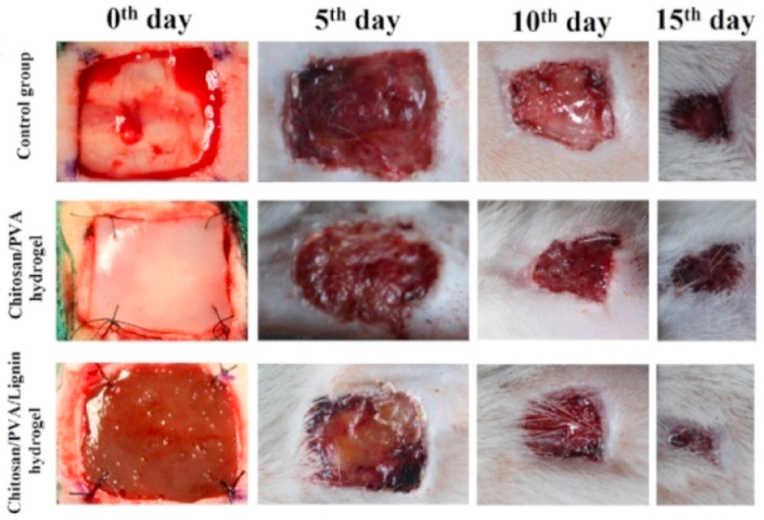
Photographs of wounds with control group (no dressing), LCPH0 dressing, and LCPH1 dressing on the 0th, 5th, 10th, and 15th day. Reproduced from Ref. [151] with permission from Elsevier. Copyright 2019.
Fig. 11
Fig. 11
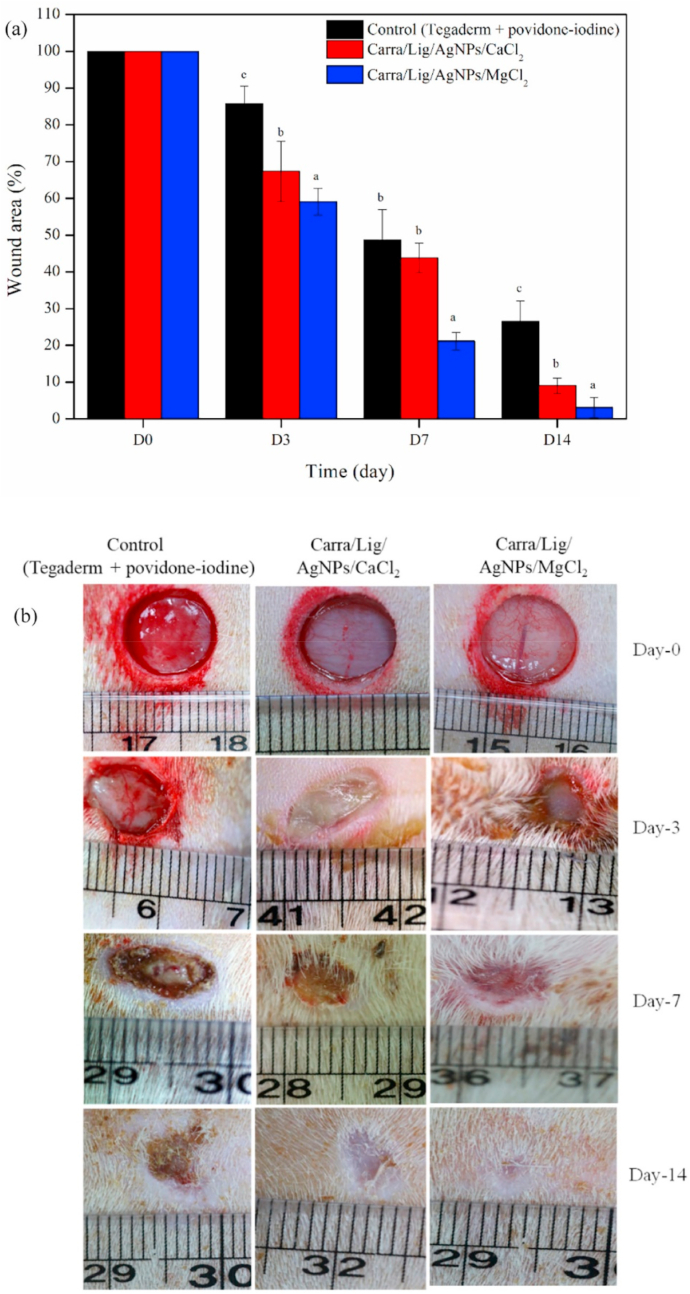
Wound healing effect of carrageenan-based nanocomposite hydrogels evaluated by (a) the wound area and (b) the apparent photographs are showing wound healing progress. Reproduced from Ref. [158] with permission from Elsevier. Copyright 2020.
Fig. 12
Fig. 12
Formation of HAp minerals facilitated by lignin. (a) SEM images showing the absence and presence of lignin for the formation of HAp after a two-day culturing. (b) SEM images of lignin/PCL nanofibrous film showing that the entire surface of the film was covered with HAp after incubation for 5 days. (c) High-magnification SEM image showing a platelet-like structure, which is typically found in natural HAp. (d–f) Results from EDX elemental analysis showing the distribution of Ca and P. Reproduced from Ref. [169] with permission from ACS Publications. Copyright 2019.
Fig. 13
Fig. 13
Photographs of (A) PLA and PLA coated pellets; (B) LIG and TC containing PLA filaments; (C) LIG and TC containing 1 cm × 1 cm squares prepared using 3D printing; (D) different shapes printed using the filament containing 2%(w/w) LIG. Reproduced from Ref. [176] with permission from MDPI. Copyright 2019.
Fig. 14
Fig. 14
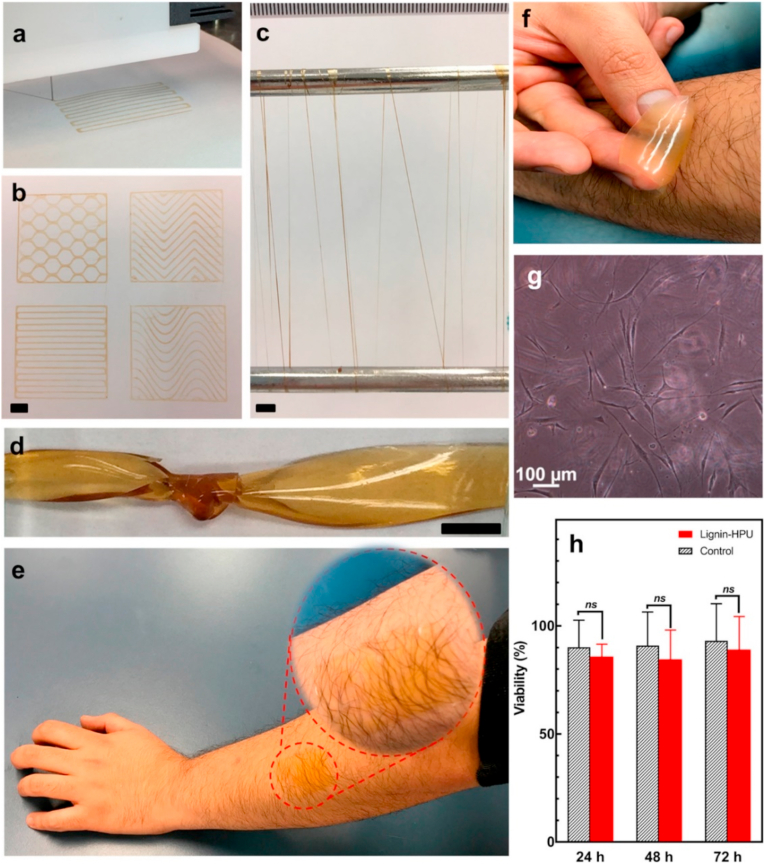
Different forms of lignin-HPU hydrogel: (a) extruding the lignin-HPU ink from the 3D printer nozzle, (b) various patterns printed from lignin-HPU hydrogels, (c) dry-spun hydrogel fibers from lignin-HPU, and (d) a knot formed with a fully swollen lignin-HPU hydrogel films. Scale bars: 5 mm. (e) Lignin-HPU patch on arm, (f) peeling off the hydrogel film without any attached hair and without any pain, (g) human dermal fibroblast cells on lignin-HPU film, (h) viability of human dermal fibroblast cells on lignin-HPU film versus controls (no material) at over 1, 2 and 3 days Reproduced from Ref. [177] with permission from ACS Publications. Copyright 2018.
Fig. 15
Fig. 15
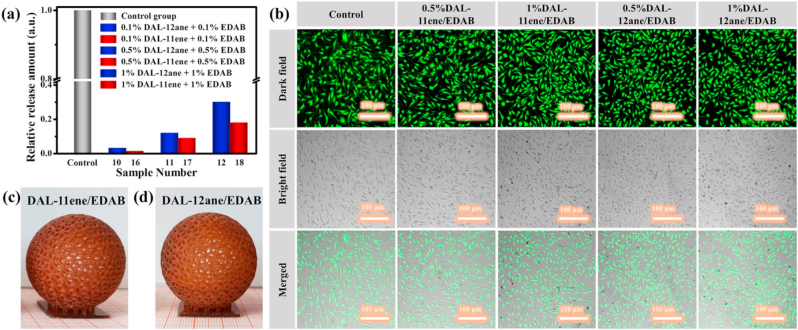
(a) Relative release amount of PIs from samples using DAL-12ane/EDAB and DAL-11ene/EDAB as PIs. (b) Confocal laser scanning microscope images of L929 cells incubated on poly PEGDA tablet fabricated by using different PIs. Hollow spheres fabricated by DLP 3D printed using HDDA as a monomer and (c) DAL-11ene/EDAB or (d) DAL-12ane/EDAB as PIs. Reproduced from Ref. [179] with permission from ACS Publications. Copyright 2020.

References

    1. Steinbüchel A., Hofrichter M. Wiley-VCH; Weinheim: 2001. Biopolymers : Biology, Chemistry, Biotechnology, Applications Volume 1, Volume 1.
    1. Tsegaye B., Balomajumder C., Roy P. Microbial delignification and hydrolysis of lignocellulosic biomass to enhance biofuel production: an overview and future prospect. Bulletin of the National Research Centre 43(1) 2019
    1. S. Schoenherr, M. Ebrahimi, P. Czermak, Lignin degradation processes and the purification of valuable products, Lignin - Trends and Applications2018.
    1. Cao L., Yu I.K.M., Liu Y., Ruan X., Tsang D.C.W., Hunt A.J., Ok Y.S., Song H., Zhang S. Lignin valorization for the production of renewable chemicals: state-of-the-art review and future prospects. Bioresour. Technol. 2018;269:465–475. - PubMed
    1. Research G.V. Lignin market size, share & trends analysis report by product (Ligno-Sulphonates, kraft, organosolv), by application (macromolecule, aromatic) By Region, And Segment Forecasts, 2020-2027. 2020 https://www.grandviewresearch.com/industry-analysis/lignin-market

LinkOut - more resources