


Skeletal Muscle and Childhood Cancer: Where are we now and where we go from here
- PMID: 34541550
- PMCID: PMC8445321
- DOI: 10.1002/aac2.12027
Skeletal Muscle and Childhood Cancer: Where are we now and where we go from here
Abstract
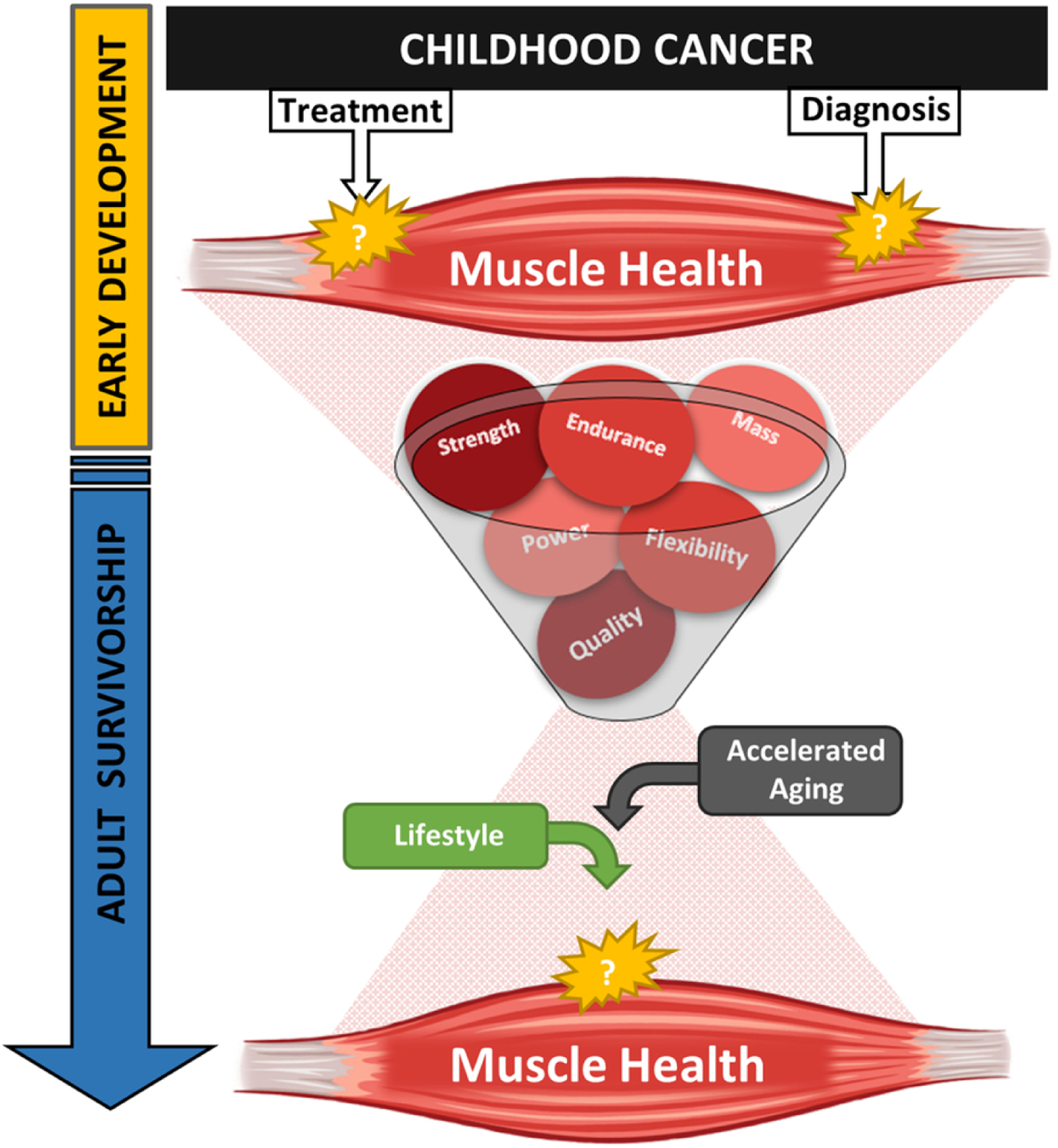
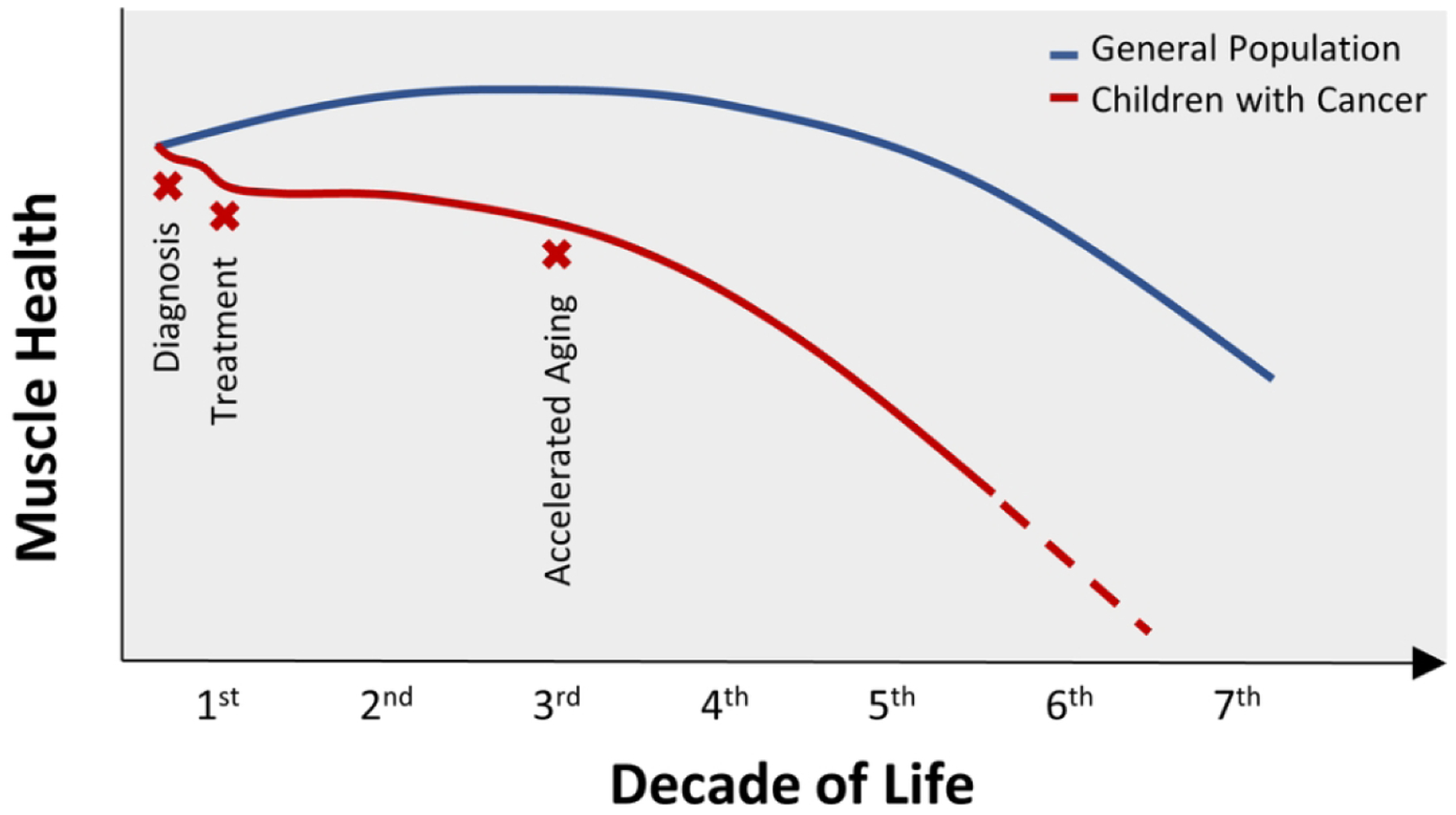
Skeletal muscle (muscle) is essential for physical health and for metabolic integrity, with sarcopenia (progressive muscle mass loss and weakness), a pre-curser of aging and chronic disease. Loss of lean mass and muscle quality (force generation per unit of muscle) in the general population are associated with fatigue, weakness, and slowed walking speed, eventually interfering with the ability to maintain physical independence, and impacting participation in social roles and quality of life. Muscle mass and strength impairments are also documented during childhood cancer treatment, which often persist into adult survivorship, and contribute to an aging phenotype in this vulnerable population. Although several treatment exposures appear to confer increased risk for loss of mass and strength that persists after therapy, the pathophysiology responsible for poor muscle quantity and quality is not well understood in the childhood cancer survivor population. This is partly due to limited access to both pediatric and adult survivor muscle tissue samples, and to difficulties surrounding non-invasive investigative approaches for muscle assessment. Because muscle accounts for just under half of the body's mass, and is essential for movement, metabolism and metabolic health, understanding mechanisms of injury responsible for both initial and persistent dysfunction is important, and will provide a foundation for intervention. The purpose of this review is to provide an overview of the available evidence describing associations between childhood cancer, its treatment, and muscle outcomes, identifying gaps in current knowledge.
Keywords: childhood cancer; muscle fitness; muscle health; muscle mass; muscle outcomes; muscle quality; skeletal muscle.
Conflict of interest statement
Conflicts of Interest (CoI) CGG has no conflicts of interest to declare. REP has no conflicts of interest to declare. KKN has no conflicts of interest to declare
Figures
References
-
- Siegel RL, Miller KD, Jemal A. Cancer Statistics, 2017. CA Cancer J Clin. 2017;67(1):7–30. - PubMed
-
- SEER Cancer Statistics Review, 1975–2017. National Cancer Institute. https://seer.cancer.gov/csr/1975_2017/, based on November 2019 SEER data submission, posted to the SEER web site, April2020. AccessedAugust 2017.
Grants and funding
LinkOut - more resources
Full Text Sources