A2E-induced inflammation and angiogenesis in RPE cells in vitro are modulated by PPAR-α, -β/δ, -γ, and RXR antagonists and by norbixin
- PMID: 34544906
- PMCID: PMC8507260
- DOI: 10.18632/aging.203558
A2E-induced inflammation and angiogenesis in RPE cells in vitro are modulated by PPAR-α, -β/δ, -γ, and RXR antagonists and by norbixin
Abstract
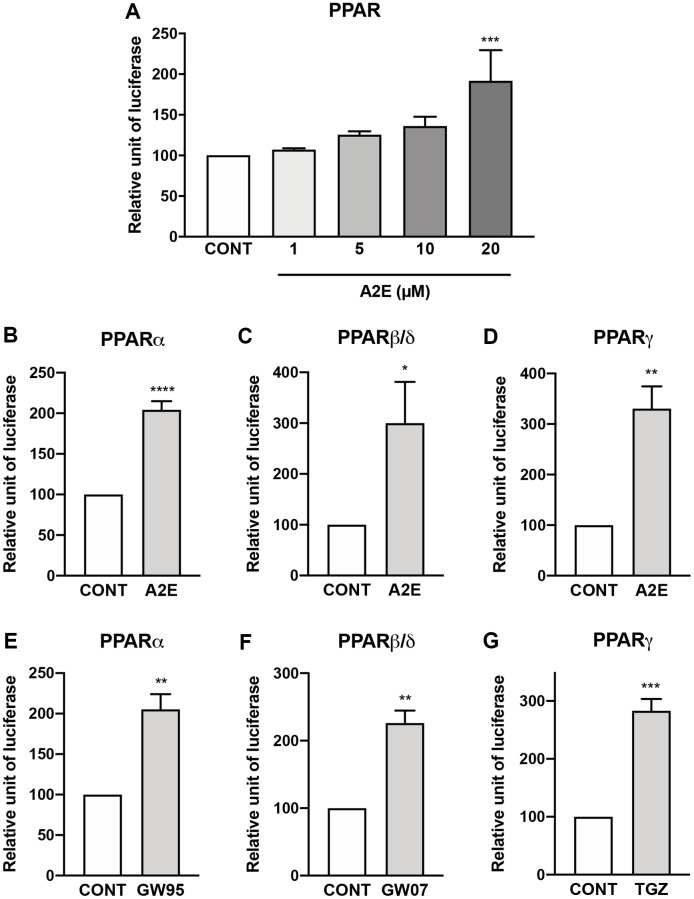
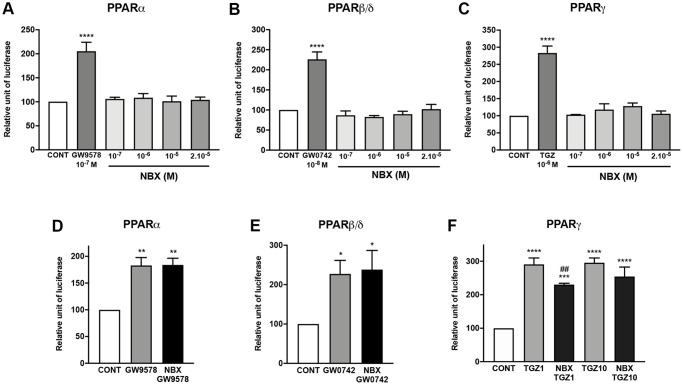
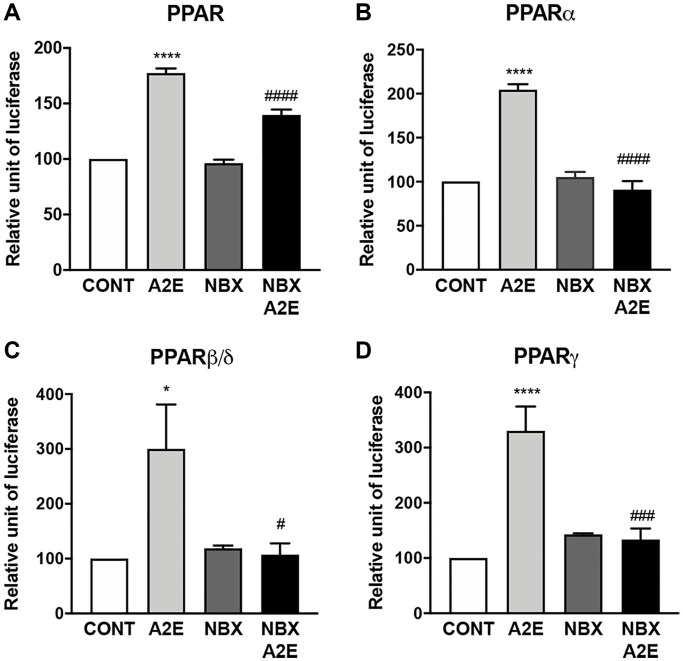
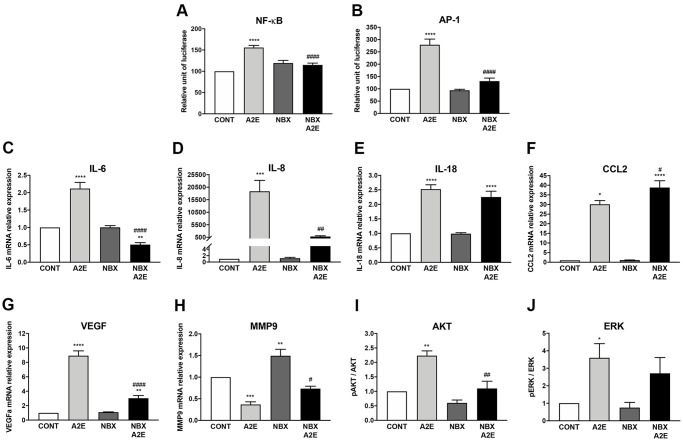
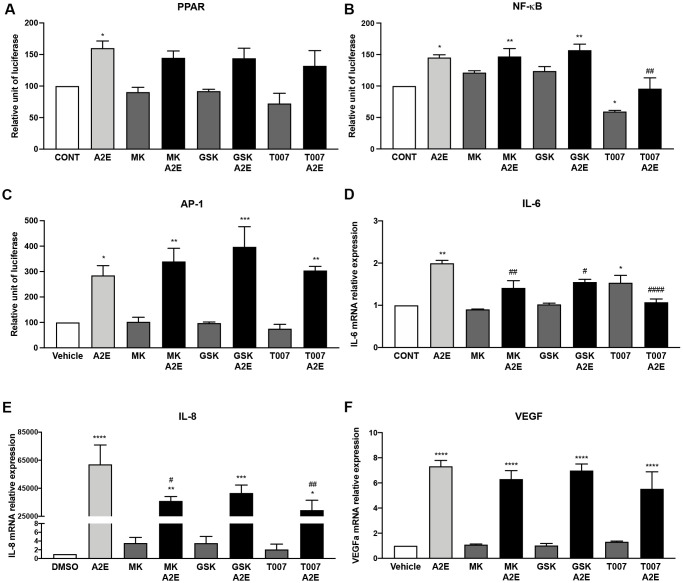
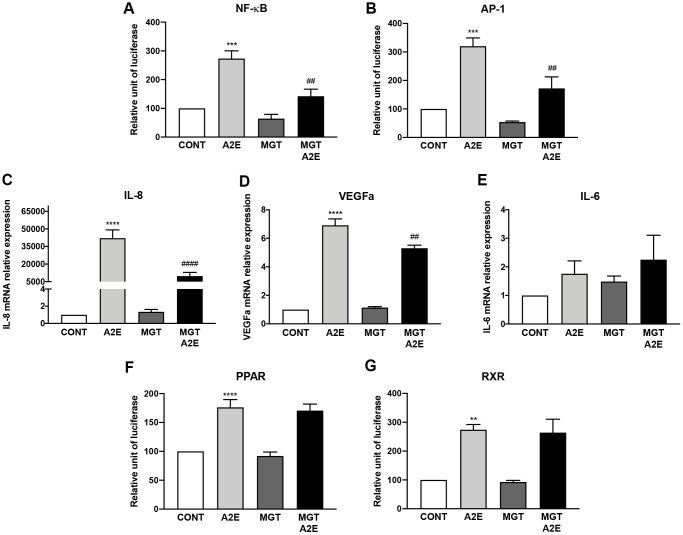
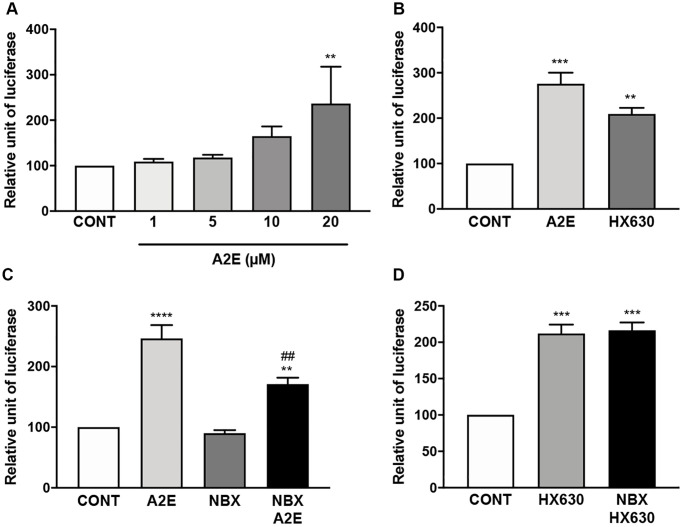
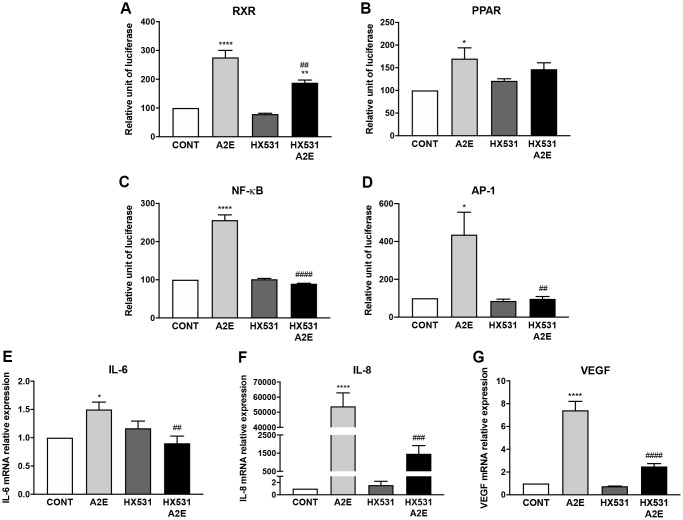
N-retinylidene-N-retinylethanolamine (A2E) plays a central role in age-related macular degeneration (AMD) by inducing angiogenesis and inflammation. A2E effects are mediated at least partly via the retinoic acid receptor (RAR)-α. Here we show that A2E binds and transactivates also peroxisome proliferator-activated receptors (PPAR) and retinoid X receptors (RXR). 9'-cis-norbixin, a di-apocarotenoid is also a ligand of these nuclear receptors (NR). Norbixin inhibits PPAR and RXR transactivation induced by A2E. Moreover, norbixin reduces protein kinase B (AKT) phosphorylation, NF-κB and AP-1 transactivation and mRNA expression of the inflammatory interleukins (IL) -6 and -8 and of vascular endothelial growth factor (VEGF) enhanced by A2E. By contrast, norbixin increases matrix metalloproteinase 9 (MMP9) and C-C motif chemokine ligand 2 (CCL2) mRNA expression in response to A2E. Selective PPAR-α, -β/δ and -γ antagonists inhibit the expression of IL-6 and IL-8 while only the antagonist of PPAR-γ inhibits the transactivation of NF-κB following A2E exposure. In addition, a cocktail of all three PPARs antagonists and also HX531, an antagonist of RXR reproduce norbixin effects on inflammation. Altogether, A2E's deleterious biological effects could be inhibited through PPAR and RXR regulation. Moreover, the modulation of these NR by norbixin may open new avenues for the treatment of AMD.
Keywords: N-retinylidene-N-retinylethanolamine (A2E); norbixin; peroxisome proliferator-activated receptor (PPAR); retinal pigment epithelium (RPE); retinoic X receptor (RXR).
Conflict of interest statement
Figures
References
-
- Rein DB, Wittenborn JS, Zhang X, Honeycutt AA, Lesesne SB, Saaddine J, and Vision Health Cost-Effectiveness Study Group. Forecasting age-related macular degeneration through the year 2050: the potential impact of new treatments. Arch Ophthalmol. 2009; 127:533–40. 10.1001/archophthalmol.2009.58 - DOI - PubMed
-
- Ablonczy Z, Higbee D, Anderson DM, Dahrouj M, Grey AC, Gutierrez D, Koutalos Y, Schey KL, Hanneken A, Crouch RK. Lack of correlation between the spatial distribution of A2E and lipofuscin fluorescence in the human retinal pigment epithelium. Invest Ophthalmol Vis Sci. 2013; 54:5535–42. 10.1167/iovs.13-12250 - DOI - PMC - PubMed
-
- Sparrow JR, Nakanishi K, Parish CA. The lipofuscin fluorophore A2E mediates blue light-induced damage to retinal pigmented epithelial cells. Invest Ophthalmol Vis Sci. 2000; 41:1981–89. - PubMed
Publication types
MeSH terms
Substances
LinkOut - more resources
Full Text Sources
Medical
Miscellaneous