Comparative Study
. 2021 Sep 21;326(11):1034-1044.
doi: 10.1001/jama.2021.13346.

Association Between Transcatheter Aortic Valve Replacement for Bicuspid vs Tricuspid Aortic Stenosis and Mortality or Stroke Among Patients at Low Surgical Risk

Affiliations
Comparative Study

Association Between Transcatheter Aortic Valve Replacement for Bicuspid vs Tricuspid Aortic Stenosis and Mortality or Stroke Among Patients at Low Surgical Risk

Raj R Makkar et al. JAMA. .

Abstract

Importance: There are limited data on outcomes of transcatheter aortic valve replacement (TAVR) for bicuspid aortic stenosis in patients at low surgical risk.

Objective: To compare the outcomes of TAVR with a balloon-expandable valve for bicuspid vs tricuspid aortic stenosis in patients who are at low surgical risk.

Design, setting, and participants: Registry-based cohort study of patients undergoing TAVR at 684 US centers. Participants were enrolled in the Society of Thoracic Surgeons (STS)/American College of Cardiology Transcatheter Valve Therapies Registry from June 2015 to October 2020. Among 159 661 patients (7058 bicuspid, 152 603 tricuspid), 37 660 patients (3243 bicuspid and 34 417 tricuspid) who were at low surgical risk (defined as STS risk score <3%) were included in the analysis.

Exposures: TAVR for bicuspid vs tricuspid aortic stenosis.

Main outcomes and measures: Coprimary outcomes were 30-day and 1-year mortality and stroke. Secondary outcomes included procedural complications and valve hemodynamics.

Results: Among 159 661 patients (7058 bicuspid; 152 603 tricuspid), 3168 propensity-matched pairs of patients with bicuspid and tricuspid aortic stenosis at low surgical risk were analyzed (mean age, 69 years; 69.8% men; mean [SD] STS-predicted risk of mortality, 1.7% [0.6%] for bicuspid and 1.7% [0.7%] for tricuspid). There was no significant difference between the bicuspid and tricuspid groups' rates of death at 30 days (0.9% vs 0.8%; hazard ratio [HR], 1.18 [95% CI, 0.68-2.03]; P = .55) and at 1 year (4.6% vs 6.6%; HR, 0.75 [95% CI, 0.55-1.02]; P = .06) or stroke at 30 days (1.4% vs 1.2%; HR, 1.14 [95% CI, 0.73-1.78]; P = .55) and at 1 year (2.0% vs 2.1%; HR 1.03 [95% CI, 0.69-1.53]; P = .89).There were no significant differences between the bicuspid and tricuspid groups in procedural complications, valve hemodynamics (aortic valve gradient: 13.2 mm Hg vs 13.5 mm Hg; absolute risk difference [RD], 0.3 mm Hg [95% CI, -0.9 to 0.3 mm Hg]), and moderate or severe paravalvular leak (3.4% vs 2.1%; absolute RD, 1.3% [95% CI, -0.6% to 3.2%]).

Conclusions and relevance: In this preliminary, registry-based study of propensity-matched patients at low surgical risk who had undergone TAVR for aortic stenosis, patients treated for bicuspid vs tricuspid aortic stenosis had no significant difference in mortality or stroke at 30 days or 1 year. Because of the potential for selection bias and absence of a control group treated surgically for bicuspid aortic stenosis, randomized trials are needed to adequately assess the efficacy and safety of transcatheter aortic valve replacement for bicuspid aortic stenosis in patients at low surgical risk.


Conflict of interest statement

Conflict of Interest Disclosures: Dr Makkar reported receiving research grants from Edwards Lifesciences, Medtronic, Abbott, and Boston Scientific; receiving personal fees from Edwards Lifesciences for travel. Dr Chakravarty reported other from Edwards Lifesciences, Abbott, Medtronic, and Boston Scientific (consultant and proctor) during the conduct of the study. Dr Shah reported personal fees from Edwards Lifesciences; and grants from Medtronic and Abbott during the conduct of the study. Dr Kaneko reported personal fees from Edwards Lifesciences during the conduct of the study; and personal fees from Medtronic and Abbott outside the submitted work. Dr Rinaldi reported personal fees from Edwards Lifesciences, Abbott Vascular, and Boston Scientific during the conduct of the study. Dr Babaliaros reported personal fees from Edwards Lifesciences and Abbott Vascular (consultant); and other from Transmural Systems (owns equity) outside the submitted work. Dr Vemulapalli reported grants from the American College of Cardiology (ACC), the Society of Thoracic Surgeons (STS), Boston Scientific, and Abbott Vascular outside the submitted work; grants or contracts from the US Food and Drug Administration, National Institutes of Health, and Cytokinetics; and serving on an advisory board or consulting for Janssen, HeartFlow, Boston Scientific, and the American College of Physicians. Dr Kodali reported grants from Edwards Lifesciences, Medtronic, Boston Scientific, and Abbott Vascular (research support); personal fees from Admedus (consultant) and Dura Biotech (senior advisory board); other from Thubrikar Aortic Valve and MicroInterventional Devices (owns equity and senior advisory board), and TriFlo, Adona, and Supira (owns equity and consultant) outside the submitted work. Dr Mack reported nonfinancial support from Abbott, Edwards Lifesciences, and Medtronic during the conduct of the study. Dr Leon reported grants from Edwards Lifesciences during the conduct of the study. Dr Thourani reported grants from Edwards Lifesciences outside the submitted work. No other disclosures were reported.

Figures

Figure 1.
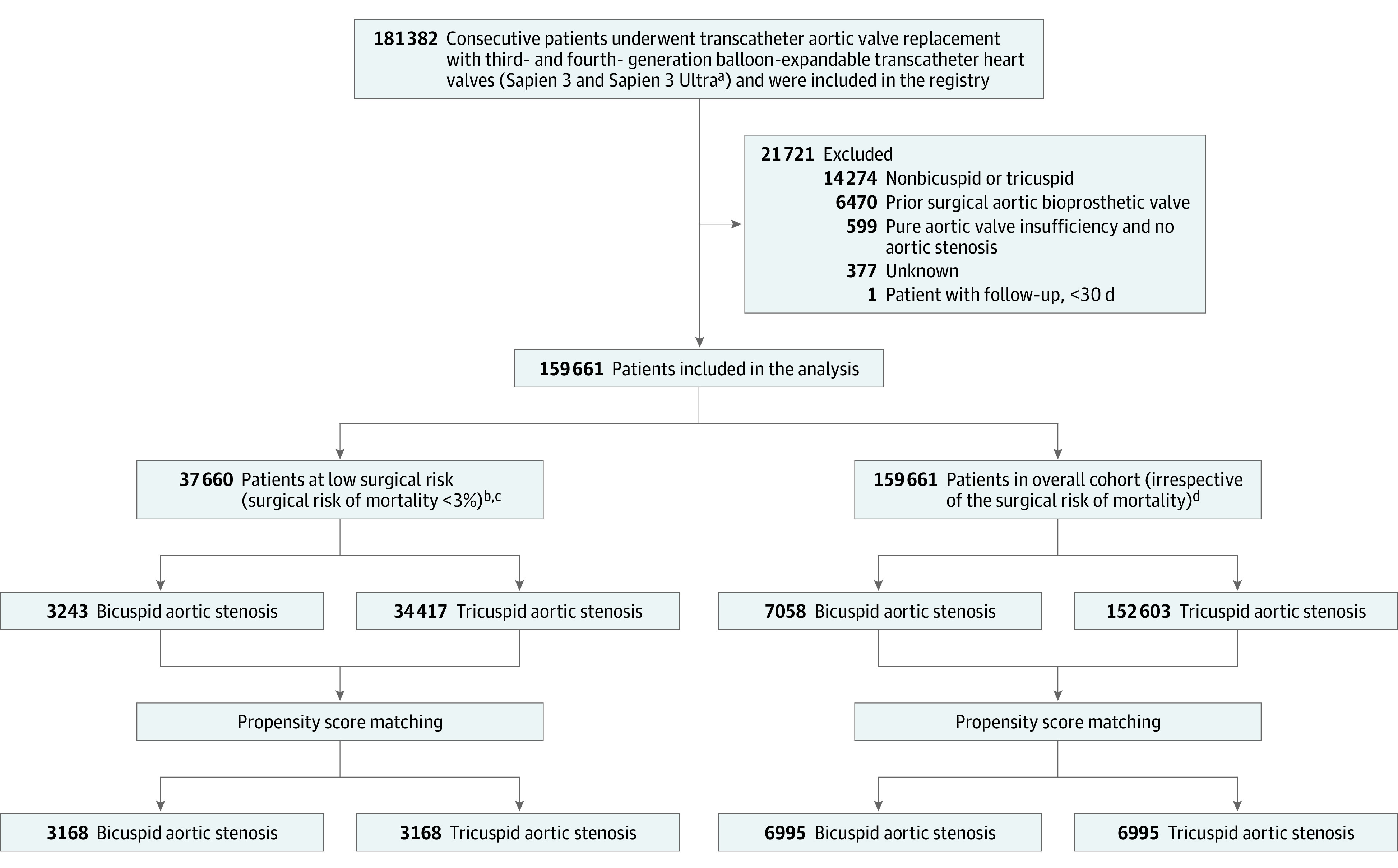
Figure 1.. Development of the Study Cohort
Patients with aortic stenosis undergoing transcatheter aortic valve replacement with the contemporary balloon-expandable transcatheter heart valves were enrolled in the Society of Thoracic Surgeons (STS)/American College of Cardiology Transcatheter Valve Therapy Registry. aCompared with the third-generation balloon-expandable valves, the fourth-generation balloon-expandable transcatheter heart valve has a textured polyethylene terephthalate outer skirt with 40% increased height, which was designed to promote enhanced healing and endothelialization. bSurgical risk of mortality was assessed with the STS Predicted Risk of Mortality score (score range, 0%-100% [higher scores indicate higher risk of death within 30 days after surgery]). cThe mean (SD) risk of death at 30 days for patients in the low-risk cohort was 1.7% (0.6%). dThe mean (SD) risk of death at 30 days in the overall cohort was 4.0% (3.6%).
Figure 2.
Figure 2.. Cumulative Event Rates of All-Cause Mortality or Stroke Among Patients at Low Surgical Risk With Bicuspid and Tricuspid Aortic Stenosis Who Underwent Transcatheter Aortic Valve Replacement
Cumulative event rates of all-cause mortality, stroke, and combined all-cause mortality or stroke after transcatheter aortic valve replacement in propensity-matched patients with bicuspid and tricuspid aortic stenosis. Median follow-up for the bicuspid aortic stenosis group was 43 days (IQR, 31-363) and for the tricuspid aortic stenosis group, 48 days (IQR, 33-365). P values were obtained from Cox proportional hazards models. Data for the full cohort are in eFigure 10 in the Supplement.

Comment in

References

    1. Sillesen AS, Vøgg O, Pihl C, et al. . Prevalence of bicuspid aortic valve and associated aortopathy in newborns in copenhagen, denmark. JAMA. 2021;325(6):561-567. doi:10.1001/jama.2020.27205 - DOI - PMC - PubMed
    1. Curfman G. Bicuspid aortic valve—a common form of structural heart disease. JAMA. 2021;325(6):540-541. doi:10.1001/jama.2021.0109 - DOI - PubMed
    1. Masri A, Svensson LG, Griffin BP, Desai MY. Contemporary natural history of bicuspid aortic valve disease: a systematic review. Heart. 2017;103(17):1323-1330. doi:10.1136/heartjnl-2016-309916 - DOI - PubMed
    1. Husso A, Airaksinen J, Juvonen T, et al. . Transcatheter and surgical aortic valve replacement in patients with bicuspid aortic valve. Clin Res Cardiol. 2021;110(3):429-439. doi:10.1007/s00392-020-01761-3 - DOI - PMC - PubMed
    1. Elbadawi A, Saad M, Elgendy IY, et al. . Temporal trends and outcomes of transcatheter versus surgical aortic valve replacement for bicuspid aortic valve stenosis. JACC Cardiovasc Interv. 2019;12(18):1811-1822. doi:10.1016/j.jcin.2019.06.037 - DOI - PubMed

Publication types