


Androgen-induced insulin resistance is ameliorated by deletion of hepatic androgen receptor in females
- PMID: 34547140
- PMCID: PMC9097557
- DOI: 10.1096/fj.202100961R
Androgen-induced insulin resistance is ameliorated by deletion of hepatic androgen receptor in females
Abstract
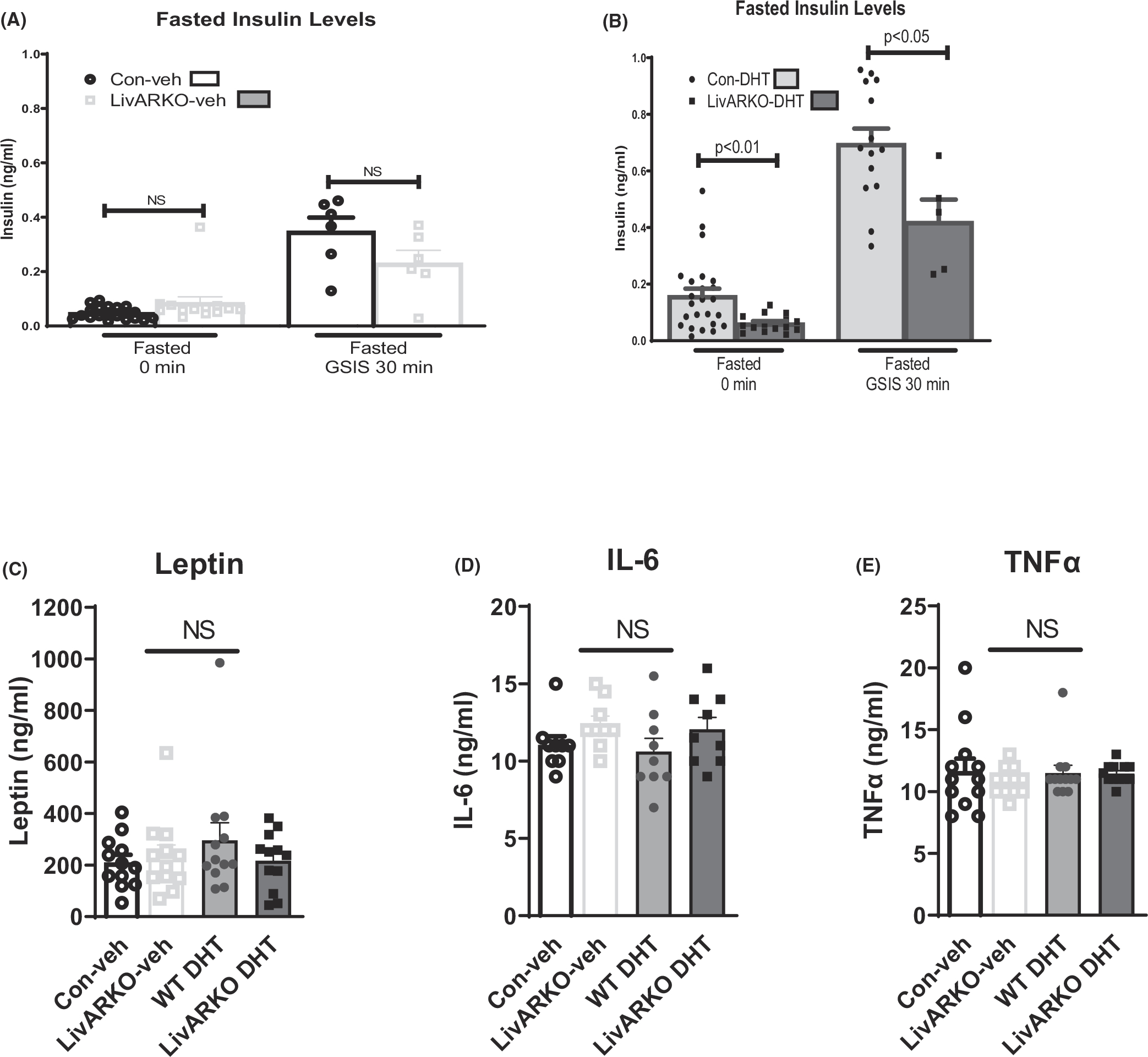
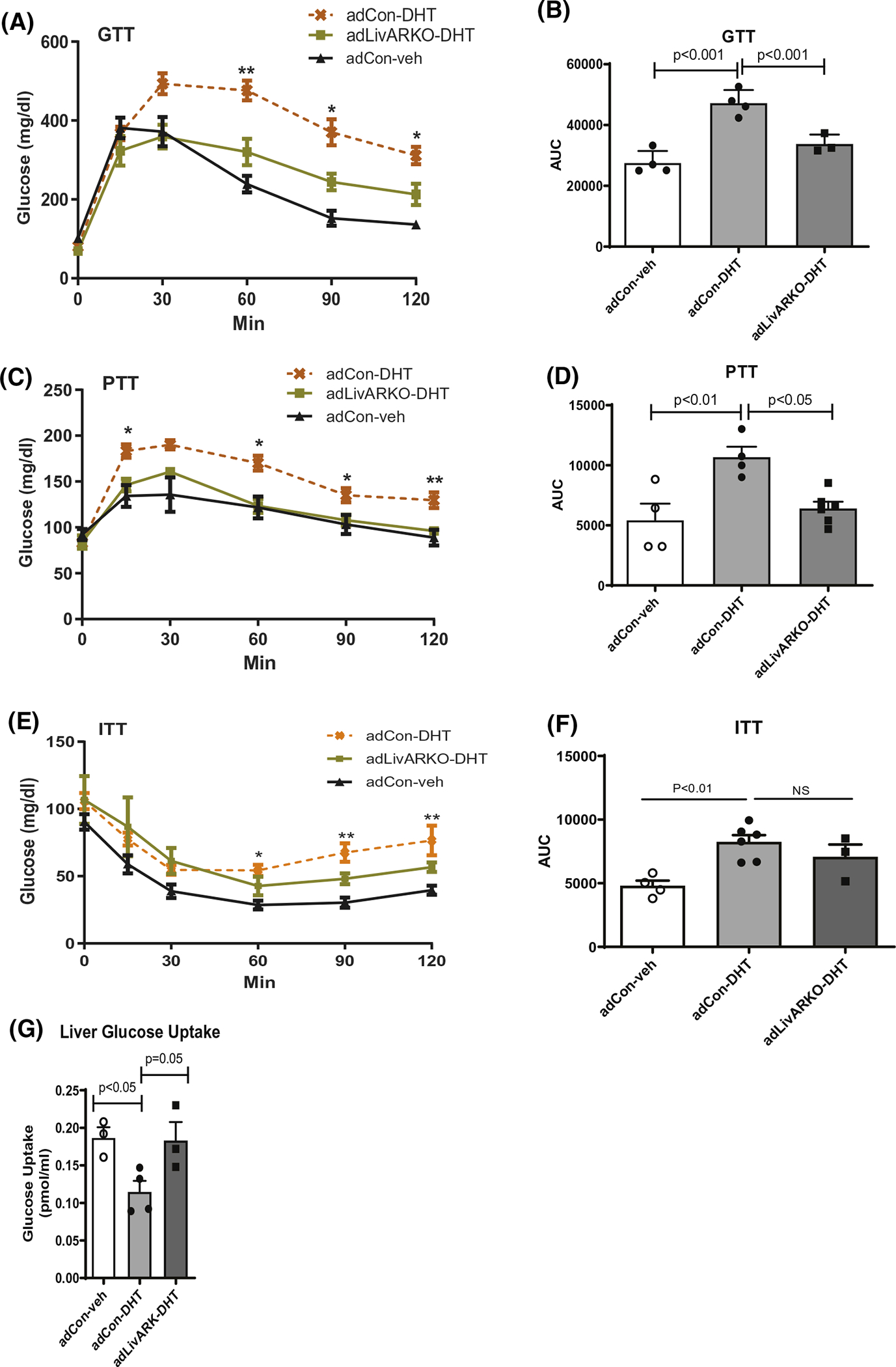
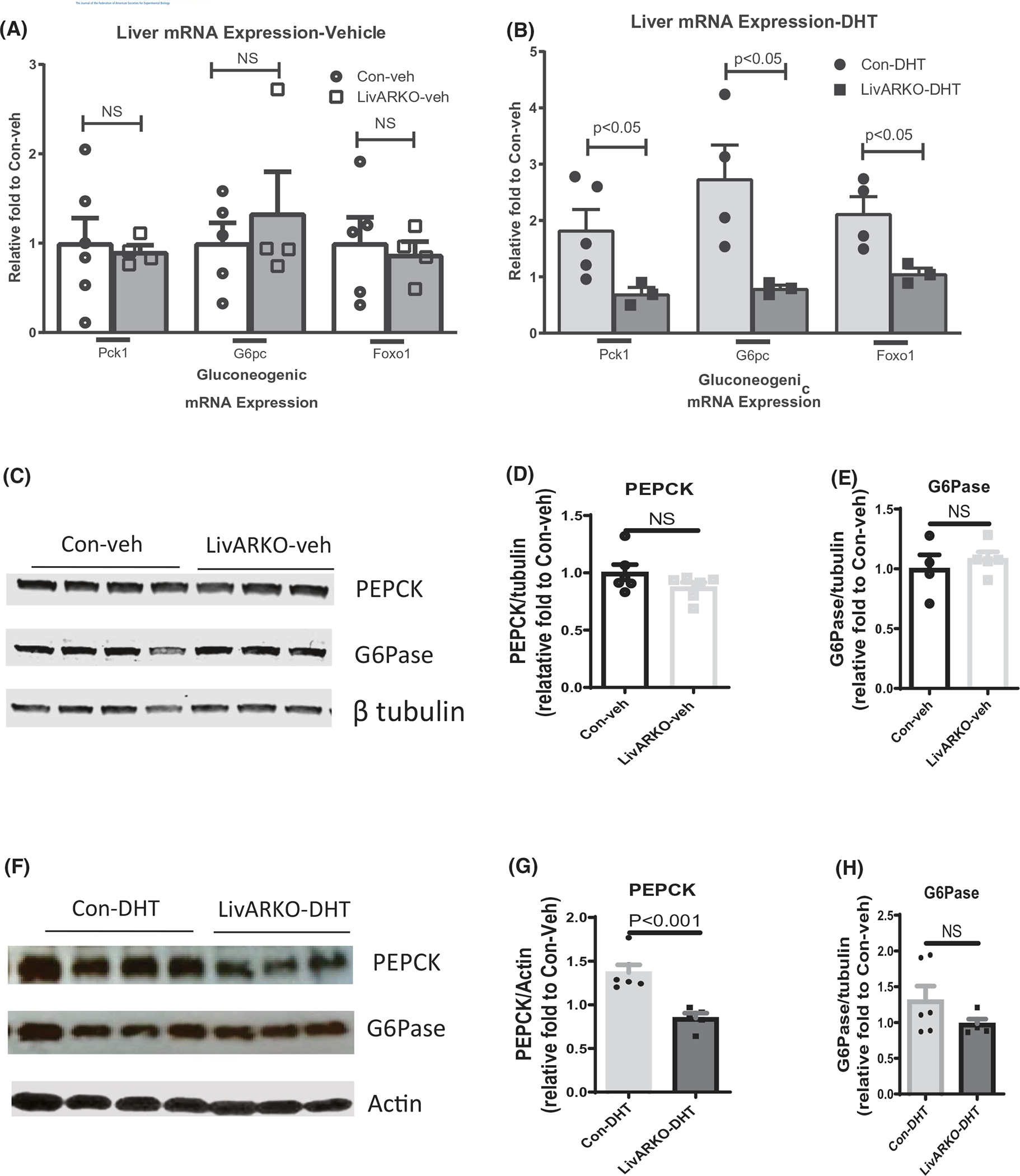
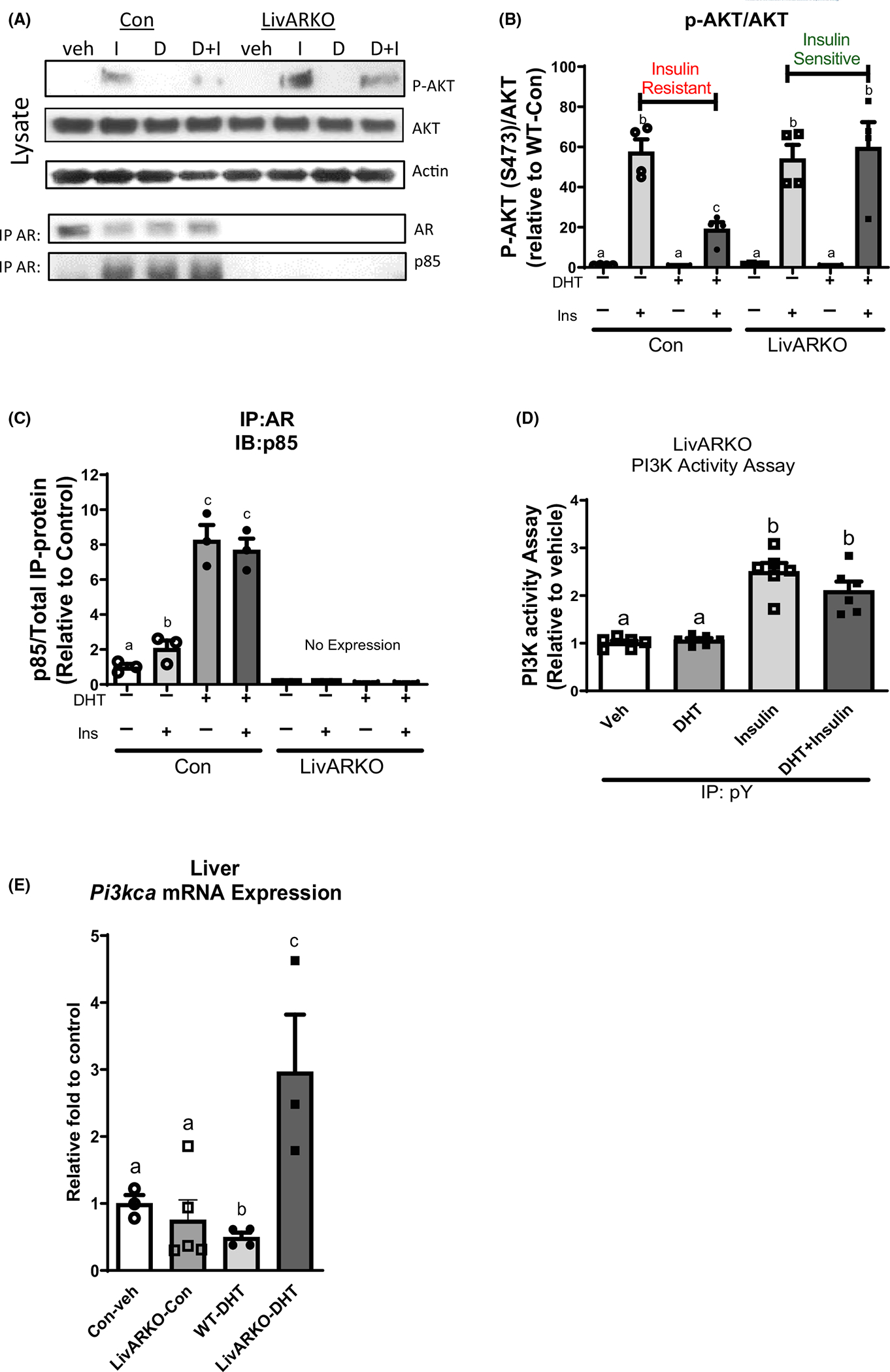
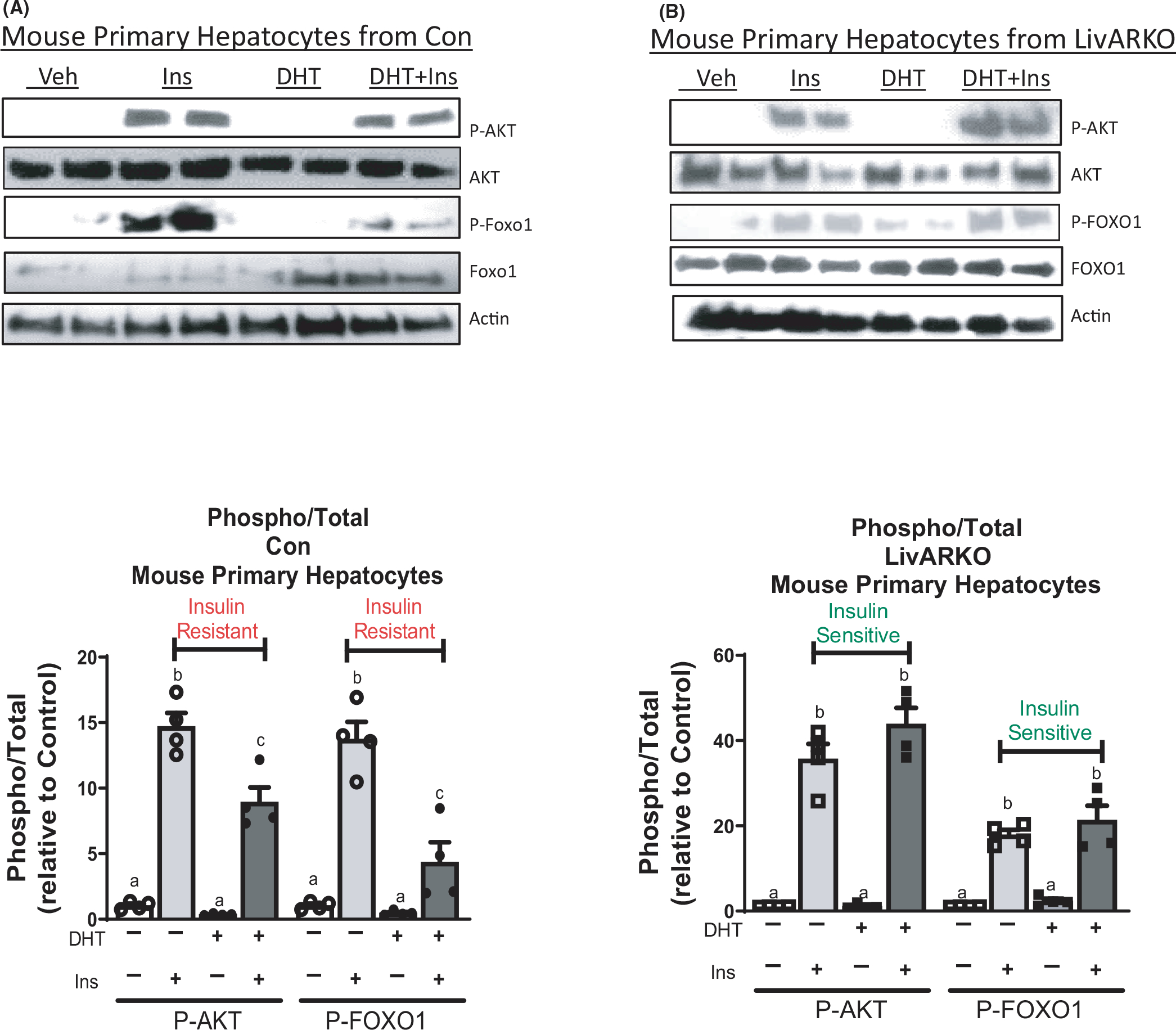
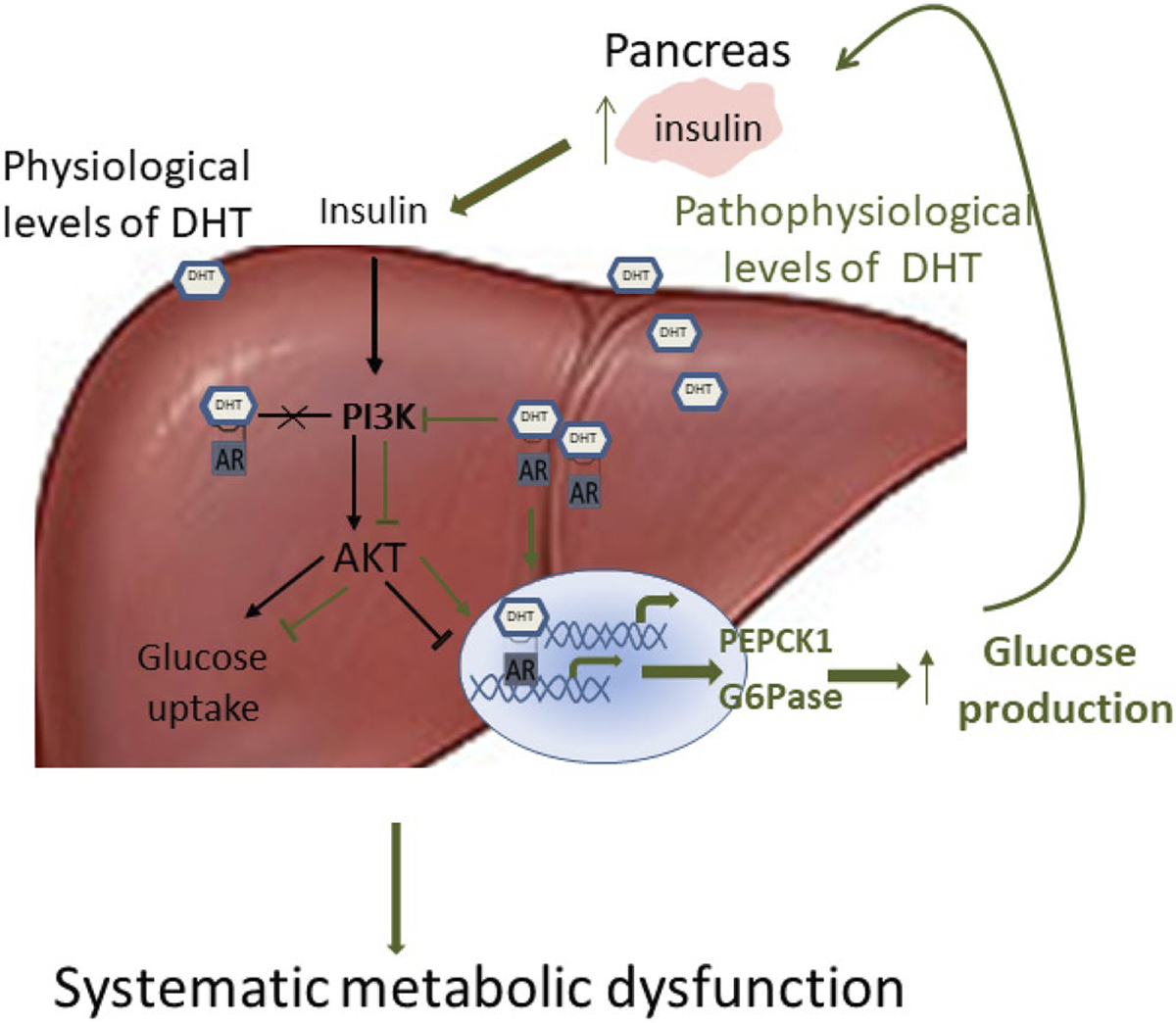
Androgen excess is one of the most common endocrine disorders of reproductive-aged women, affecting up to 20% of this population. Women with elevated androgens often exhibit hyperinsulinemia and insulin resistance. The mechanisms of how elevated androgens affect metabolic function are not clear. Hyperandrogenemia in a dihydrotestosterone (DHT)-treated female mouse model induces whole body insulin resistance possibly through activation of the hepatic androgen receptor (AR). We investigated the role of hepatocyte AR in hyperandrogenemia-induced metabolic dysfunction by using several approaches to delete hepatic AR via animal-, cell-, and clinical-based methodologies. We conditionally disrupted hepatocyte AR in female mice developmentally (LivARKO) or acutely by tail vein injection of an adeno-associated virus with a liver-specific promoter for Cre expression in ARfl/fl mice (adLivARKO). We observed normal metabolic function in littermate female Control (ARfl/fl ) and LivARKO (ARfl/fl ; Cre+/- ) mice. Following chronic DHT treatment, female Control mice treated with DHT (Con-DHT) developed impaired glucose tolerance, pyruvate tolerance, and insulin tolerance, not observed in LivARKO mice treated with DHT (LivARKO-DHT). Furthermore, during an euglycemic hyperinsulinemic clamp, the glucose infusion rate was improved in LivARKO-DHT mice compared to Con-DHT mice. Liver from LivARKO, and primary hepatocytes derived from LivARKO, and adLivARKO mice were protected from DHT-induced insulin resistance and increased gluconeogenesis. These data support a paradigm in which elevated androgens in females disrupt metabolic function via hepatic AR and insulin sensitivity was restored by deletion of hepatic AR.
Keywords: PCOS; androgen; androgen receptor; glucose; insulin signaling; liver.
© 2021 Federation of American Societies for Experimental Biology.
Figures


References
-
- Azziz R, Carmina E, Chen Z, et al. Polycystic ovary syndrome. Nat Rev Dis Primers. 2016;2:16057. - PubMed
-
- Escobar-Morreale HF, Alvarez-Blasco F, Botella-Carretero JI, Luque-Ramirez M. The striking similarities in the metabolic associations of female androgen excess and male androgen deficiency. Hum Reprod. 2014;29:2083–2091. - PubMed
-
- Barber TM, Dimitriadis GK, Andreou A, Franks S. Polycystic ovary syndrome: insight into pathogenesis and a common association with insulin resistance. Clin Med. 2015;15(suppl 6):s72–s76. - PubMed
Publication types
MeSH terms
Substances
Grants and funding
LinkOut - more resources
Full Text Sources
Molecular Biology Databases
Research Materials
