. 2021 Dec:97:31-39.
doi: 10.1016/j.alcohol.2021.09.004. Epub 2021 Sep 20.

Effect of ketamine on binge drinking patterns in crossed high alcohol-preferring (cHAP) mice

Affiliations

Effect of ketamine on binge drinking patterns in crossed high alcohol-preferring (cHAP) mice

Cherish E Ardinger et al. Alcohol. 2021 Dec.

Abstract

Background: Previous research has demonstrated the utility of subanesthetic doses of ketamine in decreasing binge (Drinking-in-the-Dark, or DID) 20% alcohol intake in female inbred (C57BL/6J) mice when administered 12 hours prior to alcohol access (Crowley et al., 2019). In the current study, we assess the efficacy of a similar ketamine pretreatment using male and female selectively bred, crossed High Alcohol Preferring (cHAP) mice, which also drink to intoxication, but are not inbred. We hypothesized that ketamine would decrease binge alcohol intake without impacting locomotor activity.

Methods and results: Subjects were 28 adult cHAP mice. Mice first received a 2-week DID drinking history using 2-h/day alcohol access. On day 12, prior to ketamine treatment, the average blood ethanol concentration (BEC) was 130 mg/dL, confirming that mice reliably reached intoxicating BECs. On day 15, mice were given 0, 3, or 10 mg/kg of ketamine 12 hours prior to the DID session. Ketamine did not decrease total (2-h) alcohol consumption or locomotion. Interestingly, the 10 mg/kg dose of ketamine did alter the drinking pattern in male mice, decreasing front-loading for a single day. We opted to then increase the doses to 32 or 100 mg/kg (i.e., an anesthetic dose) two days after the initial treatment, keeping the saline control. Mice of both sexes decreased total binge alcohol intake at the 100 mg/kg dose only, but again, the effect only lasted one day.

Conclusions: The current study found that cHAP mice reached more than double the BECs observed in C57BL/6J mice during DID, but did not respond to subanesthetic ketamine. Modest efficacy was found for ketamine pretreatment at anesthetic doses. Differences in findings may be due to differential intake during DID, or genetic differences between C57Bl/6J mice and cHAP mice. Drug efficacy in multiple models is important for discovering reliable pharmacotherapies for alcoholism.

Keywords: alcohol; binge drinking; cHAP mice; drinking patterns; front-loading; ketamine; selectively bred mice.


Conflict of interest statement

Declaration of competing interest None.

Figures

Figure 1.
Figure 1.
Timeline of experiment.
Figure 2.
Figure 2.
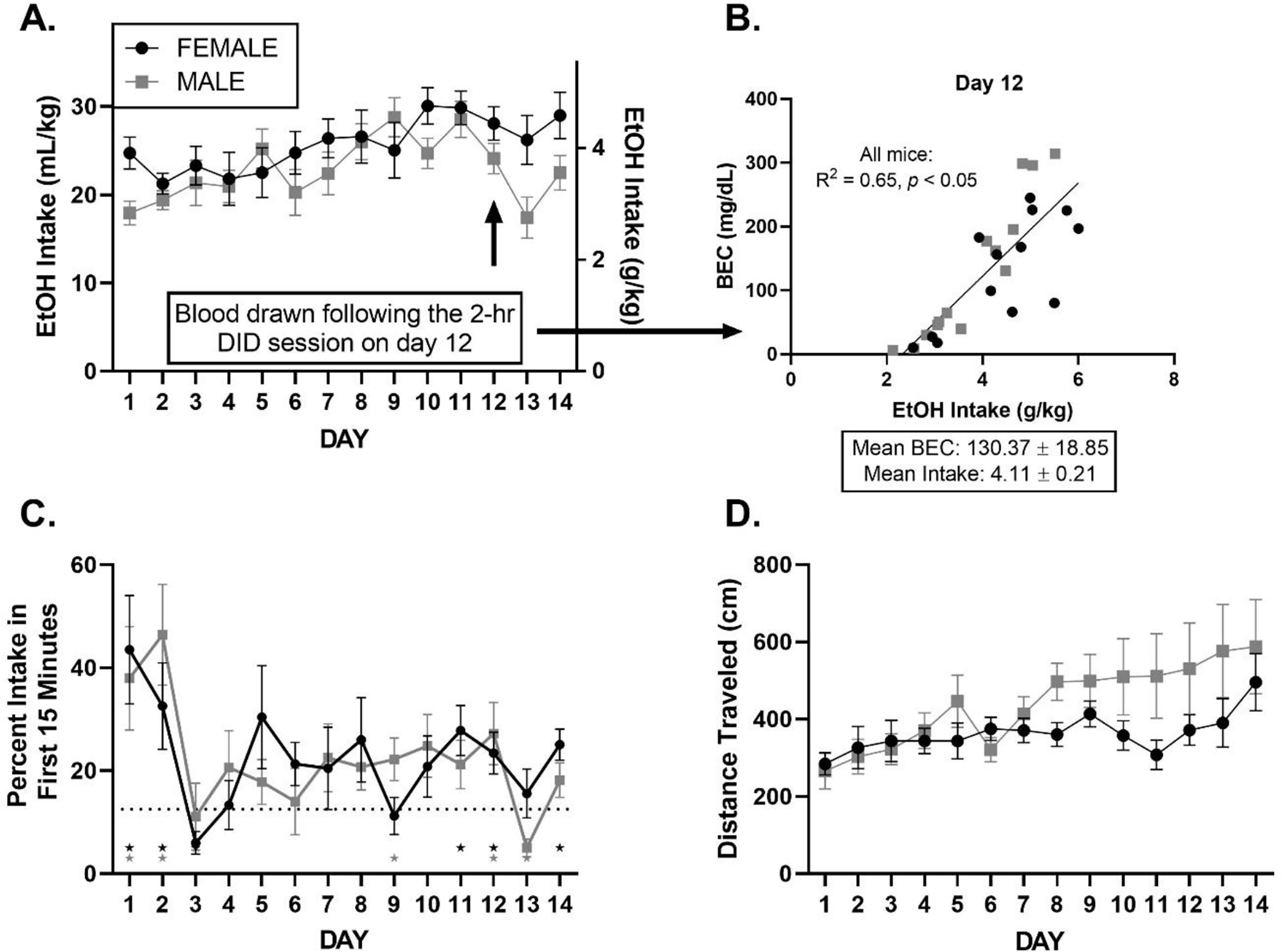
All graphs are displayed as mean ± SEM over days of 2-hr DID prior to ketamine or saline treatment. A: EtOH Drinking History. Total 20% EtOH intake varies over days. B. BEC. There is a relationship between EtOH intake and BEC during the 2-week drinking history. Intake (g/kg) and BEC (mg/dL) mean ± SEM are presented. C: Frontloading: Percent of EtOH intake within the first 15 minutes. Stars indicate that mice consumed significantly higher than 12.5% (dashed line) of their total intake within the first 15 minutes of the DID session on a given day (12.5% represents the frontloading threshold, please see further description in Methods: Statistics). D: Locomotion varies over days.
Figure 3.
Figure 3.
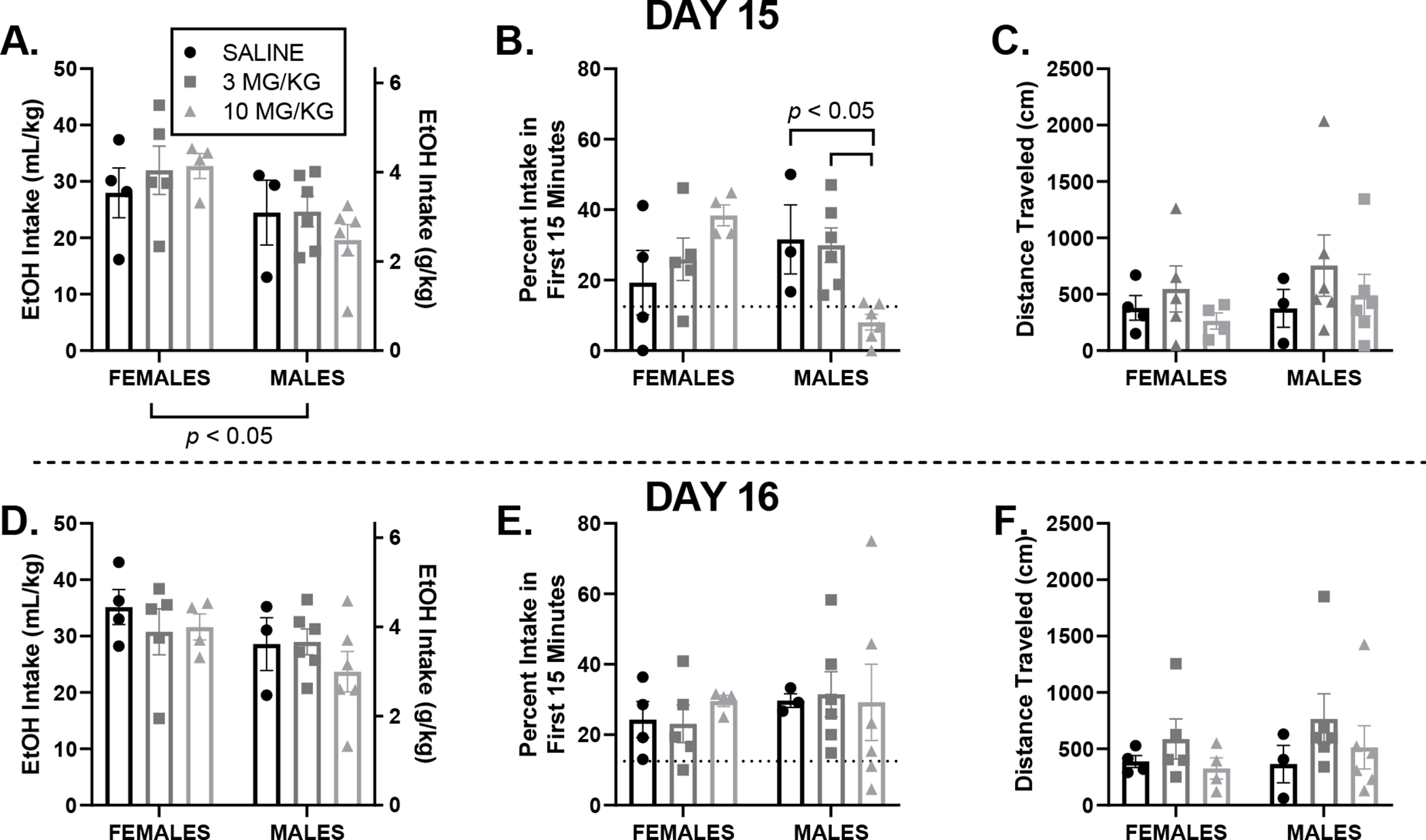
All graphs are displayed as mean ± SEM for day 15 (top) where drinking occurred 12-hours after an injection of saline, 3 or 10 mg/kg ketamine, and day 16 (bottom) one day following assessment of intake post-treatment. A, D: EtOH intake. Total 20% EtOH intake did not differ between sexes or dose groups. B, E: Frontloading: An interaction of sex and dose reveals that males in the 10 mg/kg ketamine group frontloaded significantly less than males in the saline or 3 mg/kg ketamine group on day 15, indicating that 10 mg/kg of ketamine transiently alters drinking patterns in a sex-dependent manner. C, F: Locomotor activity does not significantly differ between sexes or dose groups, indicating that differences observed in frontloading are not caused by sedation.
Figure 4.
Figure 4.
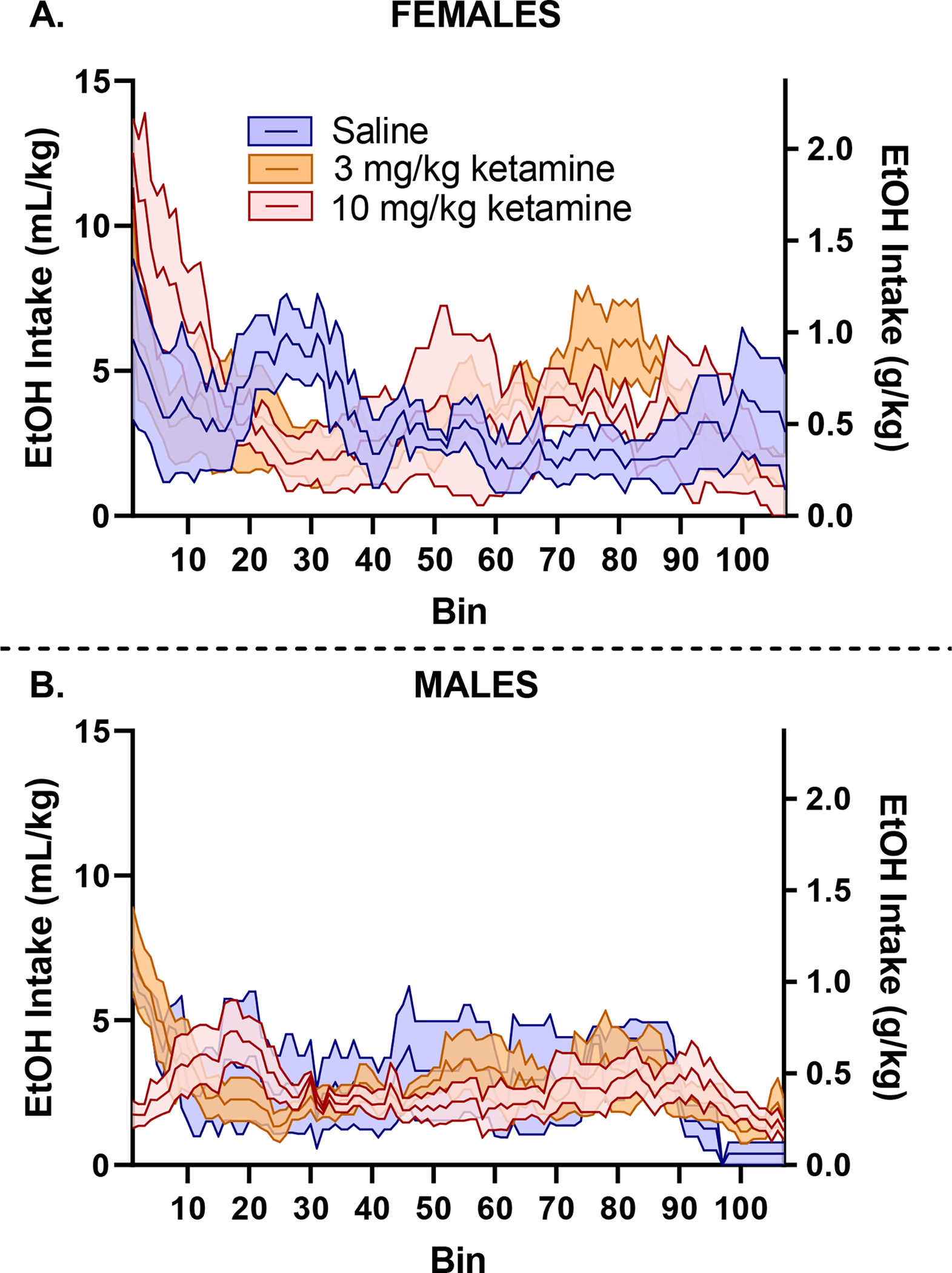
Day 15 intake patterns further demonstrate a decrease in frontloading in male mice who received 10 mg/kg of ketamine (B). No significant changes are observed in females (A).
Figure 5.
Figure 5.
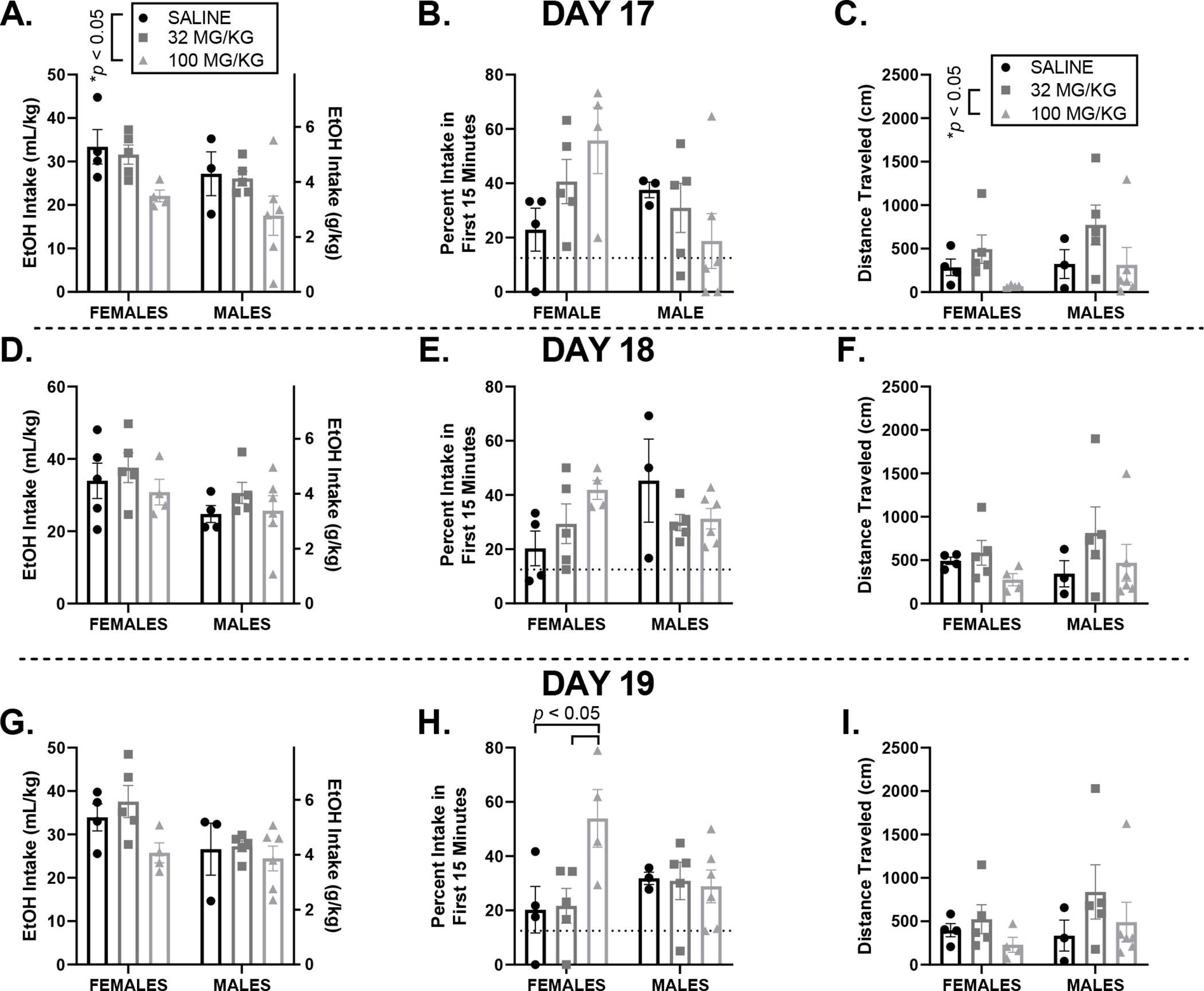
All graphs are displayed as mean ± SEM. Day 17 (top) where drinking occurred 12-hours after an injection of saline, 32 or 100 mg/kg ketamine, and day 18 (middle) one day post-treatment, and day 19 (bottom) two days following treatment. EtOH intake: Total 20% EtOH intake differed between dose groups 12-hours following treatment (Day 17; A), however this decrease in EtOH intake did not last into the next two days where no additional drug was given (days 18 and 19, D and G, respectively). Frontloading: there is no difference in frontloading between sex and dose groups on days 17 (B) and 18 (E), however an interaction of sex and dose on day 19 reveals that females in the 100 mg/kg ketamine group frontloaded significantly more than females in the saline or 32 mg/kg ketamine group (H). Locomotion: Mice in the 100 mg/kg group moved significantly less than mice in the 32 mg/kg group 12-hours following injection (day 17, C). Differences in movement between treatment groups did not persist one (day 18, F) or two (day 19, I) days later.
Figure 6.
Figure 6.
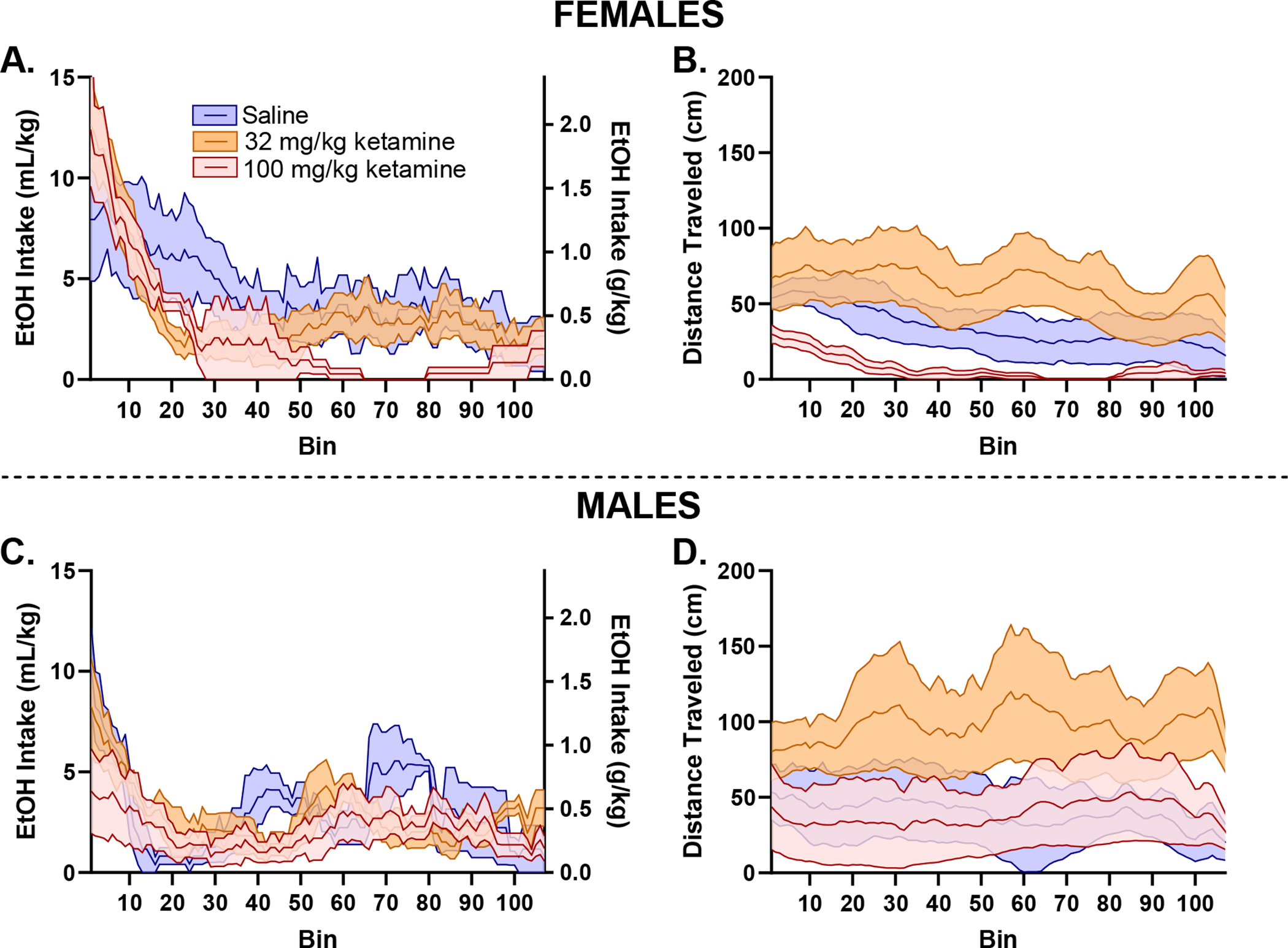
All figures are presented as mean (solid middle line) ± SEM (shaded area). To further investigate our finding that 100 mg/kg of ketamine decreased total EtOH intake and distance travelled, we calculated intake and movement patterns across the DID session on day 17 by sex: females (top), males (bottom). Intake patterns further demonstrate that female mice in the 100 mg/kg group (A) consume a disproportionately high amount in the early part of the 2-hr DID session, potentially resulting in sedation toward the middle of the session (B). Males shown for comparison (C, D). These results indicate that female mice were not sedated from the 100 mg/kg ketamine injection 12-hours prior, but rather the decrease in total distance travelled is driven by the mouse’s frontloading behavior.

References

    1. Abrahao KP, Salinas AG, & Lovinger DM (2017). Alcohol and the Brain: Neuronal Molecular Targets, Synapses, and Circuits. Neuron, 96(6), 1223–1238. doi: 10.1016/j.neuron.2017.10.032 - DOI - PMC - PubMed
    1. Anton RF, Drobes DJ, Voronin K, Durazo-Avizu R, & Moak D (2004). Naltrexone effects on alcohol consumption in a clinical laboratory paradigm: temporal effects of drinking. Psychopharmacology, 173(1), 32–40. doi: 10.1007/s00213-003-1720-7 - DOI - PubMed
    1. Ardinger CE, Grahame NJ, Lapish CC, & Linsenbardt DN (2020). High Alcohol–Preferring Mice Show Reaction to Loss of Ethanol Reward Following Repeated Binge Drinking. Alcoholism: Clinical and Experimental Research, 44(9), 1717–1727. doi: 10.1111/acer.14419 - DOI - PMC - PubMed
    1. Bell RL, Rodd ZA, Lumeng L, Murphy JM, & McBride WJ (2006). REVIEW: The alcohol-preferring P rat and animal models of excessive alcohol drinking. Addiction Biology, 11(3–4), 270–288. doi: 10.1111/j.1369-1600.2005.00029.x - DOI - PubMed
    1. Chandrasekar R (2013). Alcohol and NMDA receptor: current research and future direction. Front Mol Neurosci, 6, 14. doi: 10.3389/fnmol.2013.00014 - DOI - PMC - PubMed

Publication types