


Effectiveness of Text Messaging Interventions on Blood Pressure Control Among Patients With Hypertension: Systematic Review of Randomized Controlled Trials
- PMID: 34550078
- PMCID: PMC8495578
- DOI: 10.2196/24527
Effectiveness of Text Messaging Interventions on Blood Pressure Control Among Patients With Hypertension: Systematic Review of Randomized Controlled Trials
Abstract
Background: Controlling blood pressure (BP) is an international health concern, and high BP is a major contributor to cardiovascular disease mortality. Evidence has shown that educational interventions directed at patients potentially improve BP control and adherence to medications and lifestyle modifications. In addition, a text messaging intervention has a potential effect on BP control; however, the dosage of a text messaging intervention has not been determined in previous reviews, resulting in difficult application in practice.
Objective: This review aimed to identify the effectiveness of a text messaging intervention on hypertension management with a specific focus on the dosage of text messaging and the type of additional interventions with text messaging.
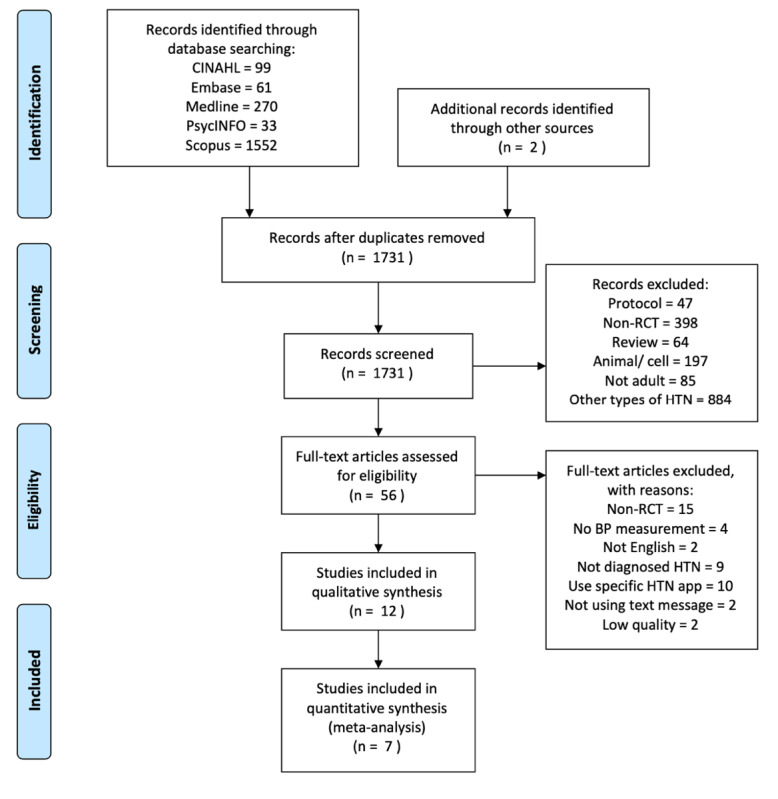
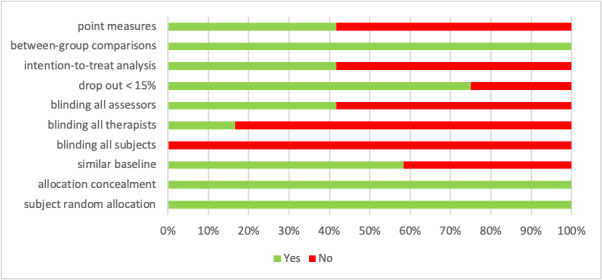
Methods: A systematic review was conducted and reported on in accordance with PRISMA guideline. Participants were aged 18 years and older and diagnosed with primary hypertension. The included studies used text messaging as a component of the intervention. We searched for randomized controlled trials published until June 30, 2020, from the following health-related electronic databases: Embase, Medline, CINAHL Complete, PsycINFO, and Scopus. Data were extracted for qualitative synthesis and meta-analysis. The Physiotherapy Evidence Database Scale was used to assess the methodological quality of each study, and the quality of the included studies was assessed independently by two authors.
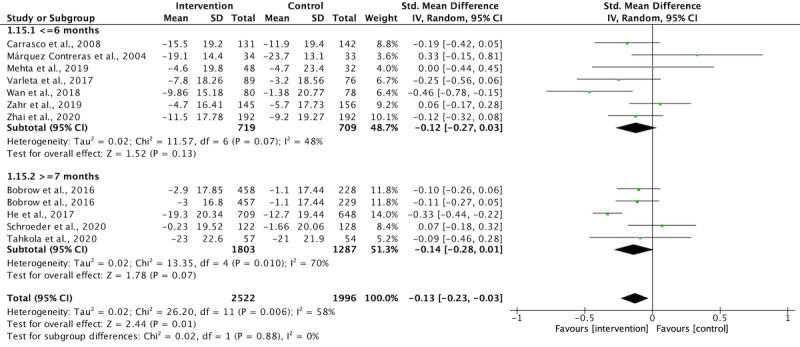
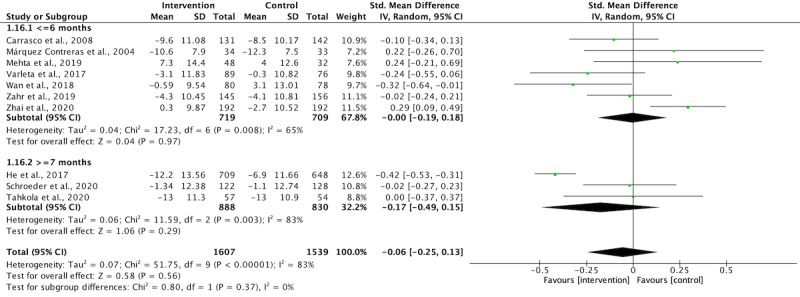
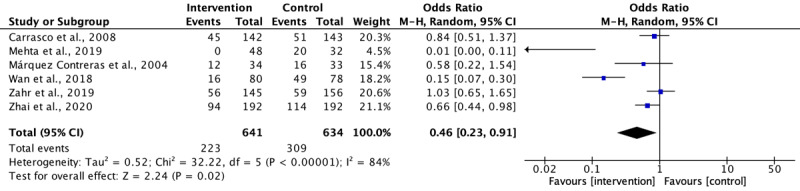
Results: Twelve studies met the inclusion criteria. The overall methodological quality was fair (mean score 5.75). The frequency of text message delivery varied from daily to biweekly. Health education was identified in 4 studies as an additional intervention with text messaging. The overall results showed that the text messaging intervention significantly reduced systolic BP (SBP) but not diastolic BP (DBP). There was no significant difference in BP reduction between studies that lasted 6 months or less and those that lasted more than 7 months. Seven studies that lasted 6 months or less involving 1428 patients with hypertension were pooled for further meta-analysis. Text messages delivered at a lower frequency (once per week or less) had a small effect on SBP reduction (effect size 0.35, P<.01) and DBP reduction (effect size 0.28, P=.01). In addition, the use of a text messaging intervention halved the odds of uncontrolled BP among patients with hypertension in 6 months (odds ratio 0.46, P=.02).
Conclusions: This review found that a text messaging intervention was effective in BP control. One-way text messaging delivered in a weekly manner was suggested to be effective and required fewer resources. Future studies should use different forms of text message and be integrated into other interventions to improve adherence behaviors and BP control among patients with hypertension.
Keywords: blood pressure; hypertension; mHealth; meta-analysis; text messaging.
©Hon Lon Tam, Eliza Mi Ling Wong, Kin Cheung, Siu Fung Chung. Originally published in JMIR mHealth and uHealth (https://mhealth.jmir.org), 22.09.2021.
Conflict of interest statement
Conflicts of Interest: None declared.
Figures
References
-
- GBD 2019 Diseases and Injuries Collaborators Global burden of 369 diseases and injuries in 204 countries and territories, 1990-2019: a systematic analysis for the Global Burden of Disease Study 2019. Lancet. 2020 Oct 17;396(10258):1204–1222. doi: 10.1016/S0140-6736(20)30925-9. https://linkinghub.elsevier.com/retrieve/pii/S0140-6736(20)30925-9 S0140-6736(20)30925-9 - DOI - PMC - PubMed
-
- World Health Organization . Hypertension. Geneva: World Health Organization; https://www.who.int/news-room/fact-sheets/detail/hypertension .
-
- Whelton PK, Carey RM, Aronow WS, Casey DE, Collins KJ, Dennison Himmelfarb C, DePalma SM, Gidding S, Jamerson KA, Jones DW, MacLaughlin EJ, Muntner P, Ovbiagele B, Smith SC, Spencer CC, Stafford RS, Taler SJ, Thomas RJ, Williams KA, Williamson JD, Wright JT. 2017 ACC/AHA/AAPA/ABC/ACPM/AGS/APhA/ASH/ASPC/NMA/PCNA Guideline for the Prevention, Detection, Evaluation, and Management of High Blood Pressure in Adults: A Report of the American College of Cardiology/American Heart Association Task Force on Clinical Practice Guidelines. J Am Coll Cardiol. 2018 May 15;71(19):e127–e248. doi: 10.1016/j.jacc.2017.11.006. https://linkinghub.elsevier.com/retrieve/pii/S0735-1097(17)41519-1 S0735-1097(17)41519-1 - DOI - PubMed
-
- Williams B, Mancia G, Spiering W, Agabiti Rosei E, Azizi M, Burnier M, Clement DL, Coca A, de Simone G, Dominiczak A, Kahan T, Mahfoud F, Redon J, Ruilope L, Zanchetti A, Kerins M, Kjeldsen SE, Kreutz R, Laurent S, Lip GYH, McManus R, Narkiewicz K, Ruschitzka F, Schmieder RE, Shlyakhto E, Tsioufis C, Aboyans V, Desormais I, ESC Scientific Document Group 2018 ESC/ESH Guidelines for the management of arterial hypertension. Eur Heart J. 2018 Sep 01;39(33):3021–3104. doi: 10.1093/eurheartj/ehy339.5079119 - DOI - PubMed
-
- Joint Committee for Guideline Revision 2018 Chinese Guidelines for Prevention and Treatment of Hypertension: a report of the Revision Committee of Chinese Guidelines for Prevention and Treatment of Hypertension. J Geriatr Cardiol. 2019 Mar;16(3):182–241. doi: 10.11909/j.issn.1671-5411.2019.03.014. http://europepmc.org/abstract/MED/31080465 jgc-16-03-182 - DOI - PMC - PubMed
Publication types
MeSH terms
LinkOut - more resources
Full Text Sources
Medical
Miscellaneous
