. 2021 Sep 1;4(9):e2126456.
doi: 10.1001/jamanetworkopen.2021.26456.

Clinical Characteristics of Multisystem Inflammatory Syndrome in Adults: A Systematic Review

Affiliations

Clinical Characteristics of Multisystem Inflammatory Syndrome in Adults: A Systematic Review

Pragna Patel et al. JAMA Netw Open. .

Abstract

Importance: Multisystem inflammatory syndrome in adults (MIS-A) has not been well described. Improved diagnosis and treatment of MIS-A might mitigate COVID-19 morbidity and mortality.

Objective: To summarize the descriptive epidemiology and clinical characteristics of MIS-A.

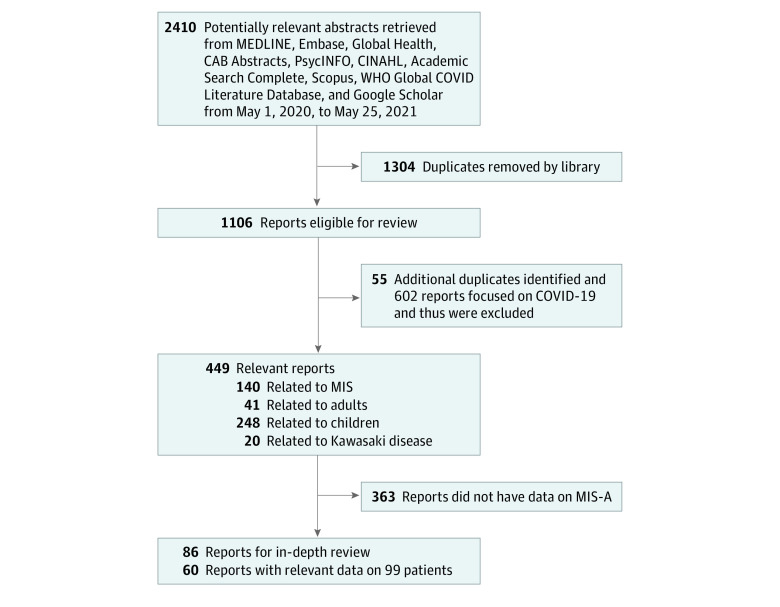
Evidence review: This systematic review identified patients with MIS-A using 3 strategies: (1) literature review from May 1, 2020, to May 25, 2021, by searching MEDLINE, Embase, Global Health, CAB Abstracts, PsycINFO, CINAHL (Cumulative Index to Nursing and Allied Health Literature), Academic Search Complete, Scopus, World Health Organization Global COVID-19 Literature Database, and Google Scholar; (2) voluntary reports of MIS-A to the Centers for Disease Control and Prevention (CDC); and (3) reports among persons aged 18 to 20 years in the CDC surveillance system for MIS in children.

Findings: Of 221 patients with MIS-A, the median age was 21 (interquartile range [IQR], 19-34) years, and 154 of 219 (70%) with data available were men. Sixty of 169 patients (36%) were non-Hispanic Black individuals, and 122 of 209 (58%) had no underlying comorbidity. One hundred two of 149 patients (68%) noted a previous symptomatic COVID-19-like illness (median, 28 [IQR, 20-36] days previously). Most patients with MIS-A presented with fever (197 of 205 [96%]), hypotension (133 of 220 [60%]), cardiac dysfunction (114 of 210 [54%]), shortness of breath (102 of 198 [52%]), and/or diarrhea (102 of 197 [52%]). The median number of organ systems involved was 5 (IQR, 4-6). Median hospital stay was 8 (IQR, 5-12) days; 115 of 201 patients (57%) were admitted to the intensive care unit; 101 of 213 (47%) required respiratory support, and 15 of 220 (7%) died. Most patients (176 of 195 [90%]) had elevated markers of coagulopathy and/or inflammation and a positive SARS-CoV-2 serologic finding (139 of 194 [72%]). Ten patients with MIS-A presented with Kawasaki disease.

Conclusions and relevance: These findings suggest that MIS-A is a serious hyperinflammatory condition that presents approximately 4 weeks after onset of acute COVID-19 with extrapulmonary multiorgan dysfunction.


Conflict of interest statement

Conflict of Interest Disclosures: None reported.

Figures

Figure 1.
Figure 1.. Selection of Studies Regarding Multisystem Inflammatory Syndrome in Adults (MIS-A)
WHO indicates World Health Organization.
Figure 2.
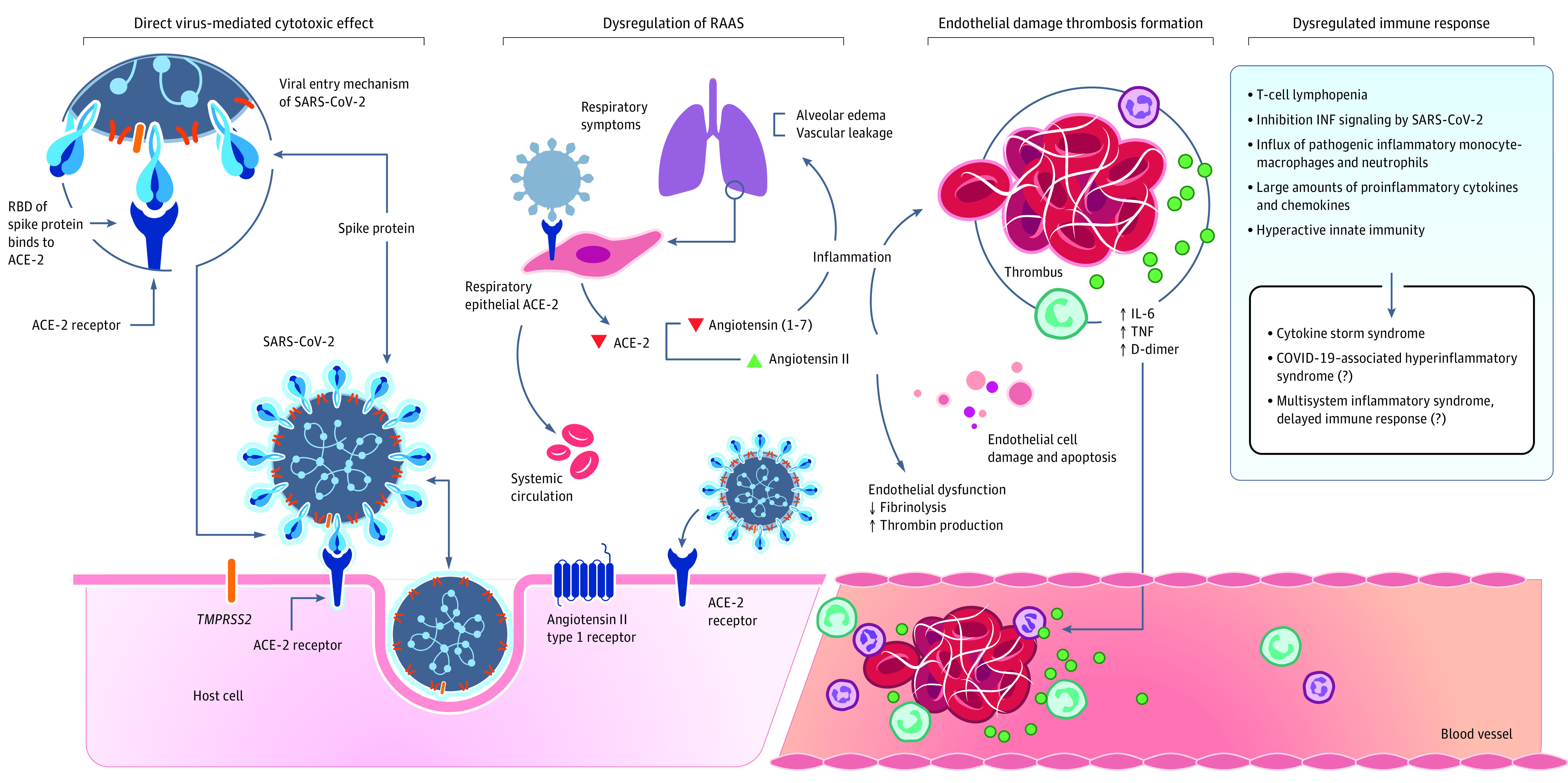
Figure 2.. Plausible Mechanisms for the Pathogenesis of COVID-19
SARS-CoV-2 enters host cells through interaction of its spike protein with angiotensin-converting enzyme 2 (ACE-2) receptors. Plausible mechanisms of injury include direct virus-mediated cytotoxic effects; dysregulation of the renin-angiotensin-aldosterone system (RAAS) resulting from downregulation of ACE-2 related to viral entry, subsequent increase in angiotensin II levels, and potential decrease in angiotensin 1-7 causing viral-induced inflammation; endothelial damage and thrombus formation; and dysregulation of the immune response with hyperinflammation caused by inhibition of interferon (INF), depletion of T lymphocytes, and production of proinflammatory cytokines. IL-6 indicates interleukin 6; RBD, receptor-binding domain; and TNF, tumor necrosis factor.
Figure 3.
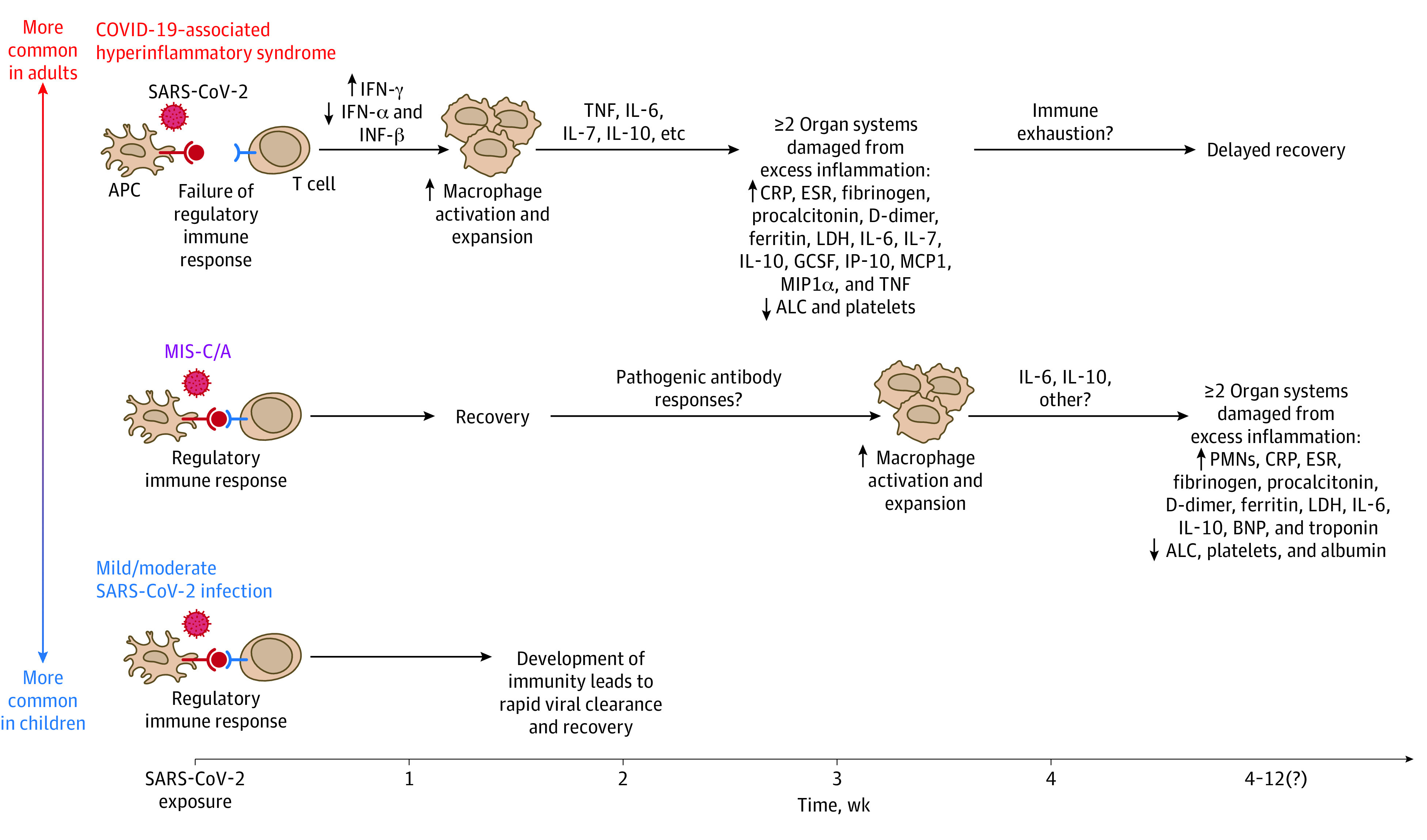
Figure 3.. Potential Mechanisms of Inflammatory Syndromes Associated With SARS-CoV-2
SARS-CoV-2 can trigger a range of inflammatory syndromes across the age spectrum. Compared with children, adults—particularly those with certain preexisting proinflammatory comorbidities—are more likely to develop acute COVID-19–associated hyperinflammatory syndrome within 1 to 2 weeks of exposure to SARS-CoV-2. COVID-19–associated hyperinflammatory syndrome begins with failure of the regulatory immune response to SARS-CoV-2, including abnormal interferon (INF) production that drives macrophage hyperactivation. This results in inflammatory cytokine cascades and causes significant damage to multiple organ systems. In contrast, children are more likely to have asymptomatic or mild acute SARS-CoV-2 infection without sequelae. The reason(s) why children do not commonly develop acute COVID-19–associated hyperinflammatory syndrome remains unknown. However, both children and adults can develop a multisystem inflammatory syndrome (MIS-C/A) of unclear etiology weeks after initial asymptomatic or mild SARS-CoV-2 infection. The precise cause of MIS-C/A remains unclear but may be due to development of abnormal antibody responses that drive systemic hyperinflammation. ALC indicates absolute lymphocyte count; APC, antigen-presenting cell; BNP, B-type natriuretic peptide; CRP, C-reactive protein; ESR, erythrocyte sedimentation rate; GCSF, granulocyte colony-stimulating factor; IL, interleukin; IP-10, human interferon-inducible protein 10; LDH, lactate dehydrogenase; MCP, monocyte chemotactic protein; MIP, macrophage inflammatory protein; PMN, polymorphonuclear leukocyte; and TNF, tumor necrosis factor. Reproduced with permission from Prathit Arun Kulkarni (Weatherhead et al) on December 20, 2020.

Comment in

References

    1. Centers for Disease Control and Prevention Coronavirus-19 (COVID-19) tracker. Updated January 5, 2021. Accessed on January 6, 2021. https://covid.cdc.gov/covid-data-tracker/#trends_dailytrendscases
    1. Morris SB, Schwartz NG, Patel P, et al. Case series of multisystem inflammatory syndrome in adults associated with SARS-CoV-2 infection—United Kingdom and United States, March-August 2020. MMWR Morb Mortal Wkly Rep. 2020;69(40):1450-1456. doi: 10.15585/mmwr.mm6940e1 - DOI - PMC - PubMed
    1. Belay ED, Abrams J, Oster ME, et al. Trends in geographic and temporal distribution of US children with multisystem inflammatory syndrome during the COVID-19 pandemic. JAMA Pediatr. 2021;175(8):837-845. doi: 10.1001/jamapediatrics.2021.0630 - DOI - PMC - PubMed
    1. Centers for Disease Control and Prevention . Health department-reported cases of multisystem inflammatory syndrome in children (MIS-C) in the United States. Reviewed June 25, 2021. Accessed December 24, 2020. https://www.cdc.gov/mis/
    1. Sokolovsky S, Soni P, Hoffman T, Kahn P, Scheers-Masters J. COVID-19 associated Kawasaki-like multisystem inflammatory disease in an adult. Am J Emerg Med. 2021;39:253.e1-253.e2. doi: 10.1016/j.ajem.2020.06.053 - DOI - PMC - PubMed

Publication types