


Astaxanthin protective barrier and its ability to improve the health in patients with COVID-19
- PMID: 34557270
- PMCID: PMC8421583
- DOI: 10.18502/ijm.v13i4.6965
Astaxanthin protective barrier and its ability to improve the health in patients with COVID-19
Abstract
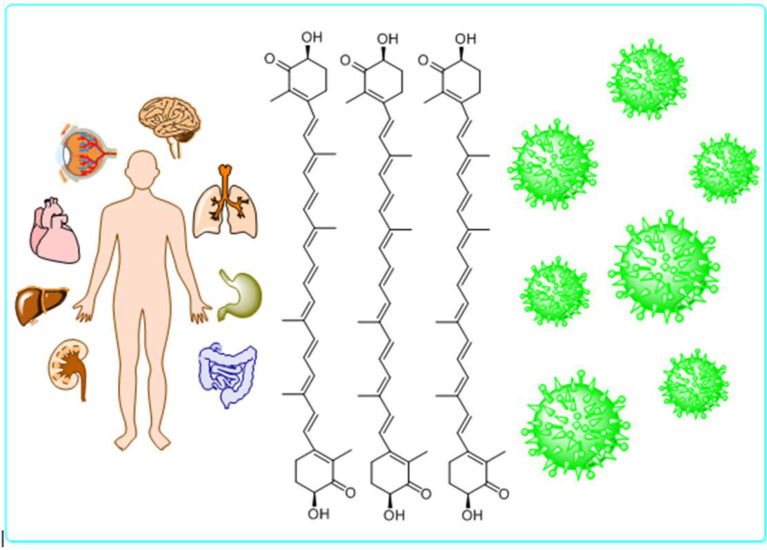
Inflammation acts like a double-edged sword and can be harmful if not appropriately controlled. COVID-19 is created through a novel species of coronavirus SARS-CoV-2 (2019-nCoV). Elevated levels of inflammatory factors such as interleukin-6 (IL-6), tumor necrosis factor-alpha (TNF-α), etc. lead to Acute Respiratory Distress Syndrome (ARDS) and severe complications of infection in the lungs of coronavirus-infected patients. Astaxanthin is a natural and potent carotenoid with powerful antioxidant activity as well as an anti-inflammatory agent that supports good health. The effects of astaxanthin on the regulation of cyclooxygenase-2 (COX-2) pathways and the reduction and suppression of cytokines and other inflammatory agents such as IL-6 and TNF-α have already been identified. Therefore, these unique features can make this natural compound an excellent option to minimize inflammation and its consequences.
Keywords: Anti-inflammatory agent; Astaxanthin; COVID-19; Interleukin-6; Respiratory distress syndrome; Tumor necrosis factor-alpha.
Copyright © 2021 The Authors. Published by Tehran University of Medical Sciences.
Figures
References
-
- Wu Z, McGoogan JM. Characteristics of and important lessons from the coronavirus disease 2019 (COVID-19) outbreak in China: summary of a report of 72 314 cases from the Chinese center for disease control and prevention. JAMA 2020;323:1239–1242. - PubMed
-
- Conti P, Ronconi G, Caraffa AI, Gallenga CE, Ross R, Frydas I, et al. Induction of pro-inflammatory cytokines (IL-1 and IL-6) and lung inflammation by coronavirus-19 (COVI-19 or SARS-CoV-2): anti-inflammatory strategies. J Biol Regul Homeost Agents 2020;34:11–15. - PubMed
Publication types
LinkOut - more resources
Full Text Sources
Research Materials
Miscellaneous