Revisiting food-sourced vitamins for consumer diet and health needs: a perspective review, from vitamin classification, metabolic functions, absorption, utilization, to balancing nutritional requirements
- PMID: 34557342
- PMCID: PMC8418216
- DOI: 10.7717/peerj.11940
Revisiting food-sourced vitamins for consumer diet and health needs: a perspective review, from vitamin classification, metabolic functions, absorption, utilization, to balancing nutritional requirements
Abstract
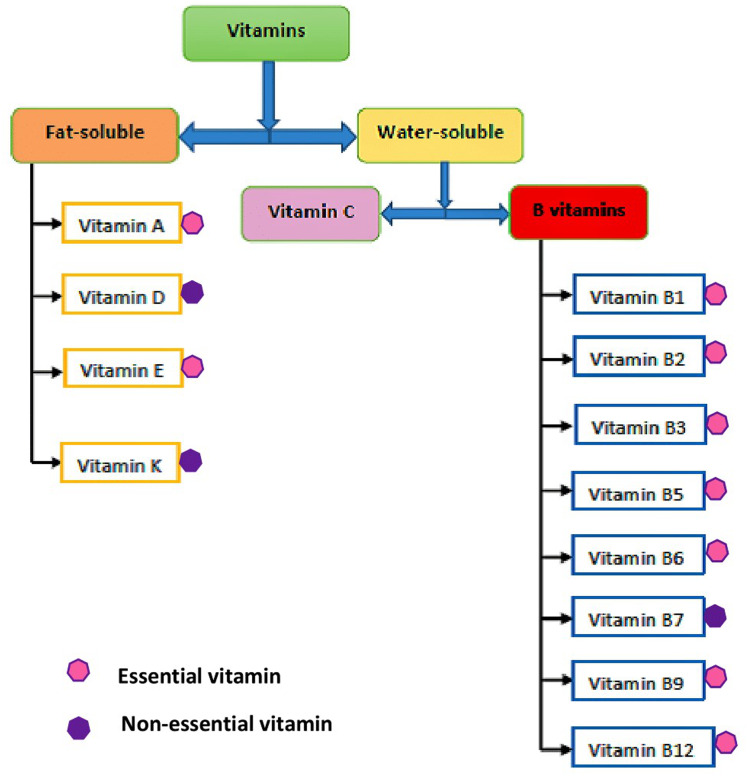
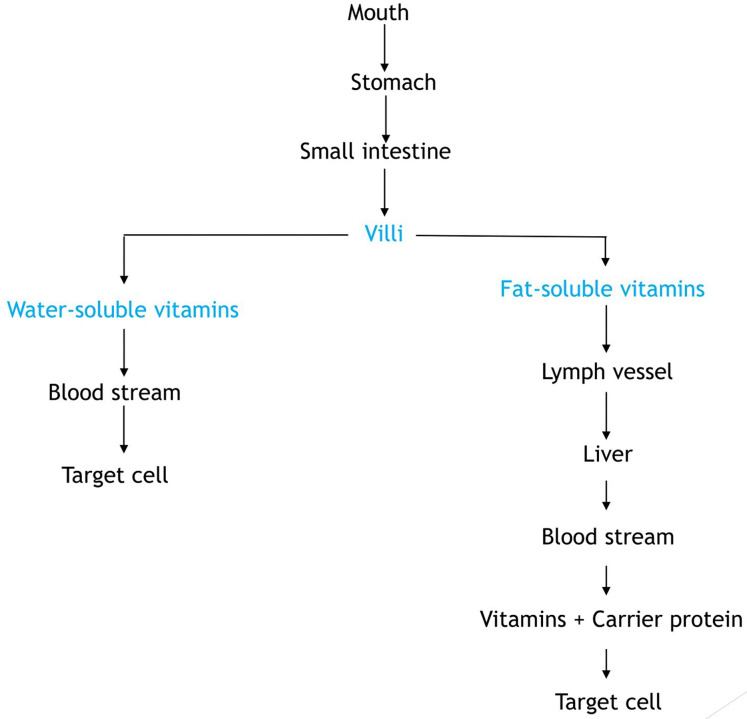
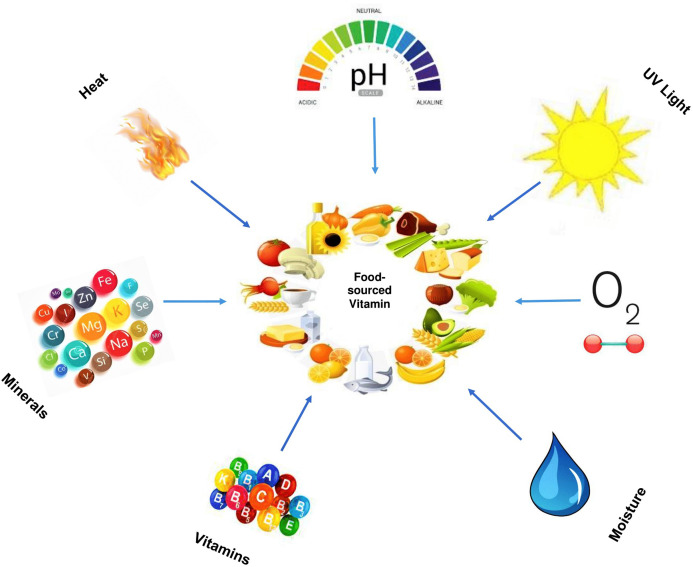
The significant attention gained by food-sourced vitamins has provided insights into numerous current researches; for instance, the potential reversal of epigenetic age using a diet and lifestyle intervention, the balance between food and dietary supplements in the general population, the role of diet and food intake in age-related macular degeneration, and the association of dietary supplement use, nutrient intake and mortality among adults. As relevant literature about food-sourced vitamin increases, continuous synthesis is warranted. To supplement existing information, this perspective review discussed food-sourced vitamins for consumer diet and health needs, scoping from vitamin absorption, metabolic functions, utilization, to balancing nutritional requirements. Relevant literatures were identified through a search of databases like Google Scholar, Web of Science, the Interscience Online Library, ScienceDirect, and PubMed. We demonstrated that vitamins whether from plant- and animal-based sources are prerequisites for the metabolic functions of the human body. The fat- and water-soluble classification of vitamins remains consistent with their respective absorption and dissolution potentials, underpinned by numerous physiological functions. Vitamins, largely absorbed in the small intestine, have their bioavailability dependent on the food composition, its associated interactions, as well as alignment with their metabolic functions, which involves antioxidants, coenzymes, electron acceptor/donor, and hormones. Moreover, vitamin deficiencies, in every form, pose a serious threat to human health. Vitamin toxicities remain rare, but can still occur mainly from supplementation, although it appears much less in water-soluble vitamins of which some excesses get readily removed by the human body, different from the fat-soluble ones that are stored in tissues and organs. Besides discussions of absorption, transport, and cellular uptake of vitamins, this perspective review also included approaches to meeting vitamin requirements and therapeutic strategies against micronutrient deficiency and COVID-19. We have also attempted on how to strike the balance between food-sourced vitamins and dietary supplements.
Keywords: Animal-based; Micronutrient; Physiological function; Plant-based; Vitamin absorption; Vitamin transport.
© 2021 Ofoedu et al.
Conflict of interest statement
Charles Odilichukwu R. Okpala is an Academic Editor for PeerJ.
Figures
References
LinkOut - more resources
Full Text Sources
Research Materials