


Characteristics and Outcomes of Type 1 versus Type 2 Perioperative Myocardial Infarction After Noncardiac Surgery
- PMID: 34560032
- PMCID: PMC8840963
- DOI: 10.1016/j.amjmed.2021.08.028
Characteristics and Outcomes of Type 1 versus Type 2 Perioperative Myocardial Infarction After Noncardiac Surgery
Abstract
Background: Perioperative myocardial infarction is frequently attributed to type 2 myocardial infarction, a mismatch in myocardial oxygen supply-demand without unstable coronary artery disease. Our aim was to identify characteristics, management, and outcomes of perioperative type 1 versus type 2 myocardial infarction among surgical inpatients.
Methods: Adults age ≥45 years hospitalized for noncardiac surgery were identified in the United States. Perioperative myocardial infarction were identified using International Classification of Diseases, 10th revision (ICD-10) codes. Clinical characteristics, invasive myocardial infarction management, mortality, and readmissions were assessed by myocardial infarction subtype.
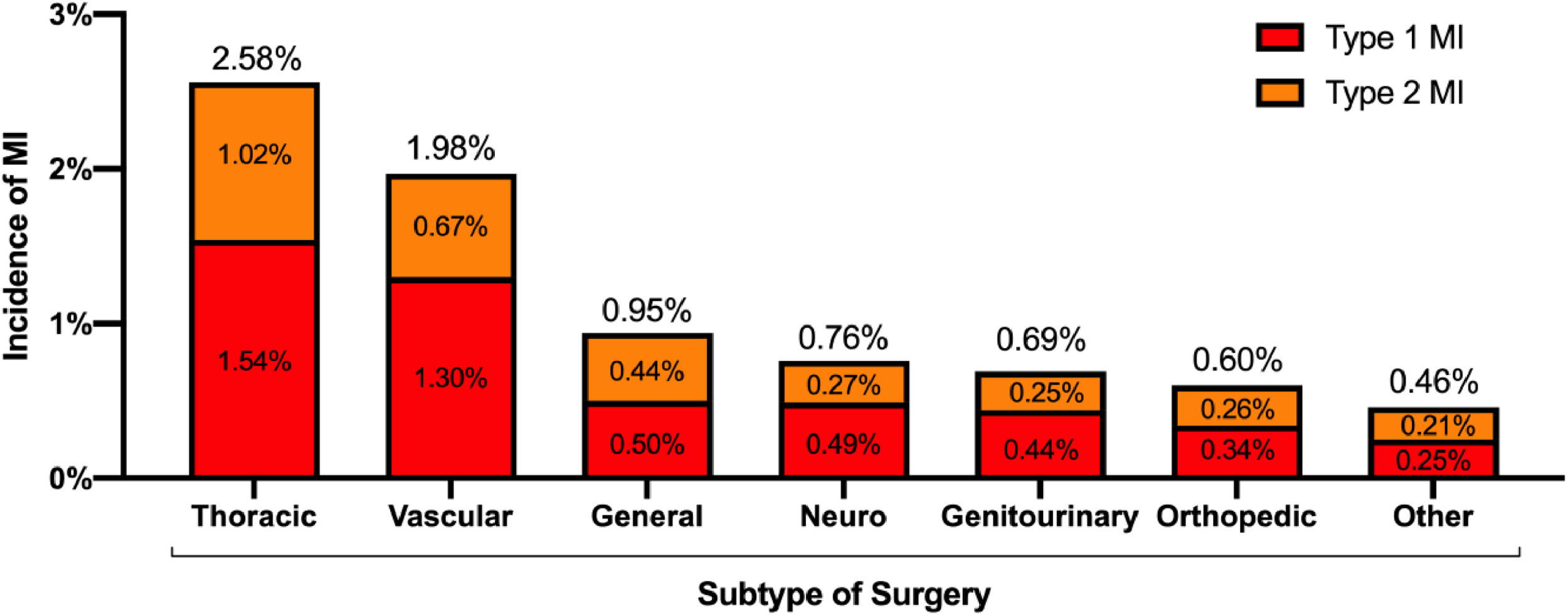
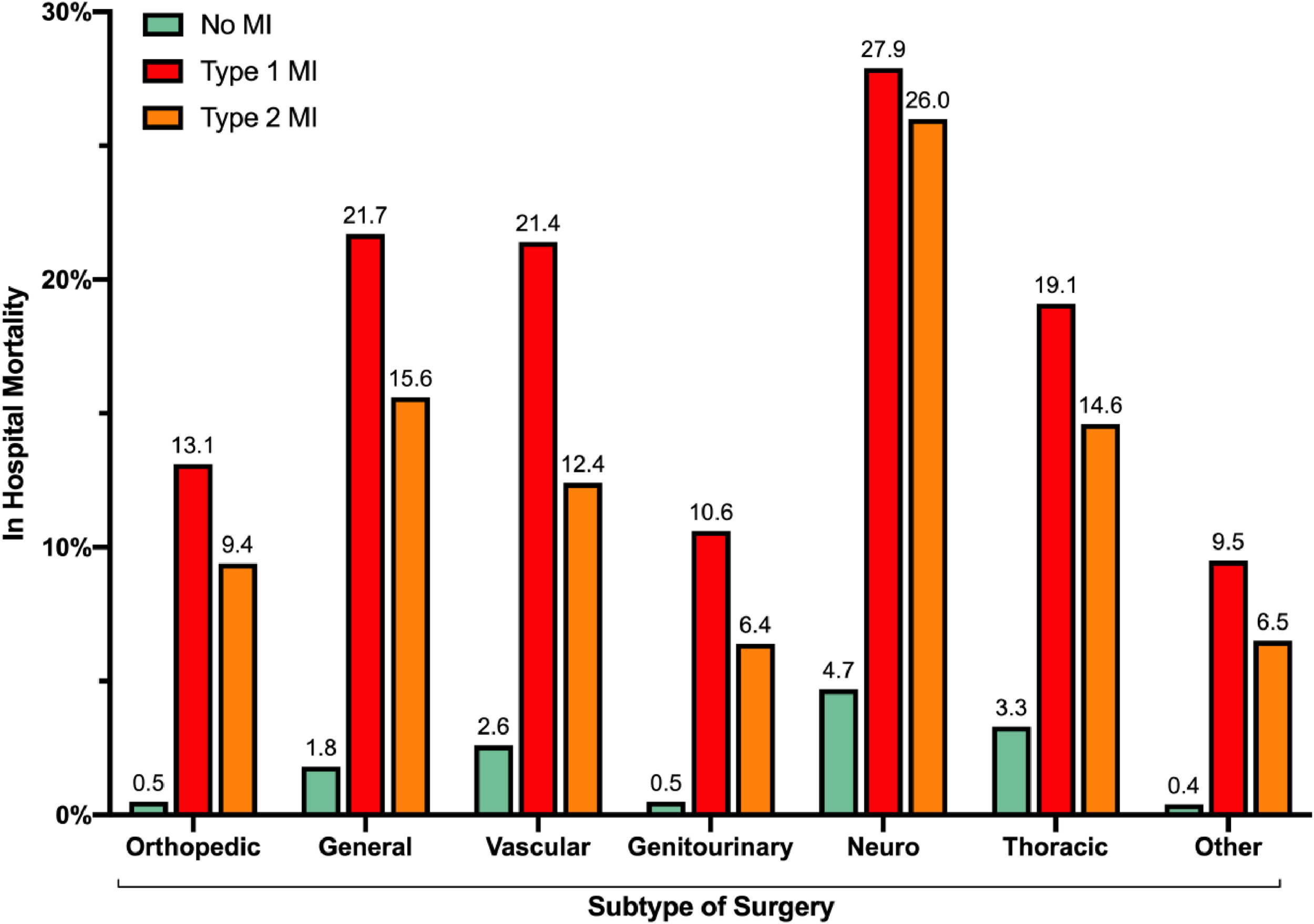
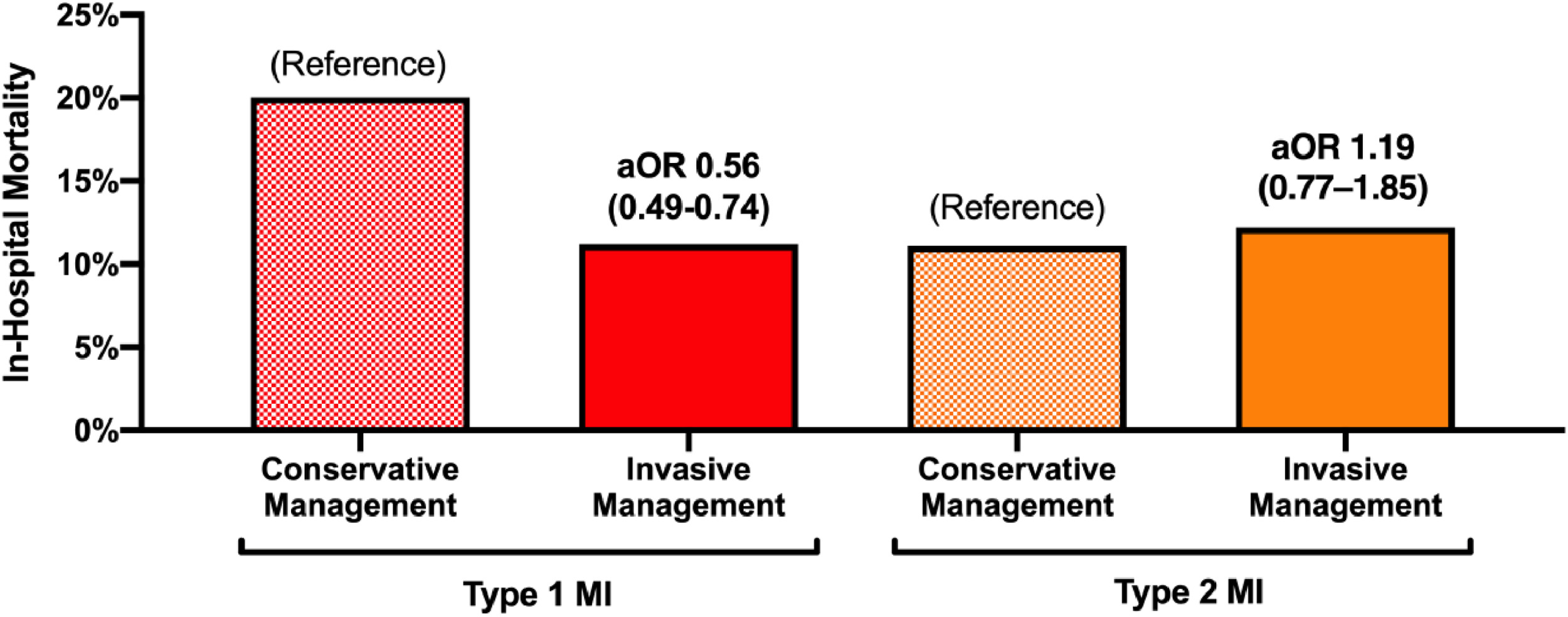
Results: Among 4,755,382 surgical hospitalizations, we identified 38,975 perioperative myocardial infarctions (0.82%), with type 2 infarction in 42%. Patients with type 2 myocardial infarction were older, more likely to be women, and less likely to have cardiovascular comorbidities compared with type 1 myocardial infarction. Fewer patients with type 2 myocardial infarction underwent invasive management than type 1 myocardial infarction (6.7% vs 28.8%, P < .001). Type 2 myocardial infarction mortality was lower than type 1 myocardial infarction mortality (12.1% vs 17.4%, P < .001; adjusted odds ratio [aOR] 0.51, 95% confidence interval [CI] 0.45-0.59). Invasive management of perioperative myocardial infarction was associated with lower mortality in type 1 (aOR 0.56, 95% CI 0.49-0.74) but not type 2 (aOR 1.19, 95% CI 0.77-1.85) myocardial infarction. Among survivors, there was no difference in 90-day hospital readmission between type 2 and type 1 perioperative myocardial infarction (36.5% vs 36.1%, P = .72).
Conclusions: Type 2 myocardial infarctions account for approximately 40% of perioperative myocardial infarctions. Patients with type 2 perioperative myocardial infarction are less likely to undergo invasive management and have lower mortality compared with those with type 1 perioperative myocardial infarction.
Keywords: Coronary angiography; Coronary revascularization; Invasive management; Mortality; Myocardial infarction; Outcomes; Percutaneous coronary intervention; Perioperative; Readmission; Rehospitalization; Type 1; Type 2.
Published by Elsevier Inc.
Figures
References
-
- Smilowitz NR, Gupta N, Guo Y, Berger JS, Bangalore S. Perioperative acute myocardial infarction associated with non-cardiac surgery. Eur Heart J. 2017;38:2409–2417 - PubMed
-
- Thygesen K, Alpert JS, Jaffe AS, Chaitman BR, Bax JJ, Morrow DA, White HD, Executive Group on behalf of the Joint European Society of Cardiology/American College of Cardiology/American Heart Association/World Heart Federation Task Force for the Universal Definition of Myocardial I. Fourth universal definition of myocardial infarction (2018). Circulation. 2018;138:e618–e651 - PubMed
-
- Barrett M, Steiner C, Andrews R, Kassed C, Nagamine M. Methodological issues when studying readmissions and revisits using hospital adminstrative data. HCUP Methods Series Report # 2011–01. 2011
-
- Hanson I, Kahn J, Dixon S, Goldstein J. Angiographic and clinical characteristics of type 1 versus type 2 perioperative myocardial infarction. Catheter Cardiovasc Interv. 2013;82:622–628 - PubMed
Publication types
MeSH terms
Grants and funding
LinkOut - more resources
Full Text Sources
Other Literature Sources
Medical
