


Climate Change and Major Pests of Mediterranean Olive Orchards: Are We Ready to Face the Global Heating?
- PMID: 34564243
- PMCID: PMC8472548
- DOI: 10.3390/insects12090802
Climate Change and Major Pests of Mediterranean Olive Orchards: Are We Ready to Face the Global Heating?
Abstract
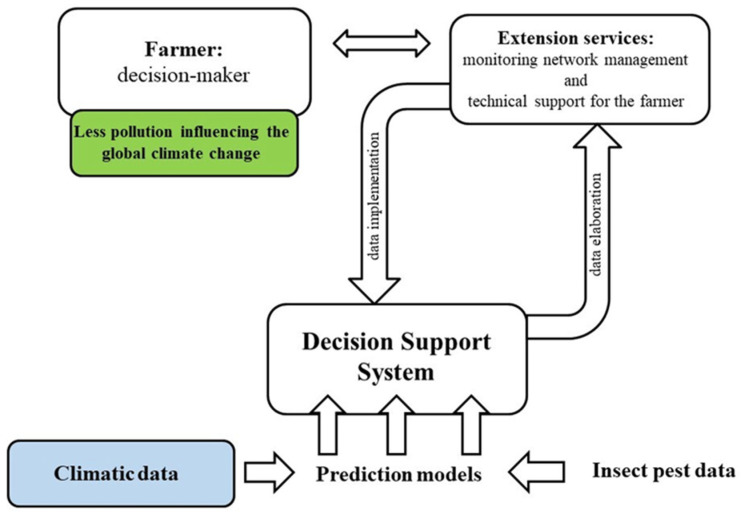
Evidence of the impact of climate change on natural and agroecosystems is nowadays established worldwide, especially in the Mediterranean Basin, an area known to be very susceptible to heatwaves and drought. Olea europaea is one of the main income sources for the Mediterranean agroeconomy, and it is considered a sensitive indicator of the climate change degree because of the tight relationship between its biology and temperature trend. Despite the economic importance of the olive, few studies are nowadays available concerning the consequences that global heating may have on its major pests. Among the climatic parameters, temperature is the key one influencing the relation between the olive tree and its most threatening parasites, including Bactrocera oleae and Prays oleae. Therefore, several prediction models are based on this climatic parameter (e.g., cumulative degree day models). Even if the use of models could be a promising tool to improve pest control strategies and to safeguard the Mediterranean olive patrimony, they are not currently available for most O. europaea pests, and they have to be used considering their limits. This work stresses the lack of knowledge about the biology and the ethology of olive pests under a climate change scenario, inviting the scientific community to focus on the topic.
Keywords: Bactrocera oleae; Mediterranean Basin; Olea europaea; climate emergency; olive pest.
Conflict of interest statement
The authors declare no conflict of interest.
Figures
References
-
- Mgbemene C.A., Nnaji C.C., Nwozor C. Industrialization and its backlash: Focus on climate change and its consequences. J. Environ. Sci. Technol. 2016;9:301–316. doi: 10.3923/jest.2016.301.316. - DOI
-
- War A.R., Taggar G.K., War M.Y., Hussain B. Impact of climate change on insect pests, plant chemical ecology, tritrophic interactions and food production. Int. J. Clin. Biol. Sci. 2016;1:16–29.
-
- Rădoi M.I. Interconnections between sustainable development, climate change and agriculture. Rev. Stiinte Pol. 2020;68:53–61.
-
- Arora N.K. Impact of climate change on agriculture production and its sustainable solutions. Environ. Sustain. 2019;2:95–96. doi: 10.1007/s42398-019-00078-w. - DOI
Publication types
LinkOut - more resources
Full Text Sources
