Review
. 2021 Aug 29;11(9):664.
doi: 10.3390/membranes11090664.

Homomeric and Heteromeric α7 Nicotinic Acetylcholine Receptors in Health and Some Central Nervous System Diseases

Affiliations
Review

Homomeric and Heteromeric α7 Nicotinic Acetylcholine Receptors in Health and Some Central Nervous System Diseases

Virginia Borroni et al. Membranes (Basel). .

Abstract

Nicotinic acetylcholine receptors (nAChRs) are pentameric ligand-gated ion channels involved in the modulation of essential brain functions such as memory, learning, and attention. Homomeric α7 nAChR, formed exclusively by five identical α7 subunits, is involved in rapid synaptic transmission, whereas the heteromeric oligomers composed of α7 in combination with β subunits display metabotropic properties and operate in slower time frames. At the cellular level, the activation of nAChRs allows the entry of Na+ and Ca2+; the two cations depolarize the membrane and trigger diverse cellular signals, depending on the type of nAChR pentamer and neurons involved, the location of the intervening cells, and the networks of which these neuronal cells form part. These features make the α7 nAChR a central player in neurotransmission, metabolically associated Ca2+-mediated signaling, and modulation of diverse fundamental processes operated by other neurotransmitters in the brain. Due to its ubiquitous distribution and the multiple functions it displays in the brain, the α7 nAChR is associated with a variety of neurological and neuropsychiatric disorders whose exact etiopathogenic mechanisms are still elusive.

Keywords: acetylcholine receptor; cholinergic neurotransmission; dendritic spine; neurotransmitter receptor protein; nicotinic; synaptopathy; α7 nAChR.


Conflict of interest statement

The authors declare no conflict of interest.

Figures
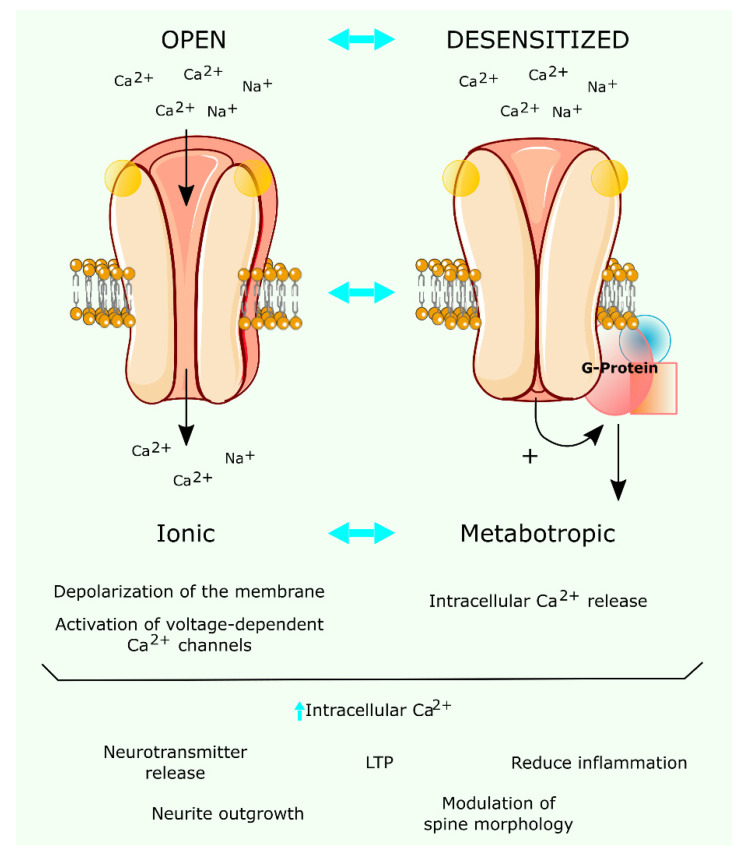
Figure 1
Figure 1
Ionotropic and metabotropic signaling of α7 nAChRs. Ionotropic signaling (left flow chart): upon ligand binding, the homomeric α7 nAChR channel opens, allowing the flux of Ca2+ and Na+ into the target cell, which produces the depolarization of the membrane. This triggers the opening of voltage-activated Ca2+ channels and the intracellular Ca2+ concentration increases further. Metabotropic signaling (right flow chart): sustained exposure to the agonist shifts the α7 nAChR conformation to the desensitized state, under which ACh or exogenous agonist molecules are bound to the oligomer, but the channel remains closed, and no ion permeation occurs. However, desensitized α7 nAChRs can couple to G-proteins that activate a cascade of signals ending in the release of Ca2+ from intracellular stores (e.g., the endoplasmic reticulum). These signaling cascades may have different effects depending on the nature of the stimulus.
Figure 2
Figure 2
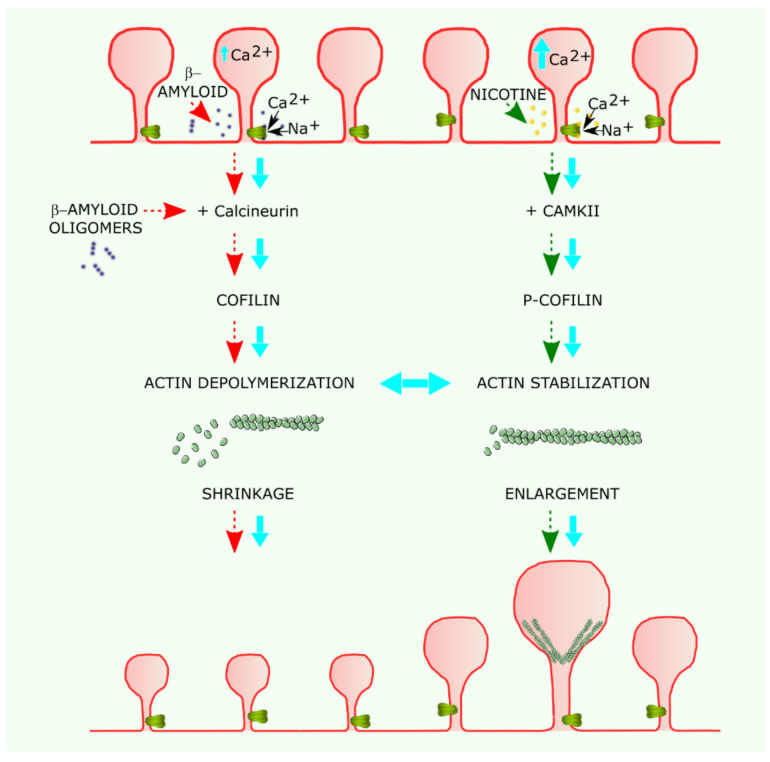
Possible mechanism of α7 nAChR modulation of dendritic spine morphology and its alteration in Alzheimer disease. The vertical flow diagram on the left shows the pathological cascade, in which β-amyloid oligomers activate α7 nAChR and the calcineurin–cofilin pathway. The increase in intracellular calcium concentration reinforces calcineurin activation. Activated calcineurin dephosphorylates cofilin, which, in turn, depolymerizes actin filaments, leading to spine shrinkage and dysmorphism. Diffusion of cofilin to neighboring spines acts like a chain reaction, spreading the shrinkage along the dendrite. The flow diagram on the right illustrates the protective action of nicotine, which activates α7 nAChRs leading to intracellular calcium increases that activate CAMKII, which, in turn, leads to phosphorylated cofilin (p-cofilin), stabilizing actin filaments. The polymerization and stabilization of actin filaments is associated with spine enlargement.
Figure 3
Figure 3
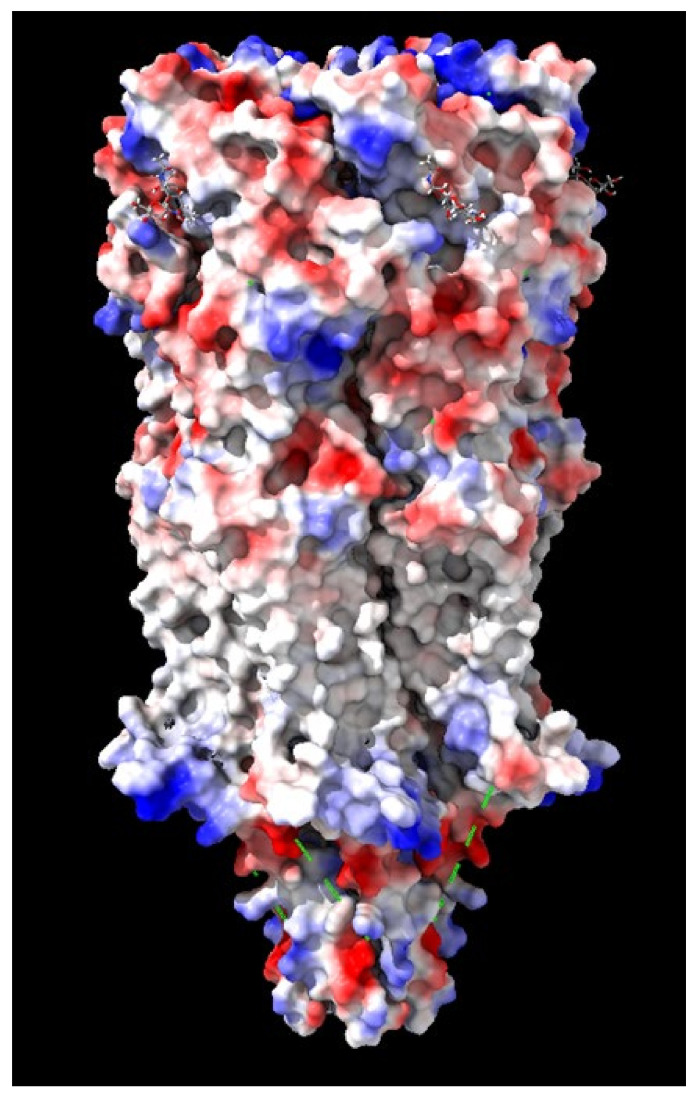
Reconstruction of the single-particle cryo-EM data of the homopentameric α7 nAChR. The structure of the receptor protein resolved at 3.9 Å resolution by Noviello and coworkers [65] is shown in surface rendering. Two epibatidine molecules (ball-and-stick representation, and a third molecule partly seen at the top right) are seen bound to crevices in the extracellular domain of the nAChR. The receptor protein was fused to soluble cytochrome b562 to facilitate crystallization. PDB entry: 7KOQ; EMDataResource: EMD-22980. Image created using the software PyMol Molecular Graphics System vers. 2.4.1. from Schrödinger, LLC, New York, U.S.A.
Figure 4
Figure 4
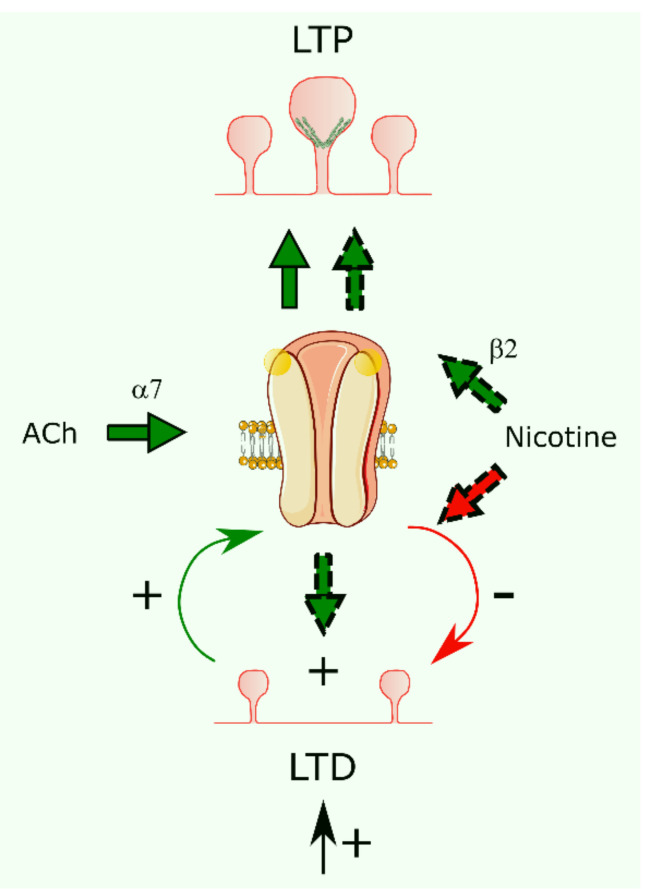
Modulation of synaptic plasticity by cholinergic agonists. Induction of long-term depression (LTD) stimulates α7 nAChR, which, in turn, inhibits LTD (solid line arrows). Nicotine application releases the inhibition and increases LTD (dash line arrows). Long-term potentiation (LTP) can be induced by the endogenous release of ACh through homomeric α7 nAChRs or by nicotine through β2-containing heteromeric nAChRs.
Figure 5
Figure 5
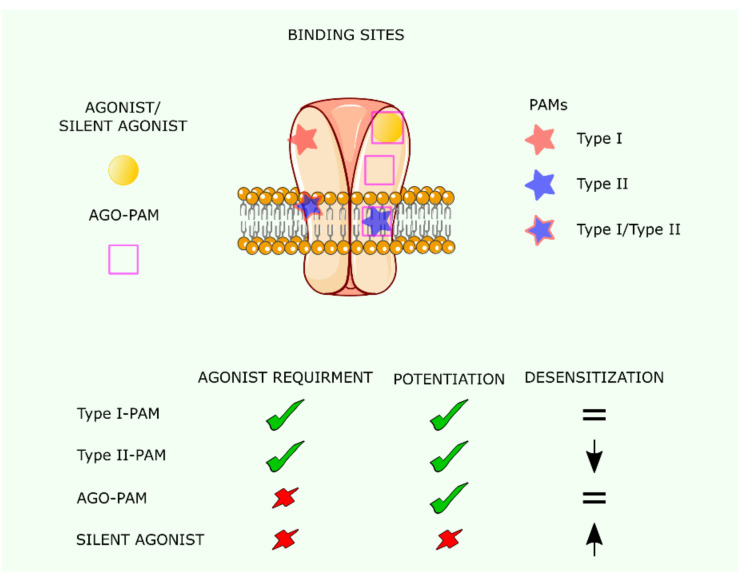
Pharmacology of α7 nAChR positive allosteric modulators (PAMs), agonist-PAMs, and silent agonists. The orthosteric binding sites are located at the interface of two subunits and are used by agonists, ago-PAM, and silent agonists. Allosteric sites were described in the transmembrane domain 2 (TM2) between the extracellular domain (ECD) and the TMD, at the ECD and in the interface between subunits in the ECD. PAMs and ago-PAMs use these sites to potentiate activation through the orthosteric site. The bottom part of the figure shows the effect of the different types of ligands on α7 nAChR-mediated currents.

References

    1. Alkondon M., Pereira E.F., Albuquerque E.X. α-Bungarotoxin-and Methyllycaconitine-Sensitive Nicotinic Receptors Mediate Fast Synaptic Transmission in Interneurons of Rat Hippocampal Slices. Brain Res. 1998;810:257–263. doi: 10.1016/S0006-8993(98)00880-4. - DOI - PubMed
    1. Yan Y., Peng C., Arvin M.C., Jin X.-T., Kim V.J., Ramsey M.D., Wang Y., Banala S., Wokosin D.L., McIntosh J.M. Nicotinic Cholinergic Receptors in VTA Glutamate Neurons Modulate Excitatory Transmission. Cell Rep. 2018;23:2236–2244. doi: 10.1016/j.celrep.2018.04.062. - DOI - PMC - PubMed
    1. Hellström-Lindahl E., Gorbounova O., Seiger Å., Mousavi M., Nordberg A. Regional Distribution of Nicotinic Receptors during Prenatal Development of Human Brain and Spinal Cord. Dev. Brain Res. 1998;108:147–160. doi: 10.1016/S0165-3806(98)00046-7. - DOI - PubMed
    1. Murakami K., Ishikawa Y., Sato F. Localization of A7 Nicotinic Acetylcholine Receptor Immunoreactivity on GABAergic Interneurons in Layers I–III of the Rat Retrosplenial Granular Cortex. Neuroscience. 2013;252:443–459. doi: 10.1016/j.neuroscience.2013.08.024. - DOI - PubMed
    1. Caruncho H.J., Guidotti A., Lindstrom J., Costa E., Pesold C. Subcellular Localization of the A7 Nicotinic Receptor in Rat Cerebellar Granule Cell Layer. Neuroreport. 1997;8:1431–1433. doi: 10.1097/00001756-199704140-00021. - DOI - PubMed

LinkOut - more resources