Diversity and Similarity of Termination and Ribosome Rescue in Bacterial, Mitochondrial, and Cytoplasmic Translation
- PMID: 34565314
- PMCID: PMC8943824
- DOI: 10.1134/S0006297921090066
Diversity and Similarity of Termination and Ribosome Rescue in Bacterial, Mitochondrial, and Cytoplasmic Translation
Abstract
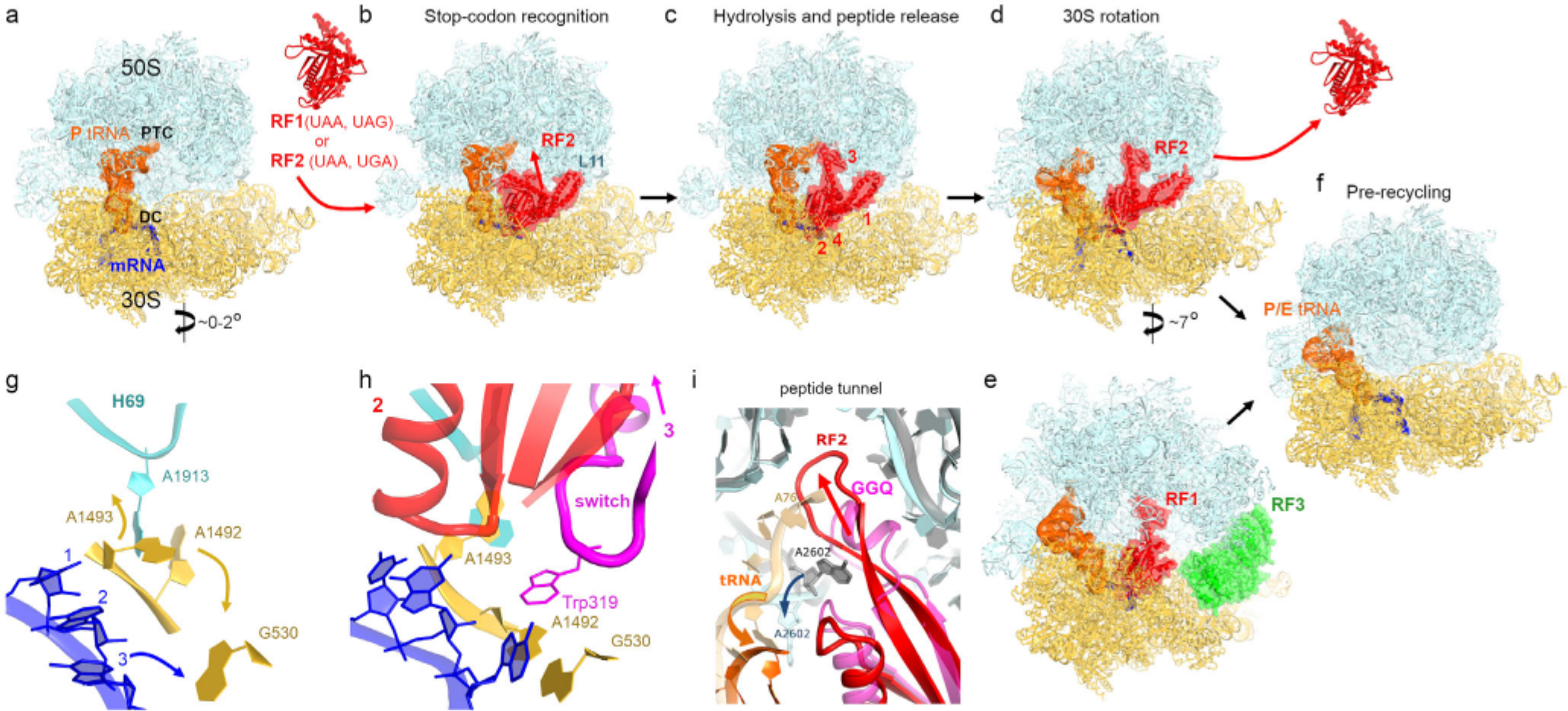
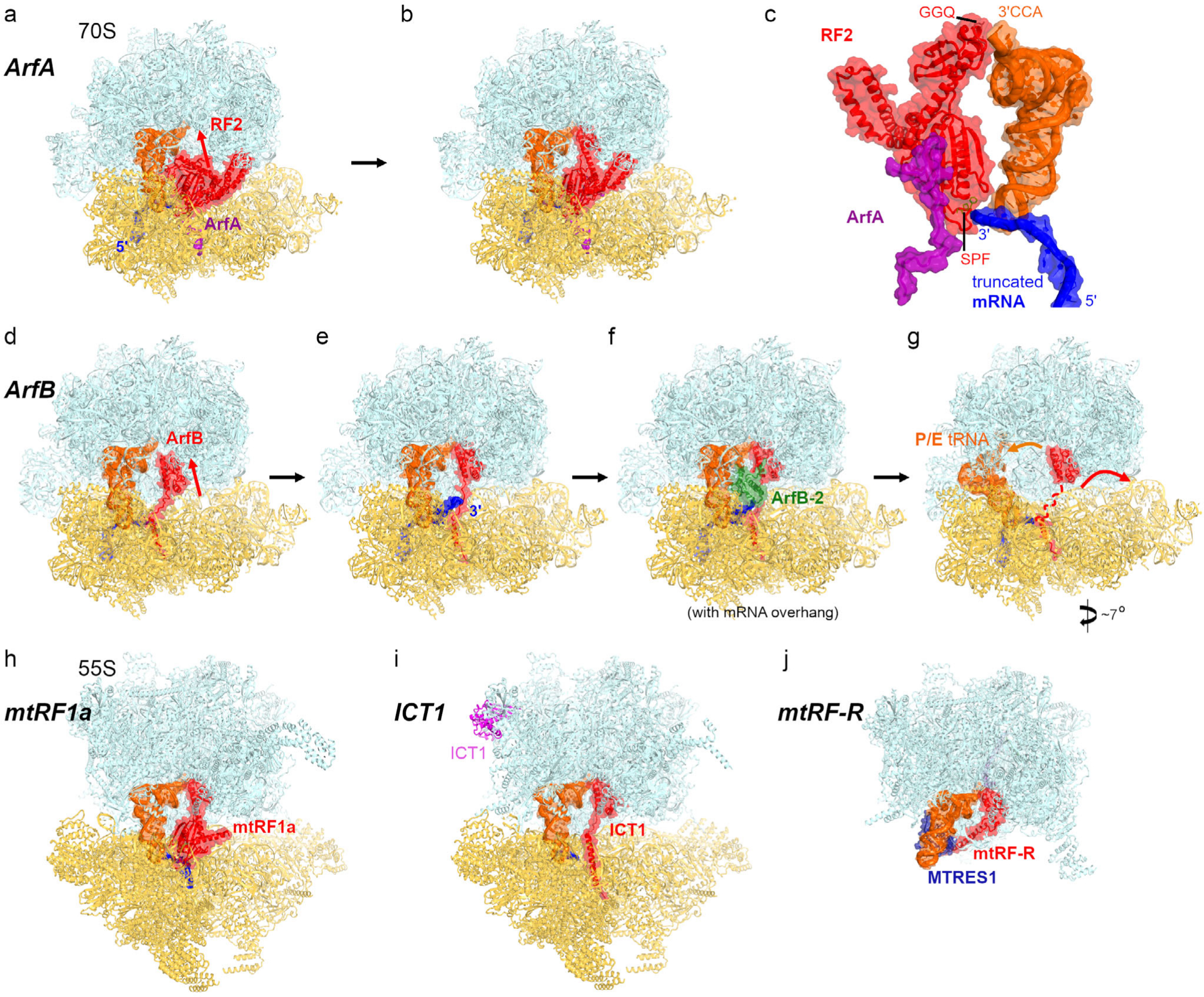
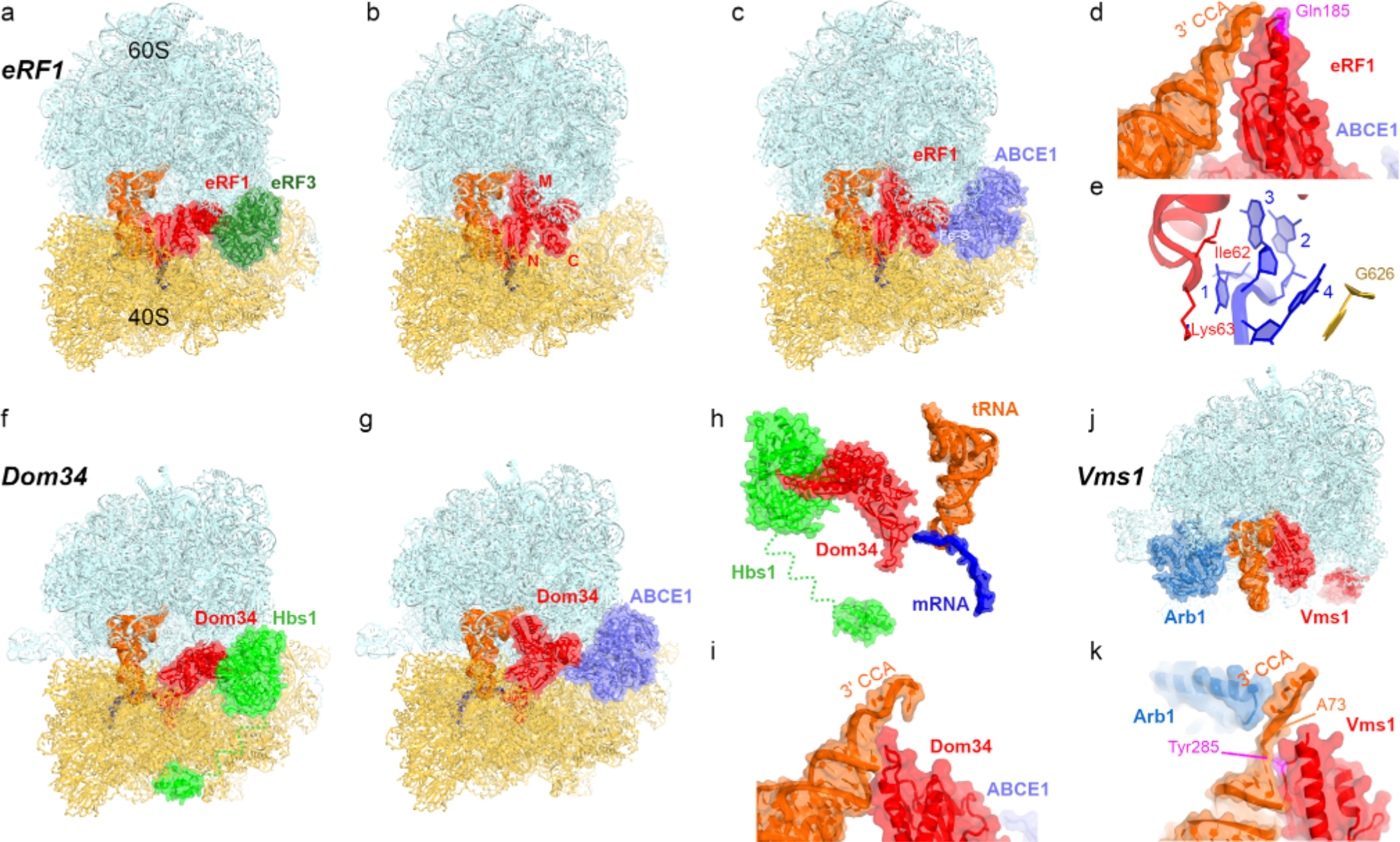
When a ribosome encounters the stop codon of an mRNA, it terminates translation, releases the newly made protein, and is recycled to initiate translation on a new mRNA. Termination is a highly dynamic process in which release factors (RF1 and RF2 in bacteria; eRF1•eRF3•GTP in eukaryotes) coordinate peptide release with large-scale molecular rearrangements of the ribosome. Ribosomes stalled on aberrant mRNAs are rescued and recycled by diverse bacterial, mitochondrial, or cytoplasmic quality control mechanisms. These are catalyzed by rescue factors with peptidyl-tRNA hydrolase activity (bacterial ArfA•RF2 and ArfB, mitochondrial ICT1 and mtRF-R, and cytoplasmic Vms1), that are distinct from each other and from release factors. Nevertheless, recent structural studies demonstrate a remarkable similarity between translation termination and ribosome rescue mechanisms. This review describes how these pathways rely on inherent ribosome dynamics, emphasizing the active role of the ribosome in all translation steps.
Keywords: rescue; ribosome; termination; translation.
Conflict of interest statement
Figures
References
-
- Brenner S, Barnett L, Katz ER, and Crick FH (1967) UGA: a third nonsense triplet in the genetic code. Nature, 213, 449–450. - PubMed
-
- Brenner S, Stretton AO, and Kaplan S (1965) Genetic code: the “nonsense” triplets for chain termination and their suppression, Nature, 206, 994–998. - PubMed
-
- Spirin AS (1999) Termination of translation, in Ribosomes. Cellular Organelles, Springer, Boston, MA, pp. 261–270.
Publication types
MeSH terms
Substances
Grants and funding
LinkOut - more resources
Full Text Sources