


Why Do Some Vertebrates Have Microchromosomes?
- PMID: 34571831
- PMCID: PMC8466491
- DOI: 10.3390/cells10092182
Why Do Some Vertebrates Have Microchromosomes?
Abstract
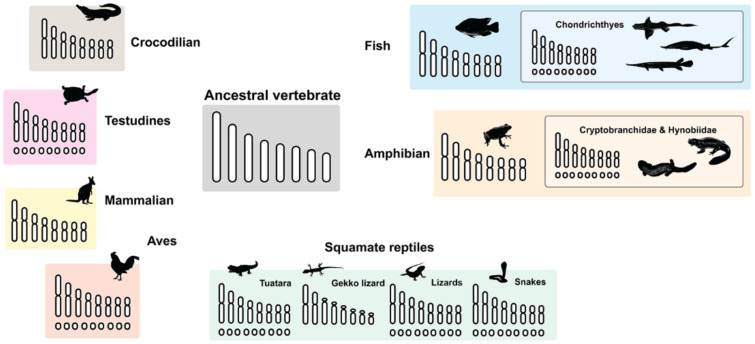
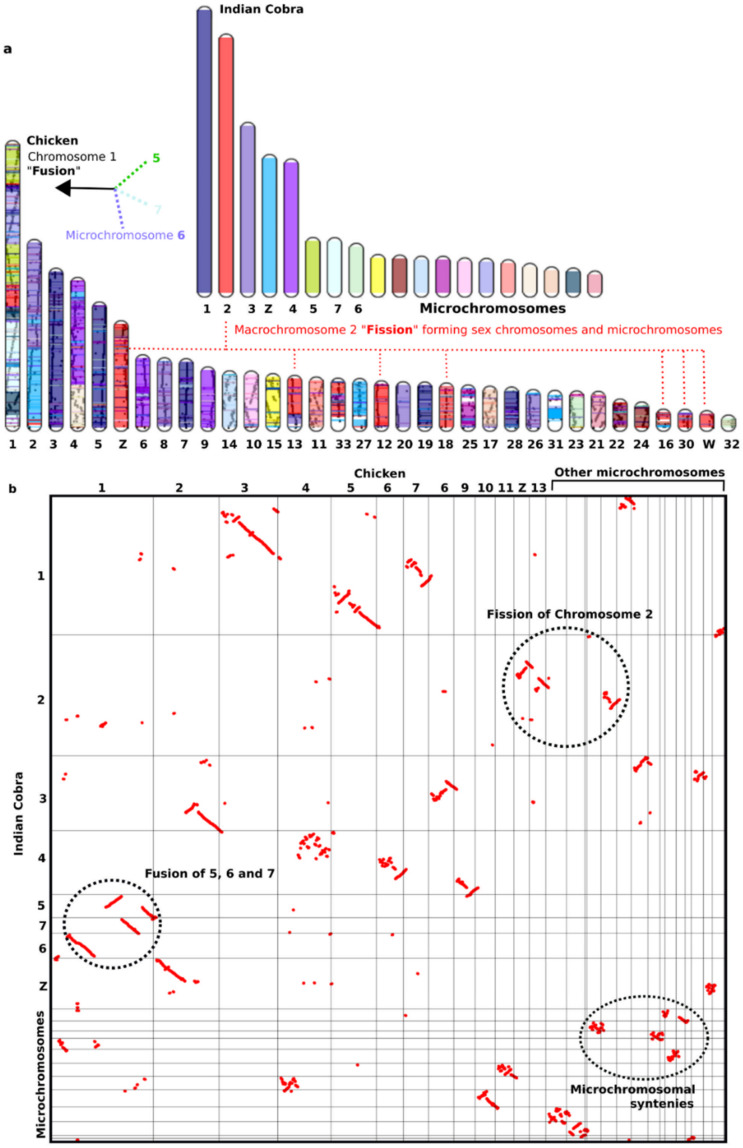
With more than 70,000 living species, vertebrates have a huge impact on the field of biology and research, including karyotype evolution. One prominent aspect of many vertebrate karyotypes is the enigmatic occurrence of tiny and often cytogenetically indistinguishable microchromosomes, which possess distinctive features compared to macrochromosomes. Why certain vertebrate species carry these microchromosomes in some lineages while others do not, and how they evolve remain open questions. New studies have shown that microchromosomes exhibit certain unique characteristics of genome structure and organization, such as high gene densities, low heterochromatin levels, and high rates of recombination. Our review focuses on recent concepts to expand current knowledge on the dynamic nature of karyotype evolution in vertebrates, raising important questions regarding the evolutionary origins and ramifications of microchromosomes. We introduce the basic karyotypic features to clarify the size, shape, and morphology of macro- and microchromosomes and report their distribution across different lineages. Finally, we characterize the mechanisms of different evolutionary forces underlying the origin and evolution of microchromosomes.
Keywords: chromosomal rearrangements; evolution; genes; genome; karyotype.
Conflict of interest statement
The authors declare no conflict of interest.
Figures
References
-
- Ostrovsky M.A. Rhodopsin: Evolution and comparative physiology. Paleontol. J. 2017;51:562–572. doi: 10.1134/S0031030117050069. - DOI
Publication types
MeSH terms
Grants and funding
- RSA6180075/Thailand Research Fund
- NSTDA P-19-52238/National Science and Technology Development Agency (NSTDA)
- P1851131/the e-ASIA Joint Research Program (e-ASIA JRP)
- Postdoctoral Researcher Grant at Kasetsart University
- Graduate Program Scholarship from The Graduate School, Kasetsart University, Thailand
LinkOut - more resources
Full Text Sources
