


Wilson's Disease: Facing the Challenge of Diagnosing a Rare Disease
- PMID: 34572285
- PMCID: PMC8471362
- DOI: 10.3390/biomedicines9091100
Wilson's Disease: Facing the Challenge of Diagnosing a Rare Disease
Abstract
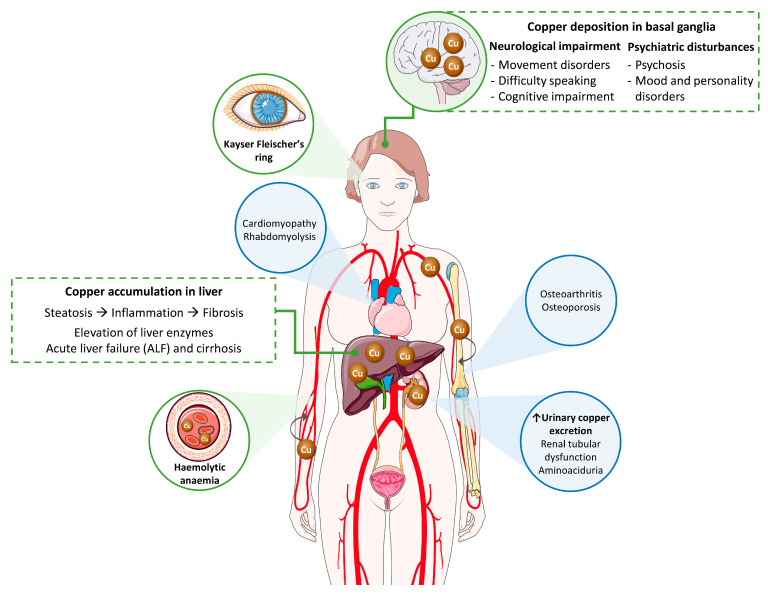
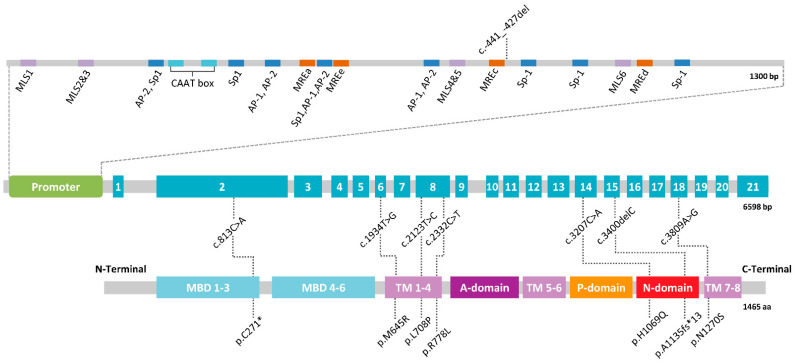
Wilson disease (WD) is a rare disorder caused by mutations in ATP7B, which leads to the defective biliary excretion of copper. The subsequent gradual accumulation of copper in different organs produces an extremely variable clinical picture, which comprises hepatic, neurological psychiatric, ophthalmological, and other disturbances. WD has a specific treatment, so that early diagnosis is crucial to avoid disease progression and its devastating consequences. The clinical diagnosis is based on the Leipzig score, which considers clinical, histological, biochemical, and genetic data. However, even patients with an initial WD diagnosis based on a high Leipzig score may harbor other conditions that mimic the WD's phenotype (Wilson-like). Many patients are diagnosed using current available methods, but others remain in an uncertain area because of bordering ceruloplasmin levels, inconclusive genetic findings and unclear phenotypes. Currently, the available biomarkers for WD are ceruloplasmin and copper in the liver or in 24 h urine, but they are not solid enough. Therefore, the characterization of biomarkers that allow us to anticipate the evolution of the disease and the monitoring of new drugs is essential to improve its diagnosis and prognosis.
Keywords: ATP7B gene; Leipzig scale; Wilson-like; Wilson’s disease; biomarkers; genetic modifiers.
Conflict of interest statement
The authors declare that they have no competing interest.
Figures
References
-
- Rumpel A. Über das Wesen und die Bedeutung der Leberveränderungen und der Pigmentierungen bei den damit verbundenen Fällen von Pseudosklerose, zugleich ein Beitrag zur Lehre von der Pseudosklerose (Westphal-Strümpell) Dtsch. Z. Nervenheilkd. 1913;49:54–73. doi: 10.1007/BF01760543. - DOI
Publication types
Grants and funding
LinkOut - more resources
Full Text Sources
Other Literature Sources
