


Unraveling How Tumor-Derived Galectins Contribute to Anti-Cancer Immunity Failure
- PMID: 34572756
- PMCID: PMC8469970
- DOI: 10.3390/cancers13184529
Unraveling How Tumor-Derived Galectins Contribute to Anti-Cancer Immunity Failure
Abstract
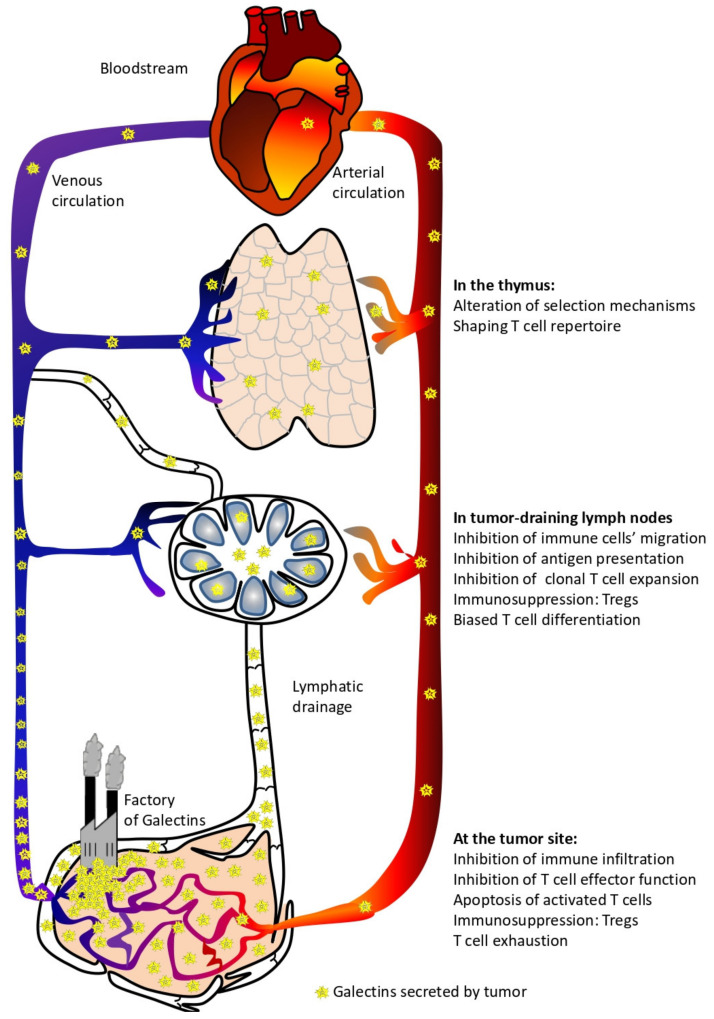
Current data indicates that anti-tumor T cell-mediated immunity correlates with a better prognosis in cancer patients. However, it has widely been demonstrated that tumor cells negatively manage immune attack by activating several immune-suppressive mechanisms. It is, therefore, essential to fully understand how lymphocytes are activated in a tumor microenvironment and, above all, how to prevent these cells from becoming dysfunctional. Tumors produce galectins-1, -3, -7, -8, and -9 as one of the major molecular mechanisms to evade immune control of tumor development. These galectins impact different steps in the establishment of the anti-tumor immune responses. Here, we carry out a critical dissection on the mechanisms through which tumor-derived galectins can influence the production and the functionality of anti-tumor T lymphocytes. This knowledge may help us design more effective immunotherapies to treat human cancers.
Keywords: cancer immunotherapy; galectins; lymphocyte homeostasis; tumor immune evasion.
Conflict of interest statement
The authors have no financial conflict of interest.
Figures
References
-
- Laderach D.J., Compagno D., Toscano M.A., Croci D.O., Dergan-Dylon S., Salatino M., Rabinovich G.A. Dissecting the signal transduction pathways triggered by galectin-glycan interactions in physiological and pathological settings. IUBMB Life. 2010;62:1–13. - PubMed
Publication types
Grants and funding
LinkOut - more resources
Full Text Sources
