


The Disappearance of Respiratory Viruses in Children during the COVID-19 Pandemic
- PMID: 34574472
- PMCID: PMC8467075
- DOI: 10.3390/ijerph18189550
The Disappearance of Respiratory Viruses in Children during the COVID-19 Pandemic
Abstract
Background: Social distancing measures are used to reduce the spreading of COVID-19. The aim of this study was to assess the impact of local restrictions on the transmission of respiratory virus infections.
Methods: we retrospectively analyzed the nasopharyngeal samples of all patients (0-18 years old) admitted with respiratory symptoms in a large Italian tertiary hospital during the last three seasons from 2018 to 2021.
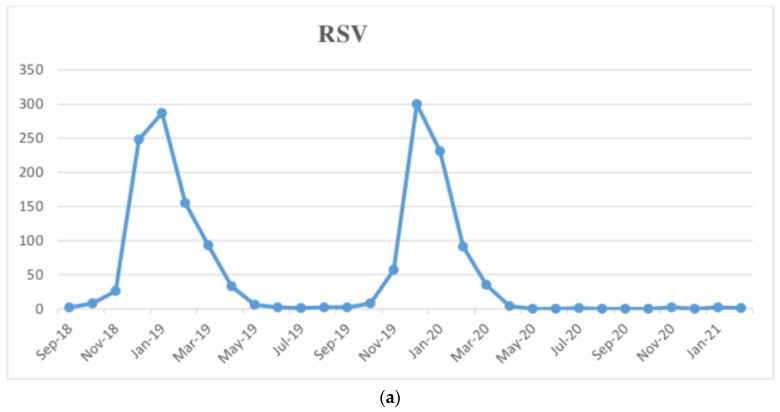
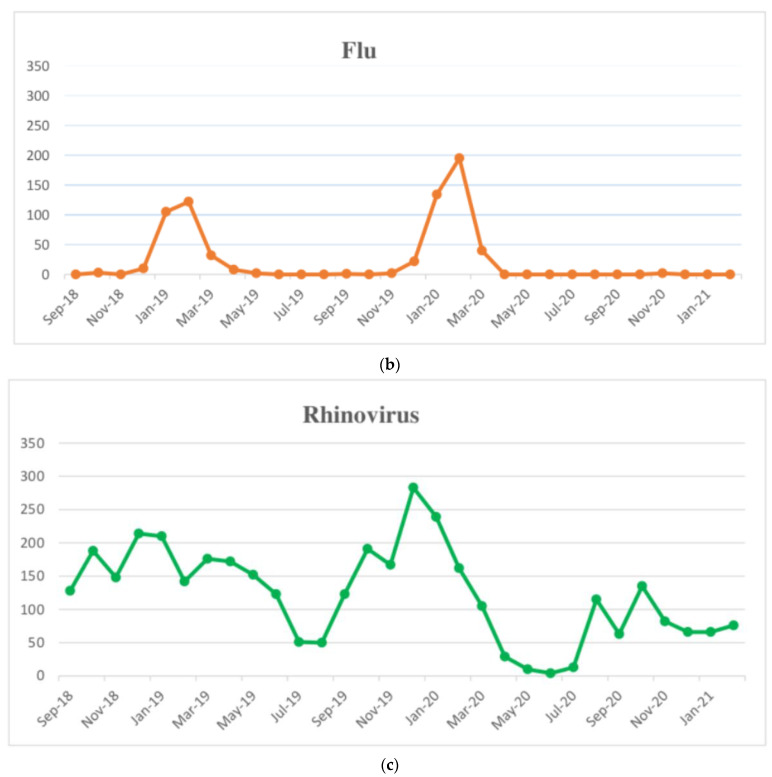
Results: A strong reduction in all viral respiratory infections was observed in the last season (2020-2021) compared to the two previous seasons (-79.69% and -80.66%, respectively). In particular, we found that during the epidemic period 2018-2019 and 2019-2020, the total number of Respiratory Syncytial Virus (RSV) cases was, respectively 726 and 689, while in the last season a total of five cases was detected. In the first months of 2018-2019 and 2019-2020, the total flu infections were 240 and 354, respectively, while in the last season we did not detect any influenza virus. As other viruses, the presence of Rhinovirus declined, but to a lesser extent: a total of 488 cases were assessed compared to the 1030 and 1165 cases of the two previous respective epidemic seasons.
Conclusions: Public health interventions and distancing (including continuous use of face masks) settled to counter the pandemic spread of COVID-19 had a macroscopic impact on all respiratory virus transmission and related diseases, with a partial exception of Rhinovirus. The absence of viruses' circulation could result in a lack of immunity and increased susceptibility to serious infections in the next seasons.
Keywords: COVID-19; childhood; pandemic; respiratory viruses; social distancing; viral infections.
Conflict of interest statement
All authors declare they have no conflicts of interest.
Figures
References
-
- Ghebreyesus T.A. WHO Director-General’s Opening Remarks at the Media Briefing on COVID-19—11 March 2020. 2020. [(accessed on 8 May 2020)]. Available online: https://www.who.int/dg/speeches/detail/who-director-general-s-opening-re....
-
- Matera L., Nenna R., Rizzo V., Ardenti Morini F., Banderali G., Calvani M., Calvi M., Cozzi G., Fabiani E., Falsaperla R., et al. SARS-CoV-2 Pandemic Impact on Pediatric Emergency Rooms: A Multicenter Study. Int. J. Environ. Res. Public Health. 2020;17:8753. doi: 10.3390/ijerph17238753. - DOI - PMC - PubMed
MeSH terms
LinkOut - more resources
Full Text Sources
Medical
Research Materials
