


Bariatric Surgery and Hypertension
- PMID: 34575161
- PMCID: PMC8467380
- DOI: 10.3390/jcm10184049
Bariatric Surgery and Hypertension
Abstract
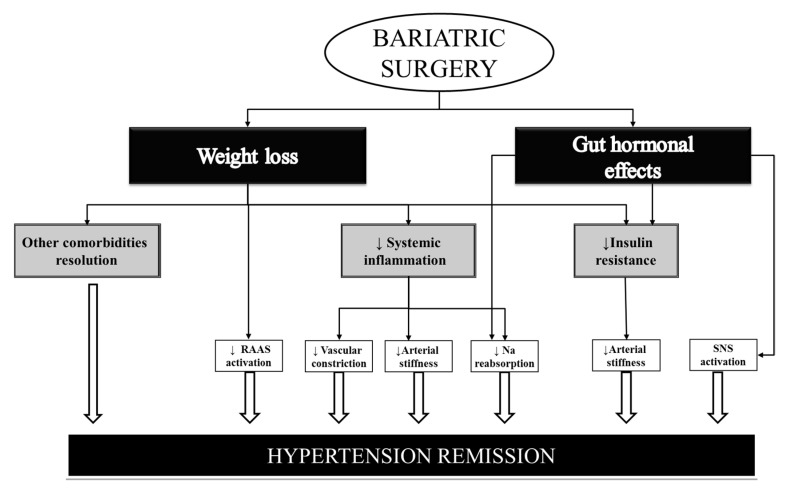
A clear pathogenetic association exists between obesity and arterial hypertension, becoming even more evident in subjects with severe obesity. Bariatric surgery has proved to be the most effective treatment for severe obesity, with its benefits going beyond weight loss. The present review aimed to determine the effects of bariatric surgery on arterial hypertension evident in short- and long-term follow-ups. Moreover, the differences between surgical techniques regarding hypertension remission are described as well as the possible pathophysiologic mechanisms involved. In addition, the effects of bariatric surgery beyond blood pressure normalization are also analyzed, including those on target organs and cardiovascular morbidity and mortality.
Keywords: bariatric surgery; blood pressure; hypertension; modifications of structural changes; obesity; severe obesity.
Conflict of interest statement
The authors declare no conflict of interest.
Figures
References
-
- Sjöström L., Lindroos A.-K., Peltonen M., Torgerson J., Bouchard C., Carlsson B., Dahlgren S., Larsson B., Narbro K., Sjöström C.D., et al. Lifestyle, Diabetes, and Cardiovascular Risk Factors 10 Years after Bariatric Surgery. N. Engl. J. Med. 2004;351:2683–2693. doi: 10.1056/NEJMoa035622. - DOI - PubMed
Publication types
LinkOut - more resources
Full Text Sources
