


Pulse-Cereal Blend Extrusion for Improving the Antioxidant Properties of a Gluten-Free Flour
- PMID: 34577047
- PMCID: PMC8467424
- DOI: 10.3390/molecules26185578
Pulse-Cereal Blend Extrusion for Improving the Antioxidant Properties of a Gluten-Free Flour
Abstract
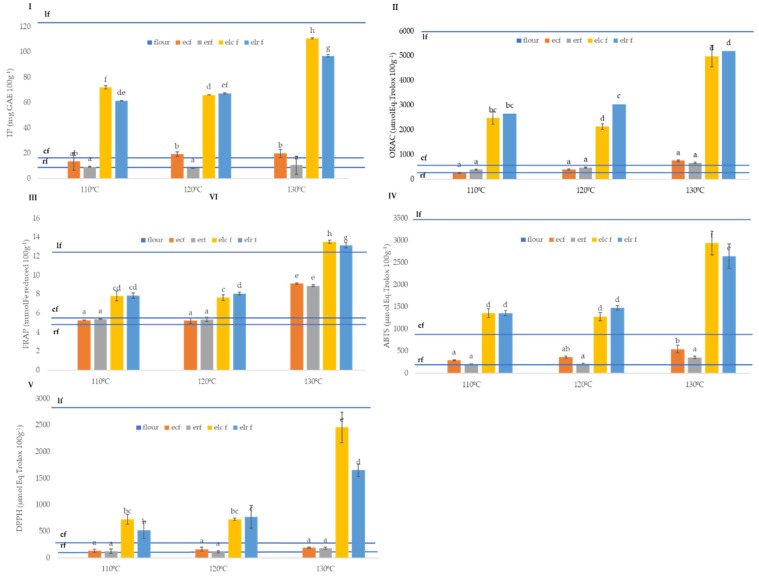
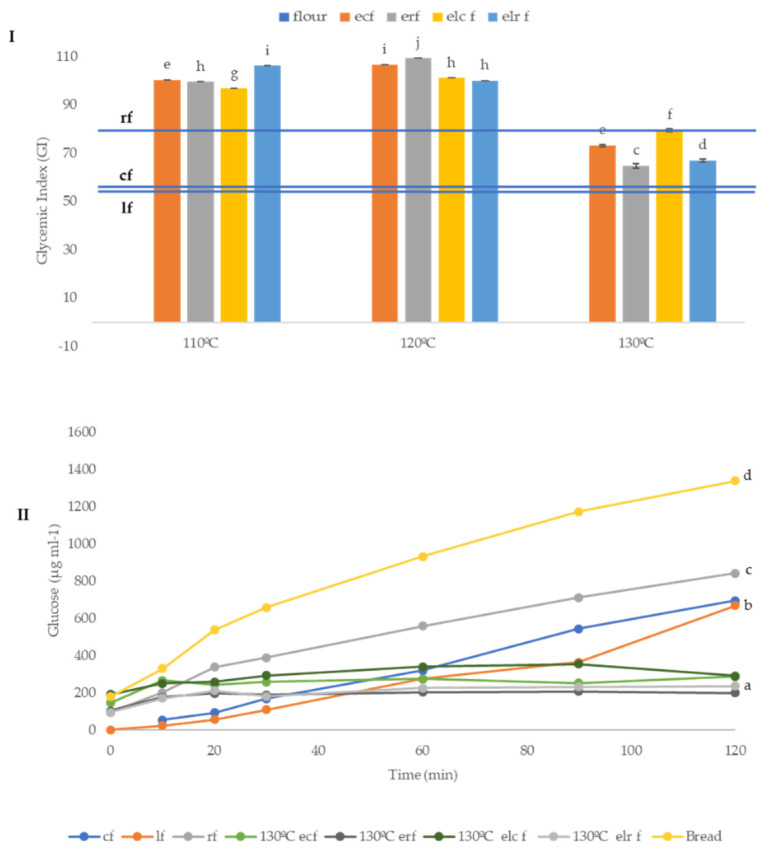
Extrusion is an interesting technological tool that facilitates pulse formulation into flour mixtures, with tailored fibre content, total antioxidant capacity (TAC) and glycemic index (GI) among other components in final formulas. The gluten-free (GF) market has significantly grown during the last years. GF products have evolved from specialty health foods to products targeted to the general population and not only associated to celiac consumers. This study evaluates how temperature, cereal base (rice/corn) and pulse concentration affect extruded flour properties and which conditions are more efficient to develop a gluten-free flour with high TAC and low GI. Additionally, it evaluated the effect of this optimal formula after the baking process. The results showed an increase of total phenol (TP) and antioxidant activity with extrusion, with a temperature-dependent effect (130 °C ≥ 120 °C ≥ 110 °C), which may imply an enhanced bioaccessibility of phenolics compounds after extraction. Extrusion increased GI in comparison to native flour; however, a dough temperature of 130 °C resulted in a significantly (p ≤ 0.05) lower GI than that observed for 110-120 °C doughs, probably associated to the pastification that occurred at higher temperatures, which would decrease the degree of gelatinization of the starches and therefore a significant (p ≤ 0.05) GI reduction. Corn-lentil flour showed higher antioxidant properties and lower GI index in comparison with rice-lentil blends. The formulation of the optimal blend flour into a baked product (muffin) resulted in a significant loss of antioxidant properties, with the exception of the reducing power (FRAP), although the final antioxidant values of the baked product were in the range of the original native flour blend before any process.
Keywords: SEM; antioxidant; corn; extrusion; glycemic index; lentil; rice.
Conflict of interest statement
The authors declare no conflict of interest.
Figures
References
-
- Levinson-Castiel R., Eliakim R., Shinar E., Perets T.T., Layfer O., Levhar N., Schvimer M., Marderfeld L., Ben-Horin S., Shamir R. Rising prevalence of celiac disease is not universal and repeated testing is needed for population screening. United Eur. Gastroenterol. J. 2019;7:412–418. doi: 10.1177/2050640618818227. - DOI - PMC - PubMed
-
- Gomes R.C., Maia J.C., Arrais R.F., Jatobá C.A.N., Rocha M.A.C., Brito M.E.F., Nazion A.L.O., Maranhão C.M., Maranhão H.D.S. The celiac iceberg: From the clinical spectrum to serology and histopathology in children and adolescents with type 1 diabetes mellitus and Down syndrome. Scand. J. Gastroenterol. 2016;51:178–185. doi: 10.3109/00365521.2015.1079645. - DOI - PMC - PubMed
MeSH terms
Substances
Grants and funding
LinkOut - more resources
Full Text Sources
Medical
Miscellaneous
