


Donor source and post-transplantation cyclophosphamide influence outcome in allogeneic stem cell transplantation for GATA2 deficiency
- PMID: 34580862
- PMCID: PMC8702451
- DOI: 10.1111/bjh.17840
Donor source and post-transplantation cyclophosphamide influence outcome in allogeneic stem cell transplantation for GATA2 deficiency
Abstract
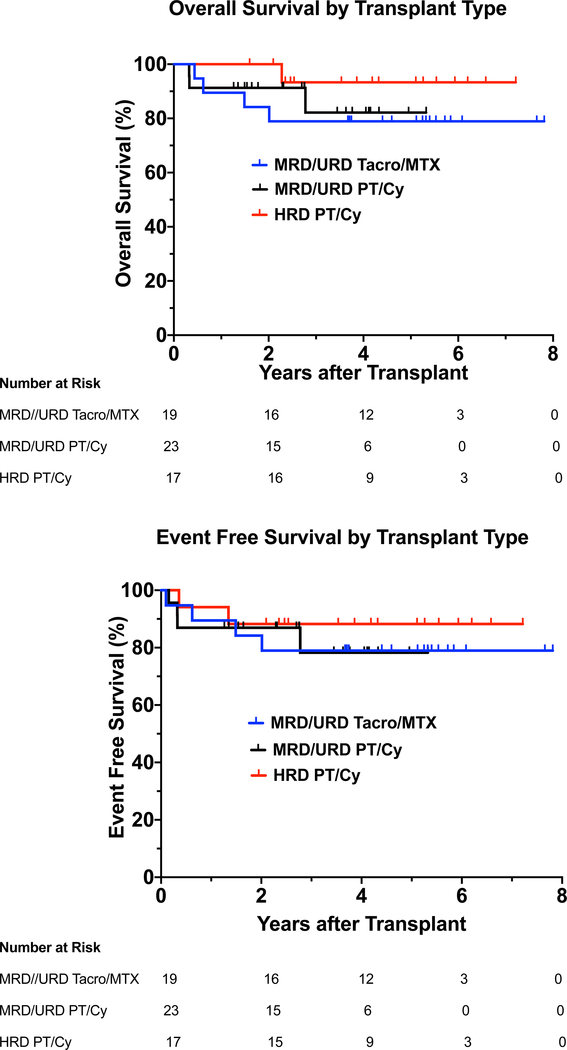
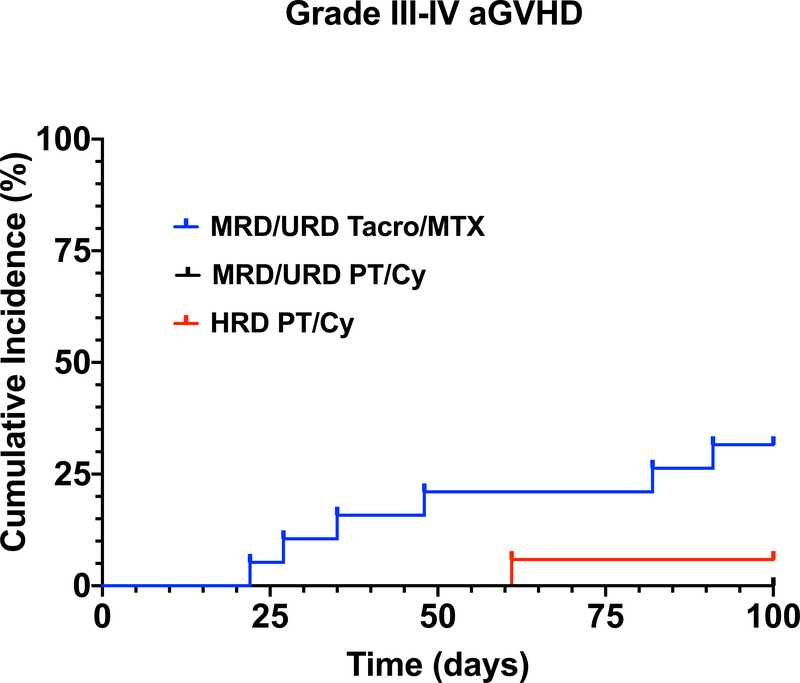
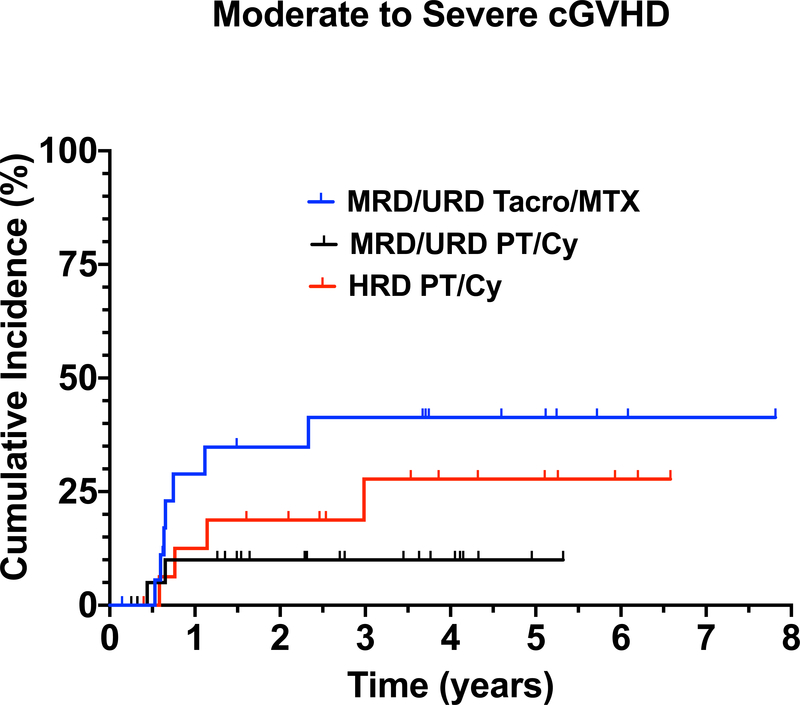
GATA2 deficiency was described in 2011, and shortly thereafter allogeneic hematopoietic stem cell transplantation (HSCT) was shown to reverse the hematologic disease phenotype. However, there remain major unanswered questions regarding the type of conditioning regimen, type of donors, and graft-versus-host disease (GVHD) prophylaxis. We report 59 patients with GATA2 mutations undergoing HSCT at National Institutes of Health between 2013 and 2020. Primary endpoints were engraftment, reverse of the clinical phenotype, secondary endpoints were overall survival (OS), event-free survival (EFS), and the incidence of acute and chronic GVHD. The OS and EFS at 4 years were 85·1% and 82·1% respectively. Ninety-six percent of surviving patients had reversal of the hematologic disease phenotype by one-year post-transplant. Incidence of grade III-IV aGVHD in matched related donor (MRD) and matched unrelated donor recipients (URD) patients receiving Tacrolimus/Methotrexate for GVHD prophylaxis was 32%. In contrast, in the MRD and URD who received post-transplant cyclophosphamide (PT/Cy), no patient developed grade III-IV aGVHD. Six percent of haploidentical related donor (HRD) recipients developed grade III-IV aGVHD. In summary, a busulfan-based HSCT regimen in GATA2 deficiency reverses the hematologic disease phenotype, and the use of PT/Cy reduced the risk of both aGVHD and cGVHD.
Keywords: GATA2; allogeneic; cyclophosphamide; donor; transplantation.
© 2021 British Society for Haematology and John Wiley & Sons Ltd. This article has been contributed to by US Government employees and their work is in the public domain in the USA.
Conflict of interest statement
Competing Interest Statement
The authors declare no competing financial interests.
Figures
Comment in
-
Finding the best haematopoietic stem cell transplant regimen for GATA2 haploinsufficiency: how close are we?Br J Haematol. 2022 Jan;196(1):13-14. doi: 10.1111/bjh.17859. Epub 2021 Sep 27. Br J Haematol. 2022. PMID: 34580866 No abstract available.
References
-
- Ostergaard P, Simpson MA, Connell FC, Steward CG, Brice G, Woollard WJ, et al. Mutations in GATA2 cause primary lymphedema associated with a predisposition to acute myeloid leukemia (Emberger syndrome). Nat Genet. 2011;43(10):929–31. - PubMed
Publication types
MeSH terms
Substances
Grants and funding
- HHSN261200800001C/RC/CCR NIH HHS/United States
- HHSN261200800001E/CA/NCI NIH HHS/United States
- ZIA BC010870/ImNIH/Intramural NIH HHS/United States
- 75N910D00024/Intramural Research program of the NIH including the National Cancer Institute, National Institutes of Health (Hematopoietic Stem Cell Transplant for GATA2 Deficiency
LinkOut - more resources
Full Text Sources
Medical
