Triangulating Evidence to Infer Pathways that Influence Ebola Virus Disease-Related Stigma and Clinical Findings among Survivors: An Observational Cohort Study
- PMID: 34583332
- PMCID: PMC8641323
- DOI: 10.4269/ajtmh.20-1513
Triangulating Evidence to Infer Pathways that Influence Ebola Virus Disease-Related Stigma and Clinical Findings among Survivors: An Observational Cohort Study
Abstract
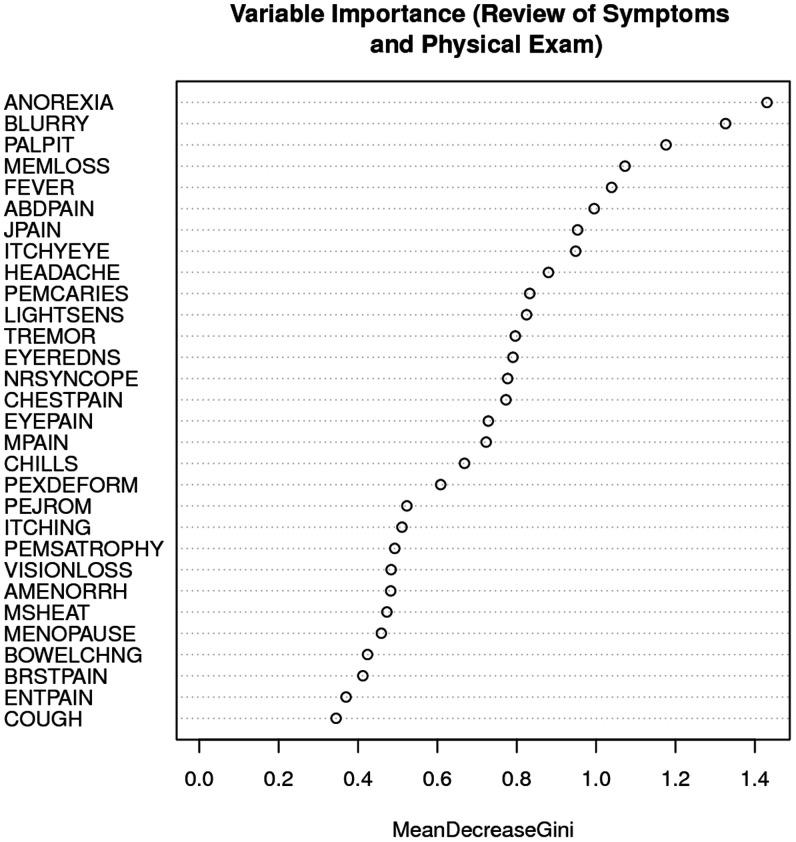
Visible signs of disease can evoke stigma while stigma contributes to depression and mental illness, sometimes manifesting as somatic symptoms. We assessed these hypotheses among Ebola virus disease (EVD) survivors, some of whom experienced clinical sequelae. Ebola virus disease survivors in Liberia were enrolled in an observational cohort study starting in June 2015 with visits every 6 months. At baseline and 18 months later, a seven-item index of EVD-related stigma was administered. Clinical findings (self-reported symptoms and abnormal findings) were obtained at each visit. We applied the generalized estimating equation method to assess the bidirectional concurrent and lagged associations between clinical findings and stigma, adjusting for age, gender, educational level, referral to medical care, and HIV serostatus as confounders. When assessing the contribution of stigma to later clinical findings, we restricted clinical findings to five that were also considered somatic symptoms. Data were obtained from 859 EVD survivors. In concurrent longitudinal analyses, each additional clinical finding increased the adjusted odds of stigma by 18% (95% CI: 1.11, 1.25), particularly palpitations, muscle pain, joint pain, urinary frequency, and memory loss. In lagged associations, memory loss (adjusted odds ratio [AOR]: 4.6; 95% CI: 1.73, 12.36) and anorexia (AOR: 4.17; 95% CI: 1.82, 9.53) were associated with later stigma, but stigma was not significantly associated with later clinical findings. Stigma was associated with select symptoms, not abnormal objective findings. Lagged associations between symptoms and later stigma substantiate the possibility of a pathway related to visible symptoms identified by community members and leading to fear of contagion.
Figures
References
-
- Regional Office for Africa of World Health Organization, 2021. Health Topics. Ebola Virus Disease. Situation Reports from 2014--2016. Available at: https://www.afro.who.int/health-topics/ebola-virus-disease. Accessed September 20, 2021.
-
- WHO Ebola Response Team , 2016. After Ebola in West Africa–unpredictable risks, preventable epidemics. N Engl J Med 375: 587–596. - PubMed
-
- Focus 1000, US Centers for Disease Control and Prevention, UNICEF, 2015. Study of Public Knowledge, Attitudes, and Practices Relating to Ebola Virus Disease Prevention and Medical Care in Sierra Leone (Ebola KAP-4), Final Report. Freetown, Sierra Leone: Focus1000. Available at: http://focus1000.org/index.php/downloads-resources/send/4-ebola-kap-stud.... Accessed December 15, 2019.