. 2021 Sep 29;16(9):e0257474.
doi: 10.1371/journal.pone.0257474. eCollection 2021.

Highly sensitive scent-detection of COVID-19 patients in vivo by trained dogs

Affiliations

Highly sensitive scent-detection of COVID-19 patients in vivo by trained dogs

Omar Vesga et al. PLoS One. .

Abstract

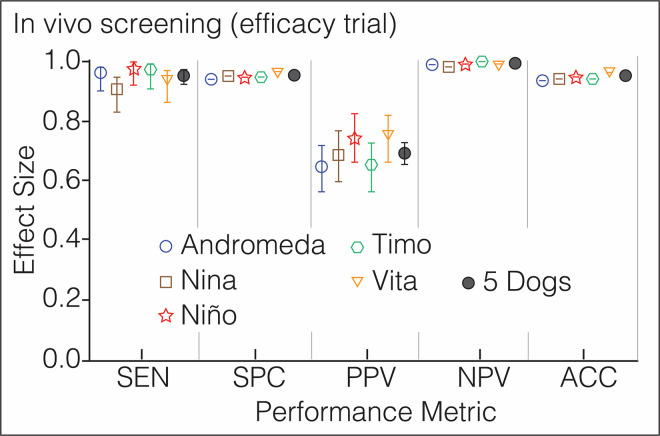
Timely and accurate diagnostics are essential to fight the COVID-19 pandemic, but no test satisfies both conditions. Dogs can scent-identify the unique odors of volatile organic compounds generated during infection by interrogating specimens or, ideally, the body of a patient. After training 6 dogs to detect SARS-CoV-2 by scent in human respiratory secretions (in vitro diagnosis), we retrained 5 of them to search and find the infection by scenting the patient directly (in vivo screening). Then, efficacy trials were designed to compare the diagnostic performance of the dogs against that of the rRT-PCR in 848 human subjects: 269 hospitalized patients (COVID-19 prevalence 30.1%), 259 hospital staff (prevalence 2.7%), and 320 government employees (prevalence 1.25%). The limit of detection in vitro was lower than 10-12 copies ssRNA/mL. During in vivo efficacy experiments, our 5 dogs detected 92 COVID-19 positive patients among the 848 study subjects. The alert (lying down) was immediate, with 95.2% accuracy and high sensitivity (95.9%; 95% C.I. 93.6-97.4), specificity (95.1%; 94.4-95.8), positive predictive value (69.7%; 65.9-73.2), and negative predictive value (99.5%; 99.2-99.7) in relation to rRT-PCR. Seventy-five days after finishing in vivo efficacy experiments, a real-life study (in vivo effectiveness) was executed among the riders of the Metro System of Medellin, deploying the human-canine teams without previous training or announcement. Three dogs were used to examine the scent of 550 volunteers who agreed to participate, both in test with canines and in rRT-PCR testing. Negative predictive value remained at 99.0% (95% C.I. 98.3-99.4), but positive predictive value dropped to 28.2% (95% C.I. 21.1-36.7). Canine scent-detection in vivo is a highly accurate screening test for COVID-19, and it detects more than 99% of infected individuals independent of key variables, such as disease prevalence, time post-exposure, or presence of symptoms. Additional training is required to teach the dogs to ignore odoriferous contamination under real-life conditions.


Conflict of interest statement

The authors have declared that no competing interests exist.

Figures
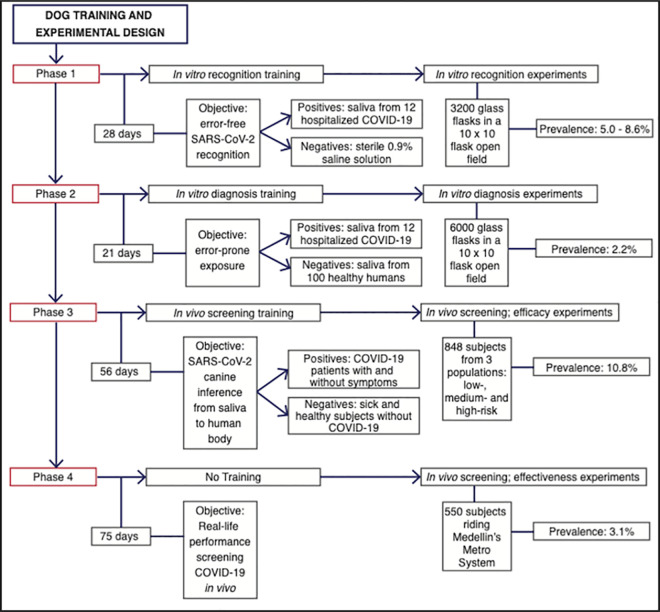
Fig 1
Fig 1. Efficacy studies.
Flow chart depicting the order in which training phases and experimental design were conducted. The number of days after phases 1, 2, and 3 indicate the time employed training the dogs before running efficacy experiments; in the case of phase 4, the time without training before starting the effectiveness experiments. COVID-19 prevalence was set up as desired for in vitro experiments, introducing a more difficult scenario by minimizing prevalence during phase 2 (in vitro diagnosis). Prevalence during phases 3 and 4 (in vivo screening) was spontaneous, given by the pandemic epidemiology of the different human groups participating in the study.
Fig 2
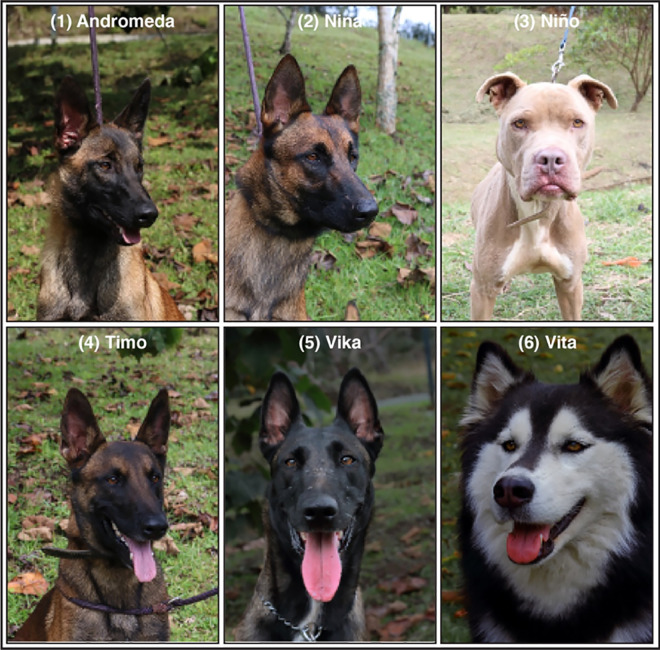
Fig 2. Pictures and identification of the six dogs trained for the scent-detection of SARS-CoV-2.
(1) Andromeda, intact female, 6-mo, Belgian Malinois (BM). (2) Nina, intact female, 25-mo, BM, (3) Niño, castrated male, unknown age, American Pit Bull Terrier. (4) Timo, intact male, 31-mo, BM. (5) Vika, intact female, 36-mo, BM. (6) Vita, intact female, 36-mo, first generation Alaskan Malamute x Siberian Husky.
Fig 3
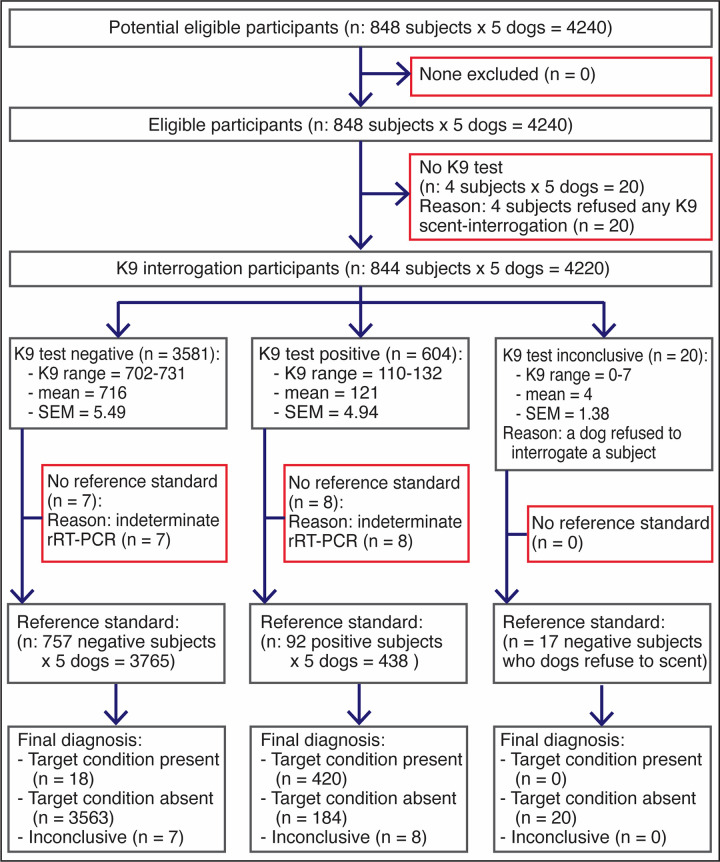
Fig 3. Phase 3: In vivo screening (efficacy trial).
Diagram illustrating the flow of human participants in the third phase of the study.
Fig 4
Fig 4. Phase 3: In vivo screening (efficacy trial).
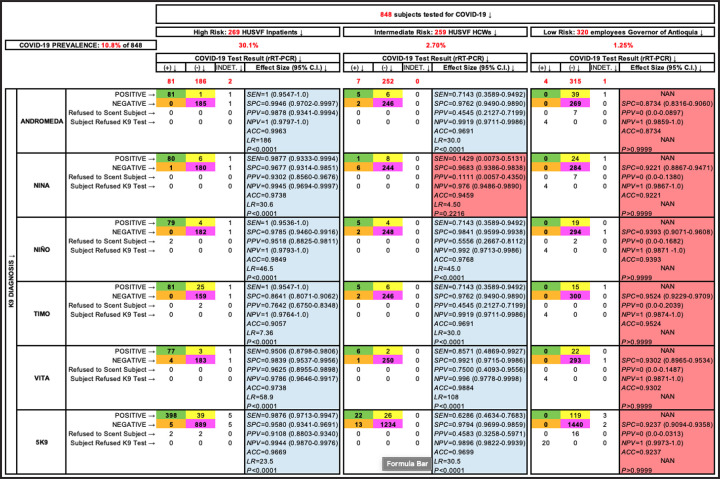
Data analysis by risk group of all participants in experiments designed to determine performance metrics of the dogs during in vivo screening. Green, yellow, orange and purple cells contain true positives, false positives, false negatives, and true negatives, respectively. Cells not enhanced contain the number of participants with “indeterminate” rRT-PCR (3), subjects who declined K9 olfaction (4), and those rare occasions where the dogs refused to scent an individual, which happened 7 times with Andromeda and Nina and 2 times with Niño. Sensitivity could not be computed in the low risk group (NAN: not a number) because all 4 COVID-19 patients declined K9 scent-detection, resulting in 0 in two cells of the 2x2 contingency table and not significant P values in the two-tailed Fisher’s Exact Test (enhanced in salmon color).
Fig 5
Fig 5. Phase 3: In vivo screening (efficacy trial).
Performance metrics of 5 dogs screening for COVID-19 the patients and staff of Hospital Universitario San Vicente Fundación and the personnel working in the Office of the Governor of Antioquia; n = 848, global prevalence = 10.5%. Each symbol has a different color to ease visualization of the dogs. The vertical lines above and below the symbols represent the 95% confidence interval for each metric, which is contained within the symbol for SPC, NPV and ACC. Additional numeric data in S4 Table in S1 File.
Fig 6
Fig 6. Phase 4: In vivo screening (effectiveness assay).
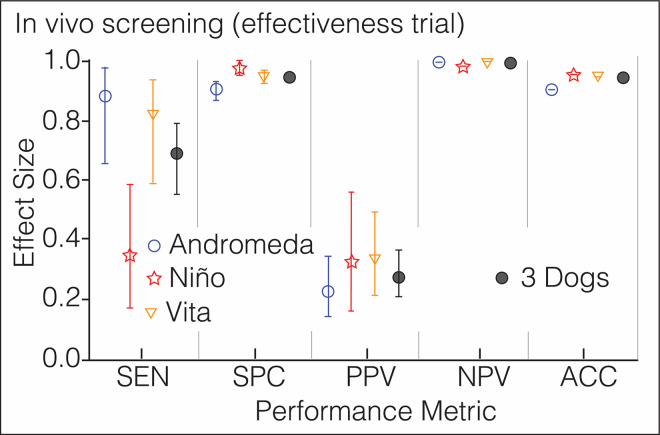
Performance metrics of 3 dogs screening for COVID-19 the citizens riding the Metro System of Medellin; n 550, prevalence 3.1%. Each symbol has a different color to ease visualization of the dogs. The vertical lines above and below the symbols represent the 95% confidence interval for each metric, which is contained within the symbol for NPV and ACC. Additional numeric data in S5 Table in S1 File.
Fig 7
Fig 7. Phase 4: In vivo screening (effectiveness assay).
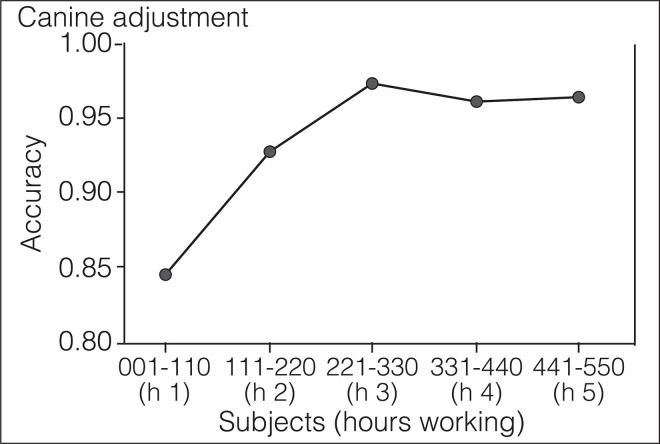
Canine adjustment to a real-life situation. Accuracy started much lower under real-life conditions, but improved with time as the dogs adjusted to the new environment. Numbers labeling the abscissa represent the order in which subjects were screened by the dogs, divided in groups of 110 individuals. Screening each group took approximately one hour of work for the dogs.
Fig 8
Fig 8. Biosafety data.
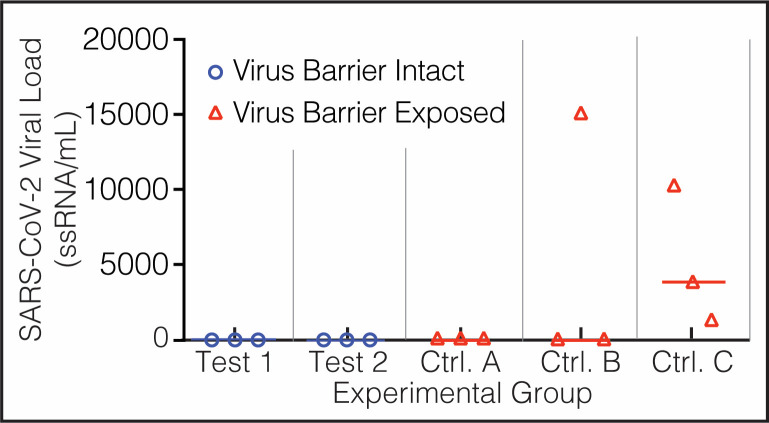
Experimental evaluation of the devices used to contain SARS-CoV-2 specimens. After testing negative for SARS-CoV-2 in saliva, 5 groups of 3 golden Syrian hamsters each (Mesocrisetus auratus) were exposed during 4 days to SARS-CoV-2 directly (Group B, virus control) or enclosed in devices 1 and 2. Animals in Test groups 1 and 2 (blue circles) were allowed to sniff their devices but could not touch them, while those allocated to control groups A, B, and C (red triangles) had direct access to the containment fabric. The ordinate represents the viral load in saliva of each hamster after exposure to SARS-CoV-2 in 5 experimental groups.

References

    1. Ritchie H, Mathieu E, Rodés-Guirao L, Appel C, Giattino C, Ortiz-Ospina E, et al (2020)—"Coronavirus Pandemic (COVID-19)". Published online at OurWorldInData.org. Available from: ’https://ourworldindata.org/coronavirus’ [Online Resource].
    1. Irwin A. What it will take to vaccinate the world against COVID-19. Nature. 2021;592: 176–178. doi: 10.1038/d41586-021-00727-3 - DOI - PubMed
    1. Botti-Lodovico Y, Rosenberg E, Sabeti PC. Testing in a Pandemic—Improving Access, Coordination, and Prioritization. N Engl J Med. 2021;384: 197–199. doi: 10.1056/NEJMp2025173 - DOI - PubMed
    1. Gandhi M, Yokoe DS, Havlir DV. Asymptomatic transmission, the Achilles’ heel of current strategies to control Covid-19. N Engl J Med. 2020;382: 2158–2160. doi: 10.1056/NEJMe2009758 - DOI - PMC - PubMed
    1. Kucirka LM, Lauer SA, Laeyendecker O, Boon D, Lessler J. Variation in false-negative rate of reverse transcriptase polymerase chain reaction–based SARS-CoV-2 tests by time since exposure. Ann Intern Med. 2020;173: 262–267. doi: 10.7326/M20-1495 - DOI - PMC - PubMed