


Factors affecting uptake of the levonorgestrel-releasing intrauterine device: A mixed-method study of social franchise clients in Nigeria
- PMID: 34587200
- PMCID: PMC8480829
- DOI: 10.1371/journal.pone.0257769
Factors affecting uptake of the levonorgestrel-releasing intrauterine device: A mixed-method study of social franchise clients in Nigeria
Abstract
Background: Despite the positive characteristics of the levonorgestrel-releasing intrauterine device (IUD)-a long-acting, highly effective contraceptive with important non-contraceptive attributes-the method has not been widely available in low- and middle-income countries. This study of hormonal IUD, copper IUD, implant and injectable users in Nigeria compares their characteristics, reasons for method choice, and experiences obtaining their method.
Methods: We conducted a phone survey with 888 women who received a hormonal IUD, copper IUD, contraceptive implant or injectable from 40 social franchise clinics across 18 states in Nigeria. We analyzed survey data descriptively by method and assessed factors associated with hormonal IUD use through multivariate logistic regression models. Follow-up in-depth interviews conducted with 32 women were analyzed thematically.
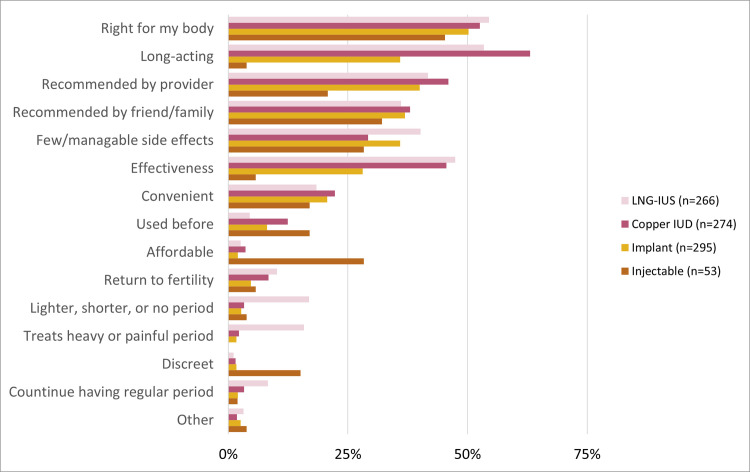
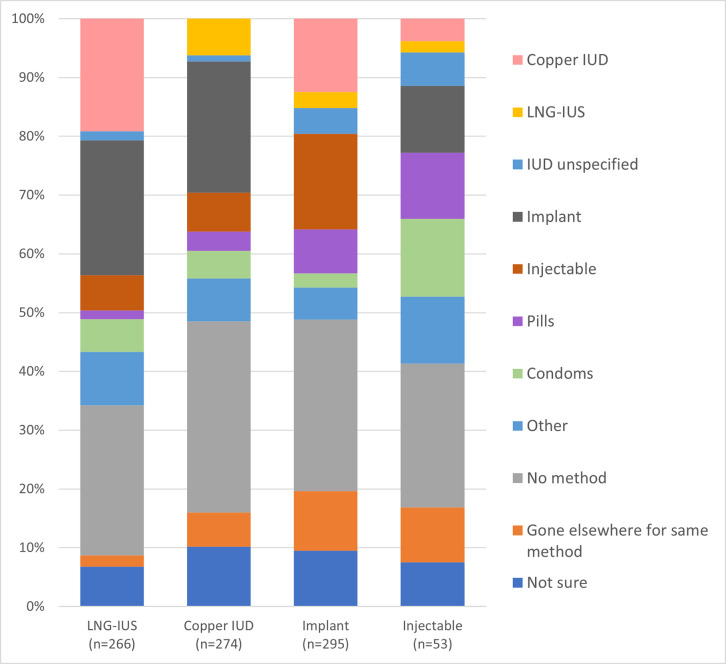
Results: There were few differences by method used in the socio-demographic profiles and contraceptive history of participants. Among users choosing a long-acting, reversible method, the top reasons for method choice included perceptions that the method was "right for my body," long duration, recommended by provider, recommended by friends/family, few or manageable side effects, and high effectiveness. Among hormonal IUD users, 17% mentioned reduced bleeding (inclusive of lighter, shorter, or no period), and 16% mentioned treatment of heavy or painful periods. Qualitative data supported these findings. Among survey respondents, between 25% and 33% said they would have chosen no method if the method they received had not been available. Both quantitative and qualitative data indicated that partner support can affect contraceptive use, with in-depth interviews revealing that women typically needed partner permission to use contraception, but men were less influential in method choice.
Conclusions: Expanding access to the hormonal IUD as part of a full method mix provides an opportunity to expand contraceptive choice for women in Nigeria. Findings are timely as the government is poised to introduce the method on a wider scale.
Conflict of interest statement
The authors have declared that no competing interests exist.
Figures
References
-
- World Health Organization (WHO); Johns Hopkins Center for Communication Programs (CCP), Family planning: a global handbook for providers. 3rd ed. Baltimore and Geneva: CCP and WHO; 2018. Available from: http://www.fphandbook.org/
Publication types
MeSH terms
Substances
LinkOut - more resources
Full Text Sources
Medical
