


Benefits from one session of deep and slow breathing on vagal tone and anxiety in young and older adults
- PMID: 34588511
- PMCID: PMC8481564
- DOI: 10.1038/s41598-021-98736-9
Benefits from one session of deep and slow breathing on vagal tone and anxiety in young and older adults
Abstract
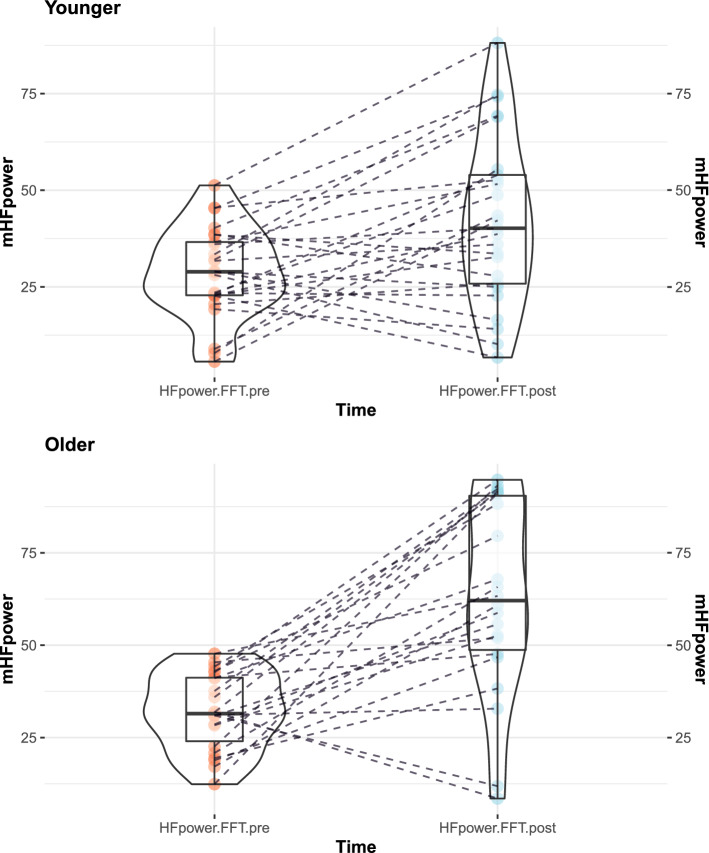
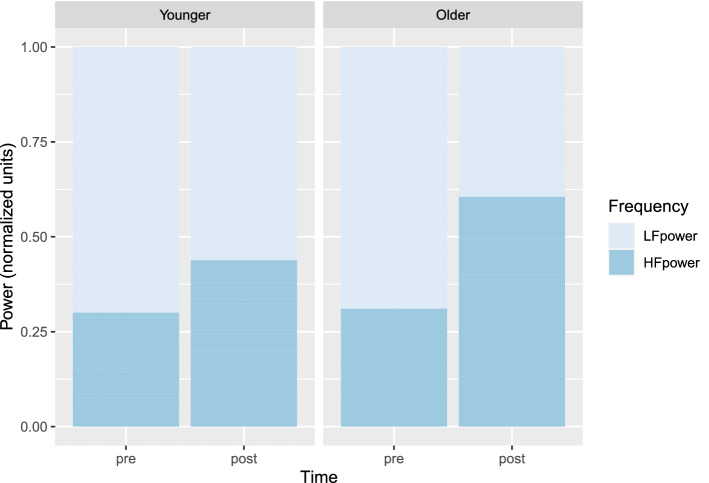
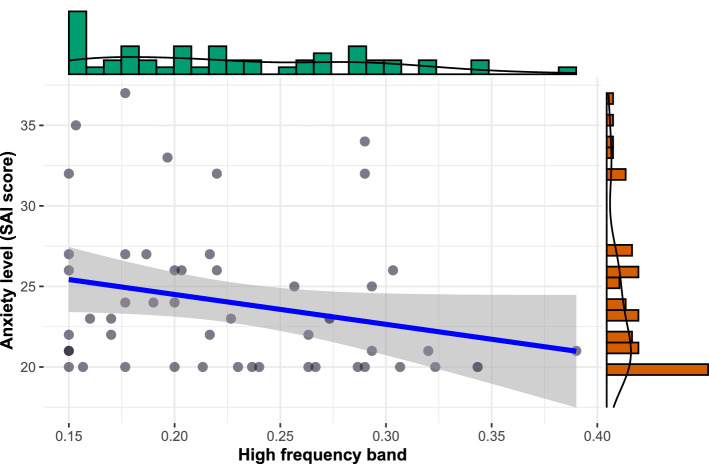
Anxiety is recognized as a major health issue and is quite prevalent among older adults. An efficient way to manage anxiety is abdominal breathing. Breathing exercises seem to reduce anxiety and to increase parasympathetic activity assessed by HRV indexes. Yet, the effect of abdominal breathing on physiological stress (HRV) and anxiety in older adults remains poorly understood. Therefore, the aim of this study is to test the effects of deep and slow breathing (DSB, low inhale/exhale ratio) on physiological stress and anxiety in older adults (n = 22) in comparison with younger ones (n = 25). DSB increased significantly HFpower and reduced state anxiety in both younger and older adults. Interestingly, the increased in HF power was significantly higher among older adults than younger ones. As expected, the ratio inhale/exhale being not equal, RMSSD did not increase following DSB. Thus, we provide evidence suggesting that DSB is more beneficial to older adults than younger ones to restore vagal outflow. Despite future work being required, those results provide relevant clinical application leads to manage state anxiety among older adults and to promote successfull aging.
© 2021. The Author(s).
Conflict of interest statement
The authors declare no competing interests.
Figures
References
Publication types
MeSH terms
LinkOut - more resources
Full Text Sources
Medical
Research Materials
Miscellaneous
