


Hib Vaccines: Their Impact on Haemophilus influenzae Type b Disease
- PMID: 34590133
- PMCID: PMC8482018
- DOI: 10.1093/infdis/jiaa537
Hib Vaccines: Their Impact on Haemophilus influenzae Type b Disease
Abstract
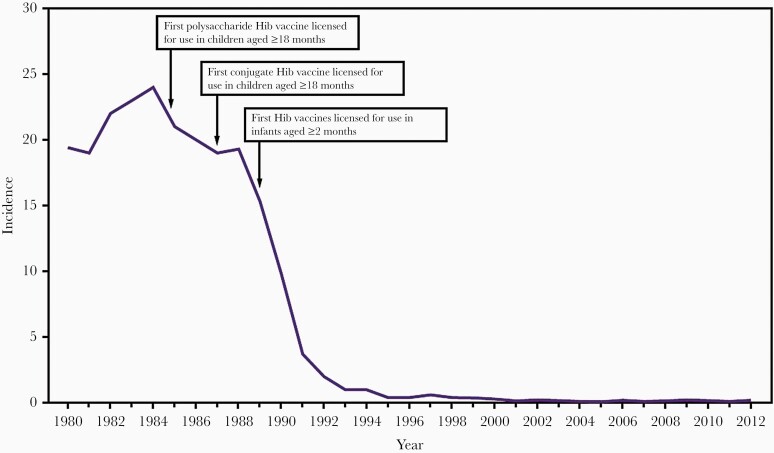
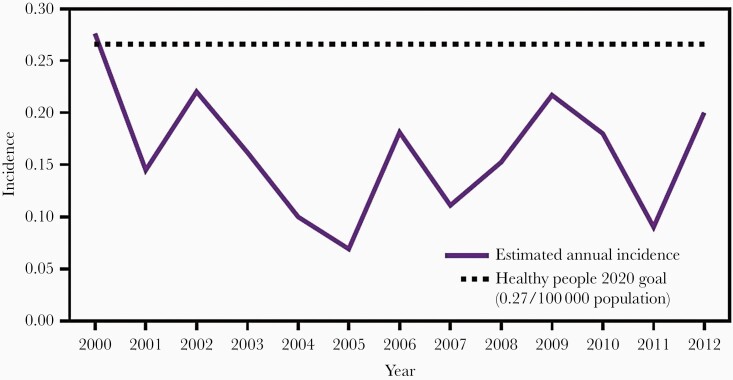
Haemophilus influenzae serotype b (Hib) is an important cause of serious, invasive infections, particularly in young children. Since 1985, a series of vaccines composed of the type b capsular polysaccharide polyribosylribitol phosphate (PRP), followed by PRP conjugated to various proteins, have been licensed for use in the United States and worldwide. The conjugated vaccines offer increased immunogenicity and prolonged durability of immune protection compared to the plain PRP vaccine and increasingly are combined with other childhood vaccines for decreased cost and increased ease of vaccination. Hib vaccines have a very favorable safety profile, have been found to be either cost-saving or cost-effective by many public health agencies, and, in most countries, are initiated during early infancy as part of routine childhood immunization programs. As a result of widespread use of the vaccines, the incidence of Hib infections, and their associated morbidity and mortality, has fallen dramatically across the globe. Yet, many children remain unimmunized or underimmunized against Hib, particularly in limited-resource countries. Future efforts to further reduce the disease burden of Hib infections remain a high priority.
Keywords: PRP; meningitis; vaccine.
© The Author(s) 2021. Published by Oxford University Press for the Infectious Diseases Society of America.
Figures
References
-
- Peltola H, Aavitsland P, Hansen KG, Jónsdóttir KE, Nøkleby H, Romanus V. Perspective: a five-country analysis of the impact of four different Haemophilus influenzae type b conjugates and vaccination strategies in Scandinavia. J Infect Dis 1999; 179:223–9. - PubMed
-
- Chandran A, Herbert H, Misurski D, Santosham M. Long-term sequelae of childhood bacterial meningitis: an underappreciated problem. Pediatr Infect Dis J 2011; 30:3–6. - PubMed
-
- Decker MD, Edwards KM, Bradley R, Palmer P. Comparative trial in infants of four conjugate Haemophilus influenzae type b vaccines. J Pediatr 1992; 120:184–9. - PubMed
-
- Briere EC, Rubin L, Moro PL, Cohn A, Clark T, Messonnier N; Division of Bacterial Diseases, National Center for Immunization and Respiratory Diseases, CDC . Prevention and control of Haemophilus influenzae type b disease: recommendations of the Advisory Committee on Immunization Practices (ACIP). MMWR Recomm Rep 2014; 63(RR-01):1–14. - PubMed
-
- Obando-Pacheco P, Rivero-Calle I, Gómez-Rial J, Rodríguez-Tenreiro Sánchez C, Martinón-Torres F. New perspectives for hexavalent vaccines. Vaccine 2018; 36:5485–94. - PubMed
MeSH terms
Substances
LinkOut - more resources
Full Text Sources
Other Literature Sources
Medical
Research Materials
