


Primary mediastinal large B cell lymphoma
- PMID: 34590432
- PMCID: PMC8563158
- DOI: 10.1111/1759-7714.14155
Primary mediastinal large B cell lymphoma
Abstract
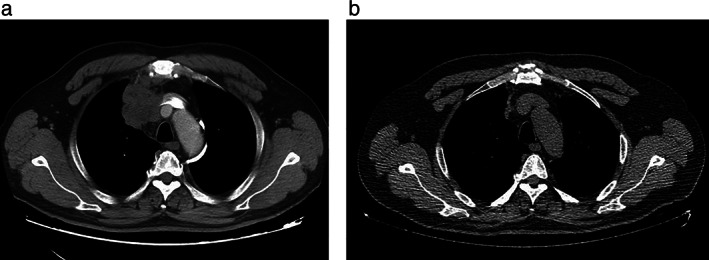
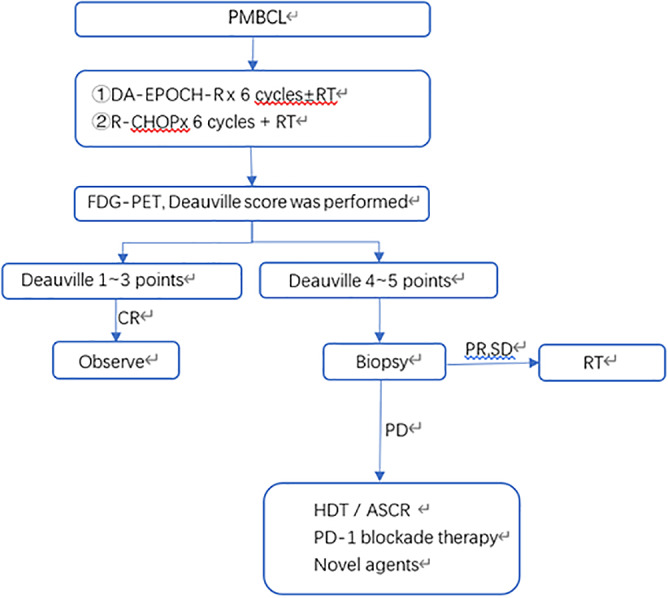
Primary mediastinal large B cell lymphoma (PMBCL) is an aggressive large B cell lymphoma originating in the mediastinum, that mainly expresses B cell surface molecules, such as CD19, CD20, CD22, andCD79a. Clinically, they are characterized by rapidly increasing anterior mediastinal masses, which can cause compression of the surrounding tissues. The diagnosis of PMBCL mainly depends on the pathological features, imaging examination and clinical features. Currently, the most commonly used therapeutic regimens are R-CHOP and R-EPOCH. Radiotherapy is beneficial in some patients, but it can also lead to long-term toxicity. The research and development of novel therapies are ongoing, and some studies have achieved encouraging results, including those conducted on chimeric antigen receptor-modified T (CAR-T) cell therapy and anti-PD-1 drugs. However, randomized controlled trials with larger sample sizes are still needed. Positron emission tomography-computed tomography (PET-CT) is mainly used to assess the curative effect after treatment and to guide the subsequent treatment strategy.
Keywords: diagnosis; drug therapy; immunotherapy; primary mediastinal large B-cell lymphoma.
© 2021 The Authors. Thoracic Cancer published by China Lung Oncology Group and John Wiley & Sons Australia, Ltd.
Conflict of interest statement
All authors declare no conflict of interest.
Figures
References
-
- Martelli M, Ferreri A, Di Rocco A, Ansuinelli M, Johnson PWM. Primary mediastinal large B‐cell lymphoma. Crit Rev Oncol Hematol. 2017;113:318–27. - PubMed
-
- Barth TFE, Leithäuser F, Joos S, Bentz M, Möller P. Mediastinal (thymic) large B‐cell lymphoma: where do we stand? Lancet Oncol. 2002;3(4):229–34. - PubMed
-
- Pfau D, Smith DA, Beck R, Gilani KA, Gupta A, Caimi P, et al. Primary mediastinal large B‐cell lymphoma: a review for radiologists. Am J Roentgenol. 2019;213(5):W194–210. - PubMed
Publication types
MeSH terms
LinkOut - more resources
Full Text Sources
Research Materials
