


Neural mechanisms of intimate partner aggression
- PMID: 34592359
- PMCID: PMC8560571
- DOI: 10.1016/j.biopsycho.2021.108195
Neural mechanisms of intimate partner aggression
Abstract
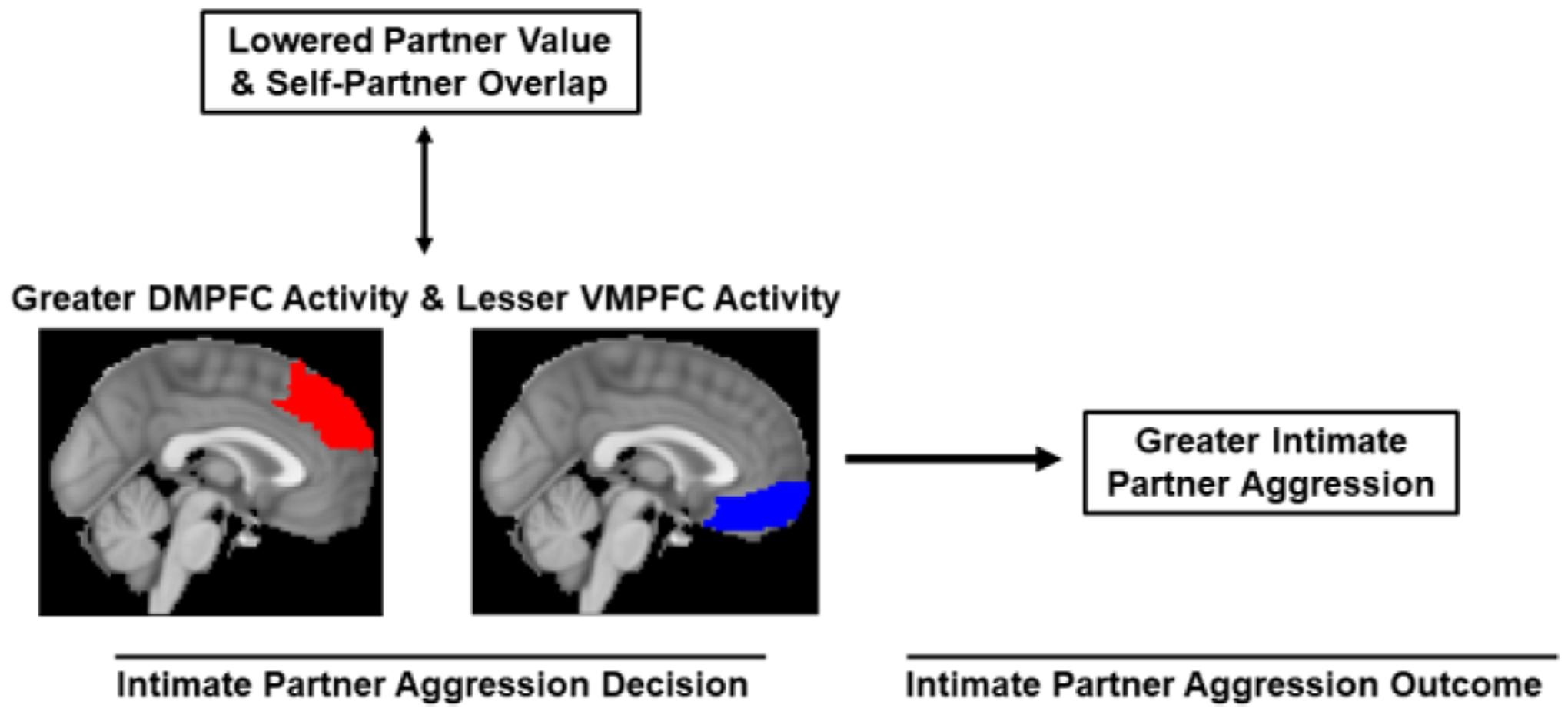
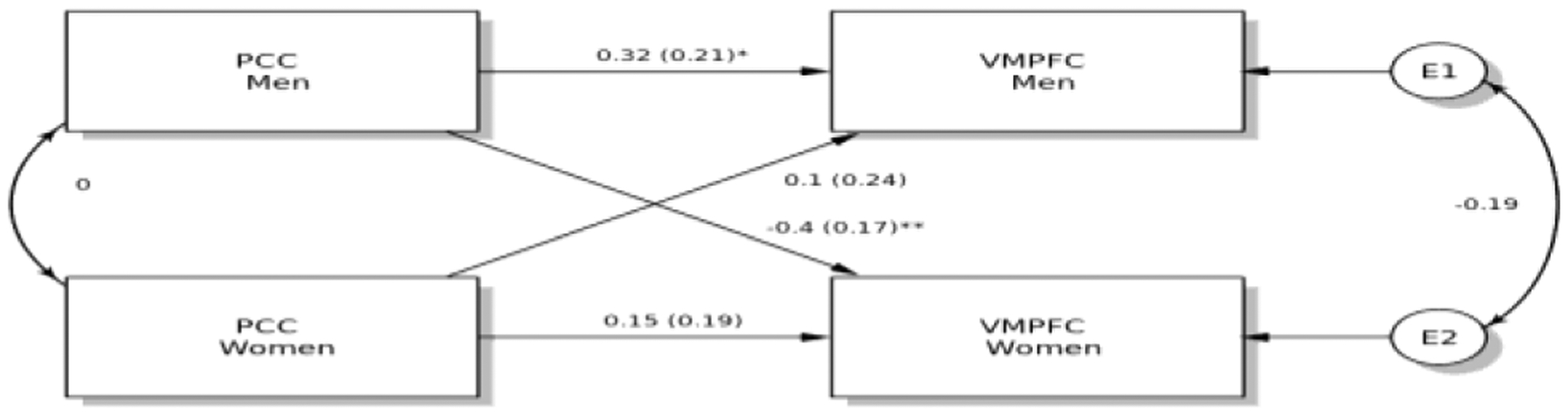
People sometimes hurt those they profess to love; yet our understanding of intimate partner aggression (IPA) and its causes remains incomplete. We examined brain activity using functional magnetic resonance imaging (fMRI) in an ethnically and racially diverse sample of 50 female-male, monogamous romantic couples as they completed an aggression task against their intimate partner, a close friend, and a different-sex stranger. Laboratory and real-world IPA were uniquely associated with altered activity within and connectivity between cortical midline structures that subserve social cognition and the computation of value. Men's IPA most corresponded to lower posterior cingulate reactivity during provocation and women's IPA most corresponded to lower ventromedial prefrontal cortex activity during IPA itself. Actor-partner independence modeling suggested women's IPA may correspond to their male partner's neural reactivity to provocation. Broadly, these findings highlight the importance of self-regulatory functions of the medial cortex and away from effortful inhibition subserved by dorsolateral cortices.
Keywords: FMRI; Implicit partner attitudes; Intimate partner aggression; Intimate partner violence; Prefrontal cortex.
Copyright © 2021 Elsevier B.V. All rights reserved.
Conflict of interest statement
Financial Disclosures
The authors report no financial interests or potential conflicts of interest.
Figures



References
-
- Allen JJ, & Anderson C (2017). Aggression and violence: Definitions and distinctions. In Sturmey P (Ed.), The Wiley handbook of violence and aggression. John Wiley & Sons.
-
- Aron A, Aron E, & Smollan D (1992). Inclusion of Other in the Self Scale and the structure of interpersonal closeness. Journal of Personality and Social Psychology, 63, 596–612.
-
- Aron A, Aron E, Tudor M, & Nelson G (1991). Close relationships as including other in the self. Journal of Personality and Social Psychology, 60, 241–253.
-
- Bates D, Mächler M, Bolker B, & Walker S (2014). Fitting linear mixed-effects models using lme4. Journal of Statistical Software, 67(1), 1–48.
Publication types
MeSH terms
Grants and funding
LinkOut - more resources
Full Text Sources
Medical
