


Factors associated with medication adherence of hypertensive patients in the Philippines: a systematic review
- PMID: 34593047
- PMCID: PMC8485436
- DOI: 10.1186/s40885-021-00176-0
Factors associated with medication adherence of hypertensive patients in the Philippines: a systematic review
Abstract
Background: Diseases of the heart and vascular system are the leading cause of mortality in the Philippines. Hypertension, the most important modifiable risk factor, has a prevalence rate of 28% and a control rate of 20%. Despite the proven efficacy of pharmacologic treatment, medication adherence is reported to be as low as 66%. While there are publications that reported factors that affect adherence in Filipinos, there are no existing research that evaluated them systematically. This review is conducted to present and synthesize findings of published literatures.
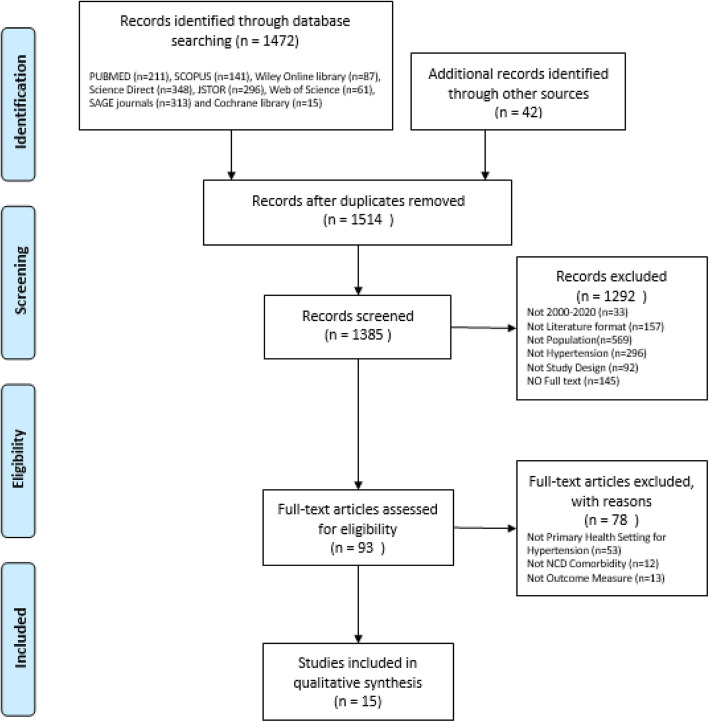
Methods: Databases-PubMed, Scopus, Wiley Online library, Science Direct, JSTOR, Web of Science, SAGE journals, and Cochrane-were used to search for articles published from 2000 to 2020 that studied medication adherence in adult Filipino hypertensive population. Out of the initial 1514 articles, 15 articles met the criteria and were included in the analysis. The evidence from the included studies was summarized and discussed in a narrative review using the World Health Organization framework for adherence to long-term therapies as the framework.
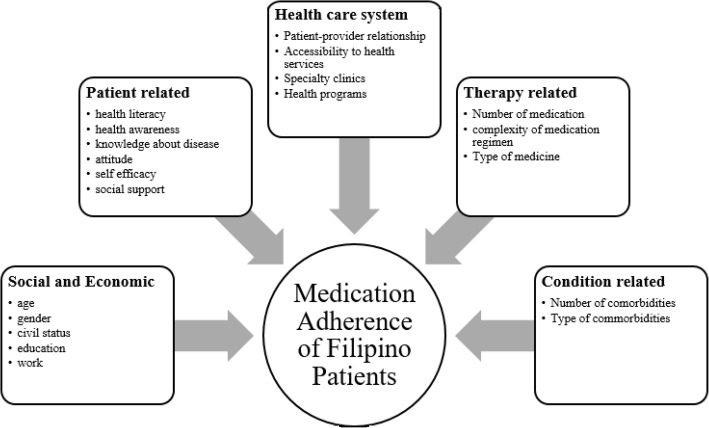
Result: The factors that were positively associated with adherence were health care system-related factors: good patient-health provider relationship, accessibility of health services, use of specialty clinics and programs for hypertension, and health insurance. The factors found to be negatively associated with adherence are (1) social economic factors: younger age, single civil status, low educational attainment, and unemployment; (2) patient-related factors: low in health literacy and awareness, knowledge on hypertension, attitude towards hypertension, self-efficacy, and social support; (3) therapy-related factors: inconsistent drug regimen schedule, use of Thiazide and complementary and alternative medicines; (4) condition-related factors: low illness perception, and absence of comorbidities.
Conclusions: Findings should be interpreted with caution because of methodological limitations. Despite this, given that health systems related factors are modifiable, they can be the focus of interventions and future researches to increase medication adherence. Clinicians may also want to screen their Filipino hypertensive patients for factors that are associated to low adherence in order to provide a tailored advice. Longitudinal research studies with heterogeneous samples of hypertensive Filipinos are imperative so that targeted interventions can be developed for the population.
Keywords: Hypertension; Medication adherence; Patient compliance; Pharmacy; Philippines.
© 2021. The Author(s).
Conflict of interest statement
The authors declare no competing interests.
Figures
References
-
- Department of Health, Republic of the Philippines. What are the leading causes of mortality in the Philippines? 2020. https://www.doh.gov.ph/node/1058. Accessed 13 July 2021.
-
- The Philippine health system at a glance. 2016. https://www.doh.gov.ph/sites/default/files/basic-page/chapter-one.pdf. .
-
- Paje R. Investment in non-communicable diseases prevention and control will save lives and contribute to the Philippines saving up to 4.8% of annual GDP. 2019. https://doh.gov.ph/press-release/investment-in-non-communicable-diseases.... .
Publication types
LinkOut - more resources
Full Text Sources
Miscellaneous