


Quantitative Susceptibility Mapping of the Basal Ganglia and Thalamus at 9.4 Tesla
- PMID: 34602986
- PMCID: PMC8483181
- DOI: 10.3389/fnana.2021.725731
Quantitative Susceptibility Mapping of the Basal Ganglia and Thalamus at 9.4 Tesla
Abstract
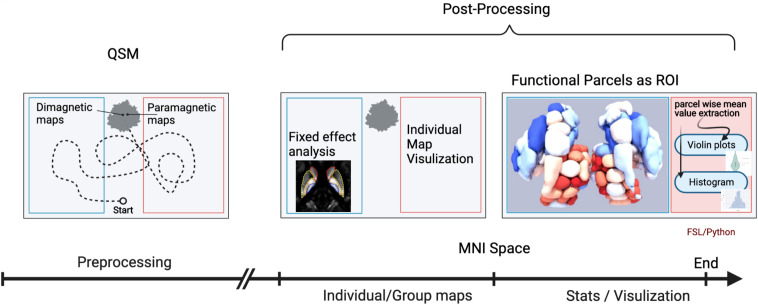
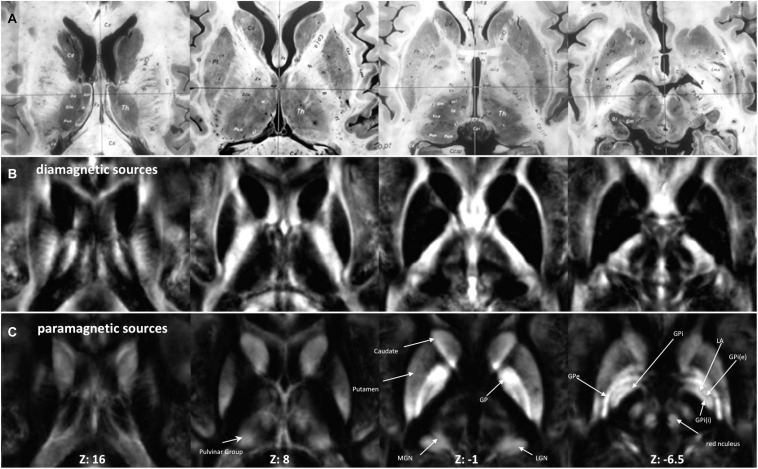
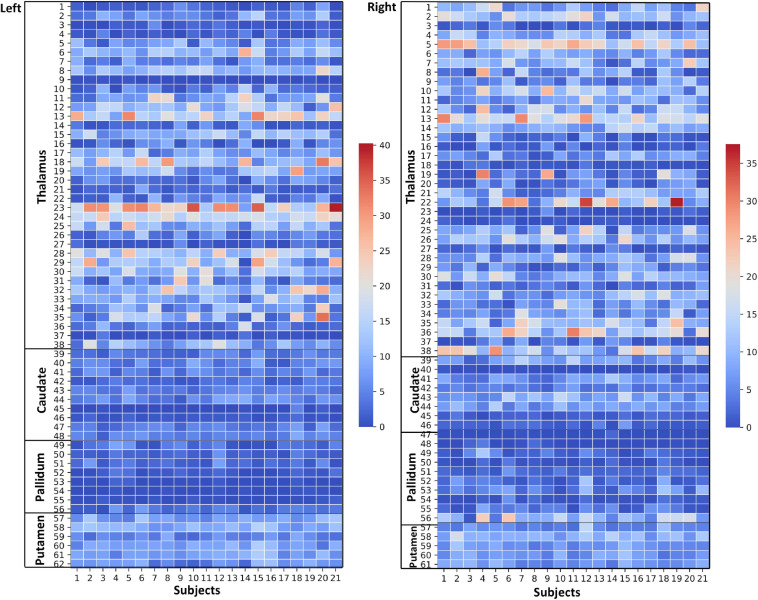
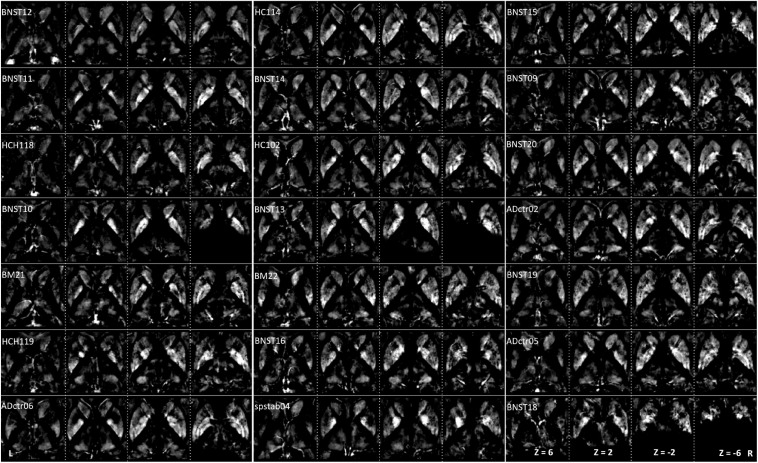
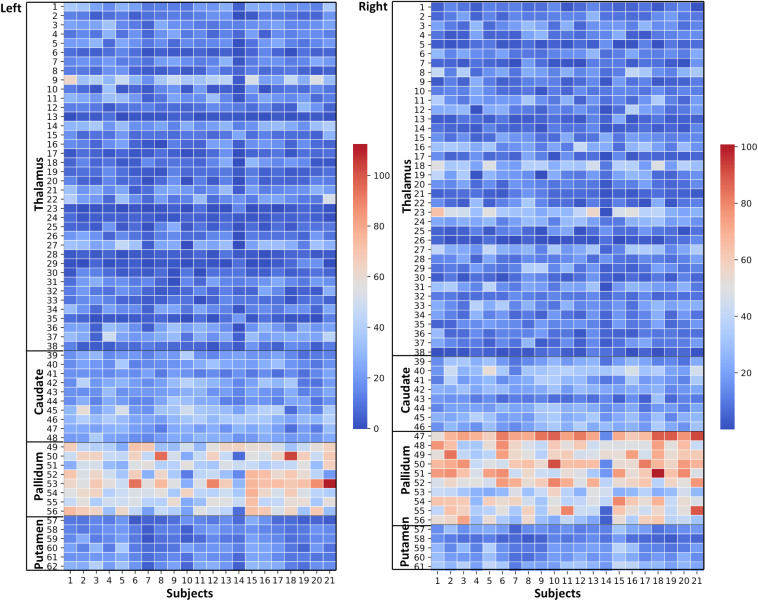
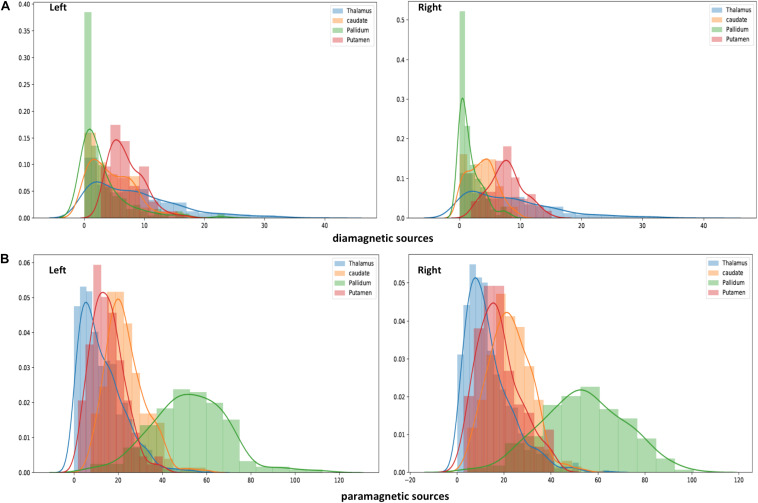
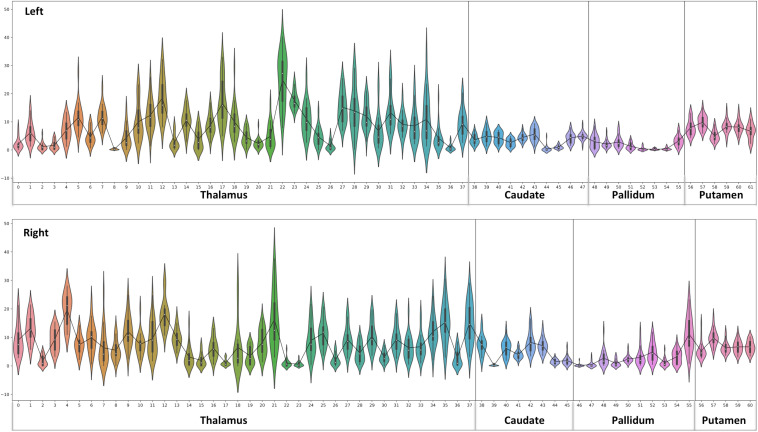
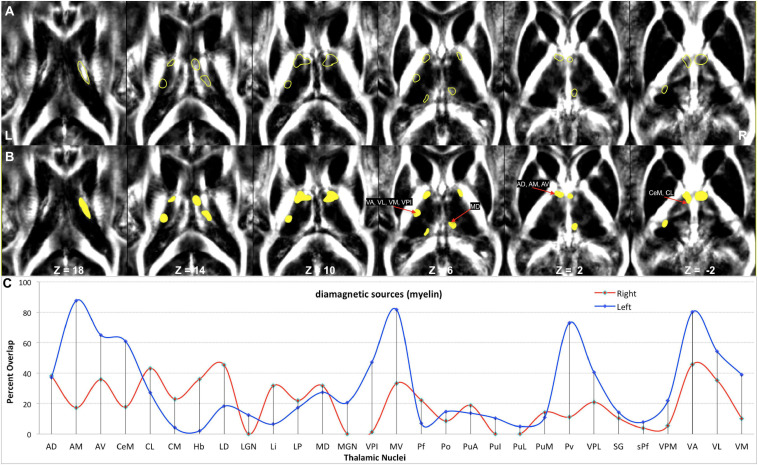
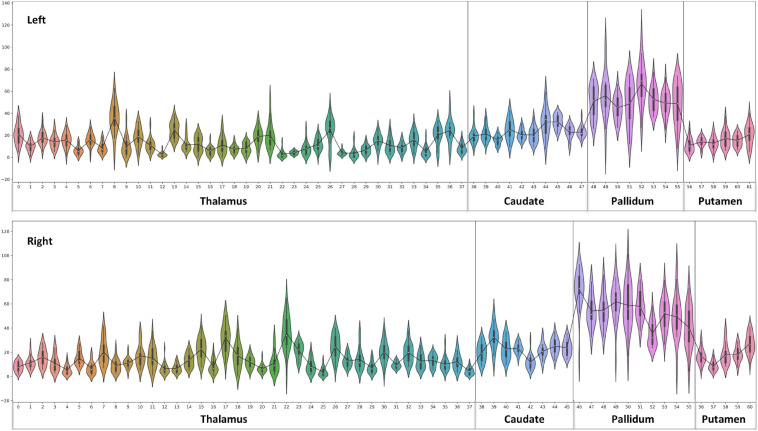
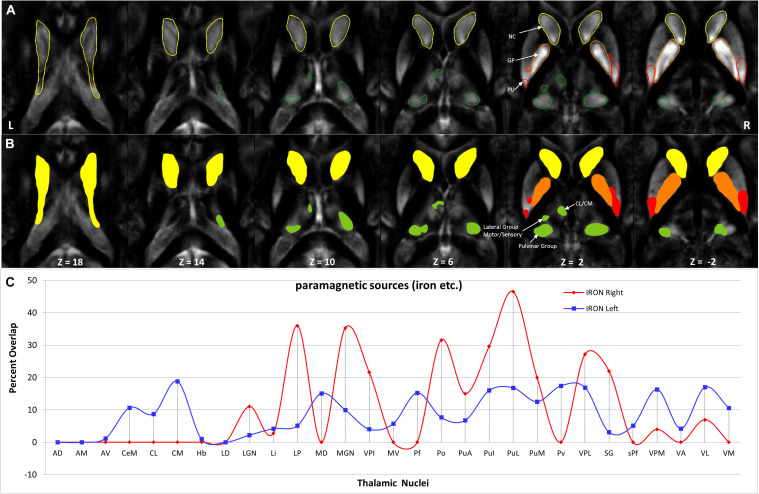
The thalamus (Th) and basal ganglia (BG) are central subcortical connectivity hubs of the human brain, whose functional anatomy is still under intense investigation. Nevertheless, both substructures contain a robust and reproducible functional anatomy. The quantitative susceptibility mapping (QSM) at ultra-high field may facilitate an improved characterization of the underlying functional anatomy in vivo. We acquired high-resolution QSM data at 9.4 Tesla in 21 subjects, and analyzed the thalamic and BG by using a prior defined functional parcellation. We found a more substantial contribution of paramagnetic susceptibility sources such as iron in the pallidum in contrast to the caudate, putamen, and Th in descending order. The diamagnetic susceptibility sources such as myelin and calcium revealed significant contributions in the Th parcels compared with the BG. This study presents a detailed nuclei-specific delineation of QSM-provided diamagnetic and paramagnetic susceptibility sources pronounced in the BG and the Th. We also found a reasonable interindividual variability as well as slight hemispheric differences. The results presented here contribute to the microstructural knowledge of the Th and the BG. In specific, the study illustrates QSM values (myelin, calcium, and iron) in functionally similar subregions of the Th and the BG.
Keywords: QSM; basal ganglia; high field MRI; iron; myelin; thalamus.
Copyright © 2021 Kumar, Scheffler, Hagberg and Grodd.
Conflict of interest statement
The authors declare that the research was conducted in the absence of any commercial or financial relationships that could be construed as a potential conflict of interest.
Figures
References
-
- Alkemade A., Mulder M. J., Groot J. M., Isaacs B. R., van Berendonk N., Lute N., et al. (2020). The amsterdam ultra-high field adult lifespan database (AHEAD): a freely available multimodal 7 tesla submillimeter magnetic resonance imaging database. NeuroImage 221:117200. 10.1016/j.neuroimage.2020.117200 - DOI - PubMed
LinkOut - more resources
Full Text Sources
