


Effects of acclimation temperature on the thermal physiology in two geographically distinct populations of lake sturgeon (Acipenser fulvescens)
- PMID: 34603733
- PMCID: PMC7526614
- DOI: 10.1093/conphys/coaa087
Effects of acclimation temperature on the thermal physiology in two geographically distinct populations of lake sturgeon (Acipenser fulvescens)
Abstract
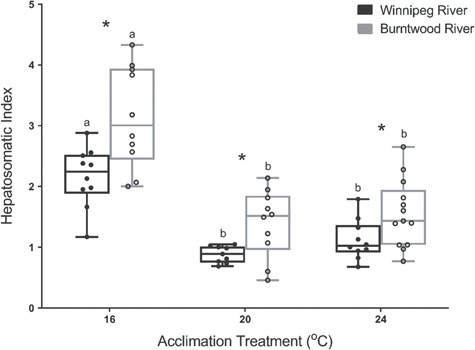
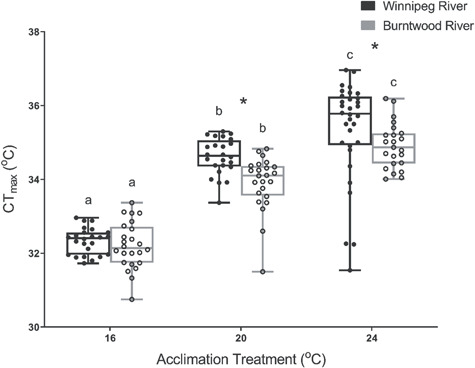
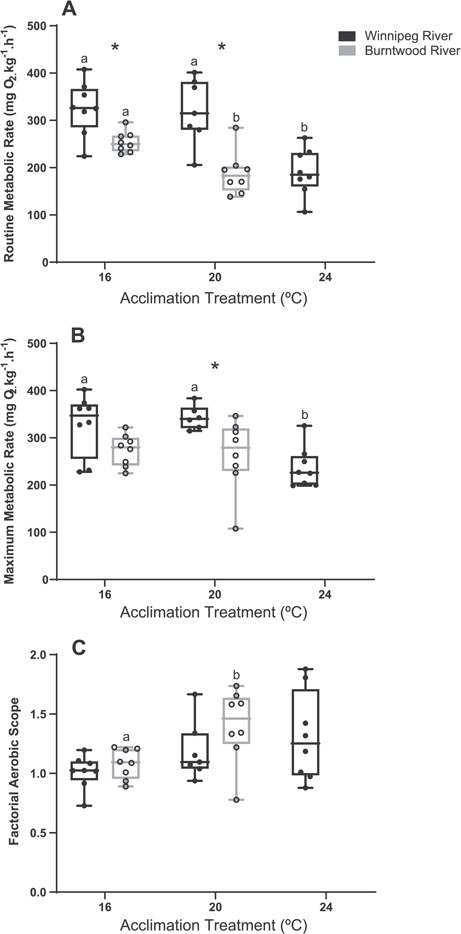
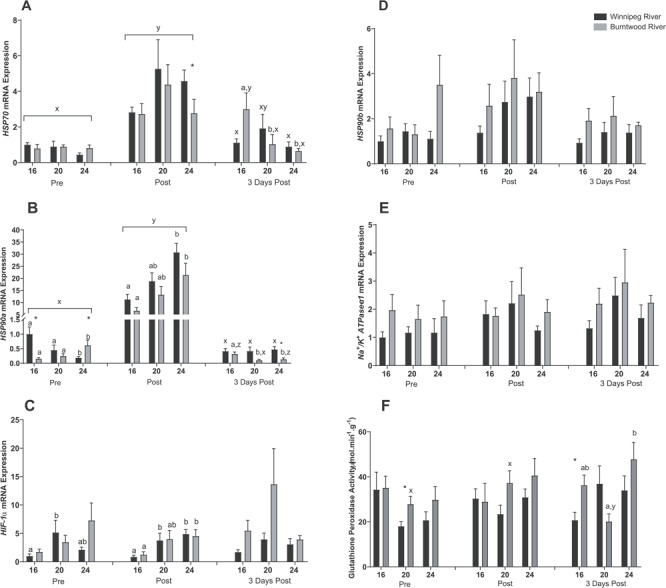
Temperature is one of the most important abiotic factors regulating development and biological processes in ectotherms. By 2050, climate change may result in temperature increases of 2.1-3.4°C in Manitoba, Canada. Lake sturgeon, Acipenser fulvescens, from both northern and southern populations in Manitoba were acclimated to 16, 20 and 24°C for 30 days, after which critical thermal maximum (CTmax) trials were conducted to investigate their thermal plasticity. We also examined the effects of temperature on morphological and physiological indices. Acclimation temperature significantly influenced the CTmax, body mass, hepatosomatic index, metabolic rate and the mRNA expression of transcripts involved in the cellular response to heat shock and hypoxia (HSP70, HSP90a, HSP90b, HIF-1α) in the gill of lake sturgeon. Population significantly affected the above phenotypes, as well as the mRNA expression of Na+/K+ ATPase-α1 and the hepatic glutathione peroxidase enzyme activity. The southern population had an average CTmax that was 0.71 and 0.45°C higher than the northern population at 20 and 24°C, respectively. Immediately following CTmax trials, mRNA expression of HSP90a and HIF-1α was positively correlated with individual CTmax of lake sturgeon across acclimation treatments and populations (r = 0.7, r = 0.62, respectively; P < 0.0001). Lake sturgeon acclimated to 20 and 24°C had decreased hepatosomatic indices (93 and 244% reduction, respectively; P < 0.0001) and metabolic suppression (27.7 and 42.1% reduction, respectively; P < 0.05) when compared to sturgeon acclimated to 16°C, regardless of population. Glutathione peroxidase activity and mRNA expression Na+/K+ ATPase-α1 were elevated in the northern relative to the southern population. Acclimation to 24°C also induced mortality in both populations when compared to sturgeon acclimated to 16 and 20°C. Thus, increased temperatures have wide-ranging population-specific physiological consequences for lake sturgeon across biological levels of organization.
Keywords: Lake Sturgeon; mRNA expression; metabolic rate, acclimation; population-specific responses.
© The Author(s) 2020. Published by Oxford University Press and the Society for Experimental Biology.
Figures
References
-
- Aidos L, Cafiso A, Bertotto D, Bazzocchi C, Radaelli G, Giancamillo AD (2020) How different rearing temperatures affect growth and stress status of Siberian sturgeon Acipenser baerii larvae. J Fish Biol 96: 913–924. - PubMed
-
- Almroth BC, Asker N, Wassmur B, Rosengren M, Jutfelt F, Grans A, Sundell K, Axelsson M, Sturve J (2015) Warmer water temperature results in oxidative damage in an Antarctic fish, the bald notothen. J Exp Mar Biol Ecol 468: 130–137.
-
- Aloisi DB, Eckes OT, Von Eschen AJ (2019) Development of a growth model for lake sturgeon. N Am J Aquacult 81: 399–405.
-
- Bard B, Kieffer JD (2019) The effects of repeat acute thermal stress on the critical thermal maximum (CTmax) and physiology of juvenile shortnose sturgeon (Acipenser brevirostrum). Can J Zool 97: 567–572.
-
- Beitinger TL, Bennet WA, McCauly RW (2000) Temperature tolerances of North American freshwater fishes exposed to dynamic changes in temperature. Environ Biol Fish 58: 237–275.
LinkOut - more resources
Full Text Sources
