Socioeconomic inequalities in tobacco smoking in women aged 15-54 in Iran: a multilevel model
- PMID: 34604600
- PMCID: PMC8451344
- DOI: 10.15167/2421-4248/jpmh2021.62.2.1604
Socioeconomic inequalities in tobacco smoking in women aged 15-54 in Iran: a multilevel model
Abstract
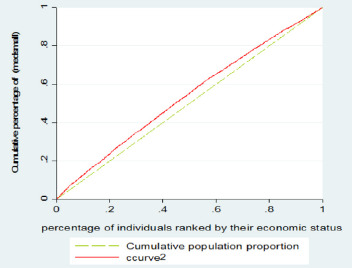
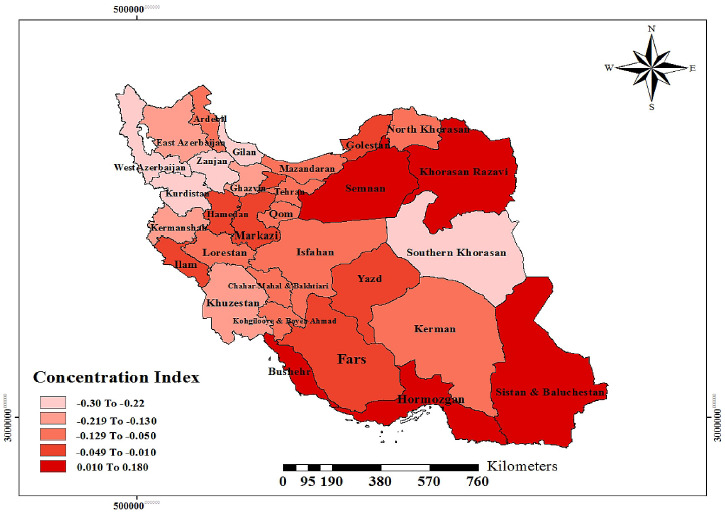
Significant evidence suggests an inverse relationship between socioeconomic status and tobacco smoking, where inequality is visible among different social and economic strata. The aim of this study was to investigate the prevalence and economic and social inequalities in tobacco smoking in women aged 15-54 in Iran. This study is a cross-sectional study. Sampling in this study was a randomized clustered multistage sampling with equal clusters. A total of 35,305 women aged 15-55 enrolled in the study. Data analysis was in two stages. In the first stage, the social and economic inequalities were investigated using the concentration index and concentration curve method, and in the second method, and multilevel method was used to identify the determinants. The prevalence of tobacco smoking in women was 12.24%. The concentration index for smoking was CI = -0.07 [95% CI (-0.09, -0.05)], which represents smoking in people with low socioeconomic status. The results of the multilevel analysis indicated that the marital status of people over the age of 35 and the economic class was related to smoking in women. Inequality in tobacco smoking in women is to the interest of the well-off group, and this inequality varies in different provinces. Marital status, place of residence, age and socioeconomic status of women are factors influencing the prevalence of tobacco smoking in women, and these issues should be noticed to reduce inequalities.
Keywords: Inequality; Iran; Socioeconomic status; Tobacco smoking; Women.
©2021 Pacini Editore SRL, Pisa, Italy.
Conflict of interest statement
Conflict of interest statement The authors declare no conflict of interest.
Figures
References
-
- Van Minh H, Giang KB, Ngoc NB, Hai PT, Huyen DTT, Khue LN, Lam NT, Nga PTQ, Xuyen NT. Prevalence of tobacco smoking in Vietnam: findings from the Global Adult Tobacco Survey 2015. J Public Health 2017;62:121-9. https://doi.org/10.1007/s00038-017-0955-810.1007/s00038-017-0955-8 - DOI - PubMed
-
- Chen Z, Peto R, Zhou M, Iona A, Smith M, Yang L, Guo Y, Chen Y, Bian Z, Lancaster G. Contrasting male and female trends in tobacco-attributed mortality in China: evidence from successive nationwide prospective cohort studies. Lancet 2015;386:1447-56. https://doi.org/10.1016/S0140-6736(15)00340-210.1016/S0140-6736(15)00340-2 - DOI - PMC - PubMed
-
- Khazaei Z, Tosang MA, Zadeh SZM, Khazaei S, Goodarzi E, Asadi ZS. Prevalence of risky behaviors and related factors among students of Dezful University of Medical Sciences in 2014. Iran J Psychiatry 2017;12:188. http://eprints.gmu.ac.ir/id/eprint/223 - PMC - PubMed
-
- Barik A, Rai RK, Gorain A, Majumdar S, Chowdhury A. Socio-economic disparities in tobacco consumption in rural India: evidence from a health and demographic surveillance system. Perspect Public Health 2016;136:278-87. https://doi.org/10.1177/175791391560994710.1177/1757913915609947 - DOI - PubMed
-
- WHO Organization. WHO report on the global tobacco epidemic, 2013: enforcing bans on tobacco advertising, promotion and sponsorship: World Health Organization 2013.
MeSH terms
LinkOut - more resources
Full Text Sources
Medical