


Symptoms of obstructive sleep apnea are associated with less frequent exercise and worse subjective cognitive function across adulthood
- PMID: 34604910
- PMCID: PMC8919199
- DOI: 10.1093/sleep/zsab240
Symptoms of obstructive sleep apnea are associated with less frequent exercise and worse subjective cognitive function across adulthood
Abstract
Study objectives: To determine whether subjective measures of exercise and sleep are associated with cognitive complaints and whether exercise effects are mediated by sleep.
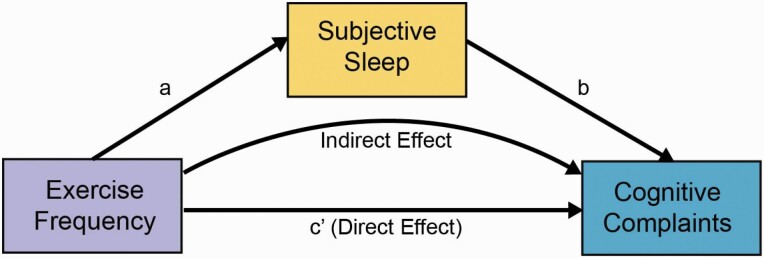
Methods: This study analyzed questionnaire data from adults (18-89) enrolled in a recruitment registry. The Cognitive Function Instrument (CFI) assessed cognitive complaints. Medical Outcomes Study Sleep Scale (MOS-SS) subscales and factor scores assessed sleep quality, daytime sleepiness, nighttime disturbance, and insomnia and obstructive sleep apnea (OSA)-like symptoms. Exercise frequency was defined as the weekly number of exercise sessions. Exercise frequency, MOS-SS subscales, and factor scores were examined as predictors of CFI score, adjusting for age, body mass index, education, sex, cancer diagnosis, antidepressant usage, psychiatric conditions, and medical comorbidities. Analyses of covariance examined the relationship between sleep duration groups (short, mid-range, and long) and CFI score, adjusting for covariates. Mediation by sleep in the exercise-CFI score relationship was tested.
Results: Data from 2106 adults were analyzed. Exercise and MOS-SS subscales and factor scores were associated with CFI score. Higher Sleep Adequacy scores were associated with fewer cognitive complaints, whereas higher Sleep Somnolence, Sleep Disturbance, Sleep Problems Index I, Sleep Problems Index II, and factor scores were associated with more cognitive complaints. MOS-SS subscales and factor scores, except Sleep Disturbance and the insomnia factor score, mediated the association between exercise and cognitive complaints.
Conclusions: The relationship between exercise frequency and subjective cognitive performance is mediated by sleep. In particular, the mediation effect appears to be driven by symptoms possibly suggestive of OSA which are negatively associated with exercise engagement, sleep quality, daytime sleepiness, and subjective cognitive performance.
Keywords: aging; cognitive complaints; exercise; insomnia; obstructive sleep apnea; sleep; subjective cognitive function.
© Sleep Research Society 2021. Published by Oxford University Press on behalf of the Sleep Research Society. All rights reserved. For permissions, please email: journals.permissions@oup.com.
Figures
References
-
- Dustman RE, et al. . Aerobic exercise training and improved neuropsychological function of older individuals. Neurobiol Aging. 1984;5(1):35–42. - PubMed
-
- Kramer AF, et al. . Ageing, fitness and neurocognitive function. Nature. 1999;400(6743):418–419. - PubMed
-
- Felez-Nobrega M, et al. . Physical activity is associated with fewer subjective cognitive complaints in 47 low- and middle-income countries. J Am Med Dir Assoc. 2020;21(10):1423–1429.e2. - PubMed
Publication types
MeSH terms
Grants and funding
LinkOut - more resources
Full Text Sources
Medical
Miscellaneous
