Systematic review of aquatic physical exercise programs on functional fitness in older adults
- PMID: 34607421
- PMCID: PMC8758957
- DOI: 10.4081/ejtm.2021.10006
Systematic review of aquatic physical exercise programs on functional fitness in older adults
Abstract
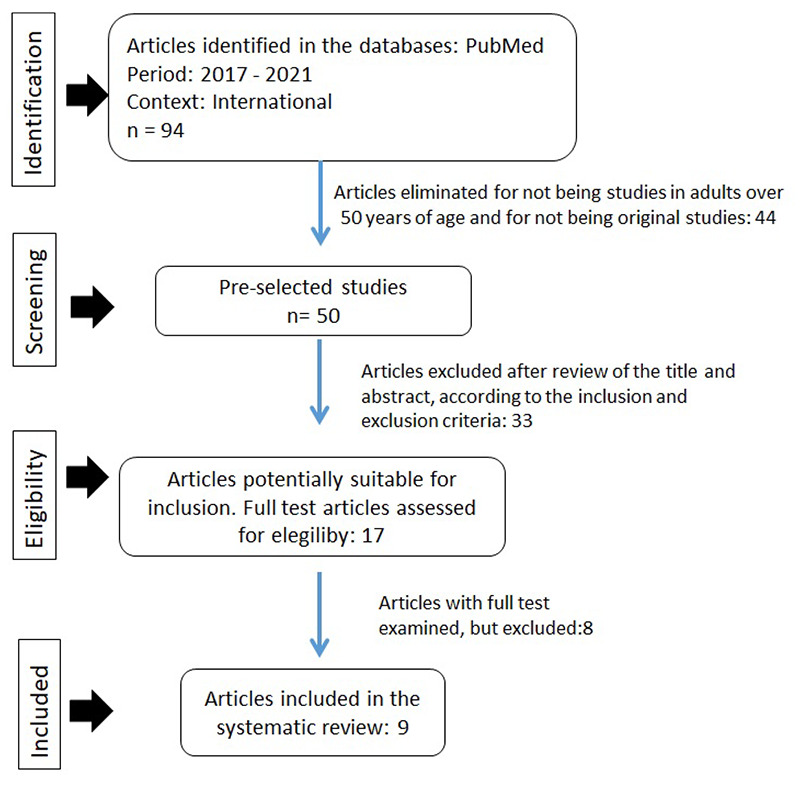
The practice of physical exercise is recommended in the prevention of the deterioration of neuromuscular functions in aging. The objectives of this systematic review were to describe the protocols used and the functional fitness indicators evaluated in aquatic exercise programs in adults aged 50 to 80 years. The Pubmed database was used. The keywords were: 1) Physical exercise program or protocols or duration or type of exercise or aquatic exercise, frequency or intensity or indicators; 2) Adults or older adults; 3) Training or indicators, functional fitness, physical fitness. The search strategy considered the components of the Population, Interventions, Comparators, Outcomes, and Study design (PICOS) tool. Nine experimental studies were identified. These studies developed protocols to improve functional fitness in adults aged 50 to 80 years. They were based on sessions of 2 to 5 per week, the work time per session was 30 to 60min, intensities varied between 50 to 95% and totaled between 4 to 24 weeks of intervention. The activities were based on aquatic gymnastic exercises aimed at muscular strengthening of the upper and lower extremities, as well as coordination, balance, agility, cycling and walking exercises submerged in water. The protocols developed to improve functional fitness in adults aged 50 to 80 years were based on general physical exercise prescription guidelines (frequency, duration, intensity and type of activity). The application of aquatic exercises based on gymnastic exercises can provoke positive responses on functional fitness if worked at least 2 to 5 times per week, 30 to 60min/day and at intensities of 50 to 95%. These systematized indicators can be used by professionals working with adults to create and promote aquatic programs to improve functional fitness.
Conflict of interest statement
We confirm that we have read the Journal’s position on issues involved in ethical publication and affirm that this report is consistent with those guidelines.
Figures
References
-
- Bangsbo J, Blackwell J, Boraxbekk CJ, Caserotti P, Dela F, Evans AB, Jespersen AP, Gliemann L, Kramer AF, Lundbye-Jensen J, Mortensen EL, Lassen AJ, Gow AJ, Harridge SDR, Hellsten Y, Kjaer M, Kujala UM, Rhodes RE, Pike ECJ, Skinner T, Skovgaard T, Troelsen J, Tulle E, Tully MA, van Uffelen JGZ, Viña J. Copenhagen Consensus statement 2019: physical activity and ageing. Br J Sports Med. 2019. Jul;53(14):856-858. doi: 10.1136/bjsports-2018-100451. Epub 2019 Feb 21. - PMC - PubMed
-
- Alcalde GE, Fonseca AC, Bôscoa TF, Gonçalves MR, Bernardo GC, Pianna B, Carnavale BF, Gimenes C, Barrile SR, Arca EA. Effect of aquatic physical therapy on pain perception, functional capacity and quality of life in older people with knee osteoarthritis: study protocol for a randomized controlled trial. Trials. 2017. Jul 11;18(1):317. doi: 10.1186/s13063-017-2061-x. - PMC - PubMed
-
- Guerrero Y, Soomro N, Wilson G, Dam Y, Meiklejohn J, Simpson K, Smith R, Brand-Miller J, Simic M, O'Connor H, Mavros Y, Foroughi N, Poon T, Bradshaw K, March L, Vanwanseele B, Eckstein F, Fransen M, Bergamasco J, Anandacoomarasamy A, Singh MF. Train High Eat Low for Osteoarthritis study (THE LO study): protocol for a randomized controlled trial. J Physiother. 2015. Oct;61(4):217. doi: 10.1016/j.jphys.2015.05.020. Epub 2015 Aug 29. - PubMed
-
- Chacón-Serna MJ, Quino-Ávila AC, Vallejo-Castillo LF. Capacidad funcional del anciano relacionada con la actividad física. Revista Investigación en Salud Universidad de Boyacá. 2017. Jul 24;4(1):86-103. 10.24267/23897325.199 - DOI
LinkOut - more resources
Full Text Sources