


Characterizing the Chemical Landscape in Commercial E-Cigarette Liquids and Aerosols by Liquid Chromatography-High-Resolution Mass Spectrometry
- PMID: 34610237
- PMCID: PMC11317110
- DOI: 10.1021/acs.chemrestox.1c00253
Characterizing the Chemical Landscape in Commercial E-Cigarette Liquids and Aerosols by Liquid Chromatography-High-Resolution Mass Spectrometry
Abstract
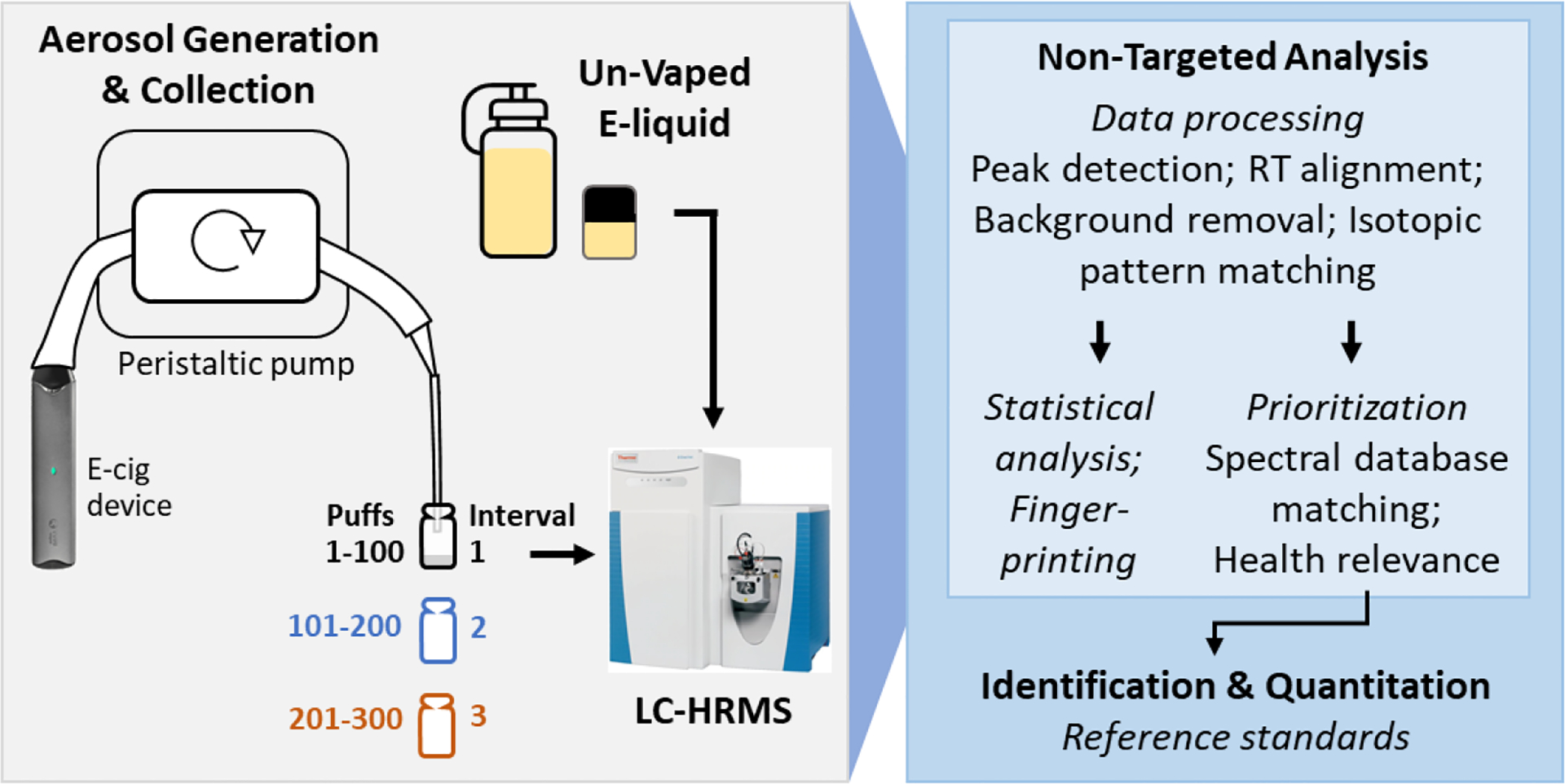
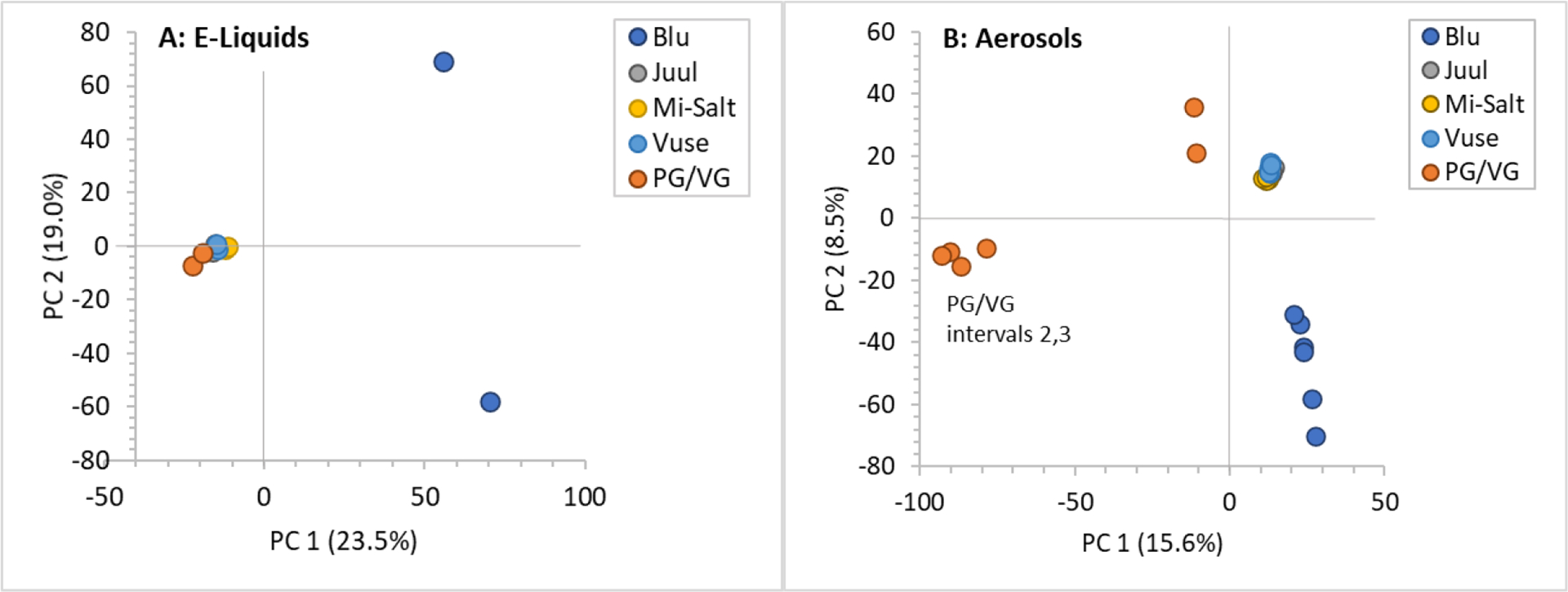
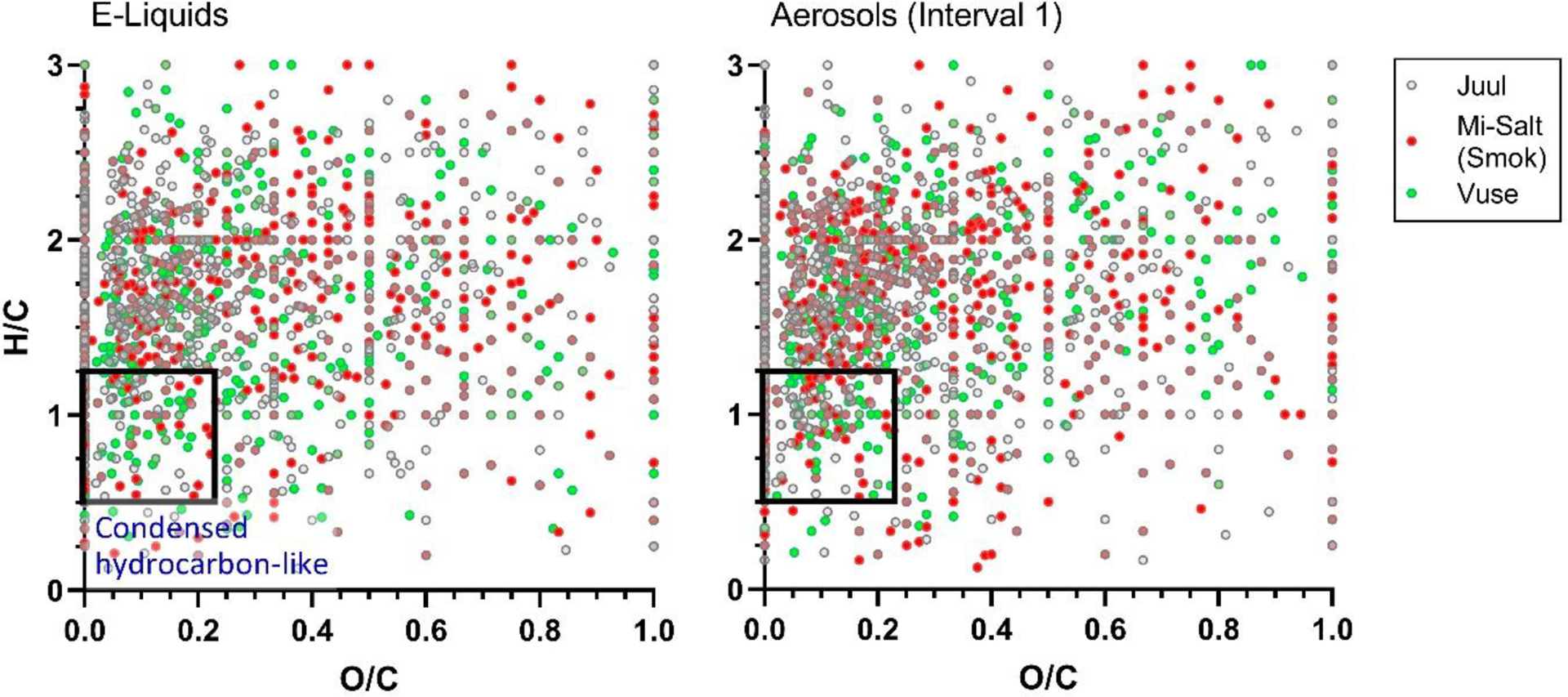
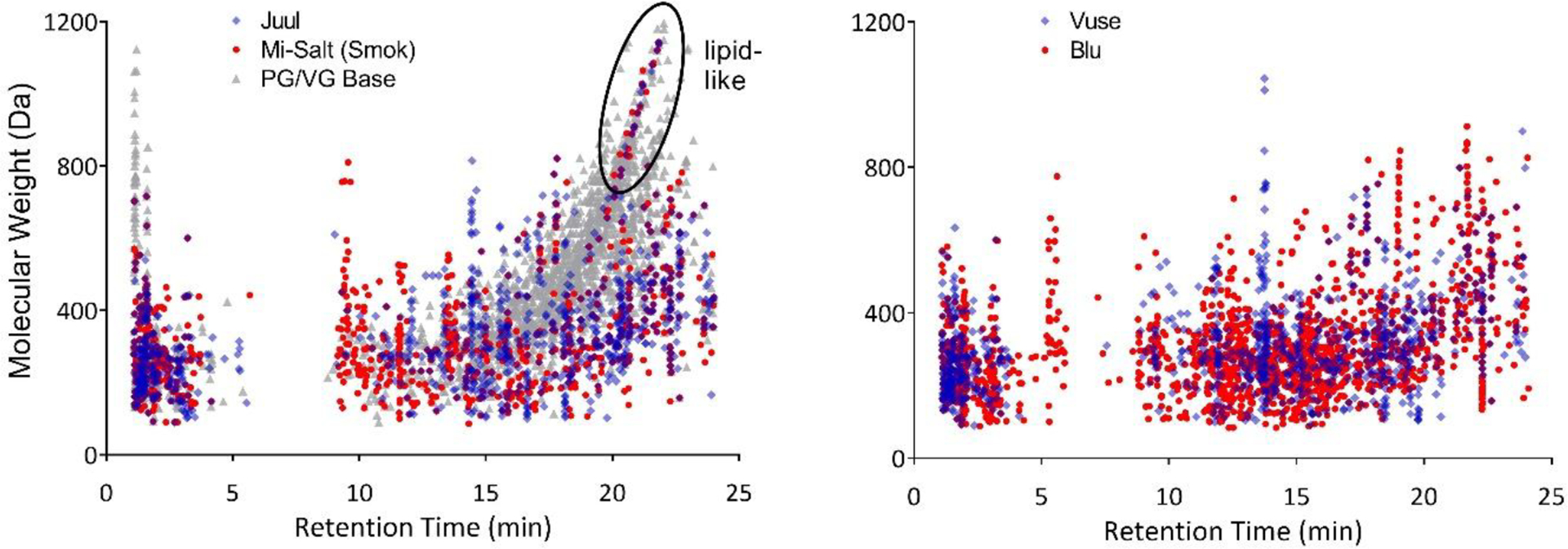
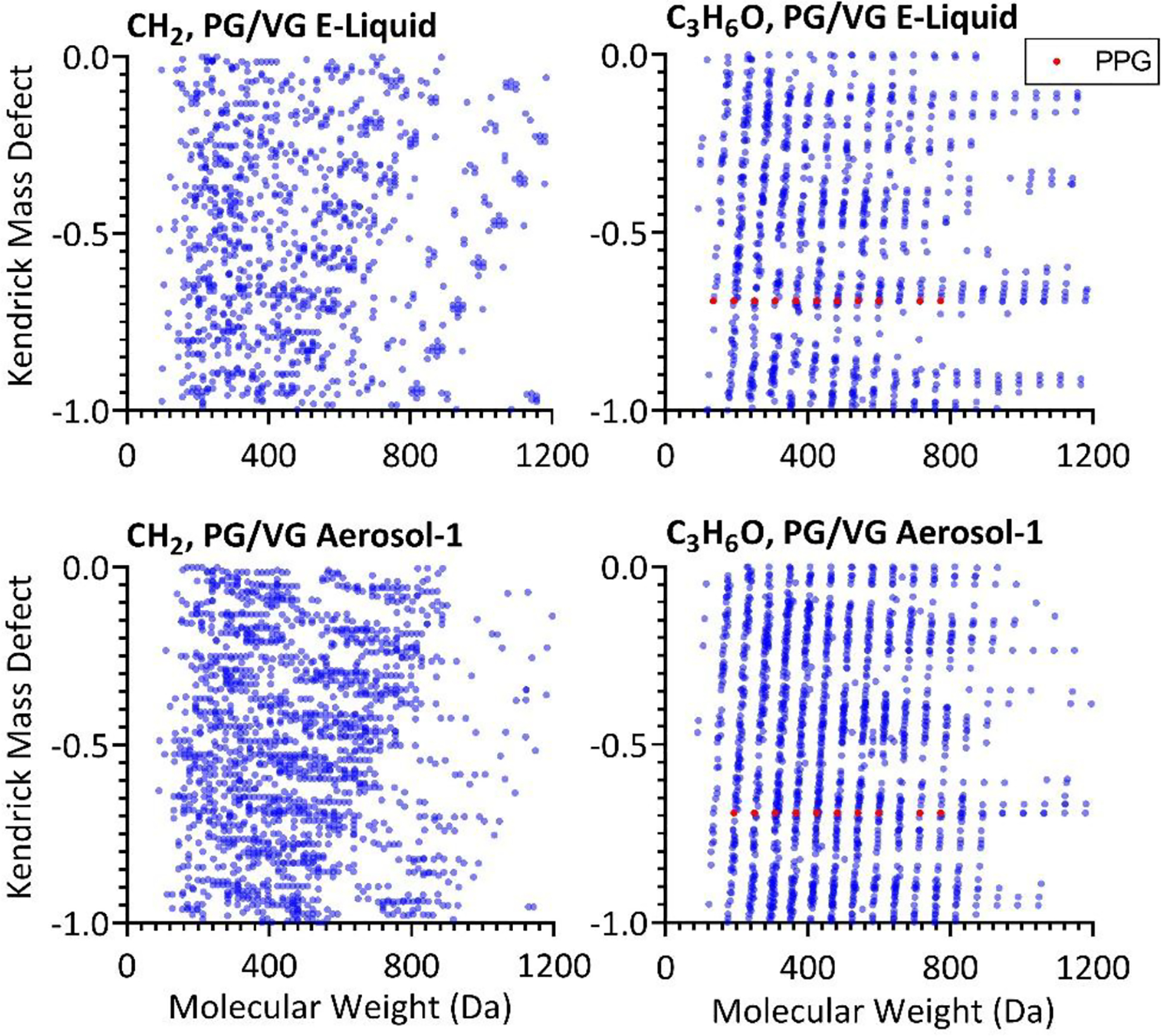
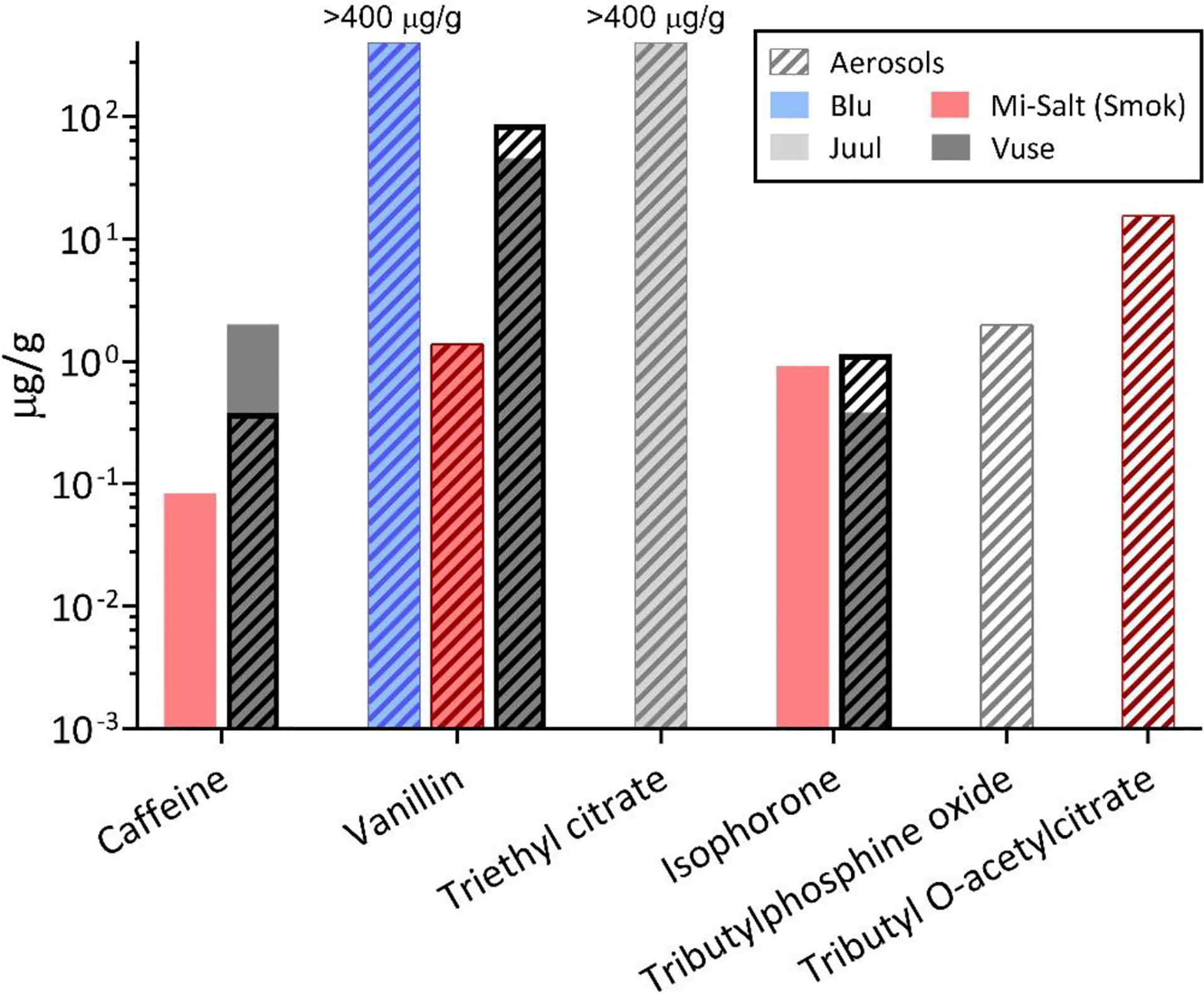
The surge in electronic cigarette (e-cig) use in recent years has raised questions on chemical exposures that may result from vaping. Previous studies have focused on measuring known toxicants, particularly those present in traditional cigarettes, while fewer have investigated unknown compounds and transformation products formed during the vaping process in these diverse and constantly evolving products. The primary aim of this work was to apply liquid chromatography-high-resolution mass spectrometry (LC-HRMS) and chemical fingerprinting techniques for the characterization of e-liquids and aerosols from a selection of popular e-cig products. We conducted nontarget and quantitative analyses of tobacco-flavored e-liquids and aerosols generated using four popular e-cig products: one disposable, two pod, and one tank/mod. Aerosols were collected using a condensation device and analyzed in solution alongside e-liquids by LC-HRMS. The number of compounds detected increased from e-liquids to aerosols in three of four commercial products, as did the proportion of condensed-hydrocarbon-like compounds, associated with combustion. Kendrick mass defect analysis suggested that some of the additional compounds detected in aerosols belonged to homologous series resulting from decomposition of high-molecular-weight compounds during vaping. Lipids in inhalable aerosols have been associated with severe respiratory effects, and lipid-like compounds were observed in aerosols as well as e-liquids analyzed. Six potentially hazardous additives and contaminants, including the industrial chemical tributylphosphine oxide and the stimulant caffeine, were identified and quantified in the e-cig liquids and aerosols analyzed. The obtained findings demonstrate the potential of nontarget LC-HRMS to identify previously unknown compounds and compound classes in e-cig liquids and aerosols, which is critical for the assessment of chemical exposures resulting from vaping.
Figures
Comment in
-
Letter to the Editor Regarding Characterizing the Chemical Landscape in Commercial E-Cigarette Liquids and Aerosols by Liquid Chromatography-High-Resolution Mass Spectrometry.Chem Res Toxicol. 2022 Jan 17;35(1):3-4. doi: 10.1021/acs.chemrestox.1c00367. Epub 2021 Dec 21. Chem Res Toxicol. 2022. PMID: 34932303 No abstract available.
-
Response to Letter to the Editor Regarding Characterizing the Chemical Landscape in Commercial E-Cigarette Liquids and Aerosols by Liquid Chromatography-High-Resolution Mass Spectrometry.Chem Res Toxicol. 2022 Jan 17;35(1):1-2. doi: 10.1021/acs.chemrestox.1c00414. Epub 2021 Dec 21. Chem Res Toxicol. 2022. PMID: 34932311 No abstract available.
References
Publication types
MeSH terms
Substances
Grants and funding
LinkOut - more resources
Full Text Sources
Medical
