


Molidustat for Japanese Patients With Renal Anemia Receiving Dialysis
- PMID: 34622100
- PMCID: PMC8484124
- DOI: 10.1016/j.ekir.2021.07.015
Molidustat for Japanese Patients With Renal Anemia Receiving Dialysis
Abstract
Introduction: Molidustat, a hypoxia-inducible factor prolyl hydroxylase inhibitor for renal anemia treatment, was evaluated in 5 phase 3 studies (MIYABI program). We report the results of the MIYABI hemodialysis-maintenance study.
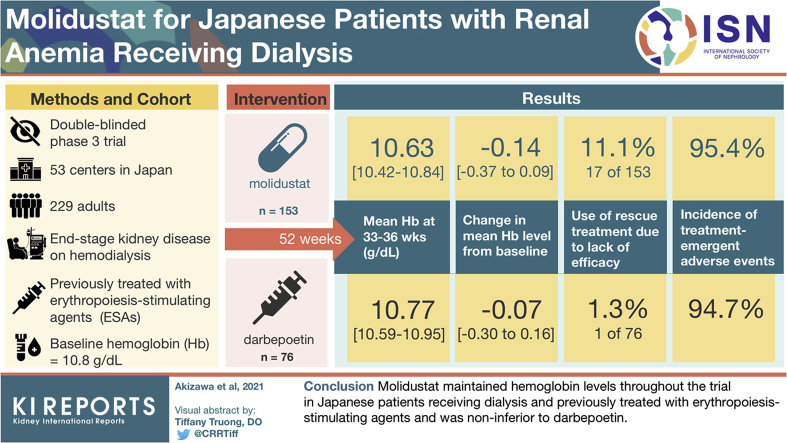
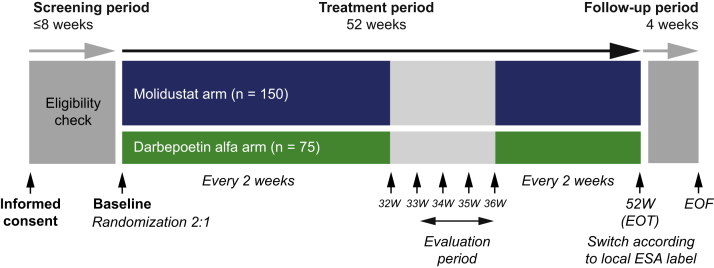
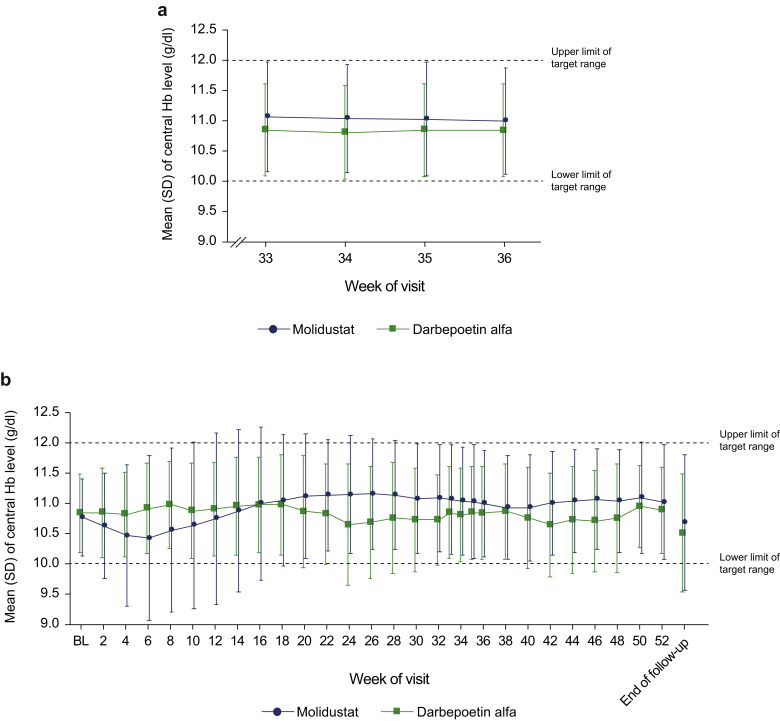
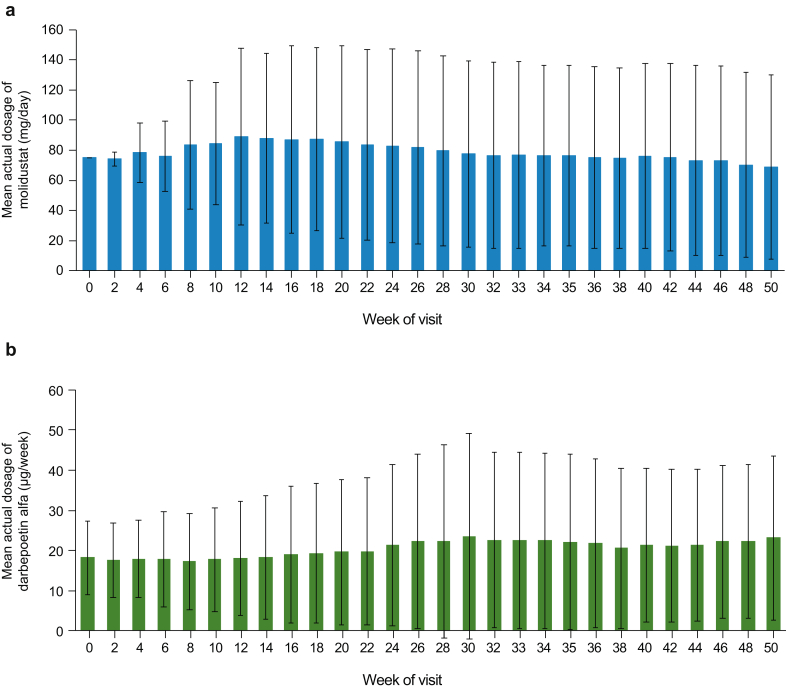
Methods: This 52-week, randomized, double-blinded, double-dummy study compared the efficacy and safety of molidustat and darbepoetin in Japanese patients receiving hemodialysis and erythropoiesis-stimulating agents. Molidustat (starting dose: 75 mg/day) and darbepoetin were titrated to maintain hemoglobin (Hb) levels in the target range (≥10.0 and <12.0 g/dl). Primary outcomes were mean Hb level during the evaluation period (weeks 33-36) and its change from baseline. Safety outcomes included adverse events.
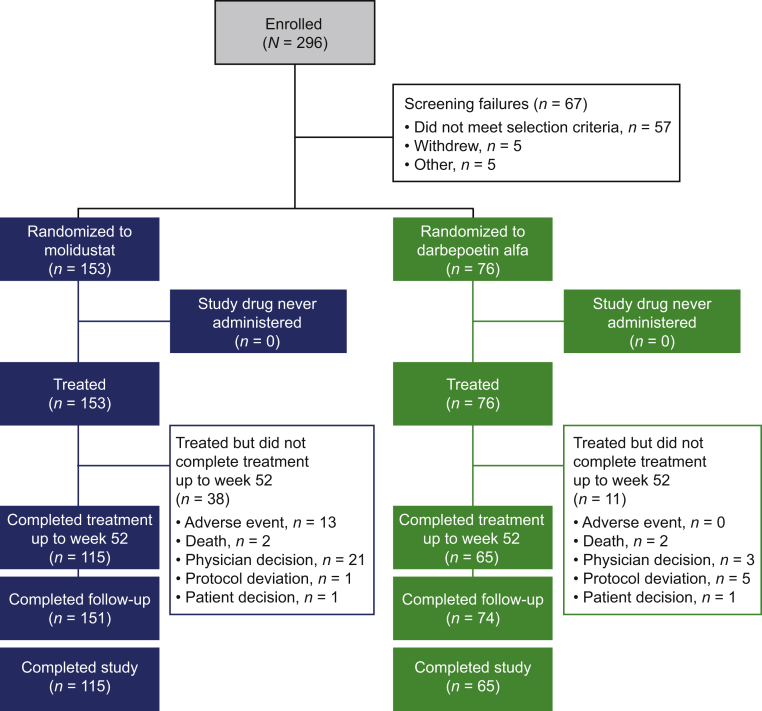
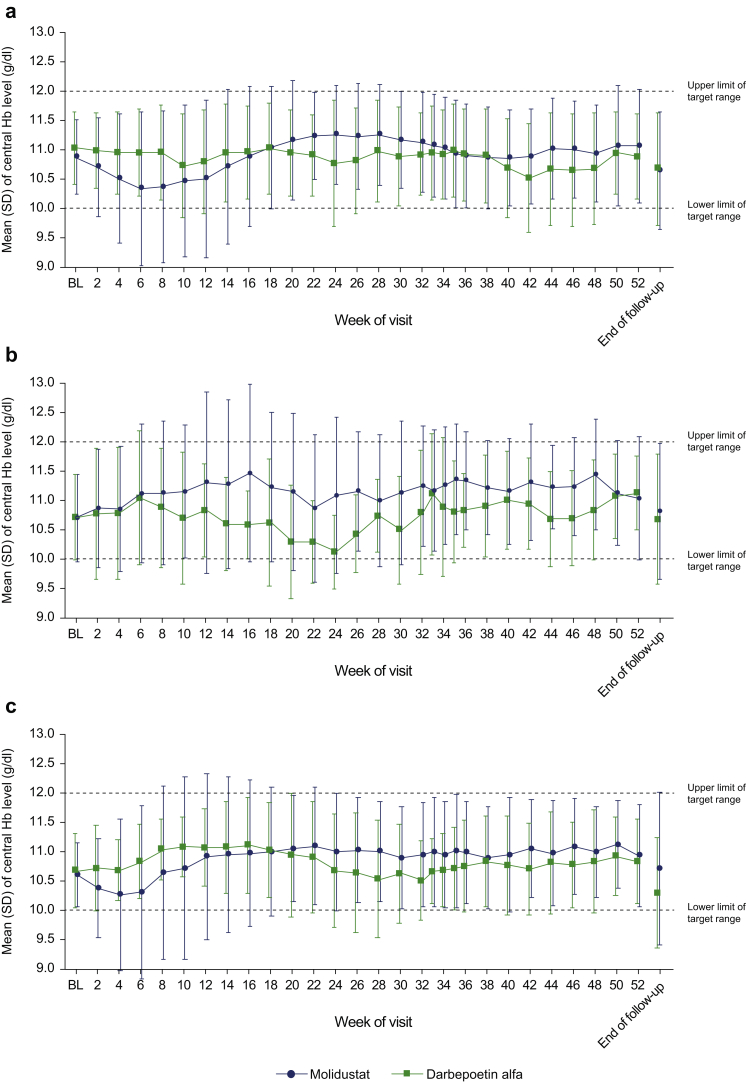
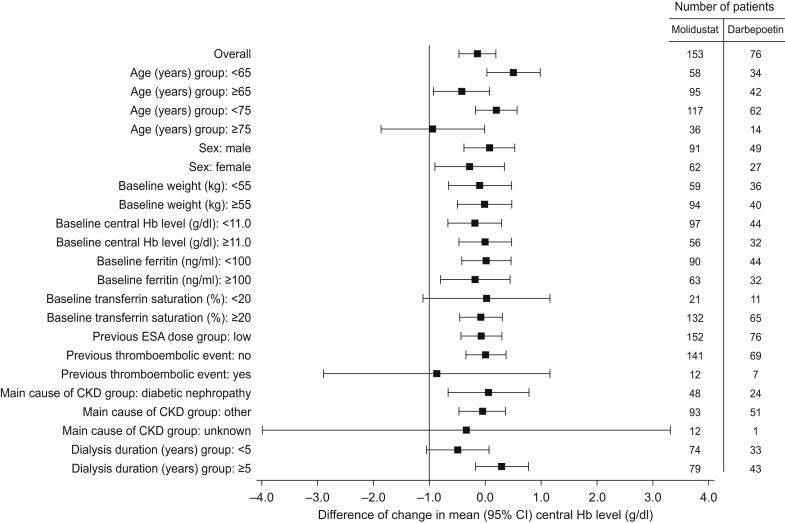
Results: Overall, 229 patients were randomized (molidustat, n = 153; darbepoetin, n = 76). Baseline characteristics were well balanced. Mean baseline Hb level was 10.8 g/dl. Mean (95% confidence interval [CI]) for mean Hb levels during the evaluation period were within the target range in both groups (molidustat: 10.63 [10.42-10.84] g/dl; darbepoetin: 10.77 [10.59-10.95] g/dl). Least-squares mean (95% CI) change in mean Hb level during the evaluation period from baseline was -0.14 (-0.37 to 0.09) g/dl for molidustat and -0.07 (-0.30 to 0.16) g/dl for darbepoetin; molidustat was noninferior to darbepoetin (least-squares mean difference [95% CI] [molidustat-darbepoetin]: -0.13 [-0.46 to 0.19] g/dl), based on a noninferiority margin of 1.0 g/dl. In line with published literature, and as expected in this patient population, most participants had ≥1 treatment-emergent adverse event.
Conclusion: Molidustat maintained Hb levels throughout the trial in patients receiving dialysis and previously treated with erythropoiesis-stimulating agents, and was noninferior to darbepoetin.
Keywords: darbepoetin alfa; dialysis; erythropoiesis-stimulating agent; hypoxia-inducible factor prolyl hydroxylase inhibitor; molidustat; renal anemia.
© 2021 International Society of Nephrology. Published by Elsevier Inc.
Figures
References
-
- Akizawa T., Okumura H., Alexandre A.F. Burden of anemia in chronic kidney disease patients in Japan: a Literature Review. Ther Apher Dial. 2018;22:444–456. - PubMed
-
- National Institute of Diabetes and Digestive and Kidney Diseases Anemia in chronic kidney disease. https://www.niddk.nih.gov/health-information/kidney-disease/anemia
-
- Pisoni R.L., Bragg-Gresham J.L., Young E.W. Anemia management and outcomes from 12 countries in the Dialysis Outcomes and Practice Patterns Study (DOPPS) Am J Kidney Dis. 2004;44:94–111. - PubMed
-
- Locatelli F., Pisoni R.L., Akizawa T. Anemia management for hemodialysis patients: Kidney Disease Outcomes Quality Initiative (K/DOQI) guidelines and Dialysis Outcomes and Practice Patterns Study (DOPPS) findings. Am J Kidney Dis. 2004;44:27–33. - PubMed
LinkOut - more resources
Full Text Sources
