


The impact of physical fitness on resilience to modern life stress and the mediating role of general self-efficacy
- PMID: 34622343
- PMCID: PMC9095527
- DOI: 10.1007/s00406-021-01338-9
The impact of physical fitness on resilience to modern life stress and the mediating role of general self-efficacy
Abstract
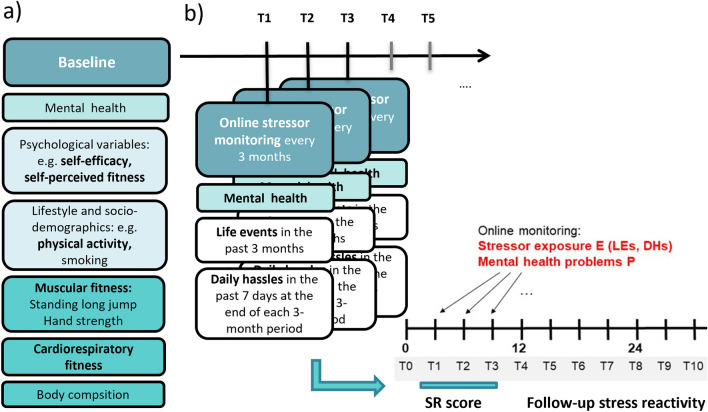
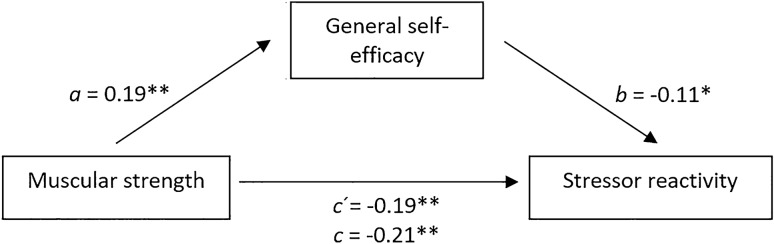
Substantial evidence shows that physical activity and fitness play a protective role in the development of stress related disorders. However, the beneficial effects of fitness for resilience to modern life stress are not fully understood. Potentially protective effects may be attributed to enhanced resilience via underlying psychosocial mechanisms such as self-efficacy expectations. This study investigated whether physical activity and fitness contribute to prospectively measured resilience and examined the mediating effect of general self-efficacy. 431 initially healthy adults participated in fitness assessments as part of a longitudinal-prospective study, designed to identify mechanisms of resilience. Self-efficacy and habitual activity were assessed in parallel to cardiorespiratory and muscular fitness, which were determined by a submaximal step-test, hand strength and standing long jump test. Resilience was indexed by stressor reactivity: mental health problems in relation to reported life events and daily hassles, monitored quarterly for nine months. Hierarchical linear regression models and bootstrapped mediation analyses were applied. We could show that muscular and self-perceived fitness were positively associated with stress resilience. Extending this finding, the muscular fitness-resilience relationship was partly mediated by self-efficacy expectations. In this context, self-efficacy expectations may act as one underlying psychological mechanism, with complementary benefits for the promotion of mental health. While physical activity and cardiorespiratory fitness did not predict resilience prospectively, we found muscular and self-perceived fitness to be significant prognostic parameters for stress resilience. Although there is still more need to identify specific fitness parameters in light of stress resilience, our study underscores the general relevance of fitness for stress-related disorders prevention.
Keywords: Mental health disorders; Physical activity; Physical fitness; Self-efficacy; Stress resilience.
© 2021. The Author(s).
Conflict of interest statement
On behalf of all authors, the corresponding author states that there is no conflict of interest.
Figures
References
-
- Trost SG, Blair SN, Khan KM. Erratum: physical inactivity remains the greatest public health problem of the 21st century: evidence, improved methods and solutions using the “7 investments that work” as a framework (British Journal of Sports Medicine (2014) 48 (169–70)) Br J Sports Med. 2014;48:401. doi: 10.1136/bjsports-2013-093372corr1. - DOI - PubMed
MeSH terms
Grants and funding
LinkOut - more resources
Full Text Sources
Medical
