


TSSK3, a novel target for male contraception, is required for spermiogenesis
- PMID: 34623009
- PMCID: PMC8961454
- DOI: 10.1002/mrd.23539
TSSK3, a novel target for male contraception, is required for spermiogenesis
Abstract
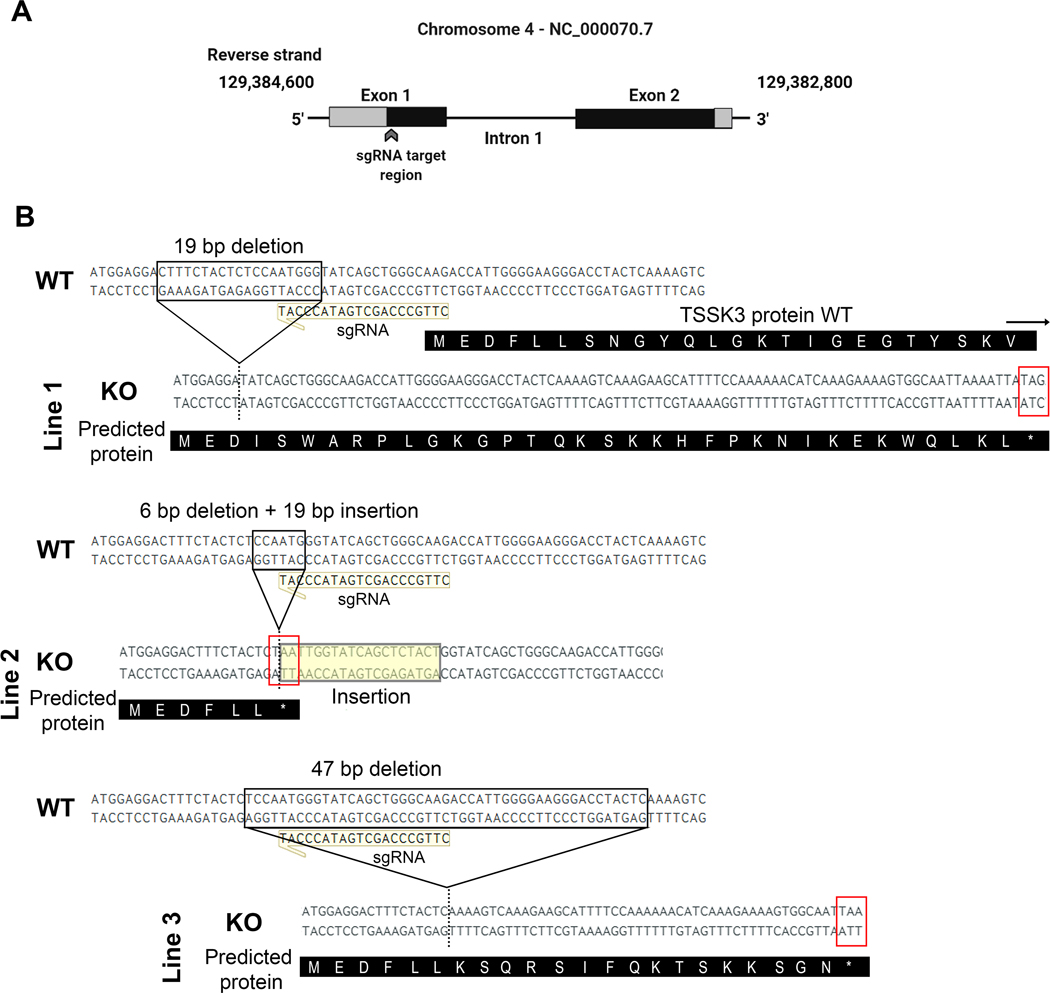
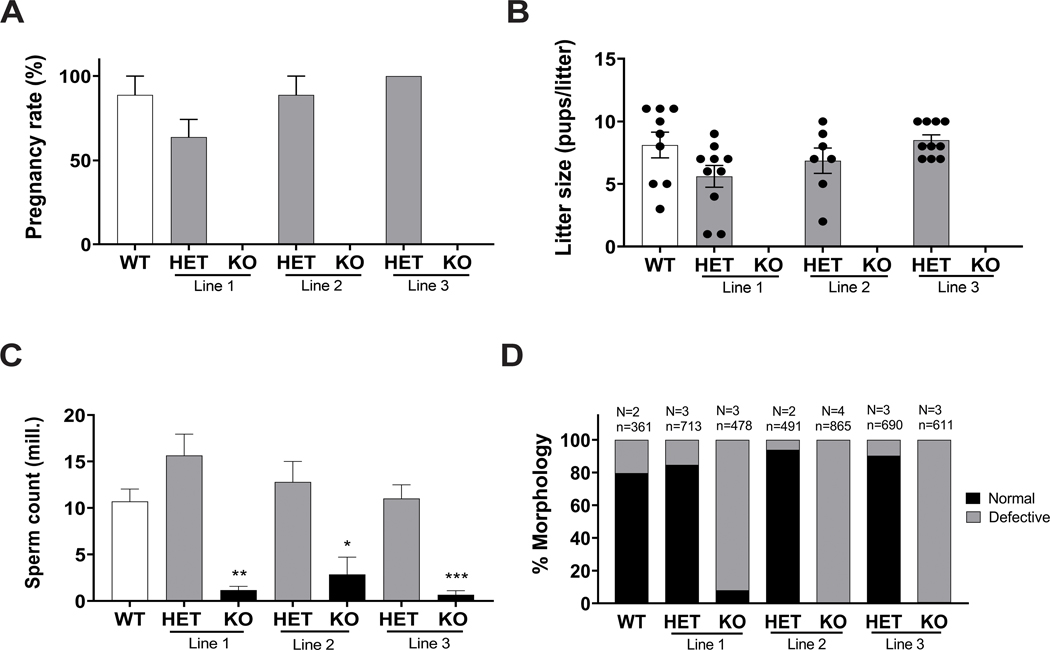
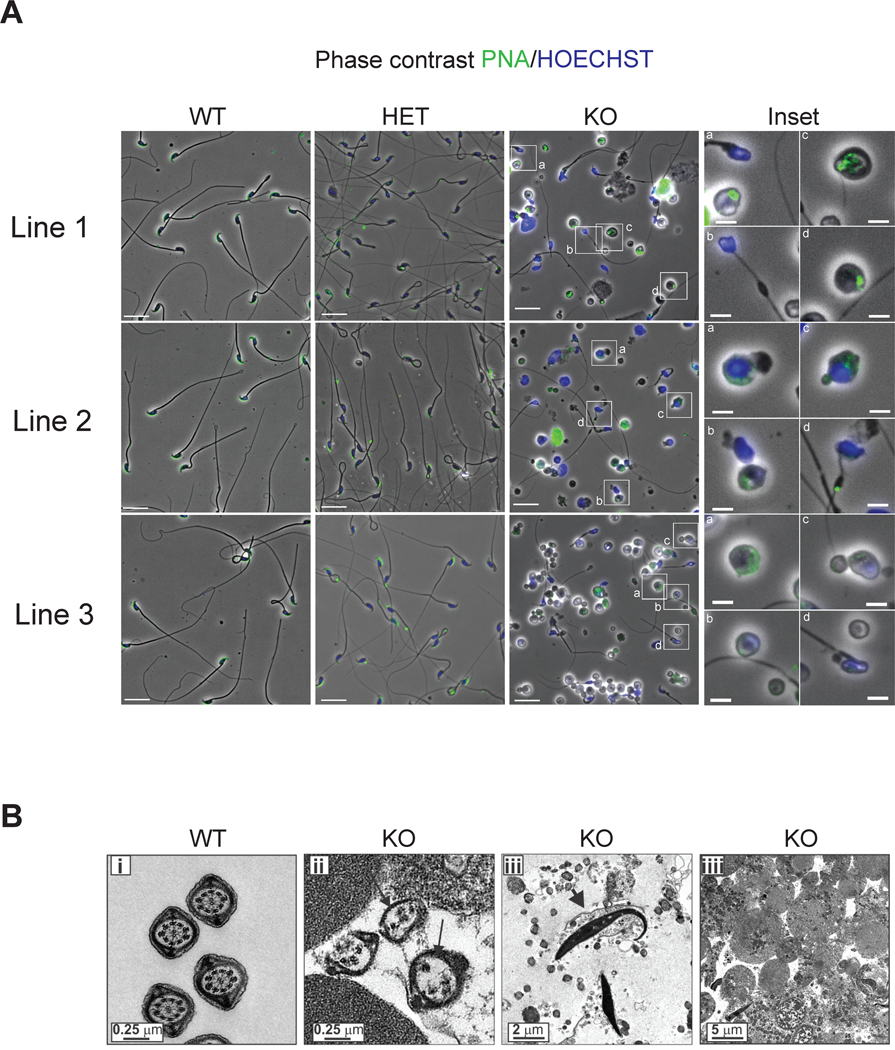
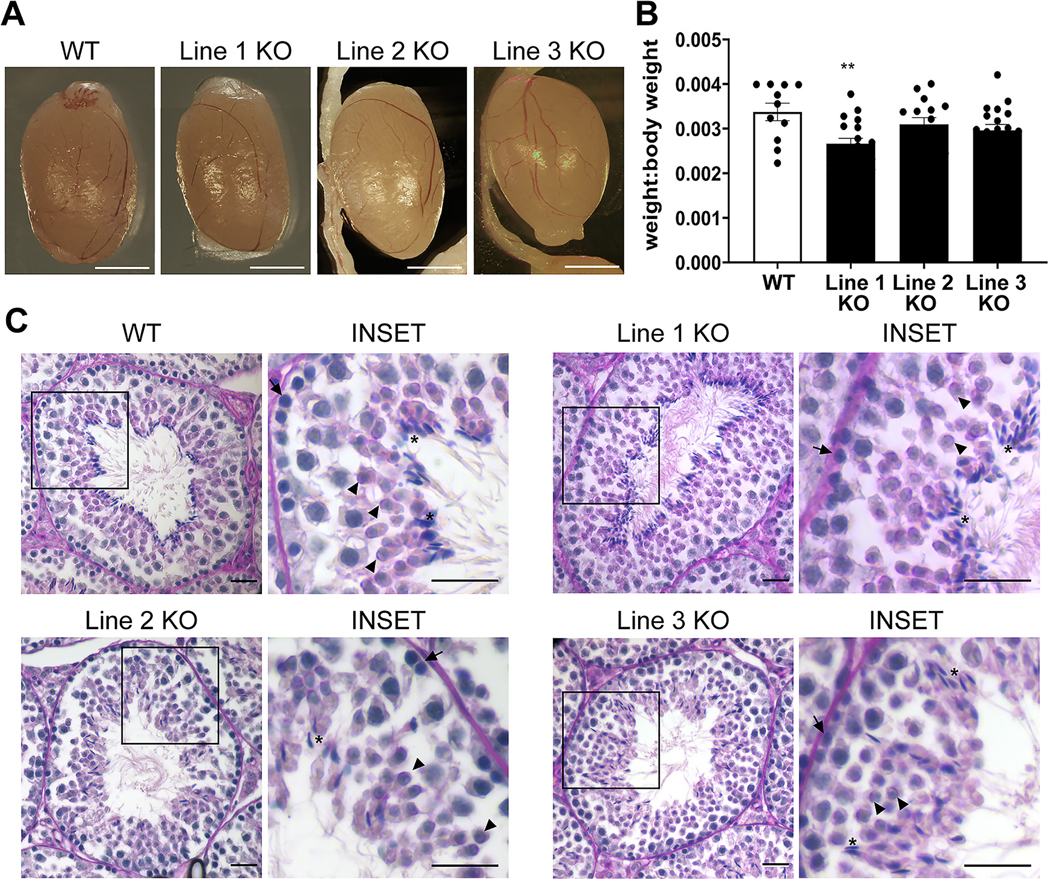
We have previously shown that members of the family of testis-specific serine/threonine kinases (TSSKs) are post-meiotically expressed in testicular germ cells and in mature sperm in mammals. The restricted post-meiotic expression of TSSKs as well as the importance of phosphorylation in signaling processes strongly suggest that TSSKs have an important role in germ cell differentiation and/or sperm function. This prediction has been supported by the reported sterile phenotype of the TSSK6 knock-out (KO) mice and of the double TSSK1/TSSK2 KO. The aim of this study was to develop KO mouse models of TSSK3 and to validate this kinase as a target for the development of a male contraceptive. We used CRISPR/Cas9 technology to generate the TSSK3 KO allele on B6D2F1 background mice. Male heterozygous pups were used to establish three independent TSSK3 KO lines. After natural mating of TSSK3 KO males, females that presented a plug (indicative of mating) were monitored for the following 24 days and no pregnancies or pups were found. Sperm numbers were drastically reduced in all three KO lines and, remarkably, round spermatids were detected in the cauda epididymis of KO mice. From the small population of sperm recovered, severe morphology defects were detected. Our results indicate an essential role of TSSK3 in spermiogenesis and support this kinase as a suitable candidate for the development of novel nonhormonal male contraceptives.
Keywords: TSSK3; evolution; fertilization; intronless gene; kinases; nonhormonal male contraceptive; sperm; spermatogenesis; testis-specific.
© 2021 Wiley Periodicals LLC.
Conflict of interest statement
Conflict of interest disclosure
Dr. Visconti and Dr. Salicioni own equity interest in Sperm Capacitation Technologies Inc., a company with goals in improving assisted reproductive technologies. The other authors have not conflict of interest to declare.
Figures

References
-
- Bielke W, Blaschke RJ, Miescher GC, Zurcher G, Andres AC, and Ziemiecki A. (1994). Characterization of a novel murine testis-specific serine/threonine kinase. Gene 139, 235–239. - PubMed
-
- Boutet I, Moraga D, Marinovic L, Obreque J, and Chavez-Crooker P. (2008). Characterization of reproduction-specific genes in a marine bivalve mollusc: influence of maturation stage and sex on mRNA expression. Gene 407, 130–138. - PubMed
-
- Bucko-Justyna M, Lipinski L, Burgering BM, and Trzeciak L. (2005). Characterization of testis-specific serine-threonine kinase 3 and its activation by phosphoinositide-dependent kinase-1-dependent signalling. The FEBS journal 272, 6310–6323. - PubMed
-
- Chemes HE (2013). Ultrastructural analysis of testicular tissue and sperm by transmission and scanning electron microscopy. Methods in molecular biology 927, 321–348. - PubMed
Publication types
MeSH terms
Substances
Grants and funding
LinkOut - more resources
Full Text Sources
Molecular Biology Databases
Research Materials
