Review
. 2022 Jan 26;122(2):1543-1625.
doi: 10.1021/acs.chemrev.1c00403. Epub 2021 Oct 8.

Visible Light-Induced Transition Metal Catalysis

Affiliations
Review

Visible Light-Induced Transition Metal Catalysis

Kelvin Pak Shing Cheung et al. Chem Rev. .

Abstract

In recent years, visible light-induced transition metal catalysis has emerged as a new paradigm in organic photocatalysis, which has led to the discovery of unprecedented transformations as well as the improvement of known reactions. In this subfield of photocatalysis, a transition metal complex serves a double duty by harvesting photon energy and then enabling bond forming/breaking events mostly via a single catalytic cycle, thus contrasting the established dual photocatalysis in which an exogenous photosensitizer is employed. In addition, this approach often synergistically combines catalyst-substrate interaction with photoinduced process, a feature that is uncommon in conventional photoredox chemistry. This Review describes the early development and recent advances of this emerging field.


Conflict of interest statement

The authors declare no competing financial interest.

Figures
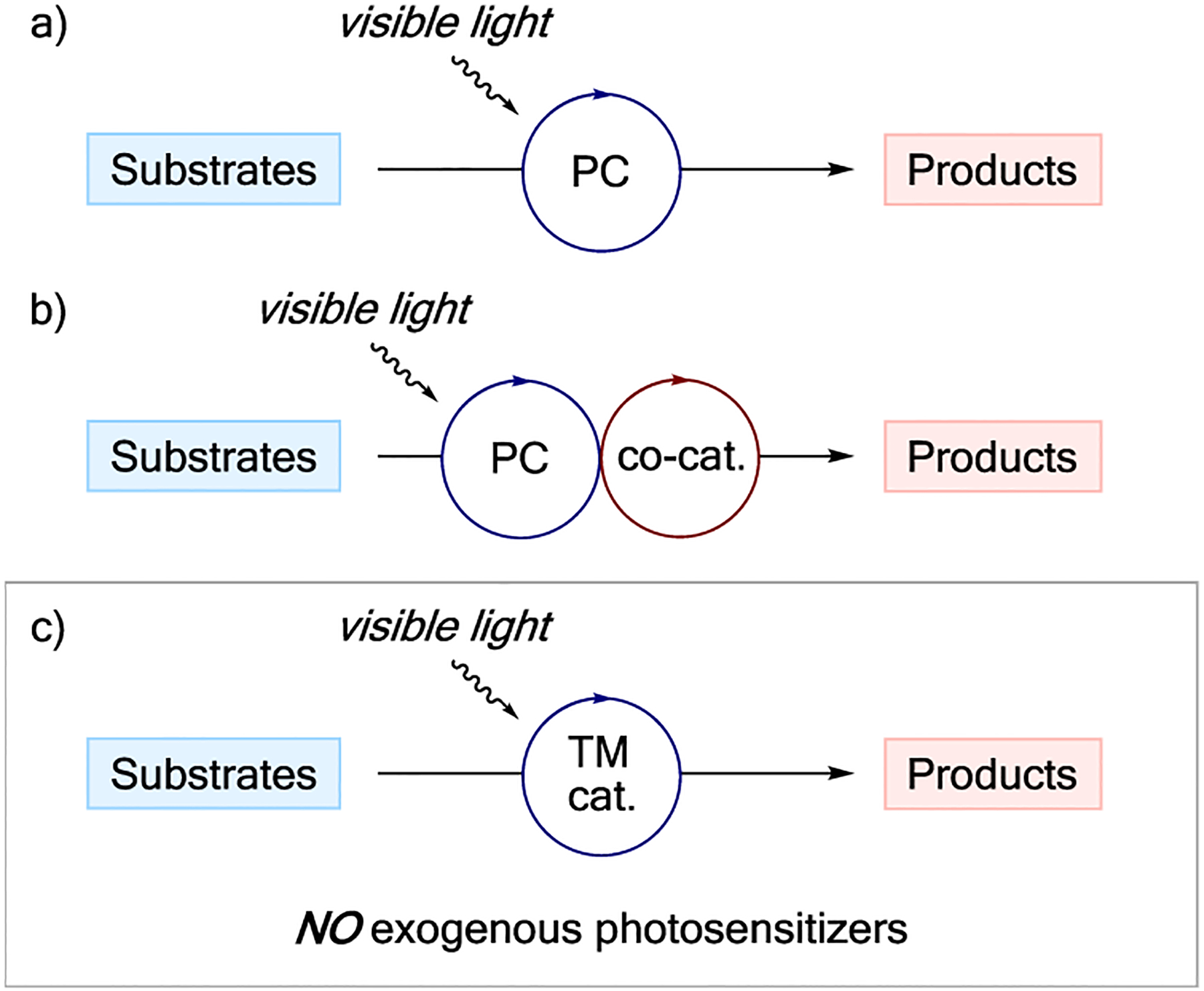
Figure 1.
Figure 1.
Visible light-induced transformations via (a) conventional photocatalysis, (b) dual photocatalysis, and (c) visible light-induced transition metal catalysis.
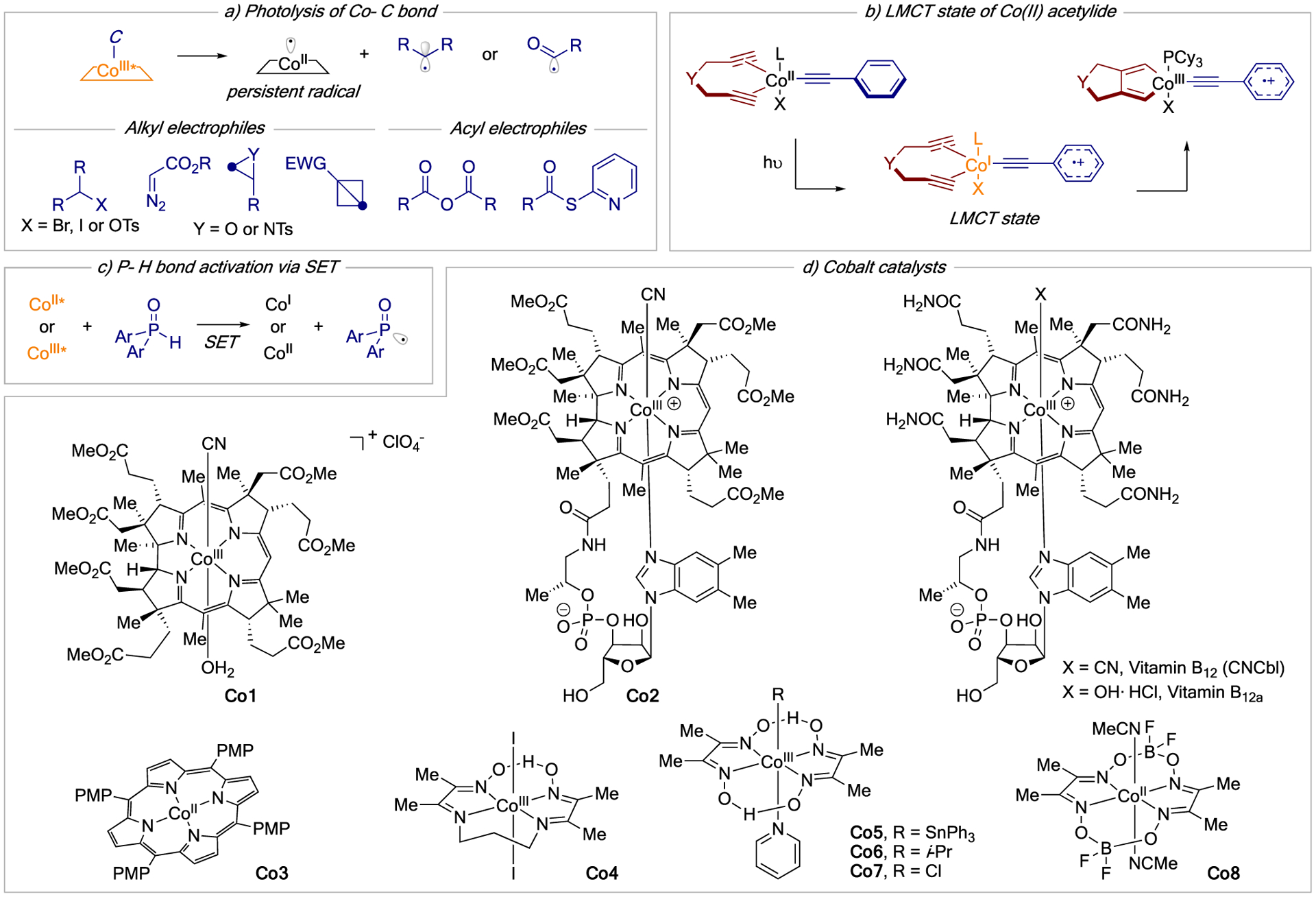
Figure 2.
Figure 2.
Outline of visible light-induced cobalt catalysis.
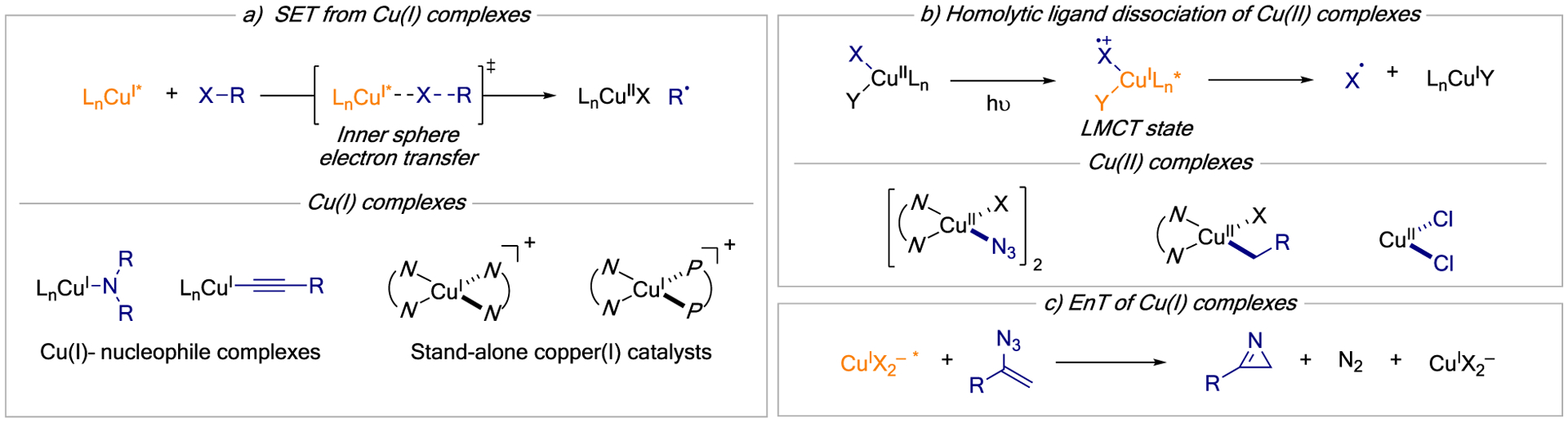
Figure 3.
Figure 3.
Outline of visible light-induced copper catalysis.
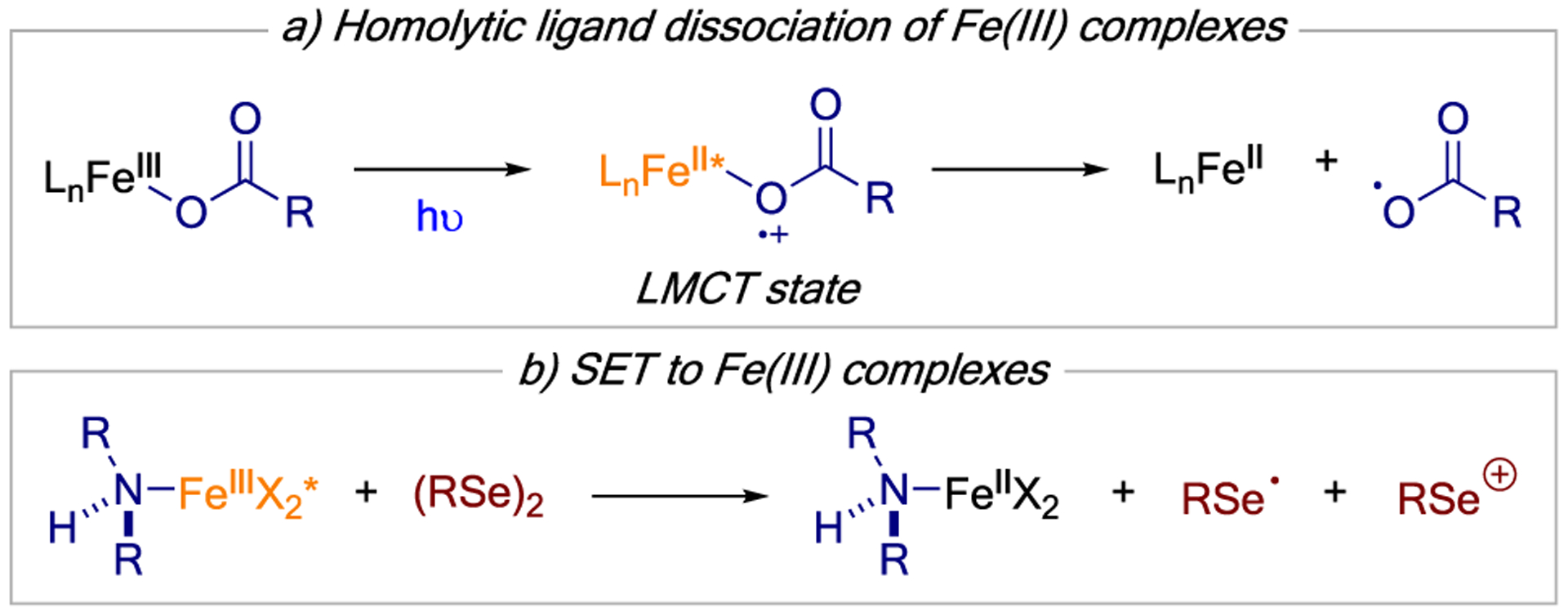
Figure 4.
Figure 4.
Outline of visible light-induced iron catalysis.
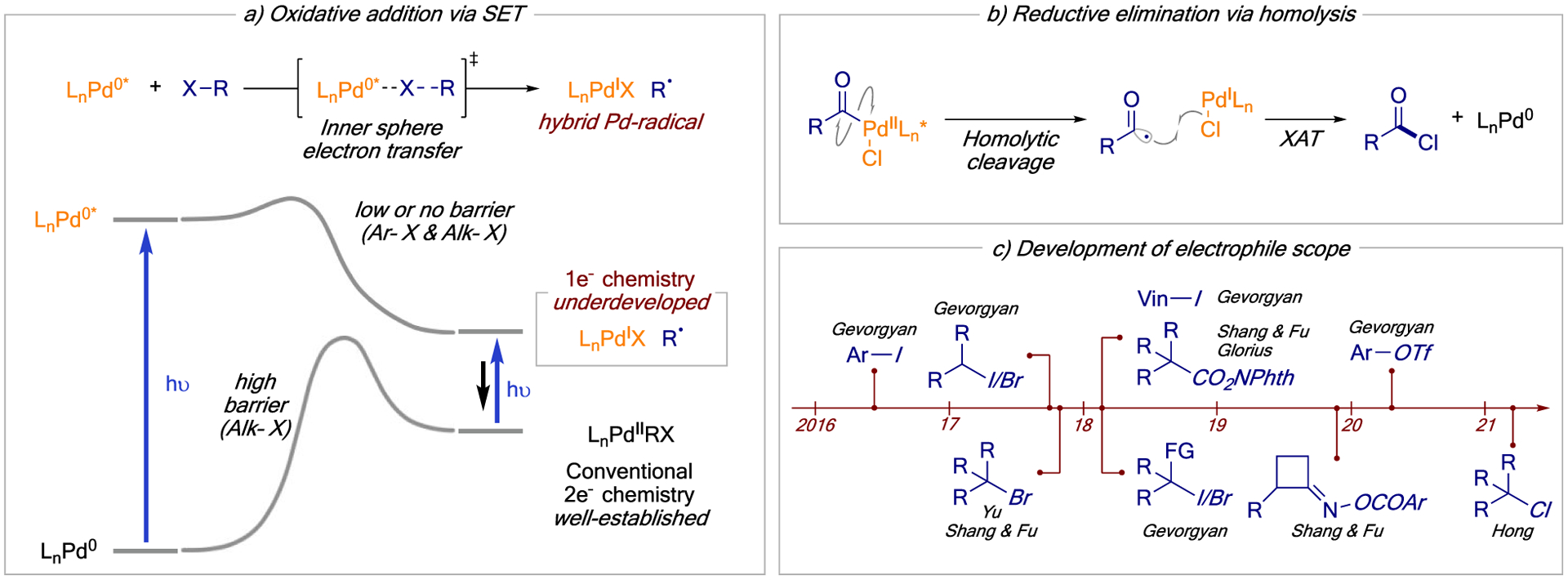
Figure 5.
Figure 5.
Outline of visible light-induced palladium catalysis.
Figure 6.
Figure 6.
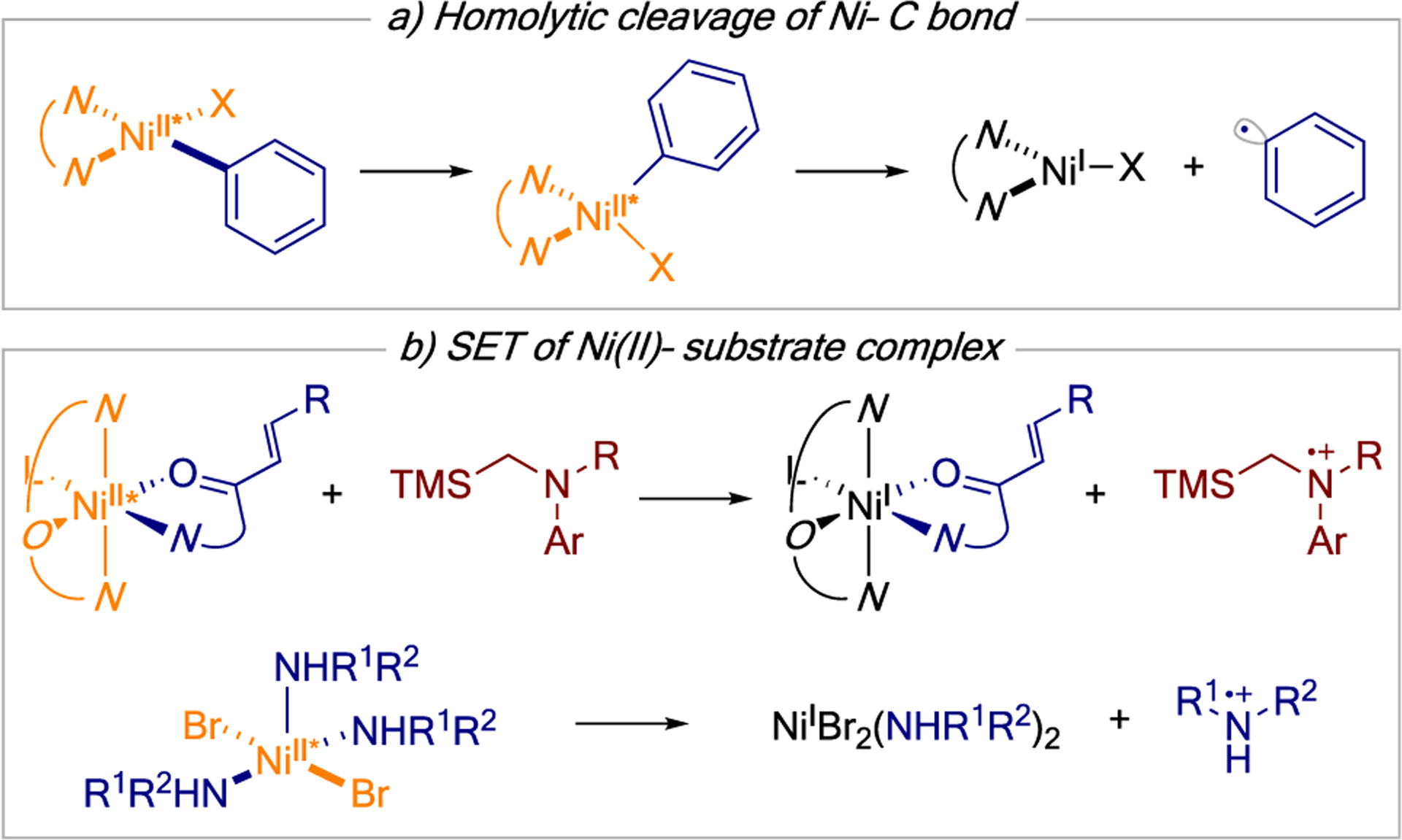
Outline of visible light-induced nickel catalysis.
Figure 7.
Figure 7.
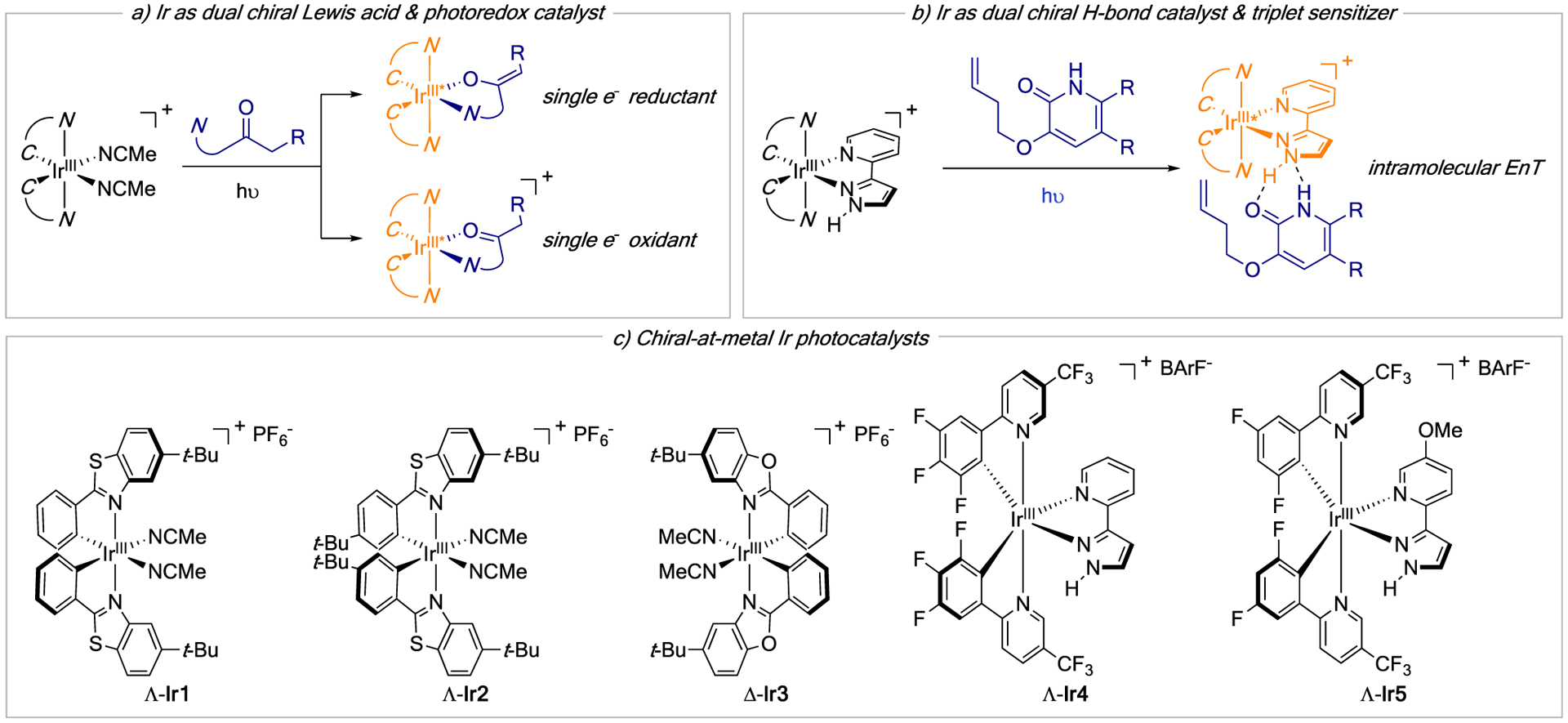
Outline of visible light-induced iridium catalysis featuring a single iridium as chiral photocatalyst.
Figure 8.
Figure 8.
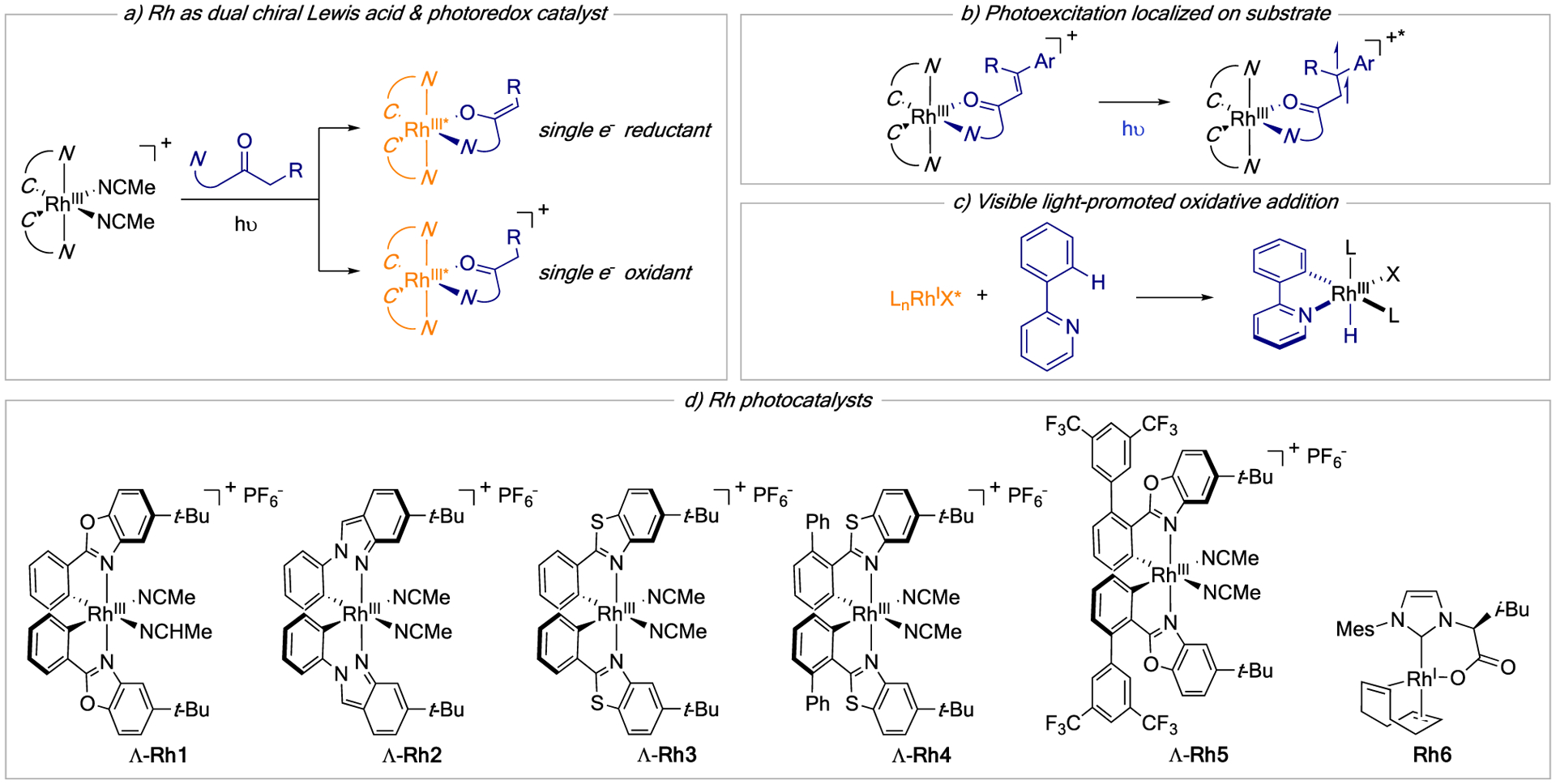
Outline of visible light-induced rhodium catalysis.
Figure 9.
Figure 9.
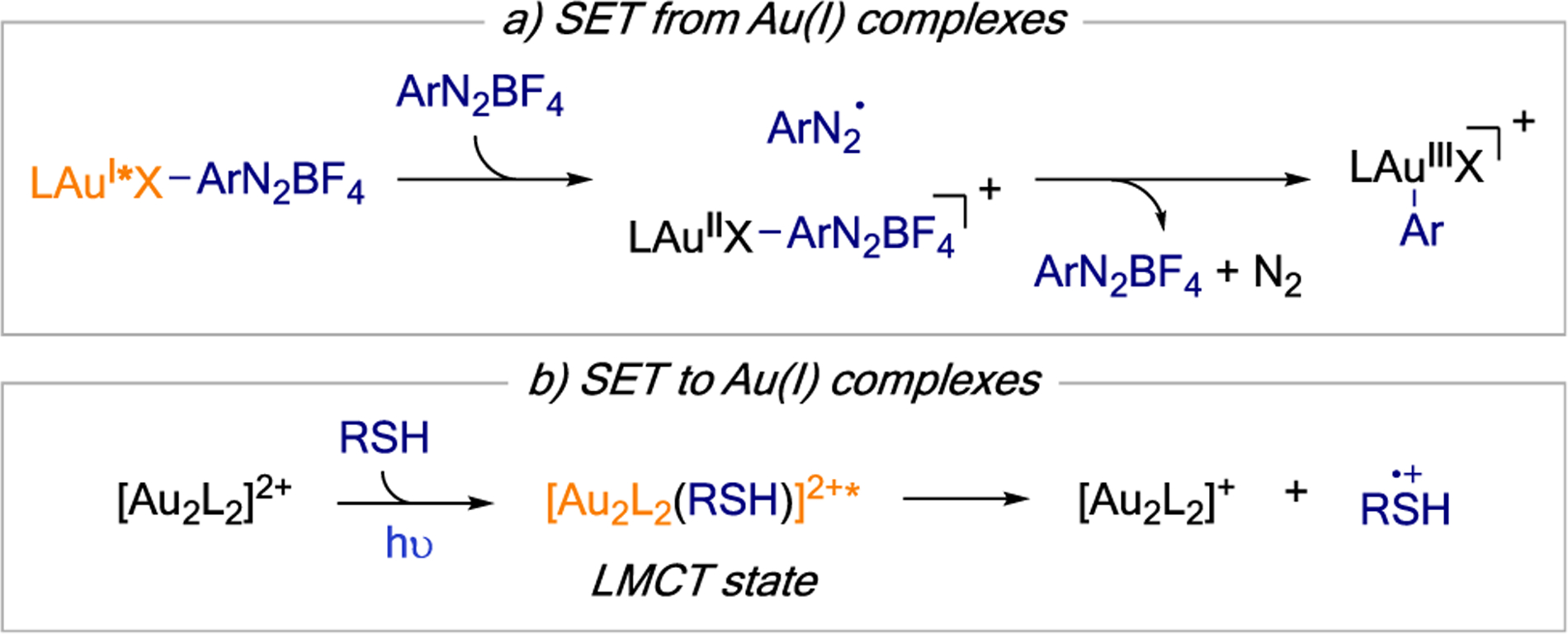
Outline of visible light-induced gold catalysis.
Figure 10.
Figure 10.
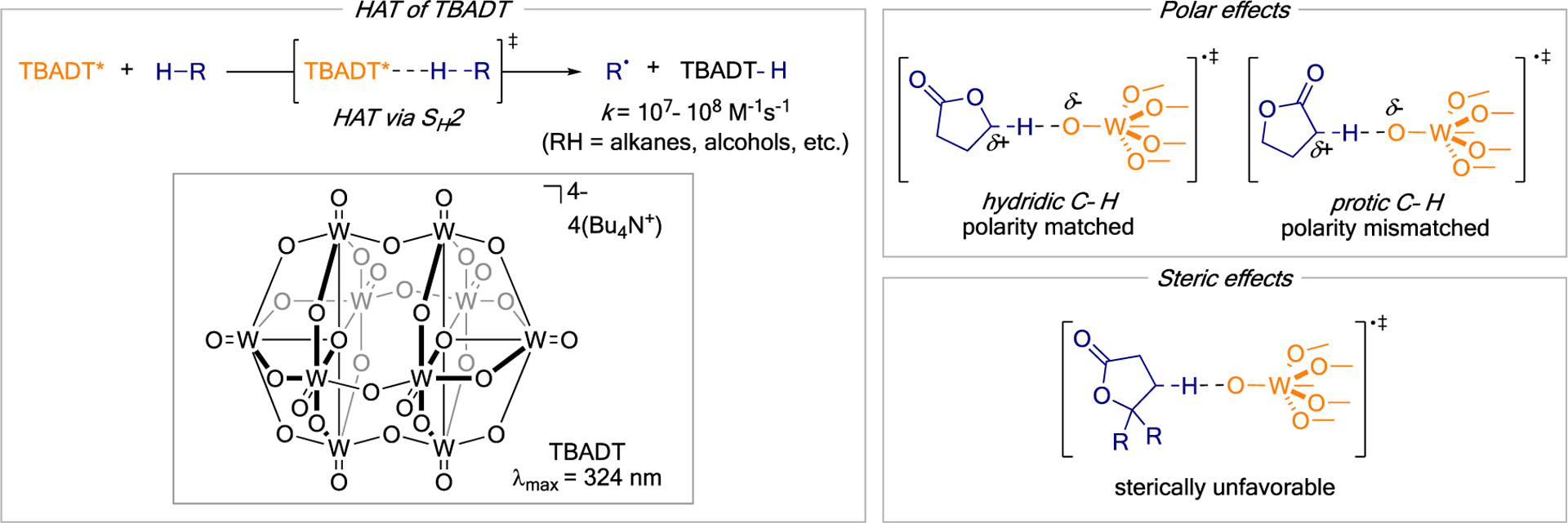
Outline of visible light-induced tungsten catalysis.
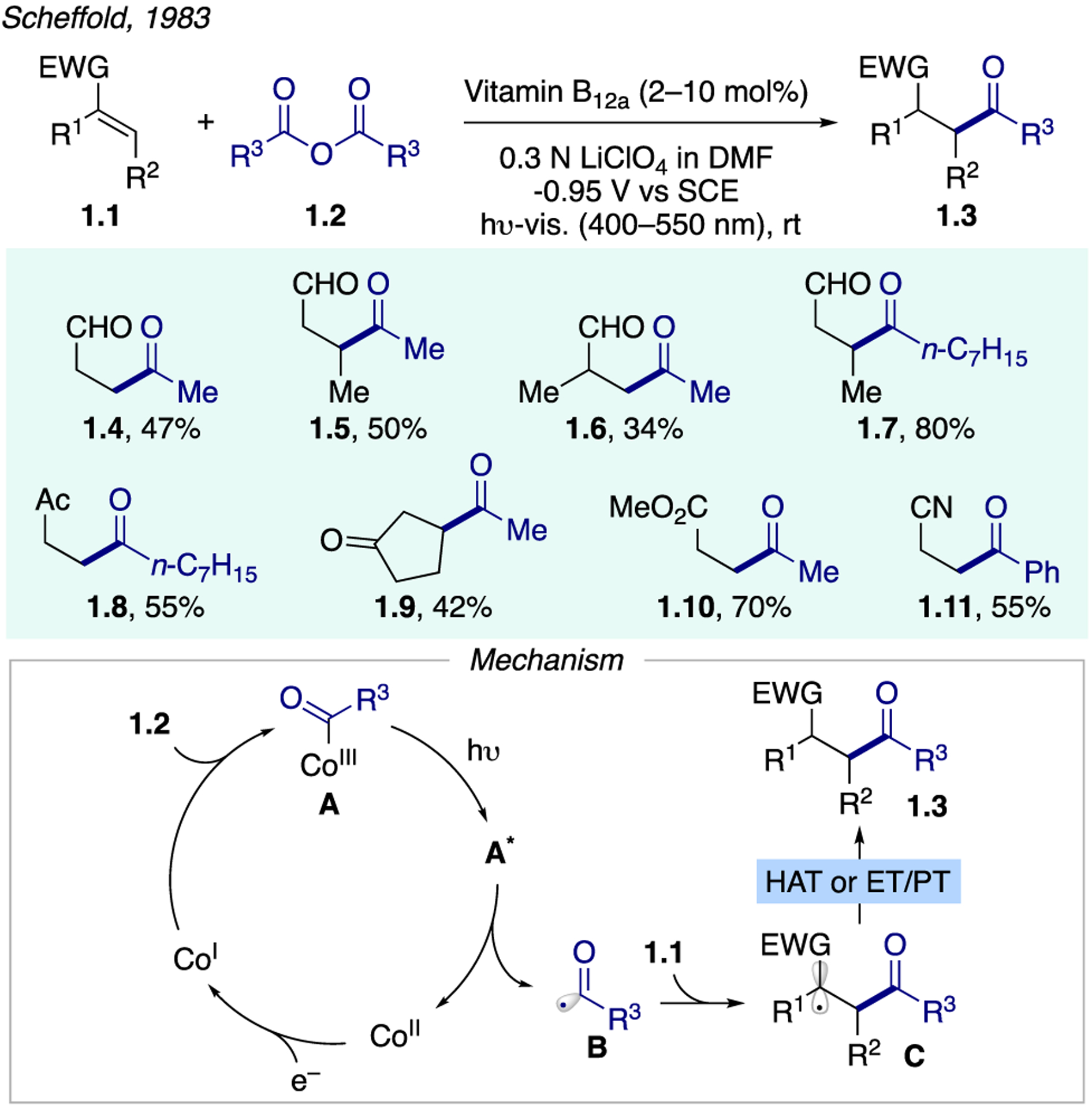
Scheme 1.
Scheme 1.
Reductive Radical Acylation of Michael Acceptors
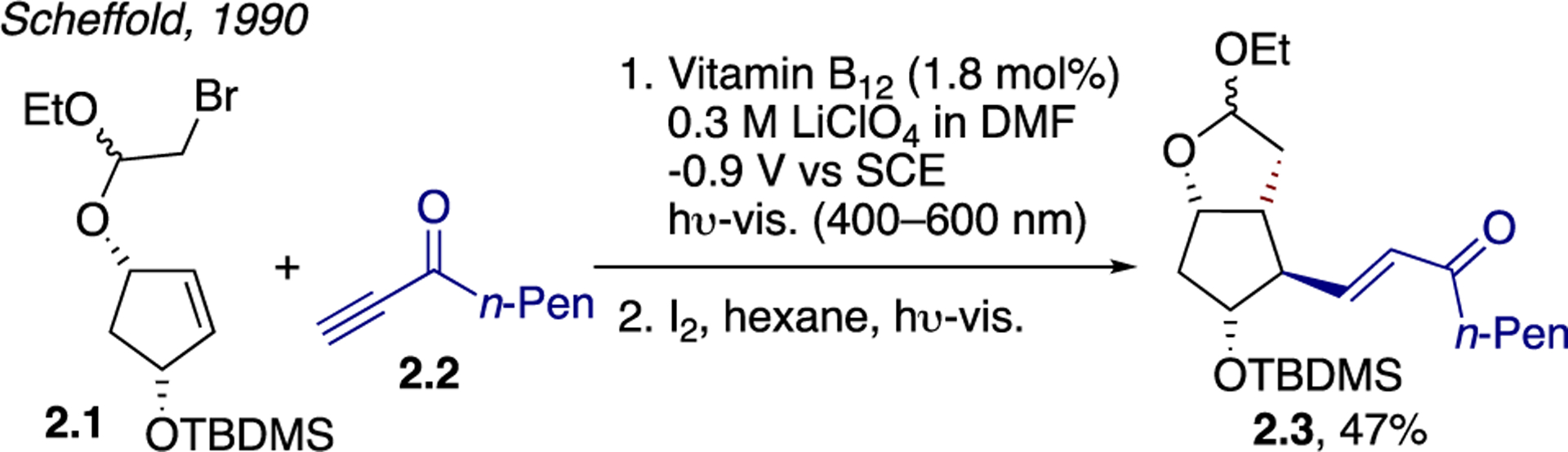
Scheme 2.
Scheme 2.
Photoelectrochemical Synthesis of Postaglandin F Precursor
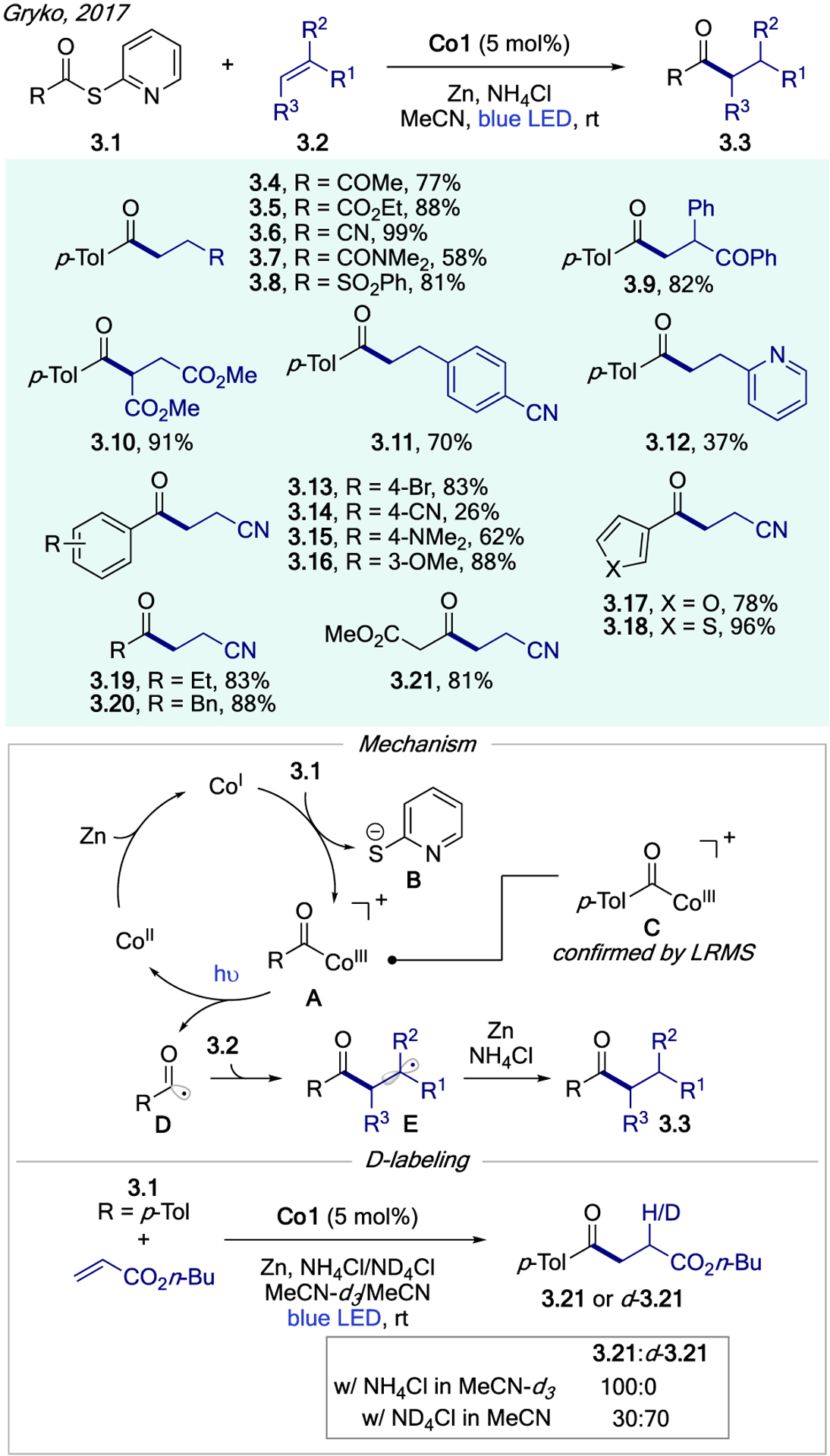
Scheme 3.
Scheme 3.
Generation of Acyl Radicals from 2-S-Pyridyl Thioesters
Scheme 4.
Scheme 4.
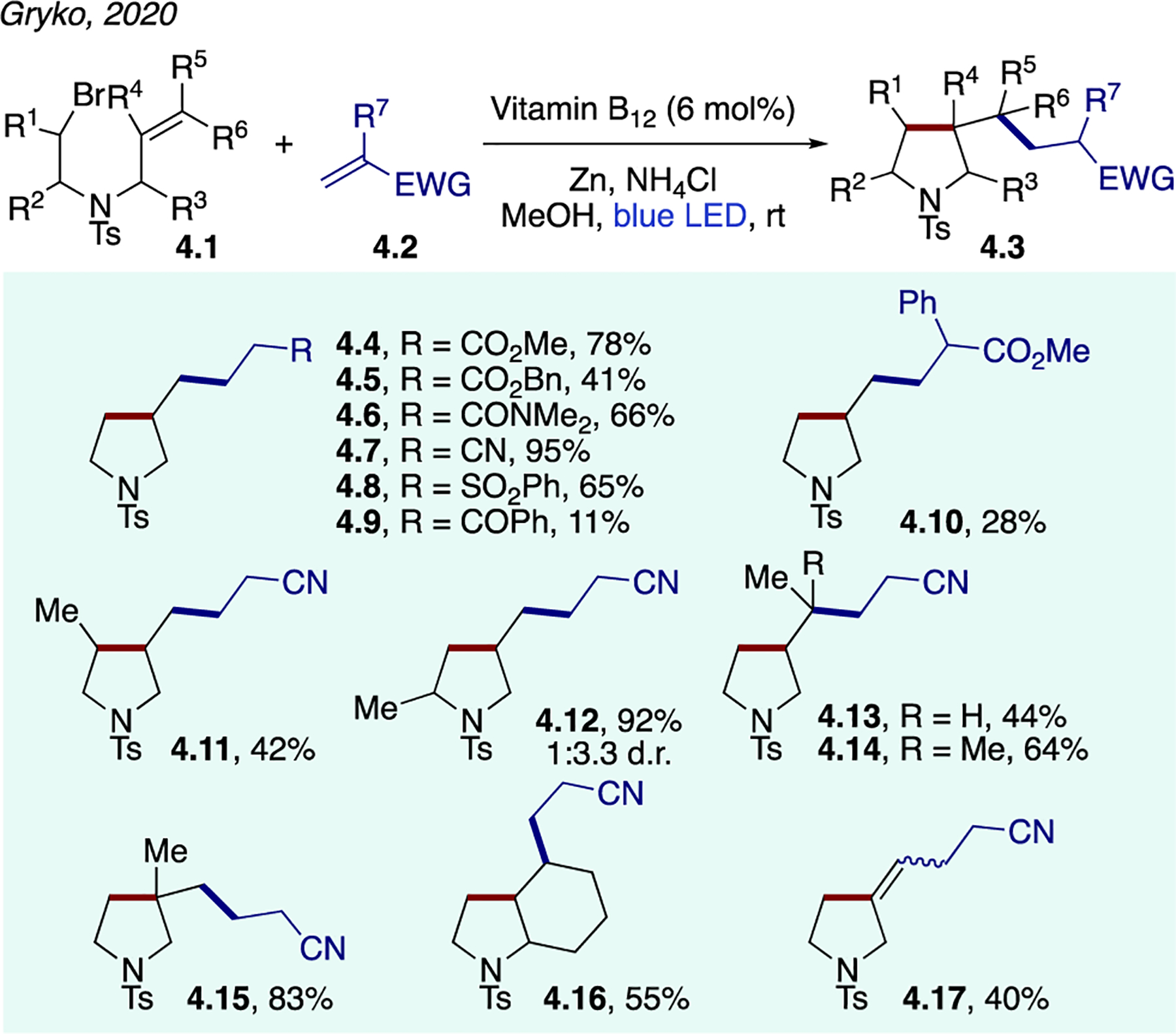
Dicarbofunctionalization of Alkene-Tethered Alkyl Bromides
Scheme 5.
Scheme 5.
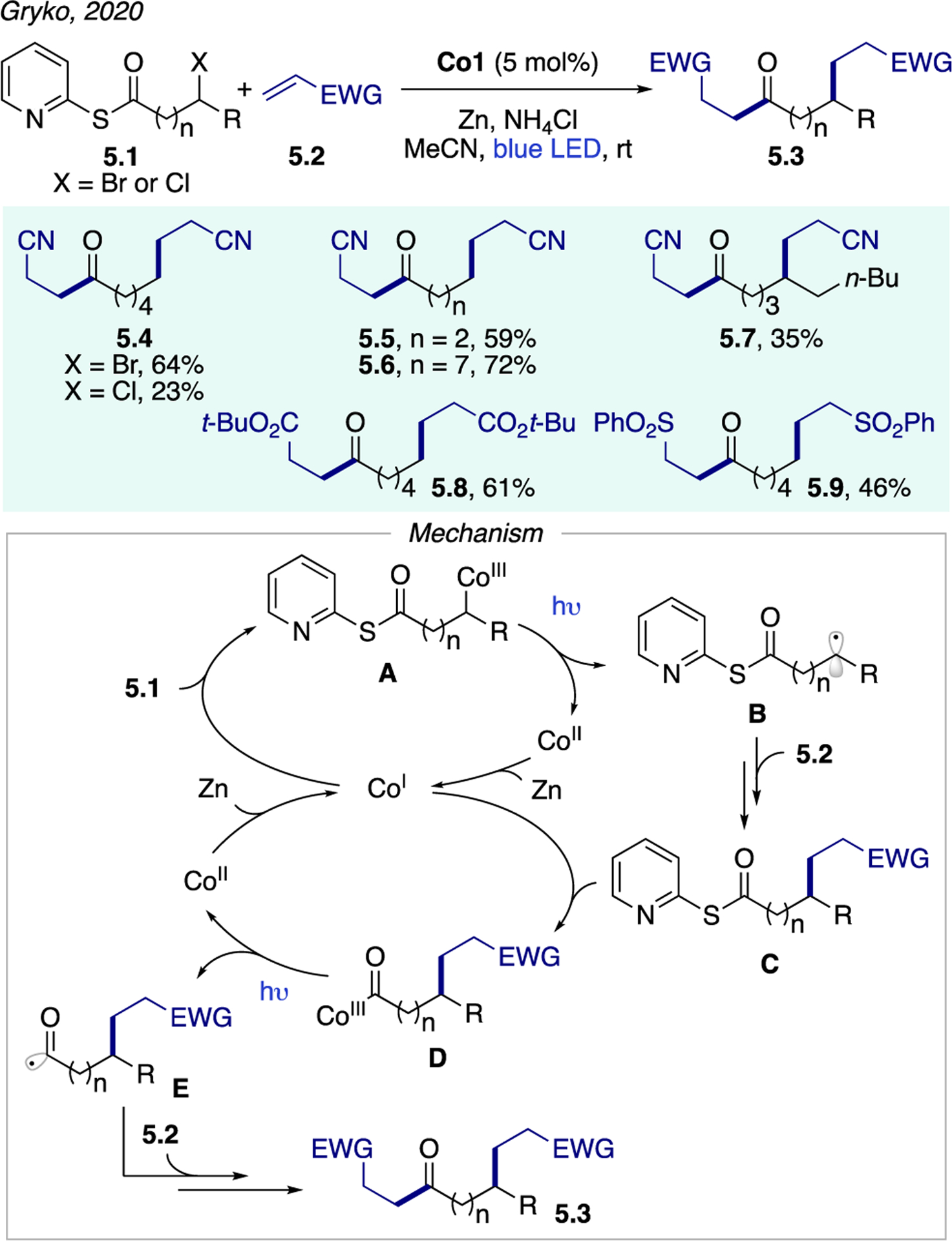
Sequential Alkyl- and Acyl Radical Generation
Scheme 6.
Scheme 6.
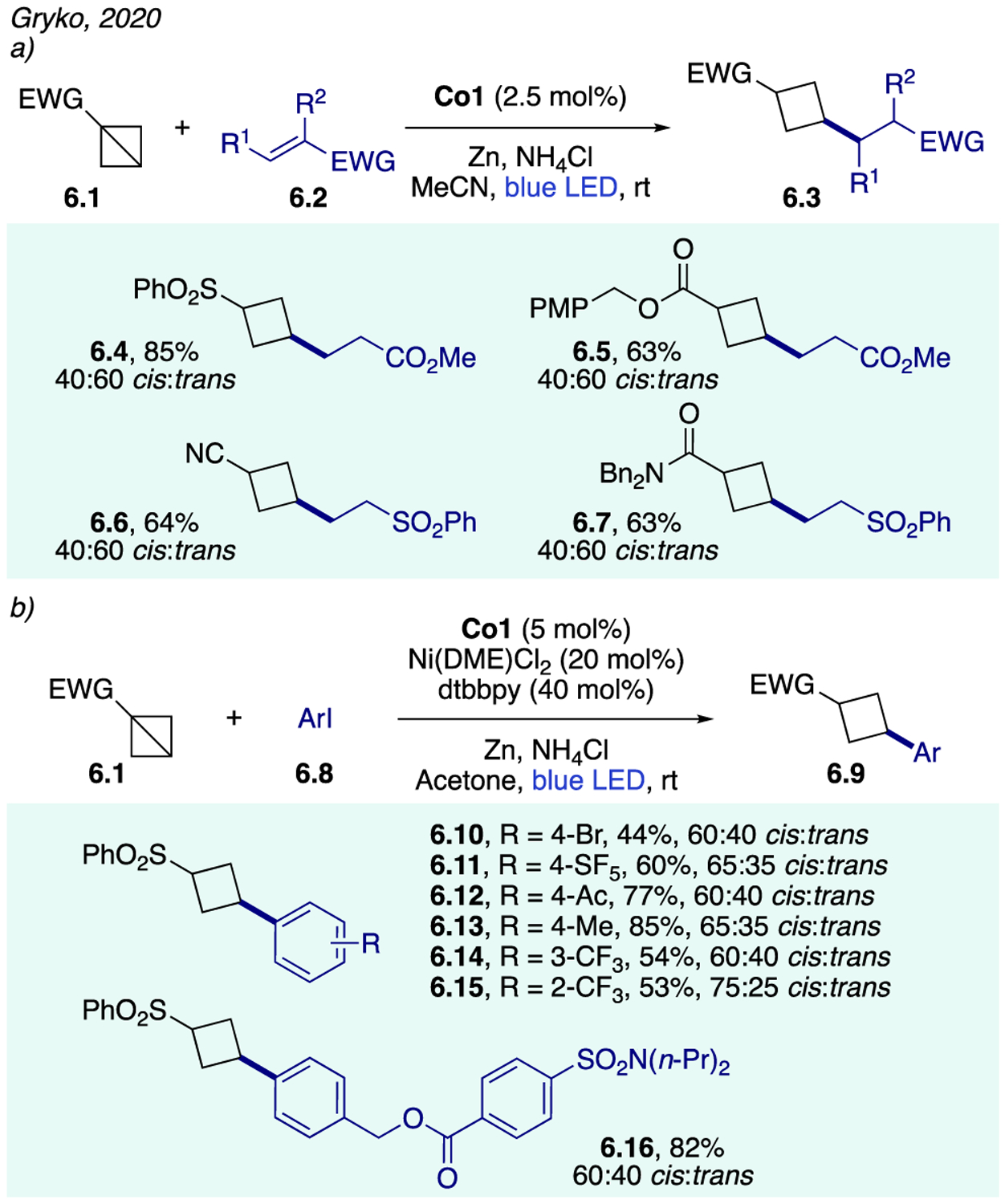
BCBs as Alkyl Radical Precursor for (a) Giese-type Reaction and (b) Cross-Electrophile Coupling
Scheme 7.
Scheme 7.
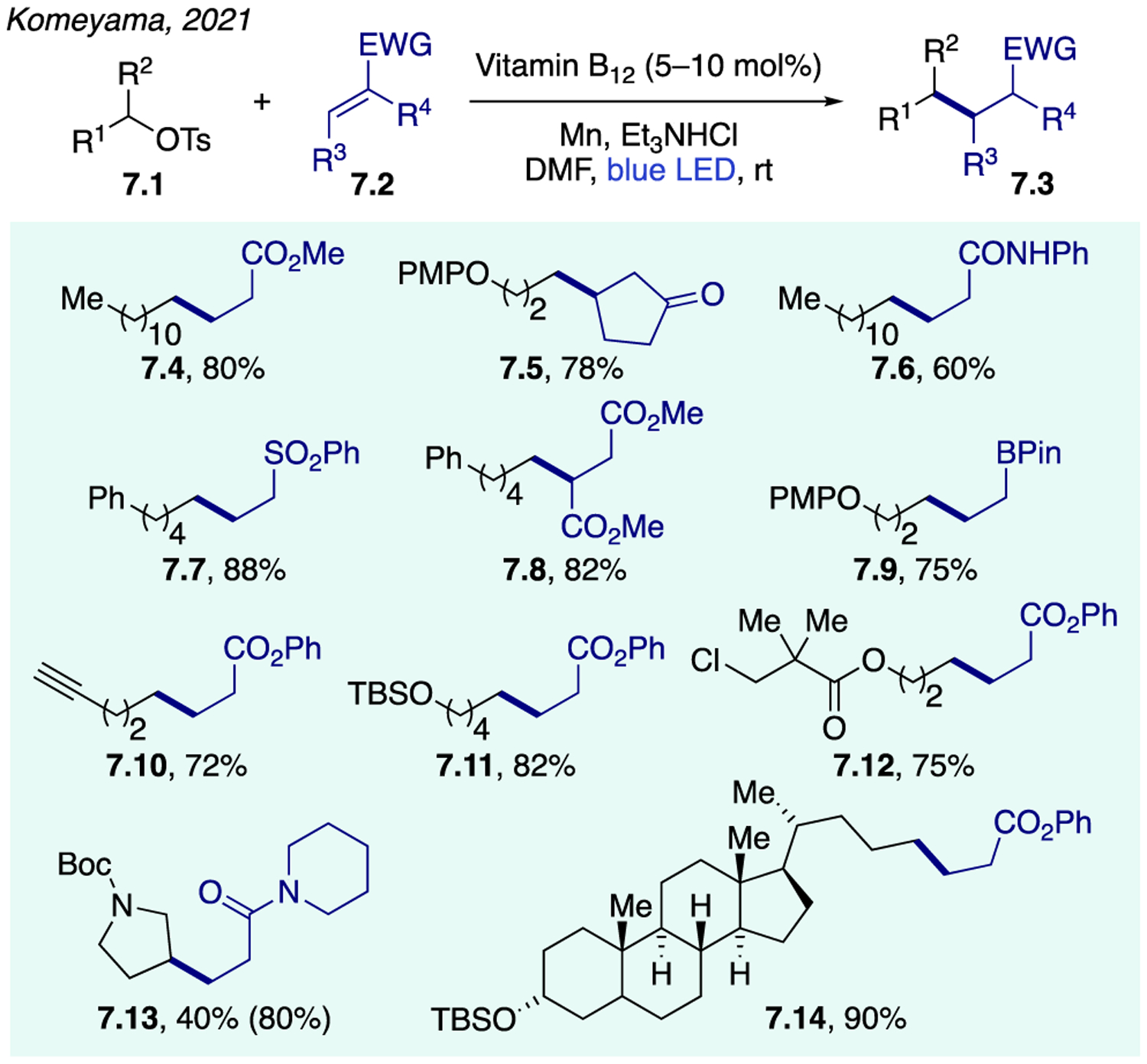
Alkyl Tosylates as Alkyl Radical Precursor
Scheme 8.
Scheme 8.
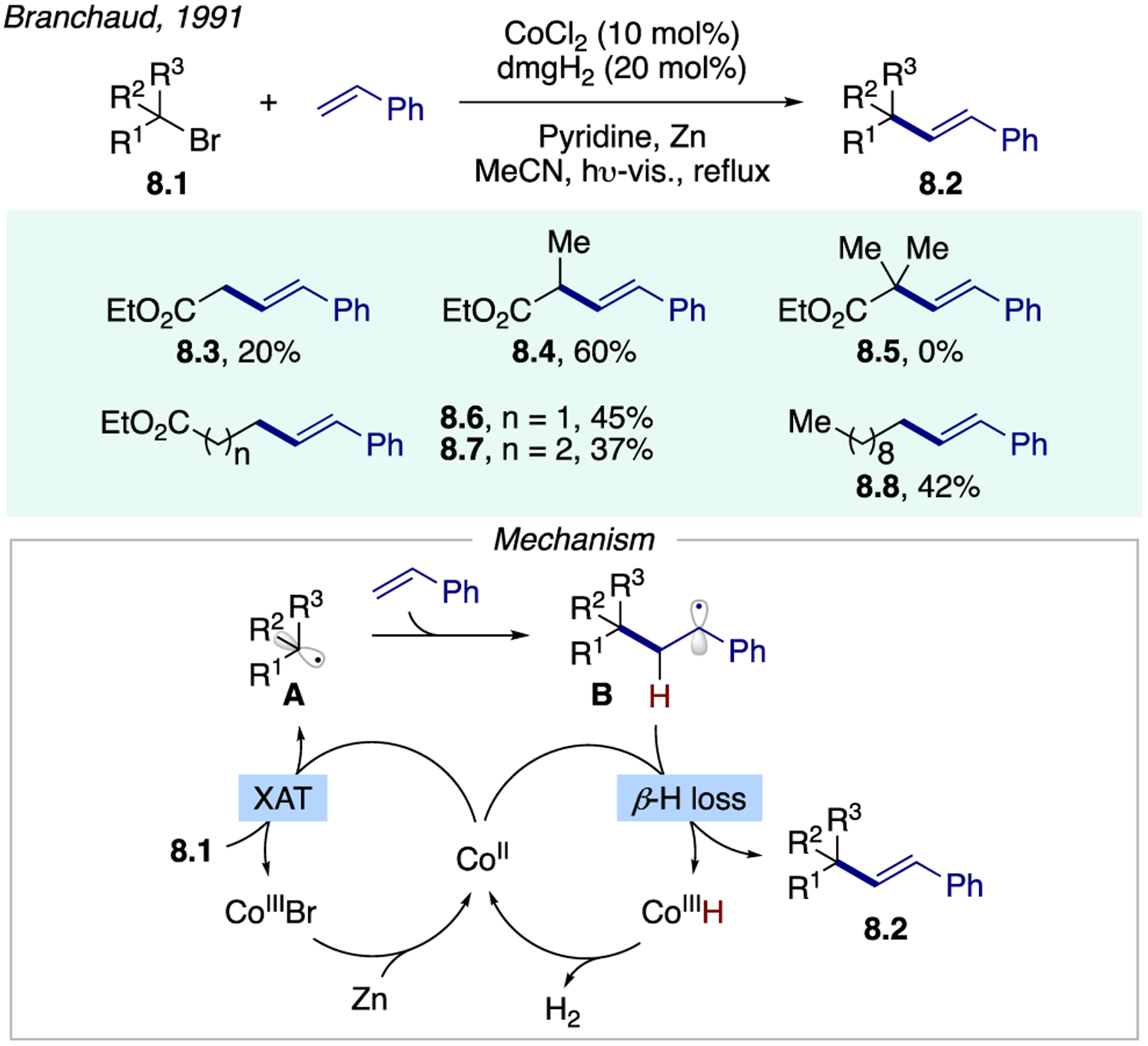
Heck-type Reaction of Alkyl Bromides and Styrene
Scheme 9.
Scheme 9.
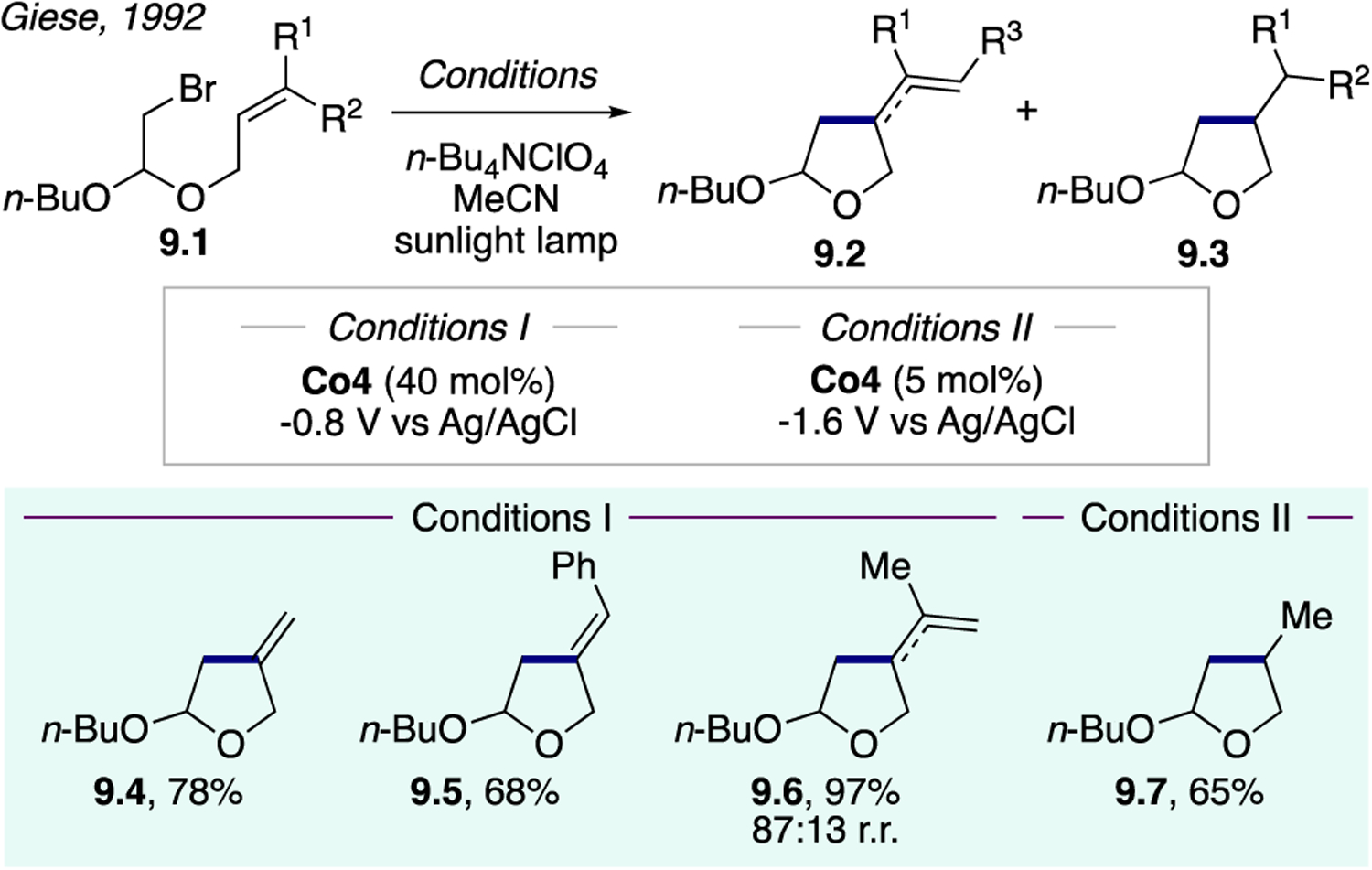
Radical Cyclization of Alkyl Bromides
Scheme 10.
Scheme 10.
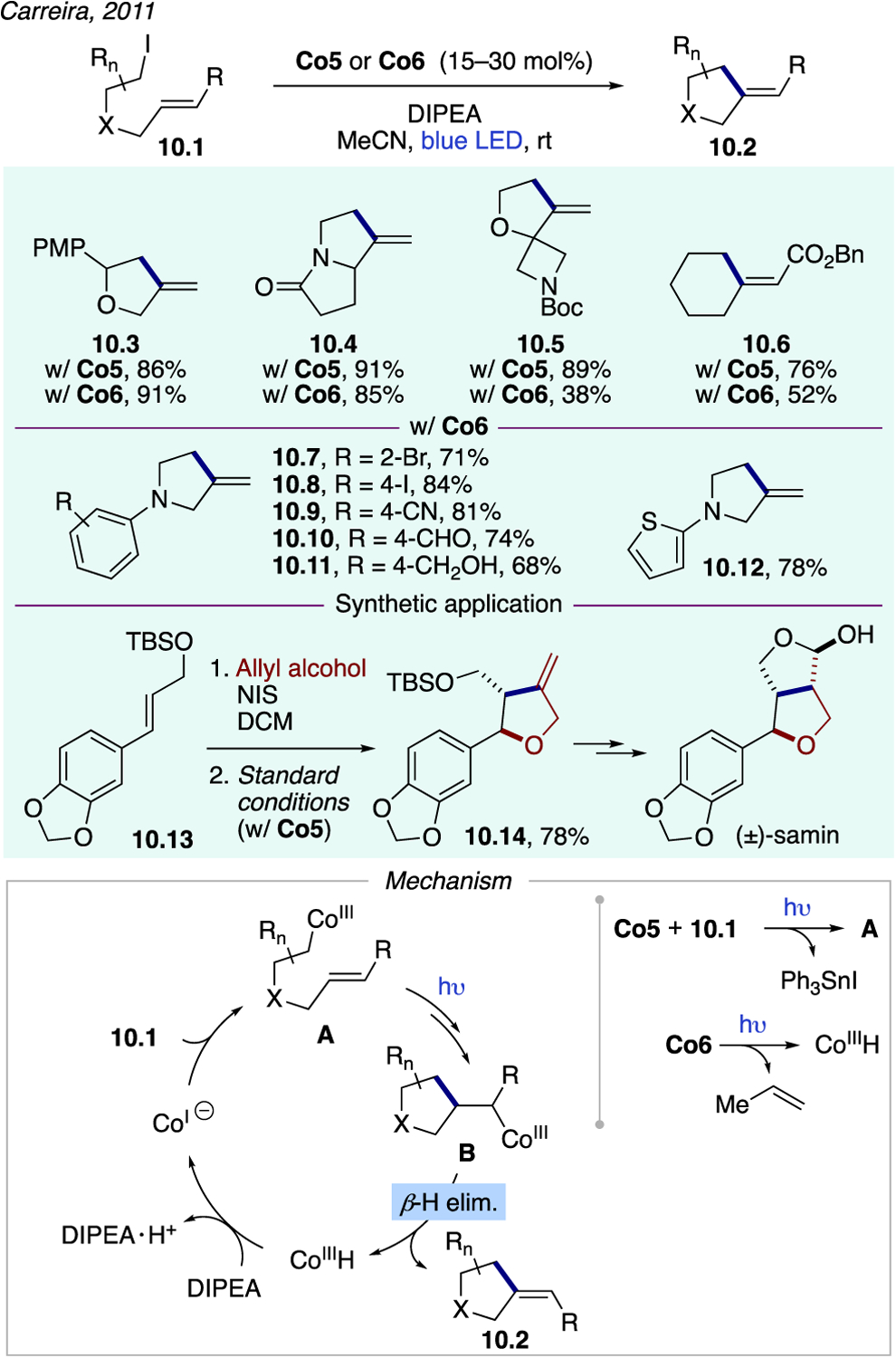
Catalyst Turnover Enabled by Deprotonation of Co(III)H
Scheme 11.
Scheme 11.
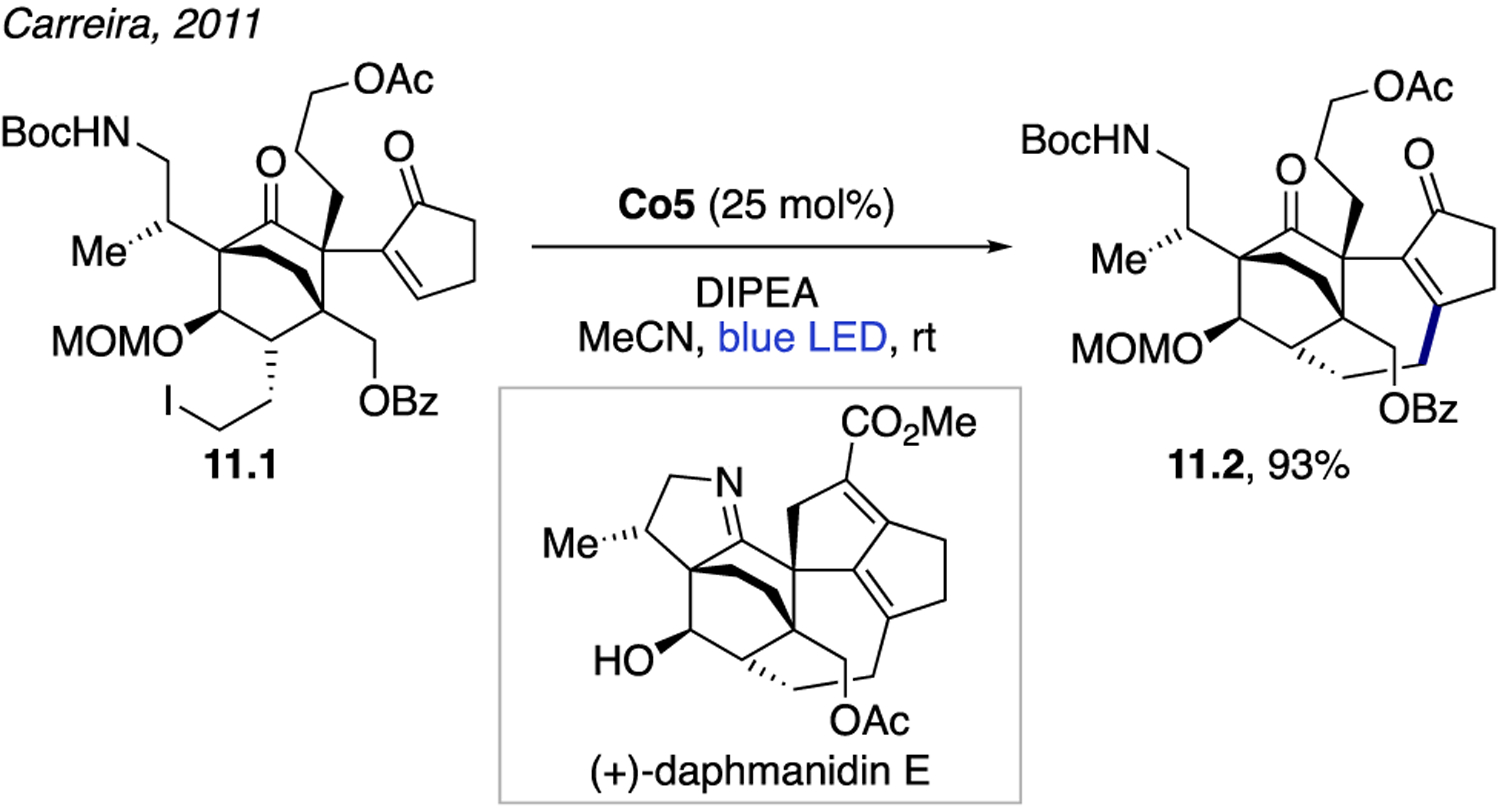
Heck-type Cyclization en Route to (+)-Daphmanidin E
Scheme 12.
Scheme 12.
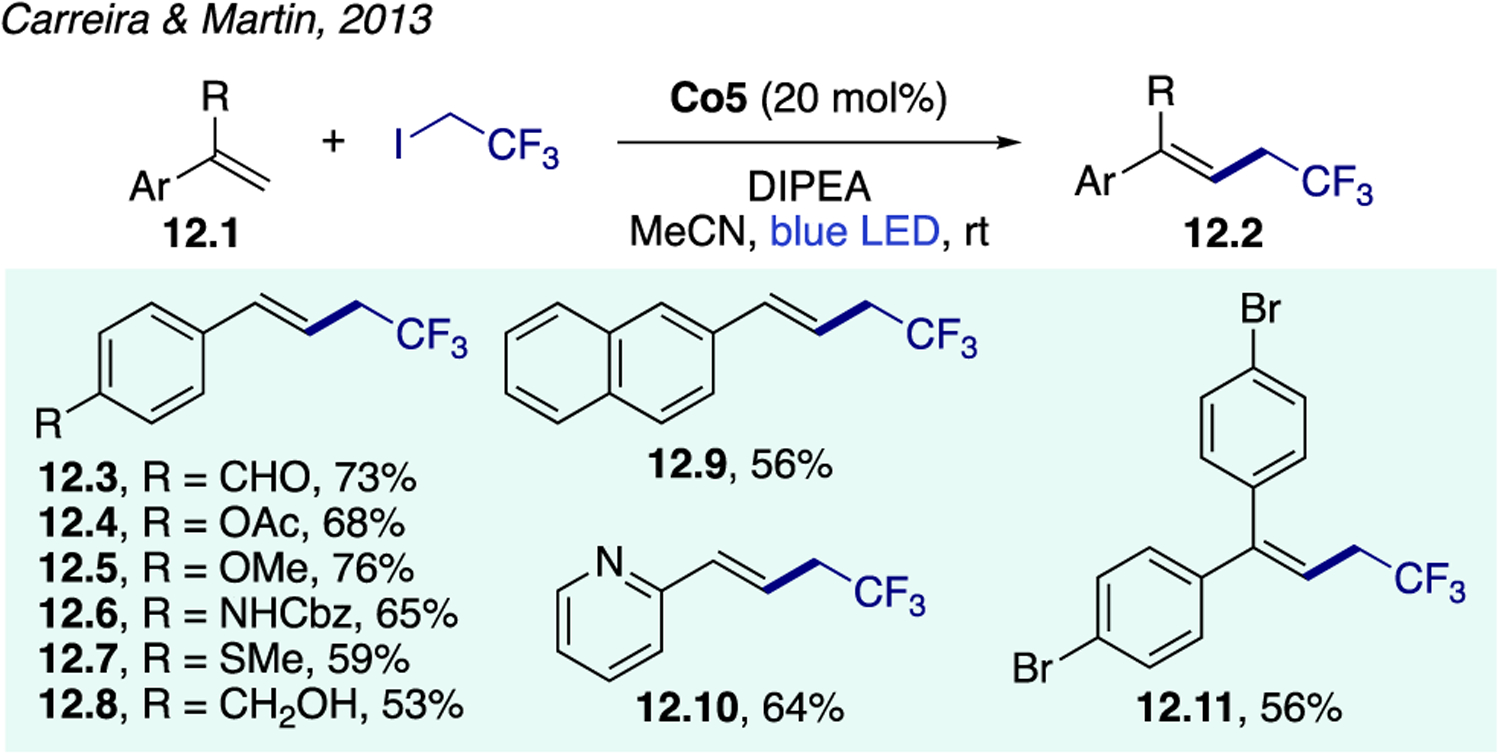
Heck-type Reaction of Styrene Derivatives with 2,2,2-Trifluoroethyl Iodide
Scheme 13.
Scheme 13.
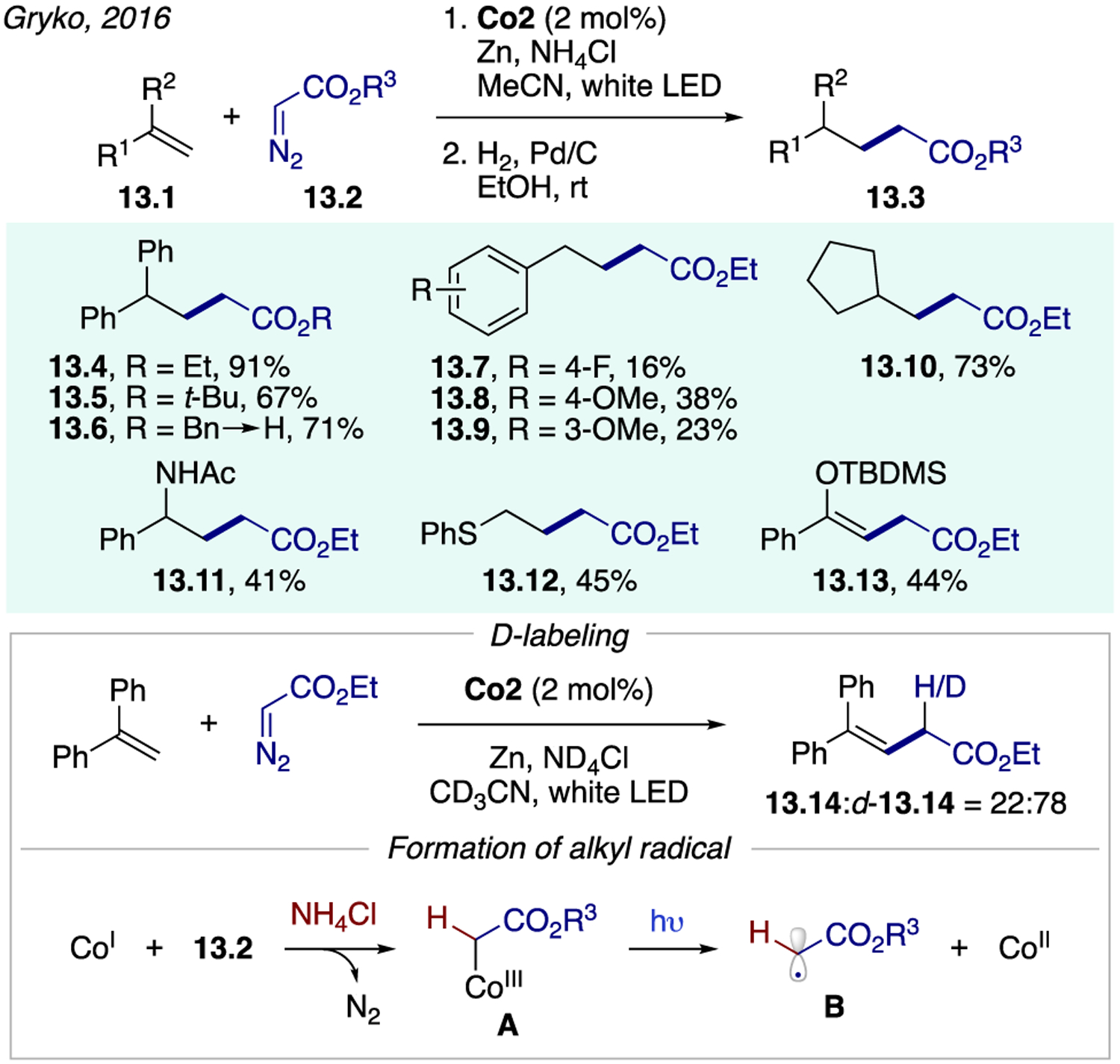
α-Diazo Esters as Alkyl Radical Precursors for Heck-type Reaction
Scheme 14.
Scheme 14.
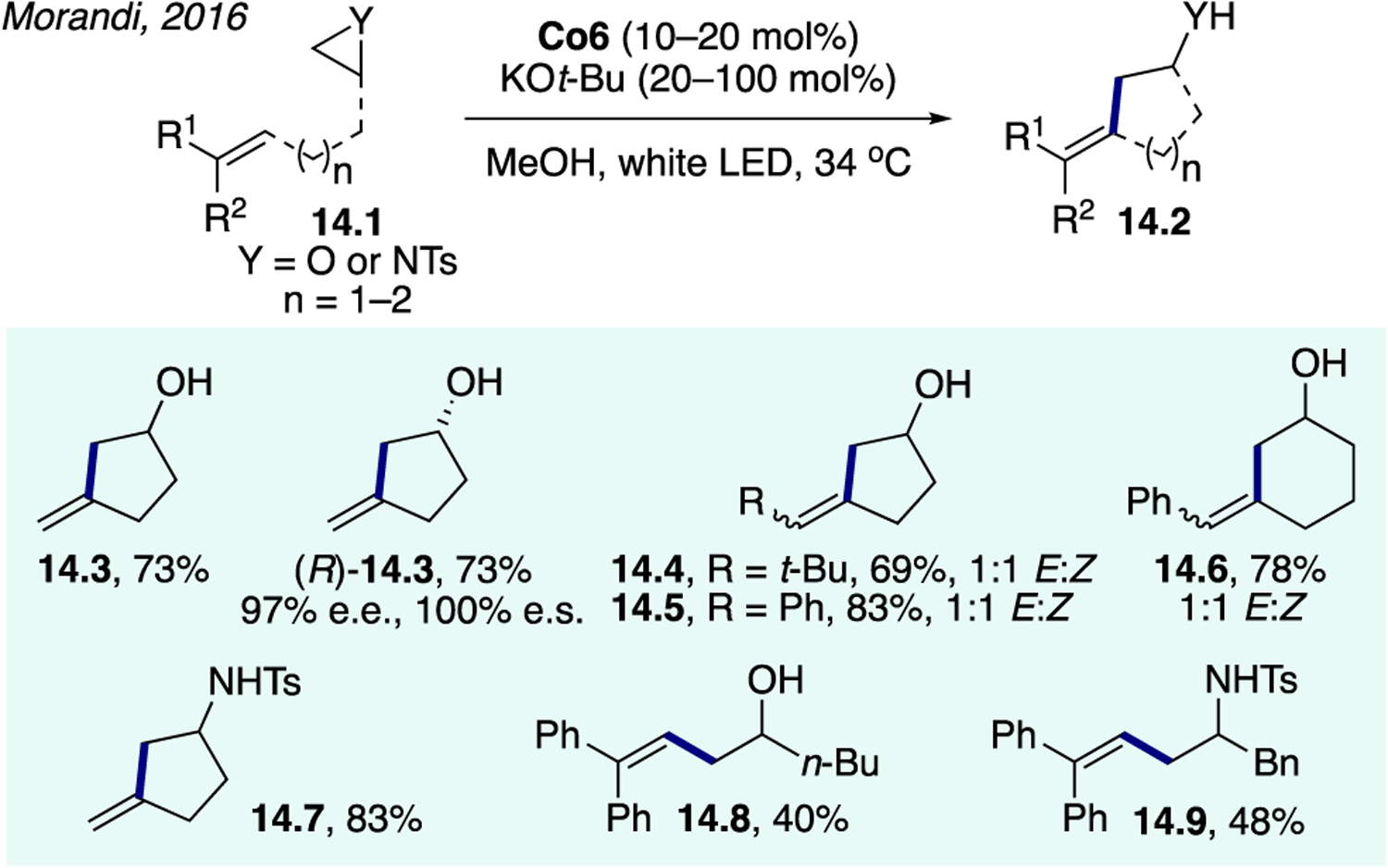
Regioselective Coupling of Epoxides and Aziridines with Alkenes
Scheme 15.
Scheme 15.
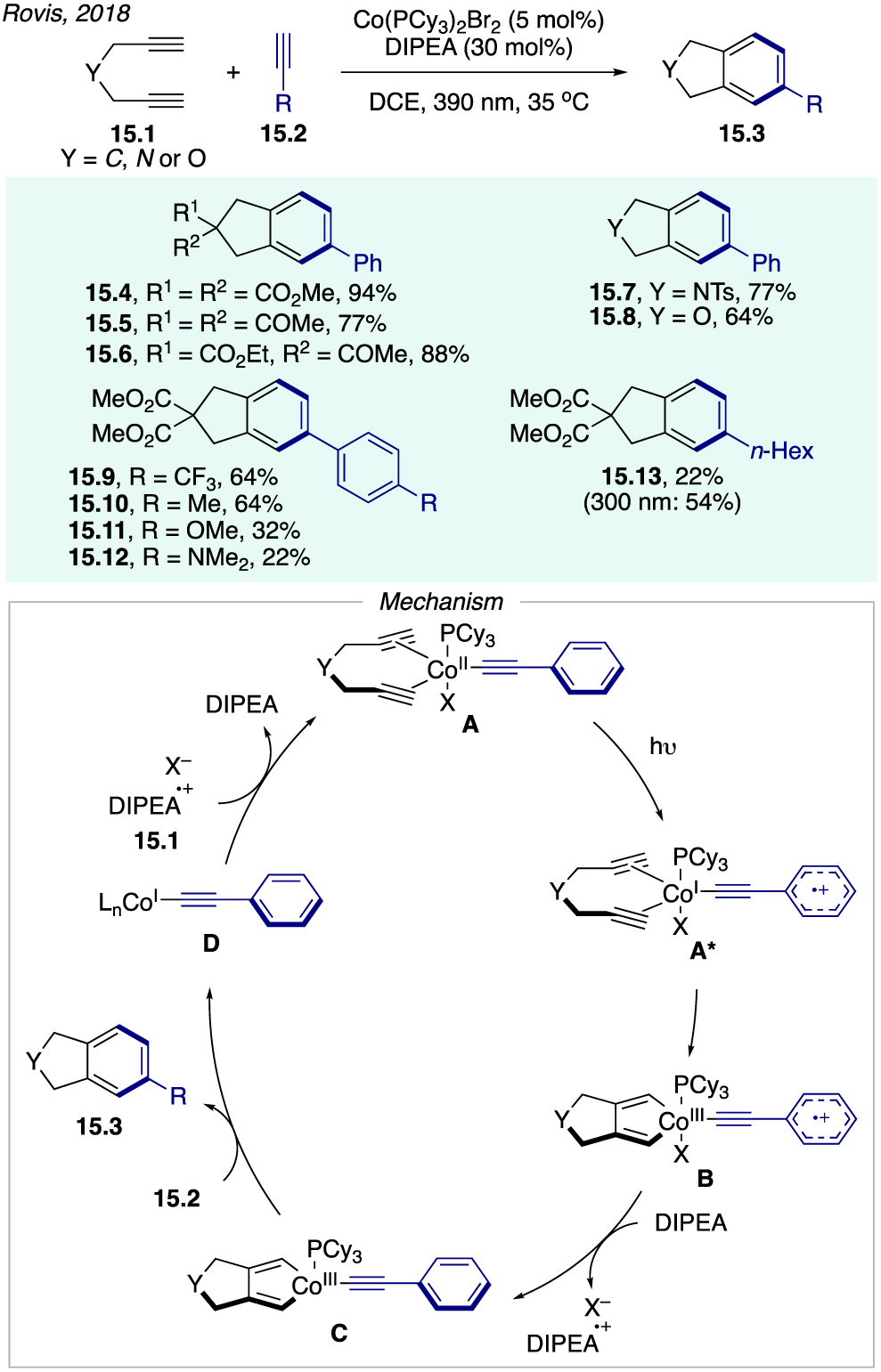
Diyne–Alkyne Cycloaddition via Photoinduced LMCT of Co(II) Acetylides
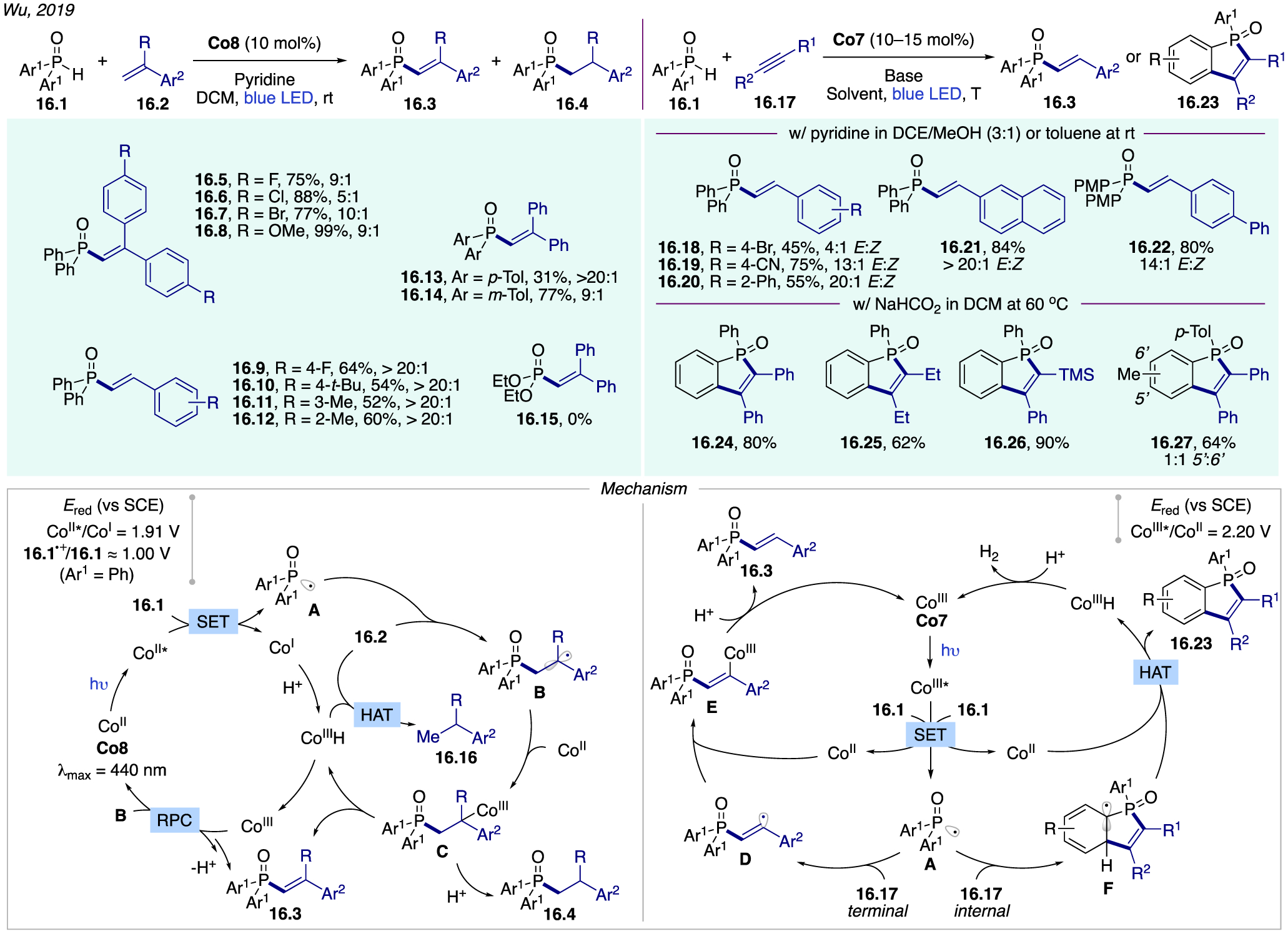
Scheme 16.
Scheme 16.
Photoinduced P–H Bond Activation of H-Phosphine Oxides
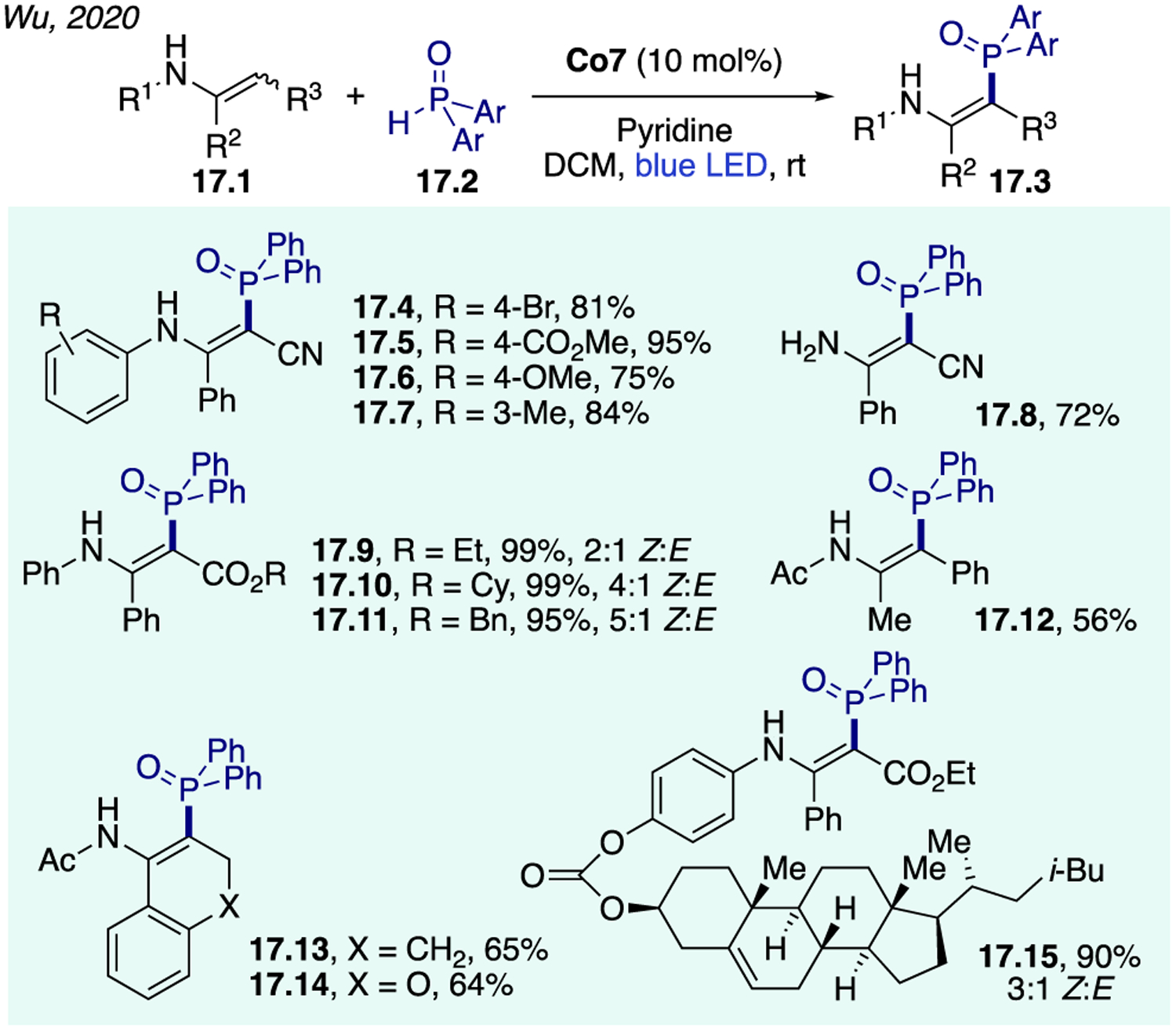
Scheme 17.
Scheme 17.
Phosphorylation of Enamines and Enamides
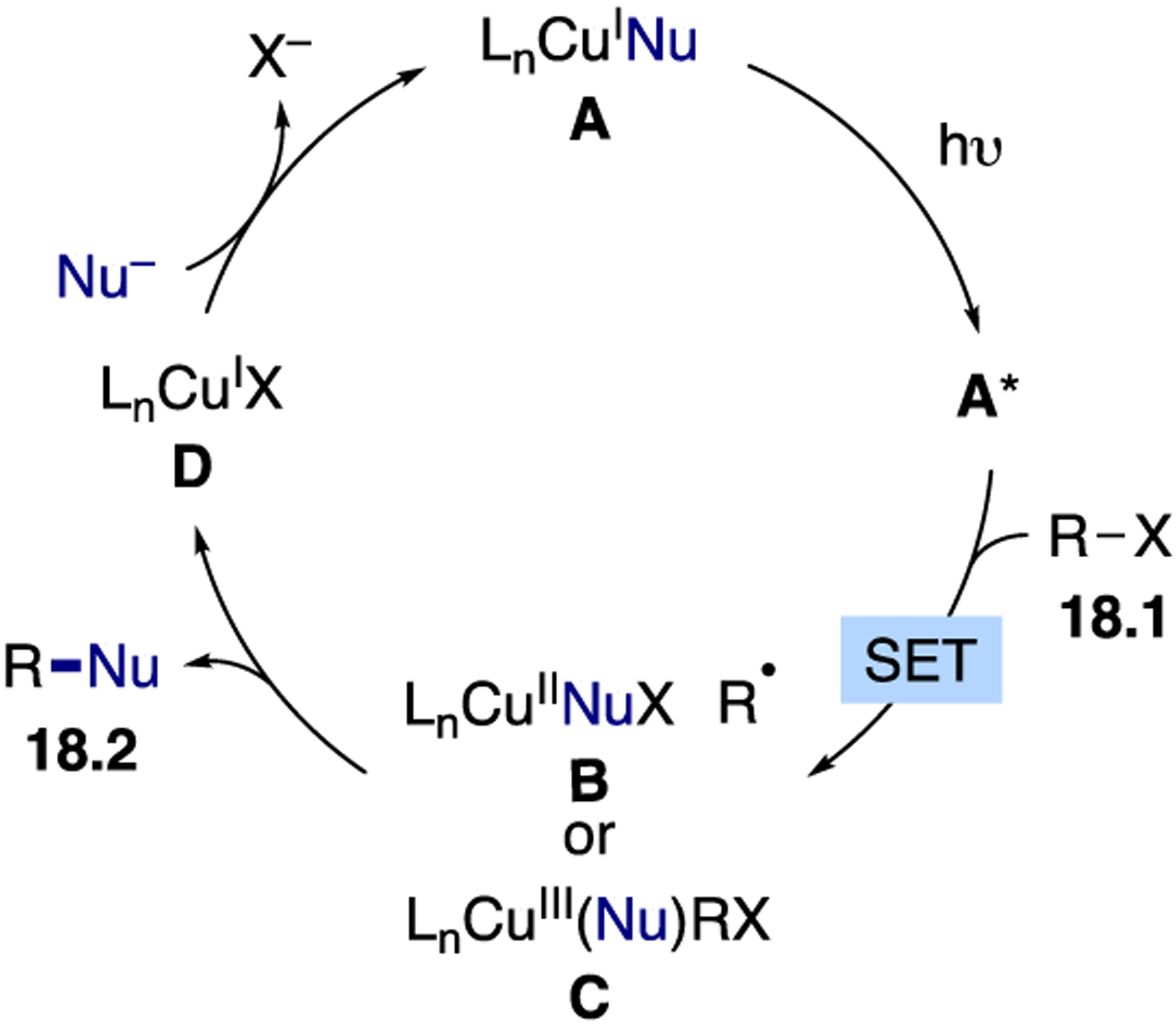
Scheme 18.
Scheme 18.
General Mechanism of Cu(I) Photocatalysis Involving Heteroatom-Based Nucleophiles
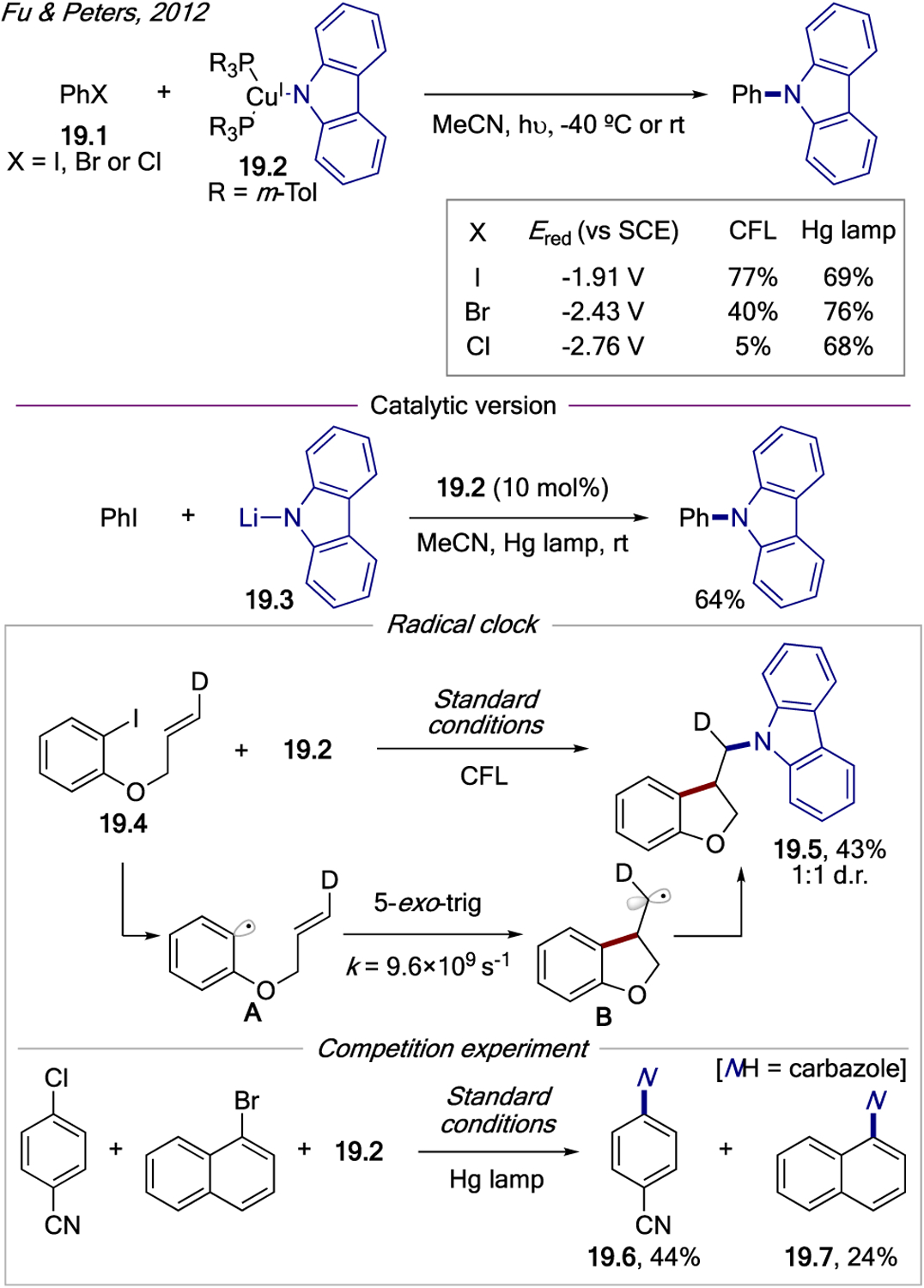
Scheme 19.
Scheme 19.
First Example of Photoinduced Radical Ullmann C–N Coupling
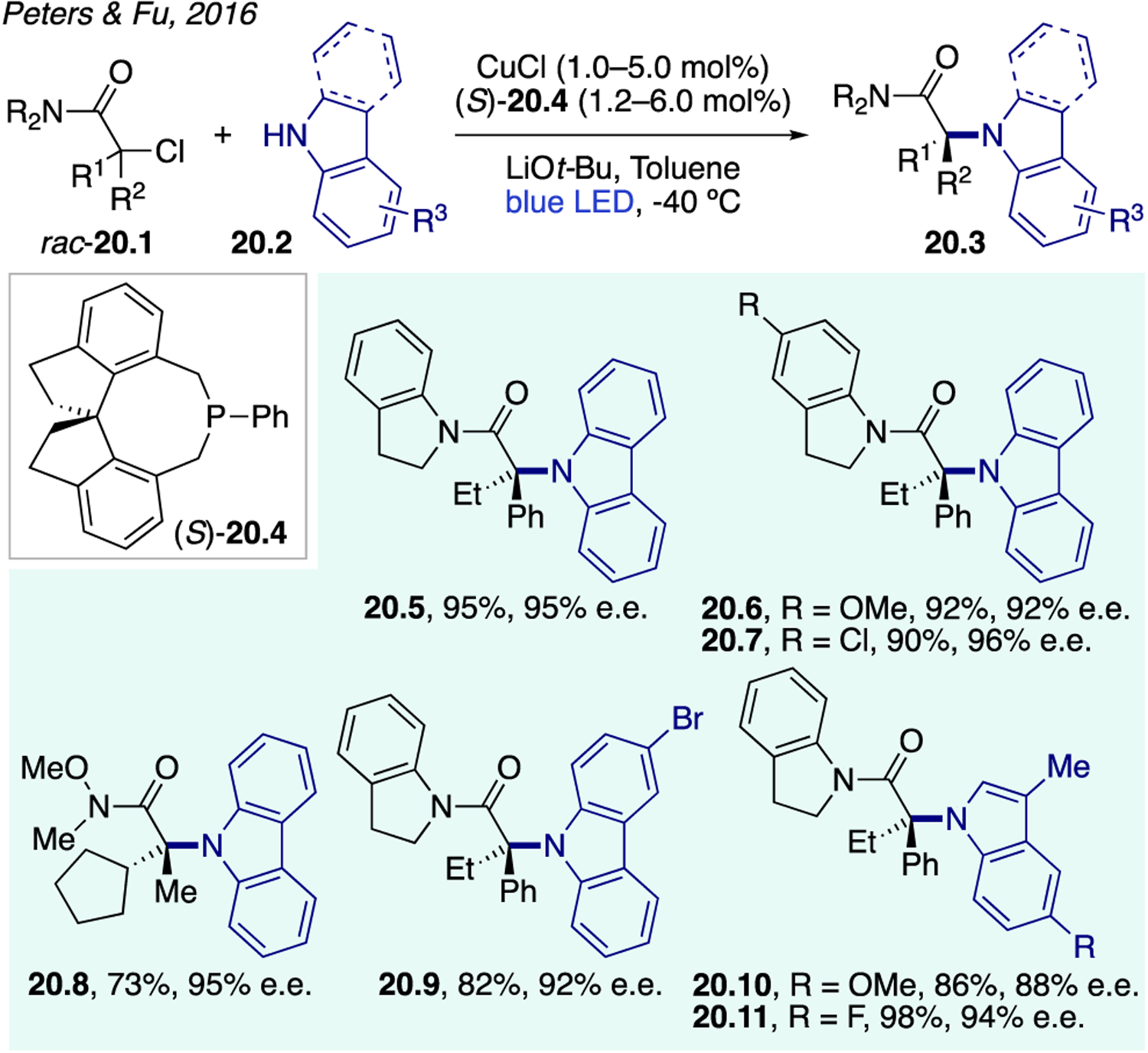
Scheme 20.
Scheme 20.
Asymmetric C–N Cross-Coupling of Alkyl Chlorides with Carbazoles and Indoles
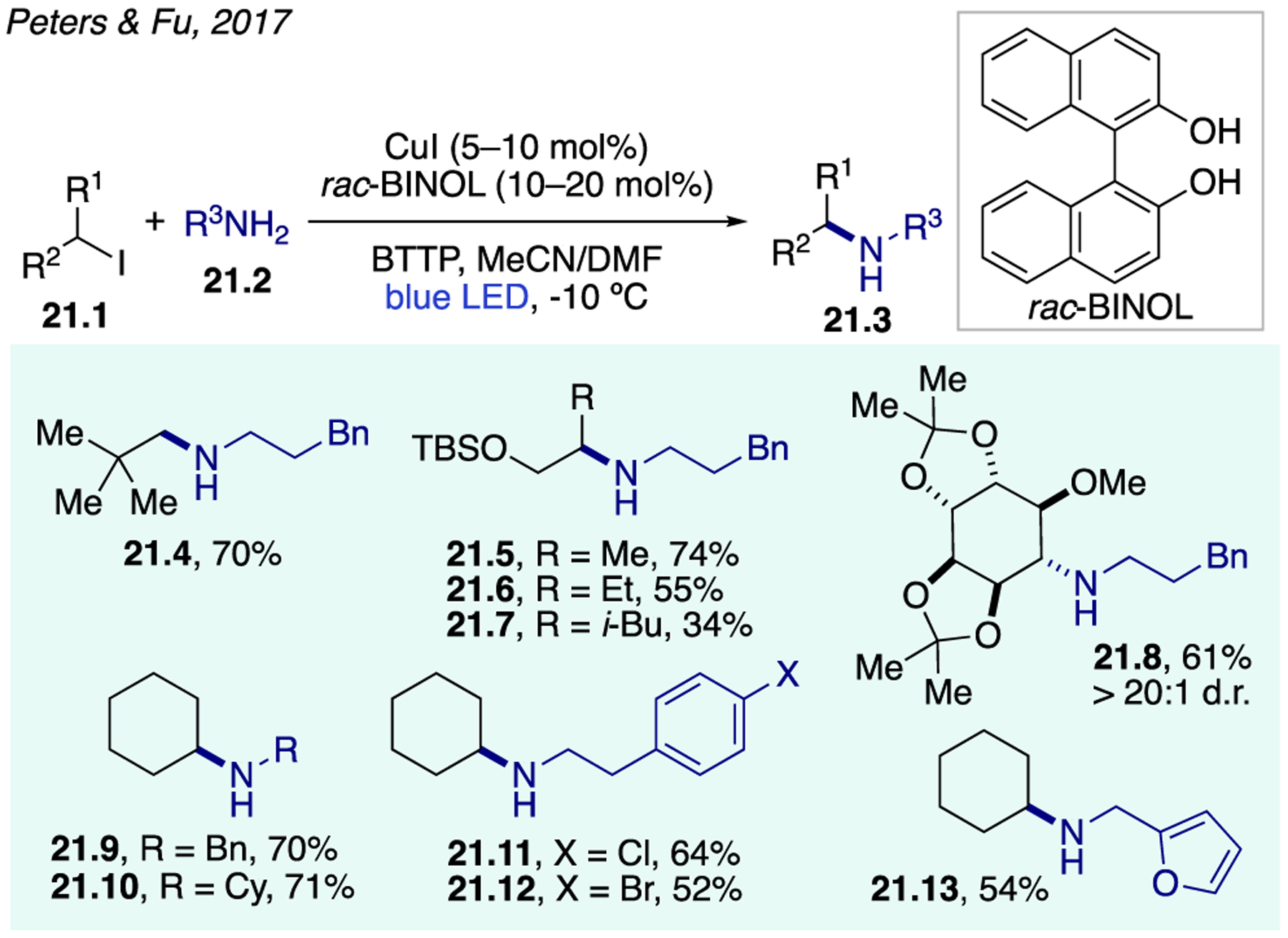
Scheme 21.
Scheme 21.
Selective Monoalkylation of Aliphatic Primary Amines
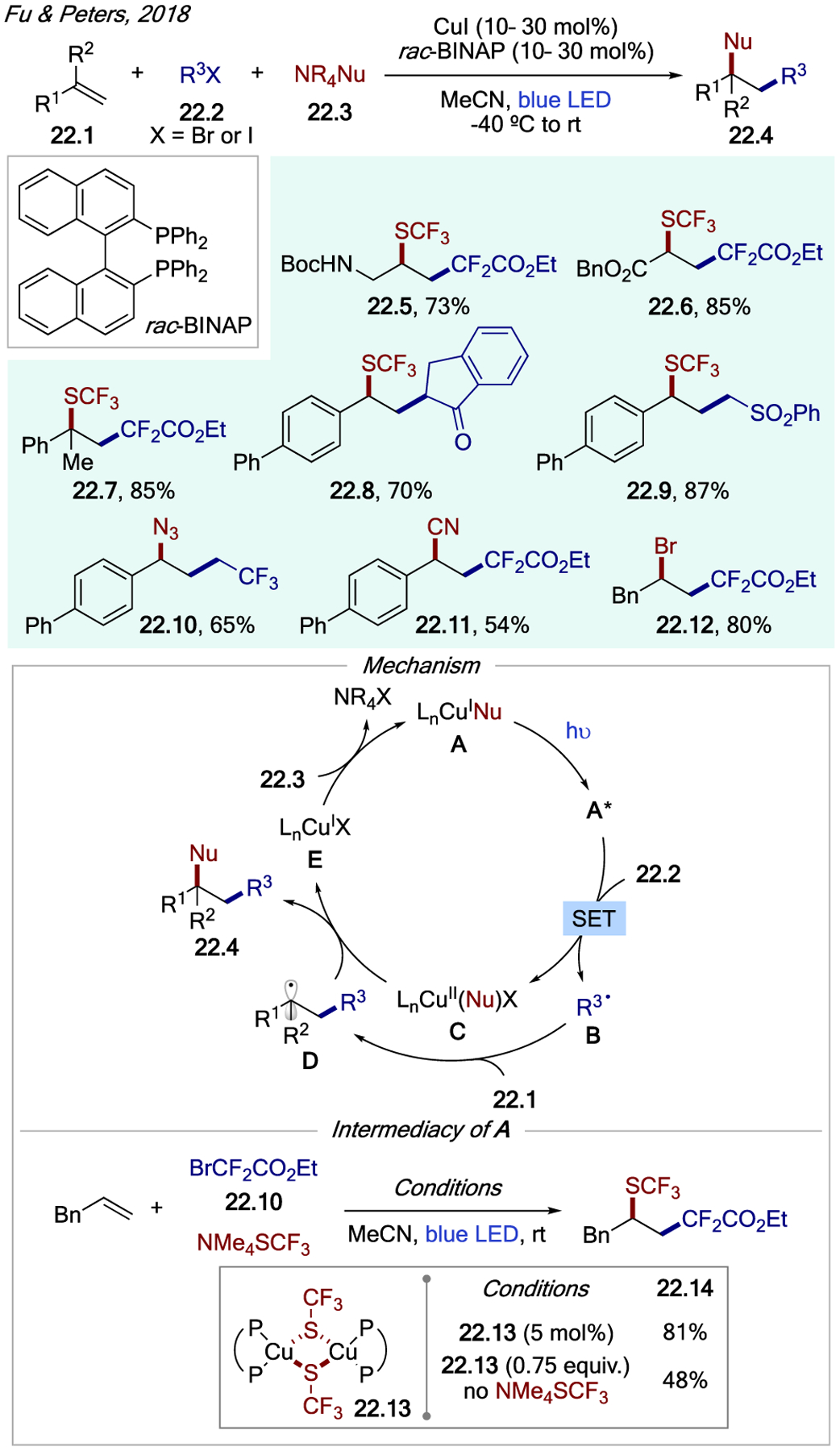
Scheme 22.
Scheme 22.
Three Component Coupling of Olefins, Alkyl Halides, and Nucleophiles
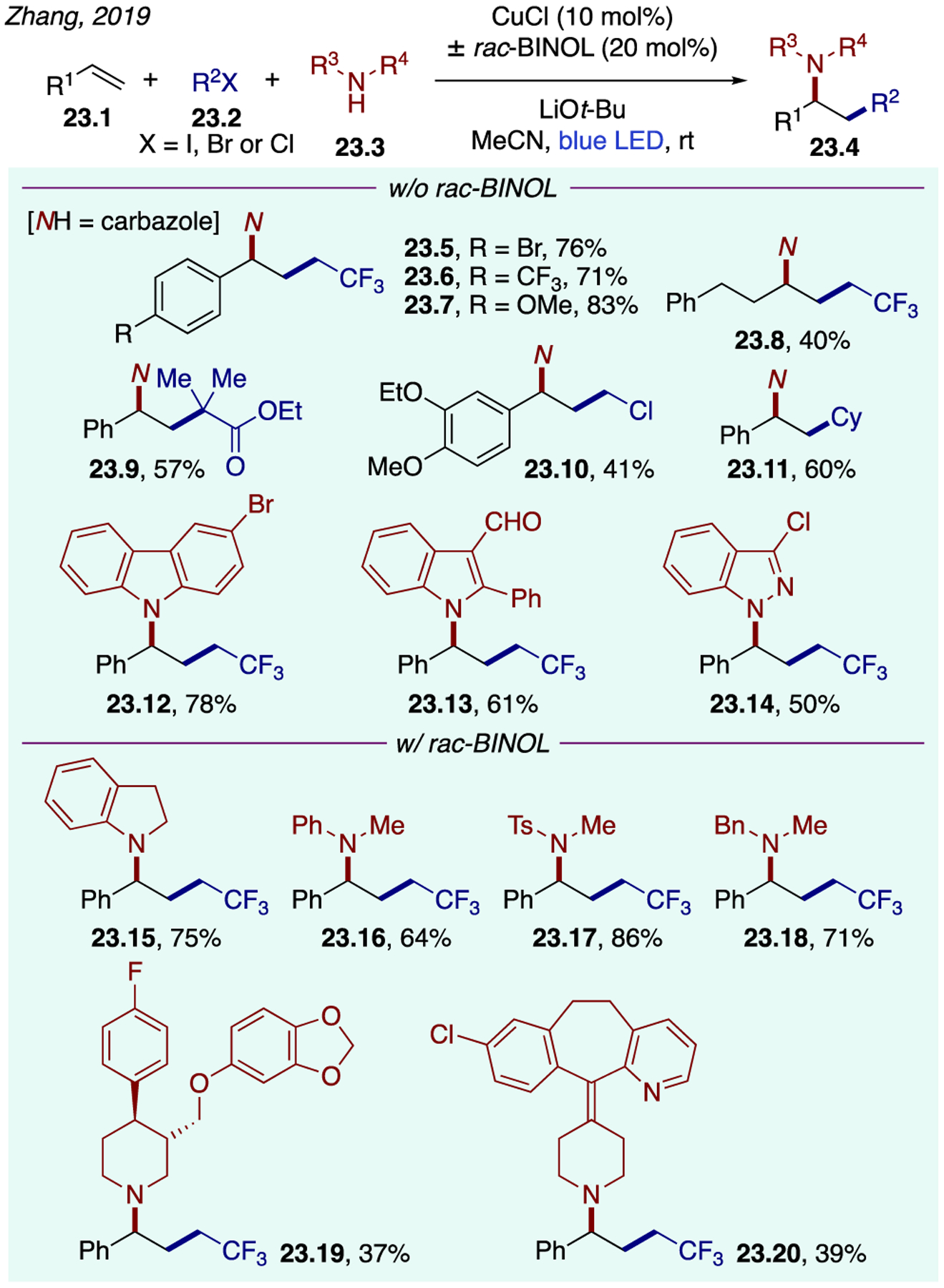
Scheme 23.
Scheme 23.
Three Component Carboamination of Alkenes
Scheme 24.
Scheme 24.
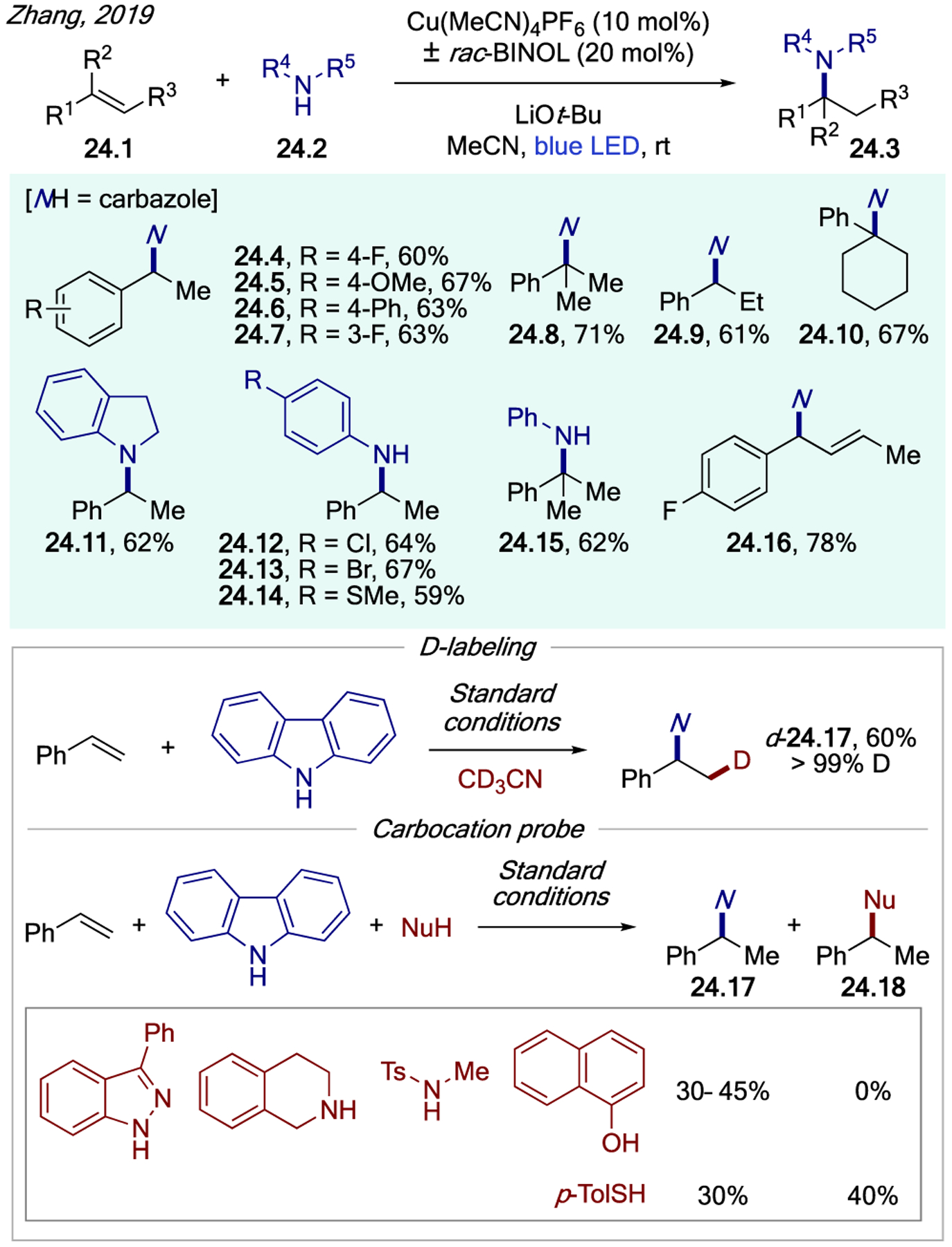
Intermolecular Markovnikov Hydroamination of Alkenes
Scheme 25.
Scheme 25.
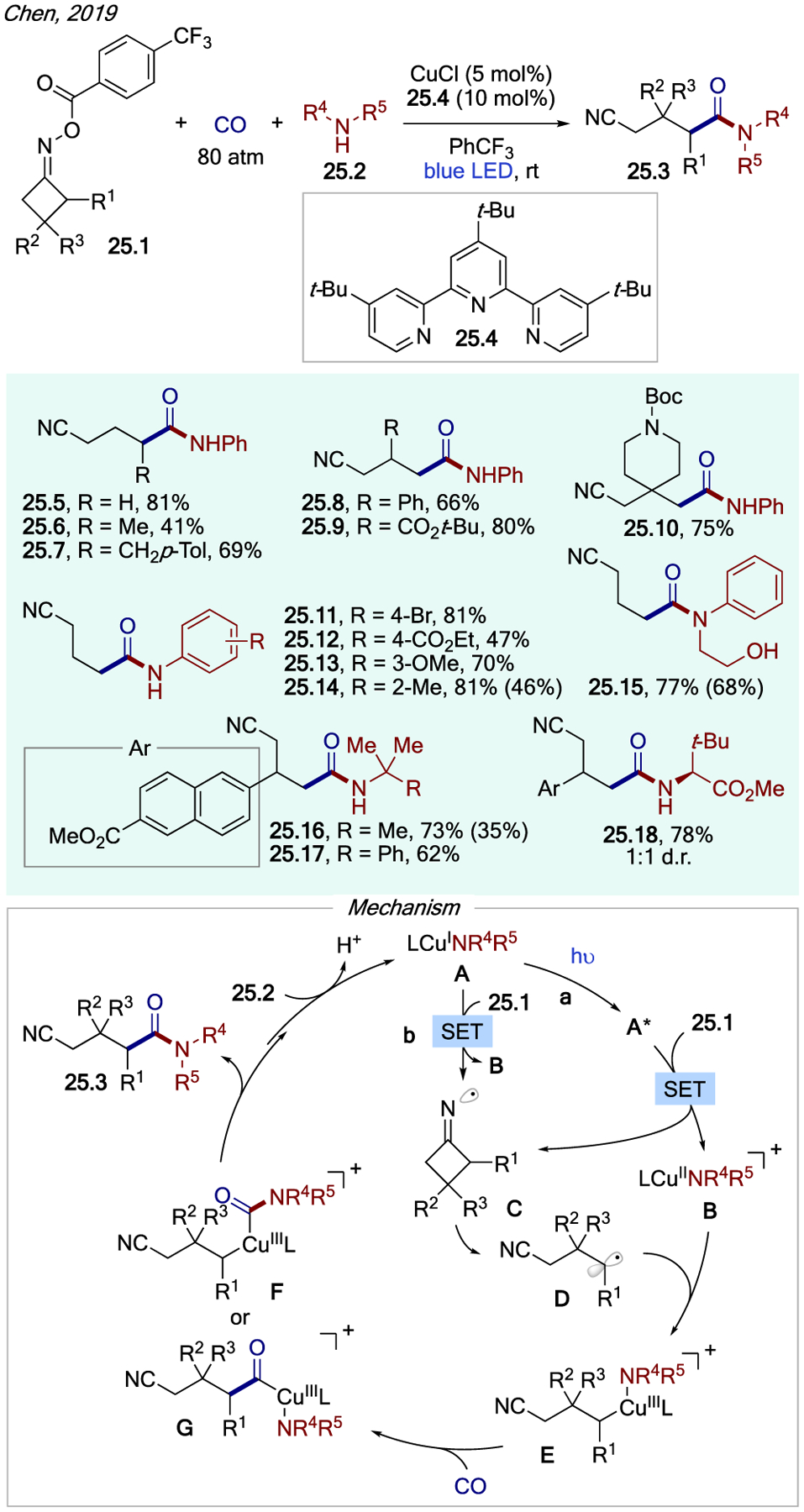
Aminocarbonylation of Cycloketone RAOEs
Scheme 26.
Scheme 26.
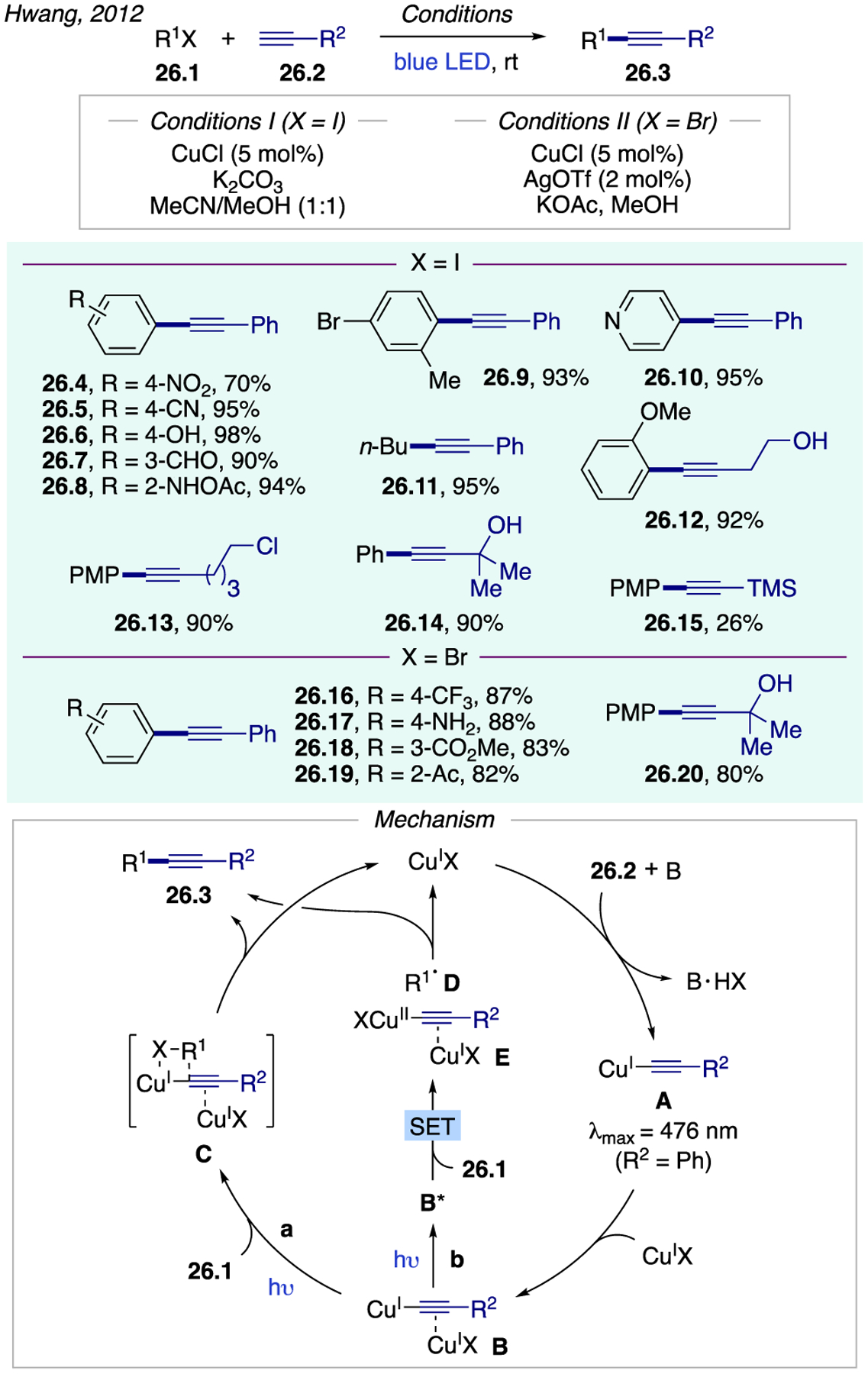
Photoinduced Sonogashira Coupling
Scheme 27.
Scheme 27.
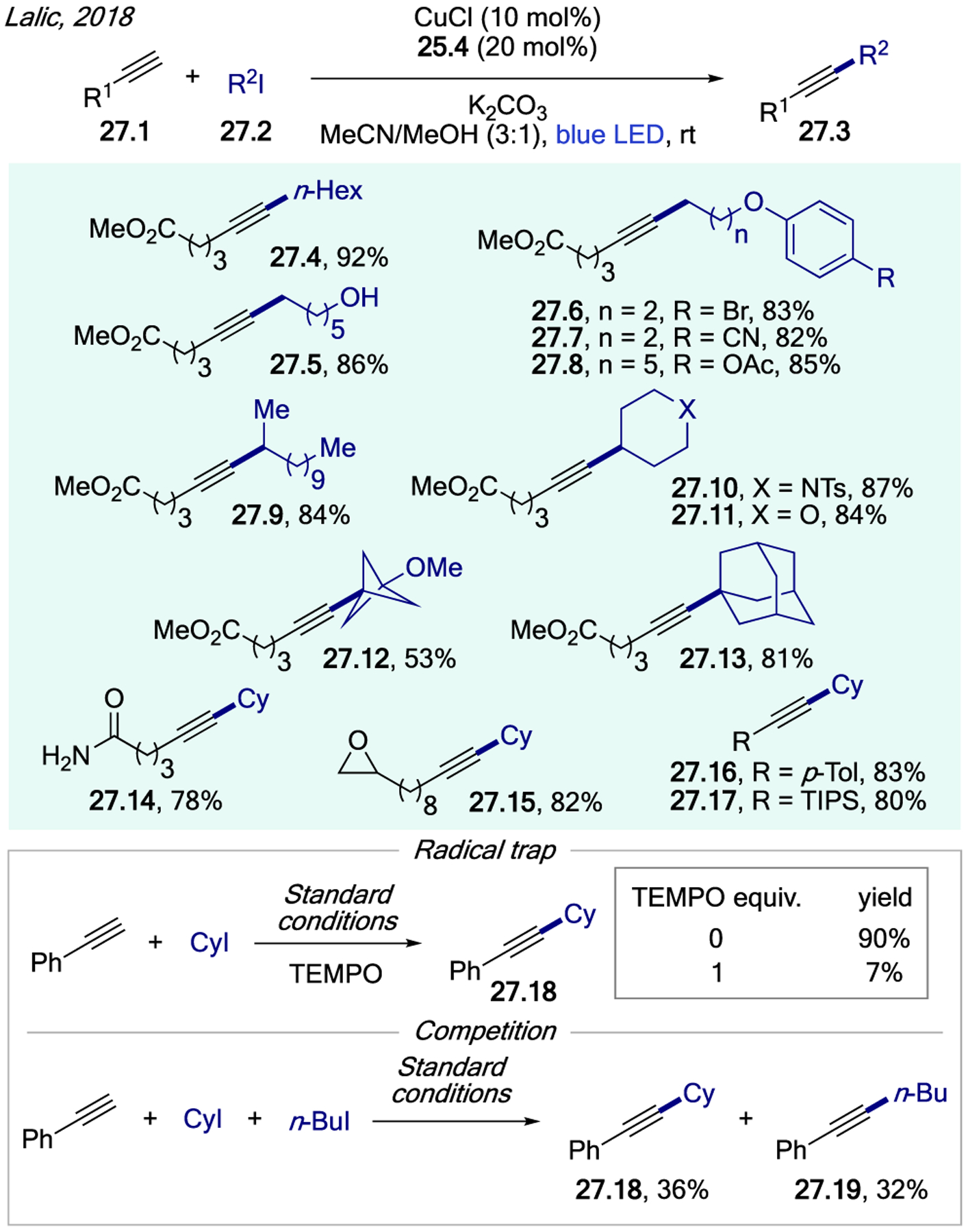
Photoinduced Alkyl Sonogashira Coupling
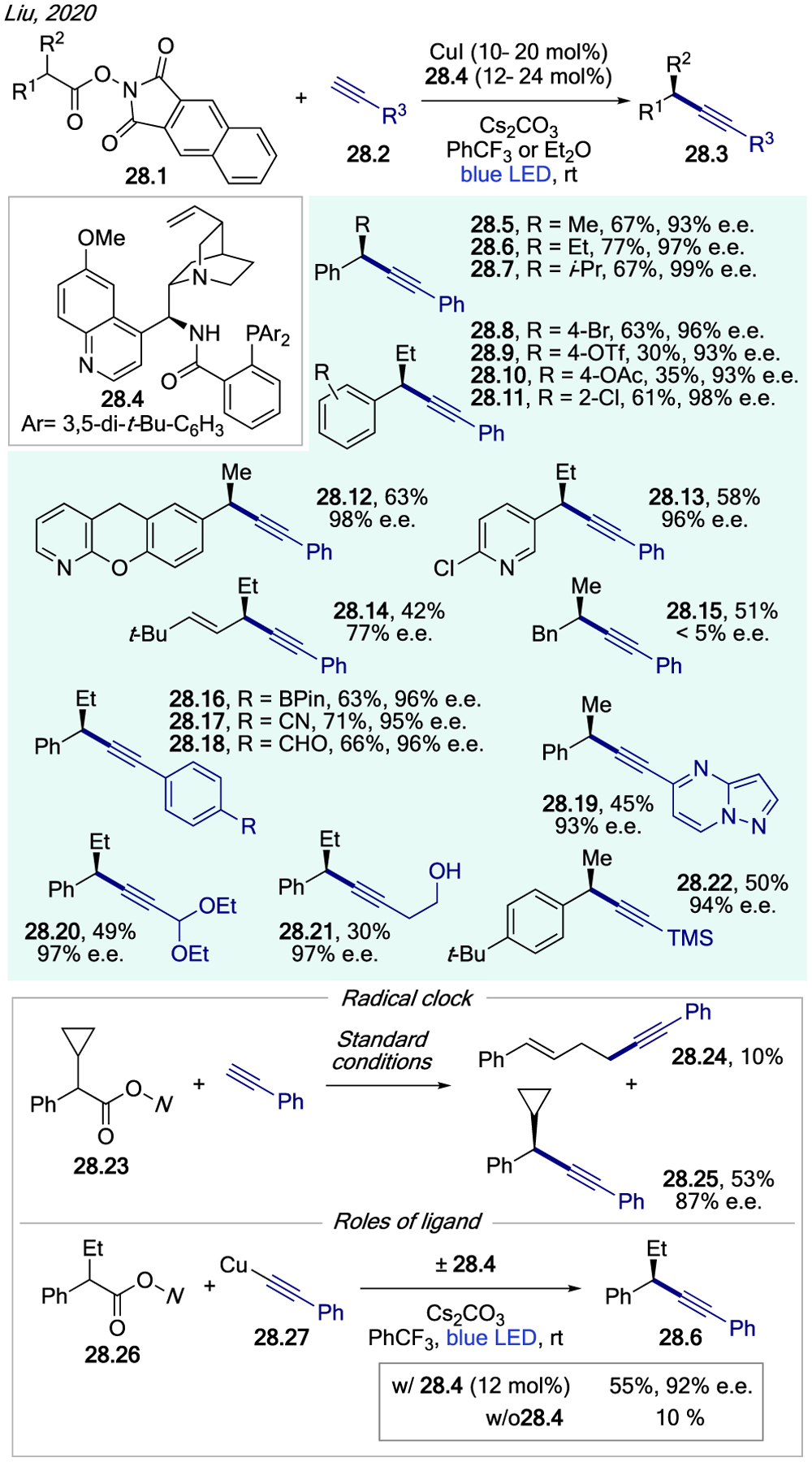
Scheme 28.
Scheme 28.
Asymmetric Alkyl Sonogashira Coupling
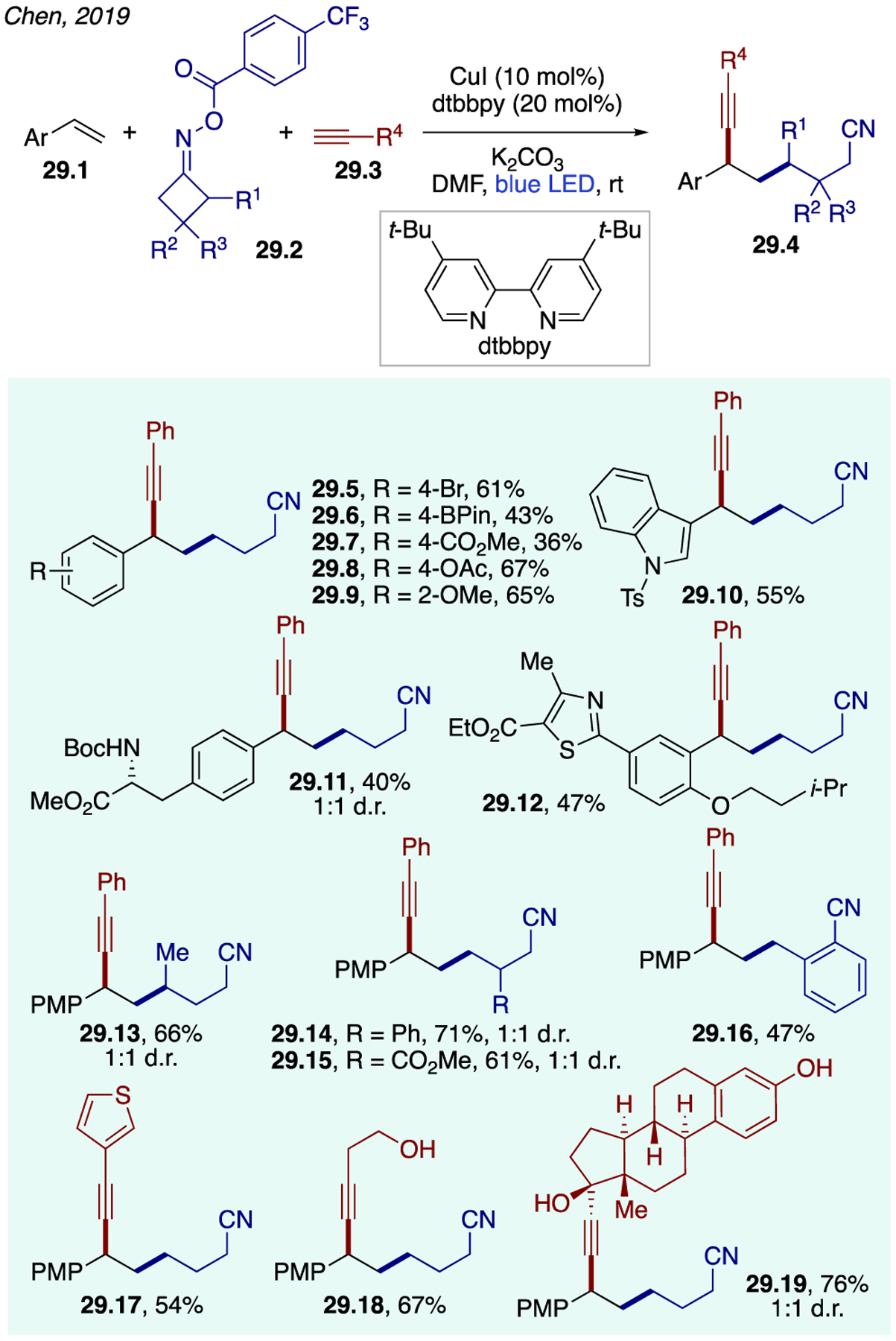
Scheme 29.
Scheme 29.
Carboalkynylation of Alkenes with RAOEs
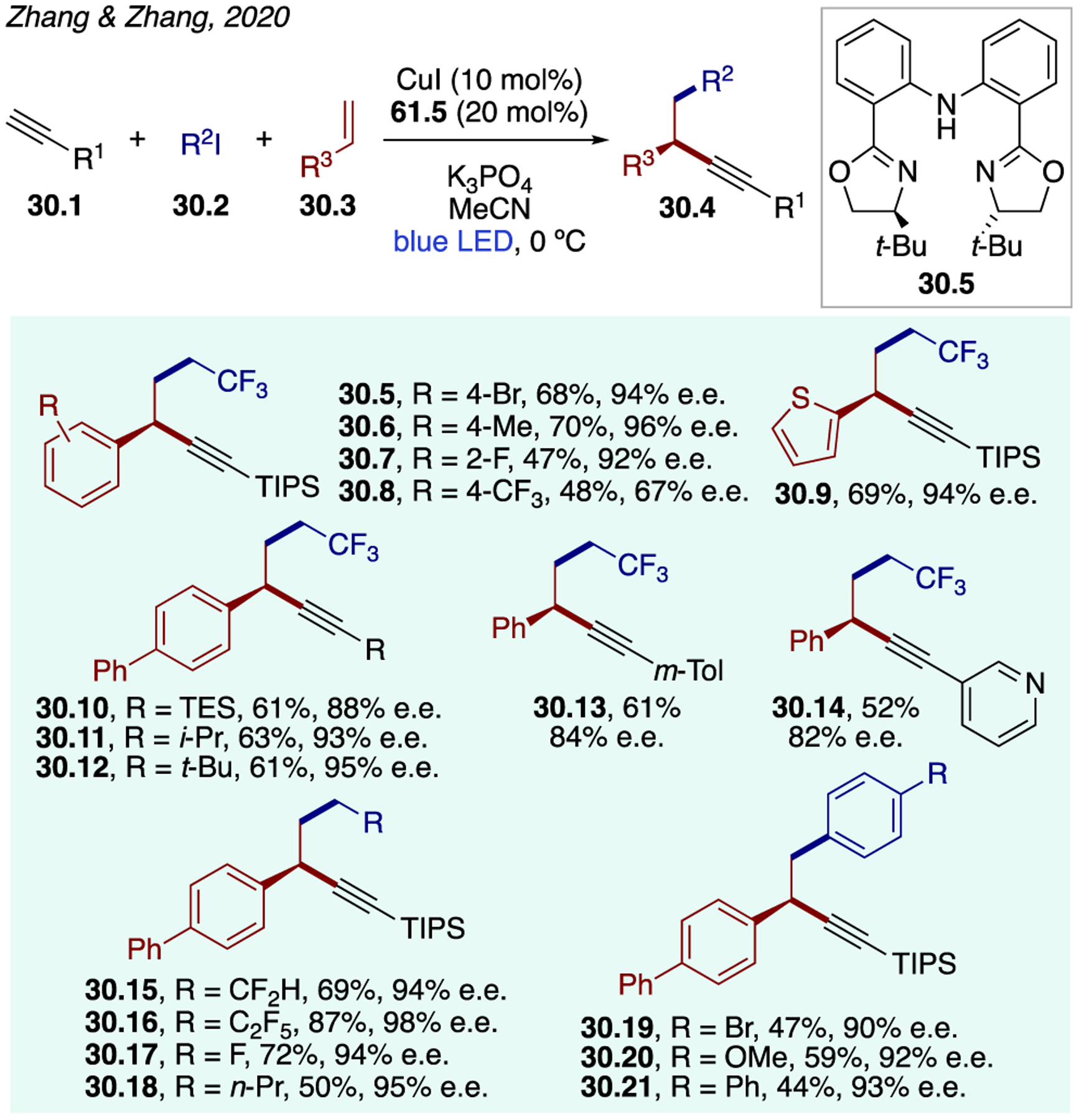
Scheme 30.
Scheme 30.
Asymmetric Carboalkynylation of Alkenes with Alkyl or Aryl Iodides
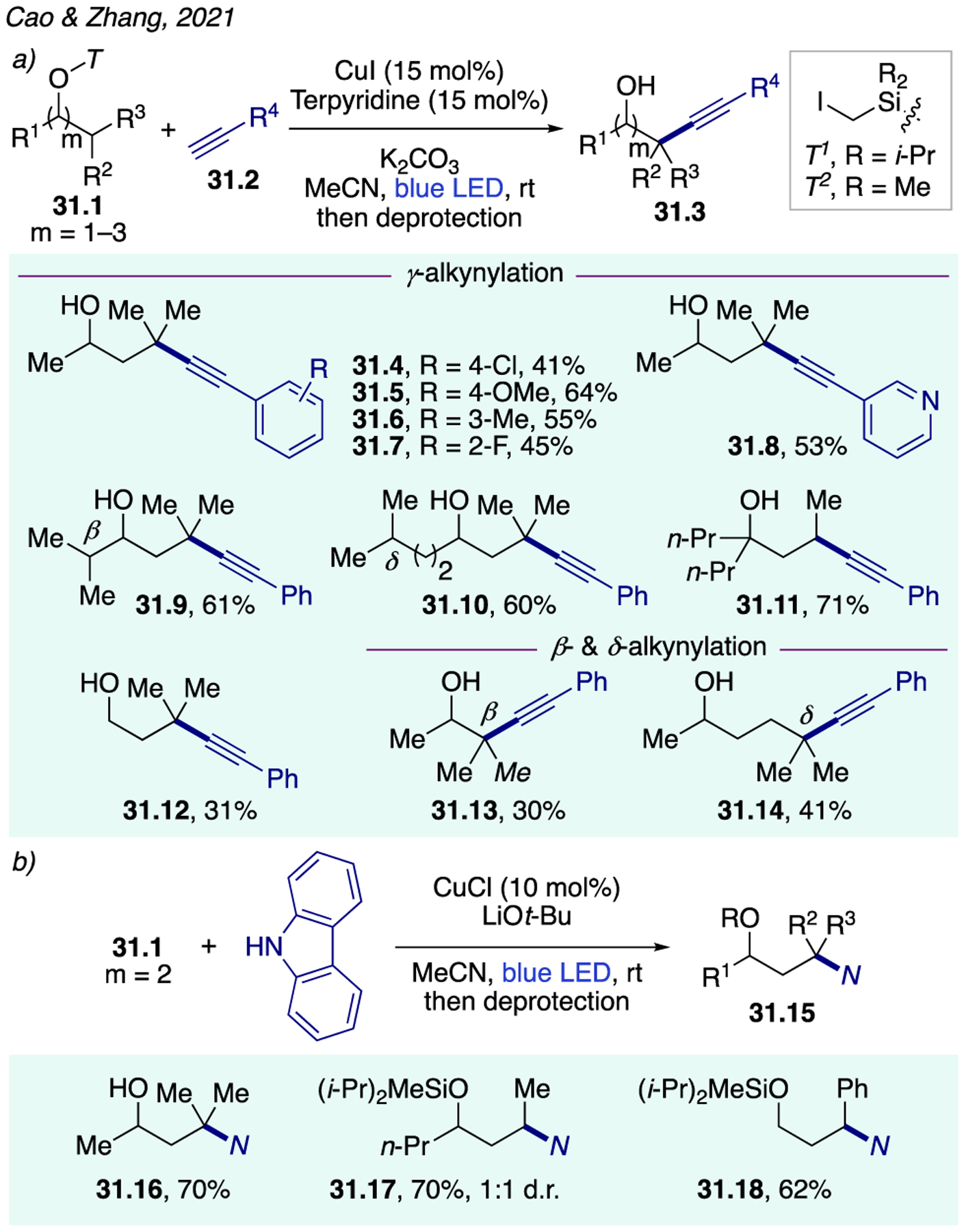
Scheme 31.
Scheme 31.
Remote C(sp3)–H (a) Alkynylation and (b) Amination of Aliphatic Alcohols
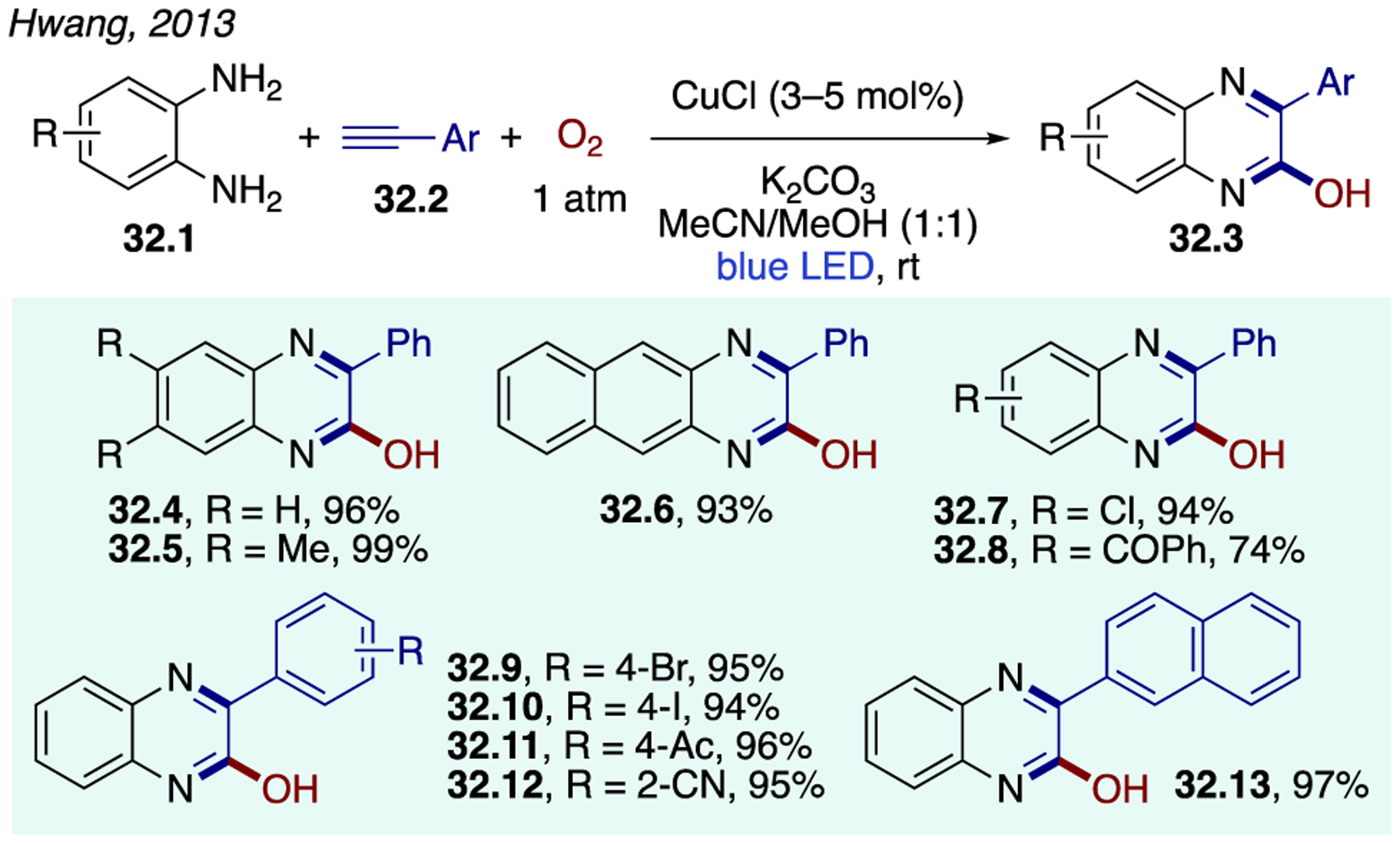
Scheme 32.
Scheme 32.
Oxidative Coupling of ortho-Phenylenediamines and Arylacetylenes
Scheme 33.
Scheme 33.
General Reactivity of Cu(I) Acetylide Complexes under Oxidizing Conditions
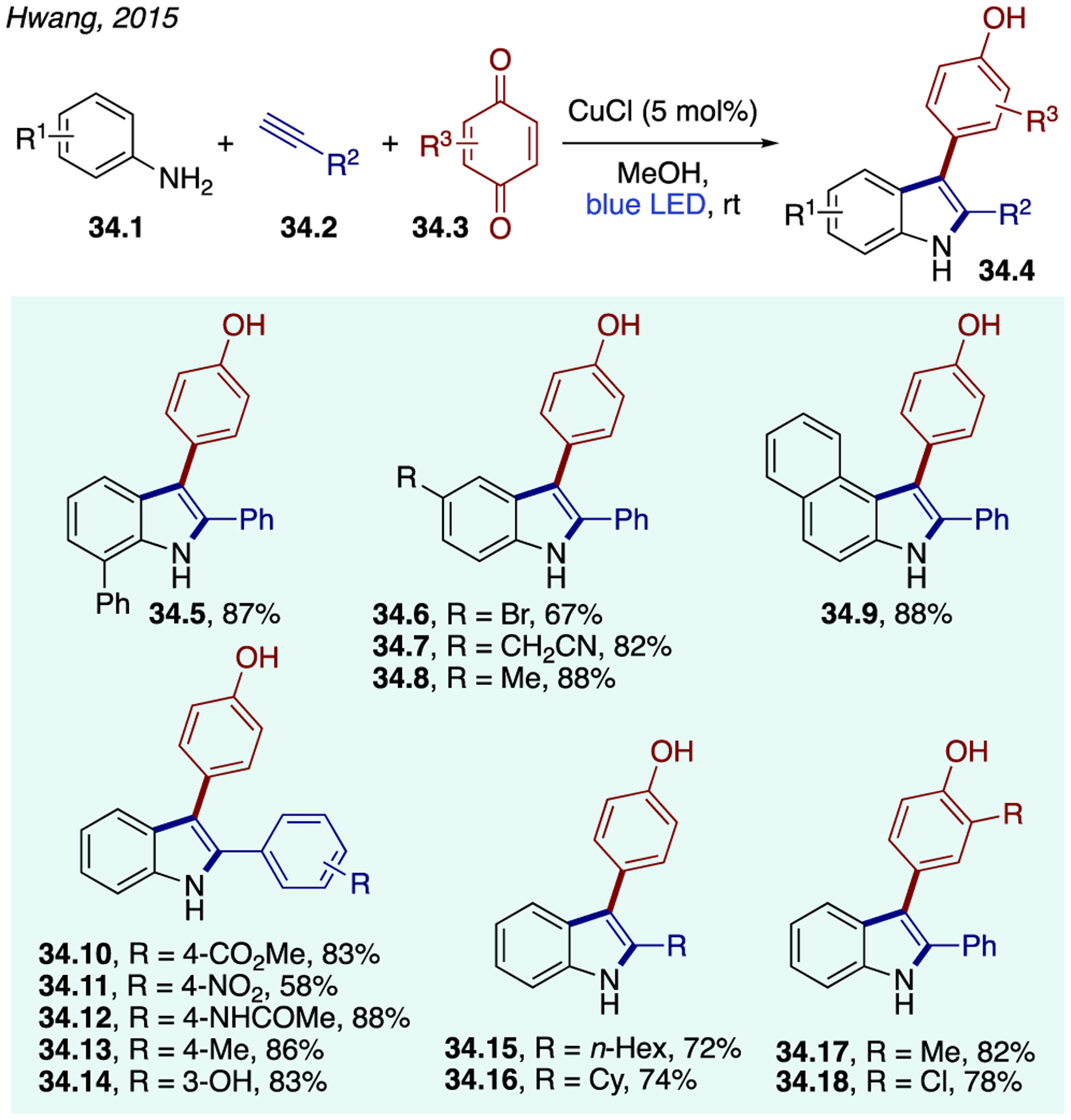
Scheme 34.
Scheme 34.
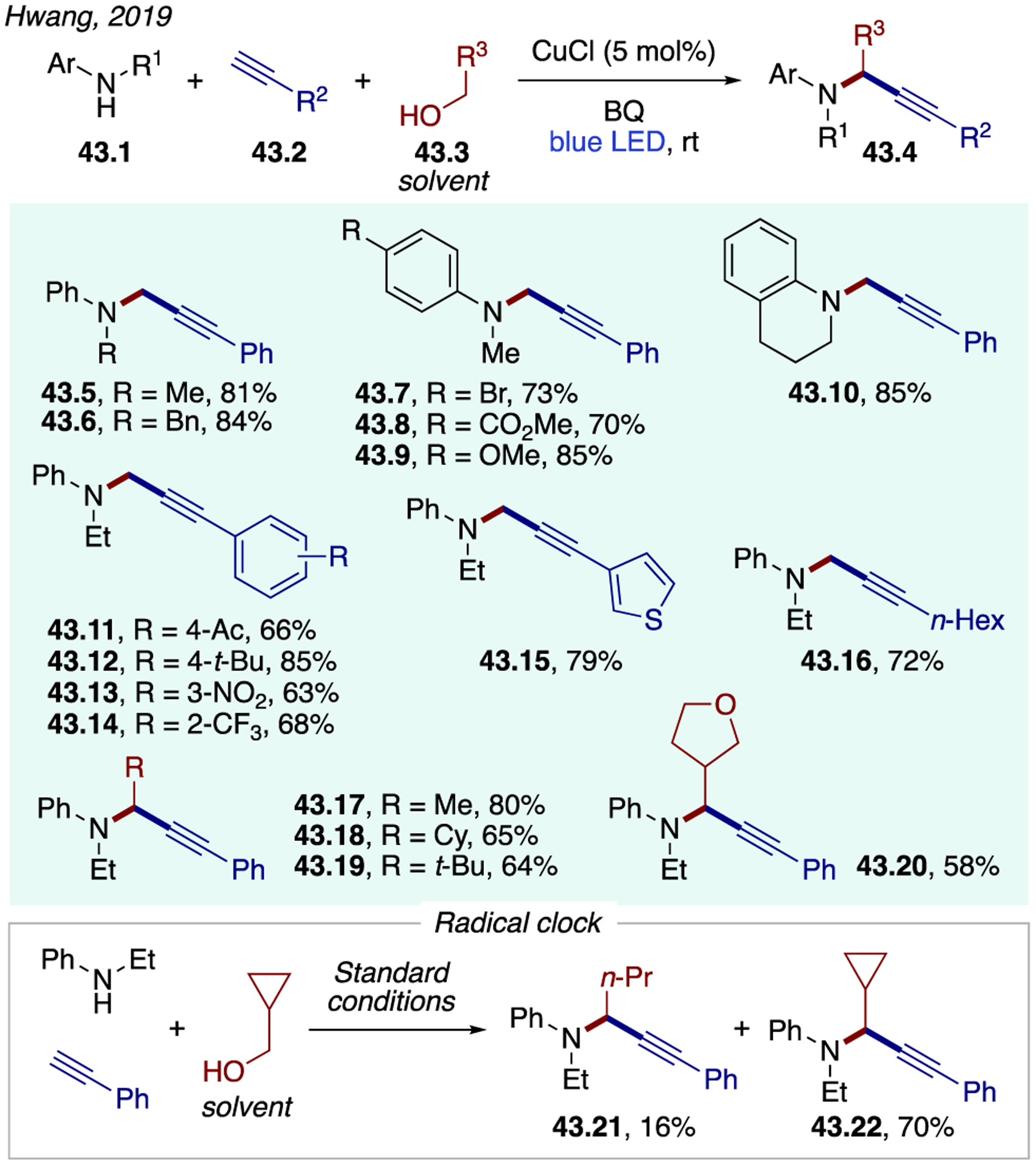
Three Component Coupling of Anilines, Terminal Alkynes, and Quinones
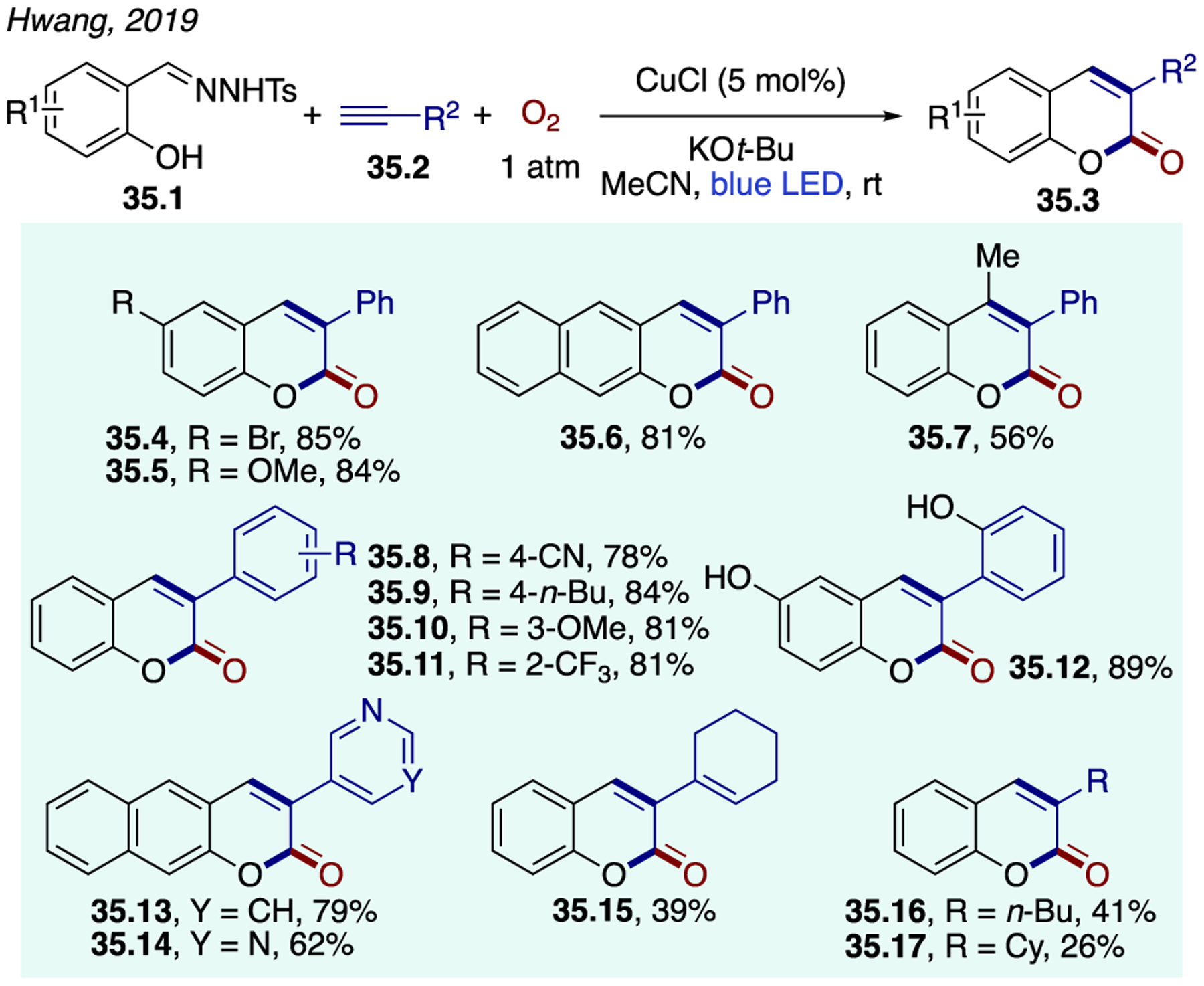
Scheme 35.
Scheme 35.
Oxidative Coupling of N-Tosylhyrdazones and Terminal Alkynes
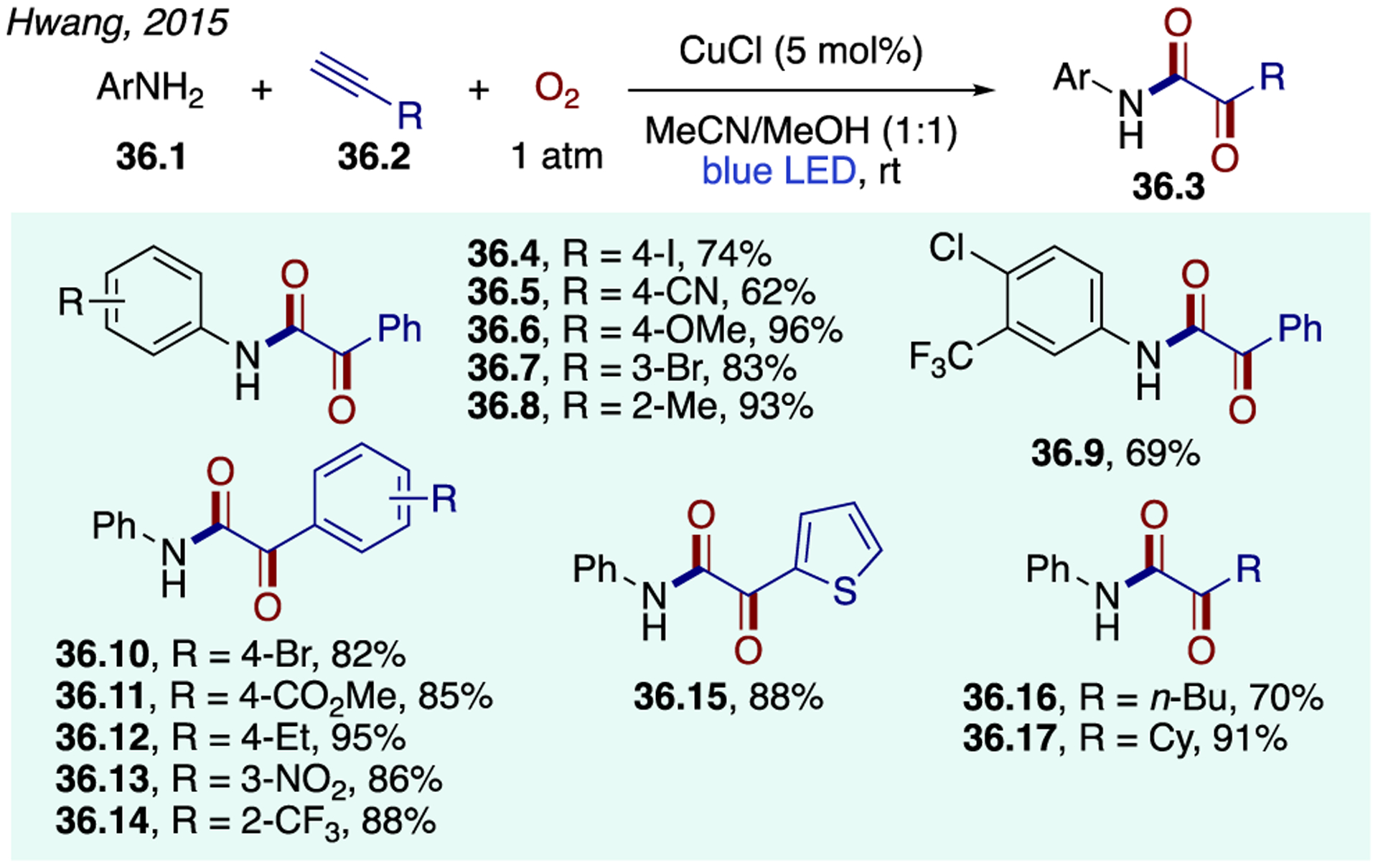
Scheme 36.
Scheme 36.
Oxidative C–N Coupling of Anilines and Alkynes Leading to α-Ketoamides
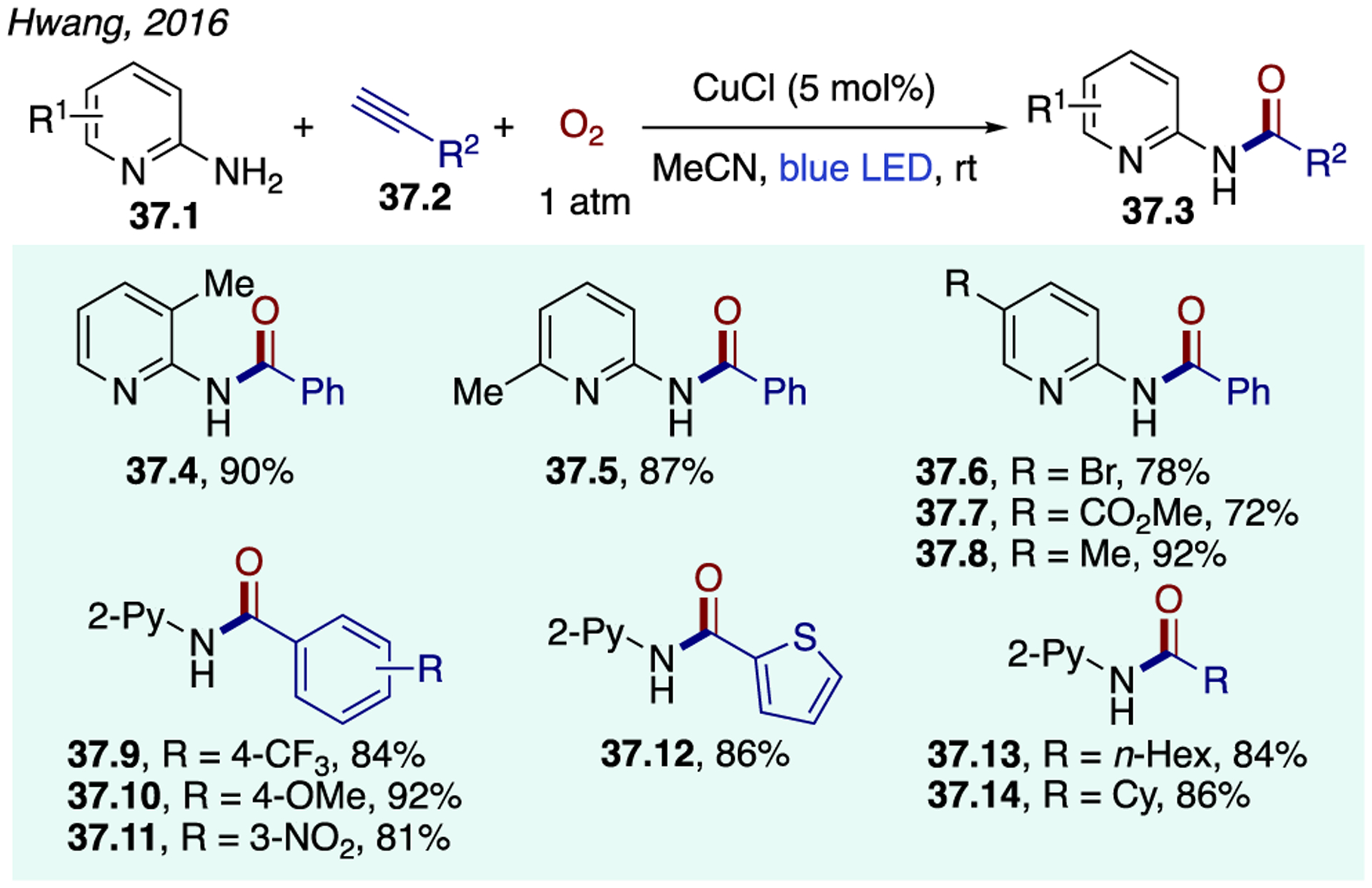
Scheme 37.
Scheme 37.
Oxidative C–N Coupling of 2-Aminopyridines and Alkynes Leading to Pyridyl Amides
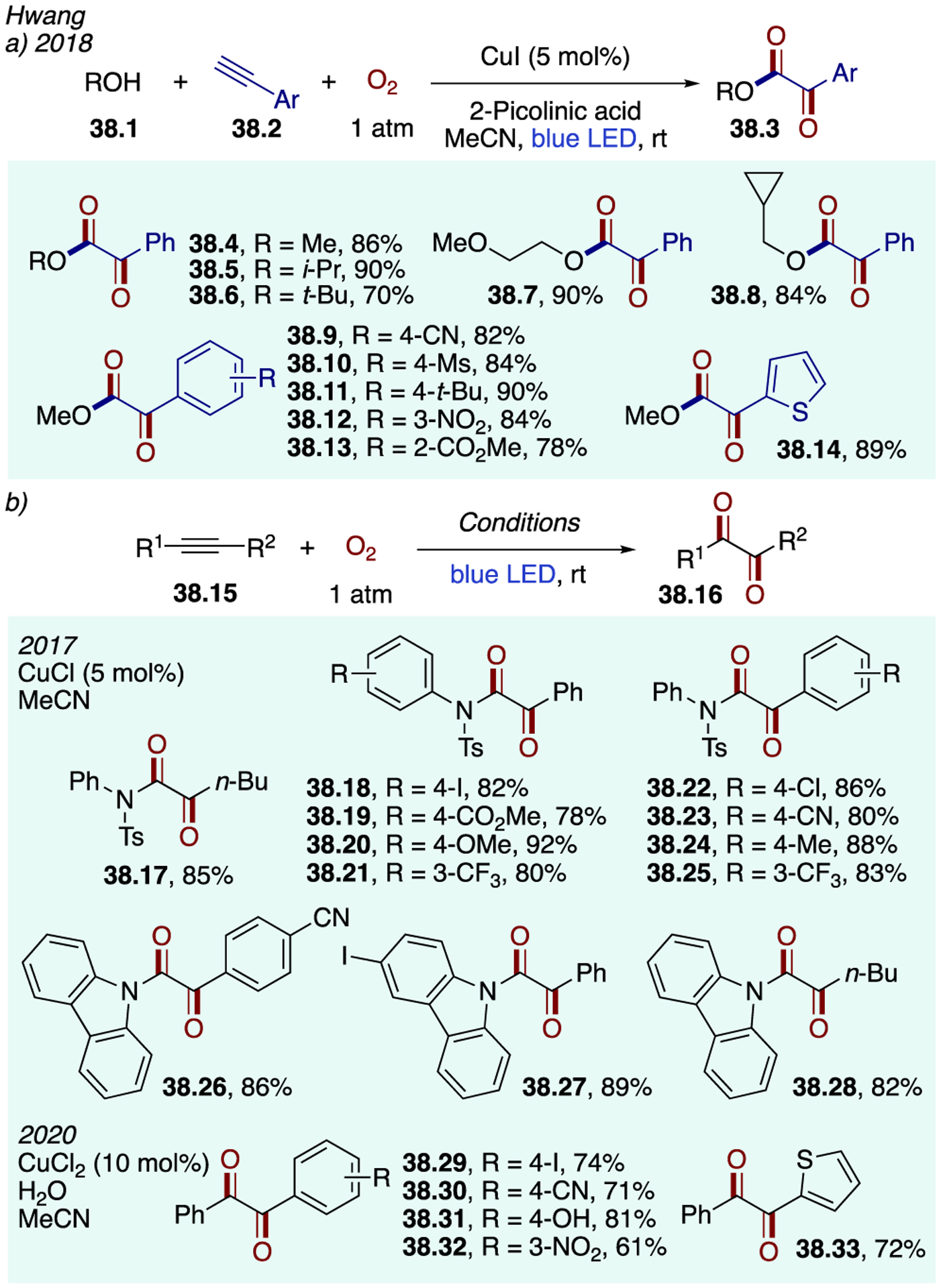
Scheme 38.
Scheme 38.
Synthesis of α-Dicarbonyls via Oxidative Transformations of (a) Arylacetylenes and (b) Internal Alkynes
Scheme 39.
Scheme 39.
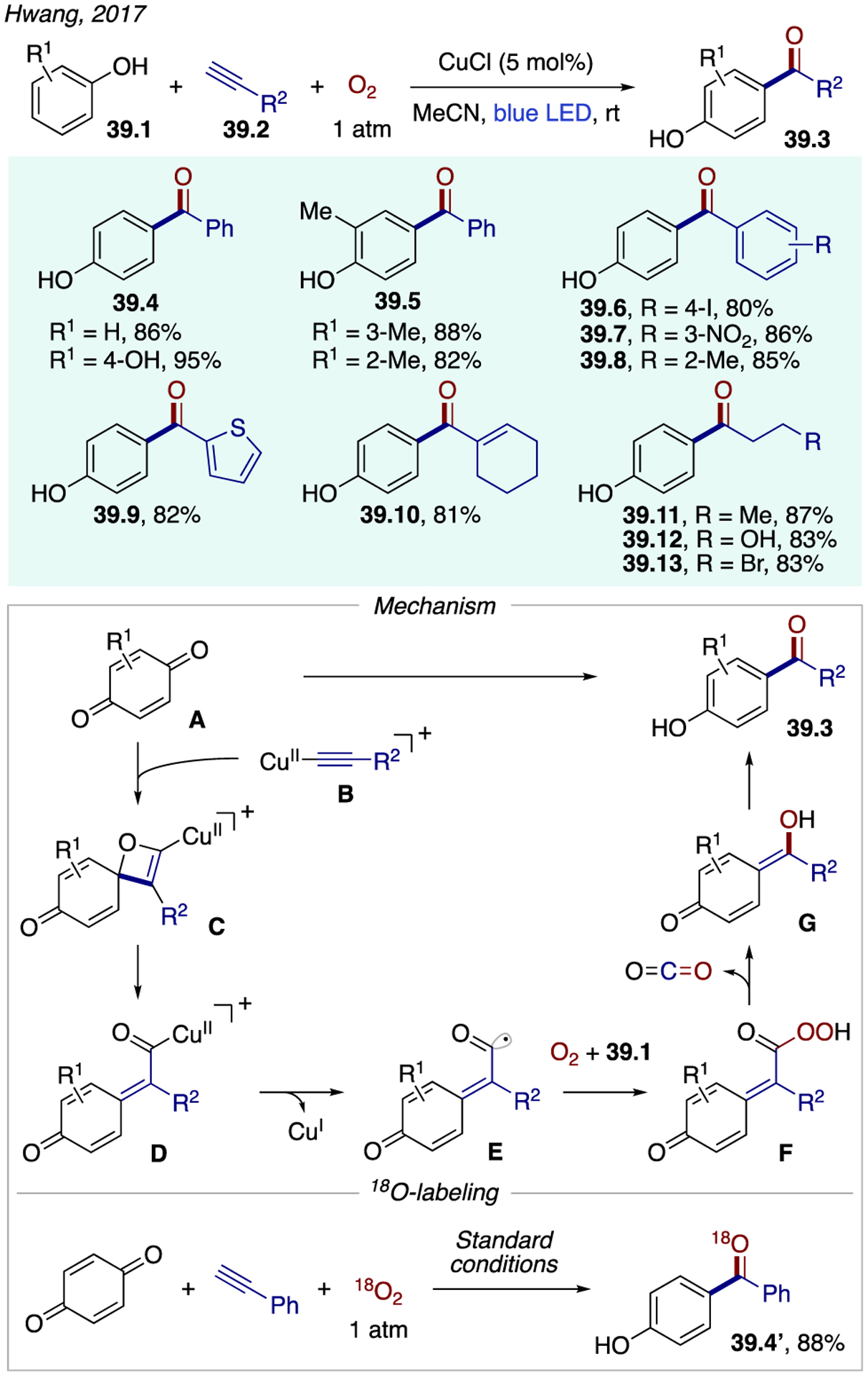
Synthesis of 4-Hydroxyaryl Ketones via Oxidative Coupling of Phenols and Alkynes
Scheme 40.
Scheme 40.
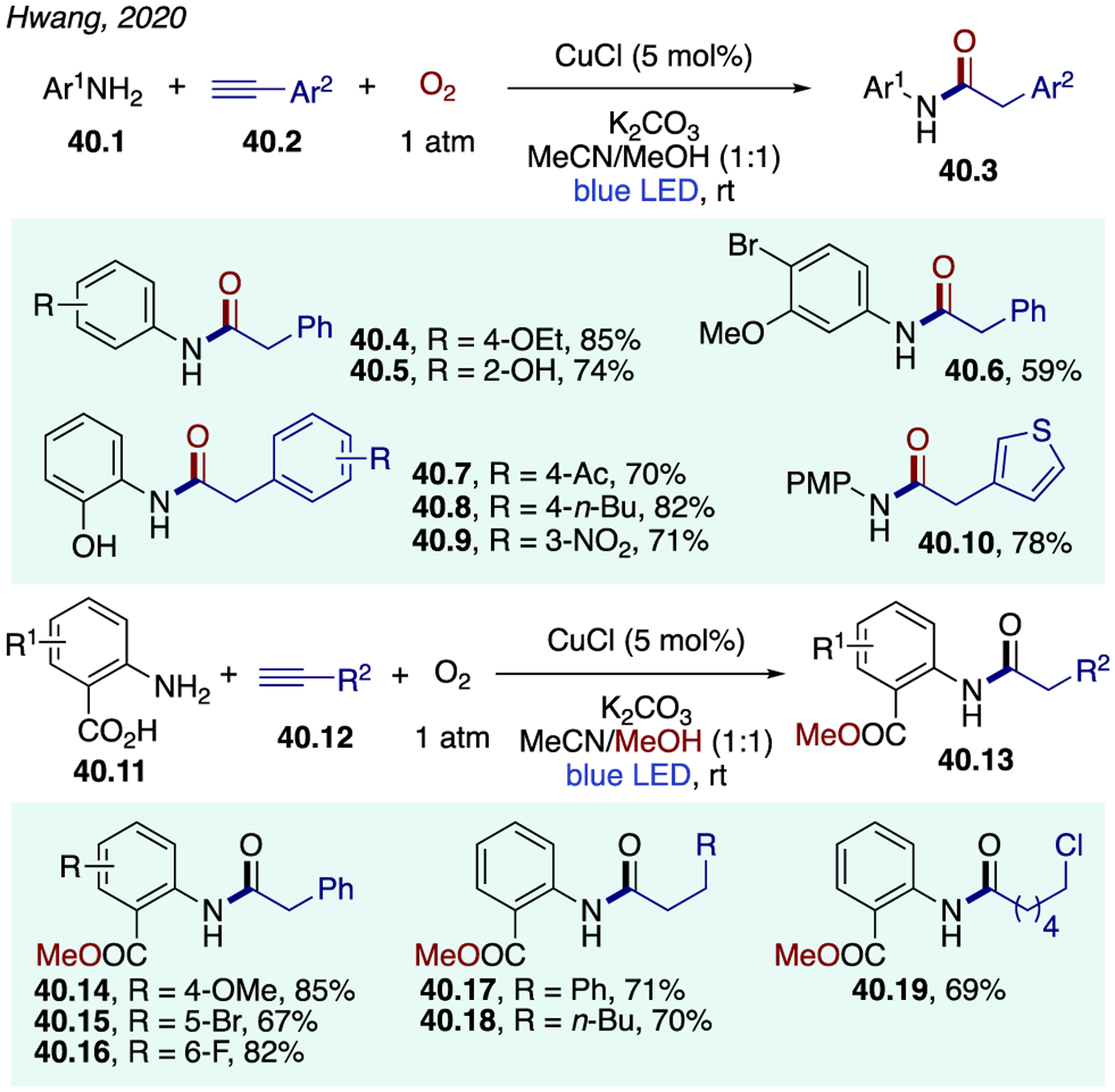
Oxidative C–N Coupling of Anilines and Alkynes Leading to Amides
Scheme 41.
Scheme 41.
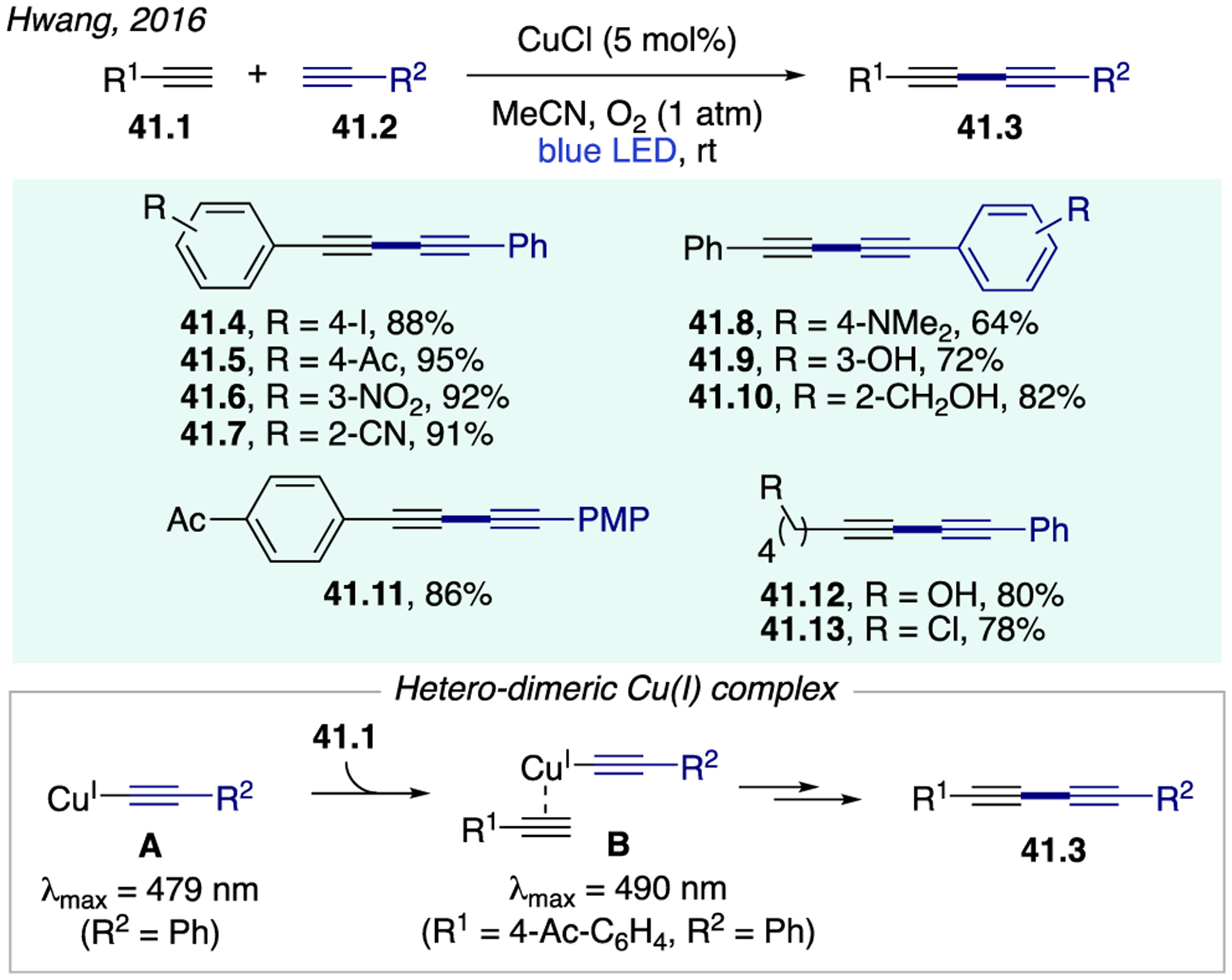
Synthesis of Unsymmetrical Conjugated Diynes
Scheme 42.
Scheme 42.
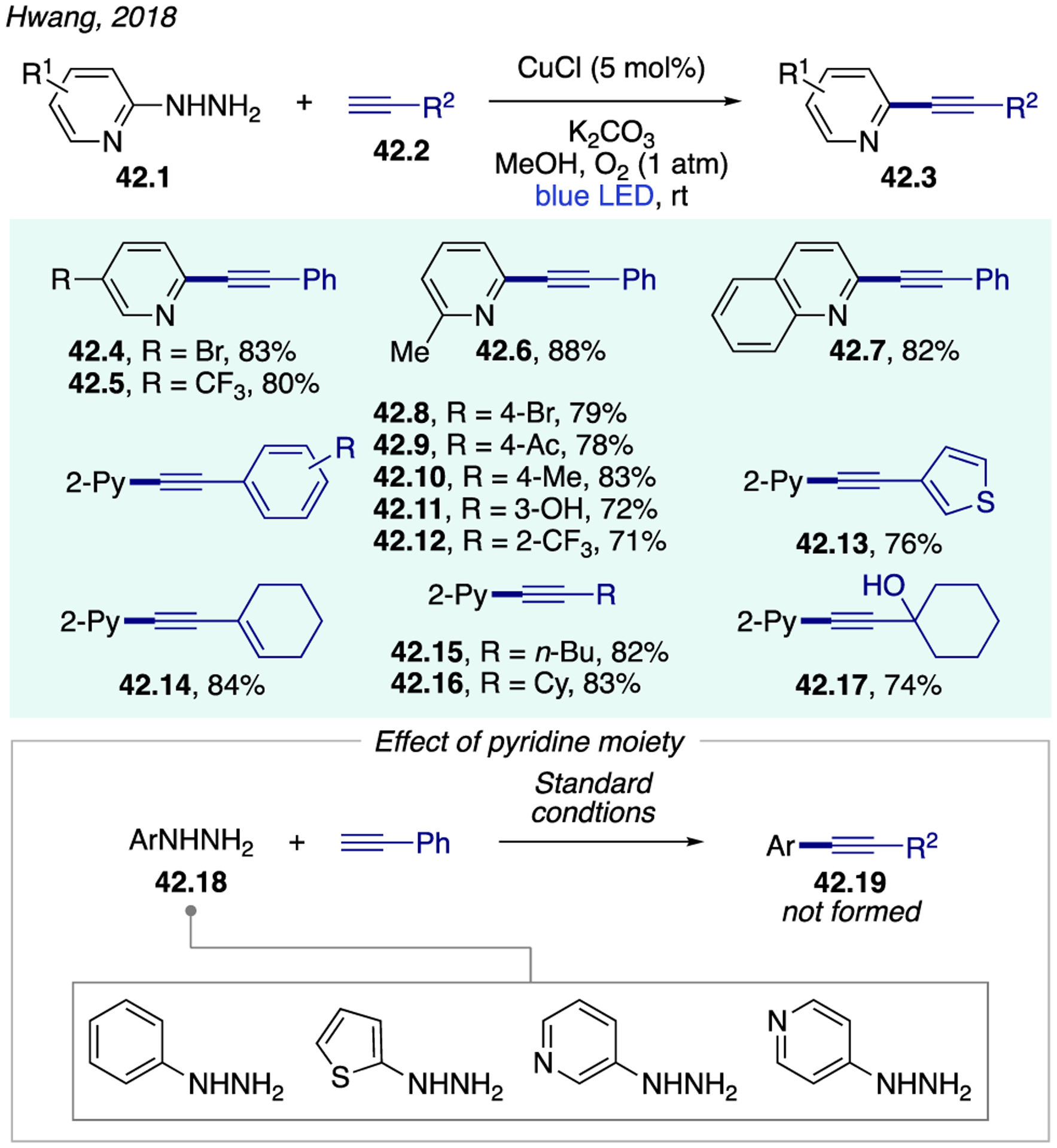
Denitrogenative Cross-Coupling of 2- Hydrazinylpyridines and Alkynes
Scheme 43.
Scheme 43.
Internal Alkynes Formation via Oxidative Three Component Coupling
Scheme 44.
Scheme 44.
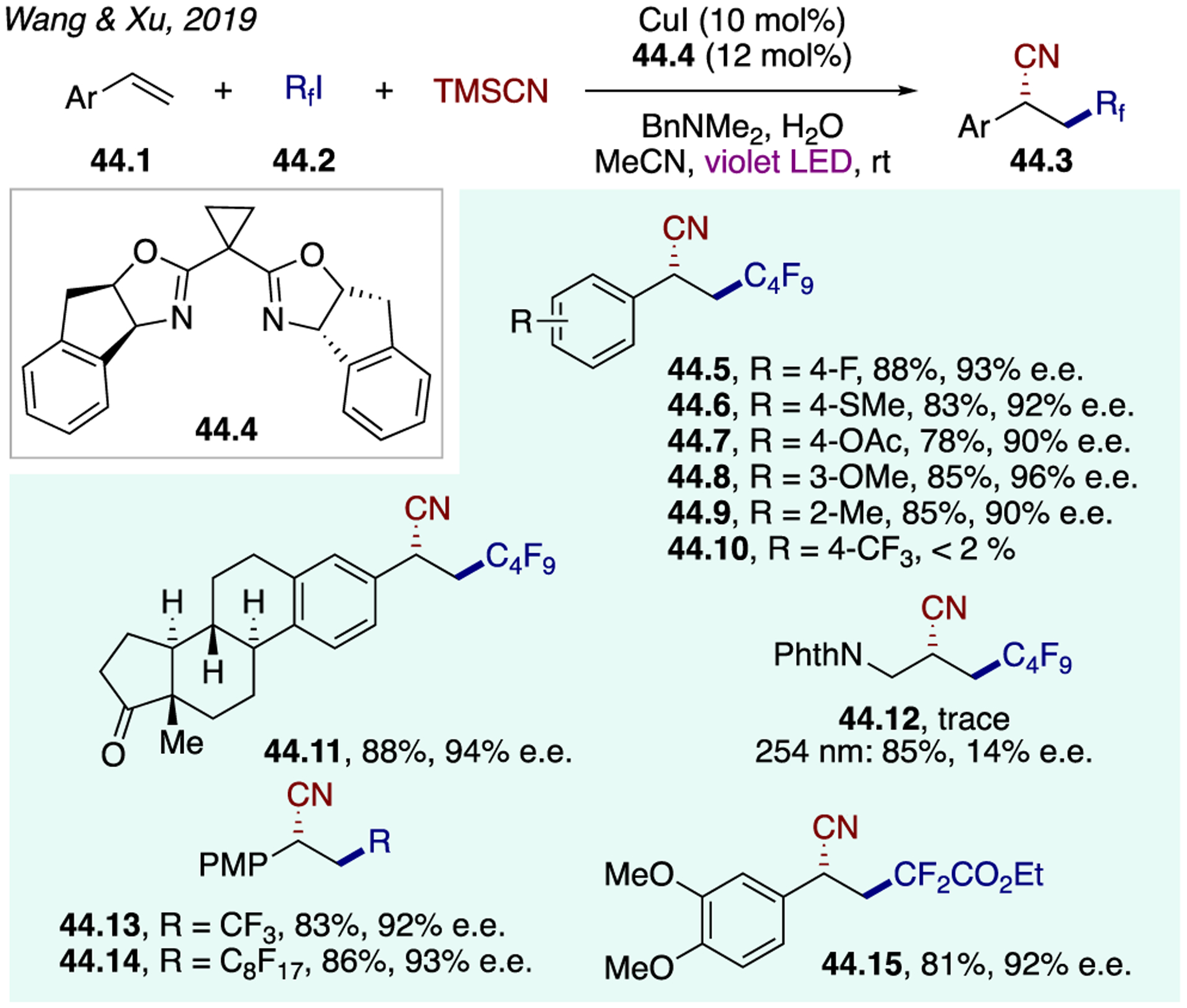
Asymmetric Cyanofluoroalkylation of Styrene Derivatives
Scheme 45.
Scheme 45.
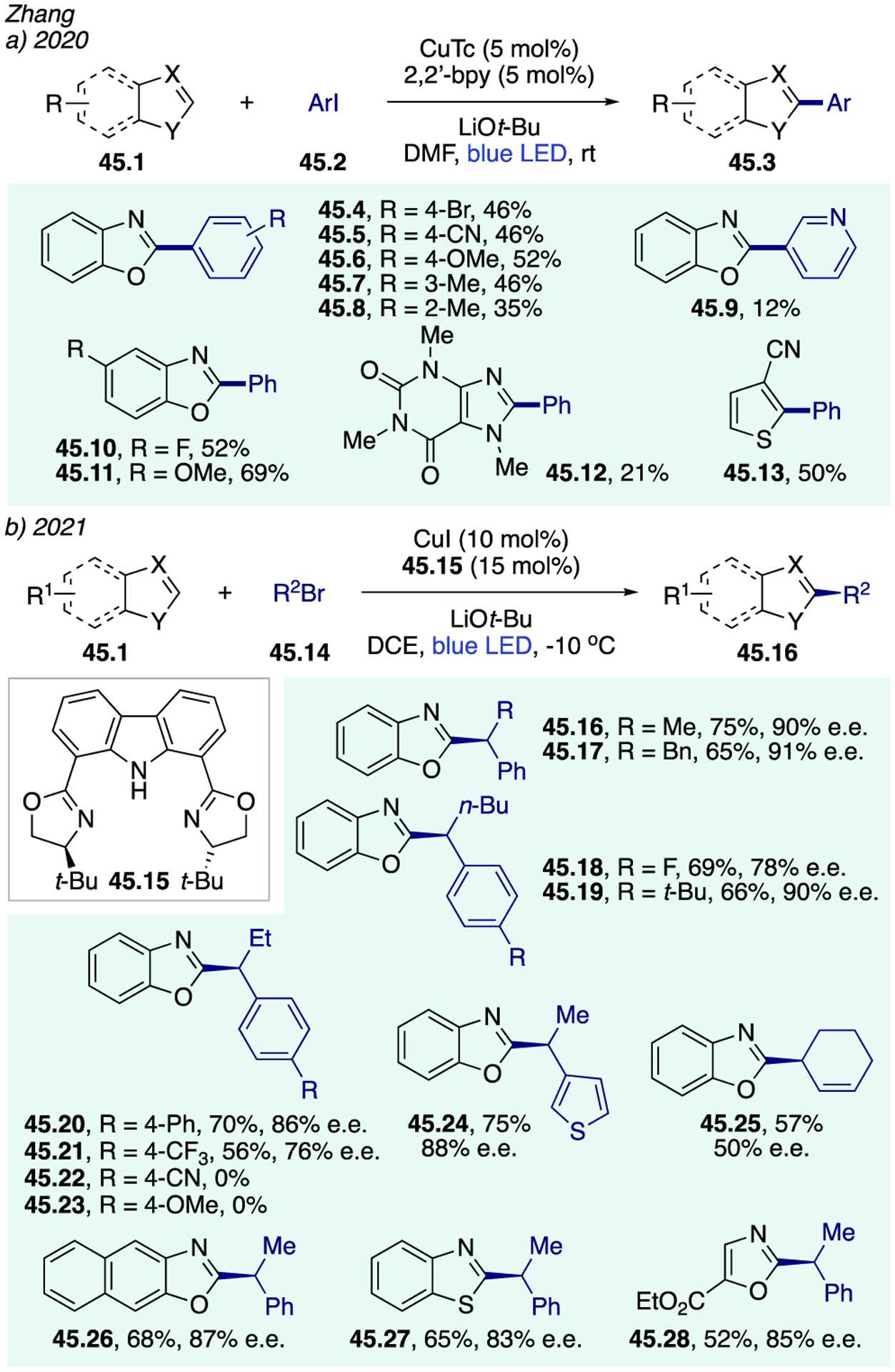
Photoinduced C–H (a) Arylation and (b) Alkylation of Azoles
Scheme 46.
Scheme 46.
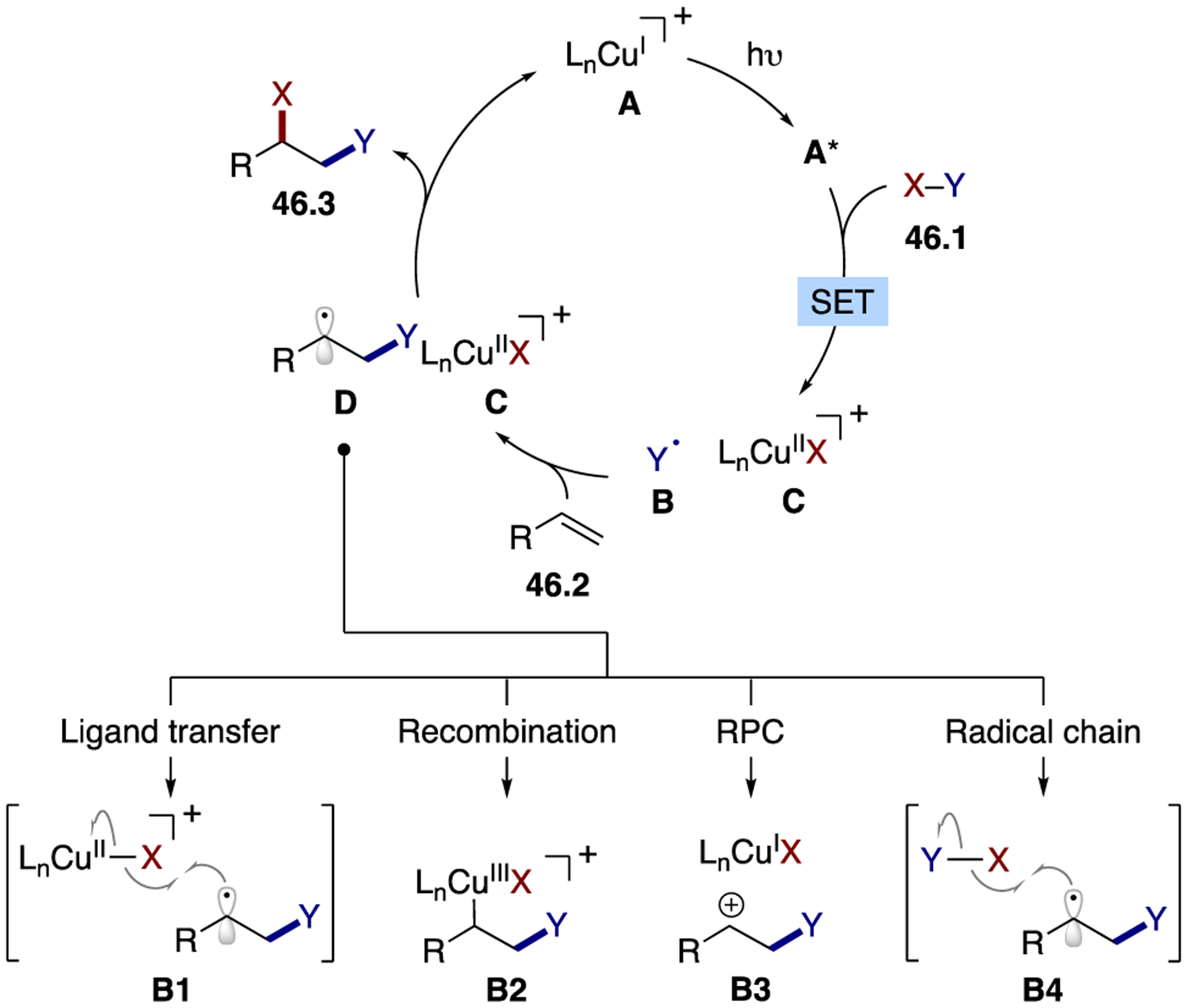
Mechanisms of Difunctionalization of Alkenes
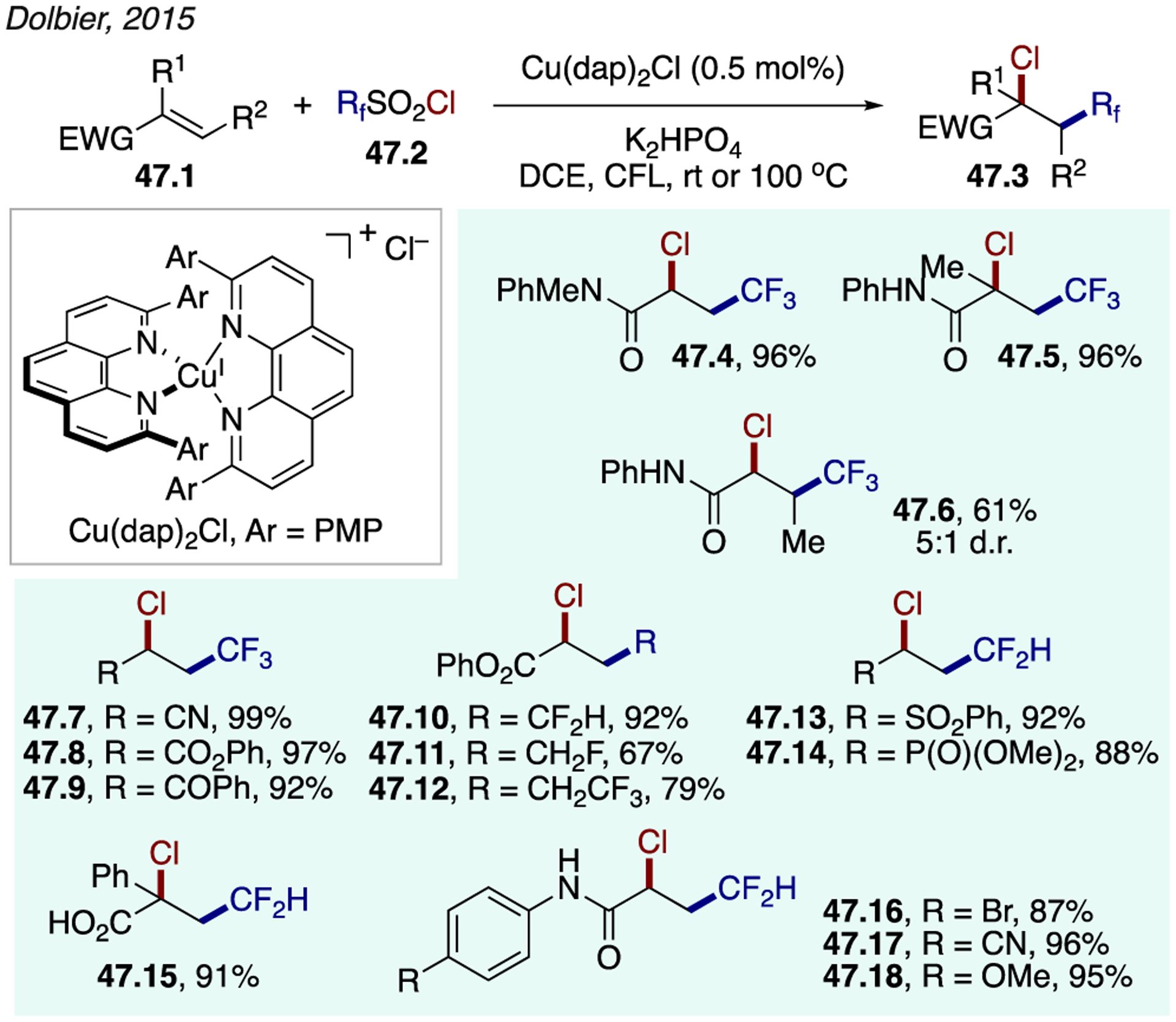
Scheme 47.
Scheme 47.
ATRA Reaction of Electron-Deficient Alkenes with Fluoroalkyl Sulfonyl Chlorides
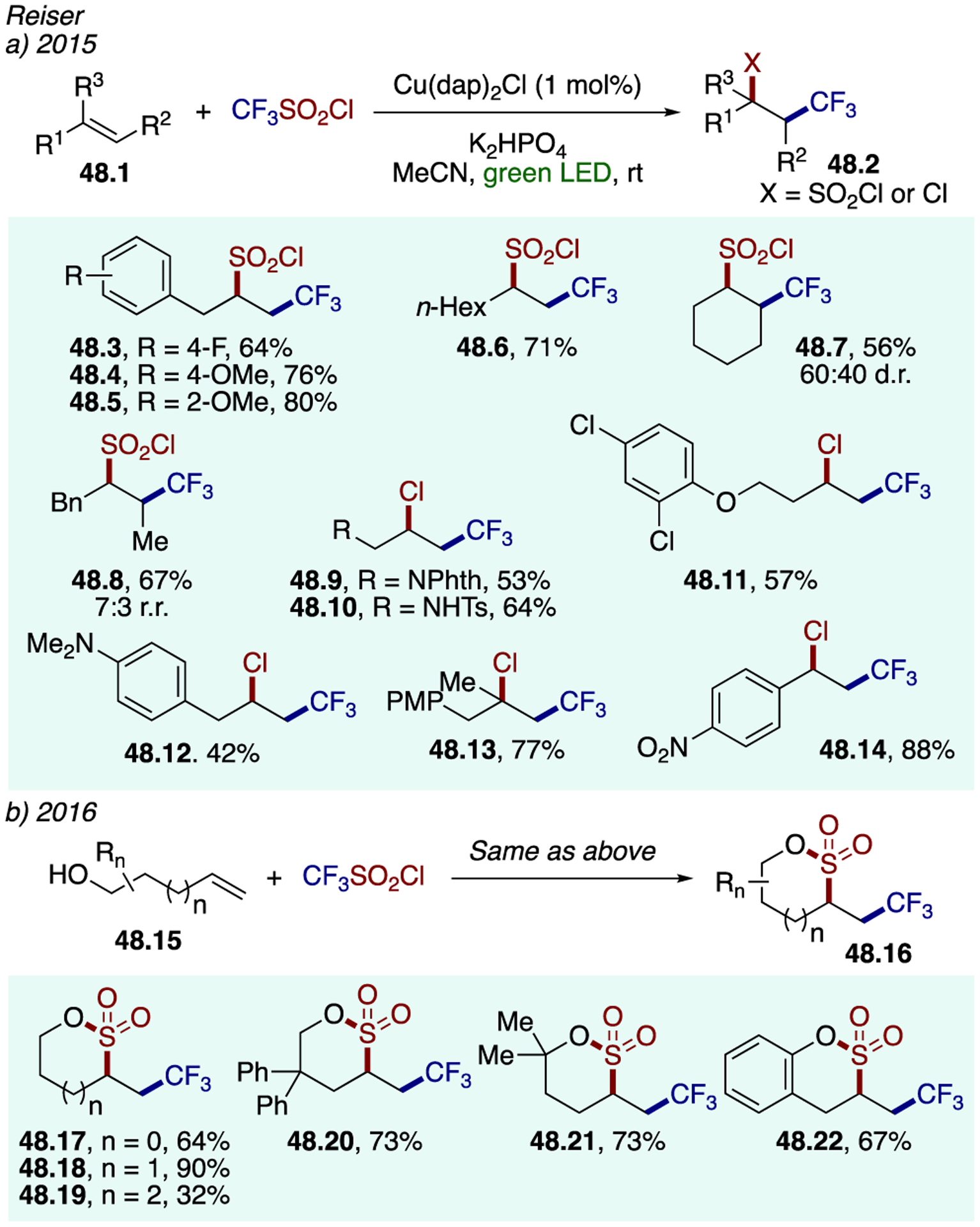
Scheme 48.
Scheme 48.
ATRA Reactions of Unactivated Alkenes with Triflic Chloride
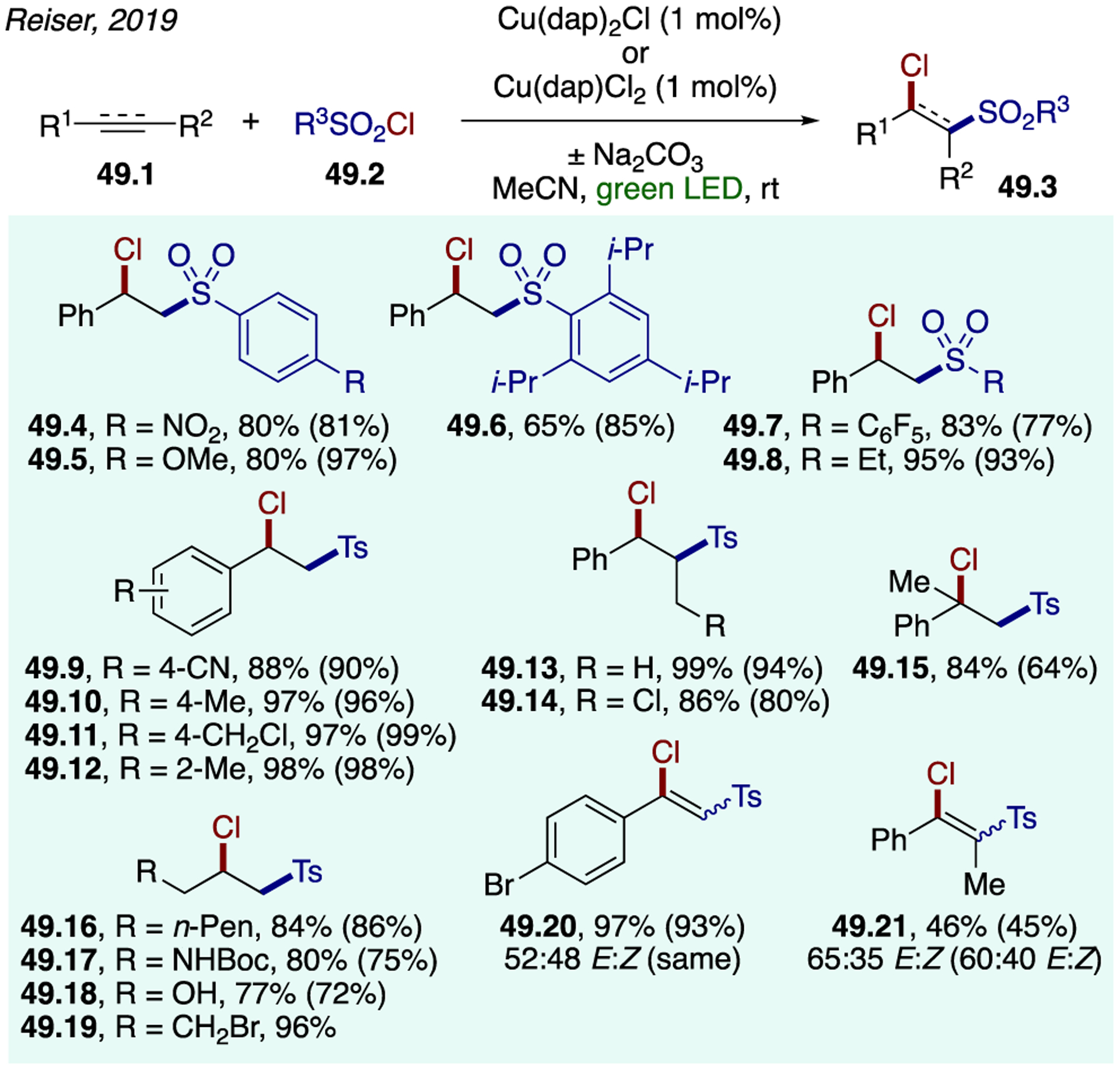
Scheme 49.
Scheme 49.
Chlorosulfonylation of Olefins
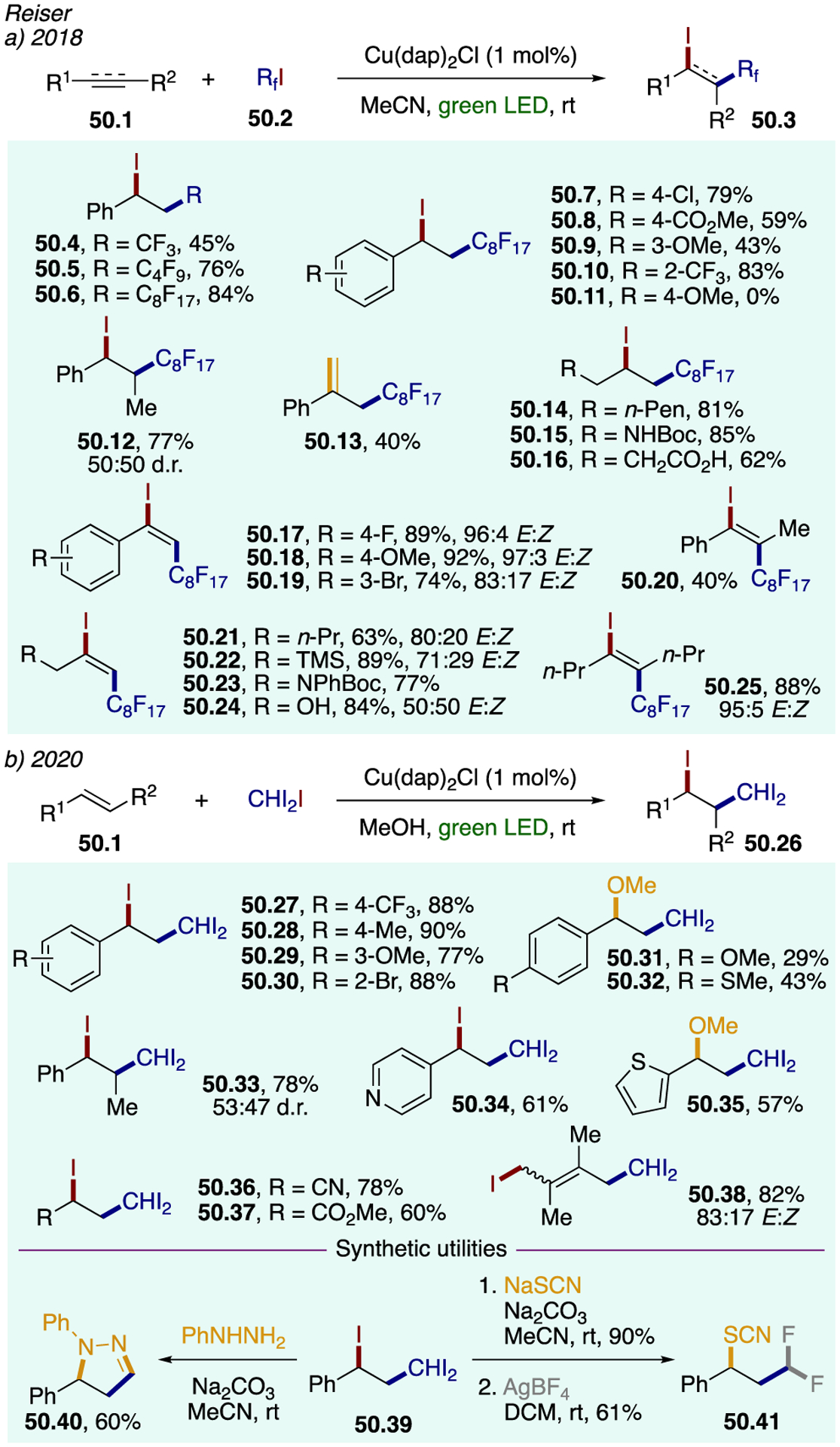
Scheme 50.
Scheme 50.
ATRA Reactions with Iodoalkanes
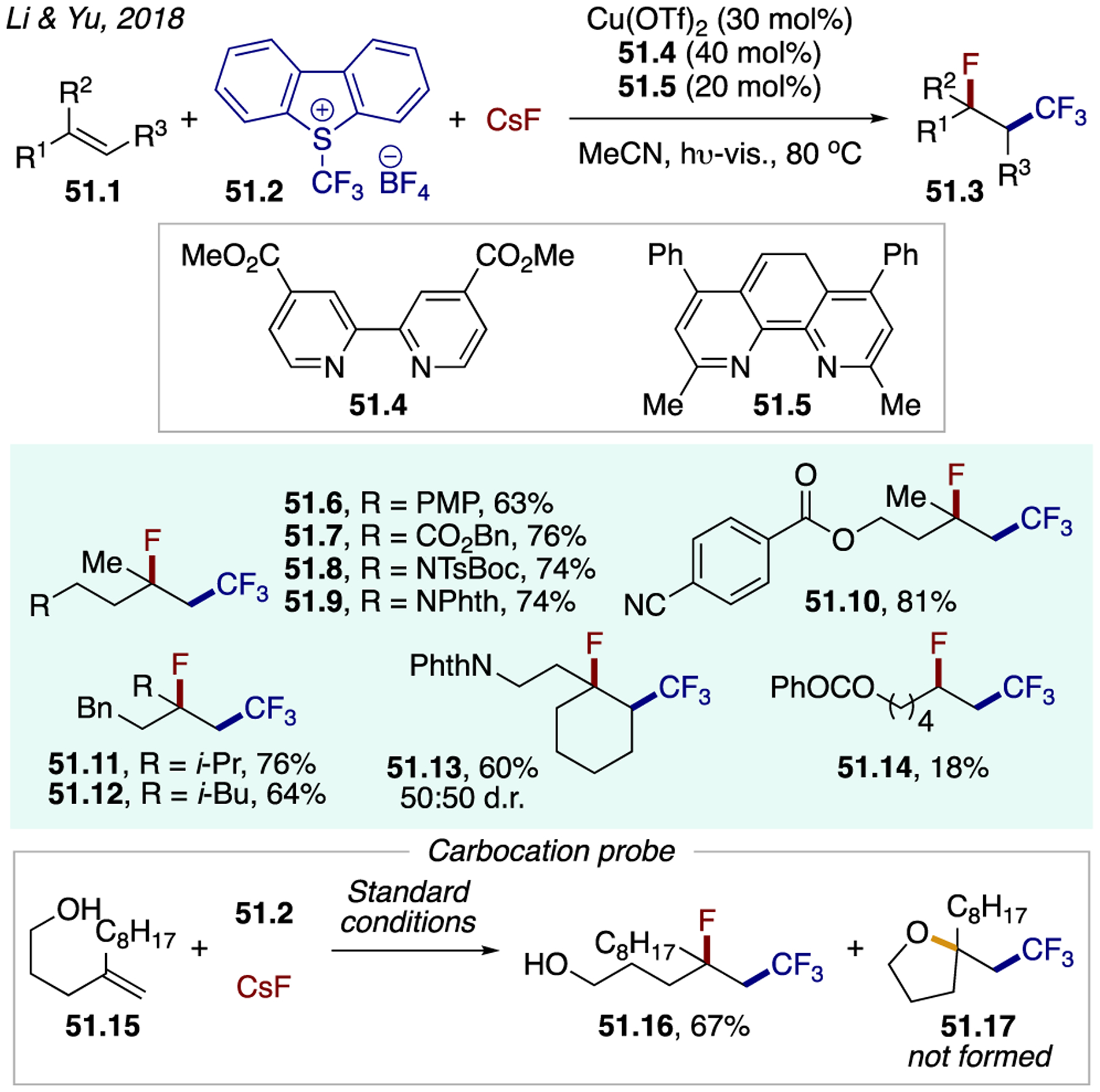
Scheme 51.
Scheme 51.
Fluorotrifluoromethylation of Unactivated Alkenes
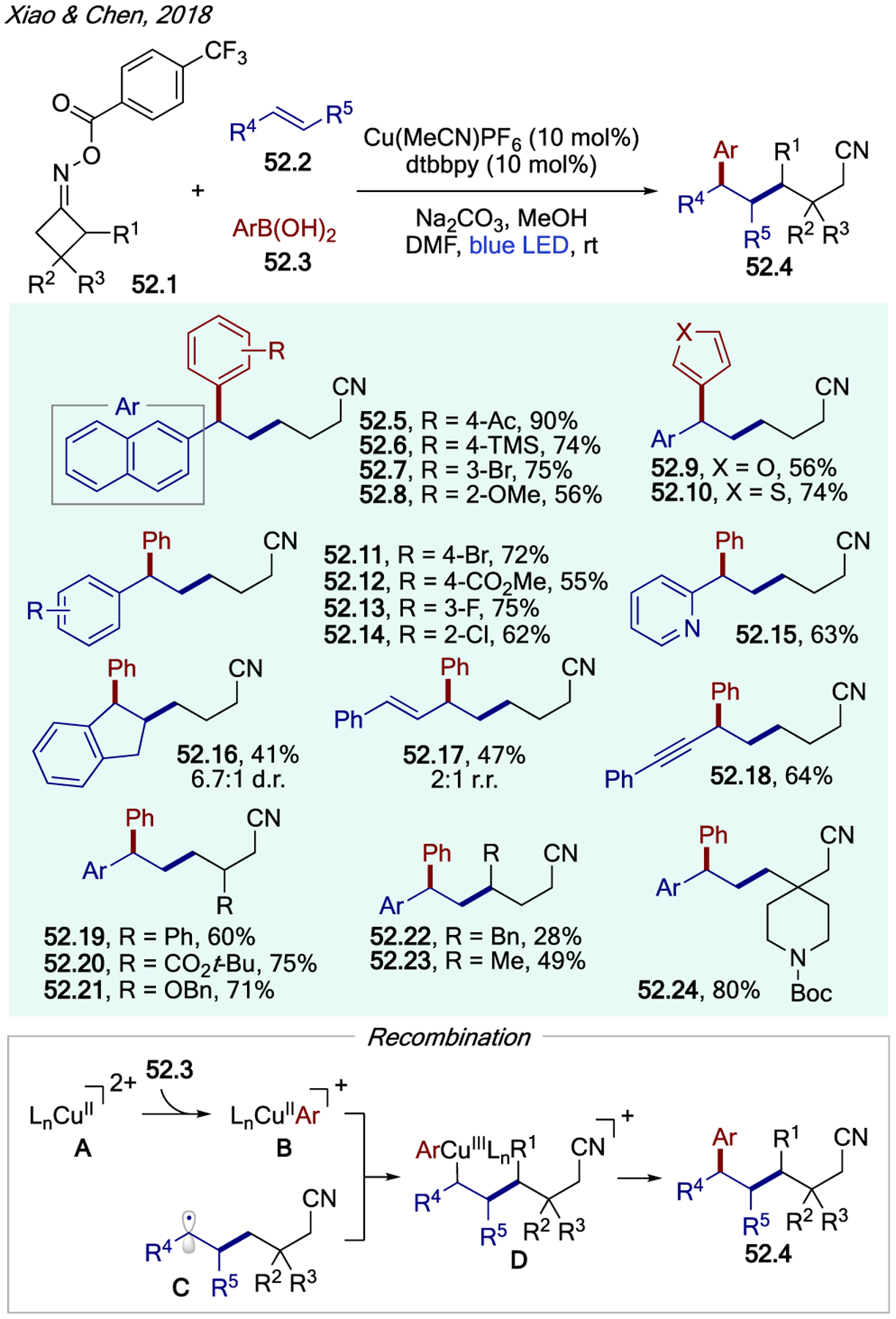
Scheme 52.
Scheme 52.
Three Component Coupling of RAOEs, Alkenes, and Arylboronic Acids
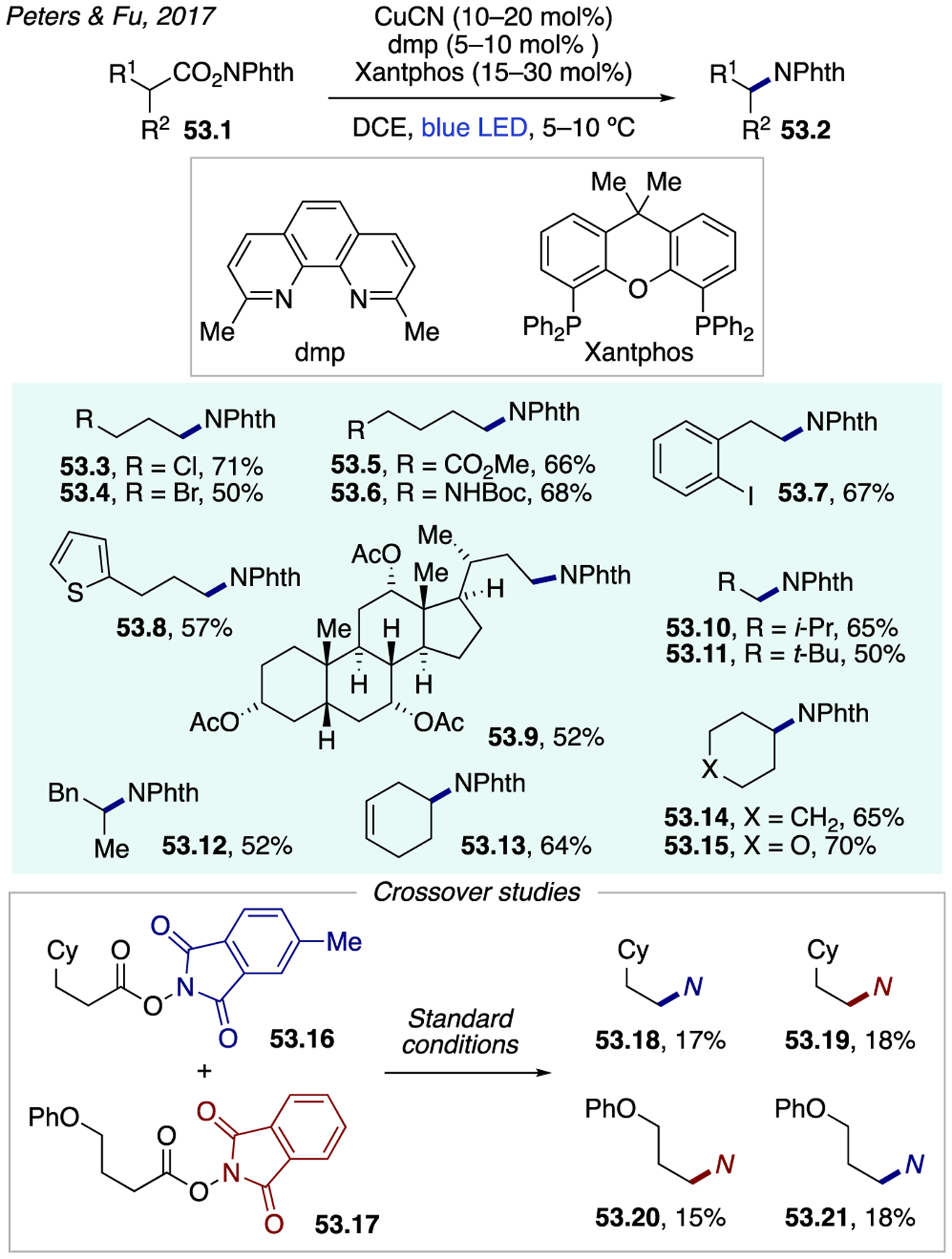
Scheme 53.
Scheme 53.
Decarboxylative C–N Coupling of RAEs
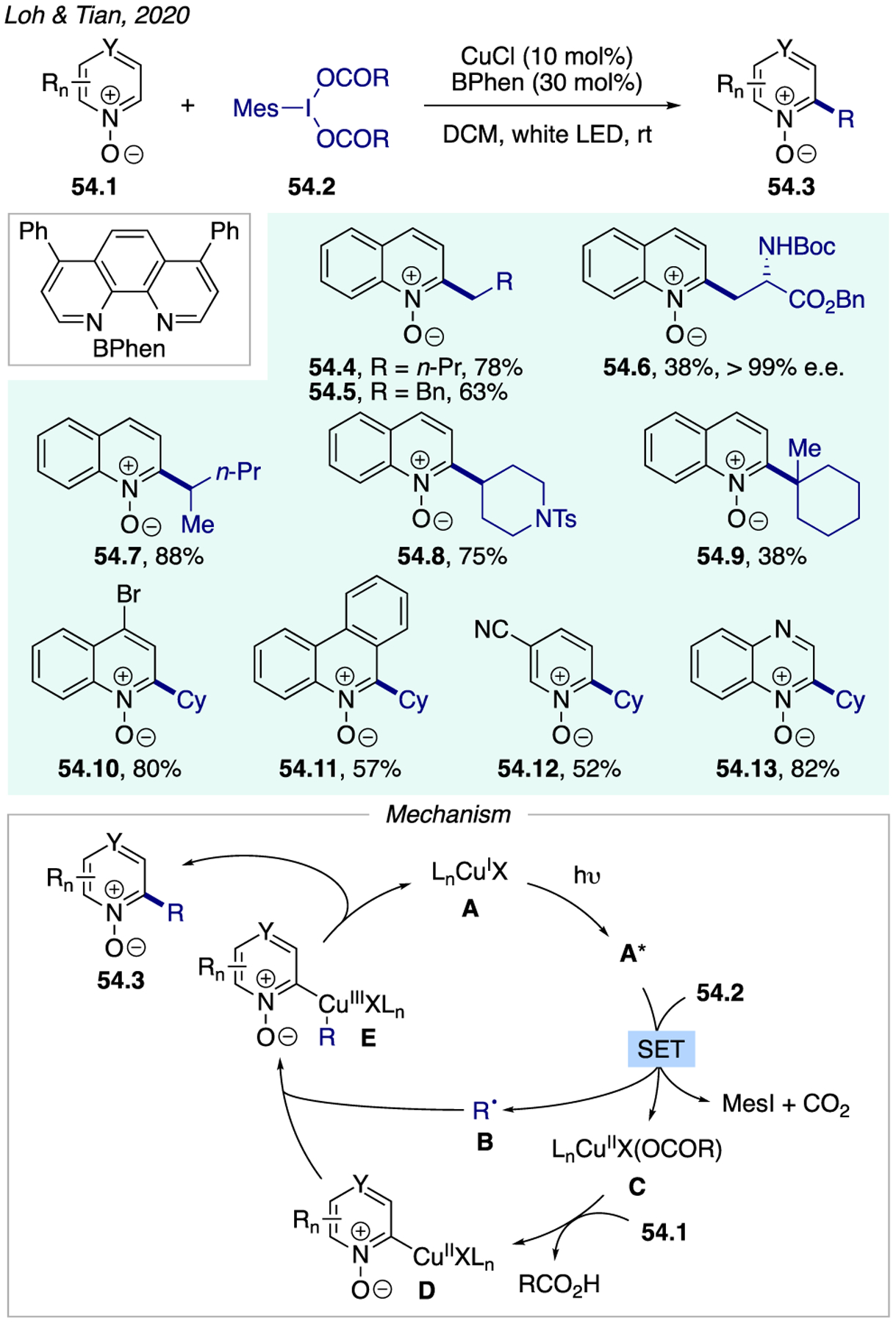
Scheme 54.
Scheme 54.
Decarboxylative C–H Alkylation of Heteroarene N-Oxides
Scheme 55.
Scheme 55.
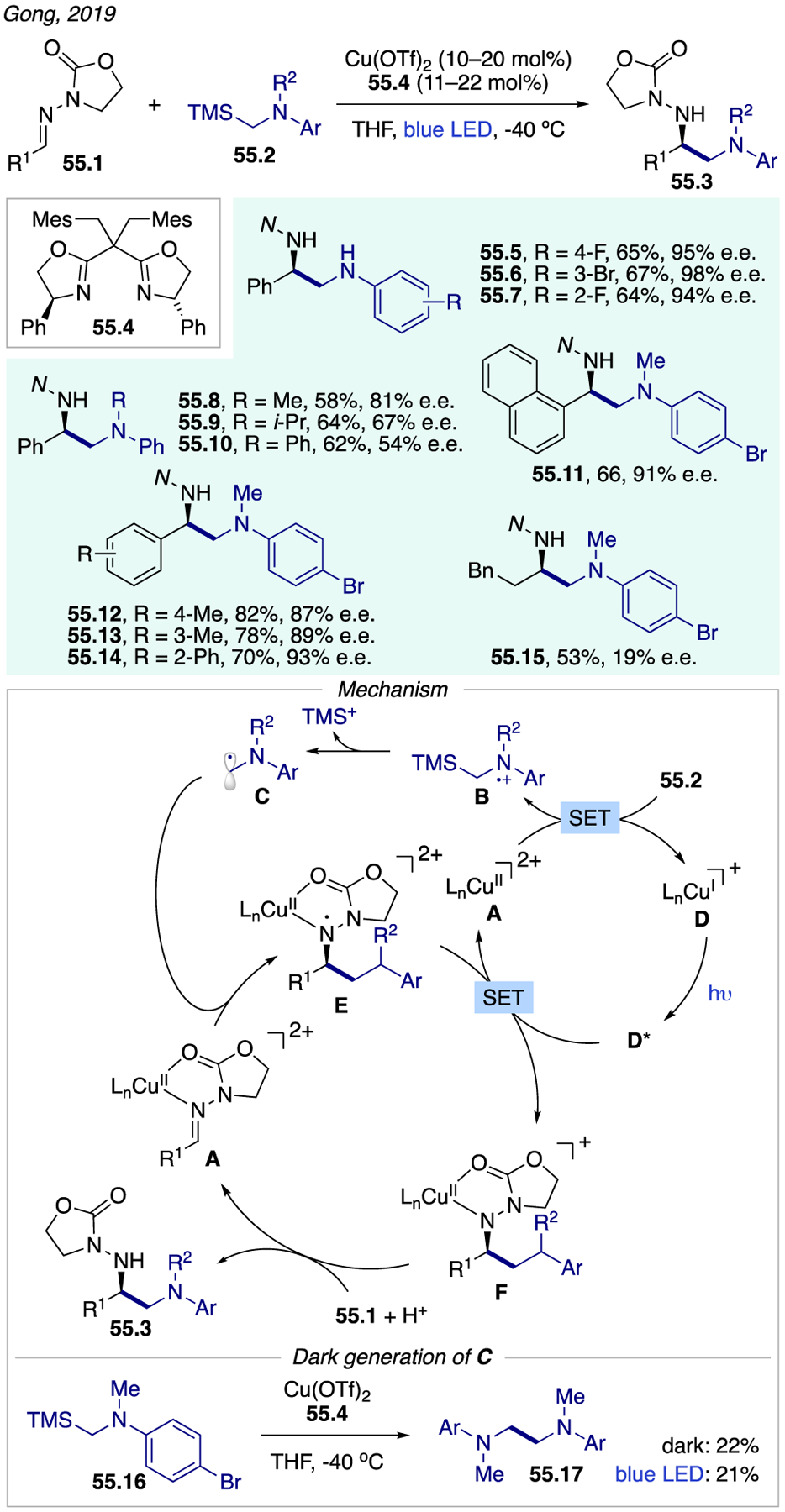
Enantioselective α-Aminoalkylation of Acyclic Imines
Scheme 56.
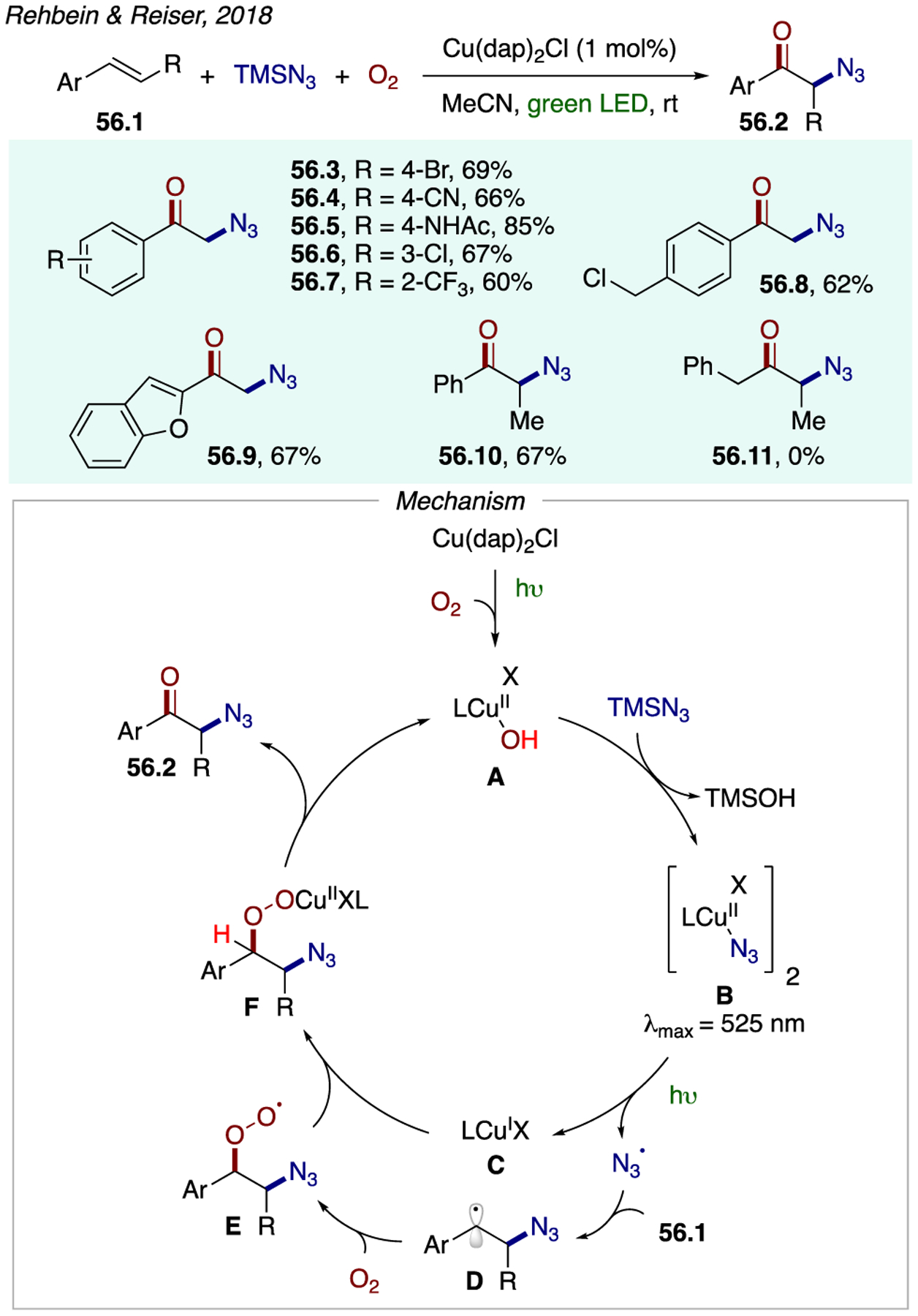
Scheme 56.
Oxoazidation of Vinyl (Hetero)arenes
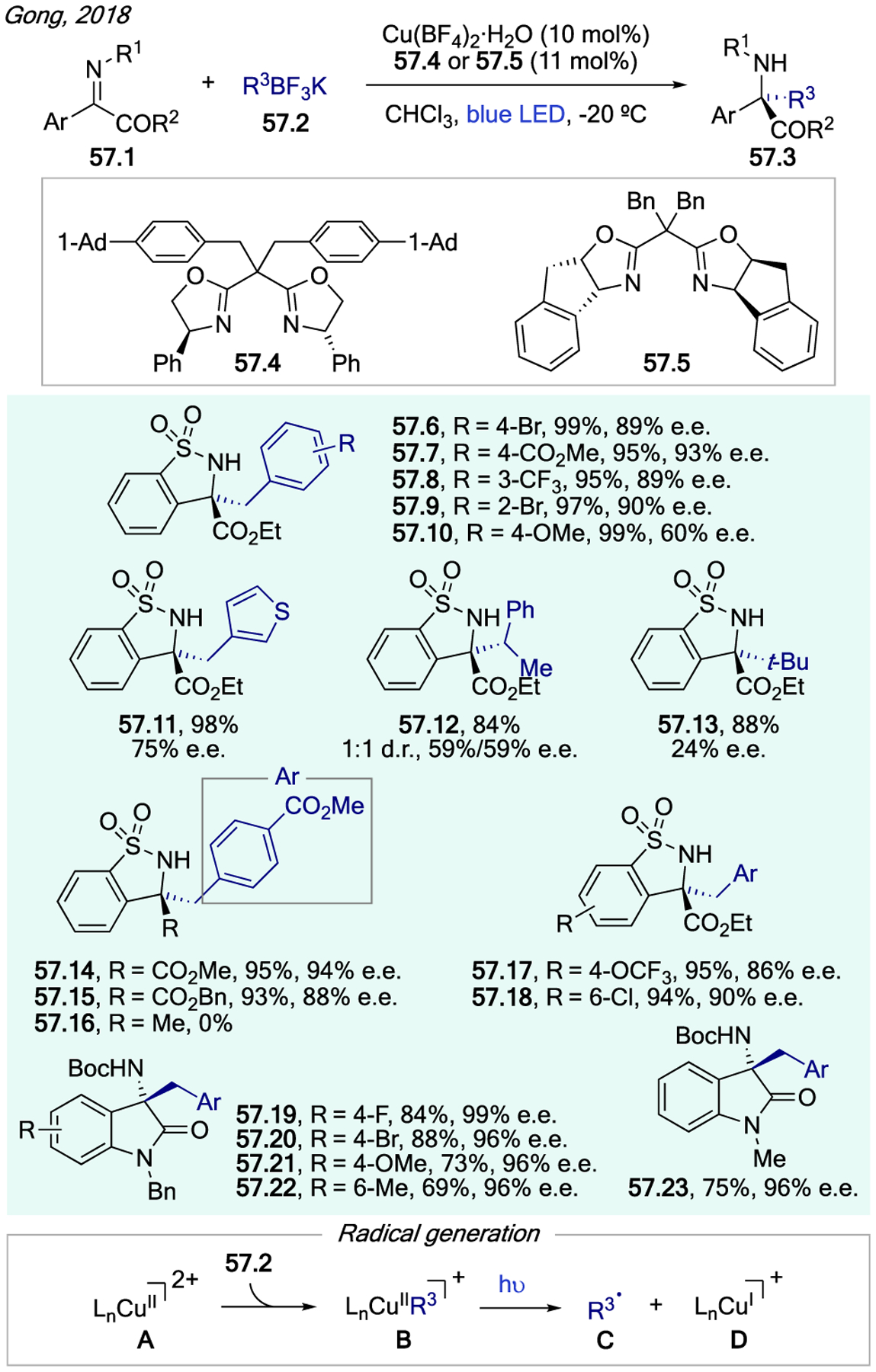
Scheme 57.
Scheme 57.
Enantioselective Alkylation of Imines with Alkyl Trifluoroborates
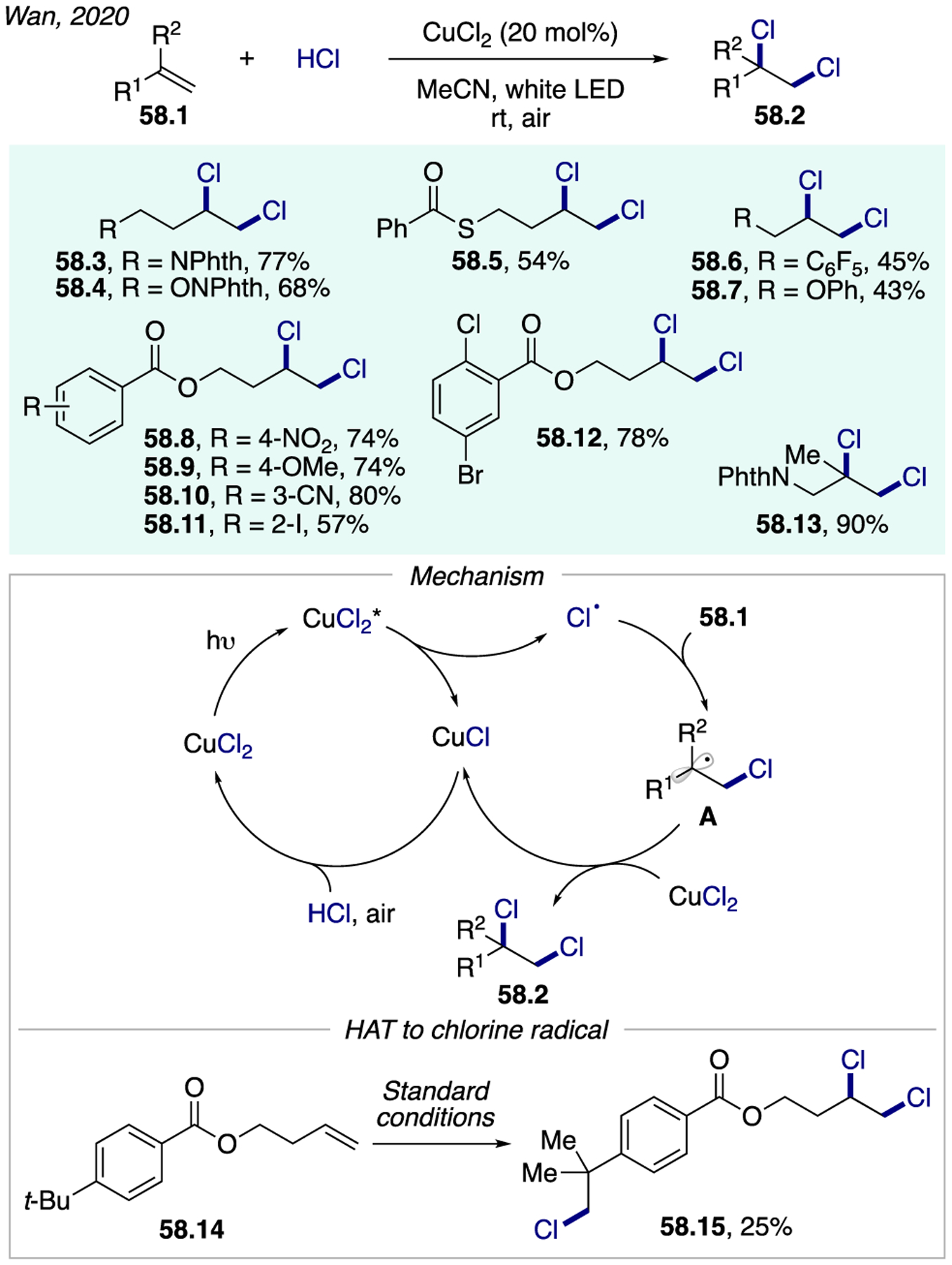
Scheme 58.
Scheme 58.
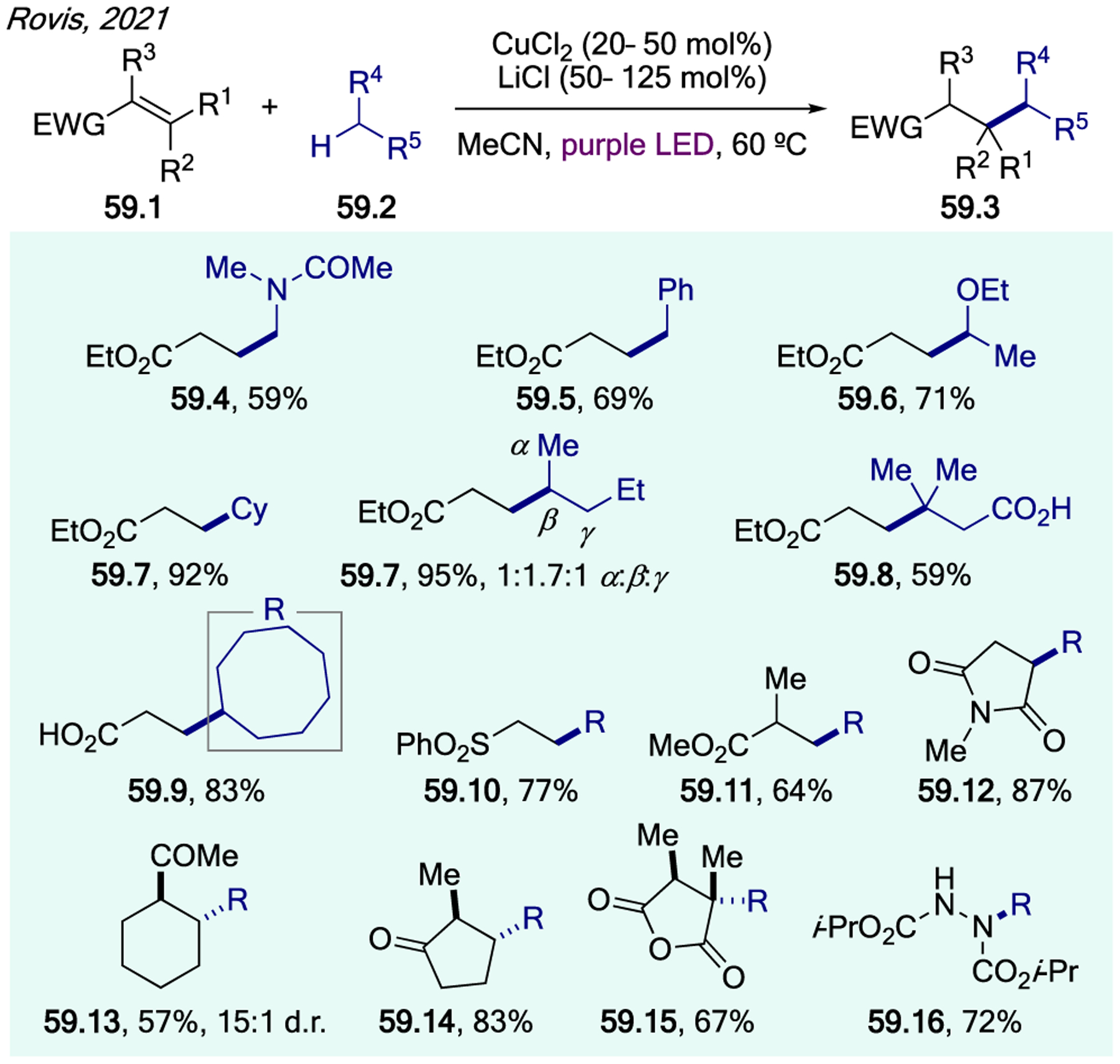
Dichlorination of Alkenes via LMCT of CuCl2
Scheme 59.
Scheme 59.
C(sp3)–H Alkylation via Intermolecular HAT
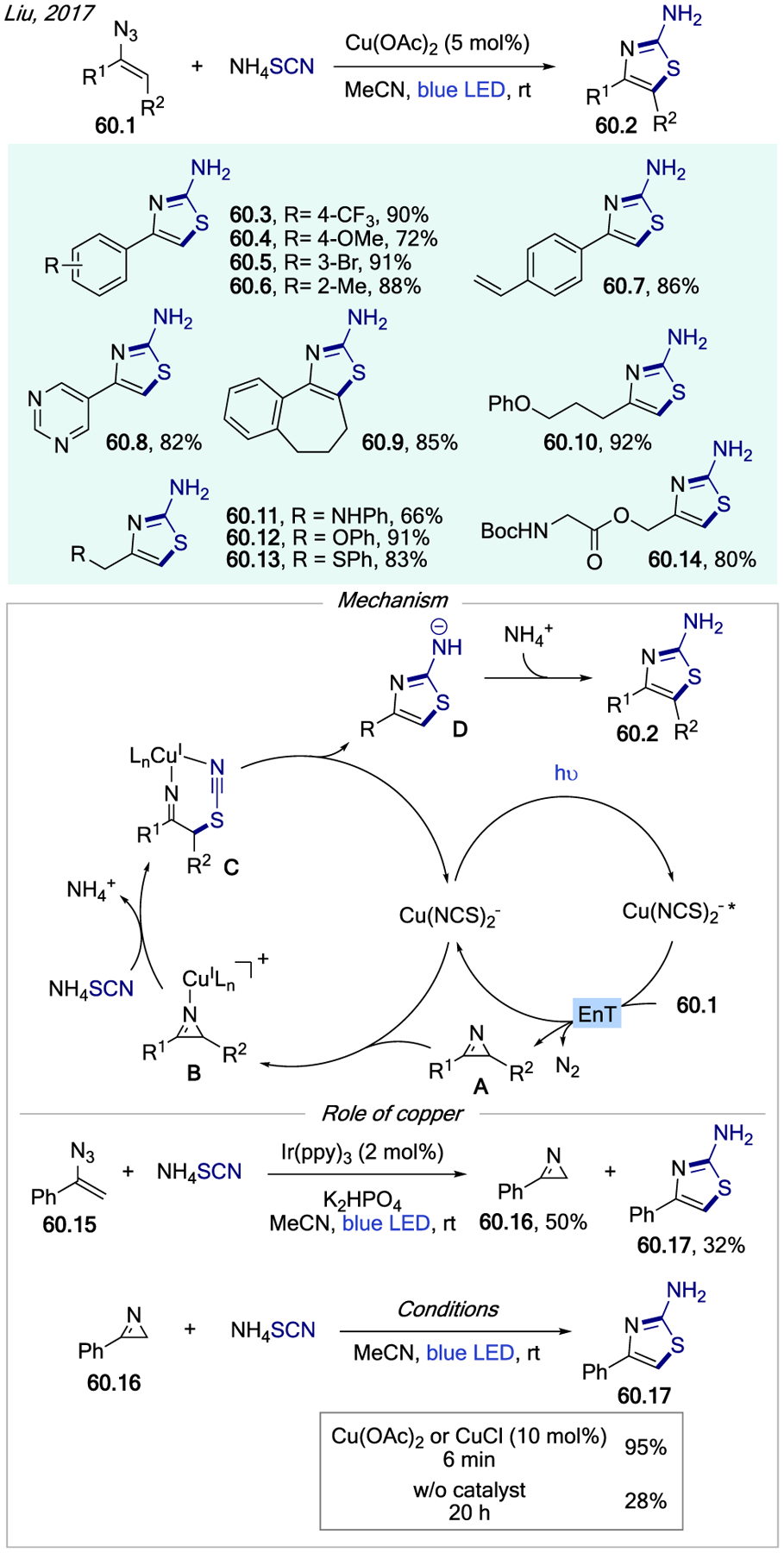
Scheme 60.
Scheme 60.
Photoinduced EnT from Cu(NCS)2 to Vinyl Azides
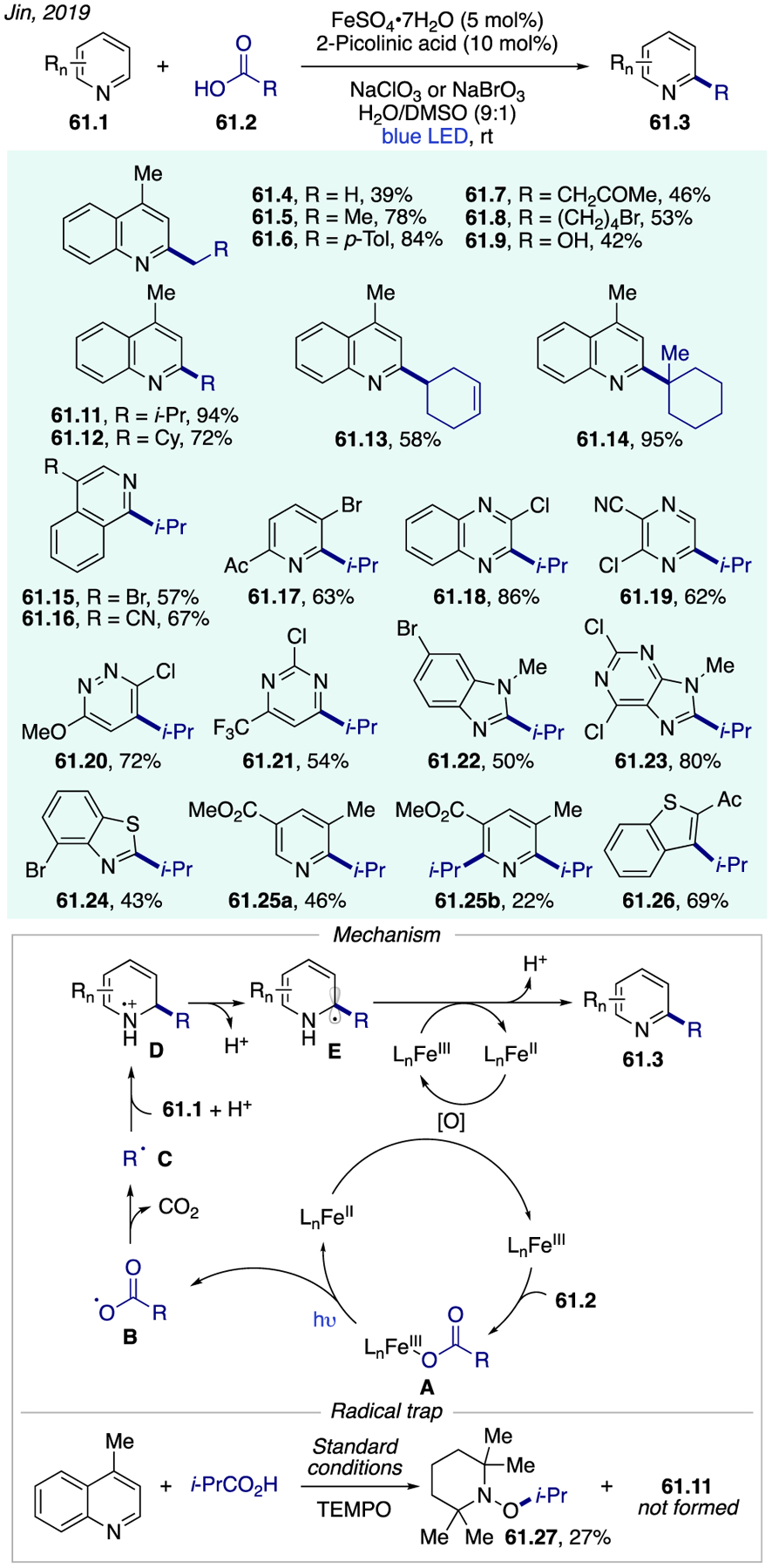
Scheme 61.
Scheme 61.
Decarboxylative Alkylation of Heteroarenes
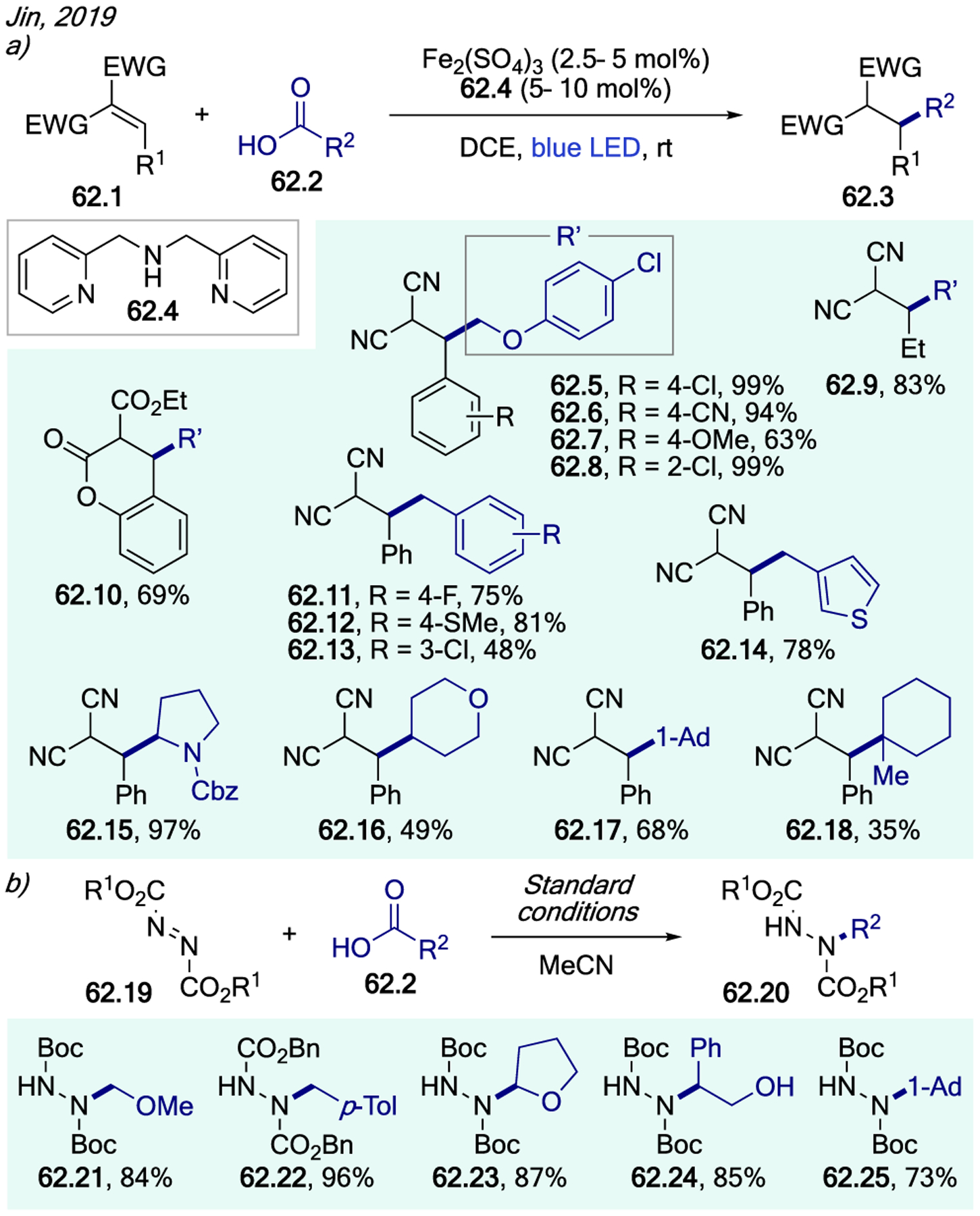
Scheme 62.
Scheme 62.
Decarboxylative Alkylation of (a) Michael Acceptors and (b) Azodicarboxylates
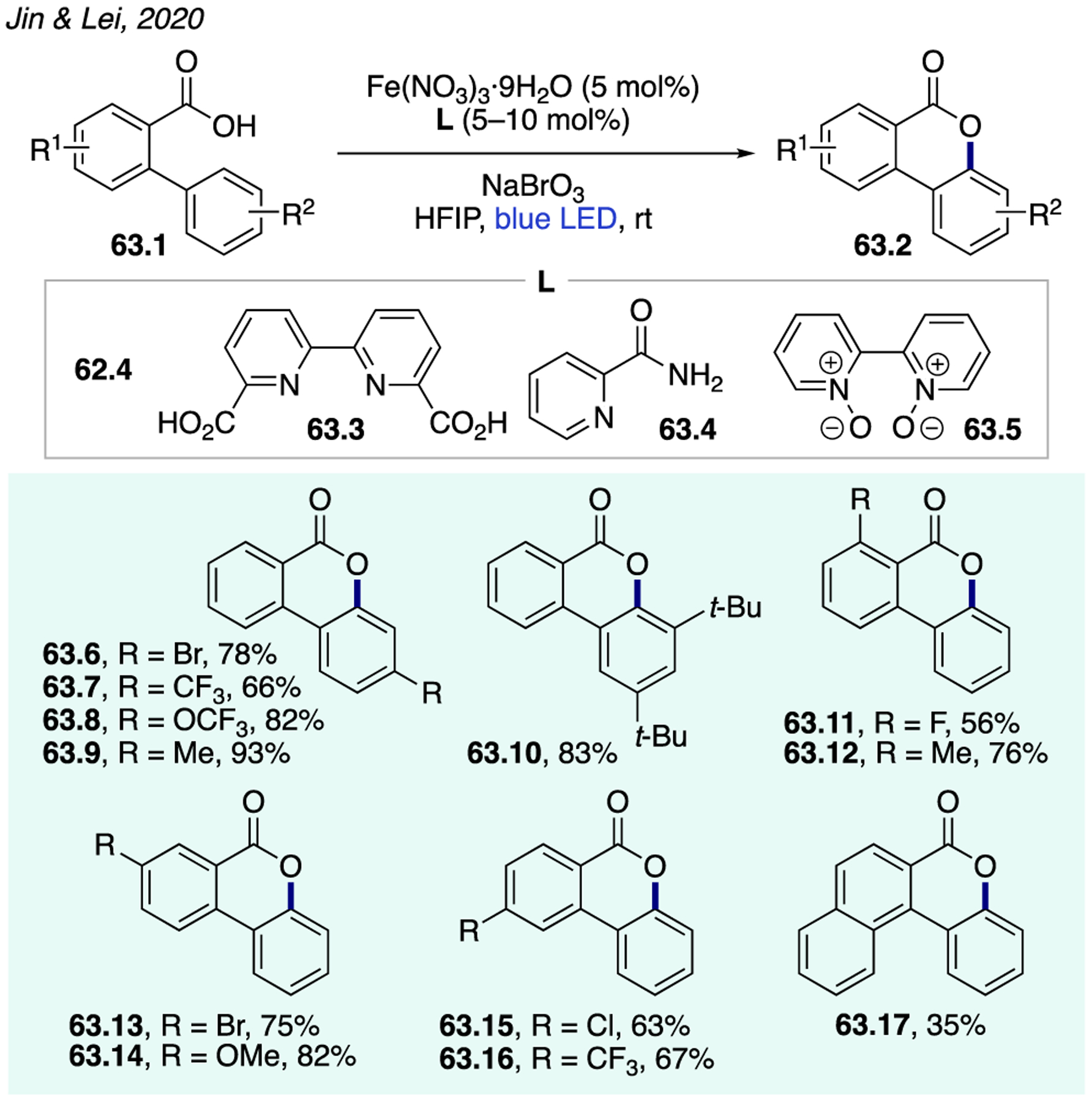
Scheme 63.
Scheme 63.
Intramolecular Lactonization of 2-Arylbenzoic Acids
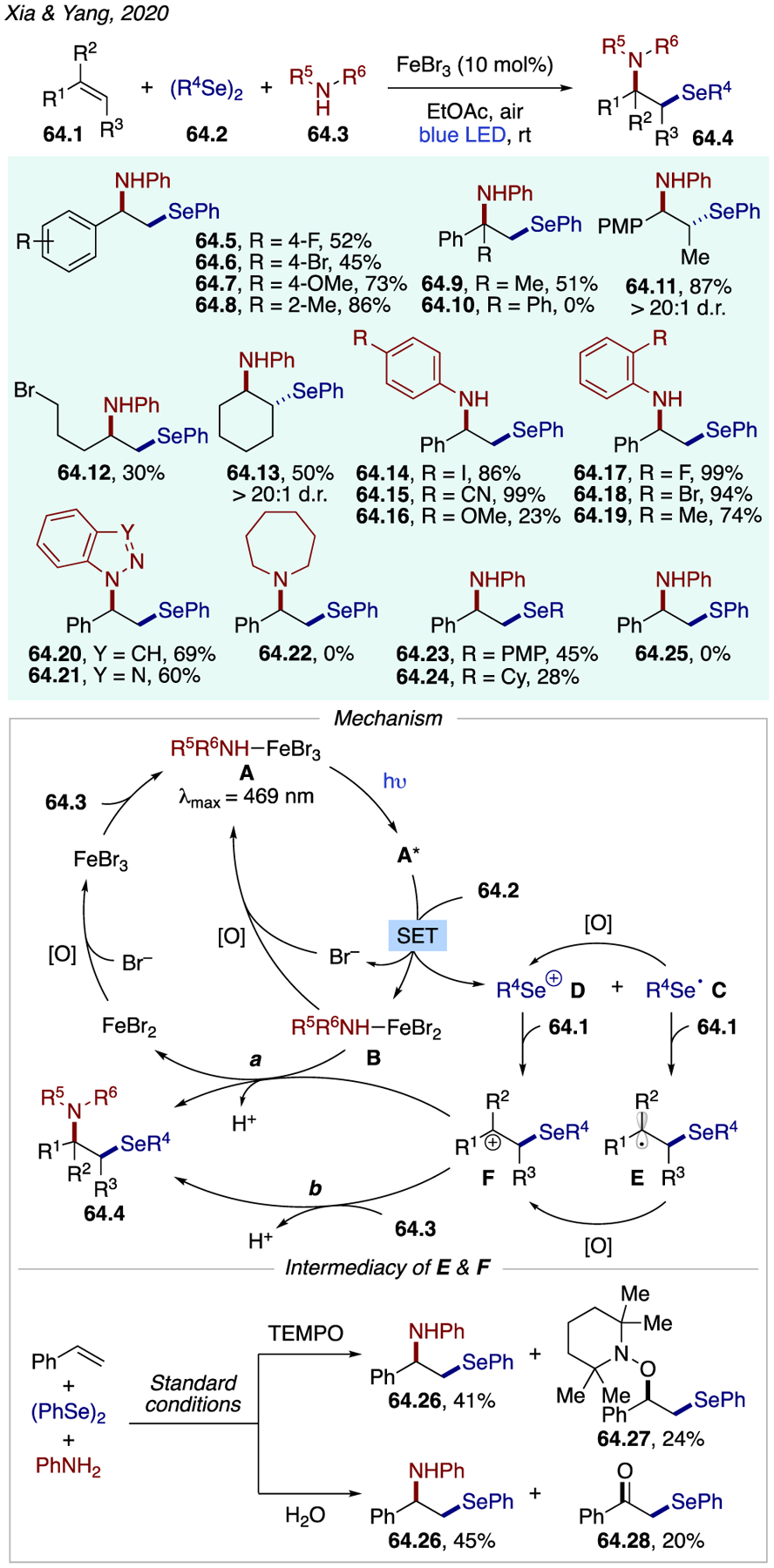
Scheme 64.
Scheme 64.
Aminoselenation of Alkenes
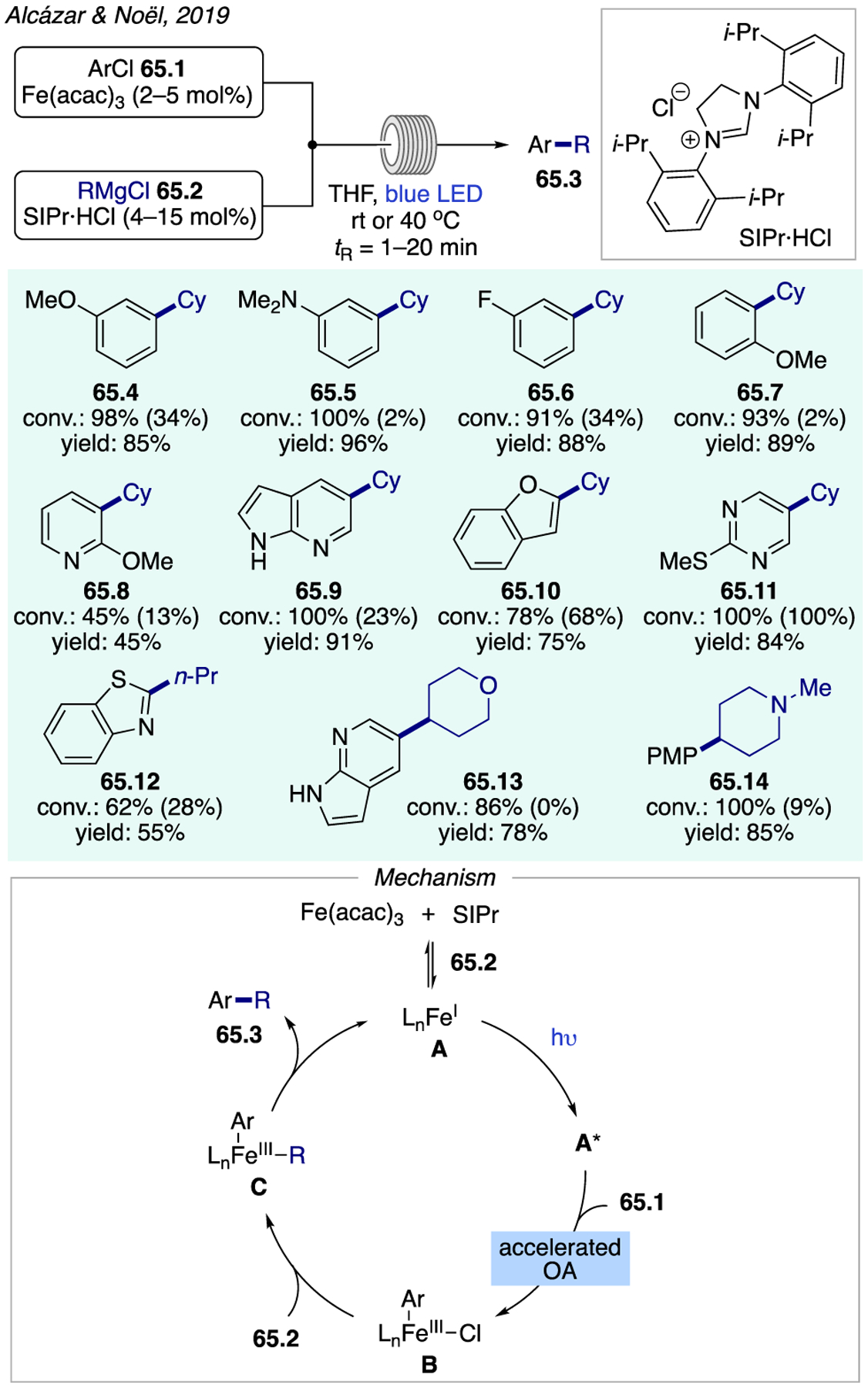
Scheme 65.
Scheme 65.
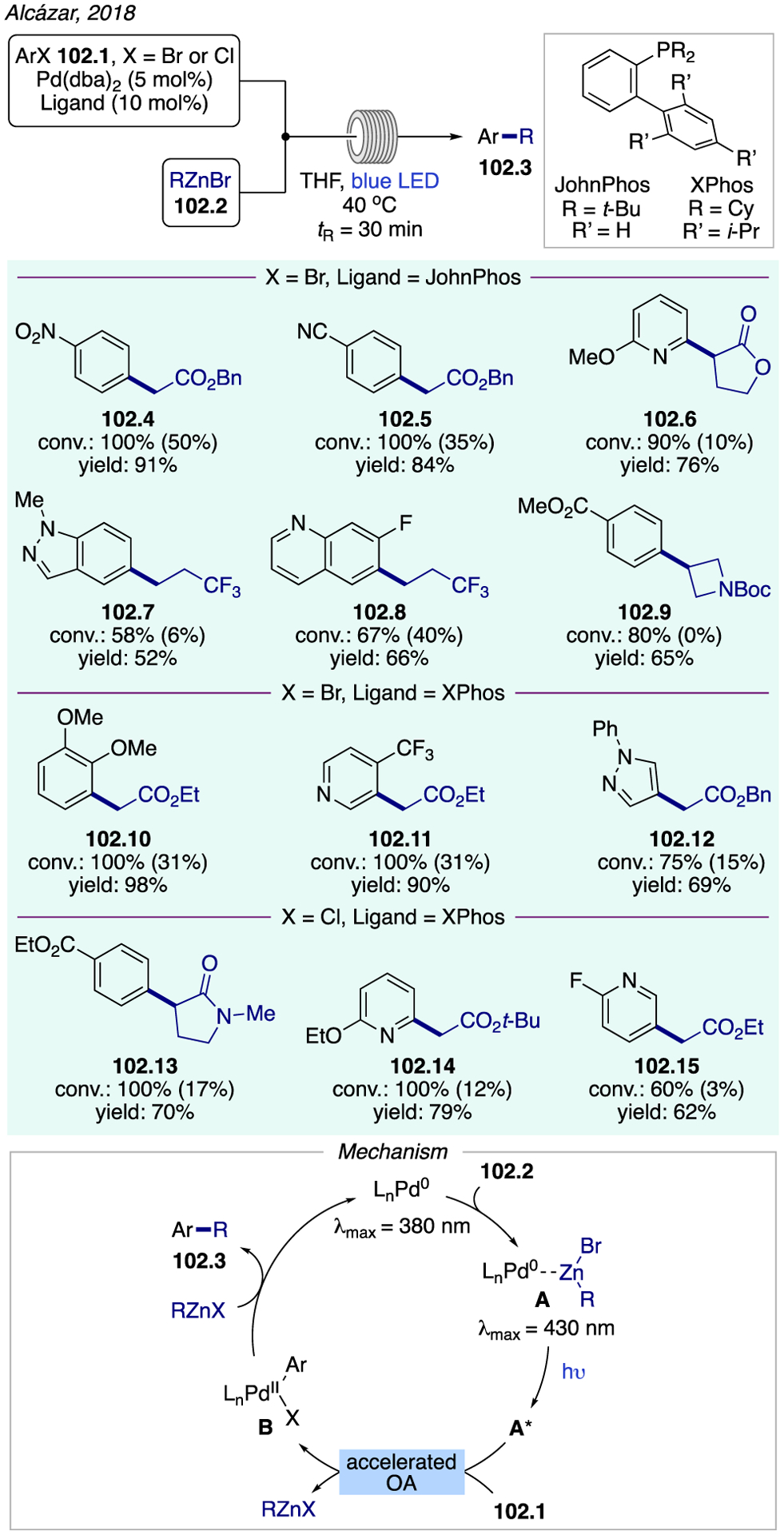
Kumada Cross-Coupling in Flow
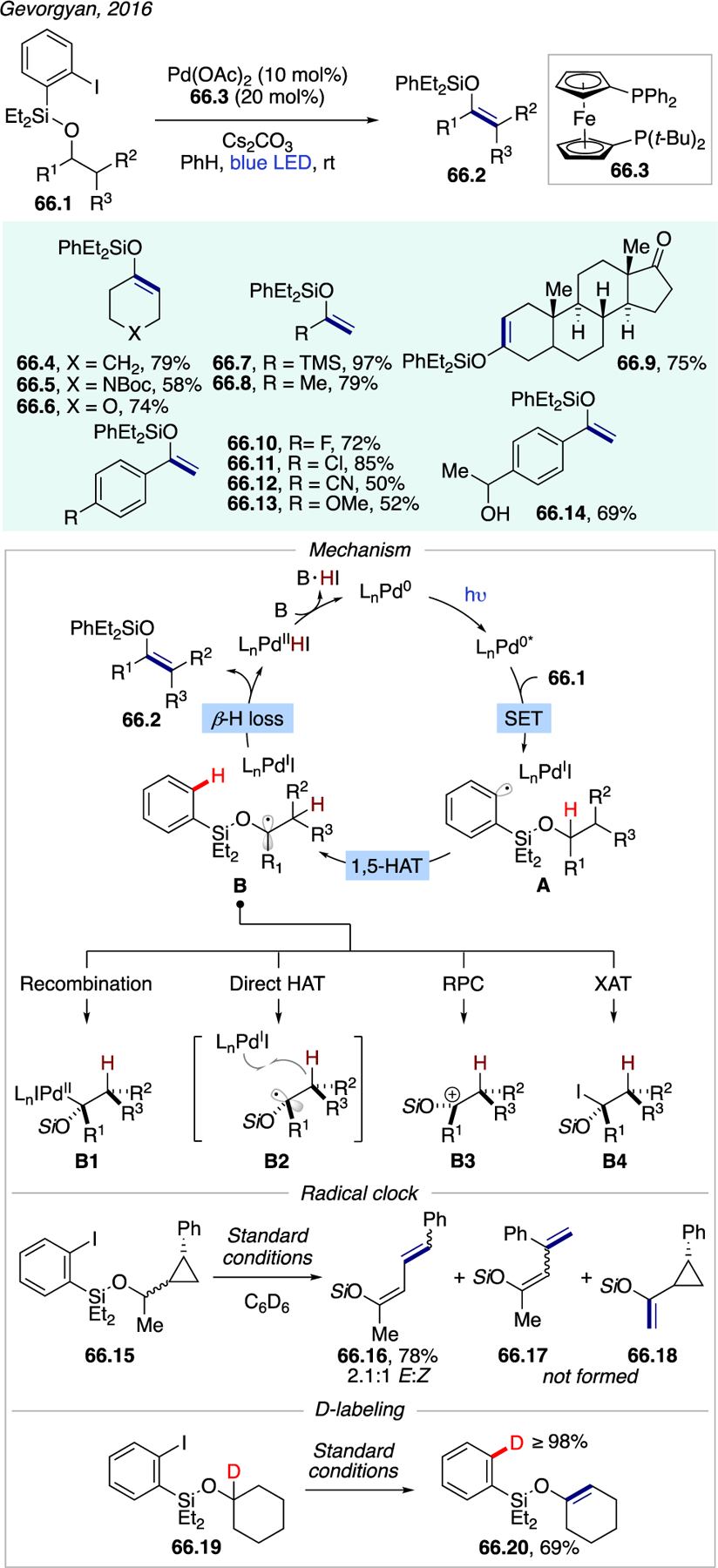
Scheme 66.
Scheme 66.
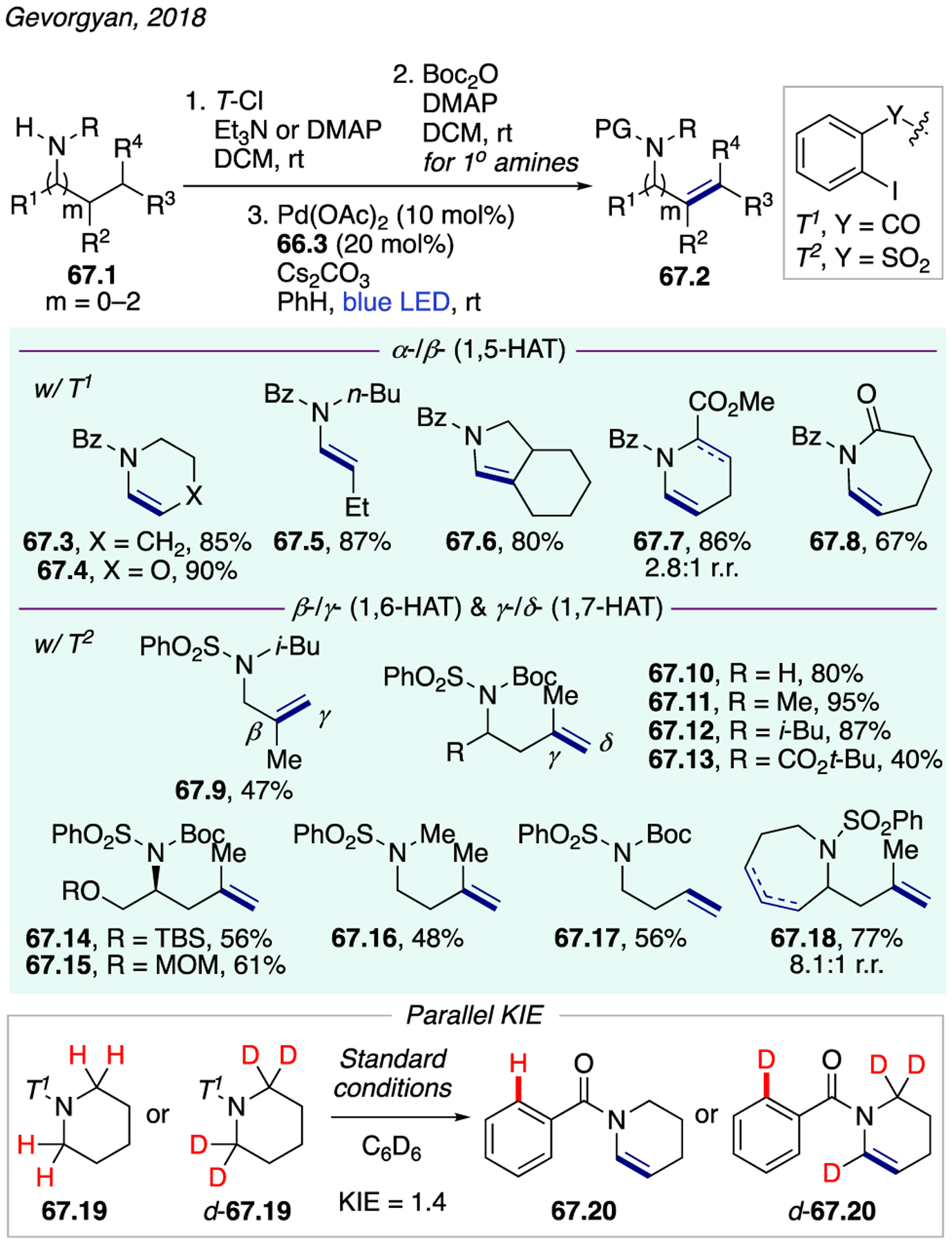
Desaturation of Silyl Ethers Involving 1,5-HAT to Hybrid Pd Aryl Radical Species
Scheme 67.
Scheme 67.
Selective Proximal and Remote Desaturation of Aliphatic Amines
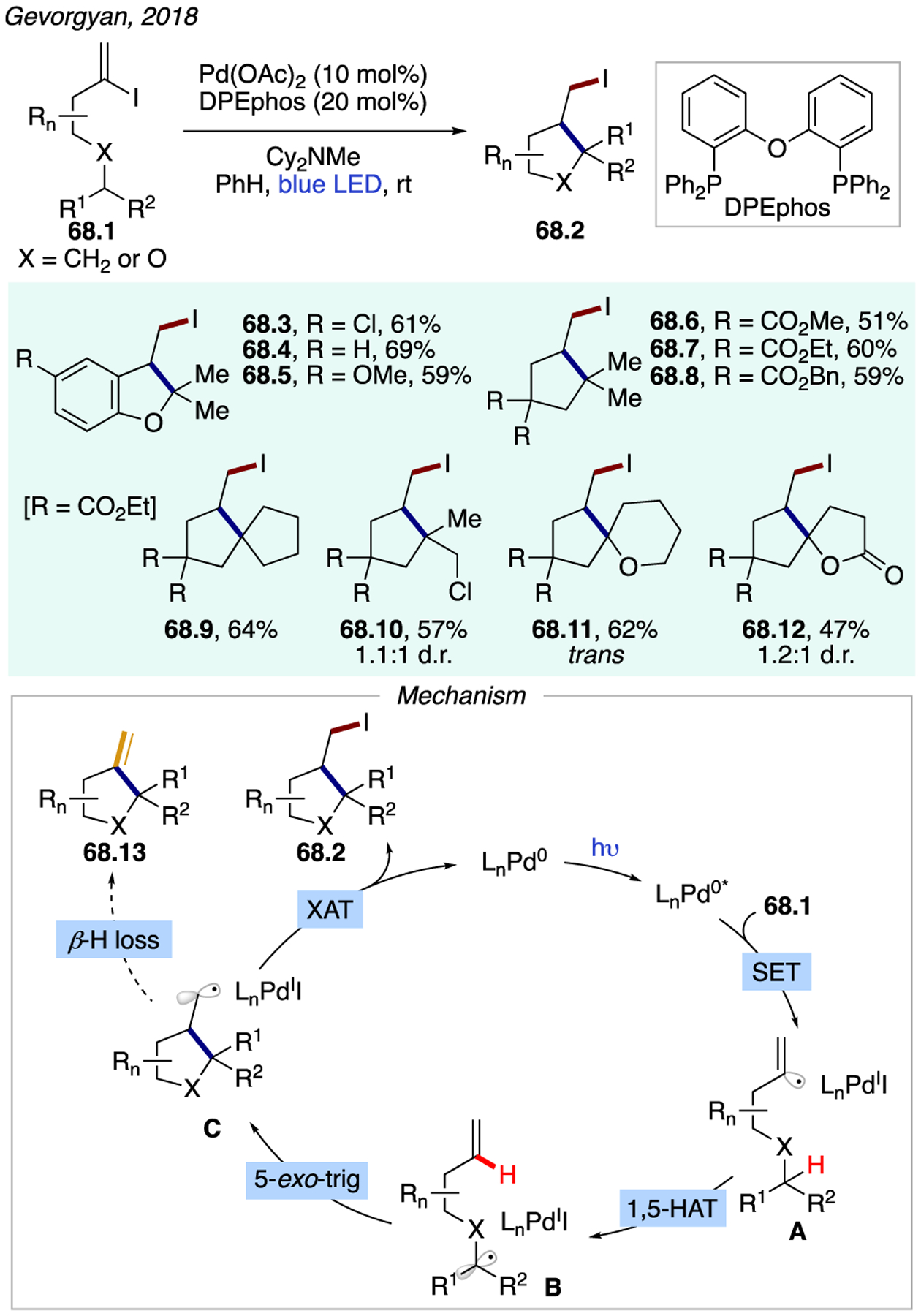
Scheme 68.
Scheme 68.
HAT/ATRC Cascade Leading to Cyclic Motifs
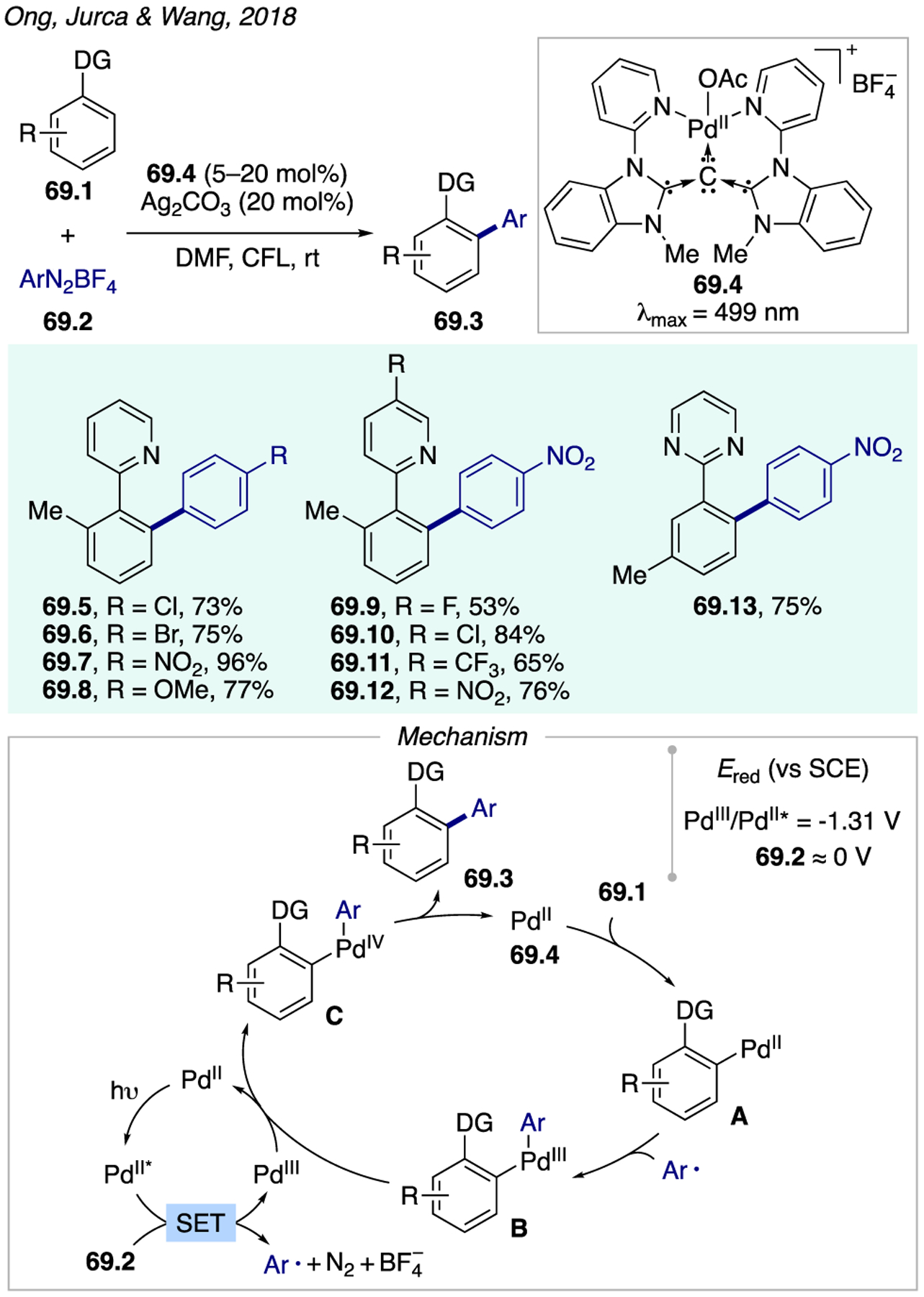
Scheme 69.
Scheme 69.
Directed C–H Arylation via Pd II/III/IV Cycle
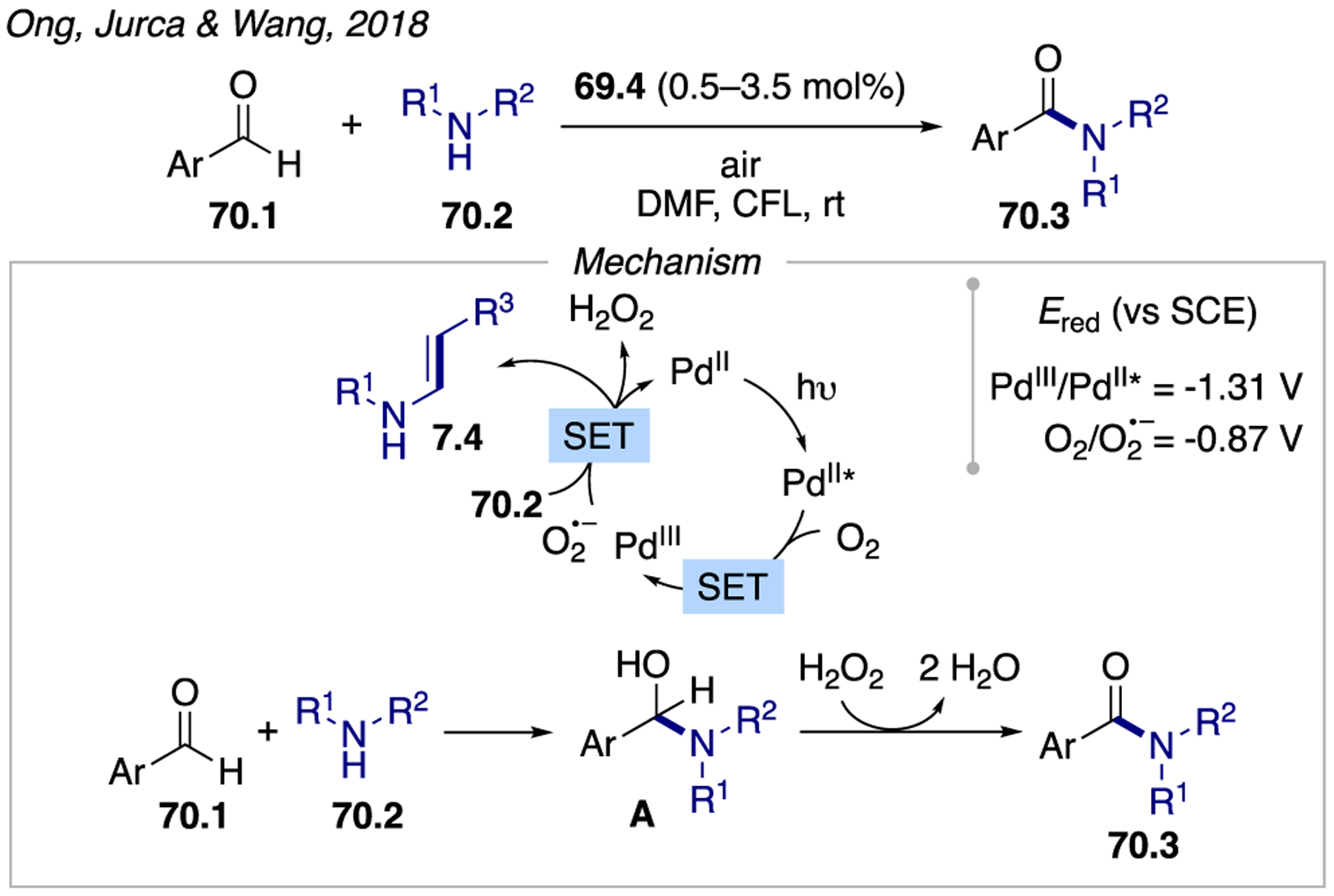
Scheme 70.
Scheme 70.
Oxidative Amination of Aldehydes
Scheme 71.
Scheme 71.
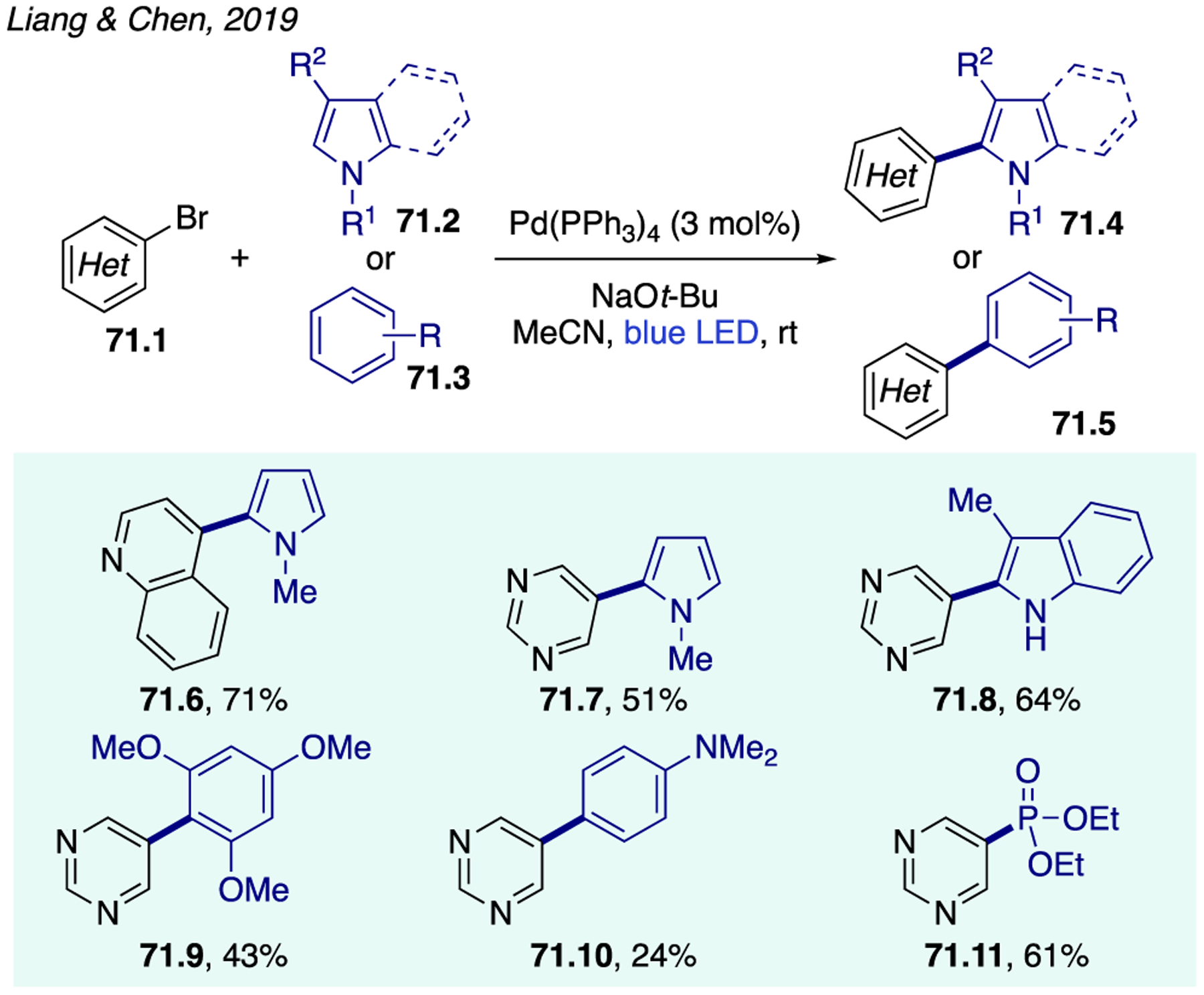
C–H Heteroarylation of (Hetero)arenes
Scheme 72.
Scheme 72.
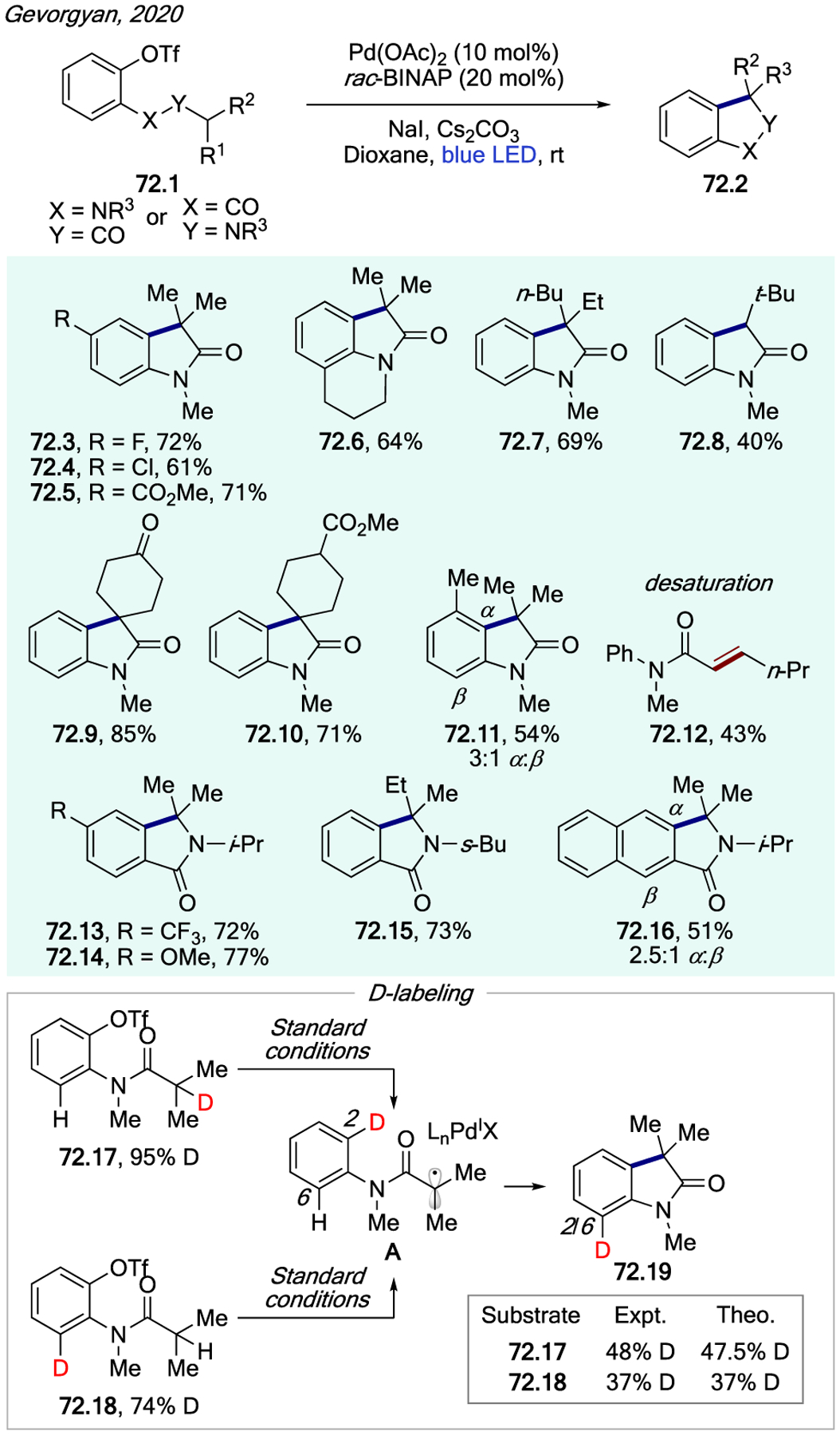
Generation of Aryl Radicals from Aryl Triflates
Scheme 73.
Scheme 73.
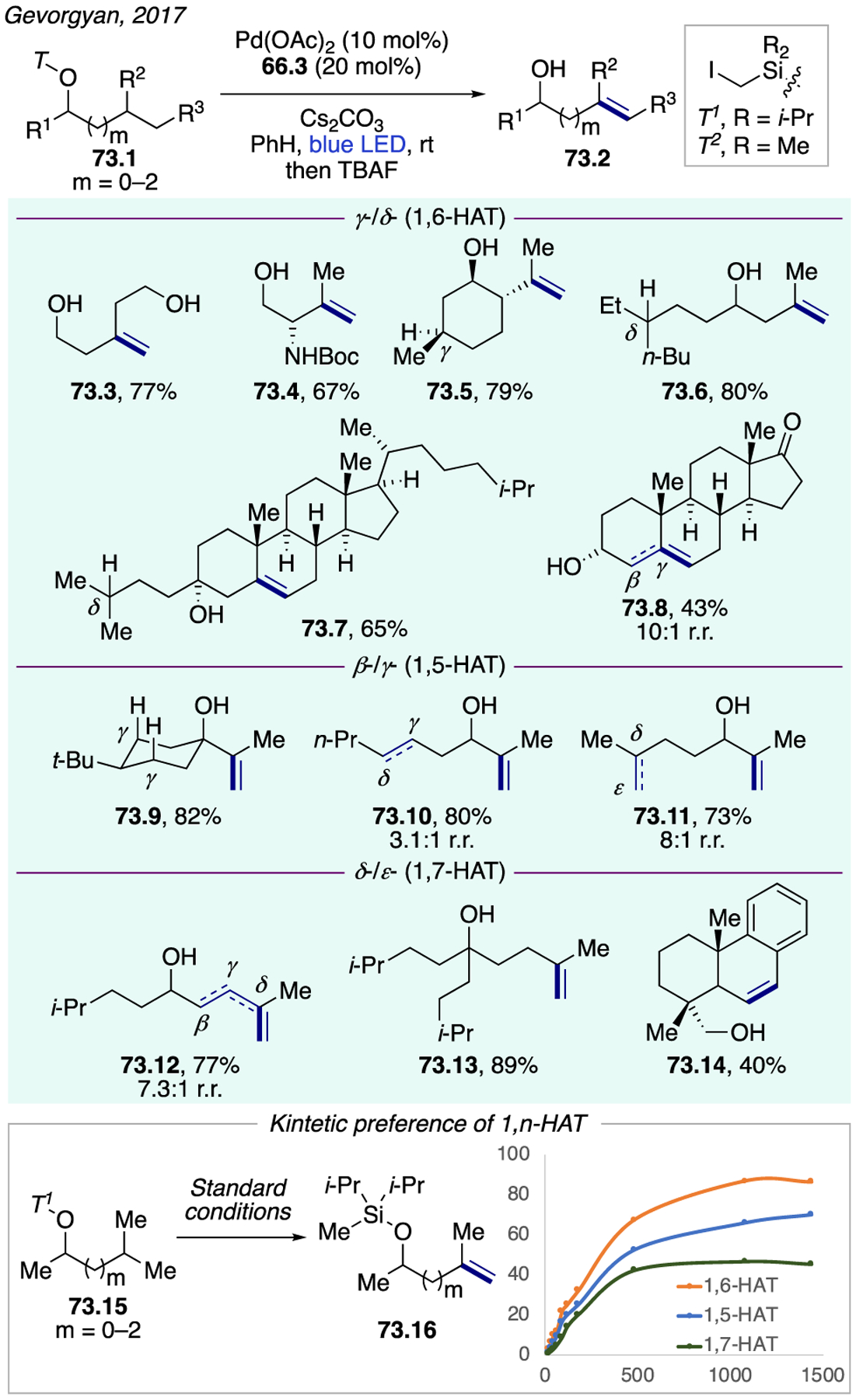
Remote Desaturation of Aliphatic Alcohols
Scheme 74.
Scheme 74.
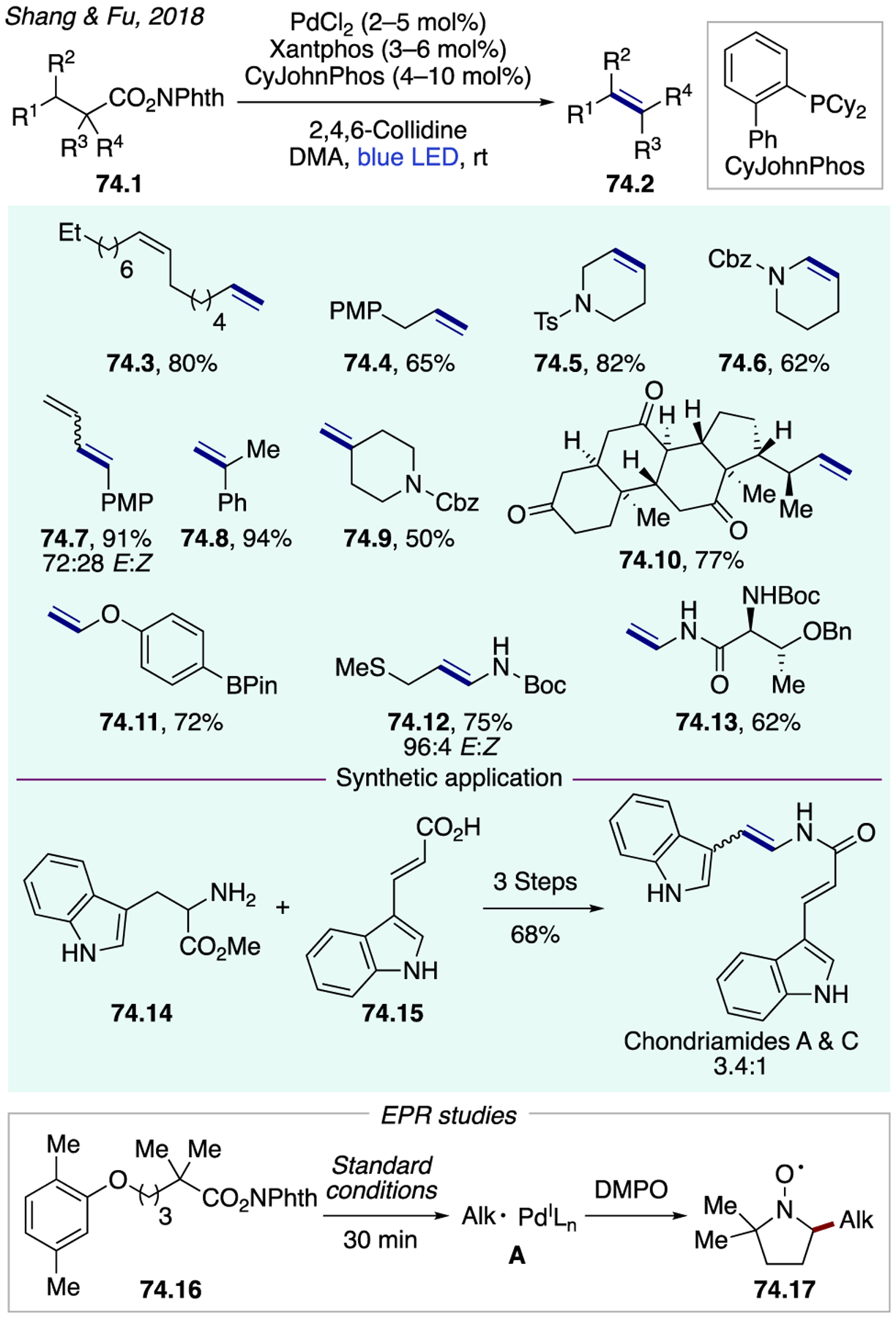
Decarboxylative Desaturation of RAEs
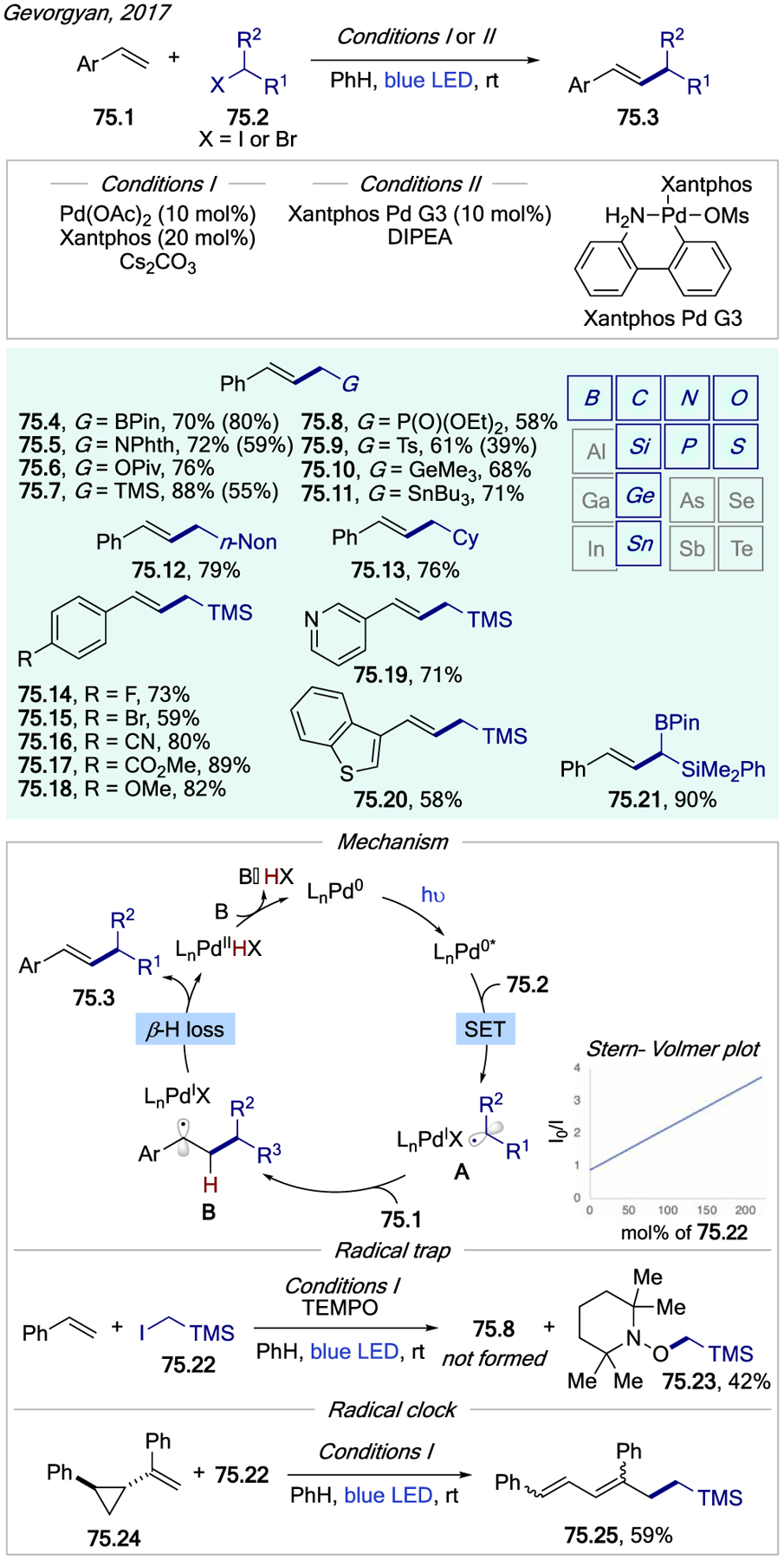
Scheme 75.
Scheme 75.
Heck Reaction with Functionalized Alkyl Iodides and Bromides
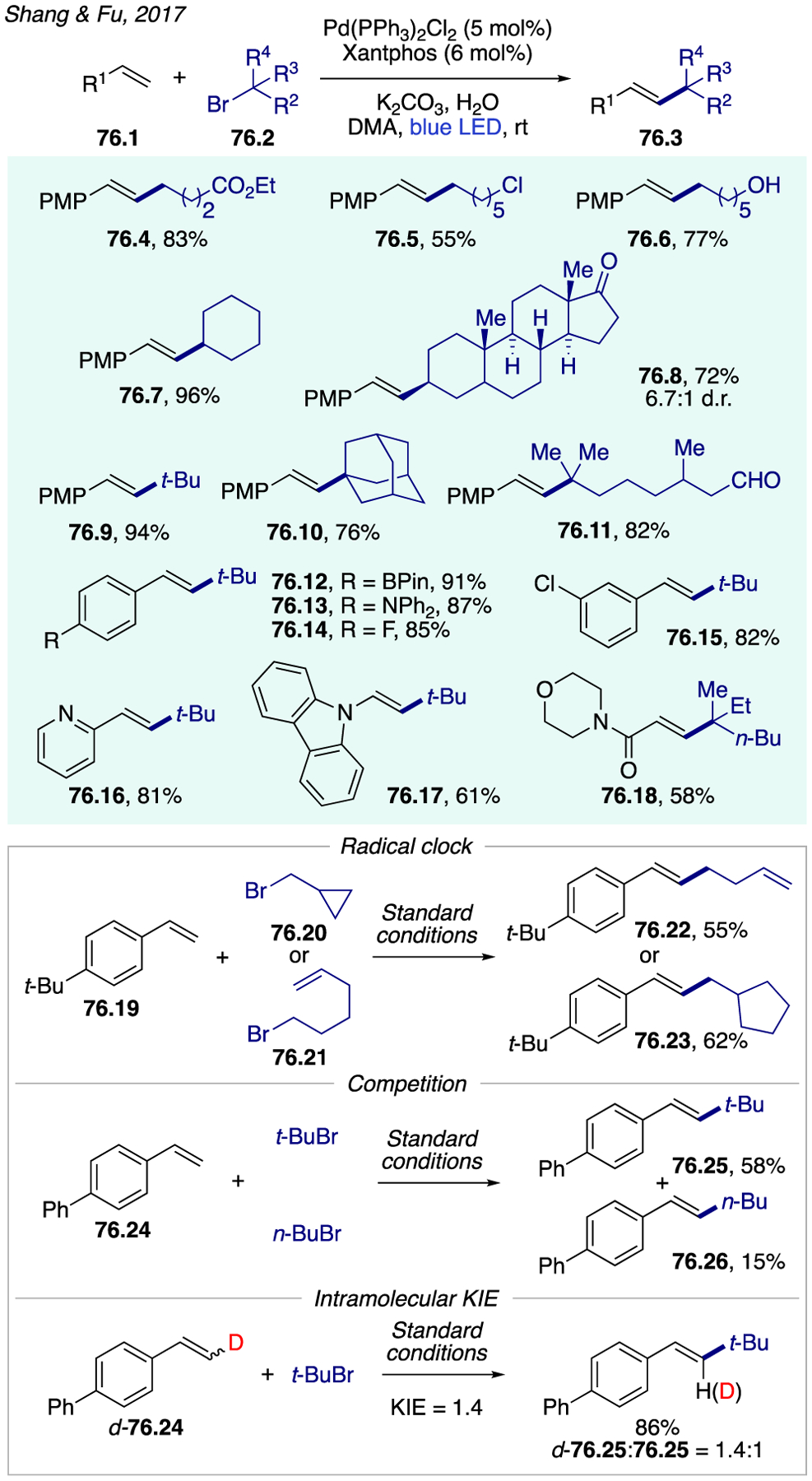
Scheme 76.
Scheme 76.
Heck Reaction with Unactivated Alkyl Bromides
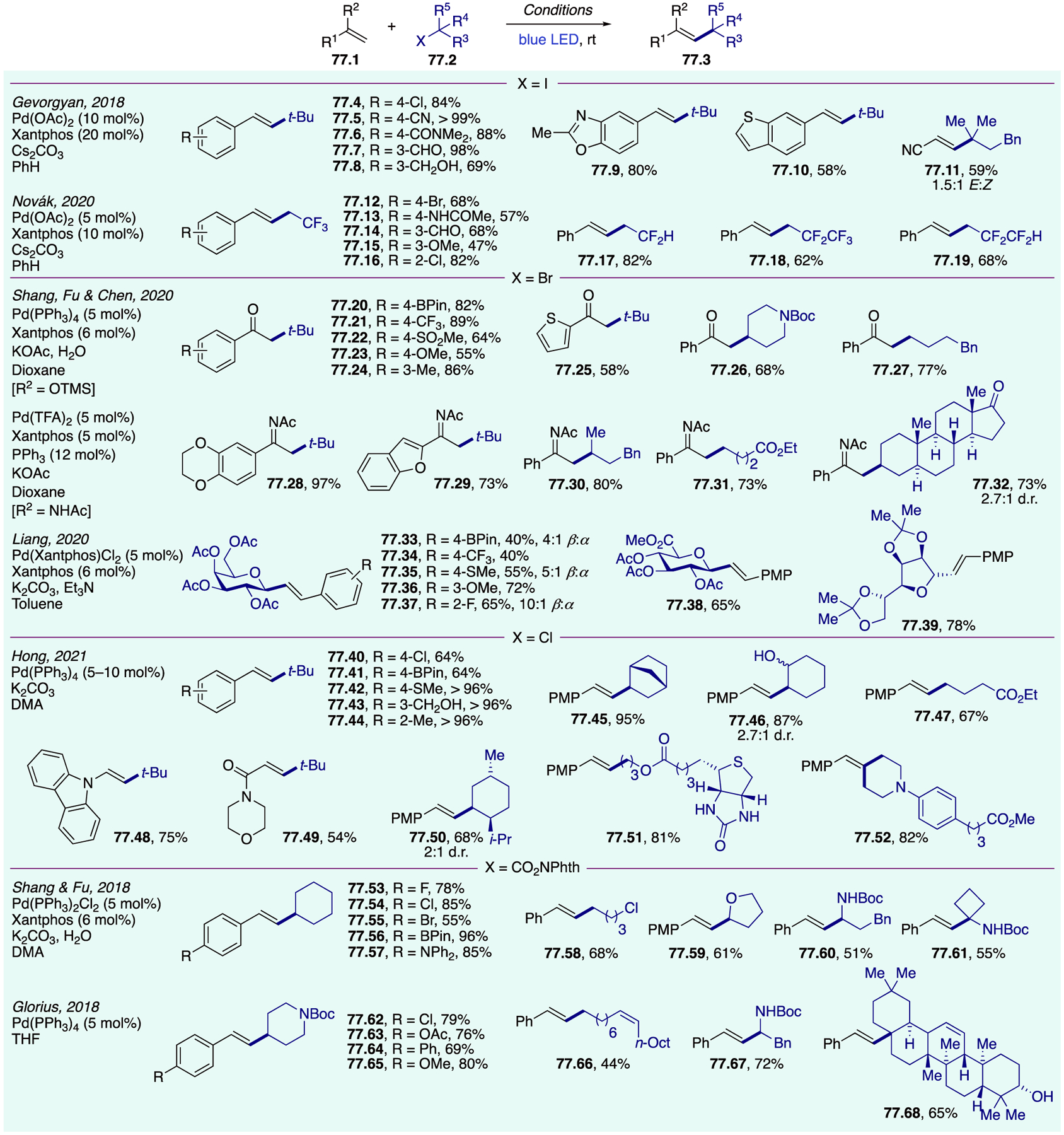
Scheme 77.
Scheme 77.
Heck Reactions of Different Alkyl Electrophiles
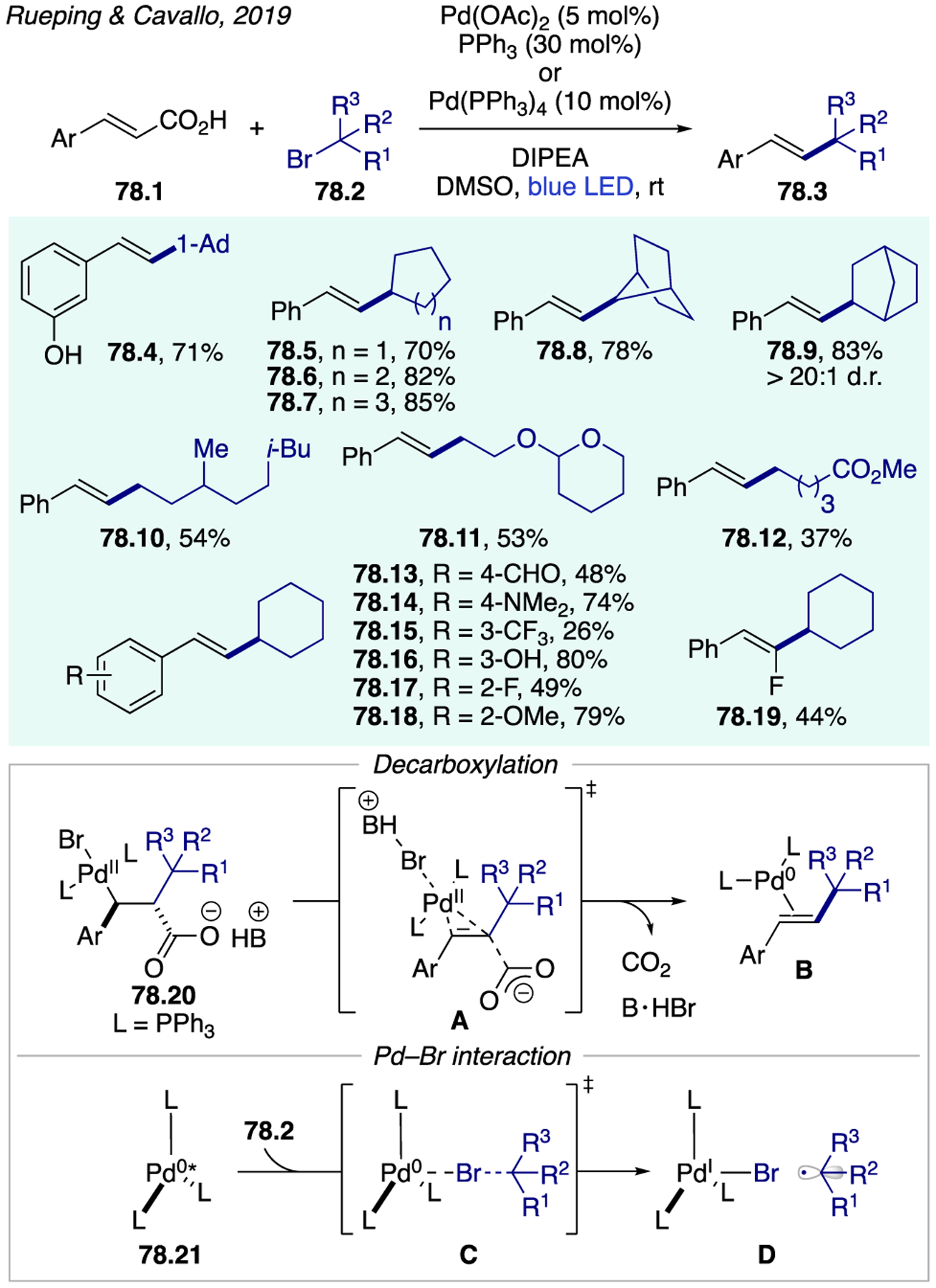
Scheme 78.
Scheme 78.
Decarboxylative Alkylation of α,β-Unsaturated Carboxylic Acids
Scheme 79.
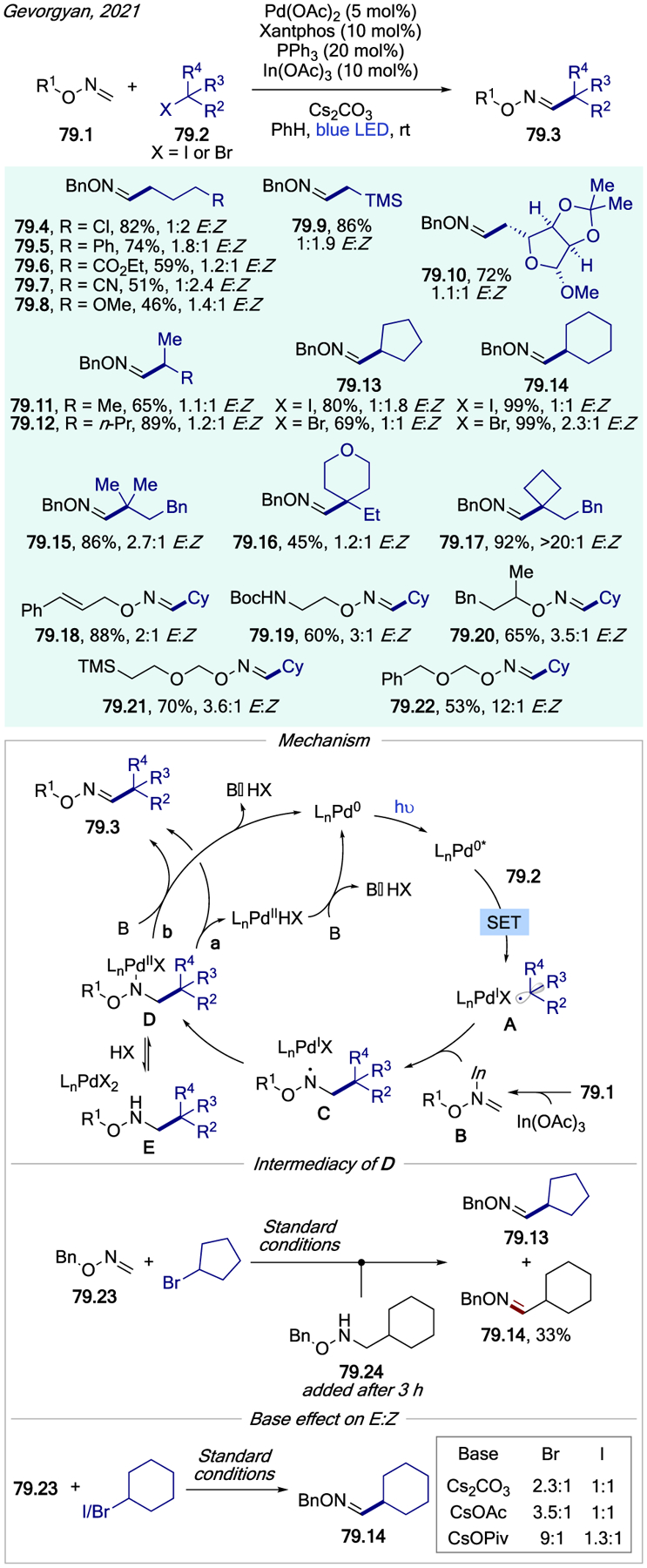
Scheme 79.
Heck-type Reaction of Oximes
Scheme 80.
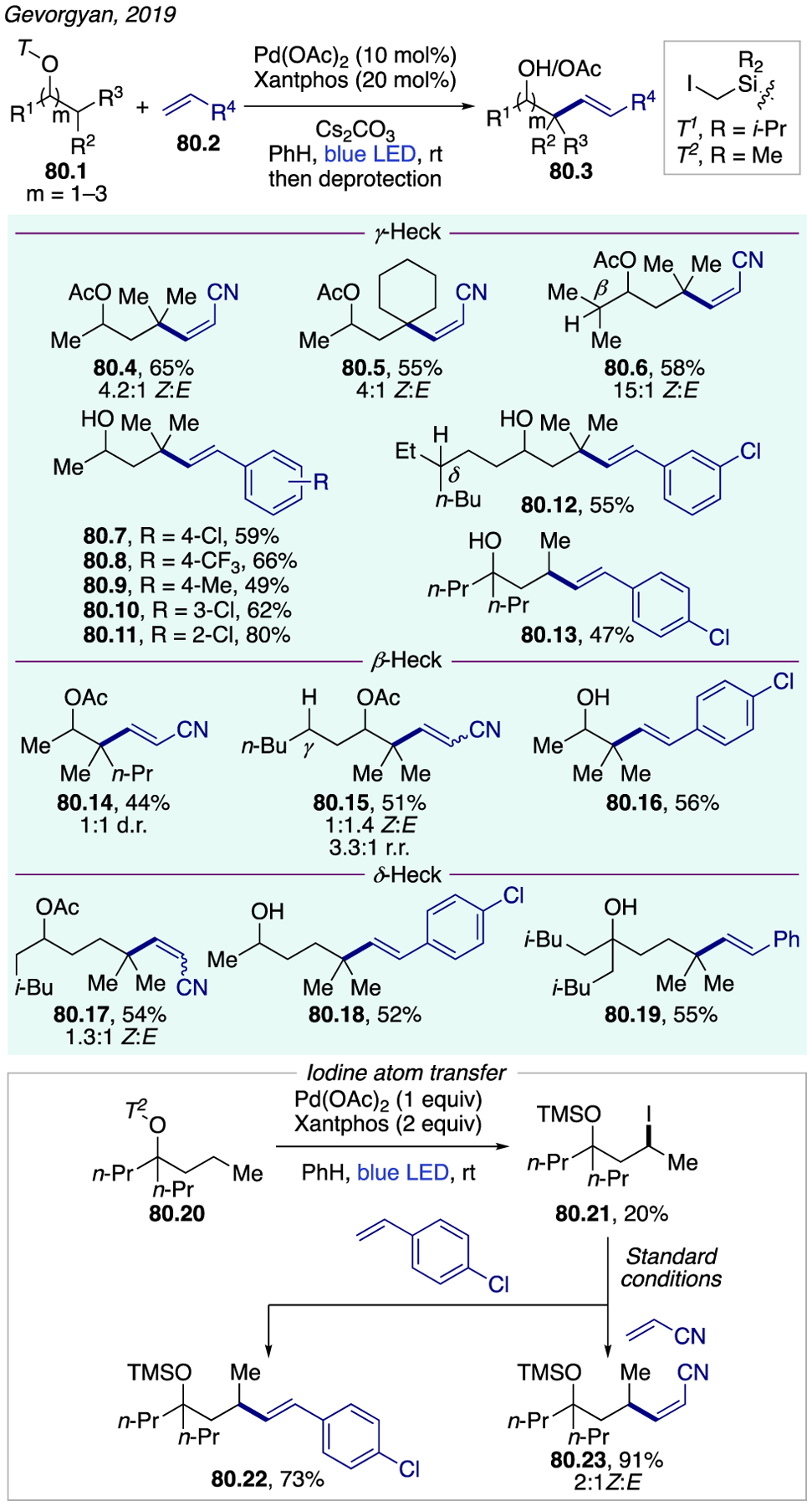
Scheme 80.
Radical Relay Heck Reaction of Aliphatic Alcohols
Scheme 81.
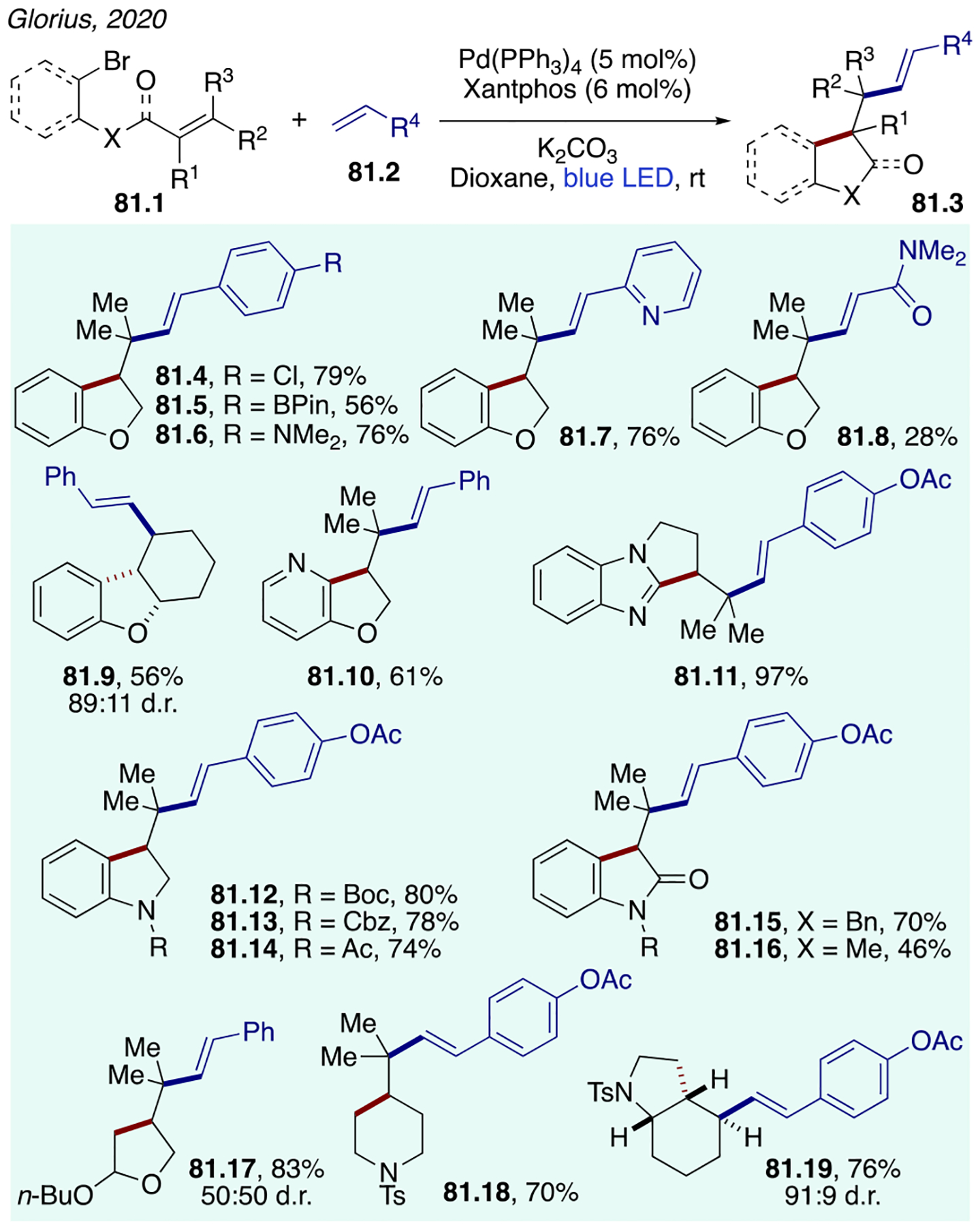
Scheme 81.
Quaternary Carbon Synthesis via Cascade Cyclization/Heck Reaction
Scheme 82.
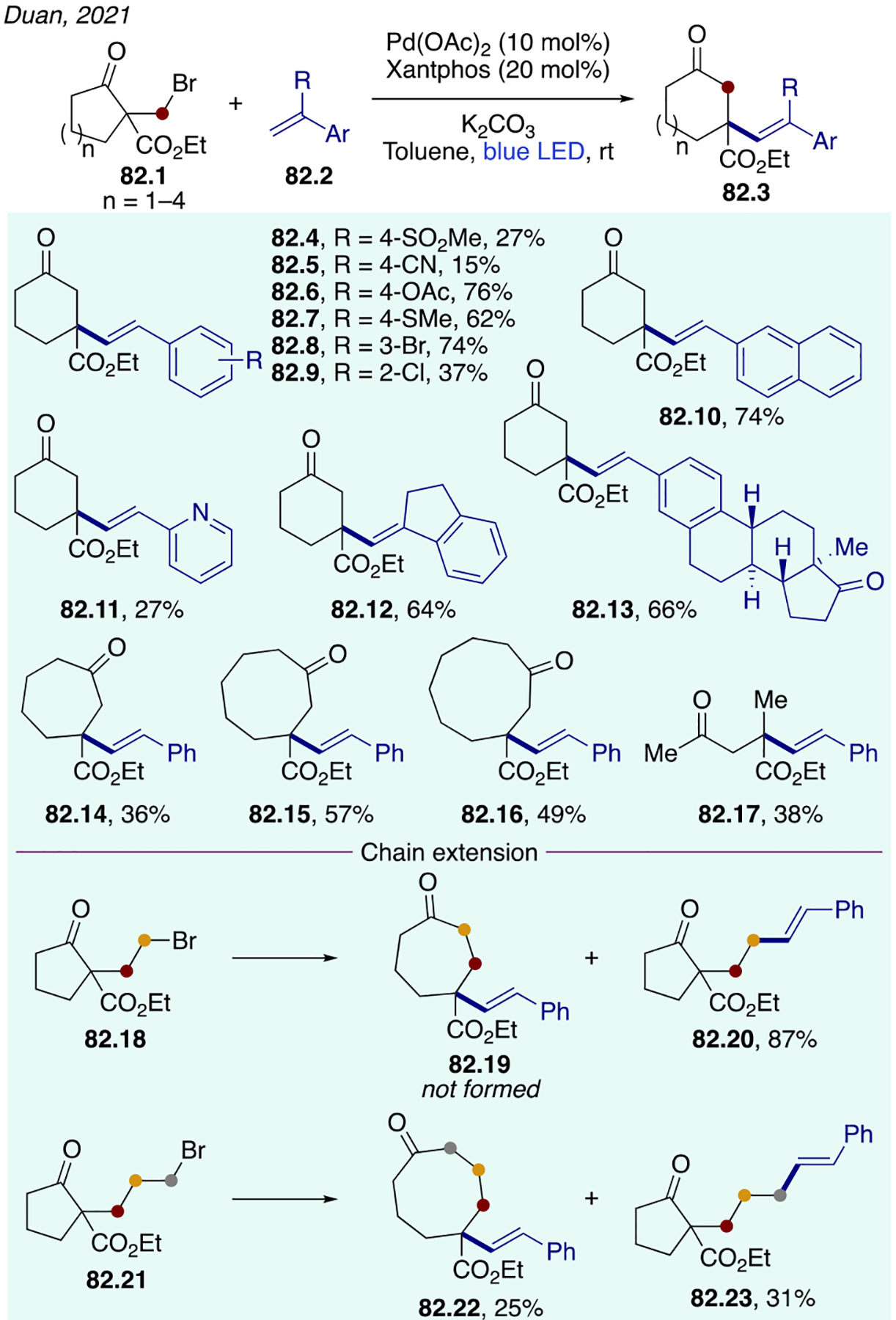
Scheme 82.
Dowd–Beckwith Ring Expansion/Heck Reaction Cascade
Scheme 83.
Scheme 83.
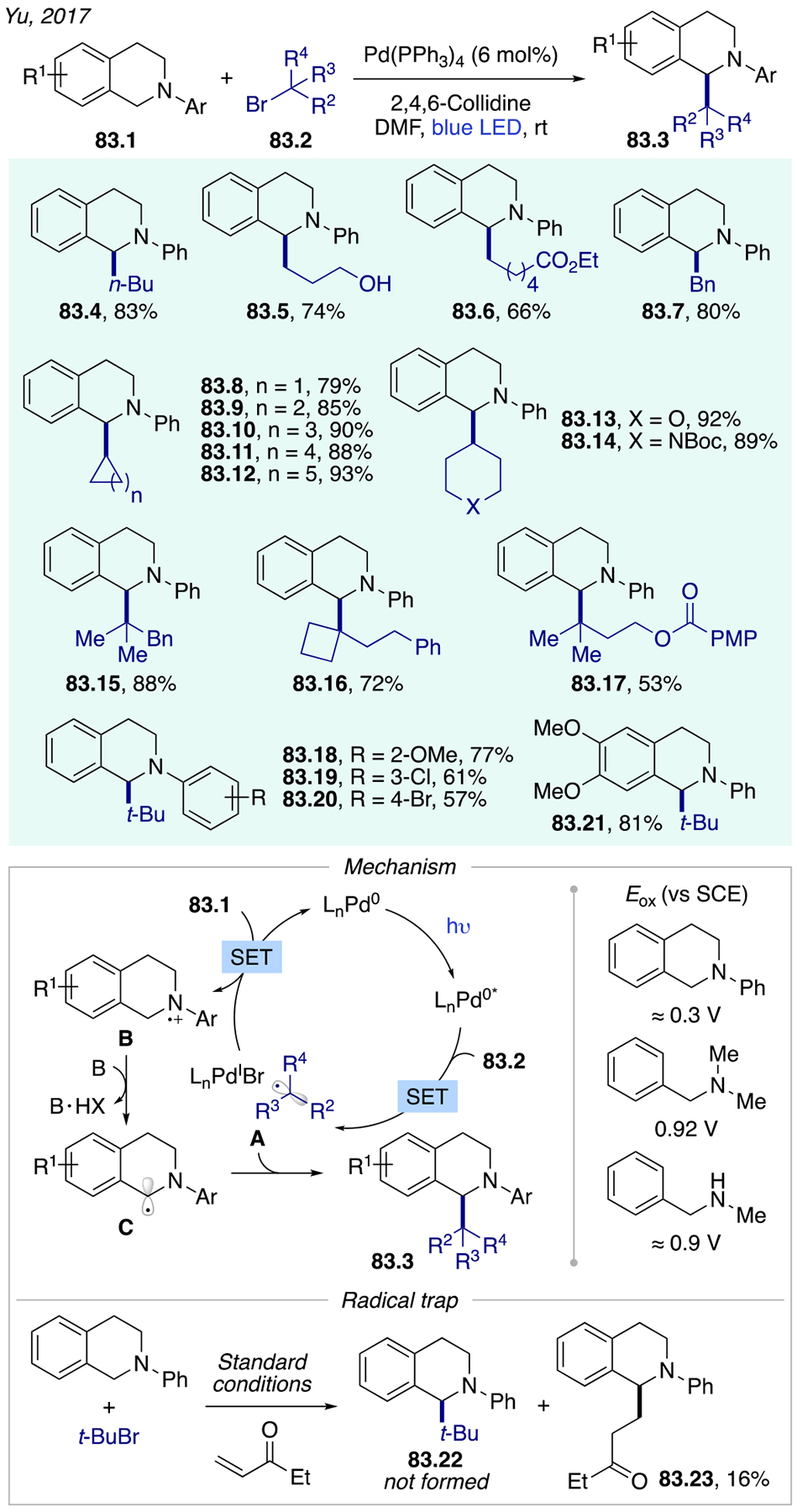
Alkylation of N-Aryl THIQ Derivatives
Scheme 84.
Scheme 84.
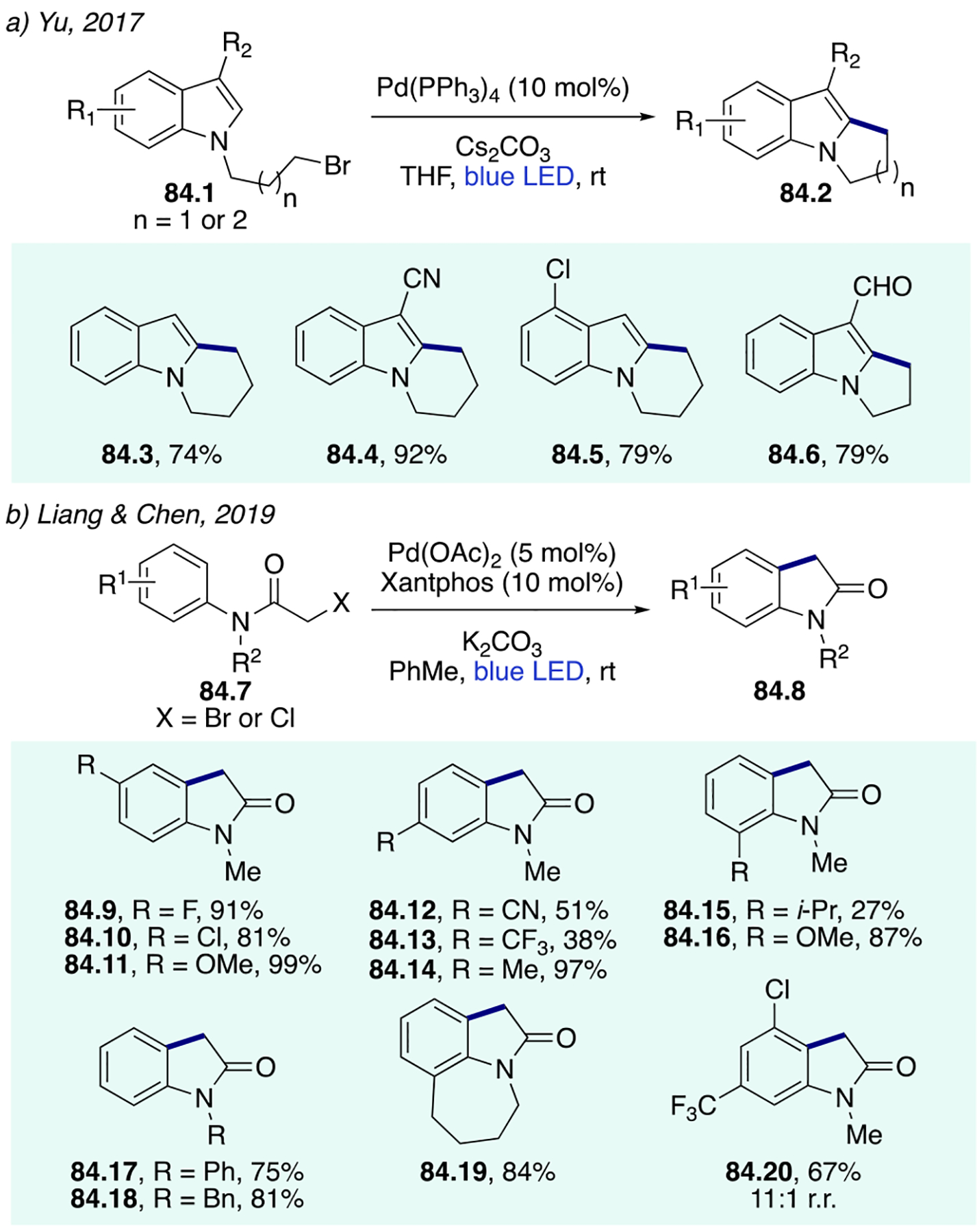
Intramolecular Alkylation en Route to (a) N-Fused Indoles and (b) Oxindoles
Scheme 85.
Scheme 85.
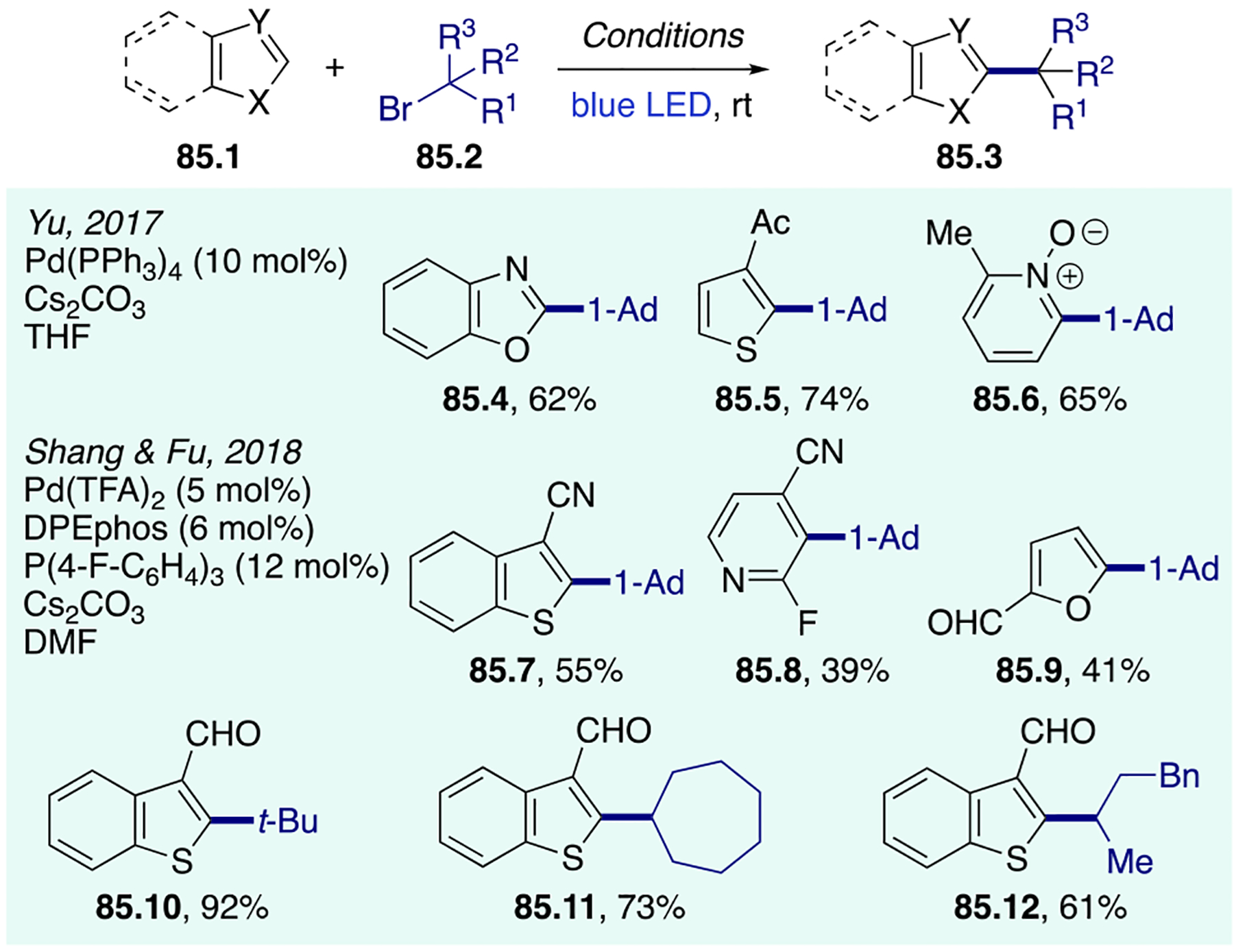
Intermolecular Alkylation of Electron-Deficient Heterocycles
Scheme 86.
Scheme 86.
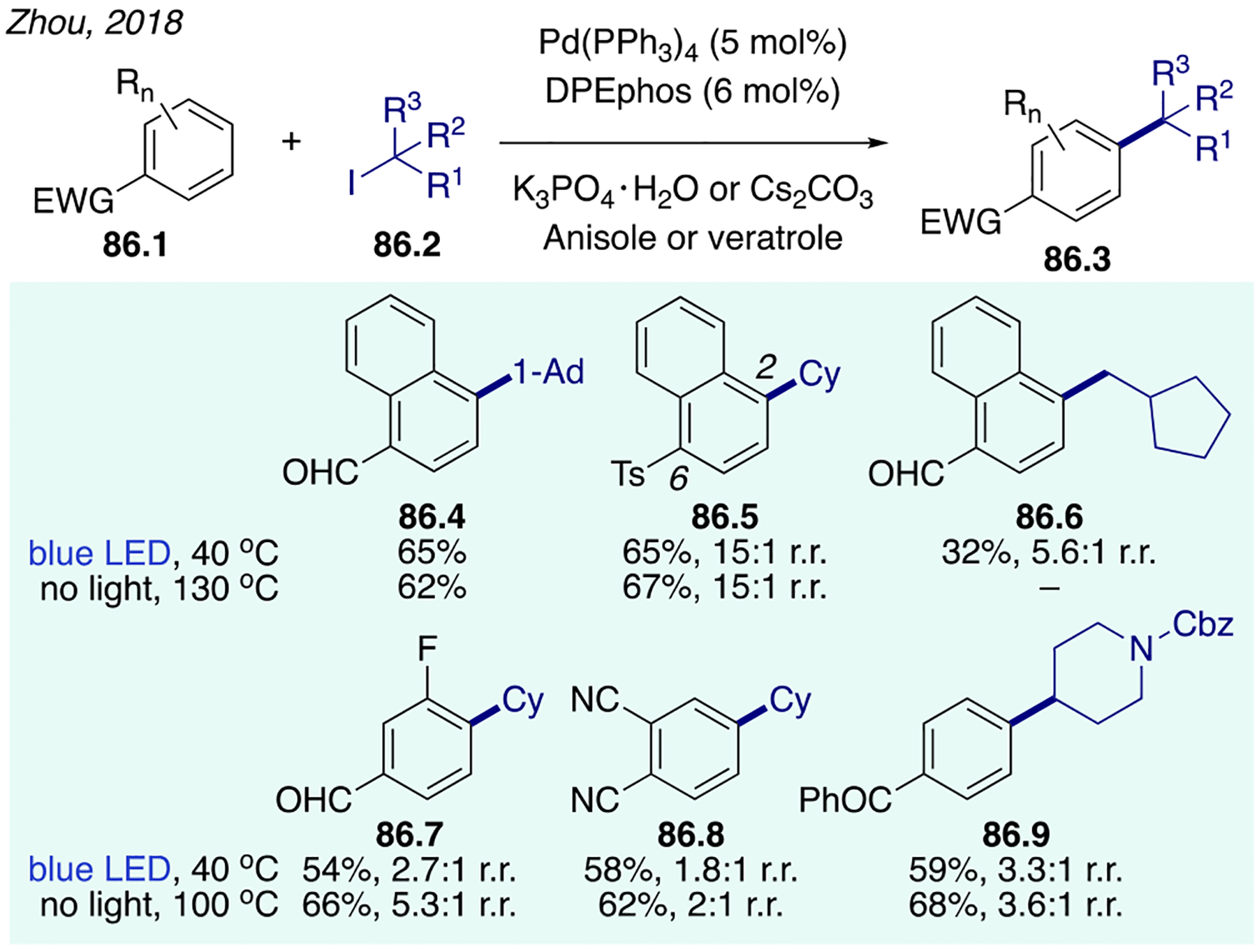
para-Selective Alkylation of Electron-Deficient Arenes
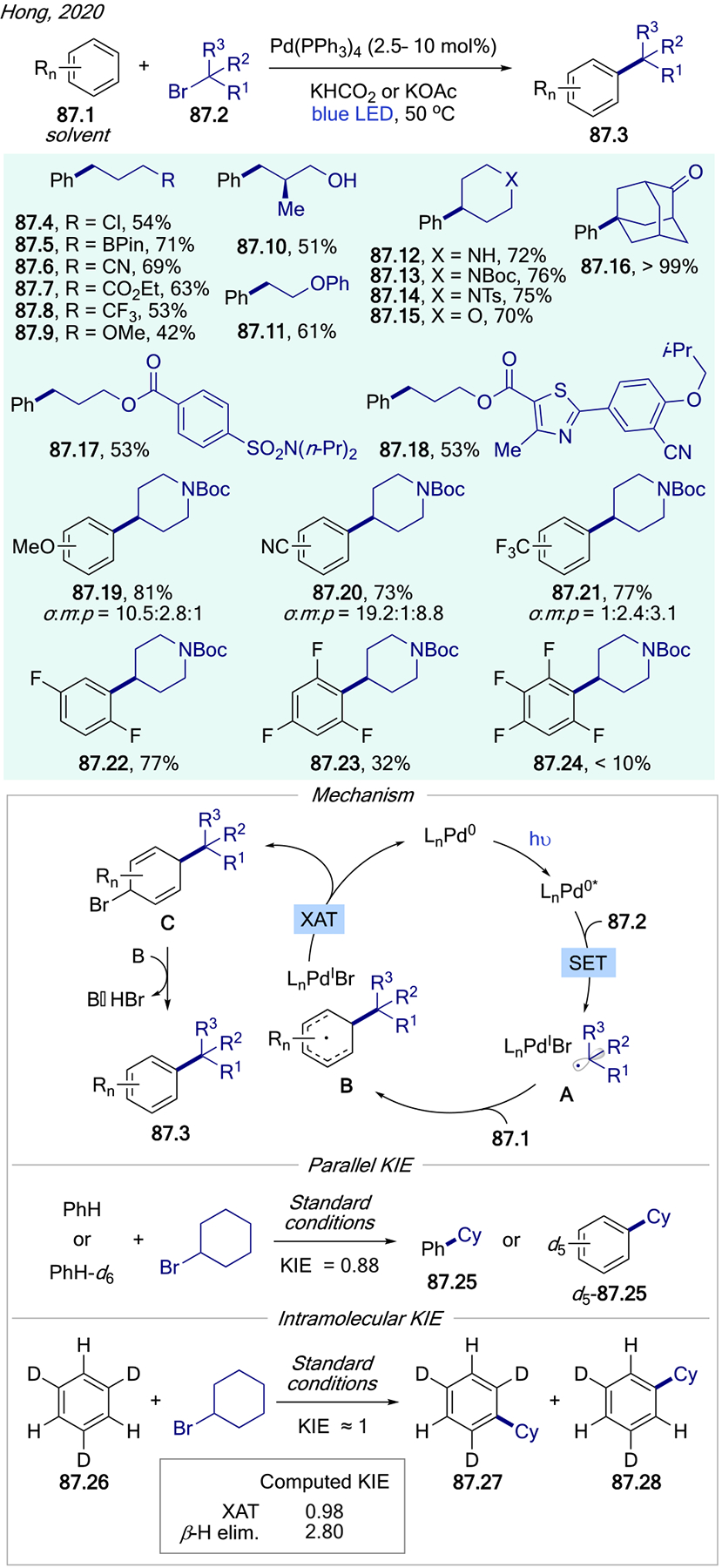
Scheme 87.
Scheme 87.
Intermolecular Alkylation of Unactivated Arenes
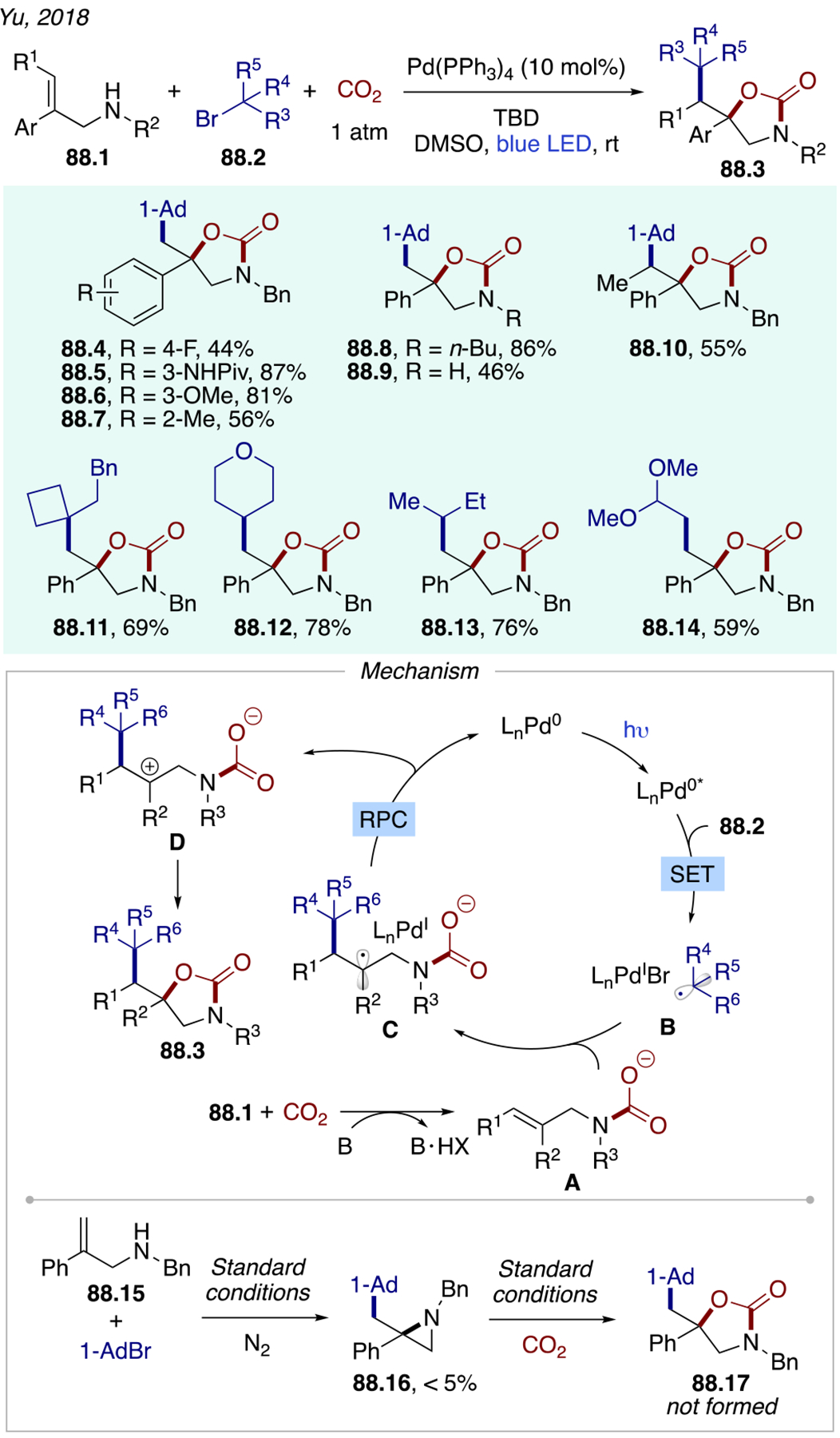
Scheme 88.
Scheme 88.
Oxyalkylation of Allylic Amines Leading to Five-Membered Cyclic Carbamates
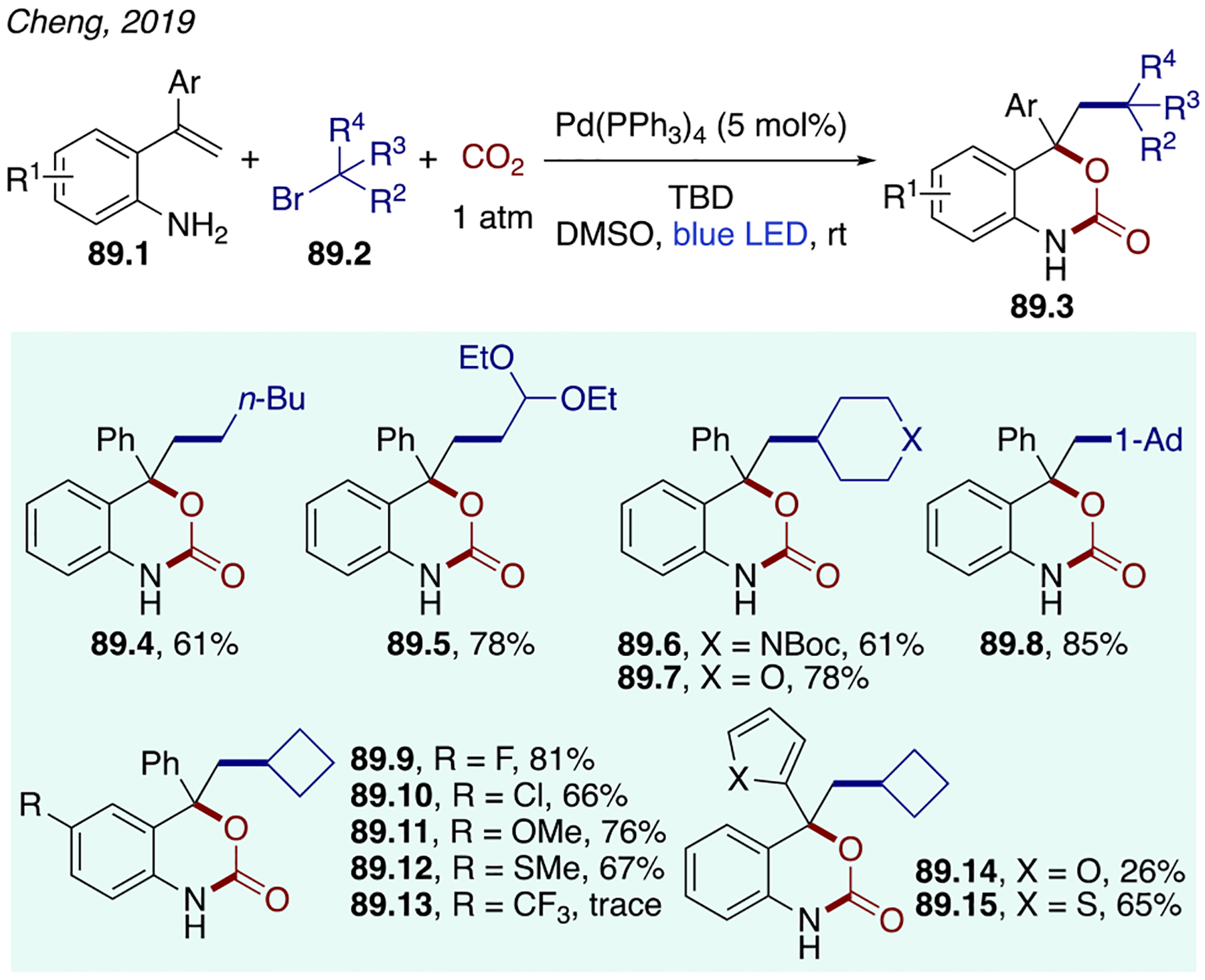
Scheme 89.
Scheme 89.
Synthesis of Six-Membered Cyclic Carbamates
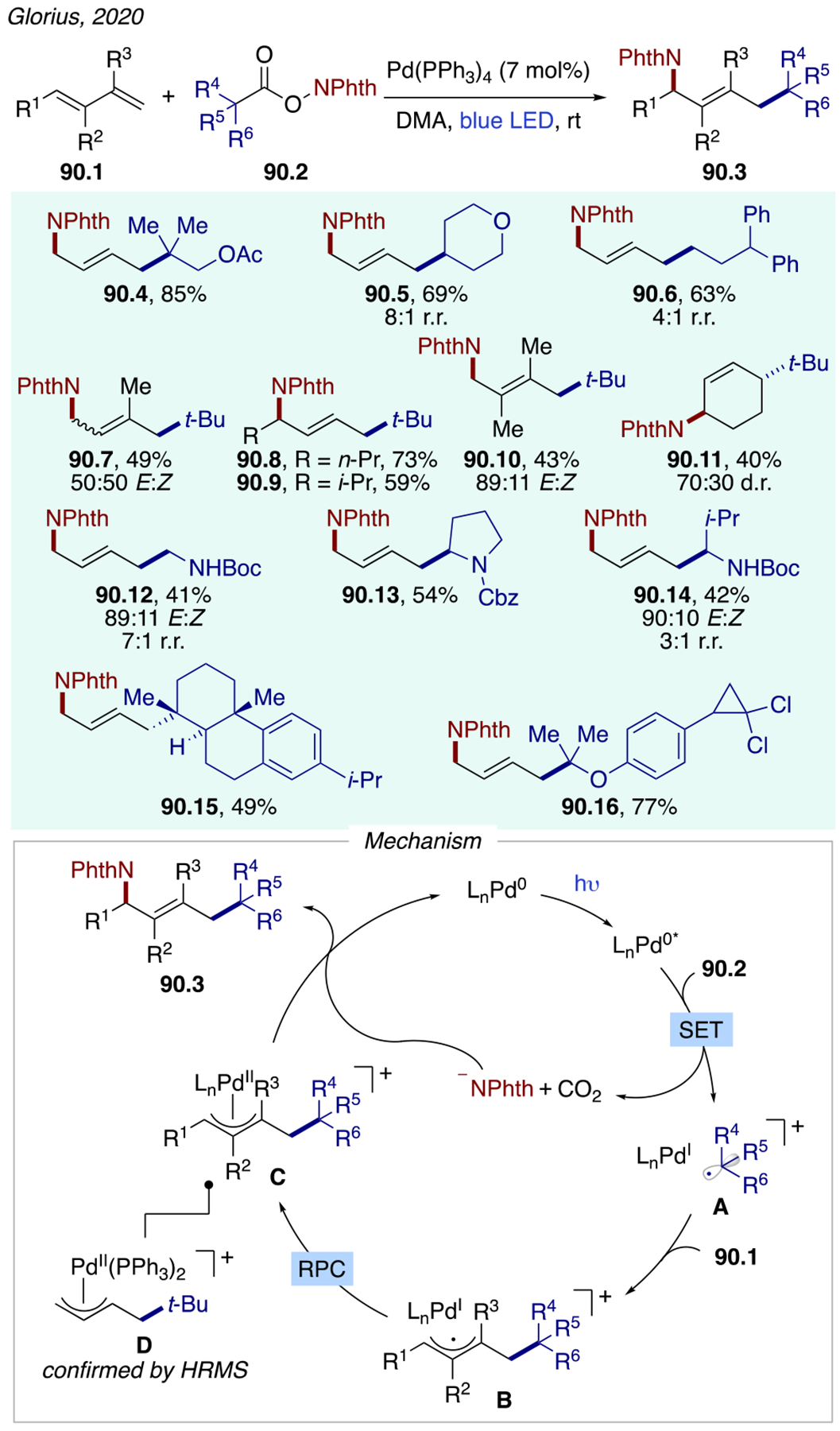
Scheme 90.
Scheme 90.
1,4-Aminoalkylation via Radical Generation of π-Allylpalladium
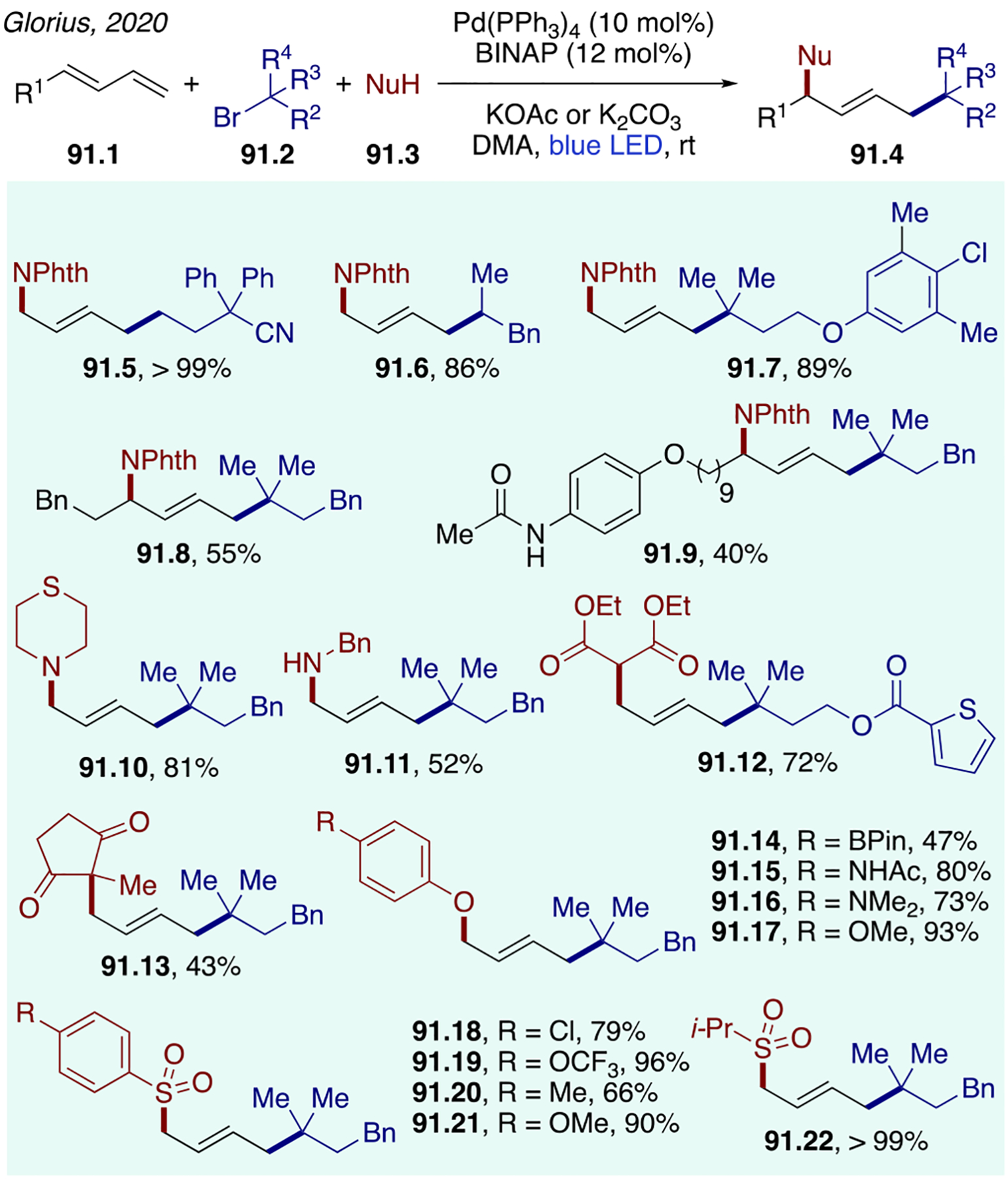
Scheme 91.
Scheme 91.
Three Component 1,4-Carbofunctionalization of Conjugated Dienes
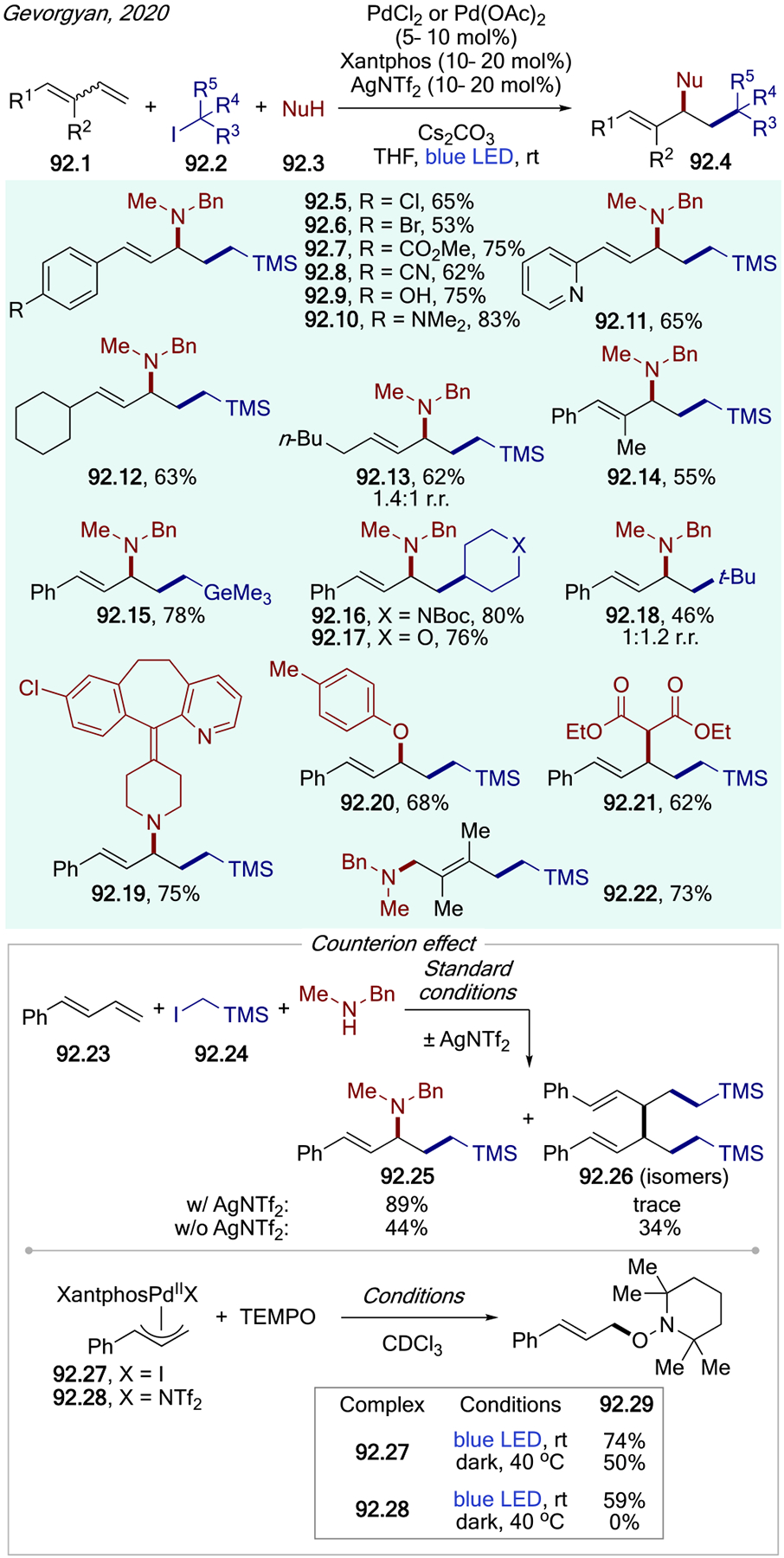
Scheme 92.
Scheme 92.
Three Component 1,2-Carbofunctionalization of Conjugated Dienes
Scheme 93.
Scheme 93.
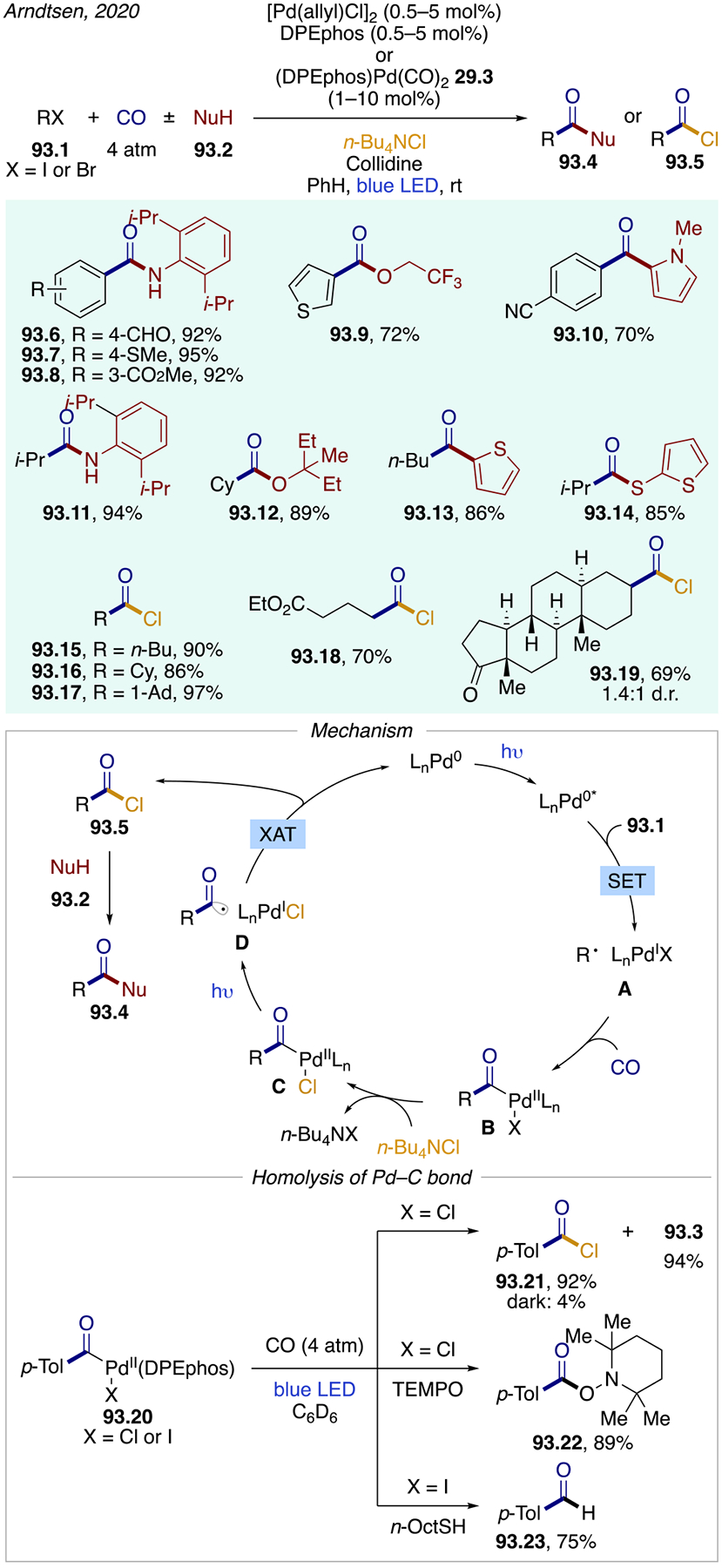
Carbonylative Transformation of Organic Halides Featuring a Dual Role of Visible Light
Scheme 94.
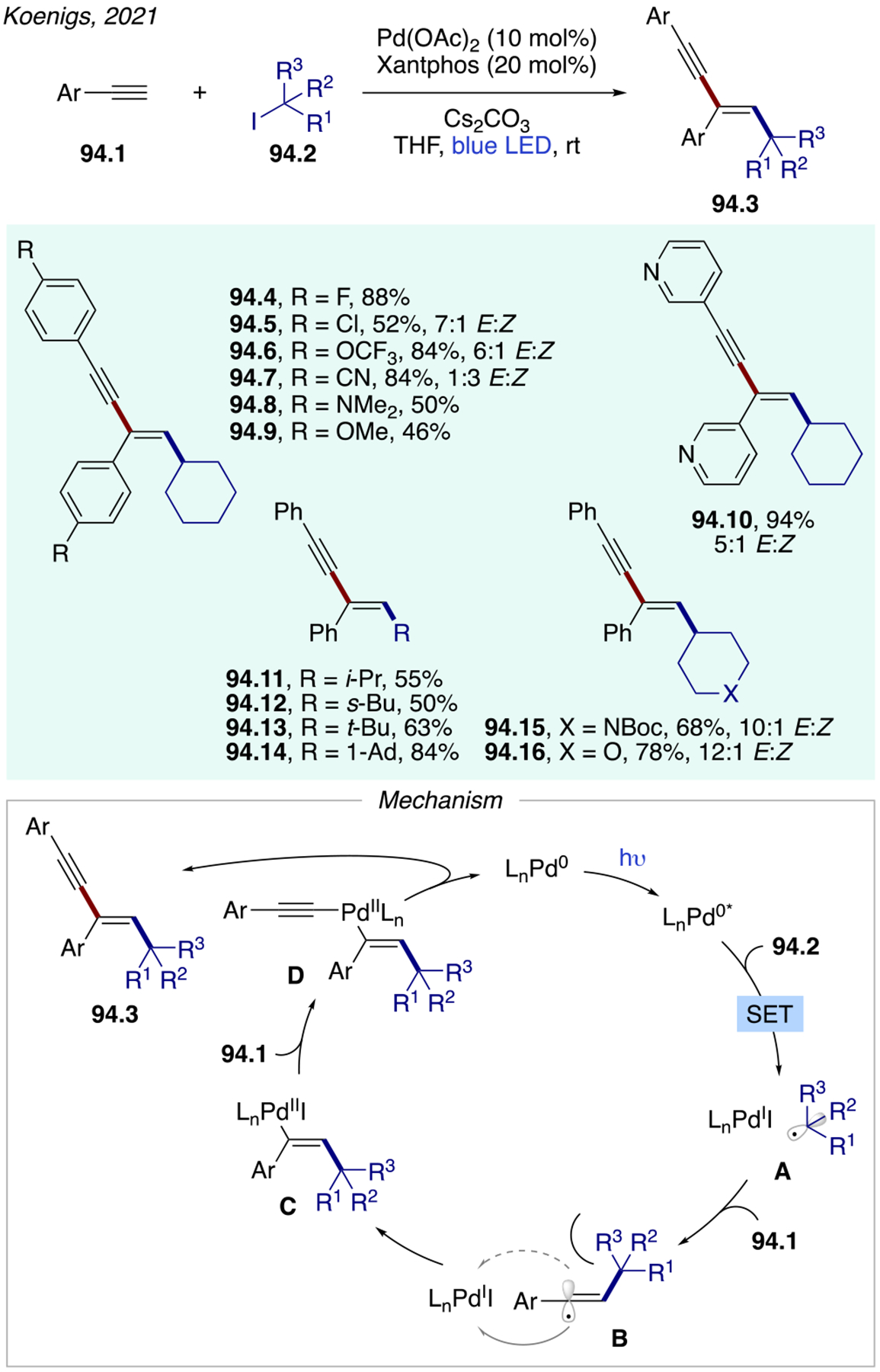
Scheme 94.
Dicarbofunctionalization of Terminal Alkynes
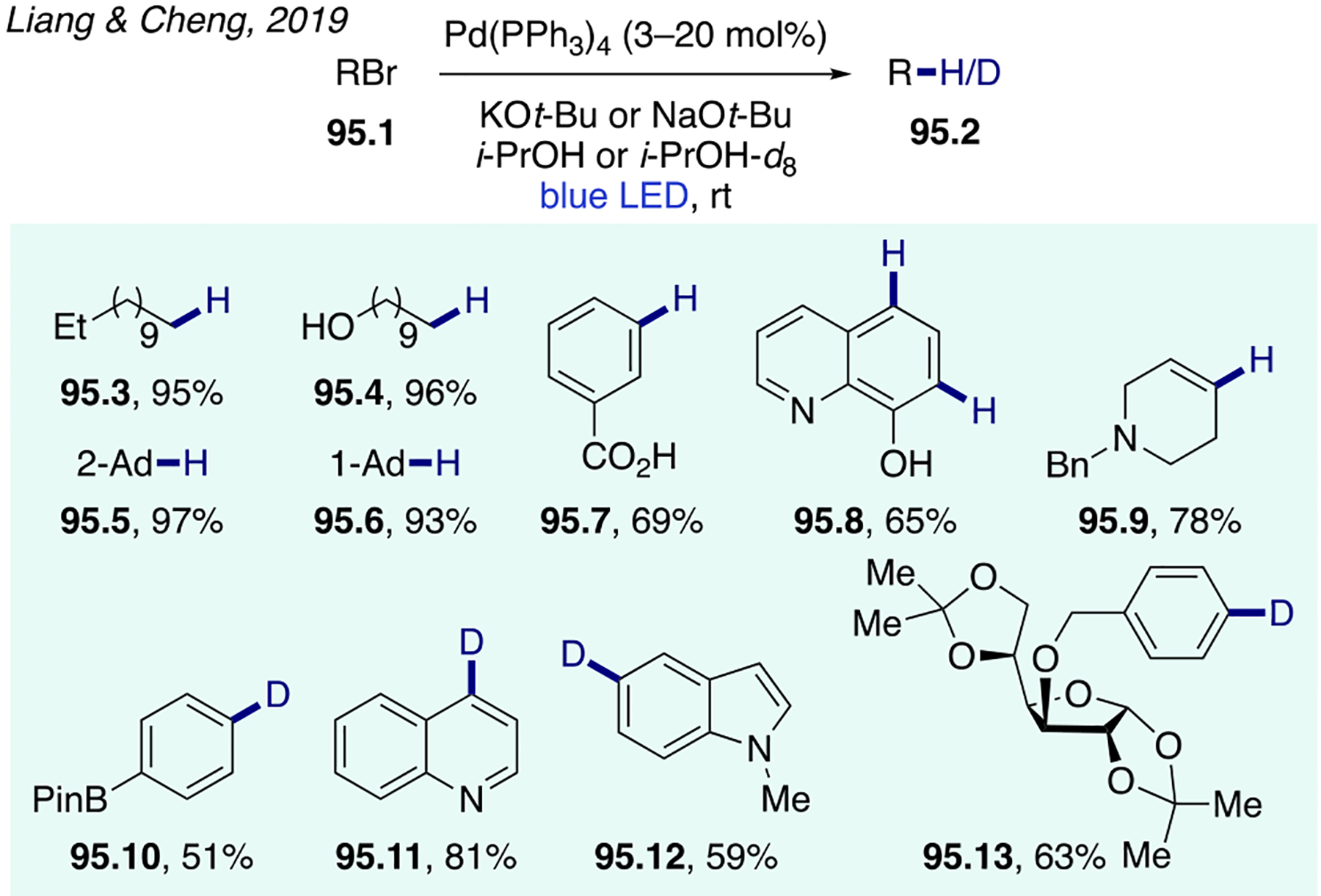
Scheme 95.
Scheme 95.
Reduction and Deuteration of Organic Halides
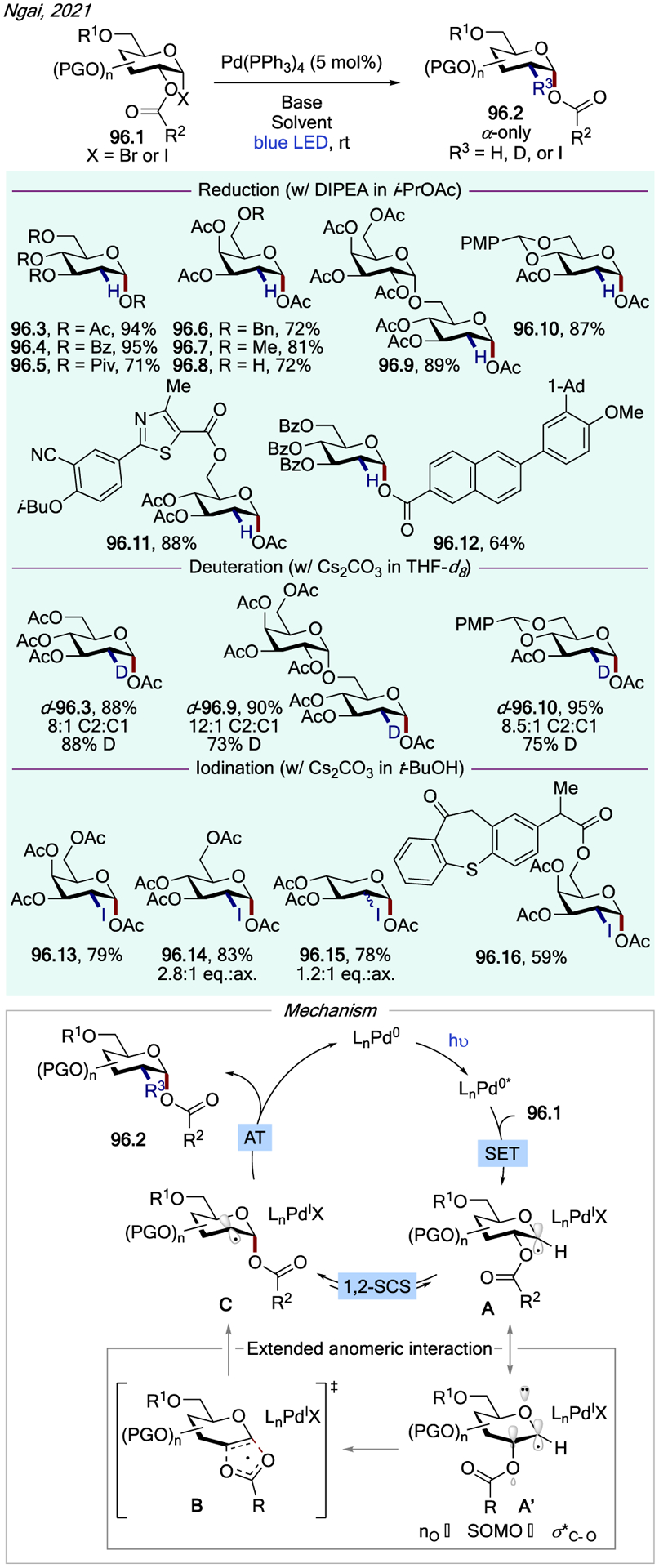
Scheme 96.
Scheme 96.
Selective C2 Reduction, Deuteration, and Iodination of Carbohydrates via 1,2-SCS
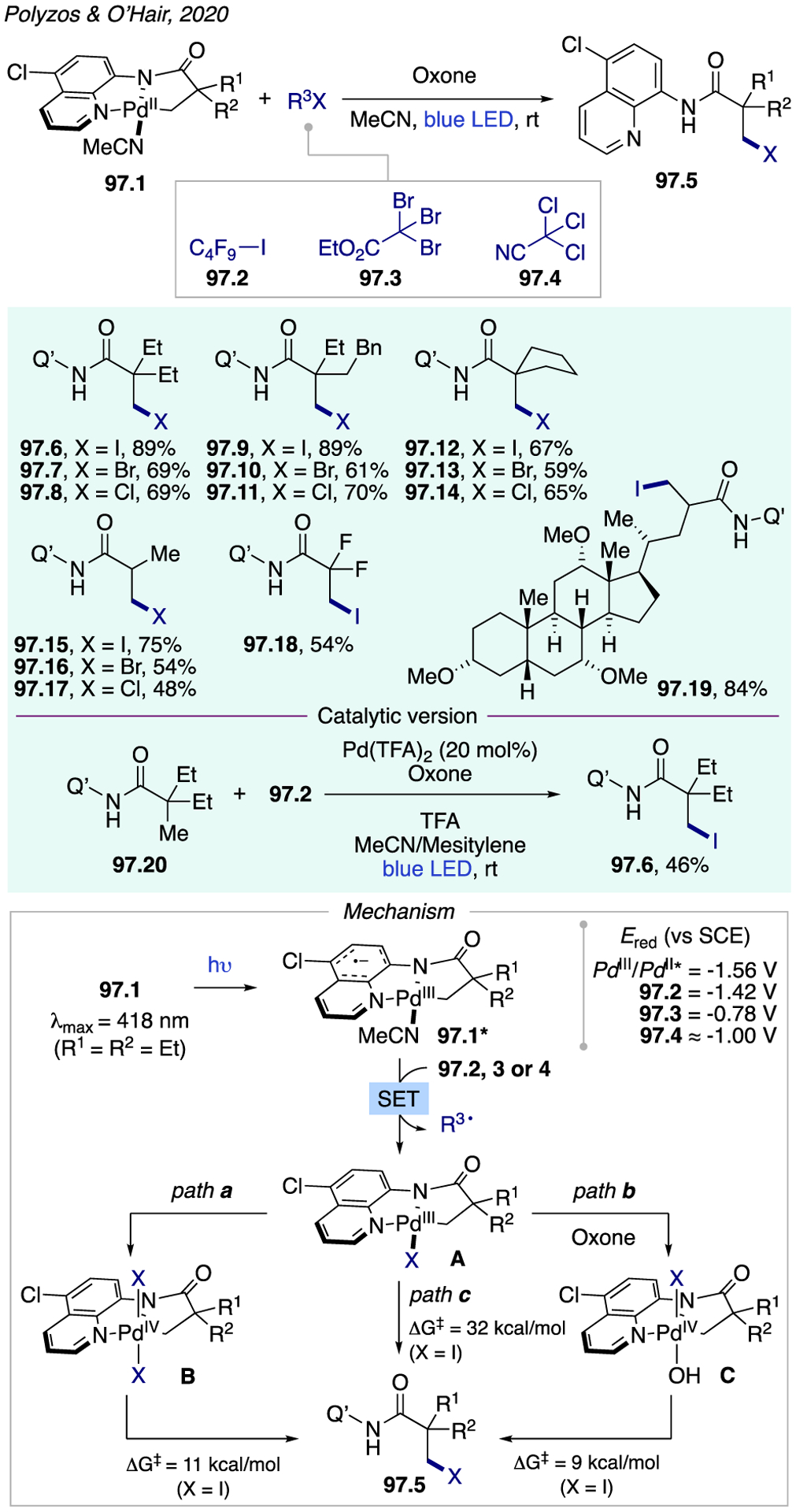
Scheme 97.
Scheme 97.
C(sp3)–H Halogenation of Pd(II) Auxiliaries
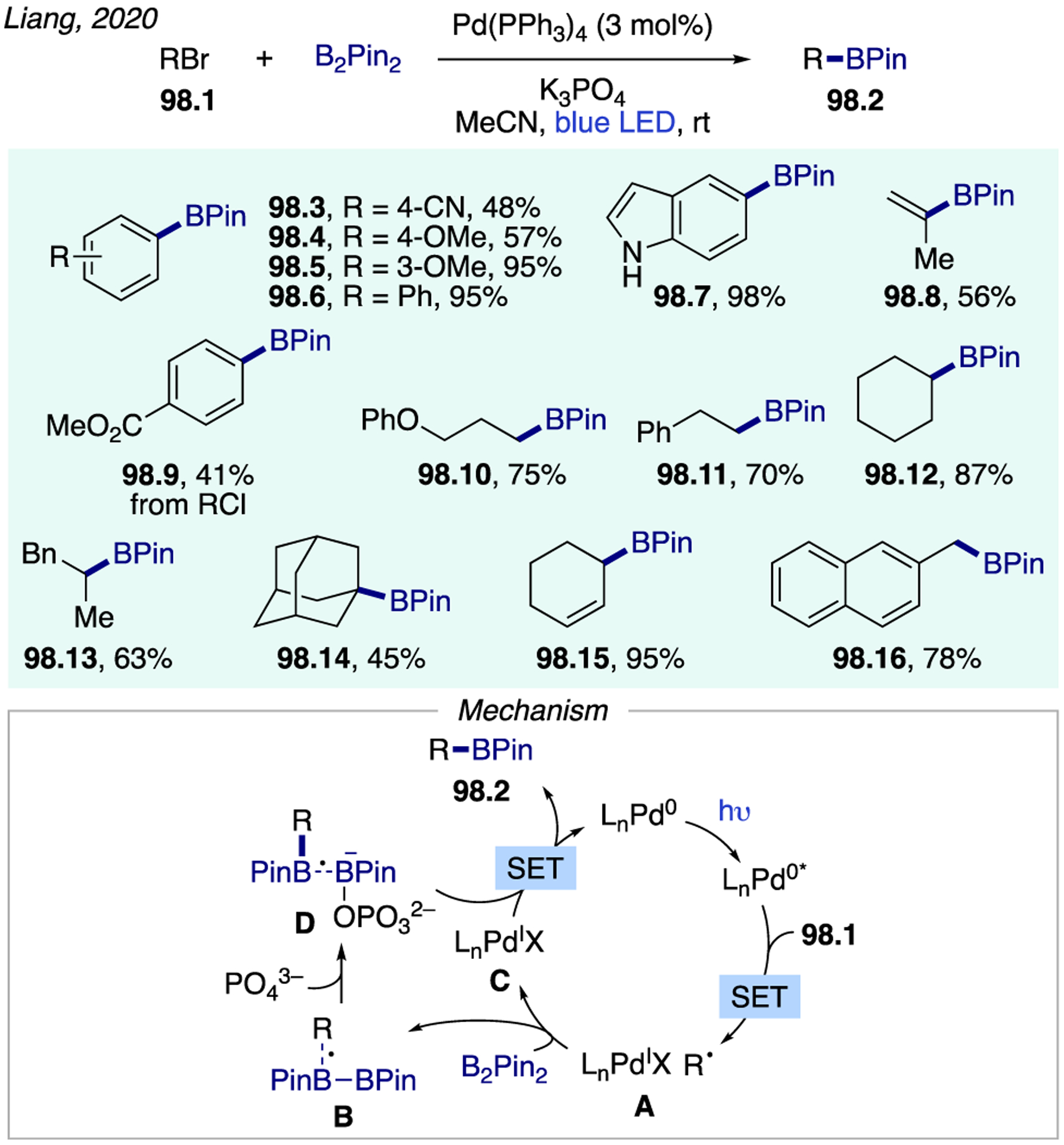
Scheme 98.
Scheme 98.
Borylation of Aryl, Vinyl, and Alkyl Bromides
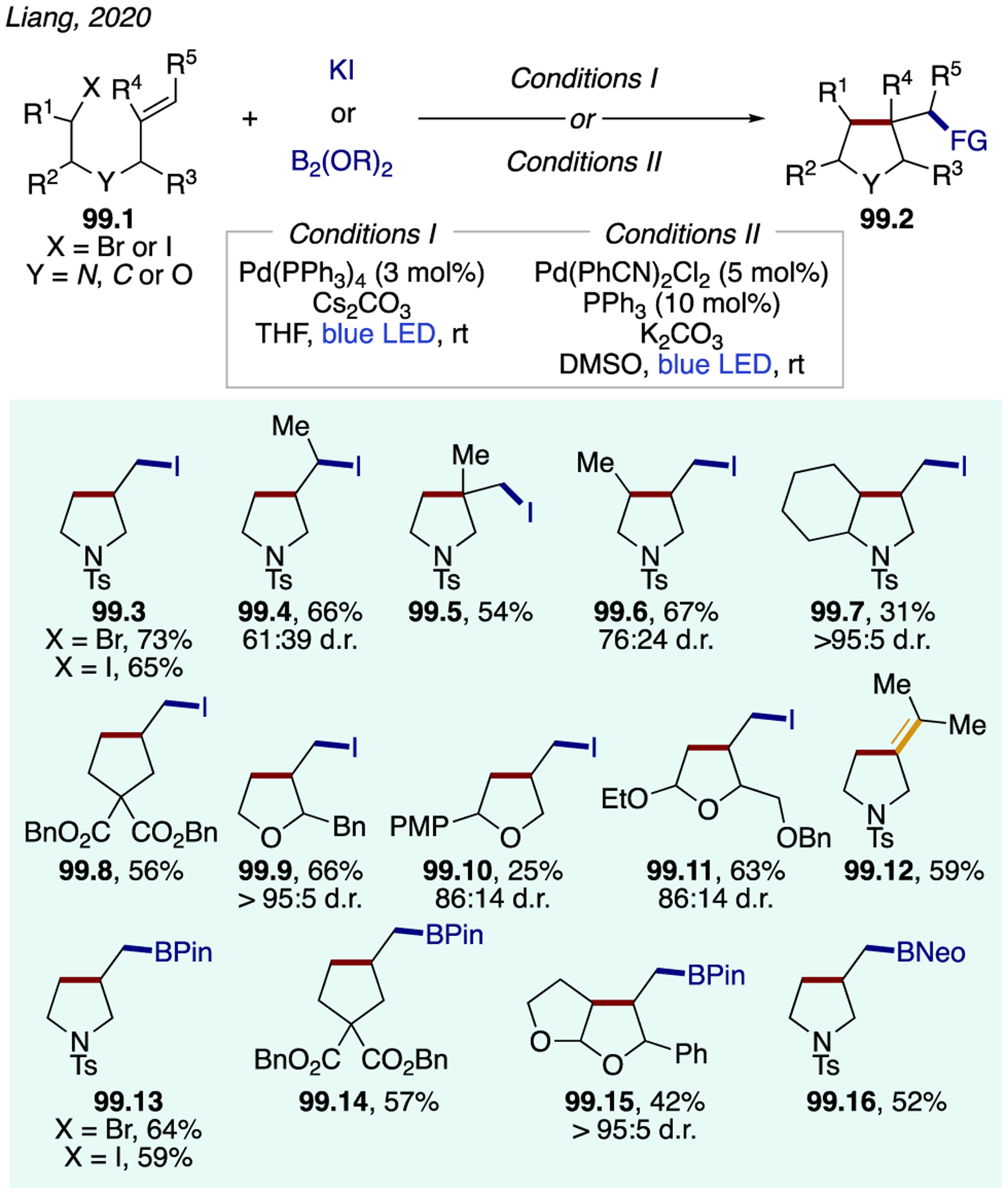
Scheme 99.
Scheme 99.
Cyclization/Functionalization Cascade of Alkene-Tethered Alkyl Halides
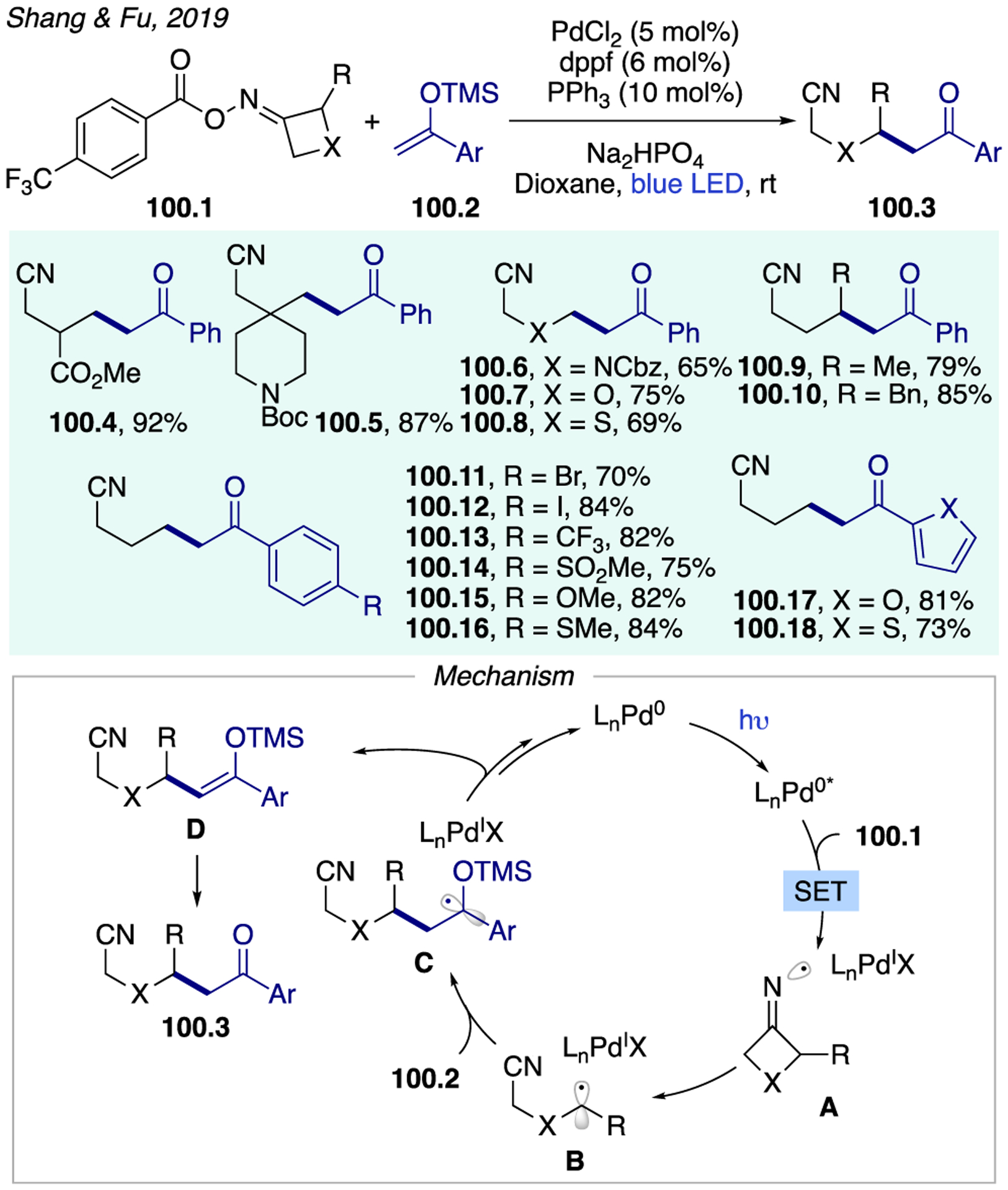
Scheme 100.
Scheme 100.
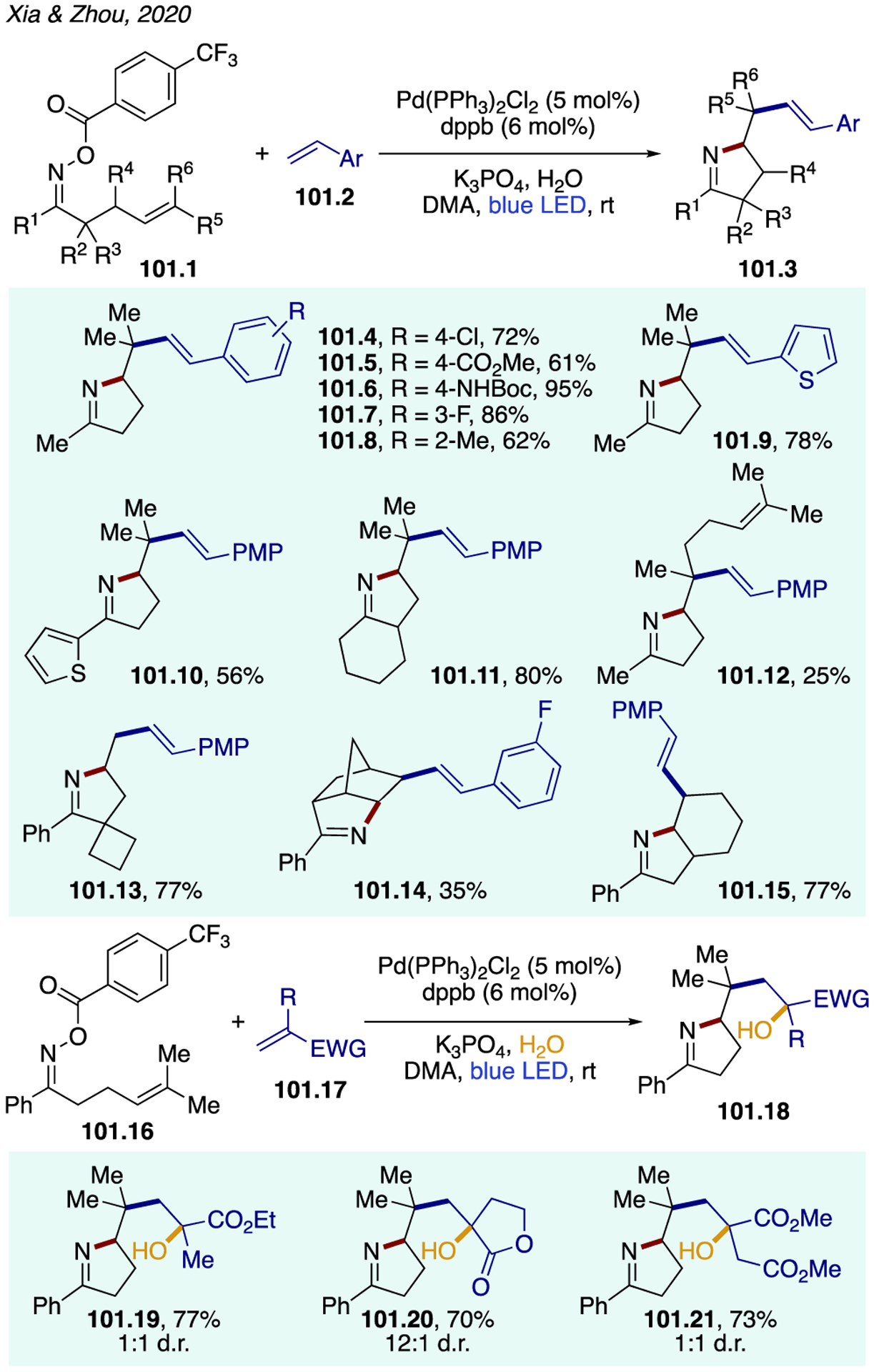
Cascade Ring Opening/Heck Reaction of Oxime Esters
Scheme 101.
Scheme 101.
Intermolecular Narasaka–Heck Reaction
Scheme 102.
Scheme 102.
Visible Light-Accelerated Oxidative Addition in Negishi Coupling
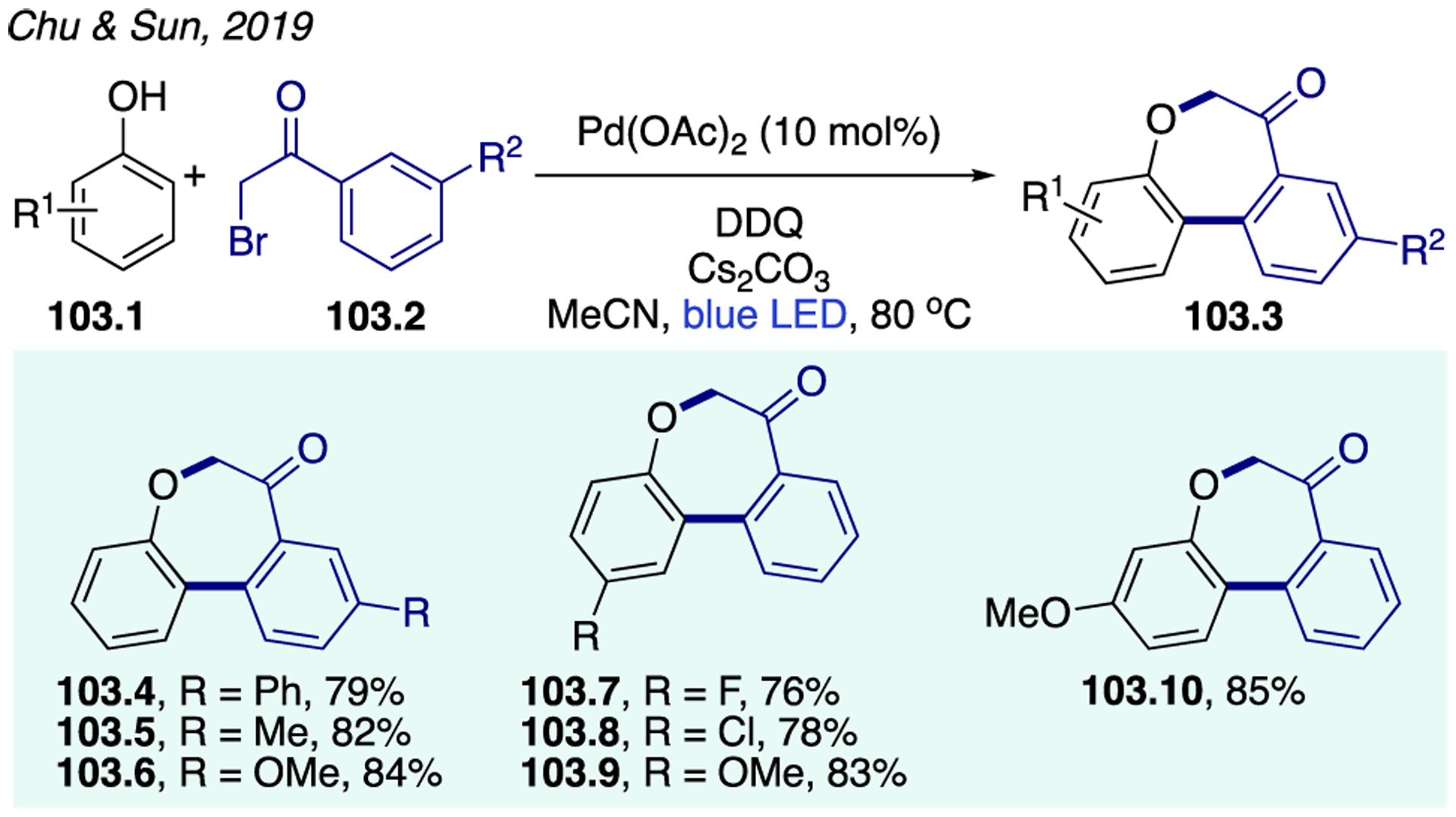
Scheme 103.
Scheme 103.
Cascade Etherification/Oxidative Cyclization
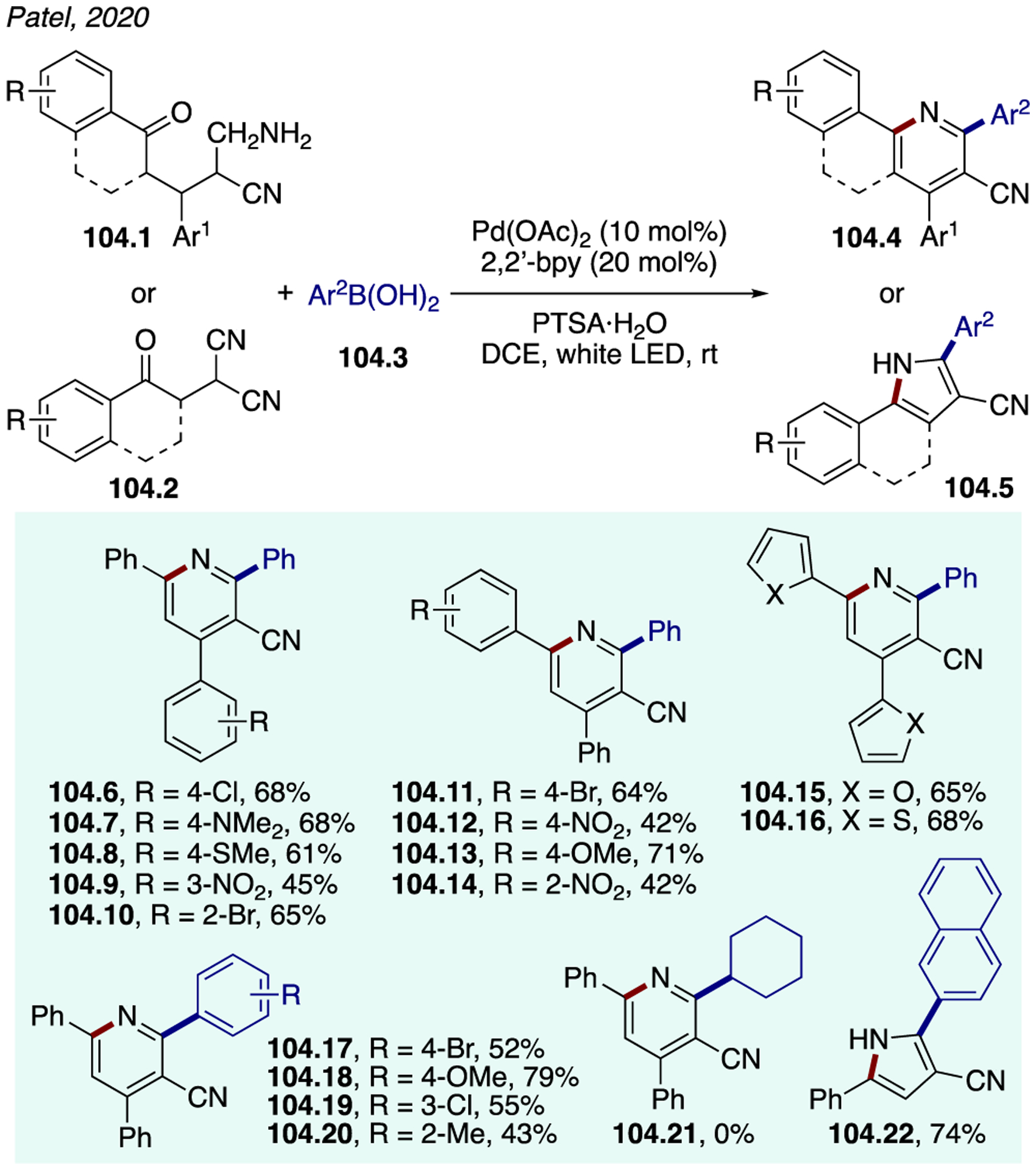
Scheme 104.
Scheme 104.
Visible Light-Accelerated Transmetalation with Arylboronic Acids
Scheme 105.
Scheme 105.
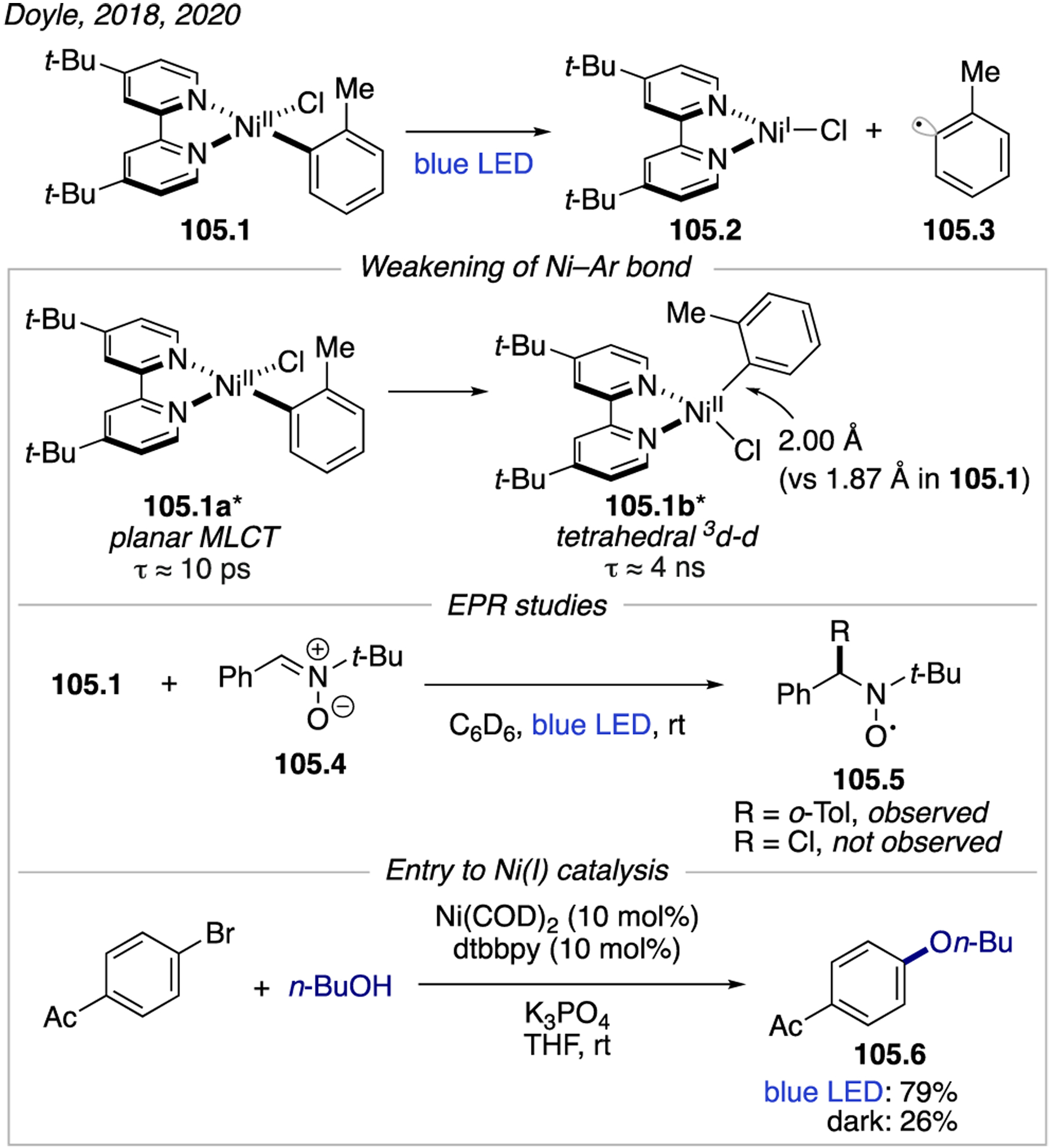
3d–d Excited State of Aryl Ni(II) Complexes and Photoinduced Homolysis of Ni–Ar Bond
Scheme 106.
Scheme 106.
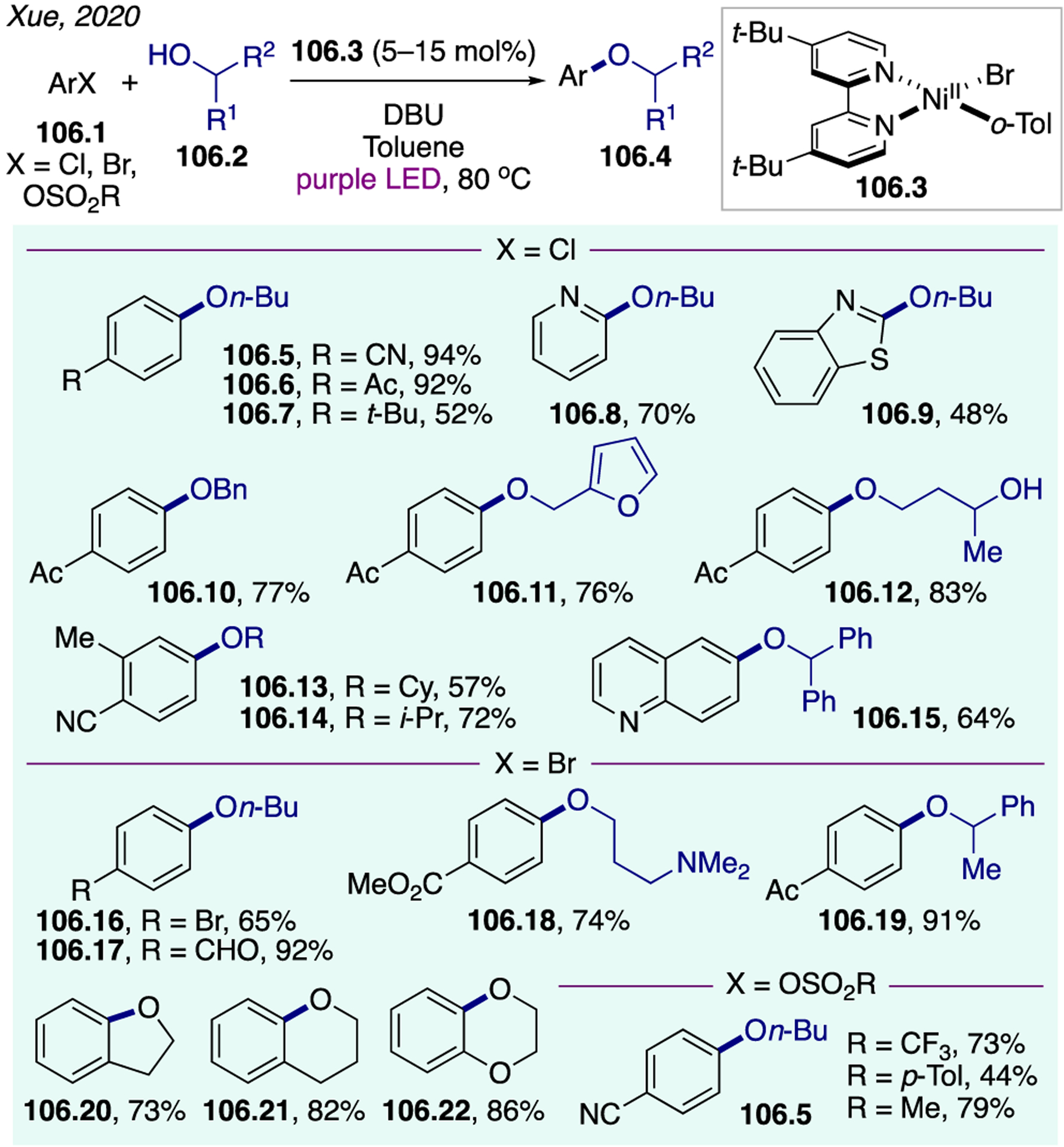
Cross-Coupling between Aryl Electrophiles and Aliphatic Alcohols
Scheme 107.
Scheme 107.
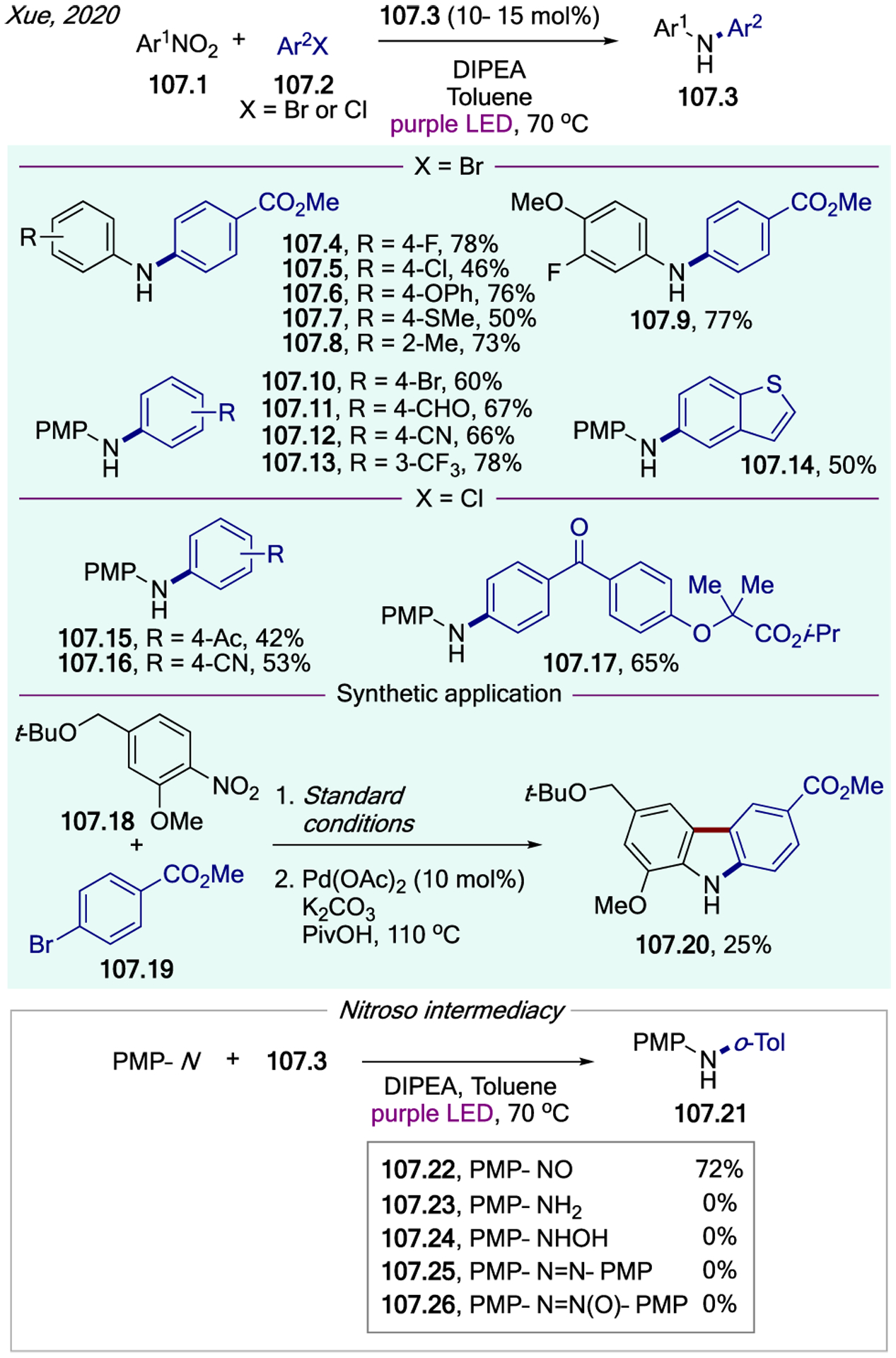
Cross-Coupling of Nitroarenes with Aryl Halides
Scheme 108.
Scheme 108.
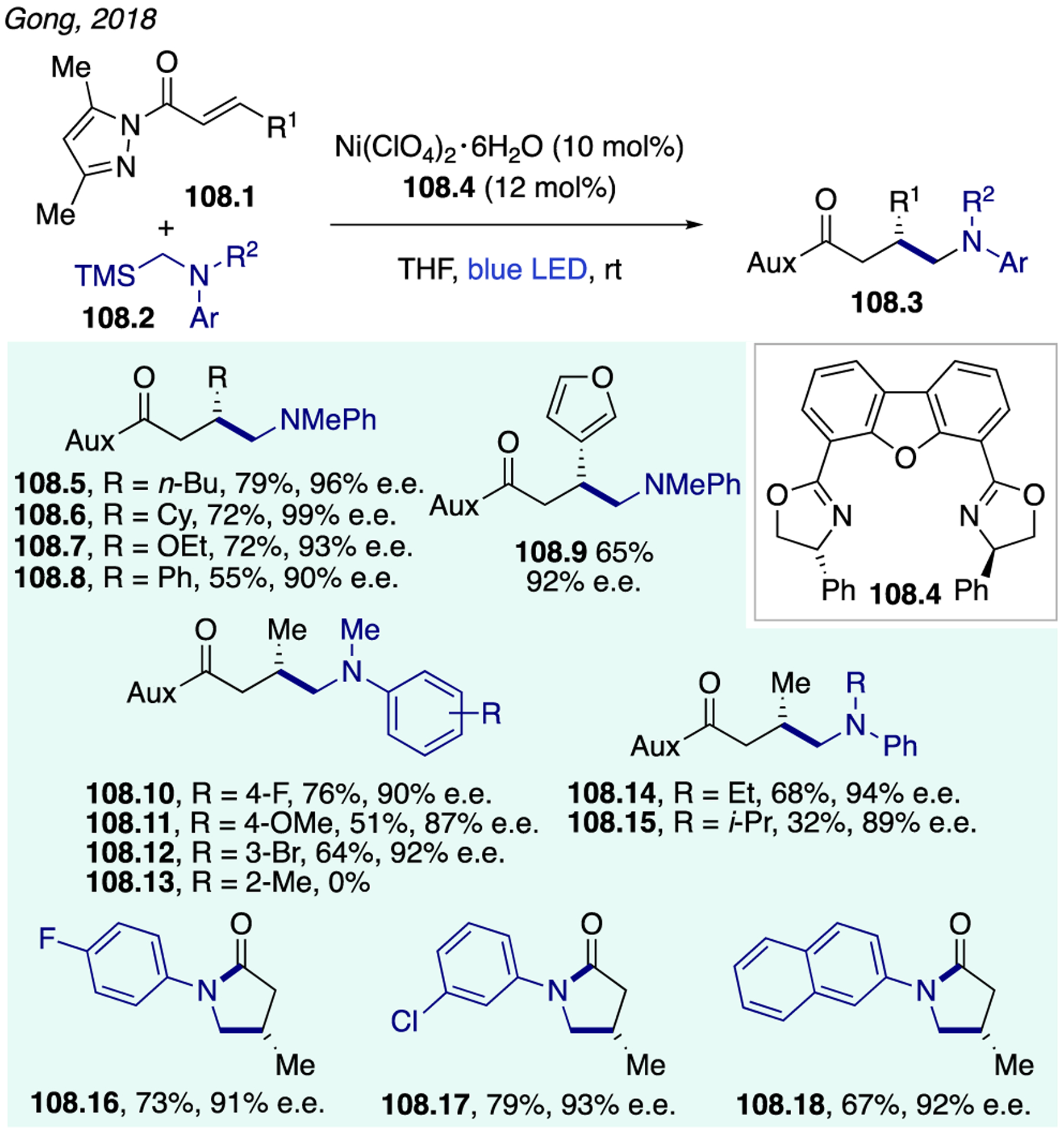
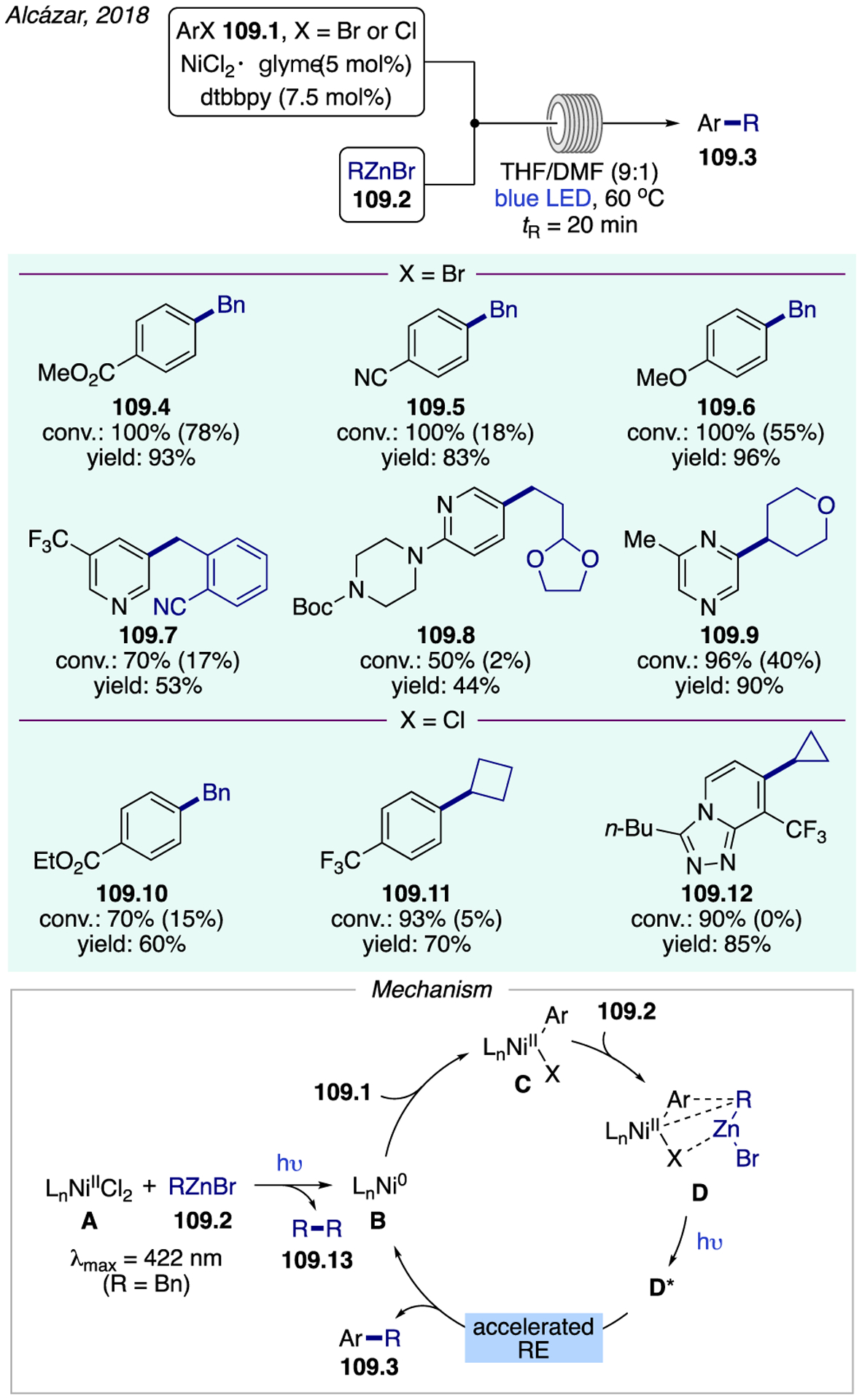
Asymmetric Aminomethylation of Enones
Scheme 109.
Scheme 109.
Visible Light-Accelerated Negishi Coupling
Scheme 110.
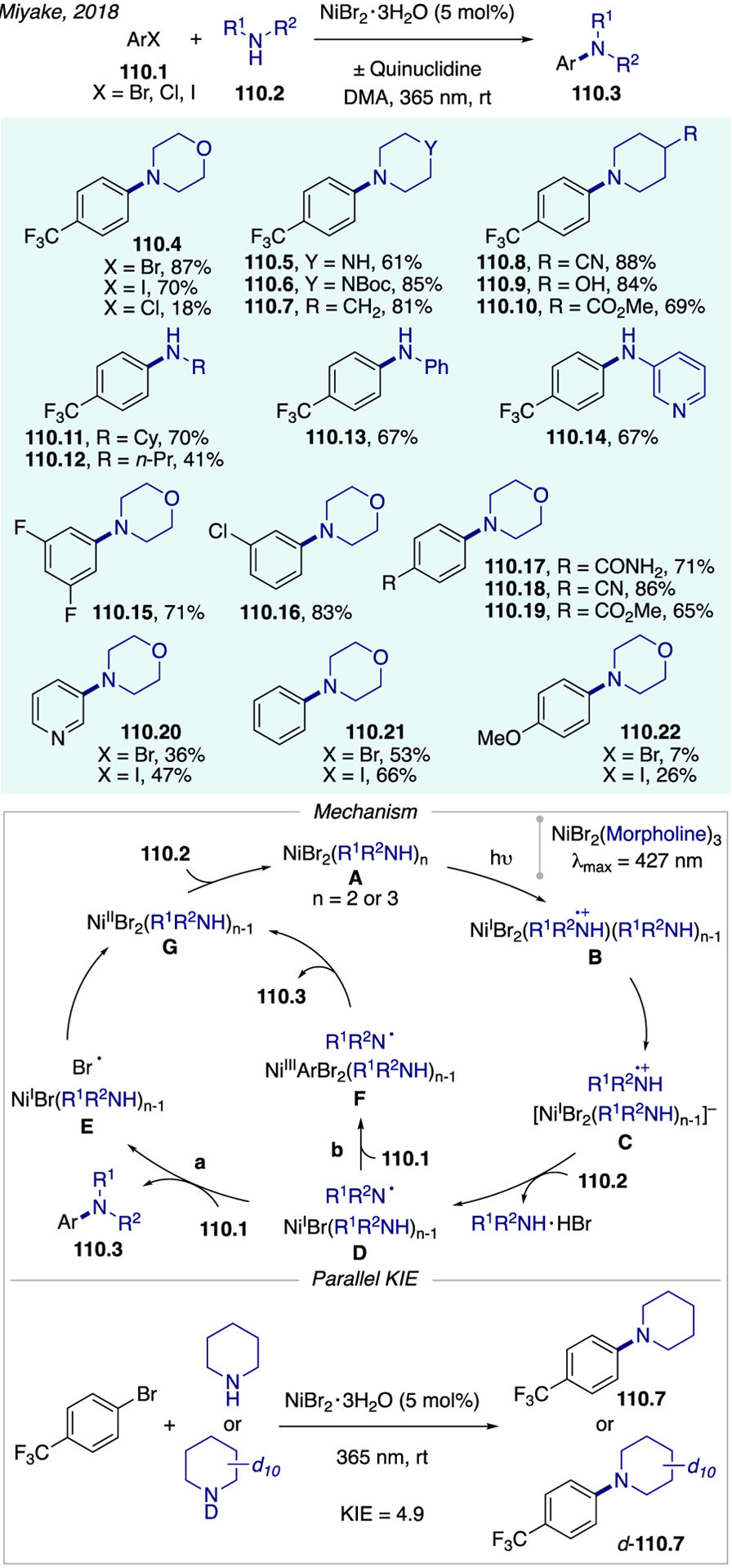
Scheme 110.
C(sp2)–N Cross-Coupling via Photoexcitation of Ni(II) Amine Complexes
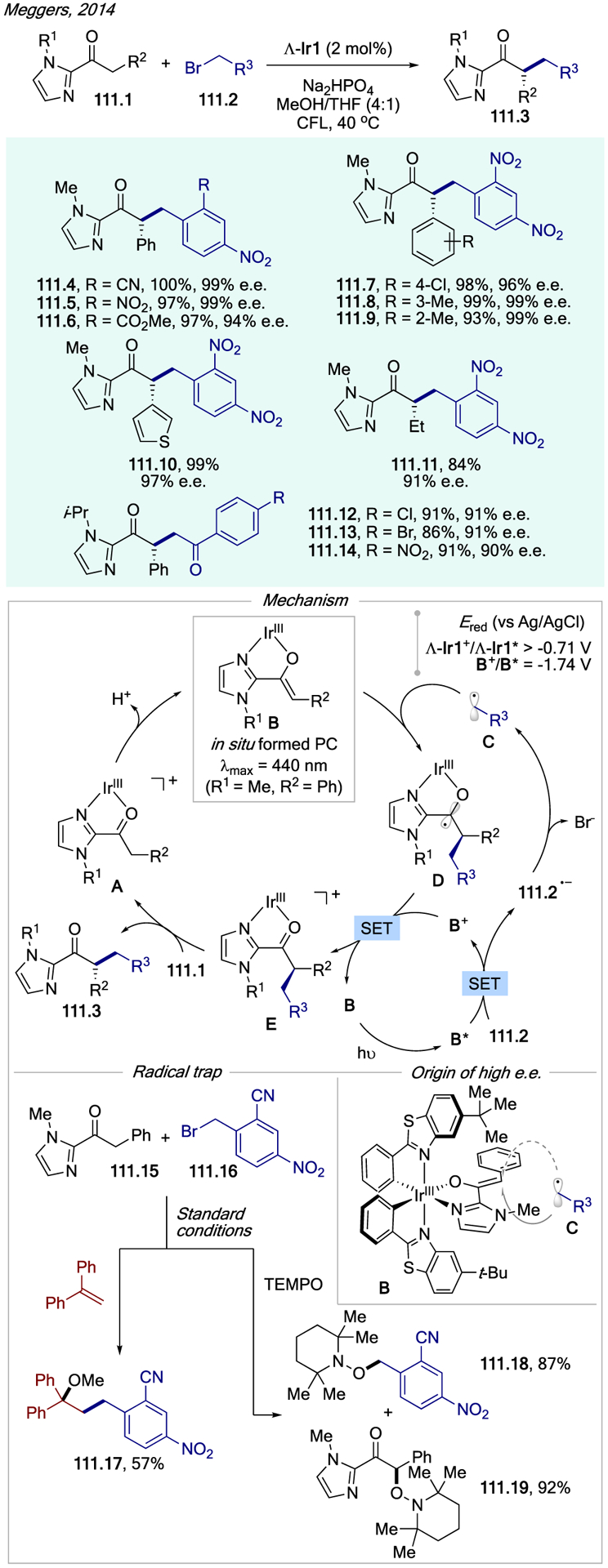
Scheme 111.
Scheme 111.
Asymmetric α-Alkylation of Ketones Enabled by a Single Iridium Photocatalyst
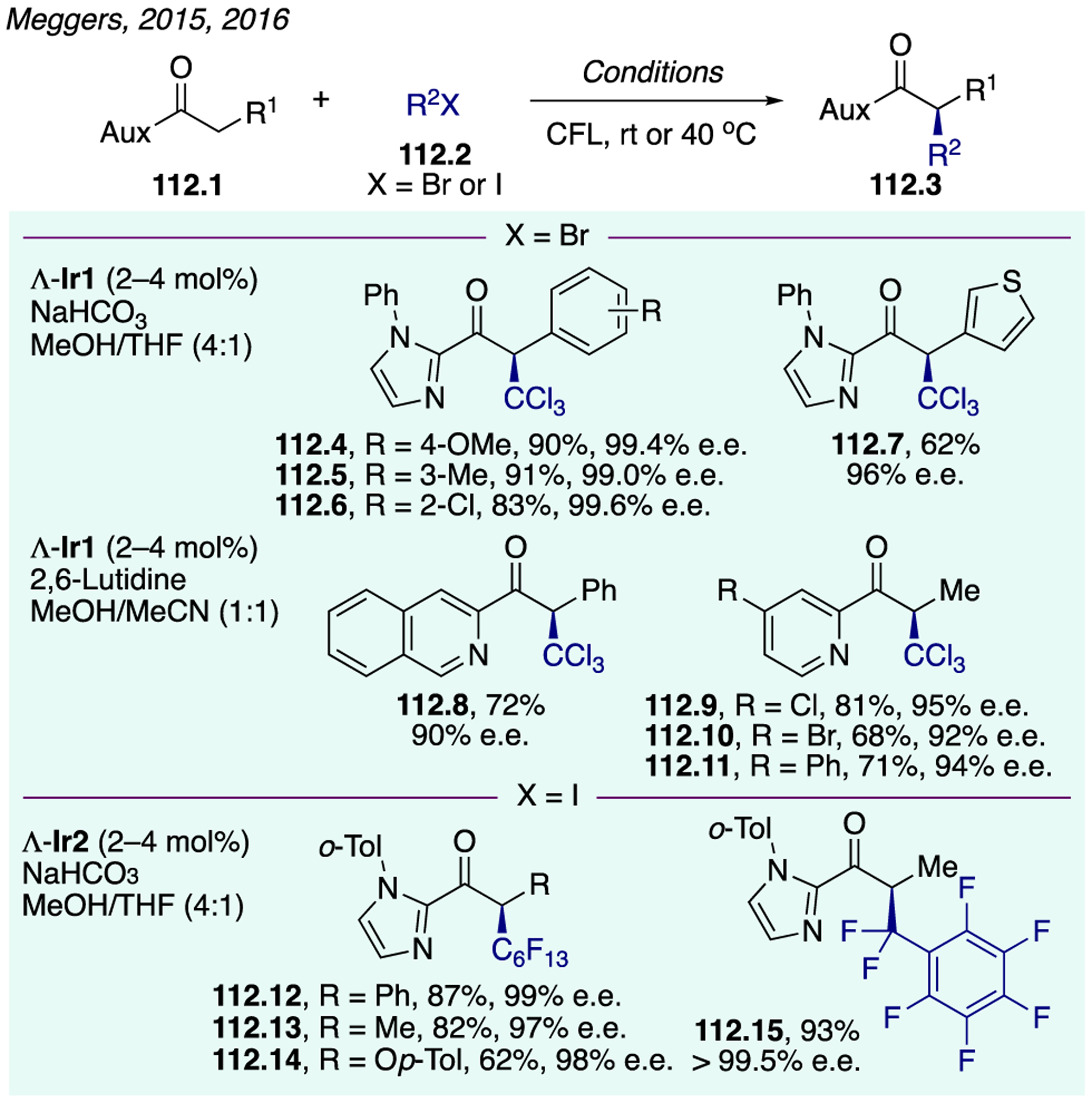
Scheme 112.
Scheme 112.
Asymmetric α-Trichloromethylation and α-Perfluoroalkylation of Ketones
Scheme 113.
Scheme 113.
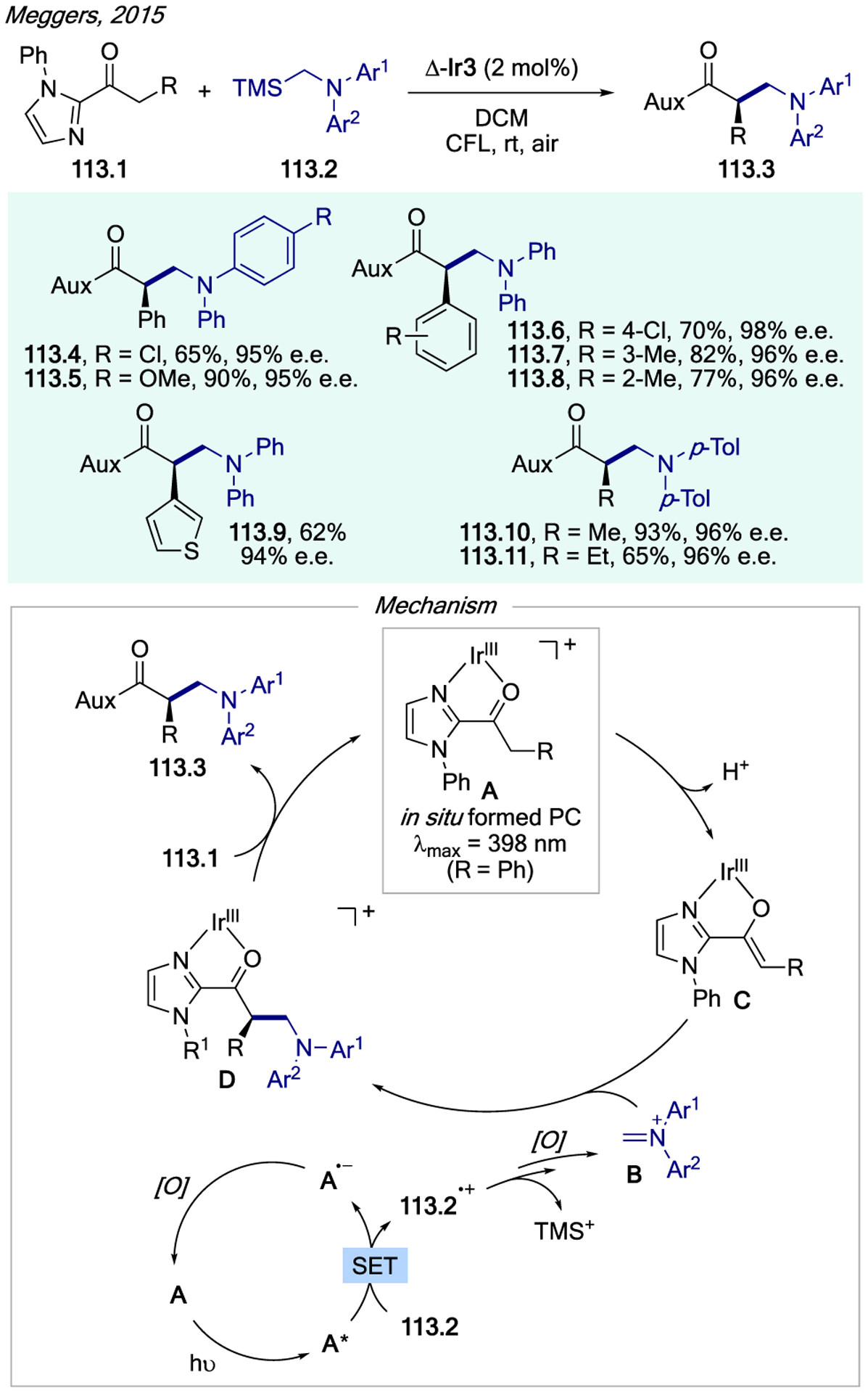
Asymmetric Oxidative α-Aminomethylation of Ketones
Scheme 114.
Scheme 114.
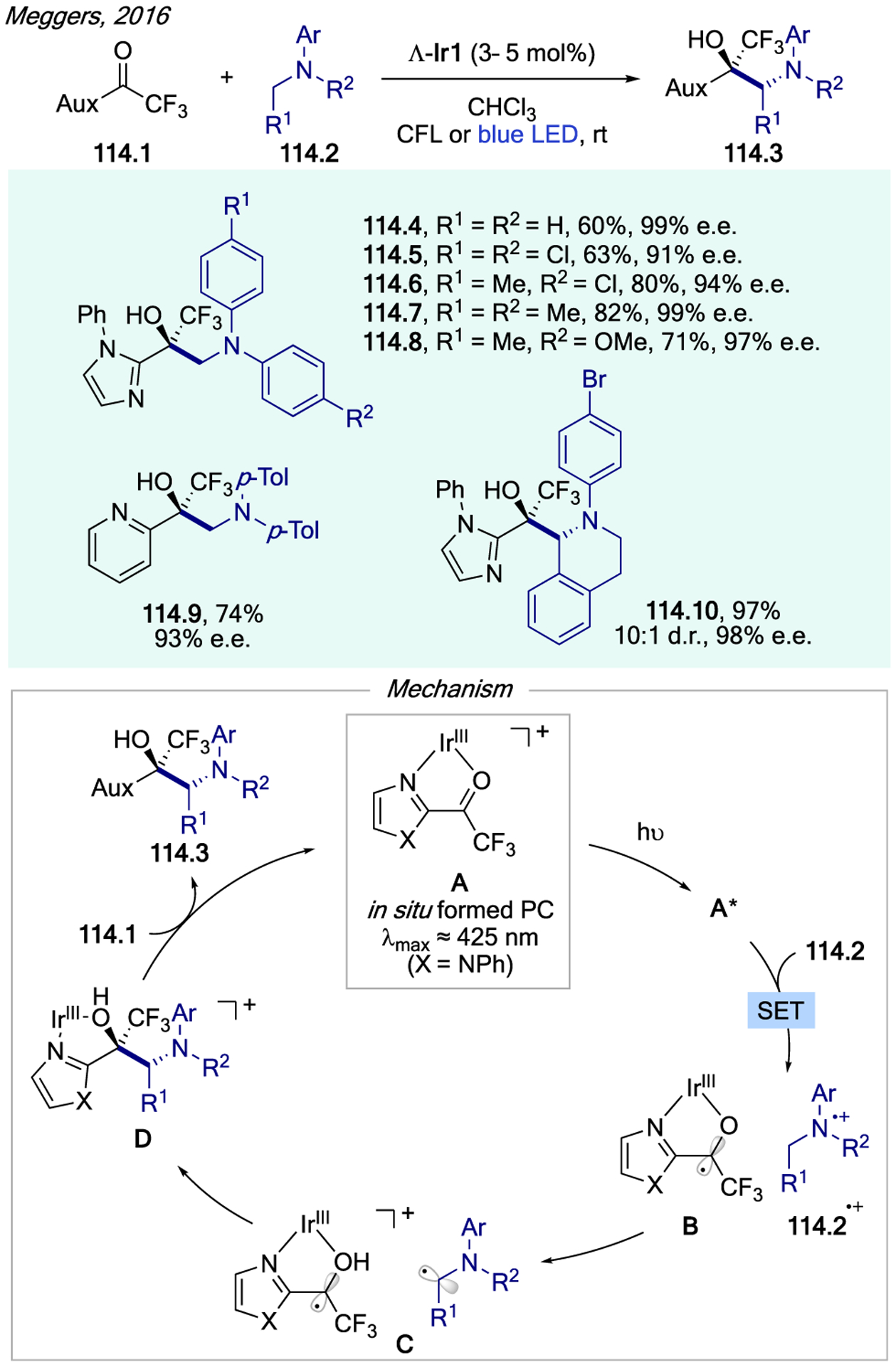
Asymmetric Radical–Radical Cross-Coupling of Trifluoromethyl Tetones and Tertiary Amines
Scheme 115.
Scheme 115.
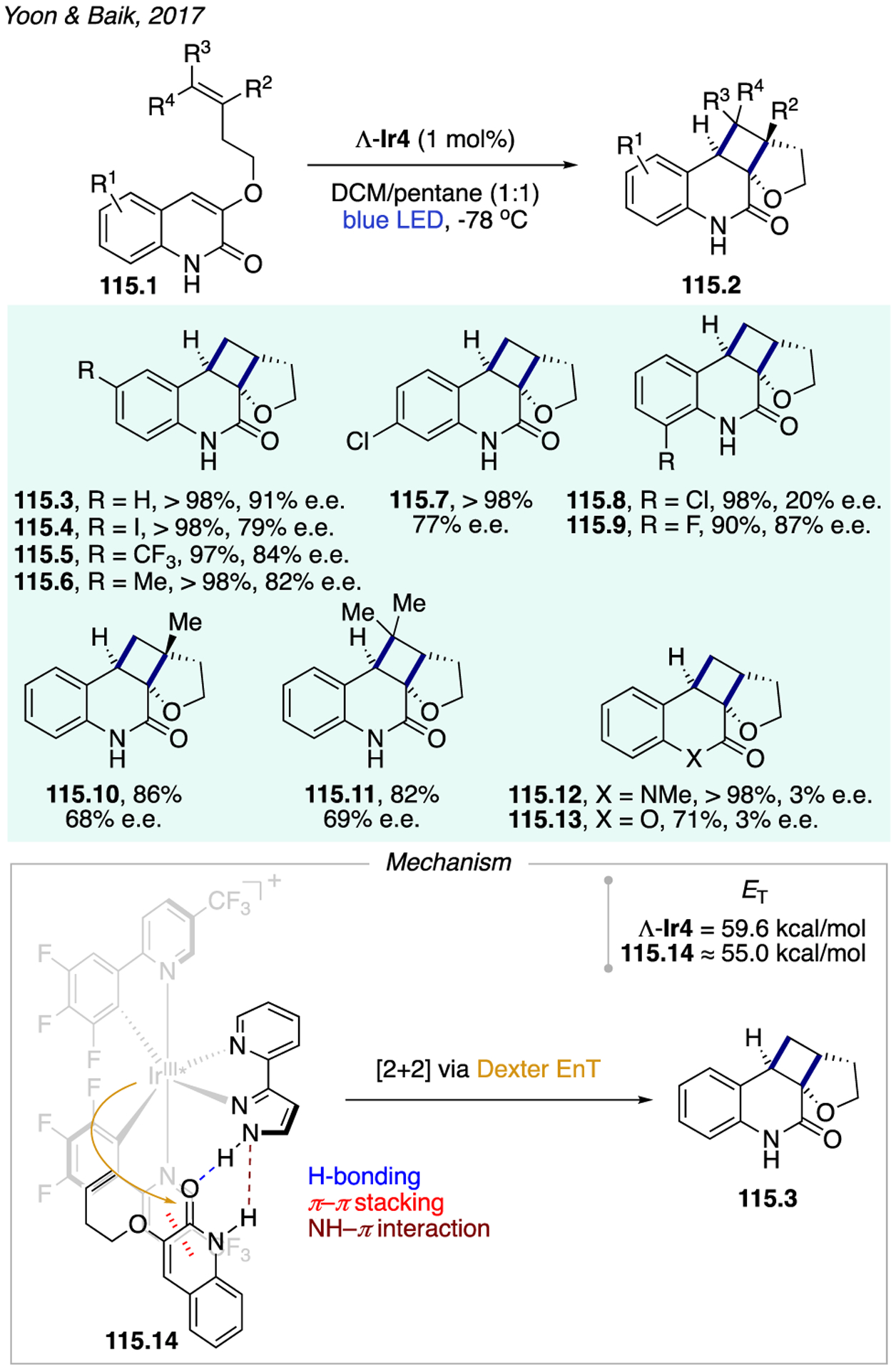
Enantioselective Intramolecular [2 + 2] Photocycloaddition
Scheme 116.
Scheme 116.
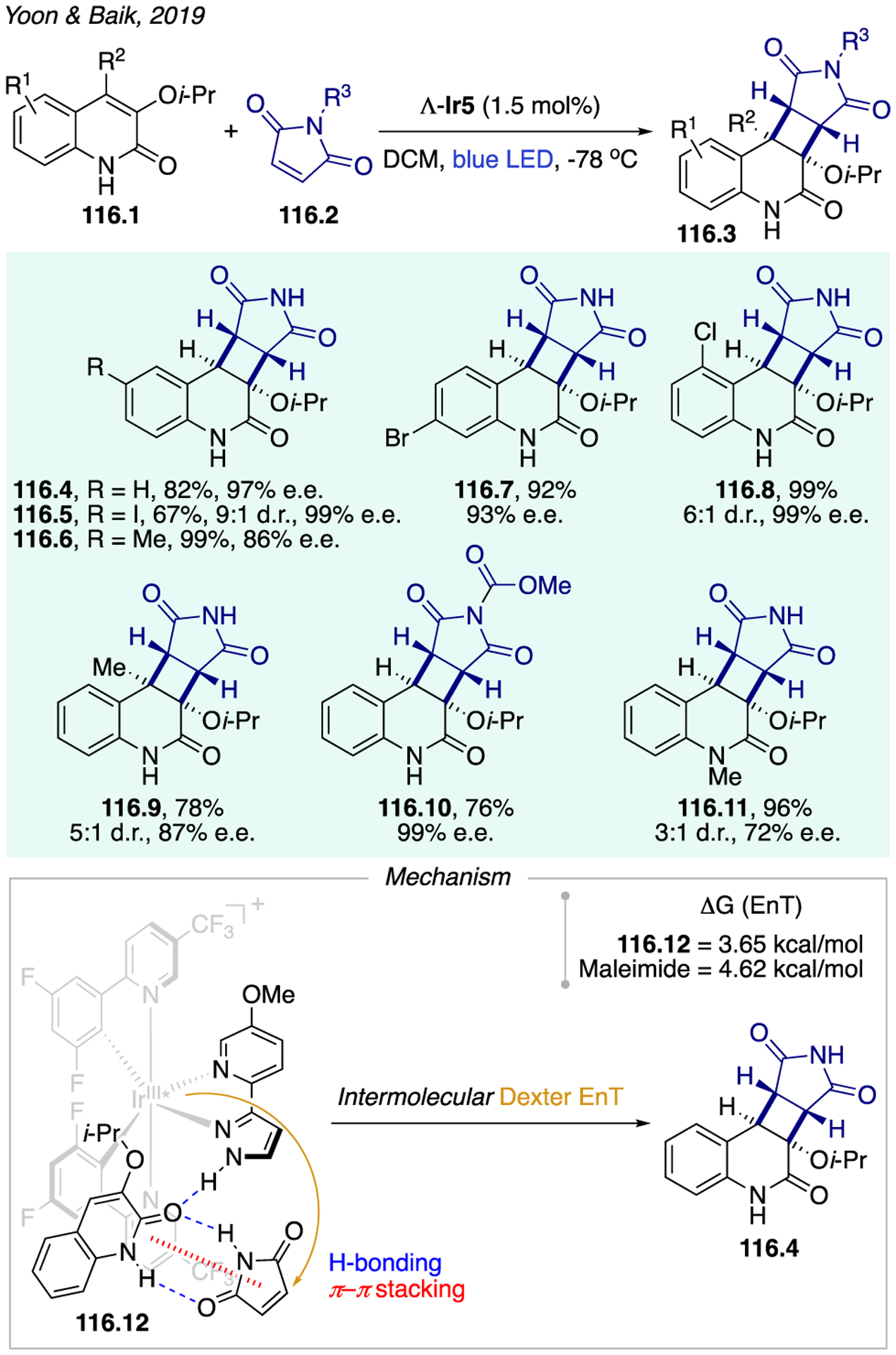
Enantioselective Intermolecular [2 + 2] Photocycloaddition
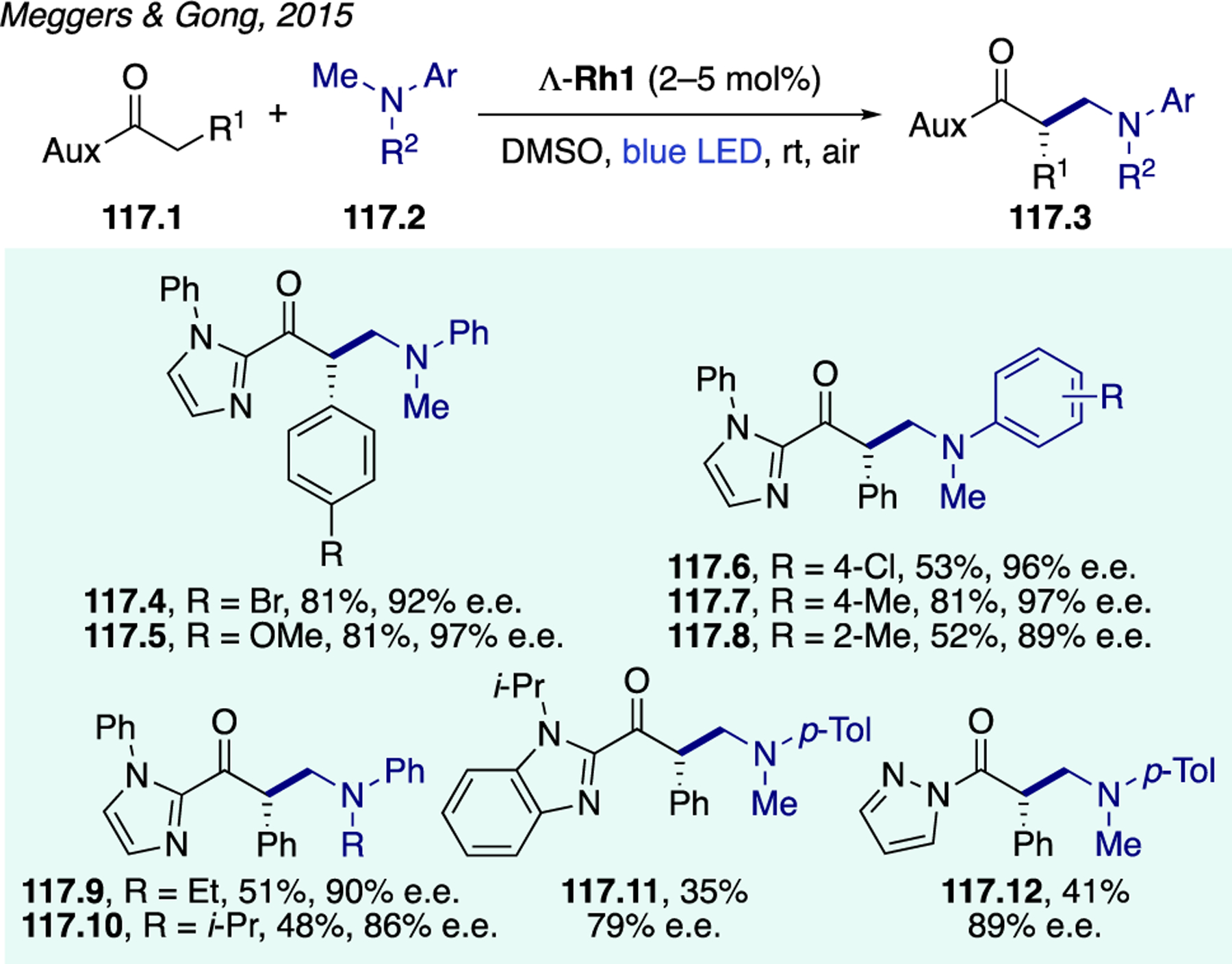
Scheme 117.
Scheme 117.
Asymmetric Oxidative α-Aminomethylation of Ketones
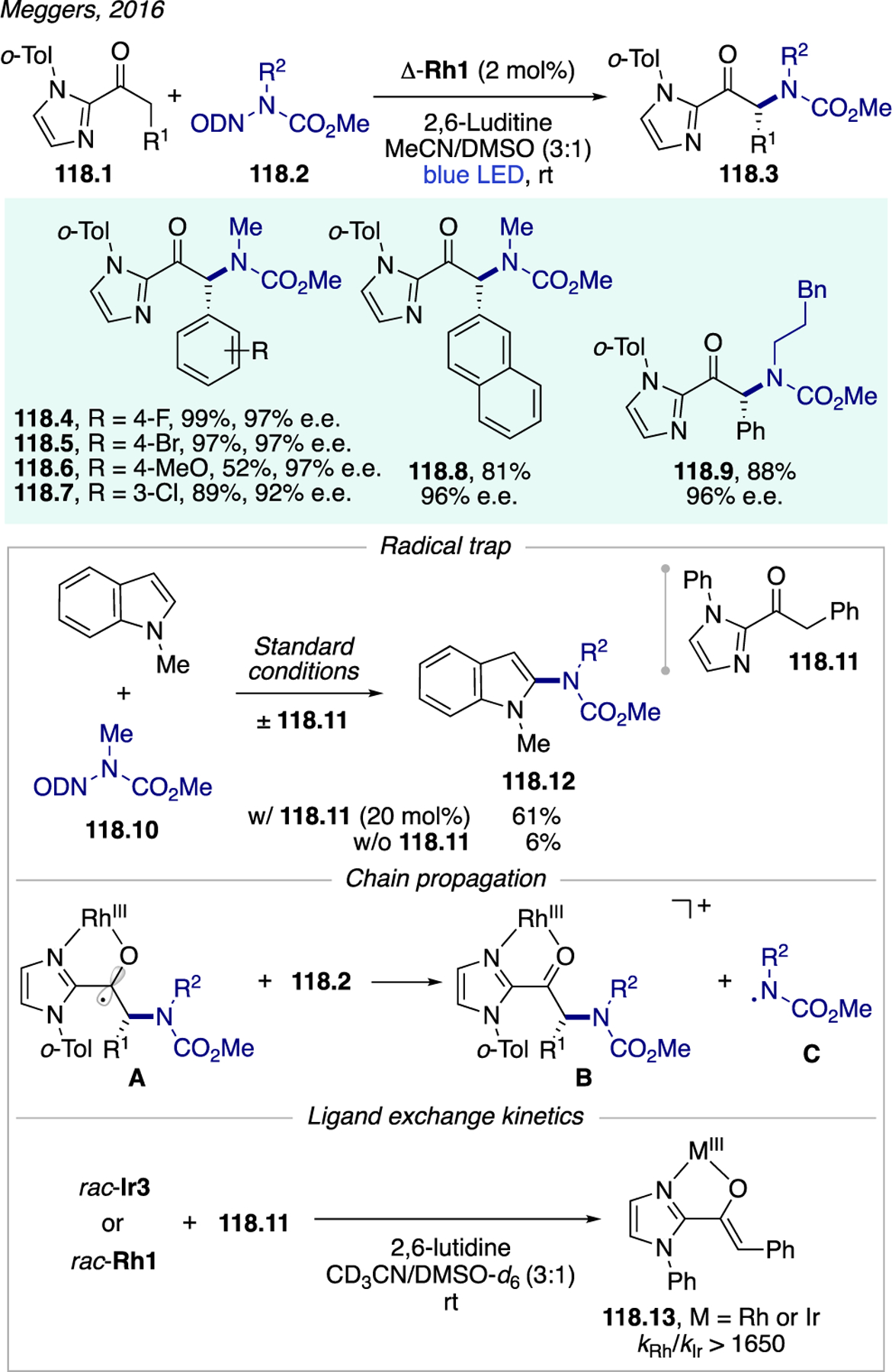
Scheme 118.
Scheme 118.
Asymmetric α-Amination of Ketones
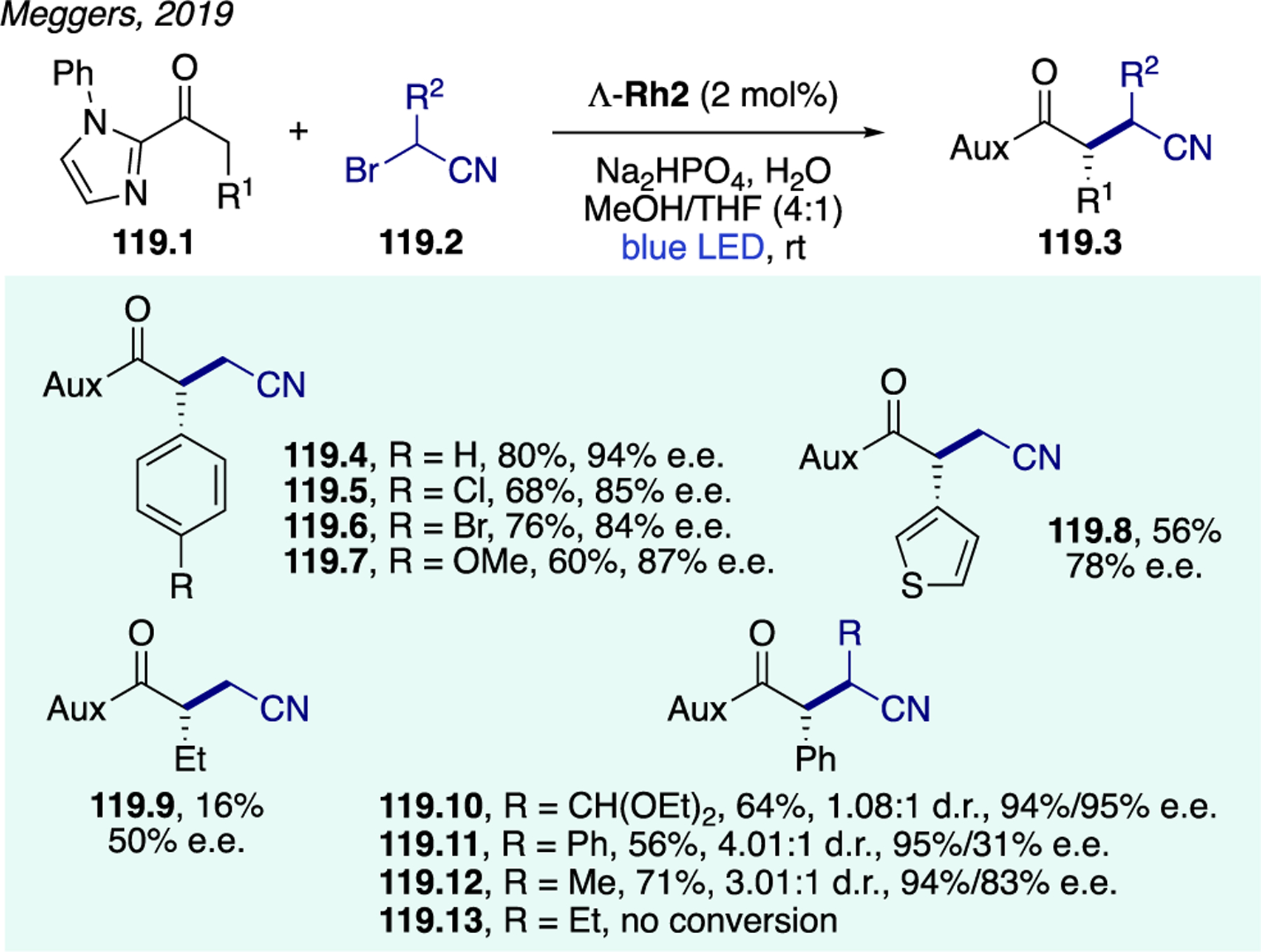
Scheme 119.
Scheme 119.
Asymmetric α-Cyanoalkylation of Ketones
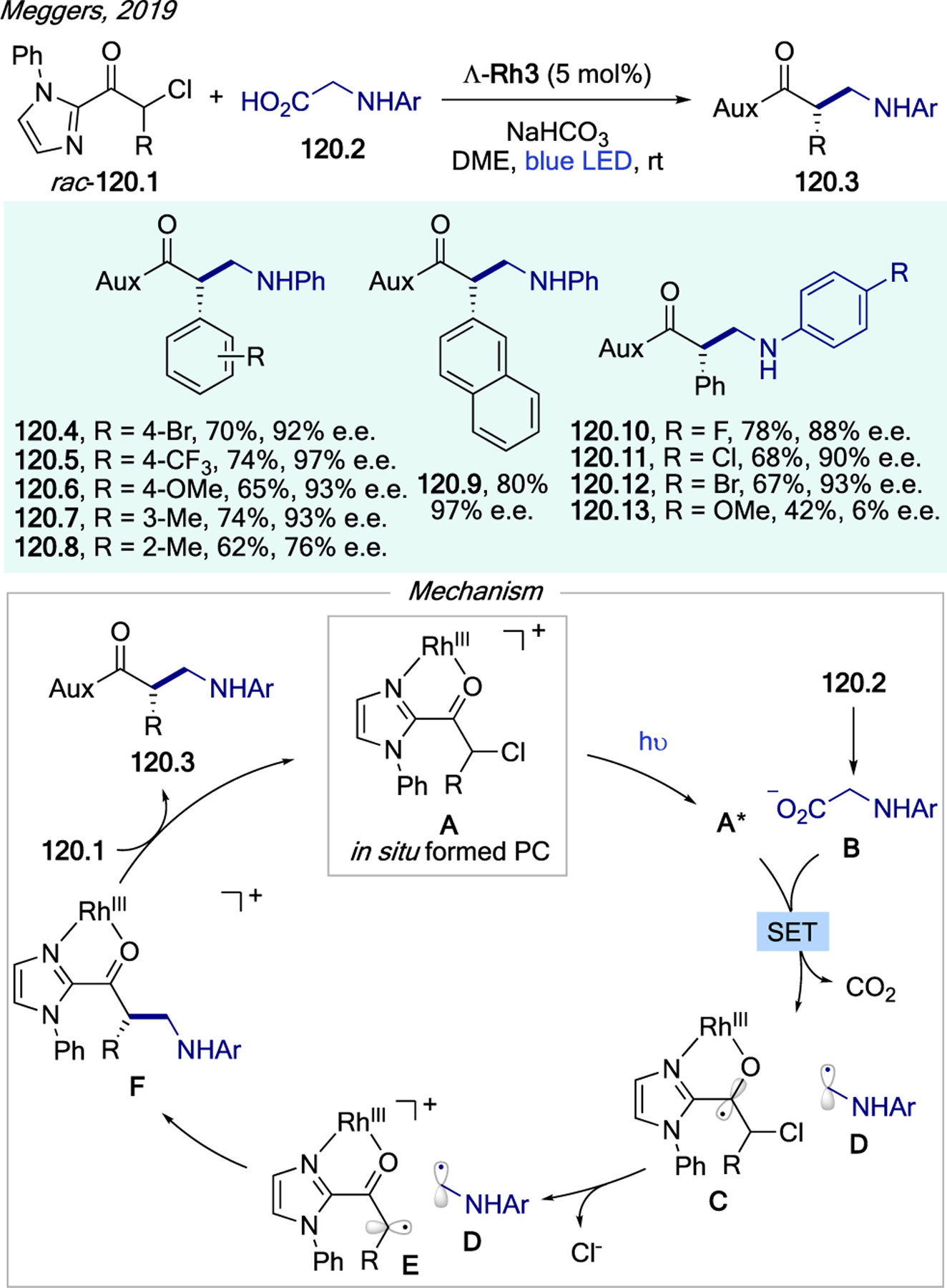
Scheme 120.
Scheme 120.
Enantioconvergent Radical–Radical Cross-Coupling of α-Chloroketones and Glycine Derivatives
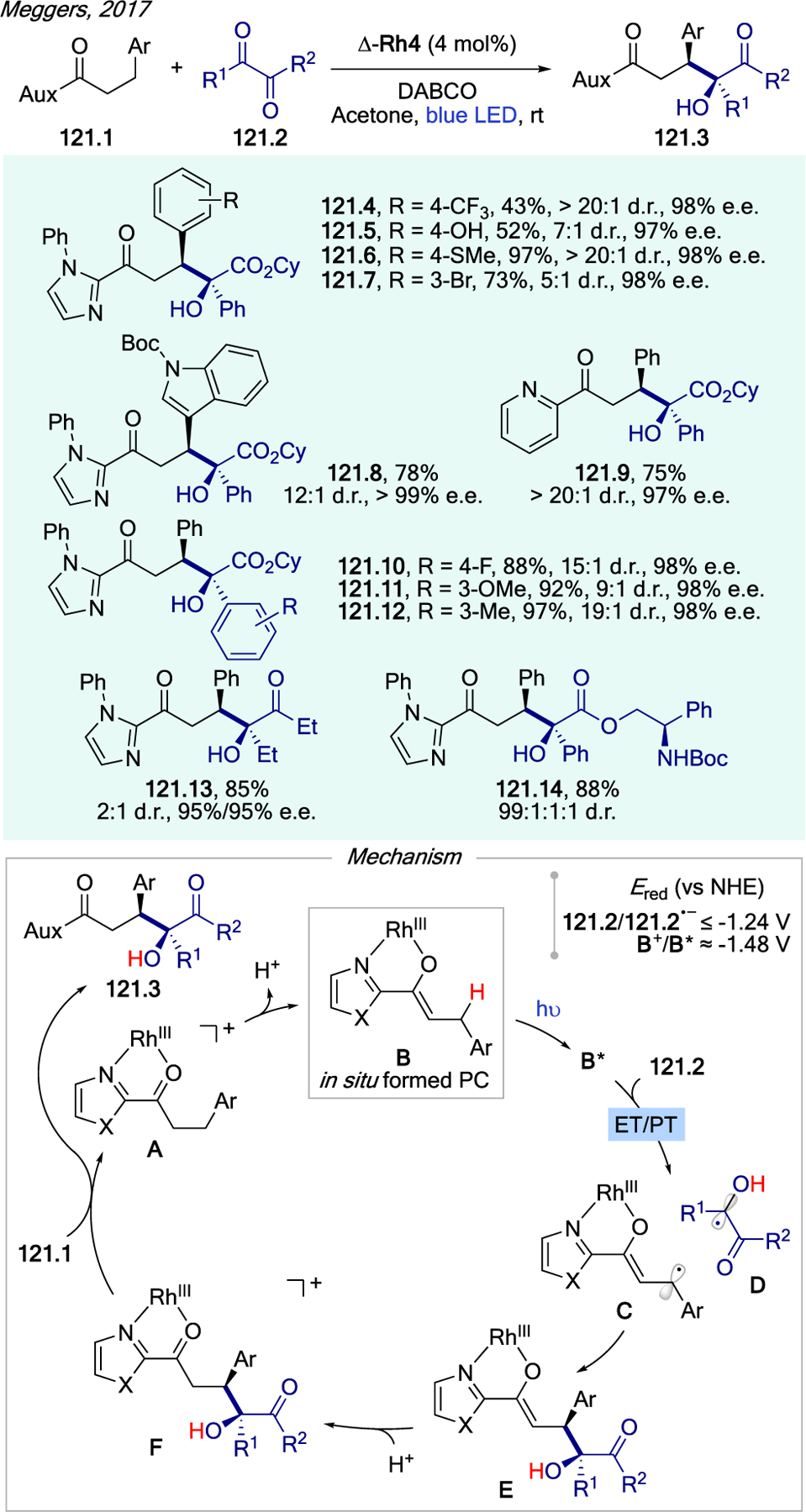
Scheme 121.
Scheme 121.
Asymmetric β-Functionalization of Ketones with 1,2-Dicarbonyl Compounds
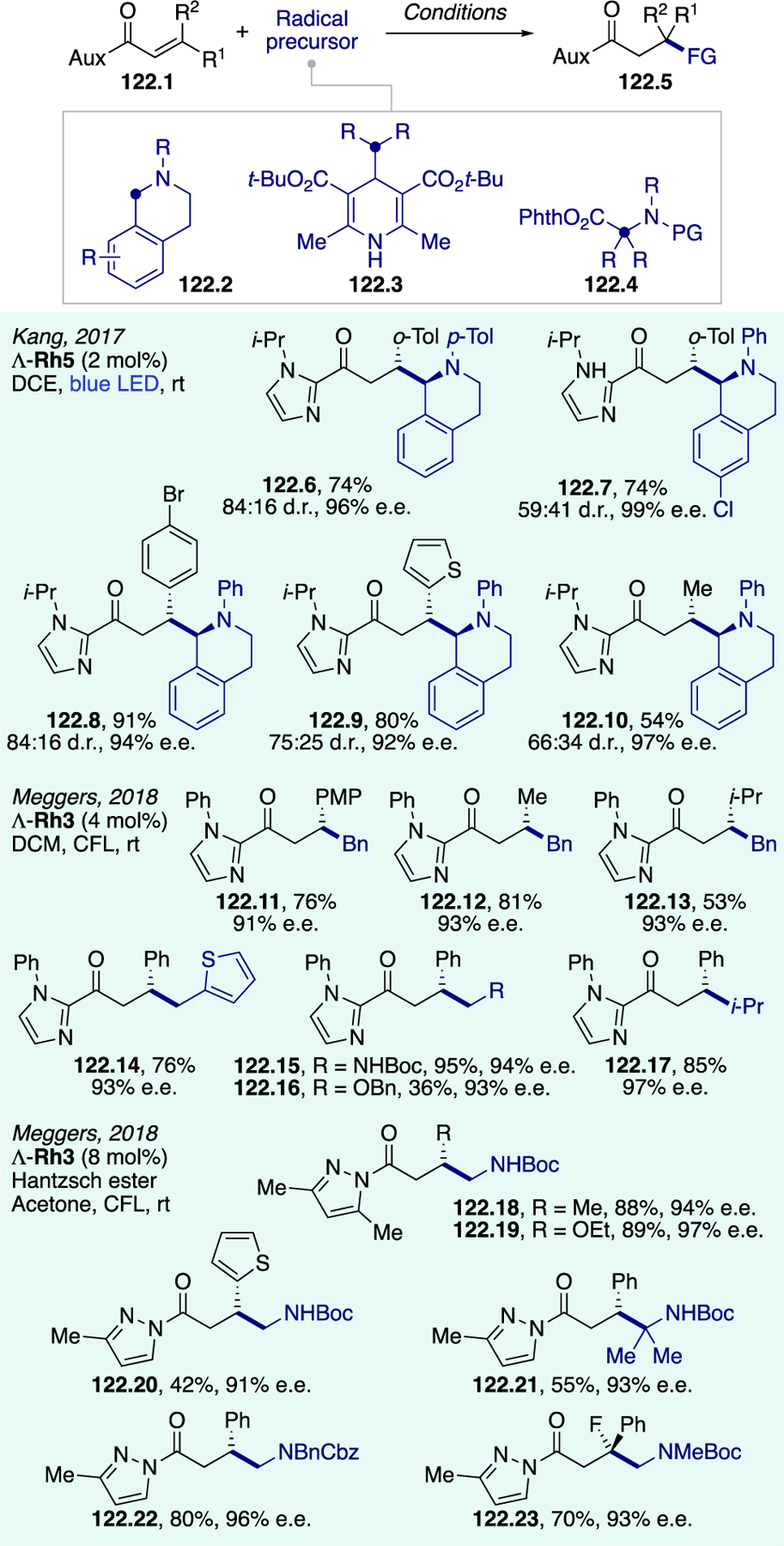
Scheme 122.
Scheme 122.
Asymmetric β-Alkylation of Enones with Different Radical Precursors
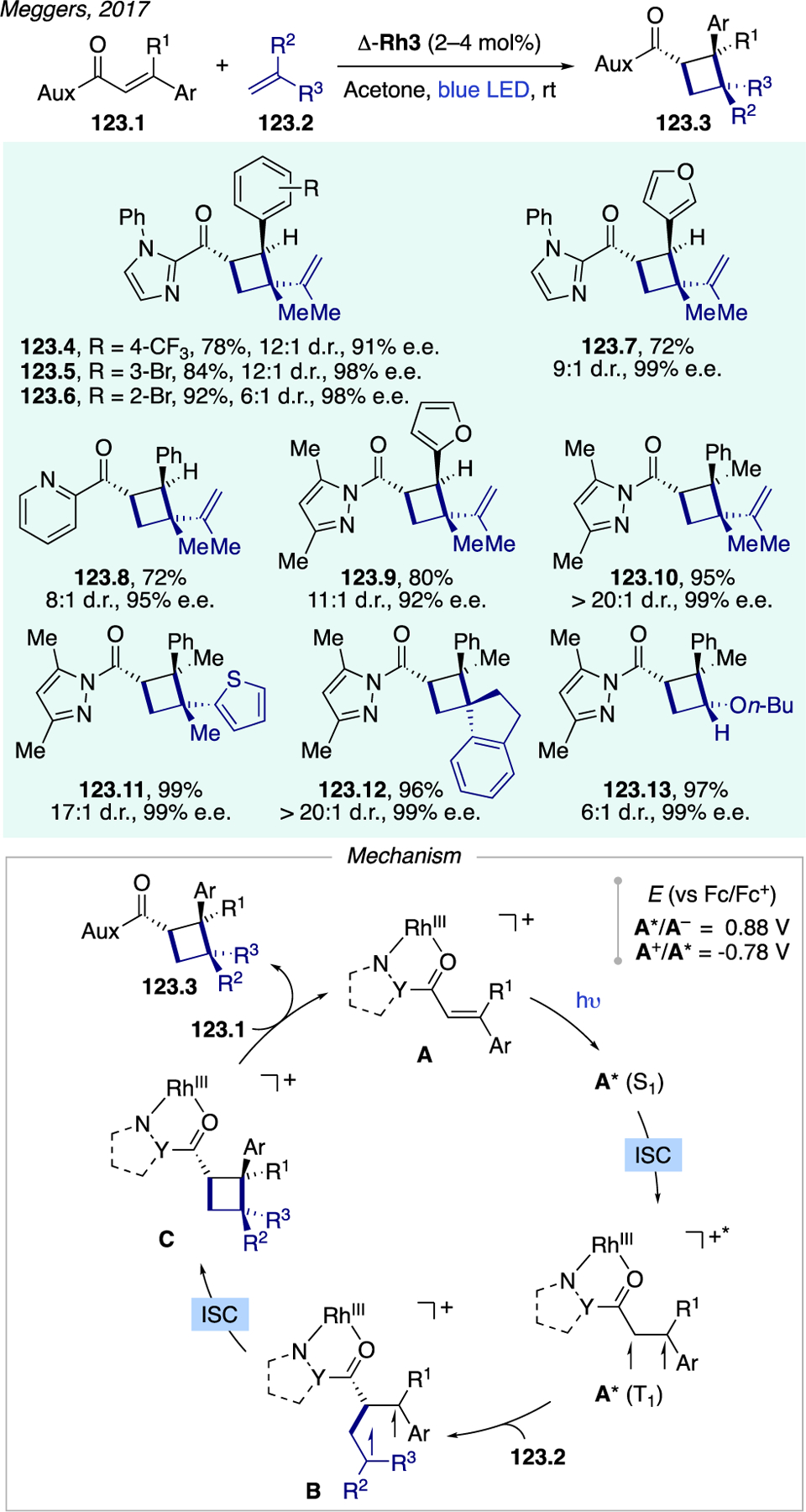
Scheme 123.
Scheme 123.
Asymmetric [2 + 2] Photocycloaddition of Enones and Alkenes
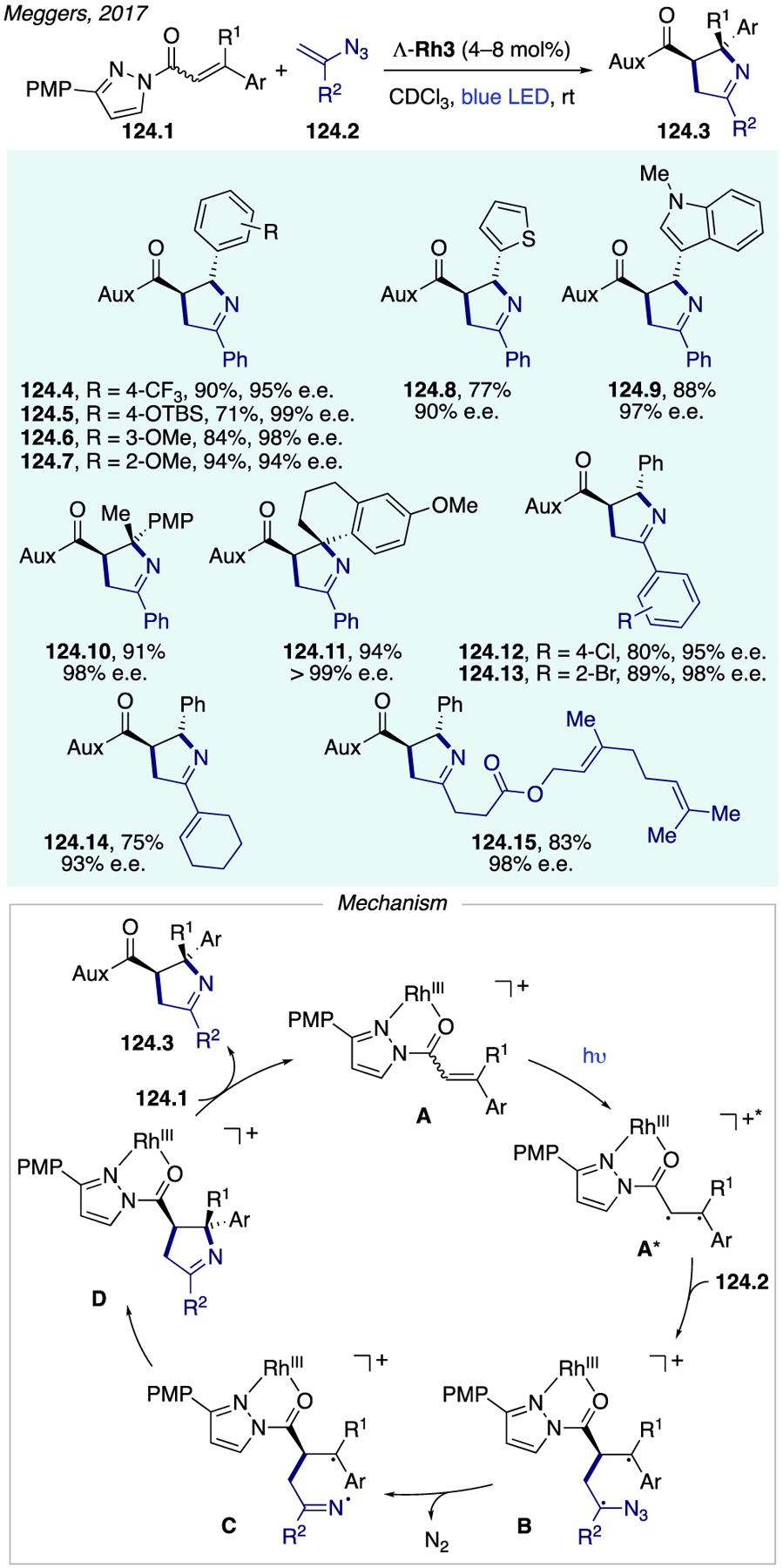
Scheme 124.
Scheme 124.
Asymmetric [2 + 3] Photocycloaddition of Enones and Vinyl Azides
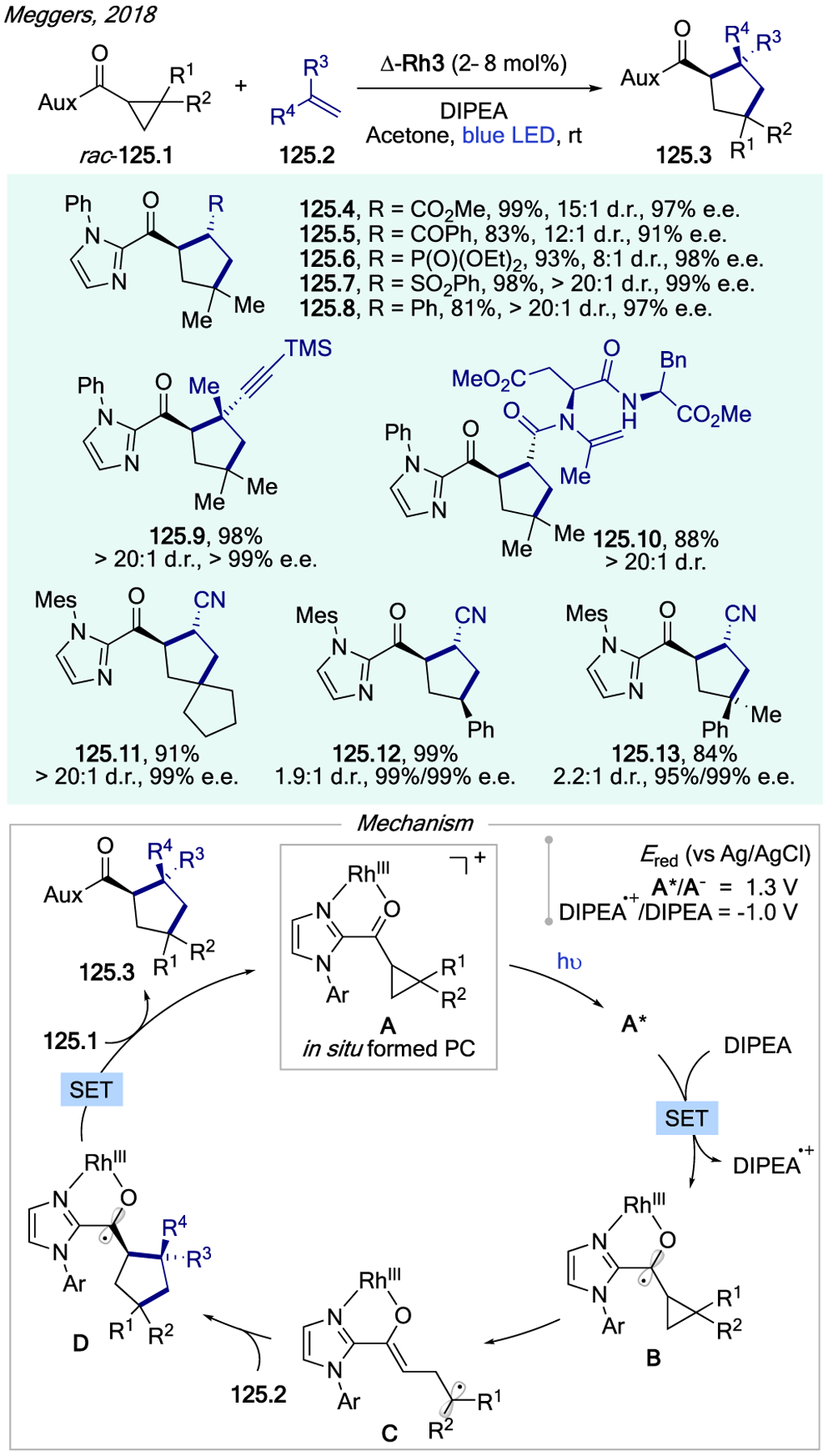
Scheme 125.
Scheme 125.
Asymmetric [3 + 2] Photocycloaddition of Cyclopropanes and Alkenes
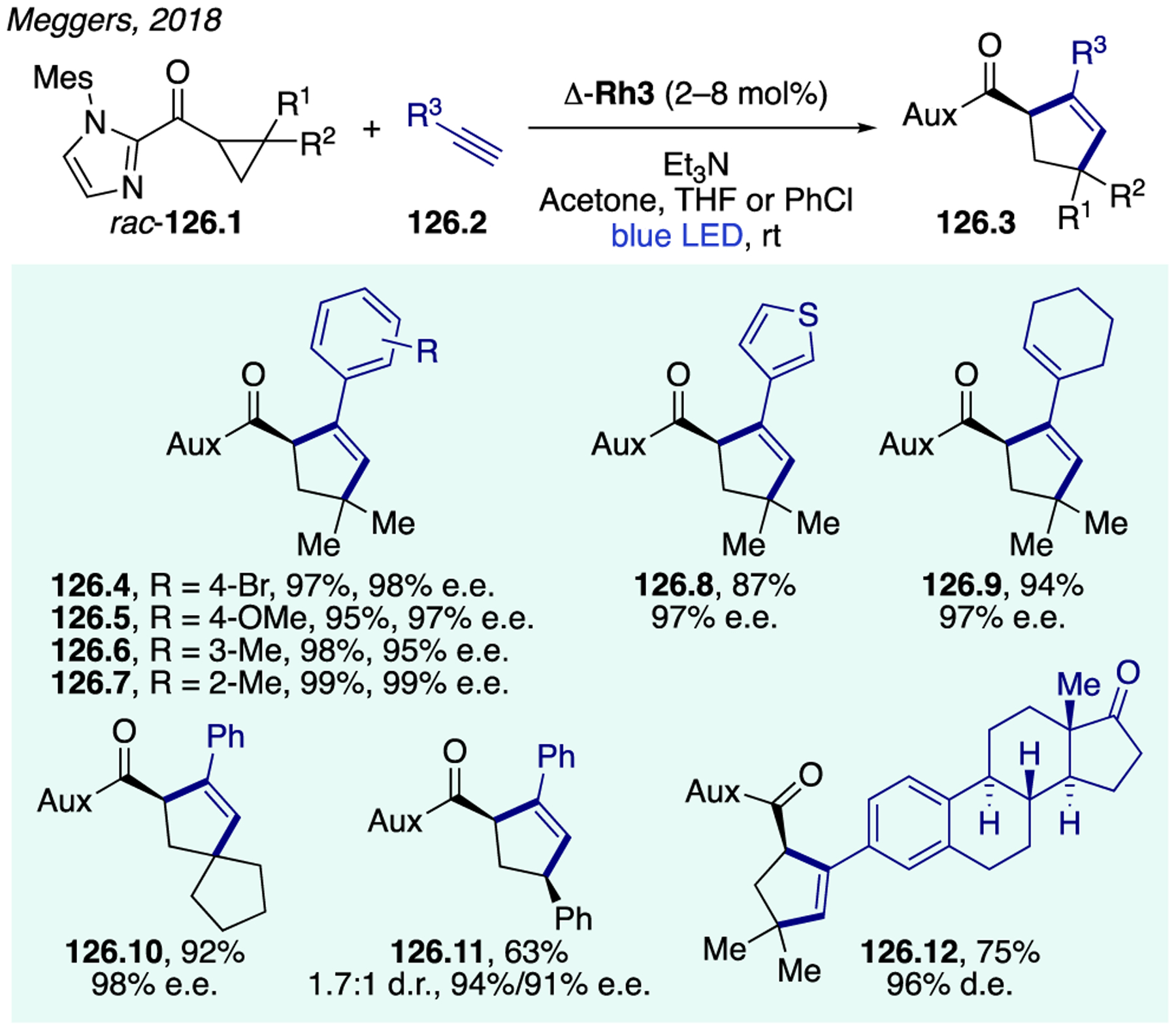
Scheme 126.
Scheme 126.
Asymmetric [3 + 2] Photocycloaddition of Cyclopropanes and Alkynes
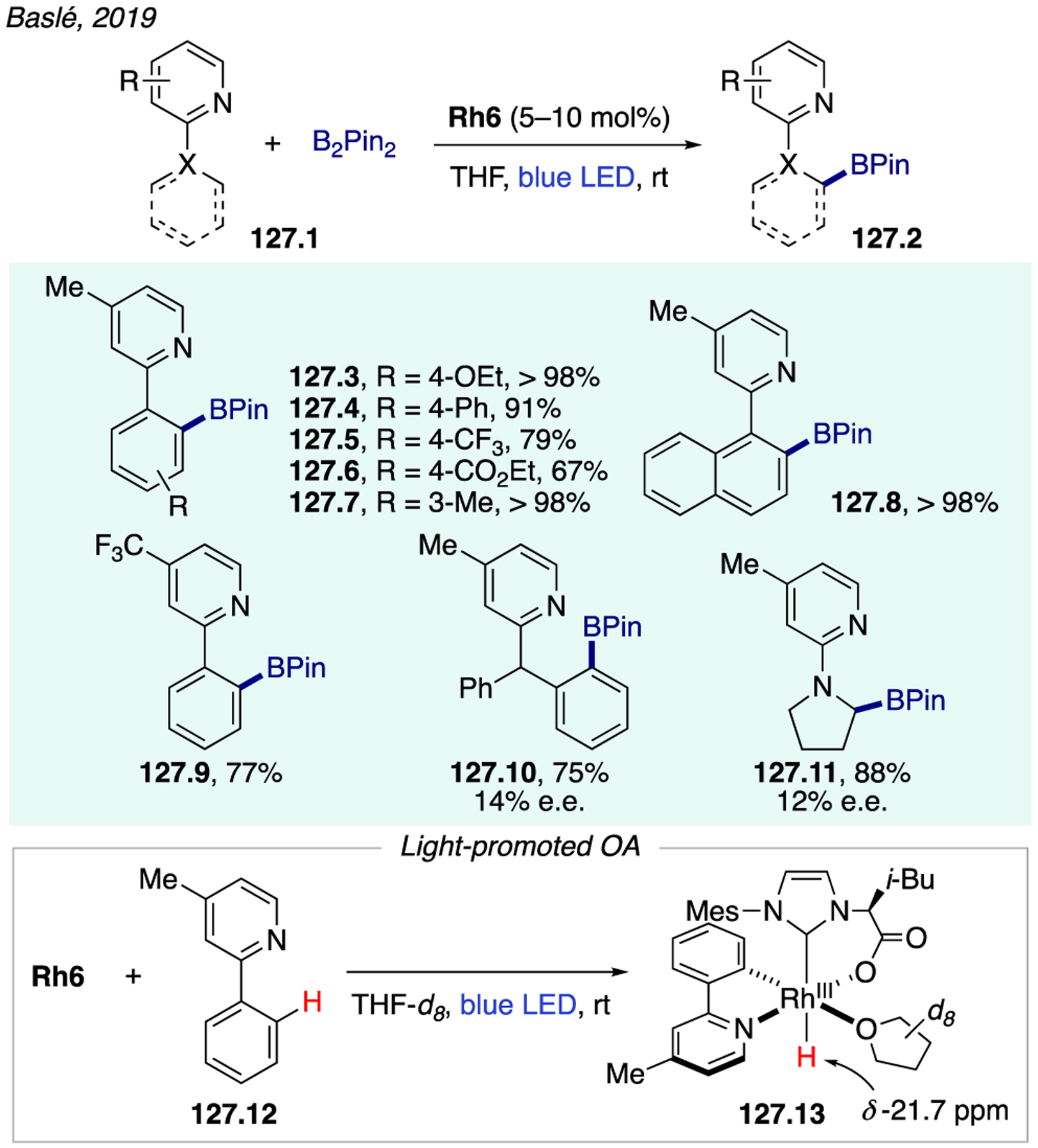
Scheme 127.
Scheme 127.
Directed C–H Borylation
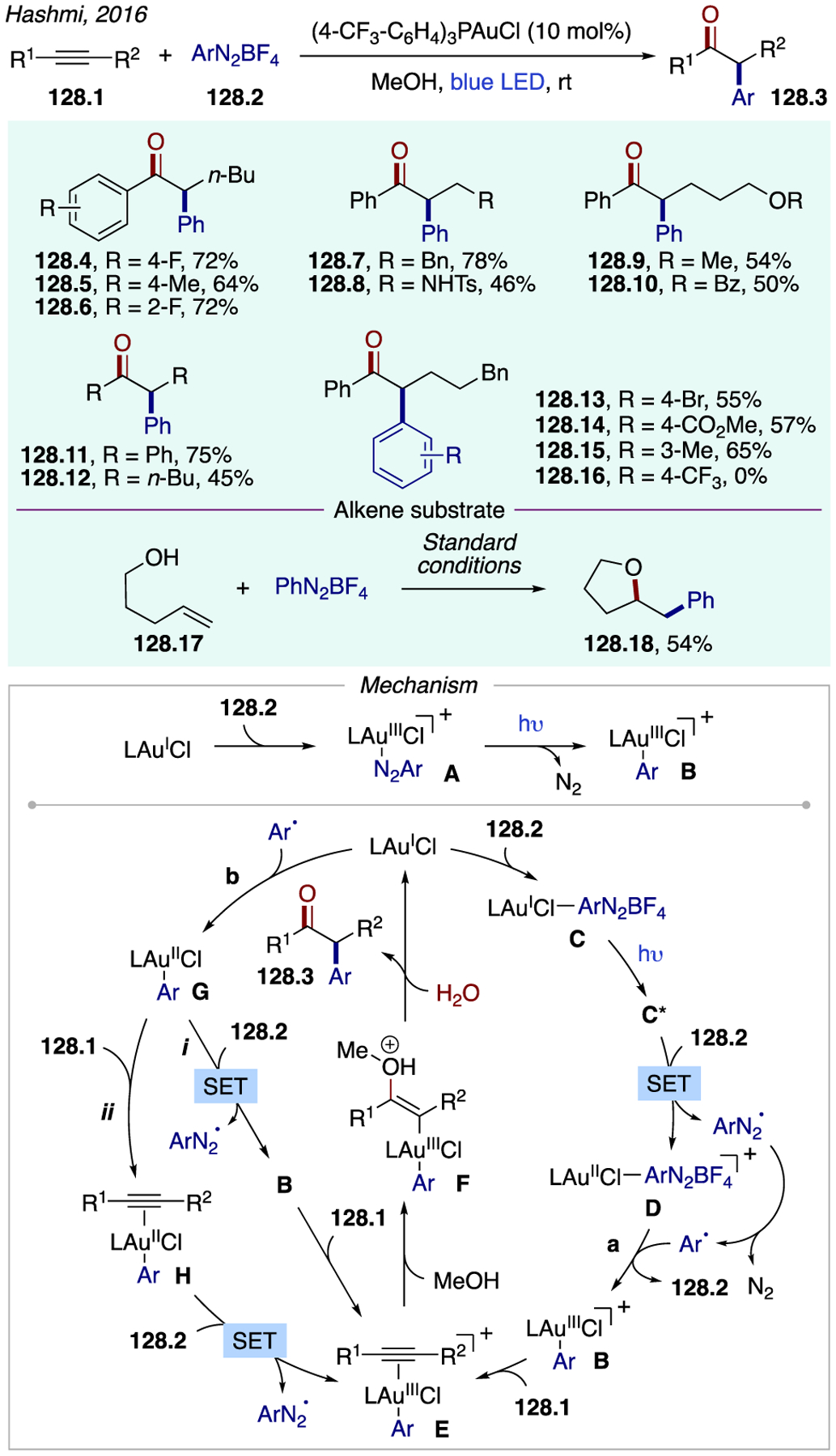
Scheme 128.
Scheme 128.
Oxyarylation of Alkynes
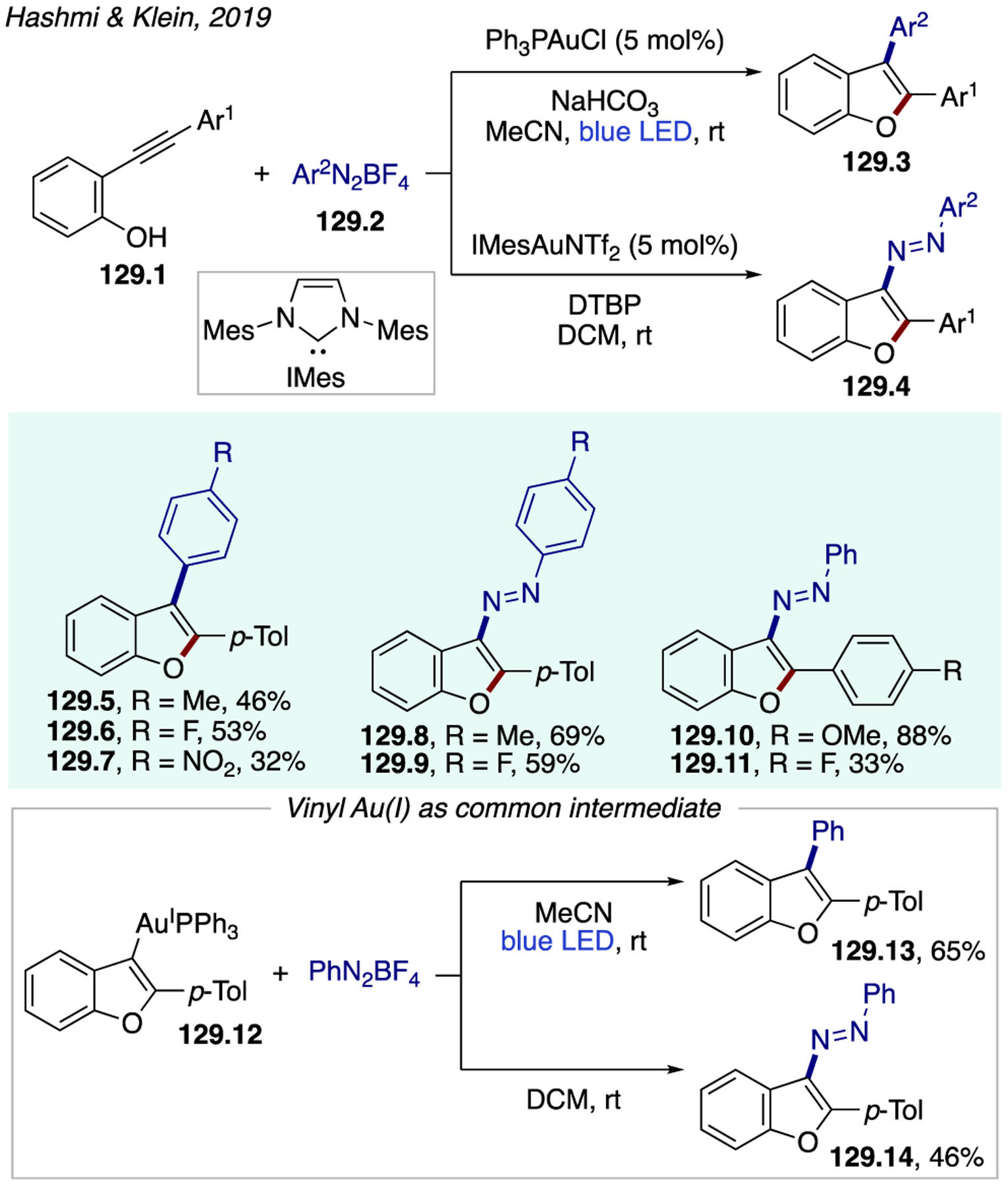
Scheme 129.
Scheme 129.
Visible Light-Induced Mechanistic Divergence
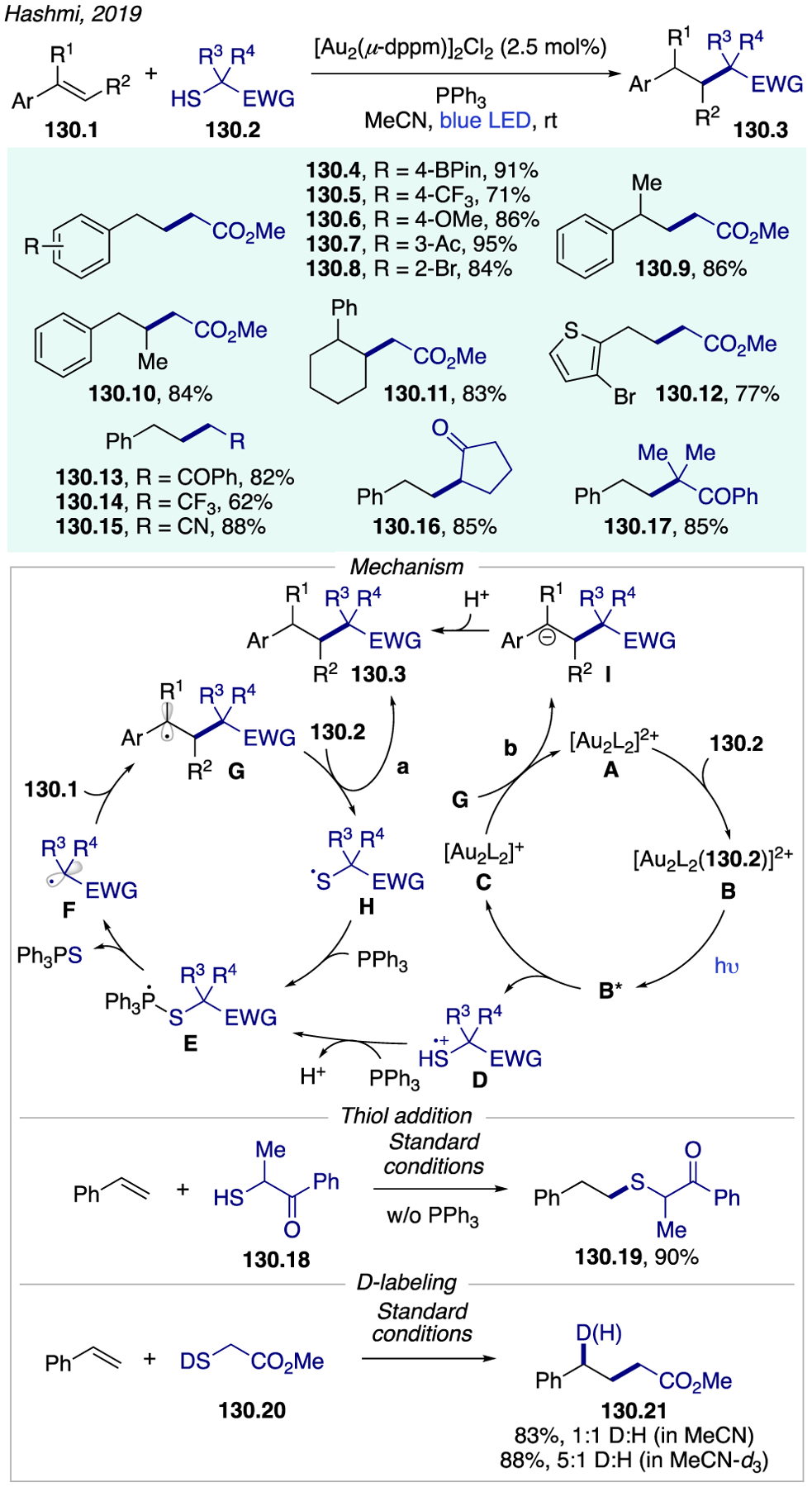
Scheme 130.
Scheme 130.
Desulfurizing Alkylation of Vinyl (Hetero)arenes
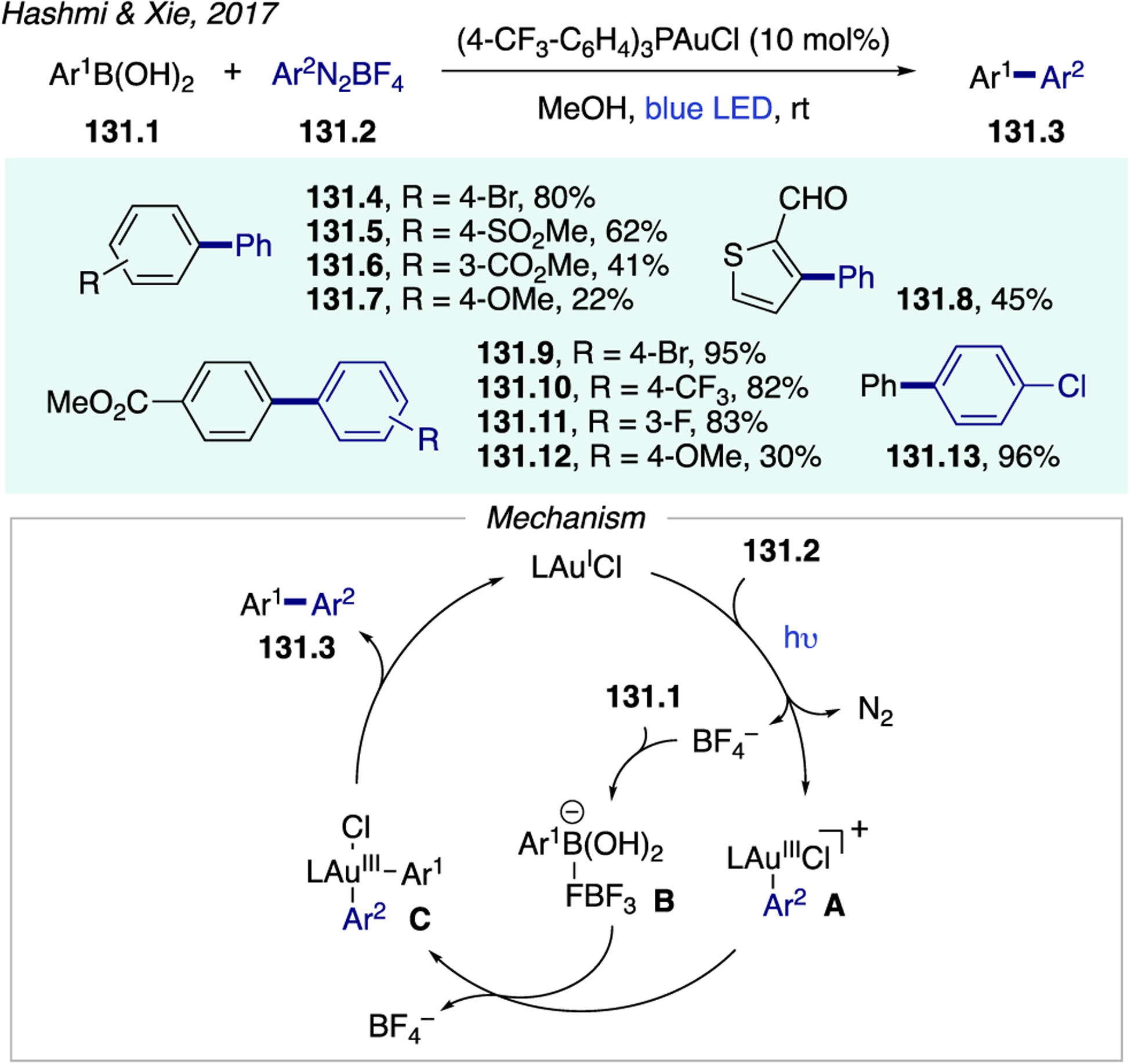
Scheme 131.
Scheme 131.
Cross-Coupling between Boronic Acids and Diazonium Salts Enabled by Visible Light-Induced Gold Catalysis
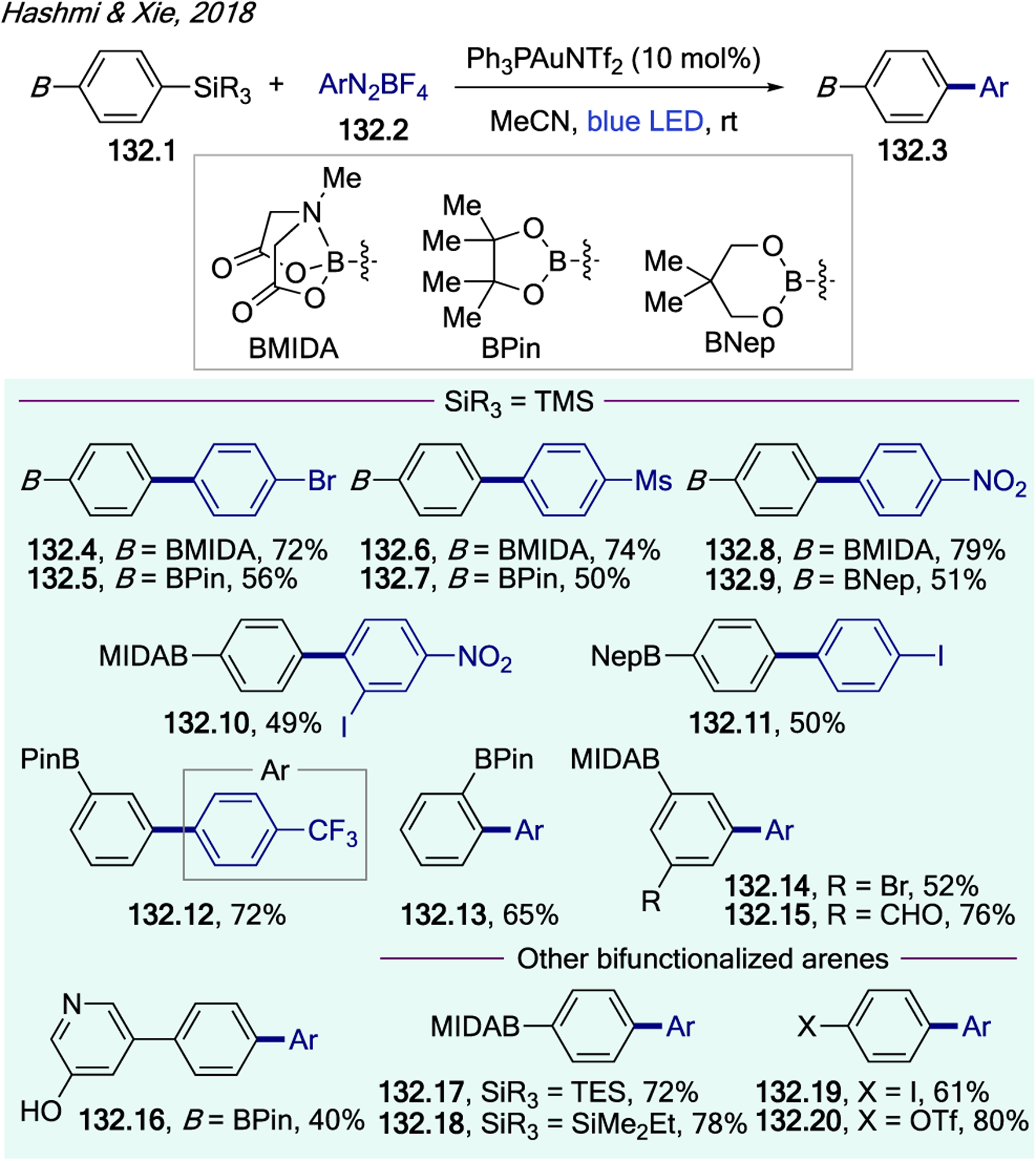
Scheme 132.
Scheme 132.
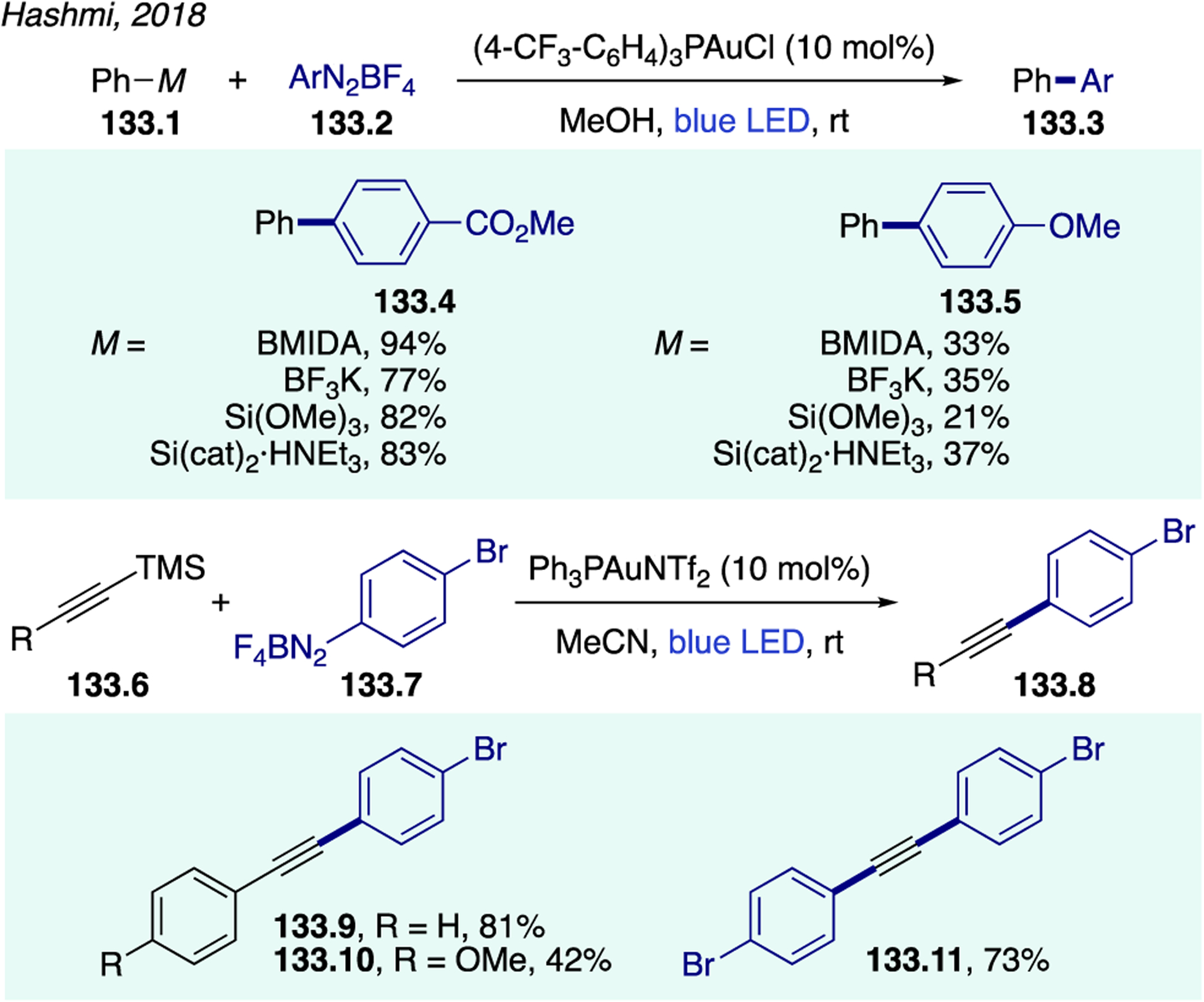
Hiyama Coupling en Route to Biarylboronates
Scheme 133.
Scheme 133.
C–C Cross-Coupling Reactions with Different Transmetalation Reagents
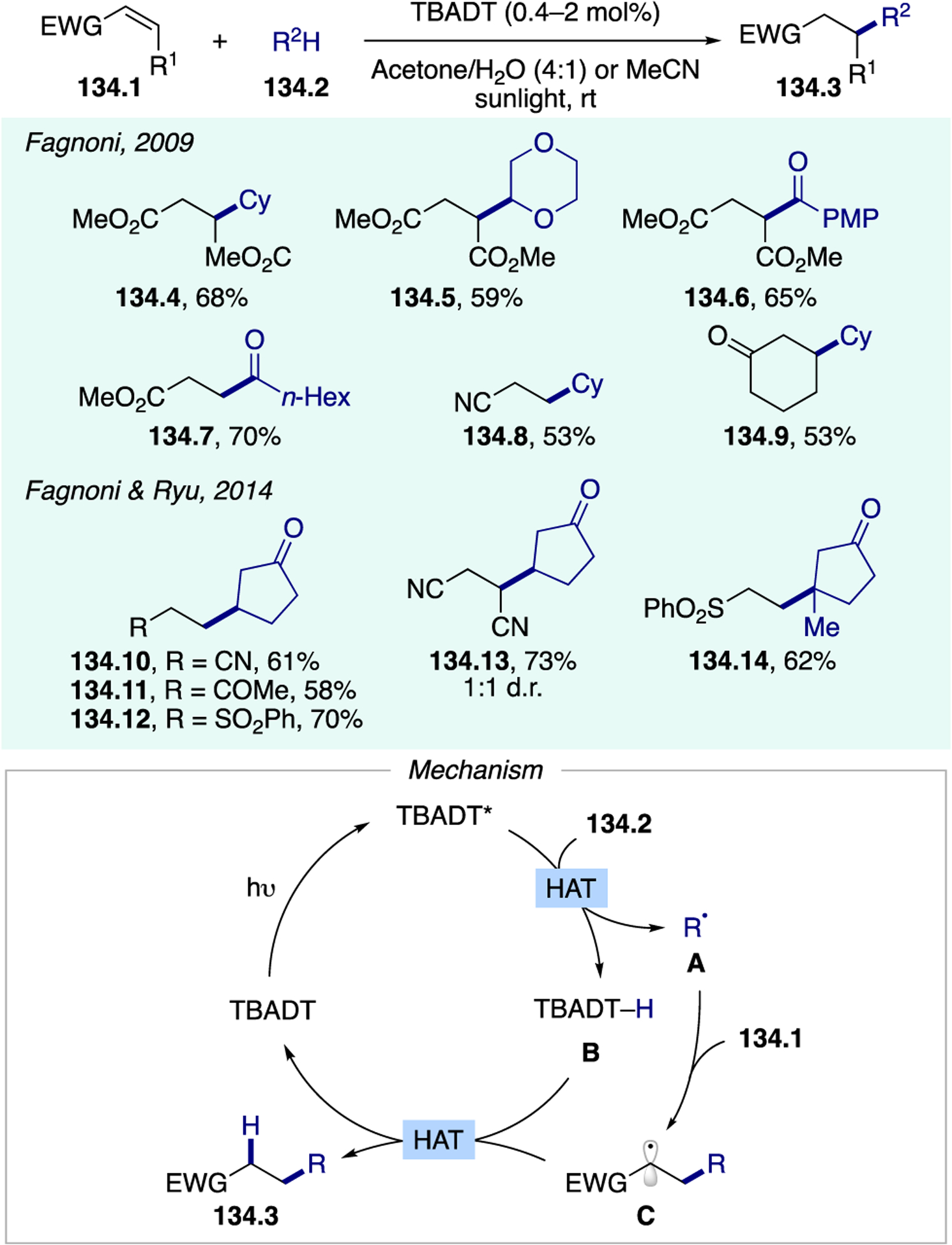
Scheme 134.
Scheme 134.
Solar Light-Induced C–H Alkylation with Electron-Deficient Alkenes
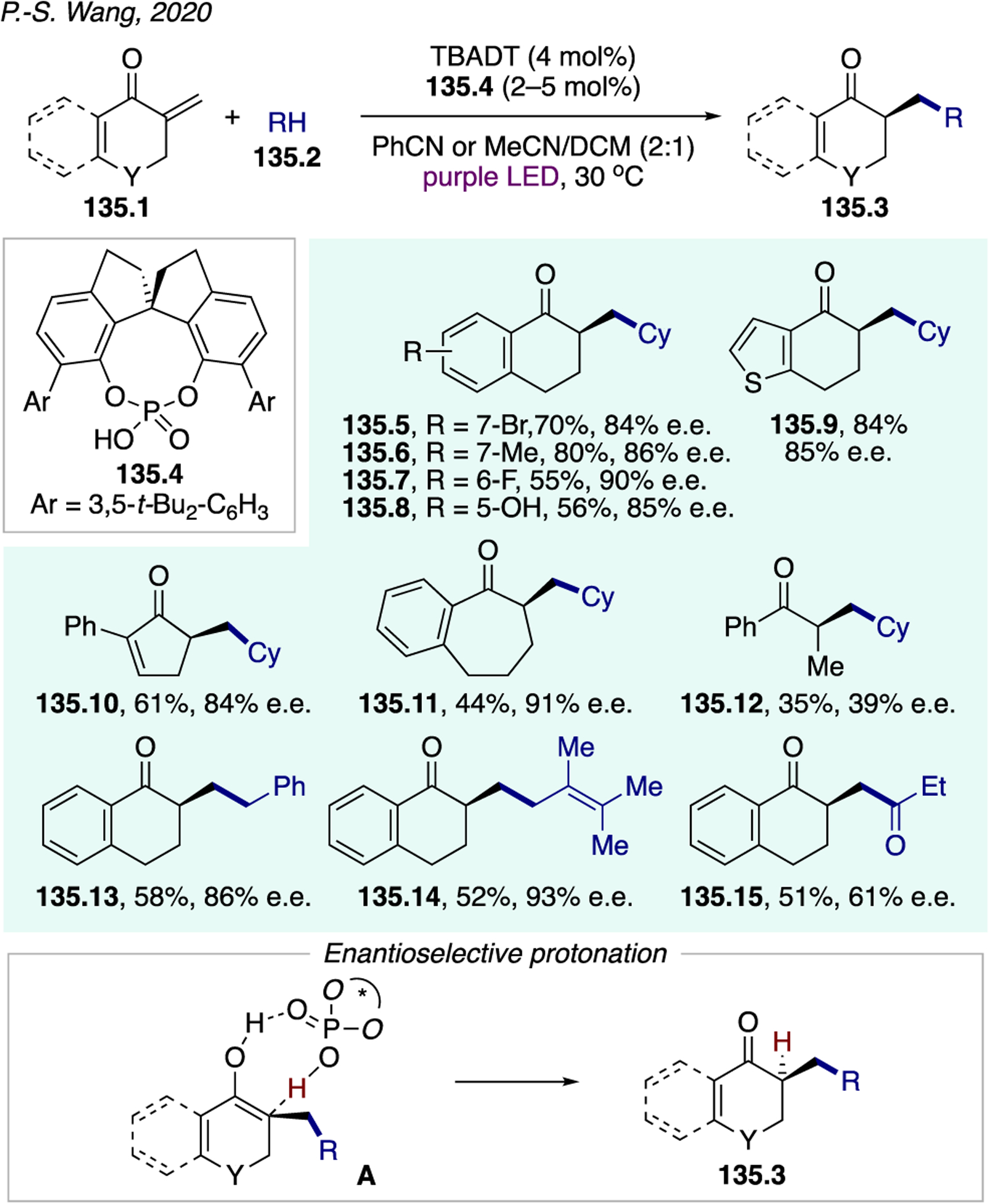
Scheme 135.
Scheme 135.
Tandem Alkylation/Chiral Proton Transfer en Route to Enantioenriched Ketones
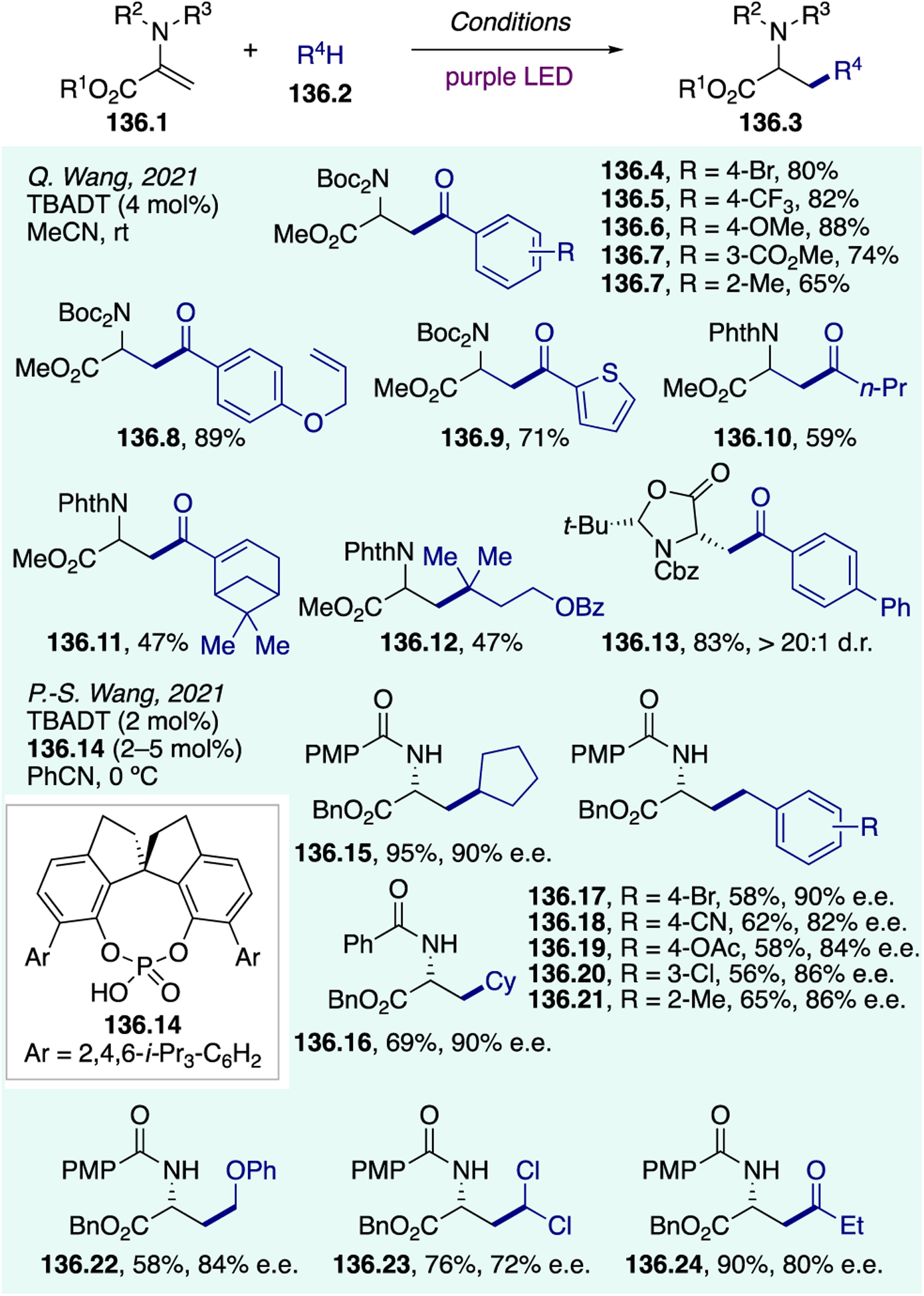
Scheme 136.
Scheme 136.
Synthesis of Unnatural α-Amino Acids
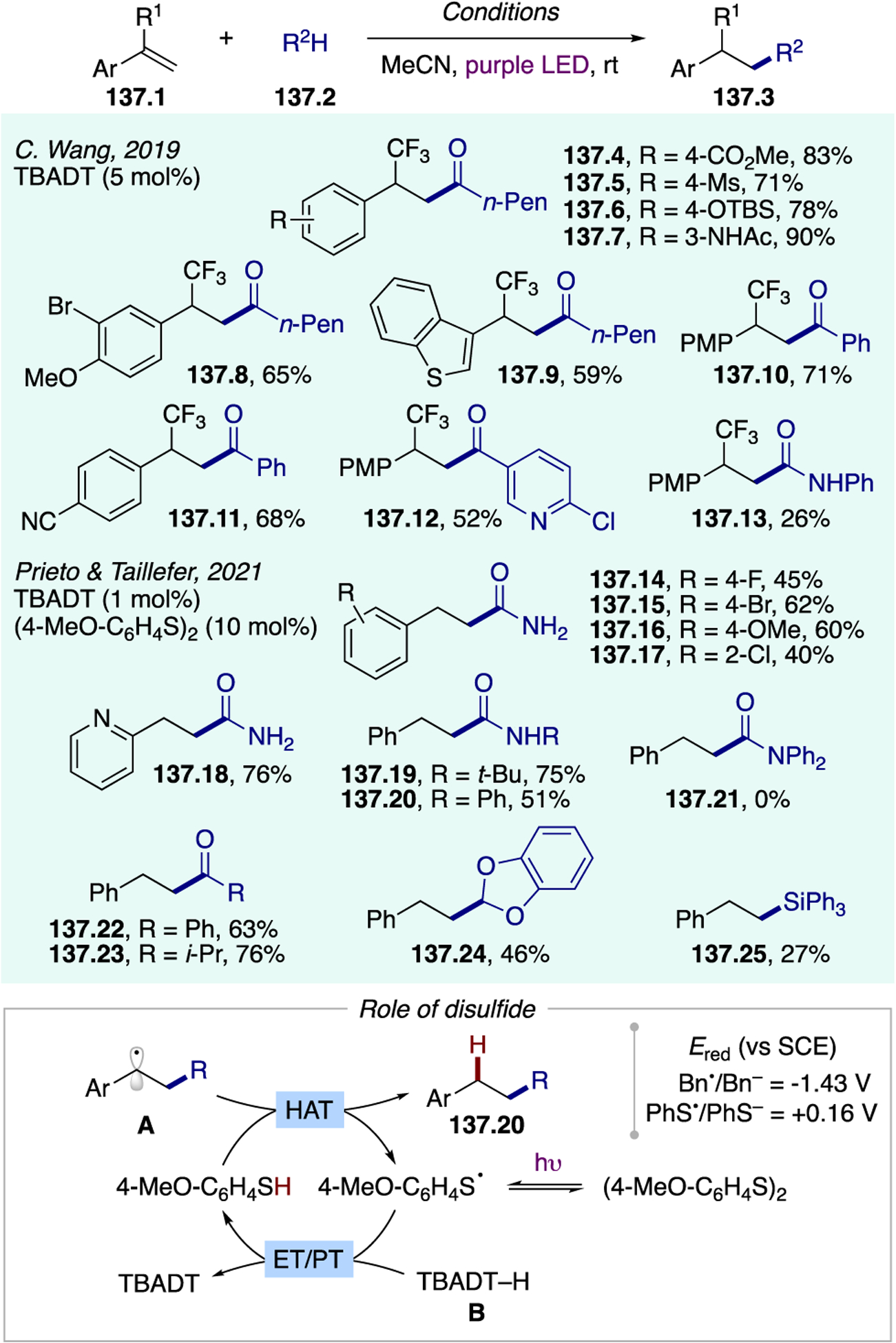
Scheme 137.
Scheme 137.
C–H Alkylation with Styrene Derivatives
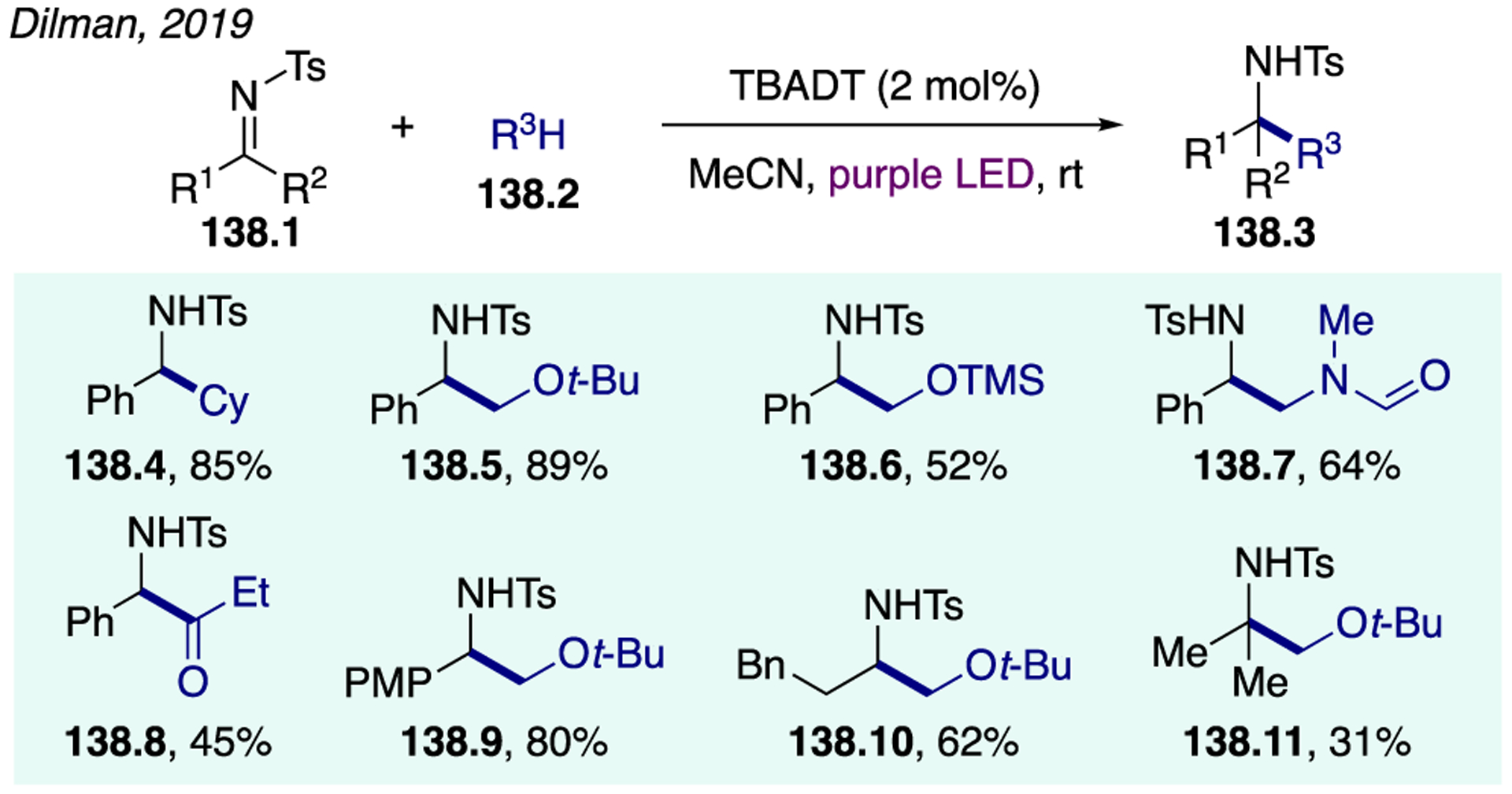
Scheme 138.
Scheme 138.
C–H Alkylation with Imines
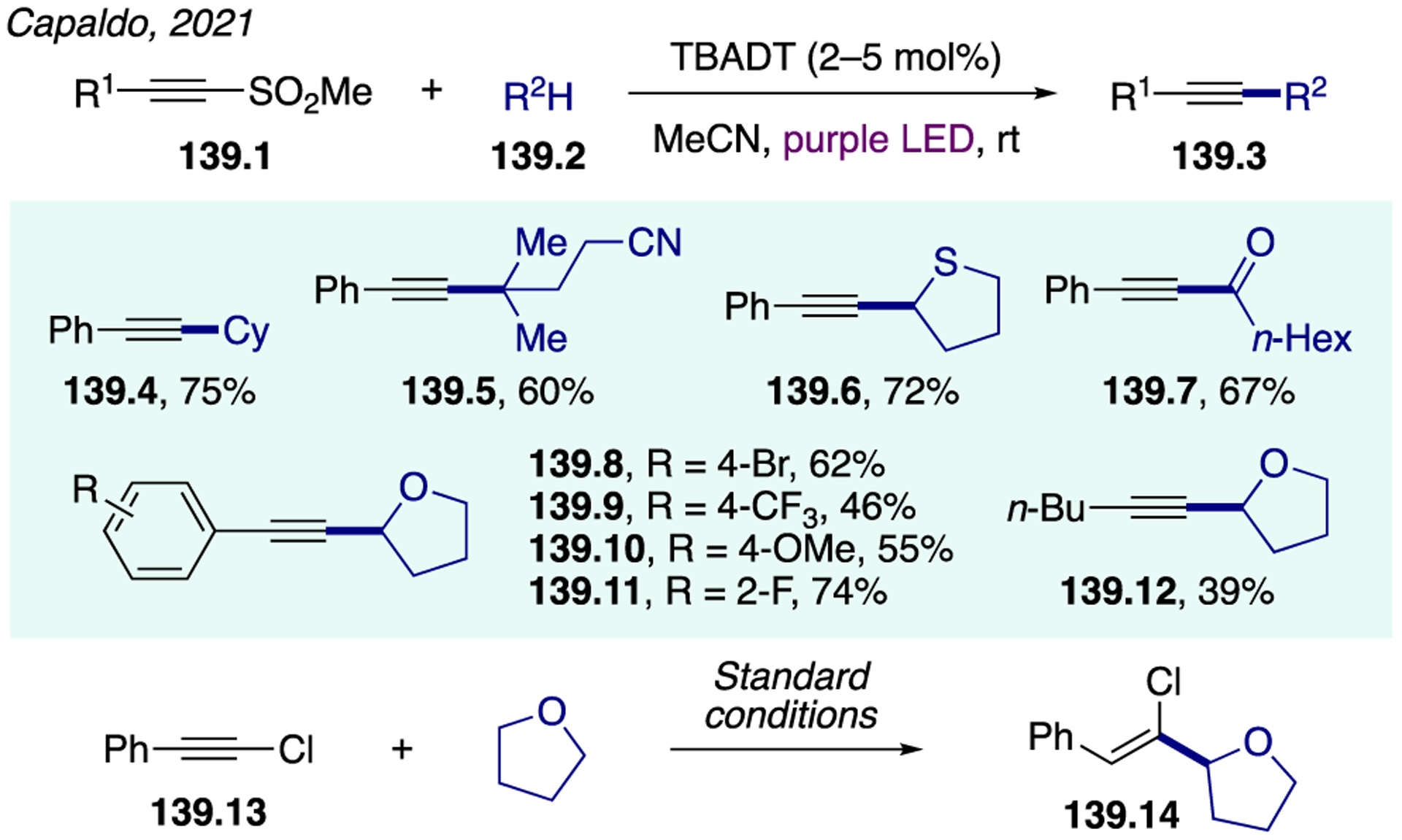
Scheme 139.
Scheme 139.
C–H Alkynylation with Methanesulfonyl Alkynes
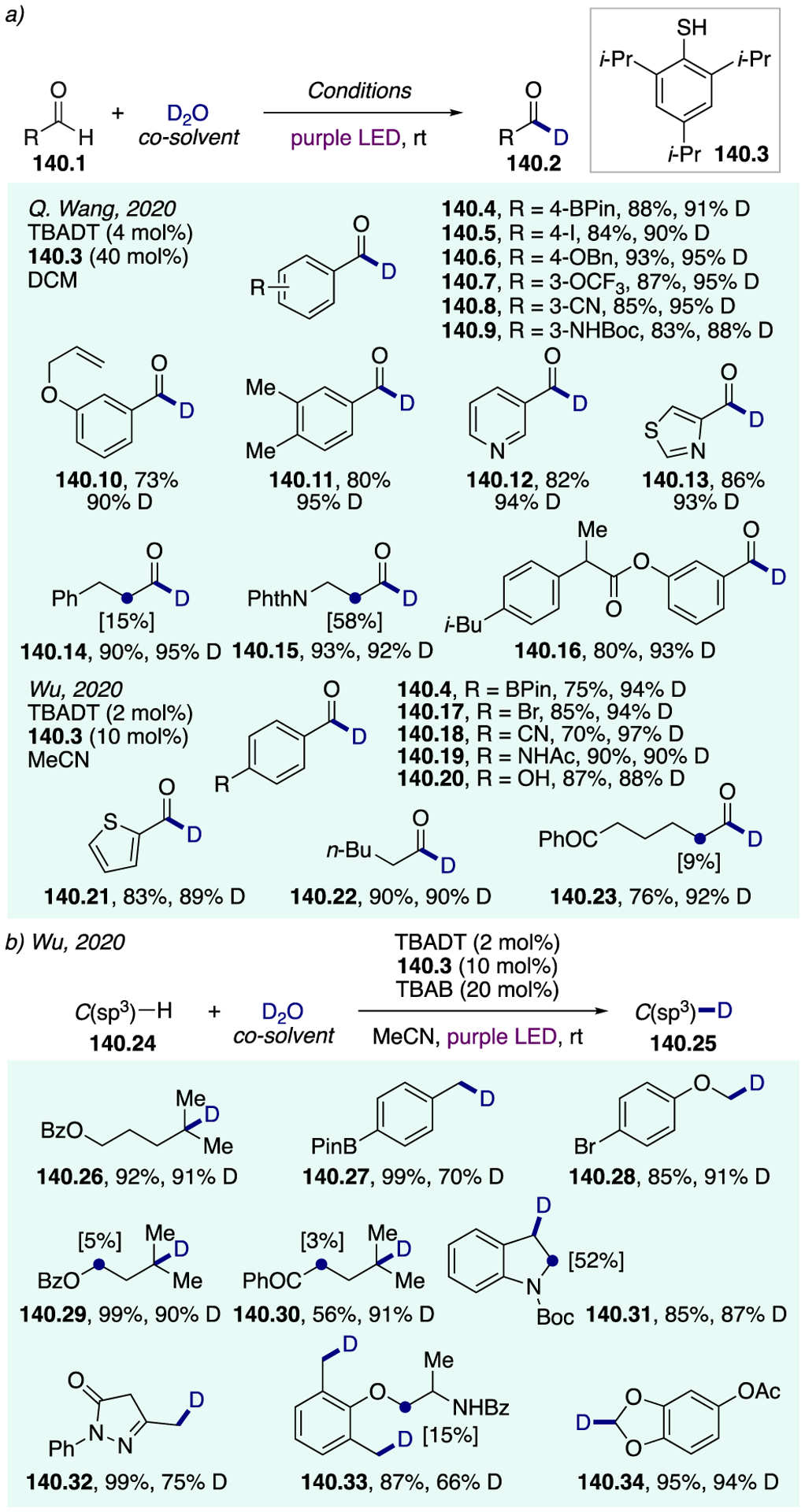
Scheme 140.
Scheme 140.
C–H Deuteration at (a) Formyl C–H and (b) Hydridic C(sp3)–H Sites
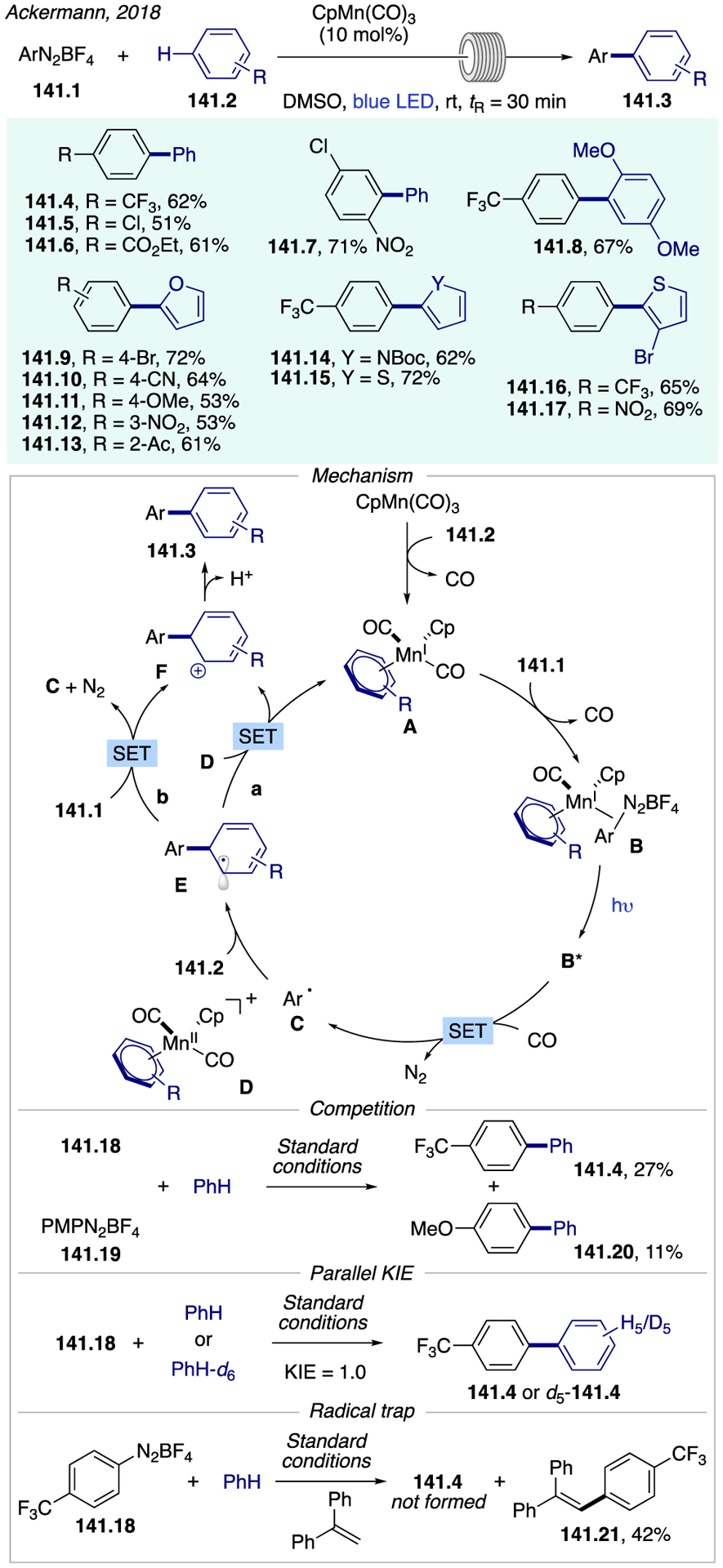
Scheme 141.
Scheme 141.
C–H Arylation of Arenes under Photoflow Conditions
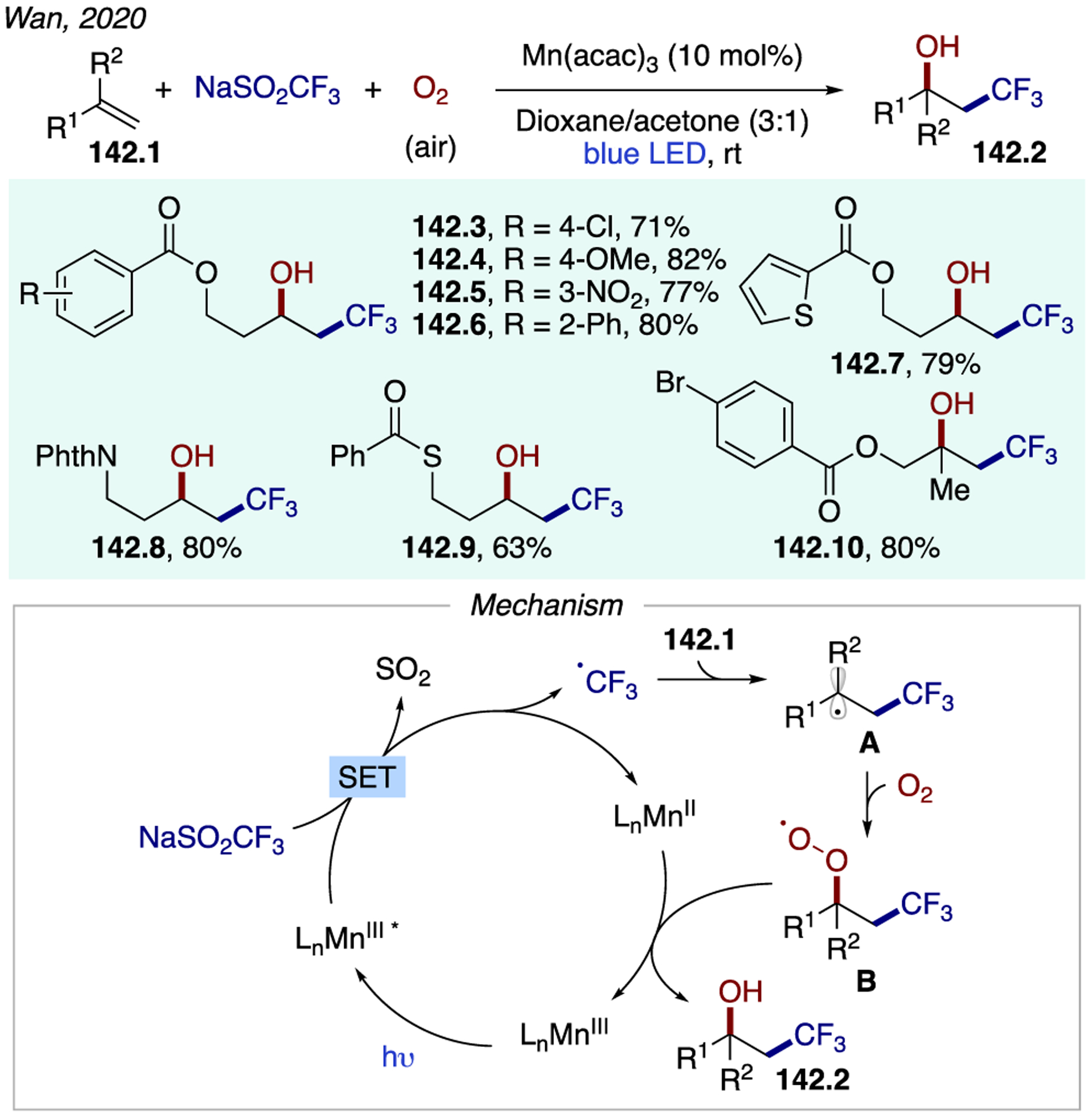
Scheme 142.
Scheme 142.
Hydroxytrifluoromethylation of Unactivated Alkenes
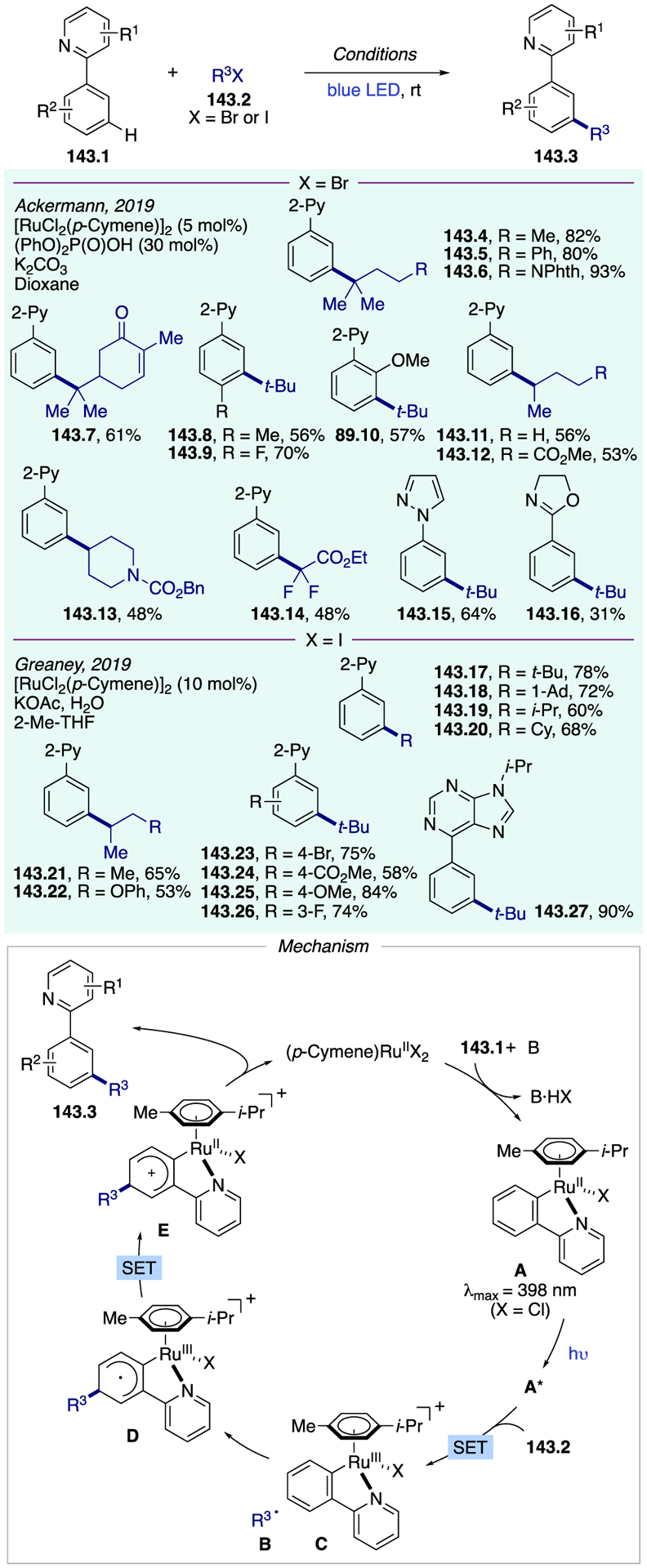
Scheme 143.
Scheme 143.
meta-Selective C–H Alkylation of Arenes
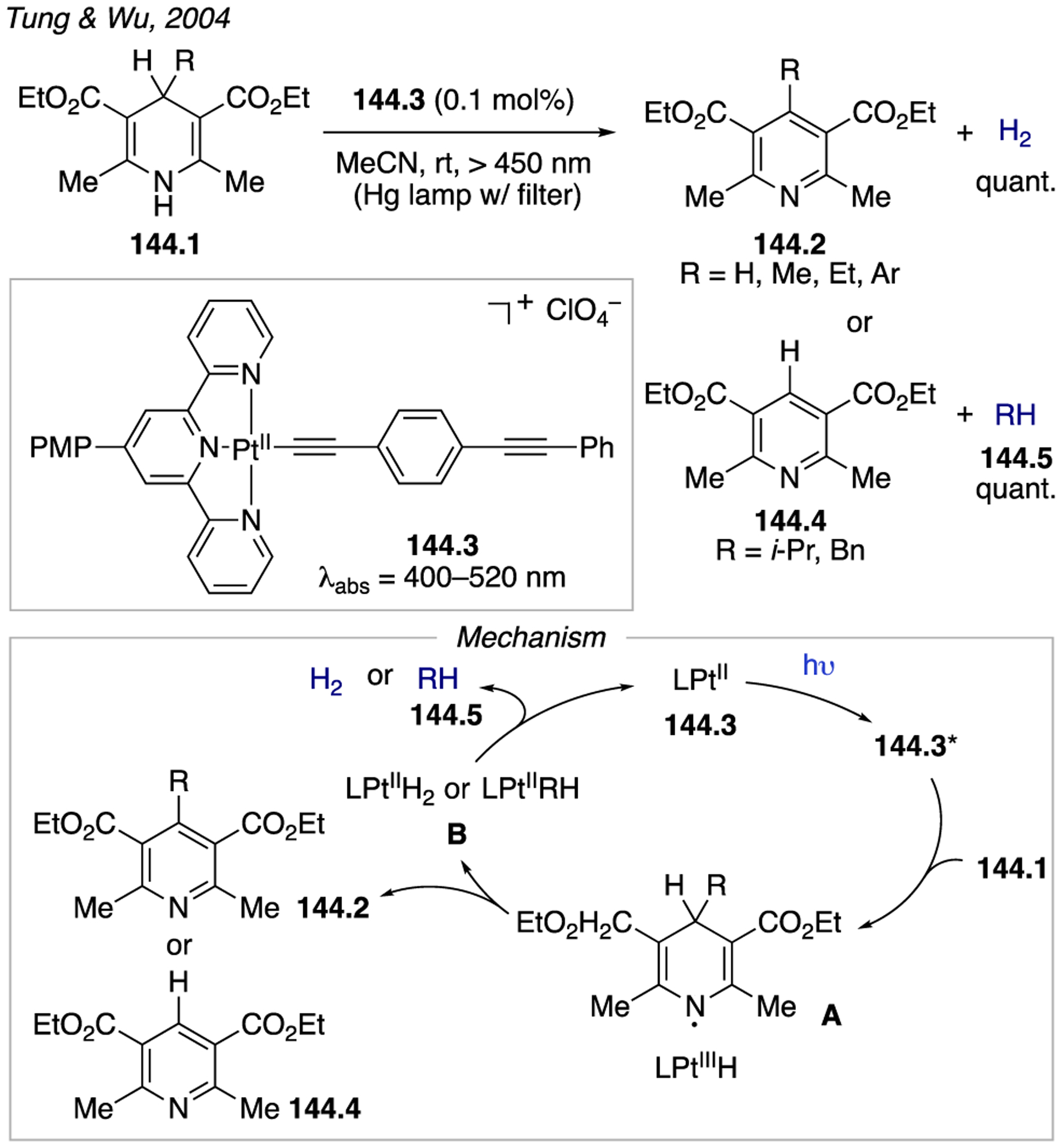
Scheme 144.
Scheme 144.
Photocatalytic Dehydrogenation and Dealkylation of Hantzsch Esters

References

    1. Narayanam JM; Stephenson CR Visible Light Photoredox Catalysis: Applications in Organic Synthesis. Chem. Soc. Rev 2011, 40, 102–113. - PubMed
    1. Tucker JW; Stephenson CR Shining Light on Photoredox Catalysis: Theory and Synthetic Applications. J. Org. Chem 2012, 77, 1617–1622. - PubMed
    1. Prier CK; Rankic DA; MacMillan DW Visible Light Photoredox Catalysis with Transition Metal Complexes: Applications in Organic Synthesis. Chem. Rev 2013, 113, 5322–5363. - PMC - PubMed
    1. Schultz DM; Yoon TP Solar Synthesis: Prospects in Visible Light Photocatalysis. Science 2014, 343, 1239176. - PMC - PubMed
    1. Romero NA; Nicewicz DA Organic Photoredox Catalysis. Chem. Rev 2016, 116, 10075–10166. - PubMed