


The impact of the COVID-19 pandemic on global neurosurgical education: a systematic review
- PMID: 34623526
- PMCID: PMC8497188
- DOI: 10.1007/s10143-021-01664-5
The impact of the COVID-19 pandemic on global neurosurgical education: a systematic review
Abstract
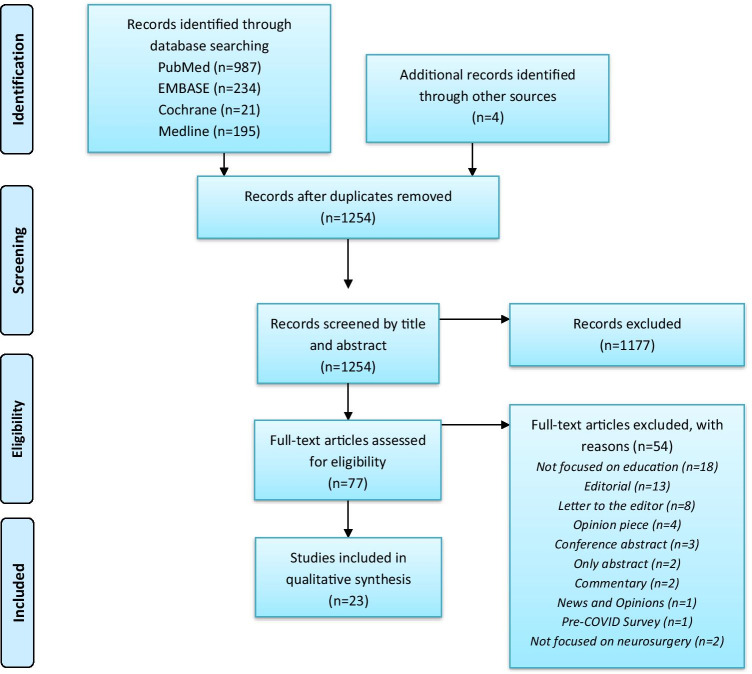
The COVID-19 pandemic has disrupted neurosurgical training worldwide, with the shutdown of academic institutions and the reduction of elective surgical procedures. This impact has disproportionately affected LMICs (lower- and/or middle-income countries), already burdened by a lack of neurosurgical resources. Thus, a systematic review was conducted to examine these challenges and innovations developed to adapt effective teaching and learning for medical students and neurosurgical trainees. A systematic review was conducted in accordance with the Preferred Reporting Items for Systematic Reviews and Meta-Analysis Protocols (PRISMA-P) and The Cochrane Handbook of Systematic Reviews of Interventions. MEDLINE, PubMed, Embase and Cochrane databases were accessed, searching and screening literature from December 2019 to 5th December 2020 with set inclusion and exclusion criteria. Screening identified 1254 articles of which 26 were included, providing data from 96 countries. Twenty-three studies reported transition to online learning, with 8 studies also mentioned redeployment into COVID wards with 2 studies mentioning missed surgical exposure as a consequence. Of 7 studies conducted in LMICs, 3 reported residents suffering financial insecurities from reduced surgical caseload and recession. Significant global disruption in neurosurgical teaching and training has arisen from the COVID-19 pandemic. Decreased surgical exposure has negatively impacted educational provision. However, advancements in virtual technology have allowed for more affordable, accessible training especially in LMICs. Using this, initiatives to reduce physical and mental stress experienced by trainees should be paramount.
Keywords: COVID-19; Education; Global surgery; Neurosurgery; Pandemic.
© 2021. The Author(s).
Conflict of interest statement
The authors declare no competing interests.
Figures
References
-
- Dewan M, Rattani A, Fieggen G, et al. Global neurosurgery: the current capacity and deficit in the provision of essential neurosurgical care. Executive Summary of the Global Neurosurgery Initiative at the Program in Global Surgery and Social Change. J Neurosurg. 2019;130(4):1055–1064. doi: 10.3171/2017.11.jns171500. - DOI - PubMed
Publication types
MeSH terms
LinkOut - more resources
Full Text Sources
Medical
