


Gliomas in children and adolescents: investigation of molecular alterations with a potential prognostic and therapeutic impact
- PMID: 34626238
- PMCID: PMC11801153
- DOI: 10.1007/s00432-021-03813-1
Gliomas in children and adolescents: investigation of molecular alterations with a potential prognostic and therapeutic impact
Abstract
Purpose: Gliomas represent the most frequent central nervous system (CNS) tumors in children and adolescents. However, therapeutic strategies for these patients, based on tumor molecular profile, are still limited compared to the wide range of treatment options for the adult population. We investigated molecular alterations, with a potential prognostic marker and therapeutic target in gliomas of childhood and adolescence using the next-generation sequencing (NGS) strategy.
Methods: We selected 95 samples with initial diagnosis of glioma from patients treated at Pediatric Oncology Institute-GRAACC/UNIFESP. All samples were categorized according to the 2021 World Health Organization Classification of Tumors of the CNS, which included 39 low-grade gliomas (LGGs) and 56 high-grade gliomas (HGGs). Four HGG samples were classified as congenital glioblastoma (cGBM). NGS was performed to identify somatic genetic variants in tumor samples using the Oncomine Childhood Cancer Research Assay® (OCCRA®) panel, from Thermo Fisher Scientific®.
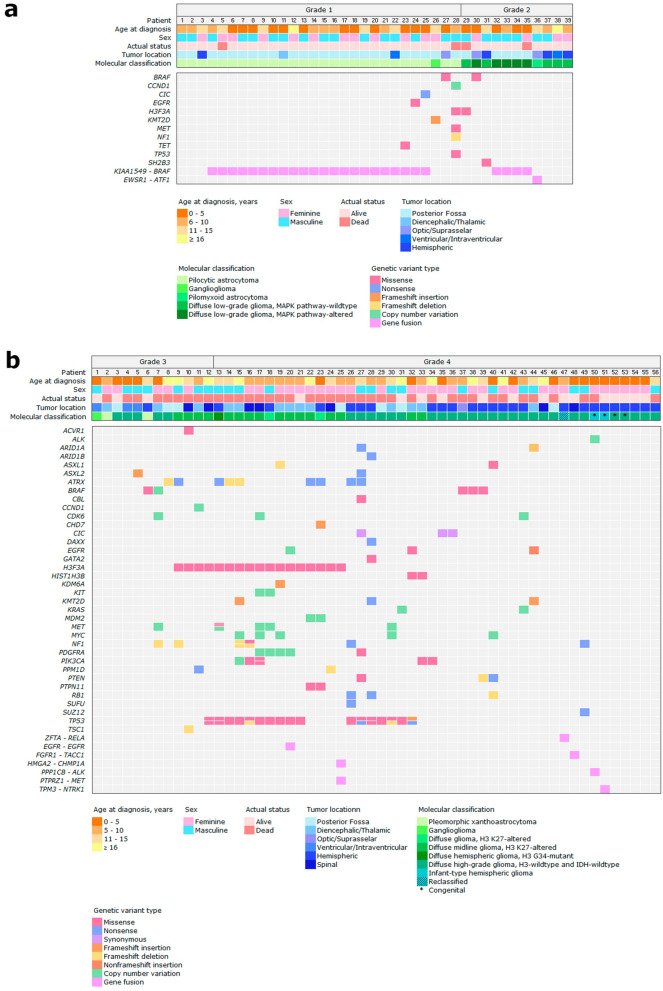
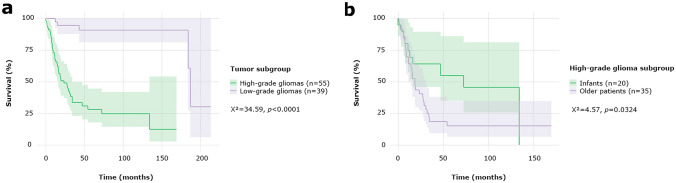
Results: Genetic variants were identified in 76 of 95 (80%) tumors. In HGGs, the most common molecular alteration detected was H3F3A c.83A > T variant (H3.3 K27M) and co-occurring mutations in ATRX, TP53, PDGFRA, MET, and MYC genes were also frequently observed. One HGG sample was reclassified as supratentorial ependymoma ZFTA-fusion positive after NGS was performed. In LGGs, four KIAA1549-BRAF fusion transcripts were detected and this alteration was the most recurrent genetic event and favorable prognostic factor identified. Additionally, genetic variants in ALK and NTRK genes, which provide potential targets for therapy with Food and Drug Administration-approved drugs, were identified in two different cases of cGBM that were classified as infant-type hemispheric glioma, a newly recognized subgroup of pediatric HGG.
Conclusion: Molecular profiling by the OCCRA® panel comprehensively addressed the most relevant genetic variants in gliomas of childhood and adolescence, as these tumors have specific patterns of molecular alterations, outcomes, and effectiveness to therapies.
Keywords: Central nervous system tumor; Congenital glioblastoma; Gliomas; Molecular profiling; Next-generation sequency; Pediatric brain tumor.
© 2021. The Author(s), under exclusive licence to Springer-Verlag GmbH Germany, part of Springer Nature.
Conflict of interest statement
The authors declare that they have no conflict of interest.
Figures


References
-
- Amend C, Stadler J, Salamat S, Dedekam E, Waanders A, Wadhwani N (2020) Congenital glioblastoma multiforme: a case report of a rare pediatric brain tumor, molecular analysis, and review of the literature. Neuro-Oncol 22(suppl3):iii351. 10.1093/neuonc/noaa222.324
-
- Ballester LY, Meis JM, Lazar AJ et al (2020) Intracranial myxoid mesenchymal tumor with EWSR1-ATF1 fusion. J Neuropathol Exp Neurol 79(3):347–351. 10.1093/jnen/nlz140 - PubMed
MeSH terms
Substances
Grants and funding
LinkOut - more resources
Full Text Sources
Medical
Research Materials
Miscellaneous
