


Self-administered subcutaneous medroxyprogesterone acetate for improving contraceptive outcomes: a systematic review and meta-analysis
- PMID: 34627229
- PMCID: PMC8502084
- DOI: 10.1186/s12905-021-01495-y
Self-administered subcutaneous medroxyprogesterone acetate for improving contraceptive outcomes: a systematic review and meta-analysis
Abstract
Background: Subcutaneous depot medroxyprogesterone acetate is an easy-to-use injectable contraceptive. A trained person can administer it, including women through self-injection. The objective of this systematic review and meta-analysis was to assess the effectiveness and safety of self-injection versus provider-administered subcutaneous depot medroxyprogesterone acetate for improving continuation of contraceptive use.
Methods: We searched for randomized controlled trials on November 1, 2020 in Cochrane Central Register of Controlled Trials, MEDLINE, CINAHL, Embase, Web of Science, Scopus, Open Grey, clinical trials registries, and reference lists of relevant studies. We did not impose any search restrictions. We included randomized trials comparing self- versus provider-administered subcutaneous depot medroxyprogesterone acetate. Two authors independently screened trials, extracted data, and assessed the risk of bias in the included studies. We used risk ratio and 95% confidence intervals for dichotomous outcomes.
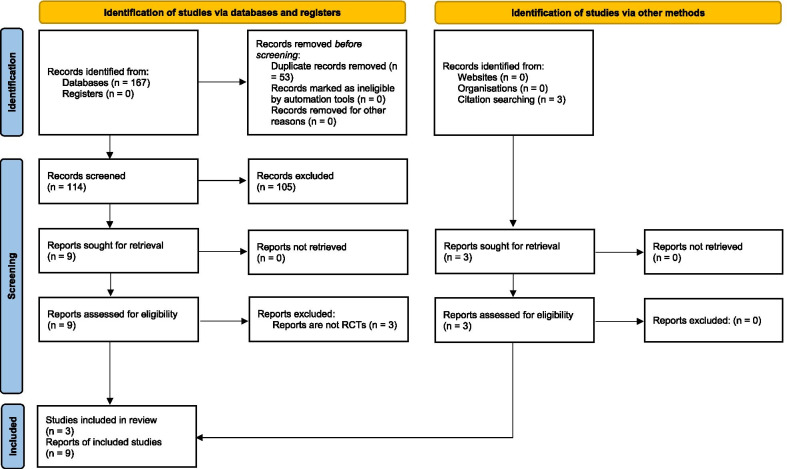
Results: We identified 3 randomized trials (9 reports; 1264 participants). The risk of bias in the included studies was low except for performance bias and detection bias of participant-reported outcomes in unmasked trials. Self-administration, compared to provider-administration, increased continuation of contraceptive use (risk ratio 1.35; 95% confidence intervals 1.10-1.66); moderate-certainty evidence). Self-injection appears to be making more of an impact on continuation for younger women compared to women 25 years and older and on women living in low and middle income compared to high income countries. There was no subgroup difference by the type of care provider (community health worker vs. clinic-based provider).
Conclusions: Self-injection of subcutaneous depot medroxyprogesterone acetate probably improves continuation of contraceptive use. The effects on other outcomes remain uncertain because of the very low certainty of evidence.
Keywords: Depo medroxyprogesterone acetate; Family planning; Long-Acting Reversible Contraception; Self-administration.
© 2021. The Author(s).
Conflict of interest statement
The authors declare that they have no competing interests.
Figures

 , high risk:


References
-
- World Health Organization. Medical eligibility criteria for contraceptive use. 5th ed. World Health Organization; 2015. - PubMed
Publication types
MeSH terms
Substances
Grants and funding
LinkOut - more resources
Full Text Sources
