


Parent-adolescent communication on adolescent sexual and reproductive health in sub-Saharan Africa: a qualitative review and thematic synthesis
- PMID: 34629082
- PMCID: PMC8504018
- DOI: 10.1186/s12978-021-01246-0
Parent-adolescent communication on adolescent sexual and reproductive health in sub-Saharan Africa: a qualitative review and thematic synthesis
Abstract
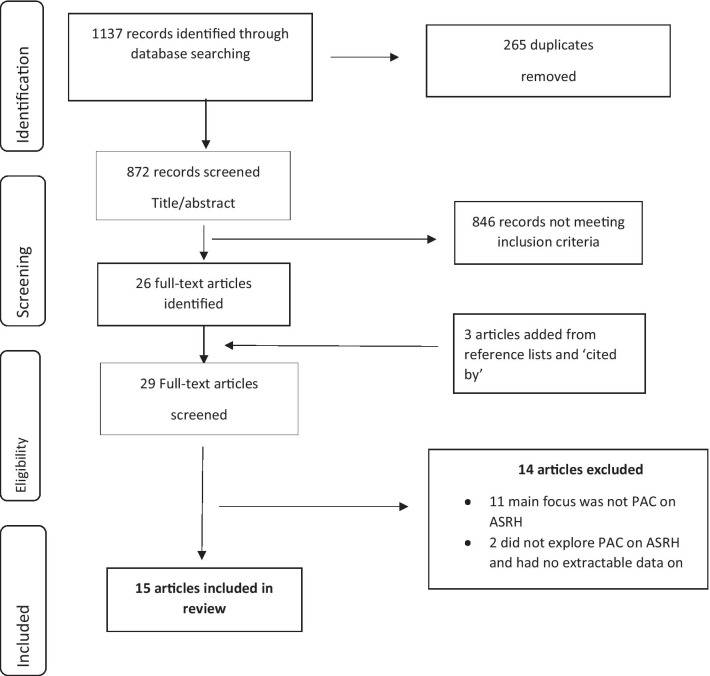
Background: Improving adolescent sexual and reproductive health continues to be a global public health need. Effective parent-adolescent communication on sexual health issues has been cited as a factor that could influence adolescents towards adopting safer sexual behaviour. The current review synthesises qualitative literature to understand the nature and relevance of parent-adolescent sexual and reproductive health communication and the barriers to effective communication in sub-Saharan Africa.
Methods: We systematically searched and synthesised qualitative literature published between 1st January 1990 to December 2019 and searched from CINAHL, PsycINFO, MEDLINE, Global Health, EMBASE, PubMed, and Google Scholar. We assessed the methodological quality of included studies using the Critical Appraisal Skills Programme (CASP) checklist. We thematically analysed qualitative data from the included primary studies.
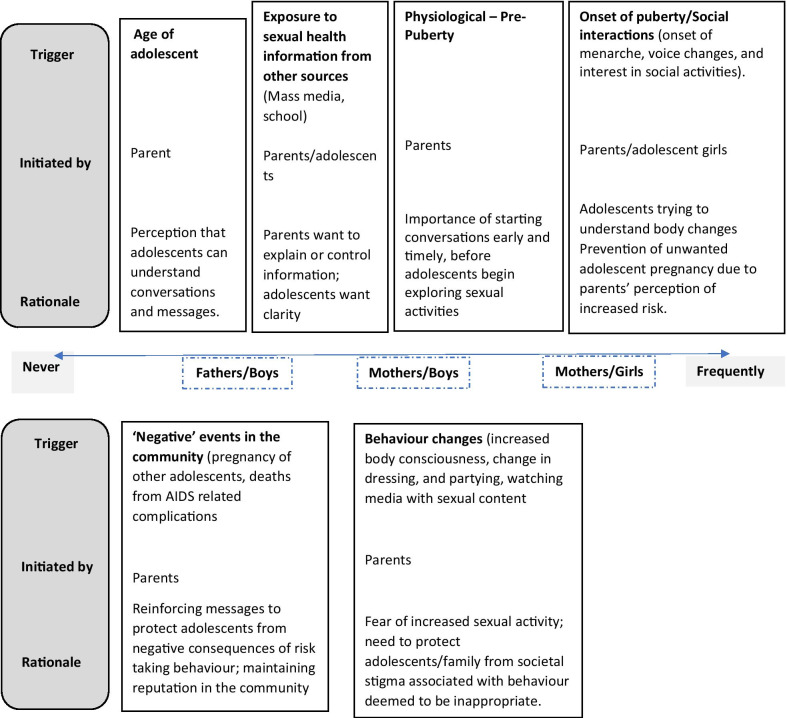
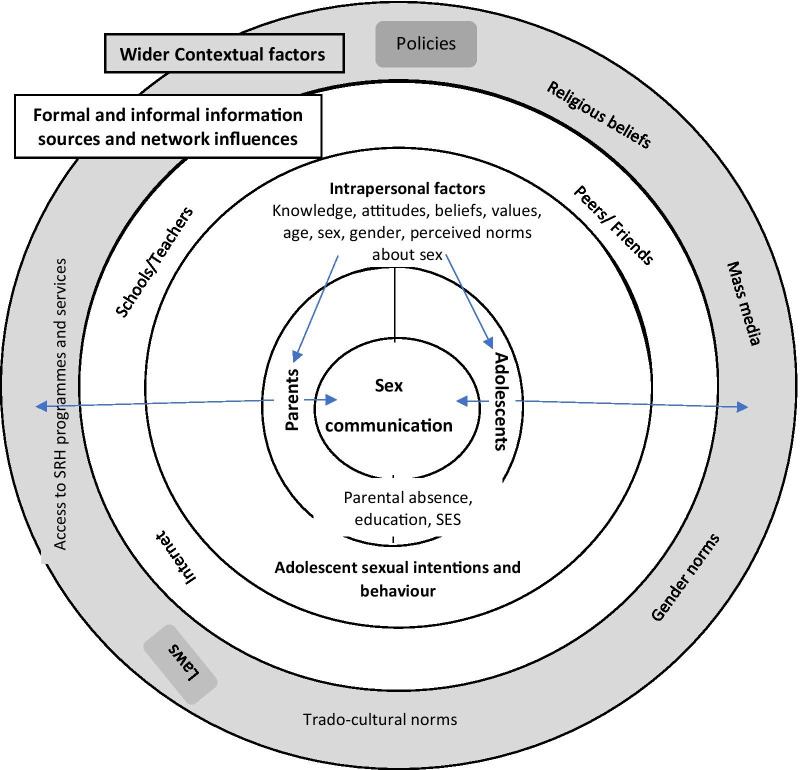
Results: Fifteen studies were included. Social and physiological events act as triggers for initiating discussions. Fear of personal, social, and economic consequences of high-risk sexual behaviours act as drivers for communication but also carry a negative framing which hinders open discussion. Lack of parental self-efficacy and cultural and religious norms create an uncomfortable environment leaving peers, media, teachers, and siblings as important and sometimes preferred sources of sexual health information.
Conclusions: While mothers recognise their own role in adolescent sexual and reproductive health and school-based interventions can act as useful prompts for initiating discussion, fathers are mainly absent from home-based dialogue. Fear dominates the narrative, and the needs of adolescents remain unarticulated.
Keywords: Adolescent; Parent; Reproductive health; Sex; Sex education; Sexual health; Sexuality.
Plain language summary
Improving adolescent sexual and reproductive health remains an important public health need globally. Effective communication on sexual health issues between adolescents and their parents has been recognised to influence safer sexual behaviour among adolescents. This review combined qualitative evidence to understand the nature of, and barriers to communication about sex between parents and adolescents in sub-Saharan Africa.We searched academic databases for relevant articles published between January 1990 and December 2019 and found 15 studies of appropriate quality. Data on parents and adolescents’ experiences of sex communication in these studies was synthesised. Drivers for sex communication including fear of personal and economic consequences were highlighted. Results also identified barriers to communication such as cultural and religious norms and lack of parental knowledge and skills.Findings showed that adolescents sometimes prefer other sources of sexual health information like peers, media, and siblings. Mothers are recognised to be more involved with home-based interactions on sexual health with adolescents compared to fathers. The results of this review point to the necessity for adolescents’ needs to be understood and articulated towards influencing policy and programmes.
© 2021. The Author(s).
Conflict of interest statement
The authors declare no competing interests.
Figures
References
-
- World Health Organisation. Adolescent health. http://www.who.int/maternal_child_adolescent/adolescence/en/ (2018). Accessed 30 Jan 2019.
-
- United Nations Children's Fund . Ending child marriage: progress and prospects. 1. London: Frances Lincoln Limited Publ; 2013.
-
- World Health Organisation. Adolescents sexual and reproductive health. http://www.who.int/reproductivehealth/topics/adolescence/en/ (2018). Accessed 19 Feb 2019.
-
- Ezeh A, Bankole A, Cleland J, García-Moreno C, Temmerman M, Ziraba AK. Burden of reproductive ill health. In: Black RE, Laxminarayan R, Temmerman M, Walker N, editors. Reproductive, maternal, newborn, and child health: disease control priorities. Washington: The International Bank for Reconstruction and Development; 2016. - PubMed
Publication types
MeSH terms
LinkOut - more resources
Full Text Sources
Medical
