. 2021 Oct 1;12(7):1773-1793.
doi: 10.14336/AD.2021.0226. eCollection 2021 Oct.

Age and Gender-related Variations of Molecular and Phenotypic Parameters in A Cohort of Sicilian Population: from Young to Centenarians

Affiliations

Age and Gender-related Variations of Molecular and Phenotypic Parameters in A Cohort of Sicilian Population: from Young to Centenarians

Anna Aiello et al. Aging Dis. .

Abstract

People are living longer, but lifespan increase does not coincide with a boost in health-span. Thus, improving the quality of life of older people is a priority. Centenarians reach extreme longevity in a relatively good health status, escaping or delaying fatal or strongly invalidating diseases. Therefore, studying processes involved in longevity is important to explain the biological mechanisms of health and well-being, since knowledge born from this approach can provide valuable information on how to slow aging. We performed the present study in a well characterized very homogeneous sample of 173 people from Western Sicily, to update existing literature on some phenotypic aspects of aging and longevity and to propose a range of values for older people. We classified 5 age groups, from young adults to centenarians, to understand the age and gender-related variations of the different parameters under study. We collected anamnestic data and performed anthropometric, bioimpedance, molecular, haematological, oxidative, and hematochemical tests, adopting a multidimensional analysis approach. An important evidence of the present study is that there are differences related to both age and gender in several biomarkers. Indeed, gender differences seem to be still poorly considered and inadequately investigated in aging as well as in other medical studies. Moreover, we often observed comparable parameters between young and centenarians rather than non-agenarians and centenarians, hypothesizing a sort of slowdown, almost followed by a reversal trend, in the decay of systemic deterioration. The study of centenarians provides important indications on how to slow aging, with benefits for those who are more vulnerable to disease and disability. The identification of the factors that predispose to a long and healthy life is of enormous interest for translational medicine in an aging world.

Keywords: aging; centenarian; gender; inflammation; longevity; phenotype.


Conflict of interest statement

Conflicts of interest The authors declare no conflict of interest.

Figures
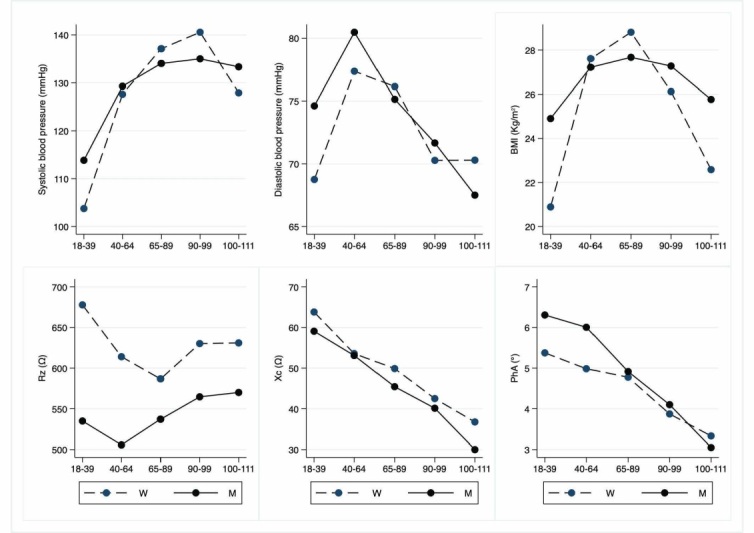
Figure 1.
Figure 1.
Anamnestic and bioimpedance parameters. The figure shows the trend of mean values by class of ages and gender related to anamnestic and bioimpedance parameters depicted. Y-axis reports the mean values of the analysed biomarker, x-axis reported the age-class (for the acronyms see the Table 1).
Figure 2.
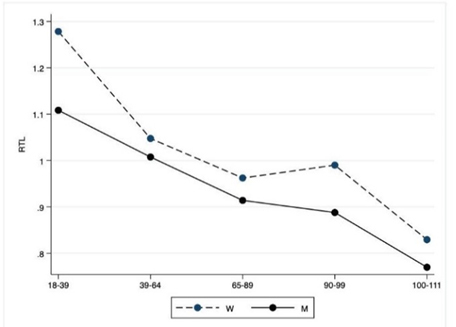
Figure 2.
Molecular tests. The figure shows the trend of mean values by class of ages and gender related to RTL. Y-axis reports the mean values of the analysed biomarker, x-axis reported the age-class (for the acronyms see the Table 2).
Figure 3.
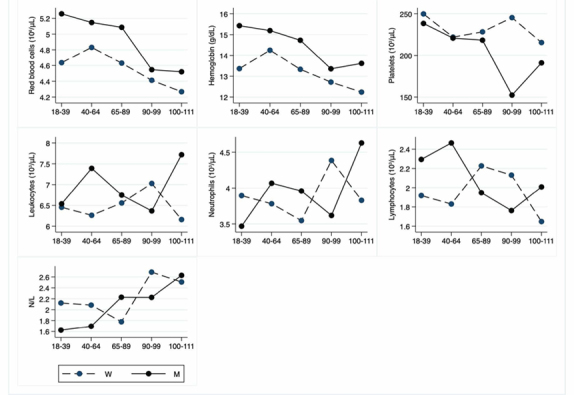
Figure 3.
Hematological parameters. The figure shows the trend of mean values by class of ages and gender related to haematological parameters. Y-axis reports the mean values of the analysed biomarker, x-axis reported the age-class (for the acronyms see the Table 3).
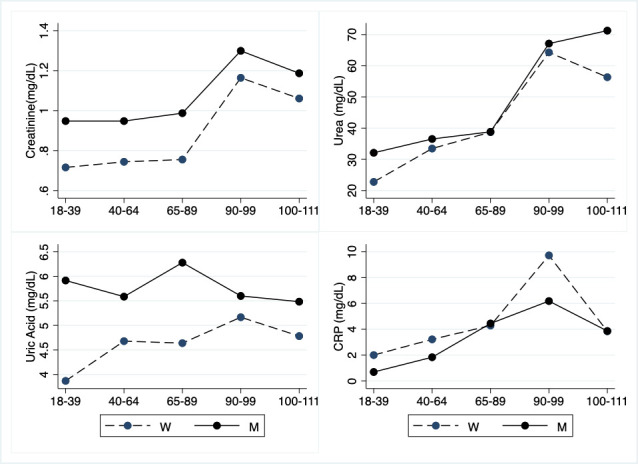
Figure 4.
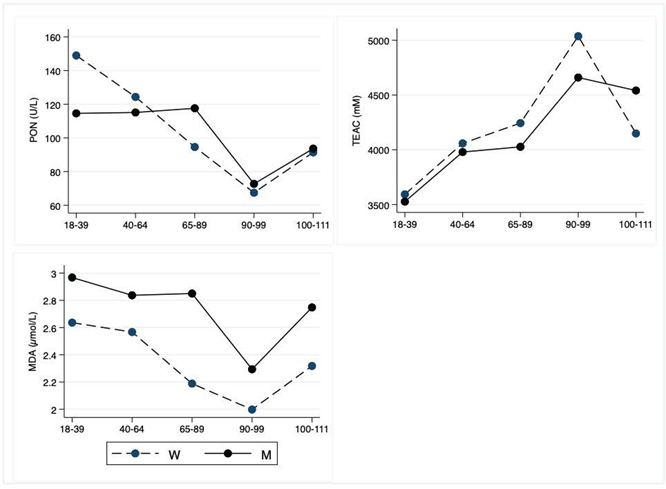
Figure 4.
Oxidative Stress Parameters. The figure shows the trend of mean values by class of ages and gender related to oxidative parameters. Y-axis reports the mean values of the analysed biomarker, x-axis reported the age-class (for the acronyms see the Table 4).
Figure 5.
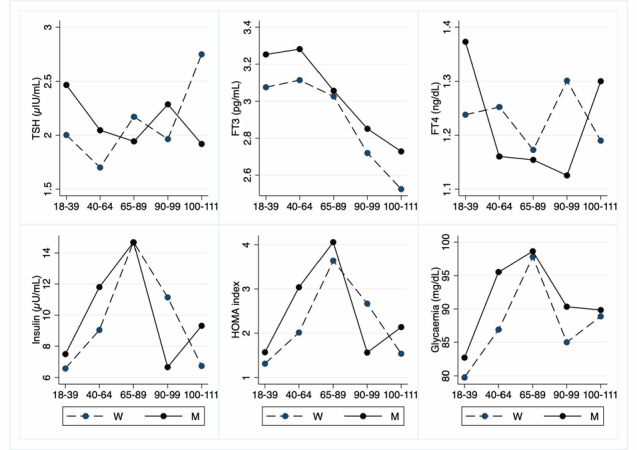
Figure 5.
Hematochemical parameters: Endocrine parameters. The figure shows the trend of mean values by class of ages and gender related to endocrine parameters reports the mean values of the analysed biomarker, x-axis reported the age-class (for the acronyms see the table 5).
Figure 6.
Figure 6.
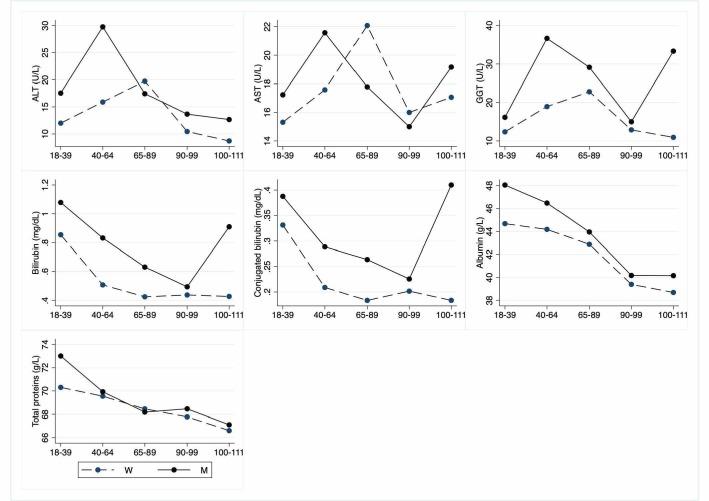
Hematochemical parameters: Liver parameters. The figure shows the trend of mean values by class of ages and gender related to liver parameters. Y-axis reports the mean values of the analysed biomarker, x-axis reported the age-class (for the acronyms see the table 6).
Figure 7.
Figure 7.
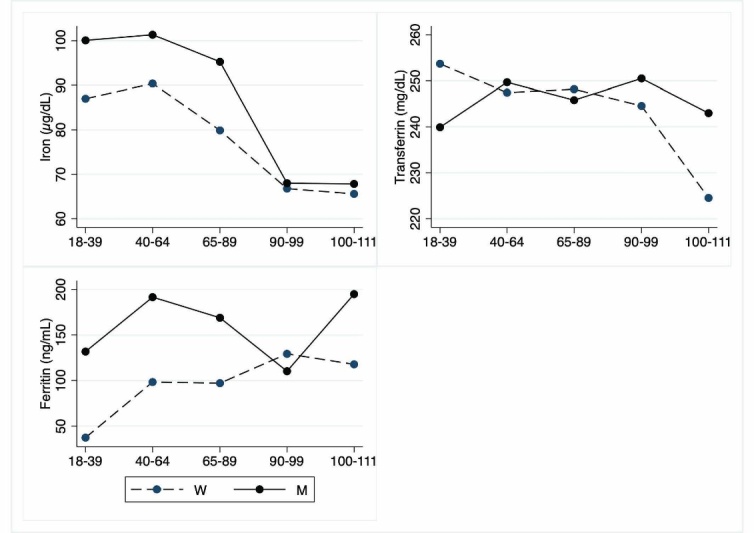
Hematochemical parameters: Iron parameters. The figure shows the trend of mean values by class of ages and gender related to iron parameters. Y-axis reports the mean values of the analysed biomarker, x-axis reported the age-class (for the acronyms see the table 7).
Figure 8.
Figure 8.
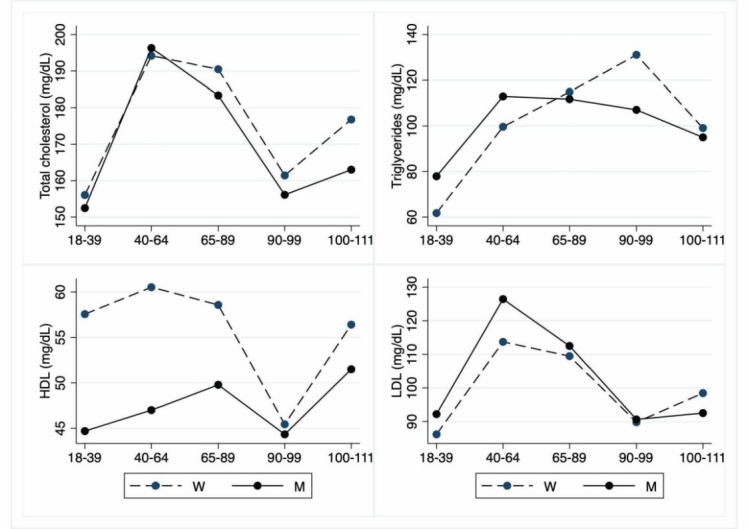
Hematochemical parameters: Lipid parameters. The figure shows the trend of mean values by class of ages and gender related to lipid parameters. Y-axis reports the mean values of the analysed biomarker, x-axis reported the age-class (for the acronyms see the table 8).
Figure 9.
Figure 9.
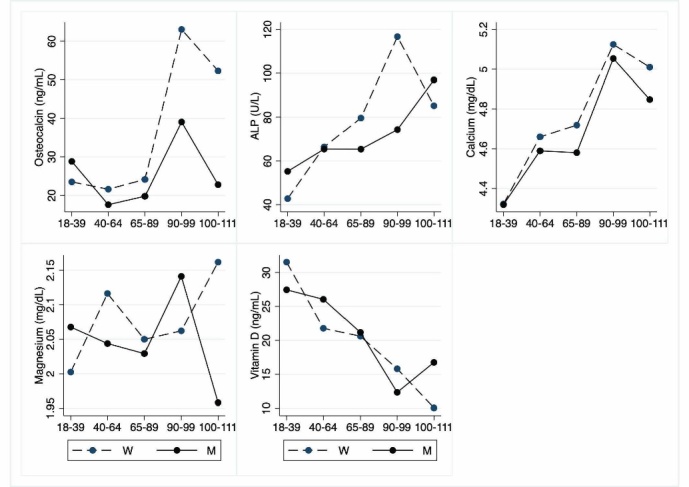
Hematochemical parameters: Bone parameters. The figure shows the trend of mean values by class of ages and gender related to bone parameters. Y-axis reports the mean values of the analysed biomarker, x-axis reported the age-class (for the acronyms see the table 9).
Figure 10.
Figure 10.
Hematochemical parameters: Catabolic and inflammatory parameters. The figure shows the trend of mean values by class of ages and gender related to catabolic and inflammatory parameters. Y-axis reports the mean values of the analysed biomarker, x-axis reported the age-class (for the acronyms see the table 10).

References

    1. Olshansky SJ (2018). From Lifespan to Healthspan. JAMA, 320(13):1323-1324. - PubMed
    1. Caruso C, editor. Centenarians. Cham: Springer; 2019.
    1. Christensen K, Doblhammer G, Rau R, Vaupel JW (2009). Ageing populations: the challenges ahead. Lancet, 374:1196-208. - PMC - PubMed
    1. Caruso C, Passarino G, Puca A, Scapagnini G (2012). "Positive biology": the centenarian lesson. Immun Ageing, 9:5. - PMC - PubMed
    1. Cimarolli VR, Jopp DS (2014). Sensory impairments and their associations with functional disability in a sample of the oldest-old. Qual Life Res, 23:1977-84. - PubMed

LinkOut - more resources