


You Have the Big Idea, Concept, and Some Examples ... Now What?
- PMID: 34631384
- PMCID: PMC8458552
- DOI: 10.1007/s40617-021-00638-9
You Have the Big Idea, Concept, and Some Examples ... Now What?
Abstract
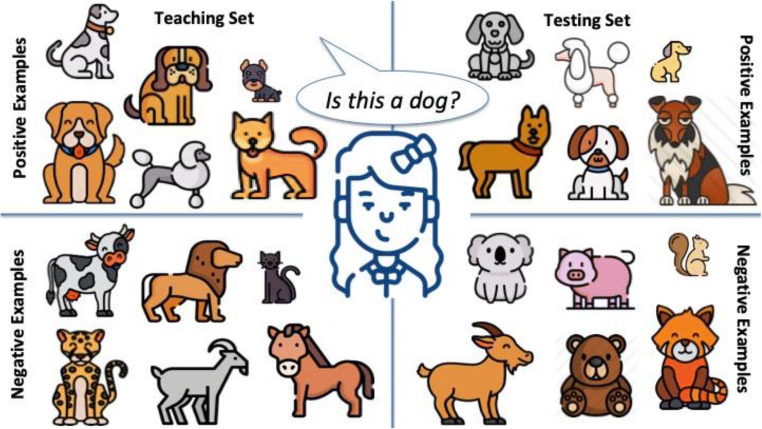
Conducting a concept or content analysis is essential in planning efficient effective instruction. Sequencing instruction when teaching a concept is equally essential. Through instructional sequencing, the upfront analysis of identifying critical and variable attributes comes to life and makes for a successful teaching arrangement. Learning concepts can be made easier or more difficult based on the order in which instructional stimuli are introduced and described. In this article we will describe Direct Instruction's emphasis on clear instruction (faultless communication) and its method for sequencing and arranging positive and negative examples (juxtaposition). We will demonstrate how Direct Instruction's five principles of juxtaposition inform examples should be presented to maximize student learning.
Keywords: Concept teaching; Direct Instruction; Instructional design; Juxtaposition; Sequencing.
© Association for Behavior Analysis International 2021.
Conflict of interest statement
Conflicts of InterestThe authors have no funding, employment, or financial conflicts of interest related to the publication of this manuscript. The first author (Twyman) also served as a co-guest editor for the journal’s special section on Direct Instruction, in which the manuscript will be published. The second author (Hockman) has no nonfinancial conflicts of interest.
Figures



References
-
- Carnine D, Crawford D, Harniss MK, Hollenbeck K. Understanding U.S. history Vol. 1: Through the Civil War. Considerate Publishing; 1994.
-
- Cooper JO, Heron TE, Heward WL. Applied behavior analysis. 3. Pearson Education; 2020.
-
- Dixon R, Carnine D, Kame’enui E. Access to curriculum: Six instructional tools for students with learning disabilities. Council for Exceptional Children; 1996.
-
- Engelmann S, Carnine D. Theory of instruction: Principles and applications. Irvington Publishers; 1982.
-
- Engelmann, S., & Carnine, D. (1991). Theory of instruction: Principles and applications (Rev. ed.). ADI Press.
Publication types
LinkOut - more resources
Full Text Sources
